A heat exchanger supplier in Adelaide, Australia working with food processing equipment has 316L plates whose corrugations and gasket grooves must survive finishing unchanged. The surface requirement is modest but the geometry is unforgiving, so the buyer needs to know whether any tumbling route can work at all or whether the plates must be handled individually. SurfacePolish supplies machines, media and compounds across borders and runs a free sample trial. This brief is written for a buyer in Adelaide working on food processing equipment; it describes equipment, media and a scoped sample review, not a local polishing service.
What free-iron and chloride exposure does the process itself introduce, and can the buyer's own cleanliness test detect it before the part is released?
Does the route have to remove heat tint and restore a passive condition, or refine a surface that is already clean, and who verifies that difference?
Which surfaces on this part touch product, and what does each one have to satisfy in roughness, oxide freedom, edge condition and cleanliness?
Grade and history determine what the surface can tolerate. Confirm whether the part is 304, 304L, 316 or 316L, whether it is annealed or cold worked, and whether a free-machining grade with added sulphur has been used in a product-contact position. Record every operation that has already touched the surface: forming, shot blasting, wire brushing with carbon steel, grinding with iron-bearing tooling, acid pickling, electrochemical polishing or an earlier mechanical polish. Each leaves a different starting condition and a different contamination risk. Note heat treatment and any sensitisation concern from welding or high-temperature service, because material condition affects how the surface behaves later and cannot be changed by finishing. Certificates for the delivered material and a written sequence of operations are the minimum evidence to request.
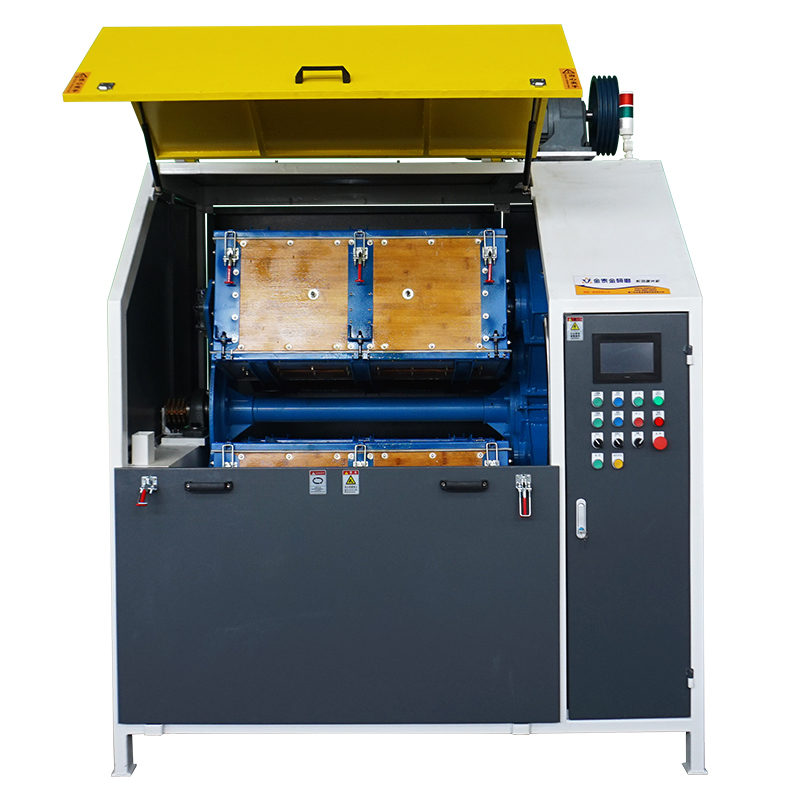
A tub vibrator gives a long, open chamber that accepts parts a bowl cannot, including tube spools, chute sections, small vessels and long fabrications. The part can be repositioned, rotated or left static depending on what has to be reached, and the open design makes it easier to watch what is happening to a weld during the cycle. The trade-off is evenness: coverage depends on how the part sits relative to the media mass, so banding and untouched shadow zones are common unless fixture and part orientation are planned. Internal surfaces of a long small-bore tube remain out of reach regardless of tub size. Tub capacity, media volume, how the part is supported and how it is lifted in and out should be settled before the route is accepted.
| Machine route | Where it fits | What it will not do |
|---|---|---|
| Disc finishing machine | High-energy work on flat faces, flanges and convex zones where material removal or fast refinement is wanted. | Poor reach into recesses and around complex geometry, and it can dish a flat face if the cycle is not controlled. |
| Centrifugal barrel finishing machine | Higher-energy cycles that shorten the time to blend an edge or refine a small part in quantity. | The added energy increases over-rounding and imprinting risk, and delicate or mixed-size loads need careful planning. |
| Dry polishing machine and dryer | Dry burnishing where a wet cycle is unwanted, and drying parts after a wet cycle so crevices do not stay wet. | Removes no oxide and needs dust extraction; a dryer manages water, it does not change the finish left by the wet stage. |
| Barrel finishing machine, rotary barrel tumbler | Large batches of small robust fittings, fasteners and valve trim that can tumble freely without damage. | Part-on-part contact is unavoidable, and fine threads, sealing lips and thin diaphragms are poor candidates. |
Media that leaves the chamber with the parts is a defect, not a housekeeping issue, so separation is designed rather than improvised. Screens sized below the smallest medium and above the largest acceptable chip, magnetic separators for steel media, and a counted retrieval step for any feature that can trap a piece all belong in the plan. Media wear management is the other half: as ceramic wears the load loses cut, so a schedule for top-up, screening out fines and removing broken pieces keeps the process from drifting. Compound carryover into threads, gasket grooves and tube ends is controlled by rinse volume, rinse water quality, orientation while draining and drying. Sludge and spent compound disposal is a production cost and a housekeeping discipline that should be costed before a line is specified.
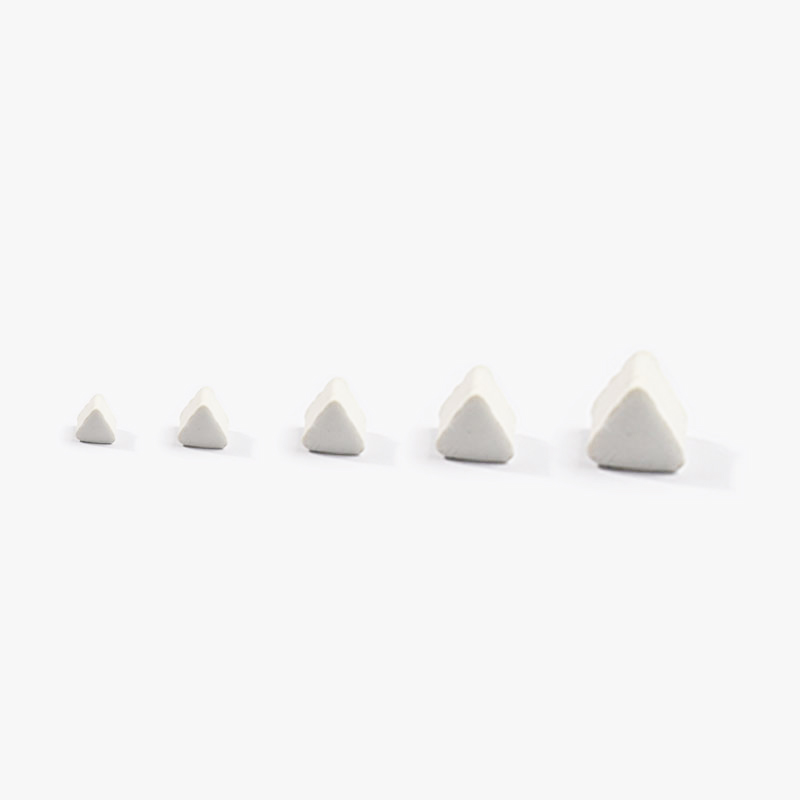
| Media | Best fit | Watch out for |
|---|---|---|
| Grinding media, coarse alumina-based | Removing a proud weld cap, heavy scale and heat tint before a refinement stage on accessible external surfaces. | Leaves a coarse scratch pattern that must be refined, removes material fast, and can gouge thin sheet or a soft alloy. |
| Steel media, balls and diagonals | Bright surface refinement on robust stainless parts where a dense medium is wanted to work into recesses. | Can transfer iron to stainless, imprint soft or thin features, flatten a deliberate edge radius, and needs magnetic recovery. |
| Ceramic media, small cylinders and spheres | General deburring and light radius work on hygienic fittings, with less edge cutting than an angle-cut shape. | Small sizes lodge in gasket grooves and drilled openings, and a sphere refines slowly where oxide is thick. |
| Plastic media, cones and triangles | Gentle edge blending and cosmetic refinement on softer non-ferrous fittings, thin sections and delicate parts. | Cannot remove heat tint, mill scale or a weld cap, so it must follow the operation that does that work. |
Banding, patchy gloss and untouched shadow zones come from the load, not from the medium. Parts sitting in a dead corner of a chamber, a tub fixture that holds a weld away from the media mass, a load that is too full or too empty, or a cycle cut short so only the accessible faces were refined will all produce a finish that fails when the whole surface is examined. The failure is easy to miss because the first glance lands on the brightest area. Detection is systematic: roughness readings at several marked locations rather than one, photographs at fixed angles around the part, and a borescope record of internal surfaces at an agreed view. Comparing a part from the top and the bottom of the load shows the spread quickly.
| Failure mode | Likely cause | How to catch it |
|---|---|---|
| Ceramic or steel media fragments embedded in the surface | Chipped or worn media, excessive cycle energy on a soft or thin feature, or a broken piece recirculating in the load. | Inspect under magnification at low angle, screen the media for broken pieces, and check the surface before and after a refinement stage to see whether fragments were present earlier. |
| Media lodged in gasket grooves, threads, blind holes or tube ends | Medium size class too close to the opening size, no masking or plugging, and no counted retrieval step at the end of the cycle. | Count media into and out of the load, use a borescope at an agreed angle plus a pin gauge on critical openings, and weigh or shake parts over a tray to reveal retained pieces. |
| Rust bloom or free-iron staining appearing after finishing | Carbon steel brushes, iron-bearing media, shared racks or contaminated rinse water depositing free iron on a 304 or 316L surface. | Run a ferroxyl-type test or the buyer's own equivalent at agreed locations including crevices and internal surfaces, after rinsing and drying, and record the result with the batch. |
| Compound residue or dried film trapped in crevices and threads | Insufficient rinse volume, a rinse that does not reach the recess, or draining in an orientation that holds fluid in place. | Wipe or swab the recess with a clean white cloth and inspect, run a water-break or residue check on product-contact surfaces, and re-check after changing rinse volume or orientation. |
Adelaide's industrial base is being reshaped around a small number of named precincts. Tonsley Innovation District occupies the 61-hectare site formerly used by Chrysler and Mitsubishi Motors and is focused on automation, software and simulation; mining and energy services; health, medical devices and assistive technologies; and cleantech and renewable energy. Renewal SA, the state's urban renewal authority, also names Lot Fourteen, Adelaide BioMed City, Osborne Naval Shipyard and the Edinburgh Defence Precinct among the strategic precincts it coordinates, and it delivered the $200 million Deep Maintenance and Modification Facility near RAAF Edinburgh for Boeing 737-variant military aircraft. The Defence Teaming Centre provides the defence industry association layer for this base.
The nearest part of that base to this brief is machinery: Tonsley's focus sectors include mining and energy services, and the district is described as setting a standard for advanced manufacturing.
Adelaide's precincts concentrate work where surface condition is inspected rather than assumed: defence aircraft maintenance and modification, naval and defence supply chain fabrication, medical device and assistive technology production, and mining and energy service equipment. Deburring and edge control on machined and sheet-metal parts affect fit-up and fatigue performance in these applications, and cleanliness and residue control matter where components are assembled into medical devices or into equipment that will be inspected against a defence or medical quality system.
An Adelaide buyer should identify whether the part is governed by a defence, medical or general engineering acceptance specification before choosing a finishing process, because that determines the evidence required - edge and surface condition, residue limits, batch traceability - and it is much cheaper to settle before media and equipment are selected than afterwards.
Freight context: Port Adelaide, Adelaide Airport. Adelaide's international sea freight moves through Port Adelaide and air freight through Adelaide Airport. Machines and sample parts consigned to Adelaide clear customs under the ABF regime, and buyers commonly route delivery through a local importer or customs broker who can manage the RCM and declaration steps for in-scope electrical equipment.
Australia and China are parties to the China-Australia Free Trade Agreement (ChAFTA), signed on 17 June 2015 and in force since 20 December 2015; the Australian Border Force maintains a dedicated ChAFTA page and working tariff schedule, and FTAs give importers a route to preferential rates of duty where the rules of origin are met. China was Australia's largest source of imports in 2025 at $130.2b, up 12.5% on 2024, and 56% (69,567) of Australian business importers traded at least once with China in 2020-21. A Chinese supplier of finishing machines, media or compounds is therefore shipping into Australia's single largest import stream, and preferential duty depends on origin documentation rather than on a blanket zero-tariff guarantee for every product line.
Business is conducted in English and Australian industrial buyers are normally registered companies with an ABN that contract through a local importer or a licensed customs broker rather than directly with an overseas manufacturer. Because the first Australian supplier of in-scope electrical equipment becomes the legally responsible supplier, Chinese manufacturers are typically asked to provide test evidence, a compliance folder and a declaration so that their Australian importer can register and mark the product. Quotation and contracting expectations centre on a clear commercial entity, correct HS/tariff classification, documented country of origin for preferential duty, and an explicit statement of what is included in the delivered price and what is not.
SurfacePolish supplies from Xiamen, China. The buyer's own destination rules, conformity marking, tariff classification and documentation responsibilities stay with the buyer; confirm them against the authorities named above before ordering.
Acceptance has to exist before finishing begins, otherwise every batch becomes a negotiation about appearance. Write the requirement per zone: which surfaces are product-contact, what roughness band applies to each, which edges keep a radius, which faces stay flat, what cleanliness and residue condition is required, and which features come back untouched. Name the inspection method and instrument for each requirement and the person who accepts or rejects. Where a requirement comes from a design code or a customer specification, the buyer's own quality function states and verifies it. A first article fully inspected and retained as the physical reference removes most later argument, particularly on welds, where a kept part says far more than a written description. Re-confirm the requirement whenever drawing, material or upstream fabrication changes.
A sample trial reports what was observed on the parts tested under the settings used, and that is the whole of it. It cannot promise a roughness value, an edge dimension, a cycle time, a throughput, a cost per part or a delivery date, and it does not qualify a machine, medium, compound or process for food contact, hygienic service or any regulated application. A handful of parts does not represent production variation in material, welding or fit-up, and performance in service, including corrosion behaviour after cleaning and any passivation step, is not established by a finishing trial. What a trial does give is evidence: how a route behaved on real geometry, which zones it reached, what the surface looked like, and where a mechanical route runs out of reach. The decisions that follow belong with the buyer.
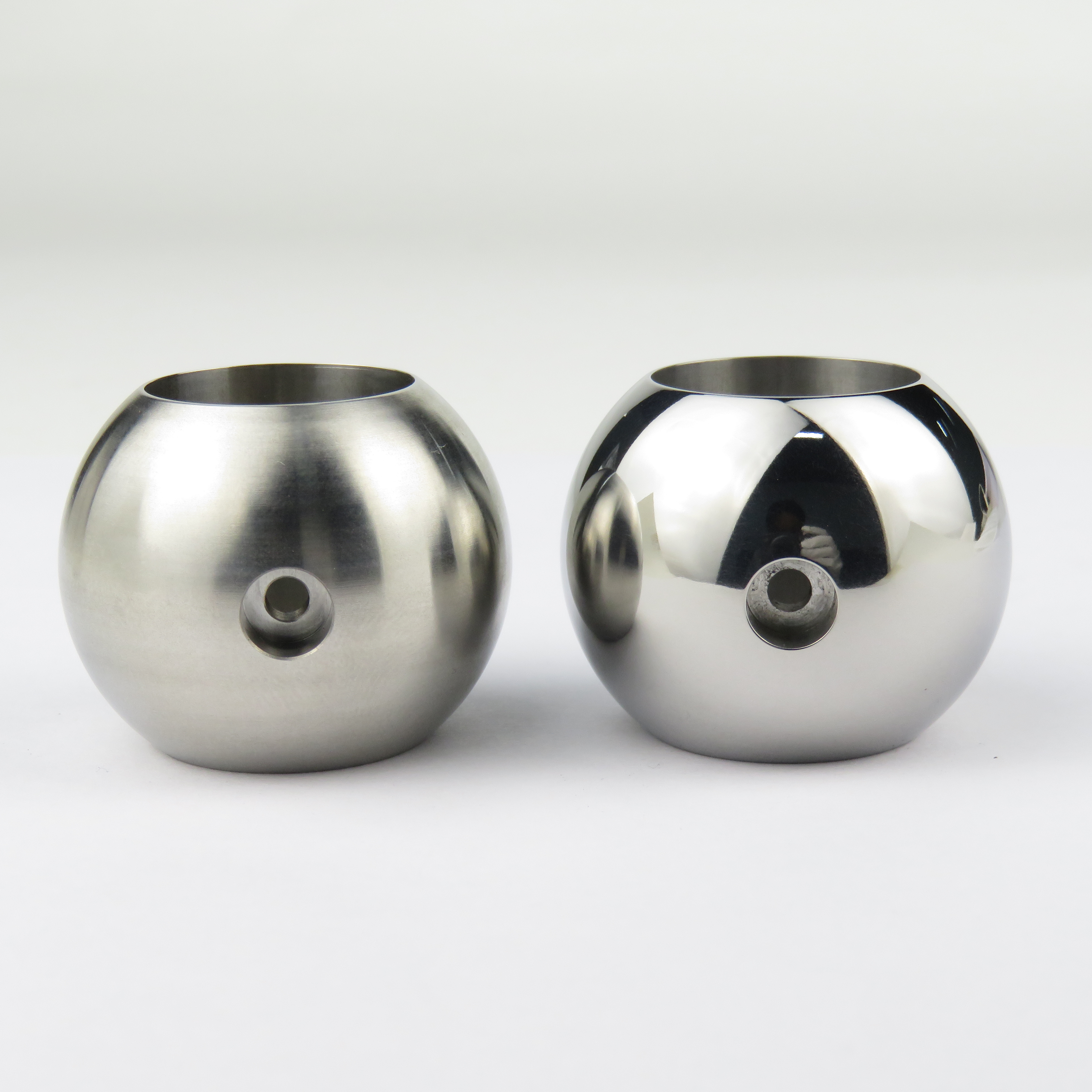
Start from geometry, not finish numbers. Map every internal surface, its bore diameter, its depth and whether a tool or medium can enter it; that map usually settles which zones an electrochemical route can level and which a mechanical route can touch. Then compare what each route leaves behind: a mechanically worked surface can carry a scratch pattern and embedded debris, while an electrochemical route changes the surface uniformly but brings its own process controls and an acid step. Cost per part, downstream passivation and your own inspection evidence should drive the decision, and a comparison trial at Adelaide can show the mechanical side on your geometry.
No. SurfacePolish supplies finishing machines, media and compounds, and no machine, medium, compound or process is presented as approved, certified or qualified for food contact, hygienic service or any regulated application. Certification of that kind depends on the finished equipment, its design, its materials and the way it is operated, and it is defined and verified by your own quality and regulatory functions against the requirements that apply to your market. What a supplier can provide is equipment and consumables information, including composition data for media and compounds, so your own assessment has something to work from. A sample trial is not a certification.
No. SurfacePolish supplies mechanical finishing equipment, media and compounds across borders and runs a free sample trial on parts sent to the factory in Xiamen. Electropolishing is an electrochemical operation that is neither supplied nor performed, and no chemical pickling or passivation step is offered either. Where the two routes are compared on this page it is to help a buyer decide what they actually need, not to present a mechanical process as a substitute. If your specification requires an electrochemical finish, that work has to be sourced and verified by you.
Use Adelaide, Australia as the destination on the enquiry and state whether the deliverable is equipment, media and compound, a representative sample review or a line concept. A destination does not imply local stock, a local service point or a local delivery time.
Adelaide buyers reference Australian Standards (AS) and joint AS/NZS standards through their own quality and safety systems, and these standards are voluntary unless state or Commonwealth legislation refers to them. Defence and medical work adds customer-specified quality and traceability requirements on top of that, while in-scope electrical equipment must be registered under the EESS and marked with the Regulatory Compliance Mark to AS/NZS 4417.1 and AS/NZS 4417.2.
Sources were retrieved on 2026-09-29 and describe the local industrial and trade context only. They do not evidence any SurfacePolish project, shipment, installation or service in Adelaide.
The buyer needs the plate surfaces and groove edges finished without distorting the corrugations or changing groove depth.
Send the material, dimensions, approximate weight, batch quantity, the incoming condition and photographs of the difficult features. Mark which features must not be contacted by media and state how the result will be inspected. This form carries source reference PSEO-0744; quote it if you prefer an additional manual reference.
Open the SurfacePolish enquiry form Email a prepared enquiry
No price, lead time, certification or result is promised here. Confirm whether a sample trial is available for the specific part and what the trial can and cannot show.
Page PSEO-0744 · revised 2026-09-29 · cross-border equipment, media and scoped sample review. City context is sourced and cited above.
Use this local checker to identify missing part and inspection information. It prepares a technical-review brief; it does not approve a machine, process recipe or production result.
Complete the part details to prepare a review brief.
Email : info@surface-polish.com


 IPv6 network supported


 +86-592-2381506