A conveyor maker in Arnhem, Netherlands serving food processing equipment has a thin 304 chute with long weld seams and a folded edge that carries stiffness. Weld dressing is wanted, but a heavy tumbling cycle would thin the sheet and round the fold, so the route must suit the material thickness. SurfacePolish supplies finishing equipment, media and compounds across borders and runs a free sample trial on parts sent in. This brief is written for a buyer in Arnhem working on food processing equipment; it describes equipment, media and a scoped sample review, not a local polishing service.
Where will roughness be measured, with which cut-off and in which direction, and does that location represent the surface the product actually sees?
Which internal surfaces can a mechanical route physically reach, and what happens to the zones it cannot?
What must the finished surface survive in service, including cleaning cycles, and how will that be checked without leaning on a finishing trial?
The first screening question is which surfaces actually touch product, which sit adjacent to it and which are structural. A tank shell, a tube bore, a gasket seat and an agitator face carry different requirements from a mounting frame or a nameplate bracket, and one blanket finish call on the drawing usually means the wrong zones get the most attention. Mark each zone and state what has to be true of it: oxide-free, inside a stated roughness band, flat at a sealing face, unbroken at an edge radius. Product-contact geometry is where a mechanical route is judged, because heat tint, crevices and unreachable internal surfaces decide whether the surface can be brought to the condition the buyer's own specification describes. Surface classification also drives inspection, since reading roughness on a structural frame says nothing about a weld inside a vessel.
Plastic media in cones, triangles and cylinders cuts gently and is chosen when the requirement is a light edge blend or a cosmetic touch rather than weld-zone oxide removal. It suits softer non-ferrous fittings, thin sections and parts that must not lose measurable material, and it can wear more predictably than ceramic in some applications. What it cannot do is remove heat tint, mill scale or a proud weld cap, so it belongs late in a sequence, after the aggressive work, or on parts that never carried those conditions. Dry media such as walnut shell and corn cob works by light abrasion and burnishing on a dry machine, produces dust that needs extraction, and leaves a different surface character from a wet abrasive cycle. Neither plastic nor dry media substitutes for the operation that removes oxide.
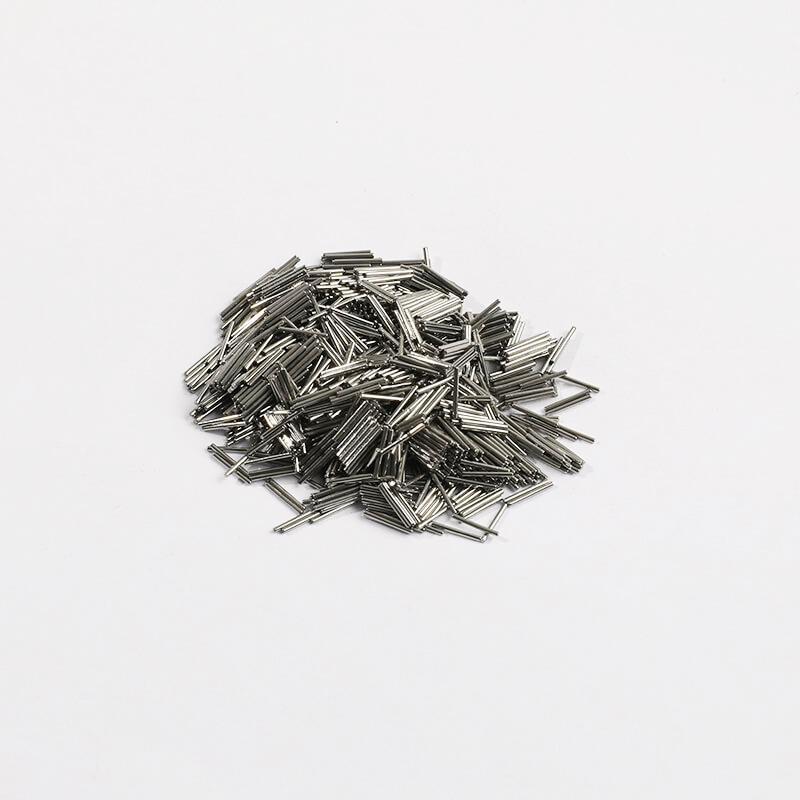
| Media | Best fit | Watch out for |
|---|---|---|
| Ceramic media, angle-cut triangles | Heavier weld-zone refinement and edge blending on 304 and 316L parts where a corner or a toe line has to be reached. | Wears down and changes its effective size class, produces sludge, and can over-round a thin edge or a soft detail. |
| Grinding media, coarse alumina-based | Removing a proud weld cap, heavy scale and heat tint before a refinement stage on accessible external surfaces. | Leaves a coarse scratch pattern that must be refined, removes material fast, and can gouge thin sheet or a soft alloy. |
| Dry media, walnut shell and corn cob | Light dry burnishing and cosmetic refinement where retained water in a crevice or assembly is a problem. | Generates dust requiring extraction, removes no oxide, and leaves a surface character different from a wet abrasive cycle. |
| Steel pins and fine media for magnetic finishing | Small precise components, short bores, slots and blind features that shaped tumbling media cannot enter. | Limited to small parts, will not remove a proud weld cap, and pins must be counted and recovered from every opening. |
A bowl vibrator keeps a visible, continuously moving load and suits mid-sized parts where edges, weld toes and accessible external surfaces need blending and refinement. Energy is set by amplitude, motor speed and load fill, so one machine can deburr aggressively or refine gently, and the effect on a weld toe is judged by how much cap material the buyer is willing to lose. The bowl reaches external geometry and shallow recesses well, and it can carry compartments or fixtures to limit part-on-part contact on thin or appearance-critical pieces. It does not reach the inside of a long tube or a narrow crevice, and chamber geometry caps part size. Media class and fill level matter more than nominal machine size: an under-filled chamber raises impingement risk, and an over-filled one starves the part of contact.
| Machine route | Where it fits | What it will not do |
|---|---|---|
| Grinding finishing machine | Removing a proud weld cap, heavy scale and heat tint before any tumbling or refinement stage. | Leaves a scratch pattern that needs refining, can smear oxide, and iron-bearing tooling can deposit free iron on stainless. |
| Barrel finishing machine, rotary barrel tumbler | Large batches of small robust fittings, fasteners and valve trim that can tumble freely without damage. | Part-on-part contact is unavoidable, and fine threads, sealing lips and thin diaphragms are poor candidates. |
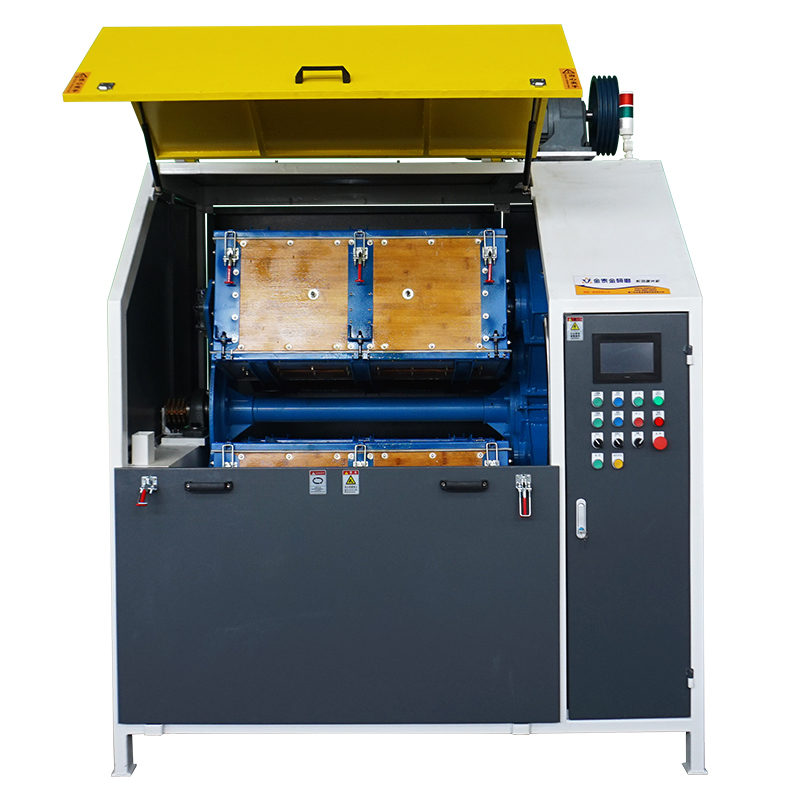
| Vibratory finishing machine, bowl type | Edge and weld-toe blending plus surface refinement on mid-sized parts, with a visible load and adjustable energy. | Chamber geometry caps part size, and the inside of a long tube or a narrow crevice stays out of reach. |
| Dry polishing machine and dryer | Dry burnishing where a wet cycle is unwanted, and drying parts after a wet cycle so crevices do not stay wet. | Removes no oxide and needs dust extraction; a dryer manages water, it does not change the finish left by the wet stage. |
Heat tint is an oxide layer whose thickness varies across a weld, thickest where the metal was hottest and often receding into a crevice or along the toe line where no medium reaches. A mechanical cycle can polish the visible cap and leave the toe untouched, so a part passes a glance and still carries oxide in exactly the location that matters. Colour is a practical indicator: straw and light blue suggest a thinner film, while grey and black scale suggests a heavier one that needs real removal before any refinement means anything. Detection is by inspection at magnification, comparison with an agreed visual reference, and the buyer's own test for free iron or passive condition where their specification asks for one. Photograph the toe at a fixed angle before and after each stage.
| Failure mode | Likely cause | How to catch it |
|---|---|---|
| Media lodged in gasket grooves, threads, blind holes or tube ends | Medium size class too close to the opening size, no masking or plugging, and no counted retrieval step at the end of the cycle. | Count media into and out of the load, use a borescope at an agreed angle plus a pin gauge on critical openings, and weigh or shake parts over a tray to reveal retained pieces. |
| Ceramic or steel media fragments embedded in the surface | Chipped or worn media, excessive cycle energy on a soft or thin feature, or a broken piece recirculating in the load. | Inspect under magnification at low angle, screen the media for broken pieces, and check the surface before and after a refinement stage to see whether fragments were present earlier. |
| Cross-contamination from tooling, racks or media shared with carbon steel | No dedicated stainless area, undocumented consumable grades, or media stored where mild steel fabrication dust settles. | Audit which tools, racks and media touch the part, record their grades, store media covered and segregated, and confirm cleanliness with the buyer's own test after a tooling change. |
| Heat tint or oxide remaining at the weld toe and in the crevice beside it | Cycle too gentle or too short for the oxide thickness, or a medium size class too large to enter the toe line. | Inspect the toe at magnification under raking light against an agreed visual reference, photograph at a fixed angle before and after, and apply the buyer's own free-iron or passive-condition method where specified. |
Arnhem's industrial identity is cleantech and energy. Cleantech Park Arnhem, formerly Industriepark Kleefse Waard (IPKW), is a 90-hectare business park for companies working on clean technology across four themes: energy, materials, mobility and human capital. The park generates 6.6 million kWh of electricity a year from 24,000 solar panels and 8.5 million kWh from wind power, runs a bioheat installation, provides 96 electric-vehicle charging points, and is a co-founder of Connectr, a collaboration between education, government and industry; the hydrogen cluster involves partners including HyGear, HAN Automotive and the municipality of Arnhem. Oost NL is the regional development agency for Gelderland and Overijssel, the two provinces in which Arnhem sits.
The nearest part of that base to this brief is energy: Cleantech Park Arnhem states that companies on the park work on generating, storing, distributing and efficiently using energy, including smart energy grids and storing energy in batteries or hydrogen, and that it is a co-founder of the Connectr energy-transition collaboration.
Cleantech and hydrogen technology work at Kleefse Waard involves stainless and aluminium components for electrolysers, pressure systems, valves, heat exchangers and battery modules, where cleanliness, edge quality and surface condition affect sealing, welding and corrosion performance. Mobility and battery work adds machined parts where burrs must be removed without altering critical dimensions.
A buyer should settle whether parts are pre-weld and pre-coating (where a defined Ra plus freedom from burrs and contamination is essential) or finished parts needing a functional or cosmetic edge radius, and whether hydrogen or pressure service imposes additional cleanliness limits on the process.
Freight context: Cleantech Park Arnhem (former Industriepark Kleefse Waard), 90 hectares. Arnhem has no seaport; it is an inland industrial location served by road and rail, with the port of Rotterdam as the nearest deep-sea gateway for machinery arriving from outside the EU. Imported machines must still be declared to Dutch Customs at the point of entry and the importer needs an EORI number.
Goods entering the Netherlands from outside the EU must be declared to Dutch Customs (Douane, part of the Belastingdienst); the importer needs an EORI number, import duty is calculated on the customs value (goods value plus transport and insurance to the EU external border), and import VAT is paid at the border unless an article 23 permit or a fiscal representative is used. CE marking is mandatory for most machinery placed on the EEA market: the Machinery Regulation replaced the Machinery Directive and manufacturers must comply with the new requirements by 20 January 2027. The importer must verify that the conformity assessment was carried out correctly, that CE marking is applied properly, that the technical file is present and complete, and that the user manual is supplied in the correct language; the manufacturer's EC Declaration of Conformity must be kept. Dutch companies imported over EUR 140 billion of machinery and appliances in 2024, 24% of total Dutch goods imports.
Business is conducted in Dutch, but engineering and procurement communication in these sectors is routinely handled in English. Buyers are KVK-registered legal entities and expect a clear commercial entity to contract with, an EORI number for customs, correct HS/TARIC classification, and a full CE technical file including the EC Declaration of Conformity and a manual in the correct language; a technical construction file held by the manufacturer is normally part of the qualification pack. For EU-internal supply the invoice carries 0% VAT with the customer's VAT identification number and the customer accounts for 21% Dutch VAT in its own return, so a Chinese seller shipping directly from outside the EU must be clear about who is importer of record and who carries the duty and import VAT. Trade and investment support is organised through bodies such as KVK, RVO, the regional development agencies and the Trade and Innovate NL network, and the Dutch technology industry is represented by FME.
SurfacePolish supplies from Xiamen, China. The buyer's own destination rules, conformity marking, tariff classification and documentation responsibilities stay with the buyer; confirm them against the authorities named above before ordering.
Mechanical finishing leaves media, compound, swarf and water wherever they were not removed, so cleanliness is part of acceptance rather than a separate concern. Agree how the part is rinsed, how it is dried, what residue check applies, and whether a water-break or wipe test is used on product-contact surfaces. Crevices, threads, gasket grooves and tube ends deserve their own check because that is where material collects. If the buyer's specification requires chemical passivation, that is a separate downstream operation with its own method and verification, and mechanical finishing neither performs nor replaces it, though the surface condition it leaves affects how that step behaves. Where free iron is a concern, the buyer's own test method and critical locations define acceptance, and both belong in writing before a batch is accepted.
A trial load is small, hand-observed and run by someone who knows what is being tested; a producing line is larger, repeatable and operated by whoever is on shift. That gap is where results are lost. Fix the load fill level, the part-to-media ratio, the fixture positions and the cycle time as written settings, then check that a shift operator can reproduce them. Expect drift from media wear, compound concentration, water quality and part mix, and put a check in place that detects it before a batch is finished rather than after. Mixed-size loads, changes in upstream welding and new material heats are all reasons to re-verify. Where a finish depends on a hand operation, variation between operators becomes part of process capability and has to be managed, not assumed away.
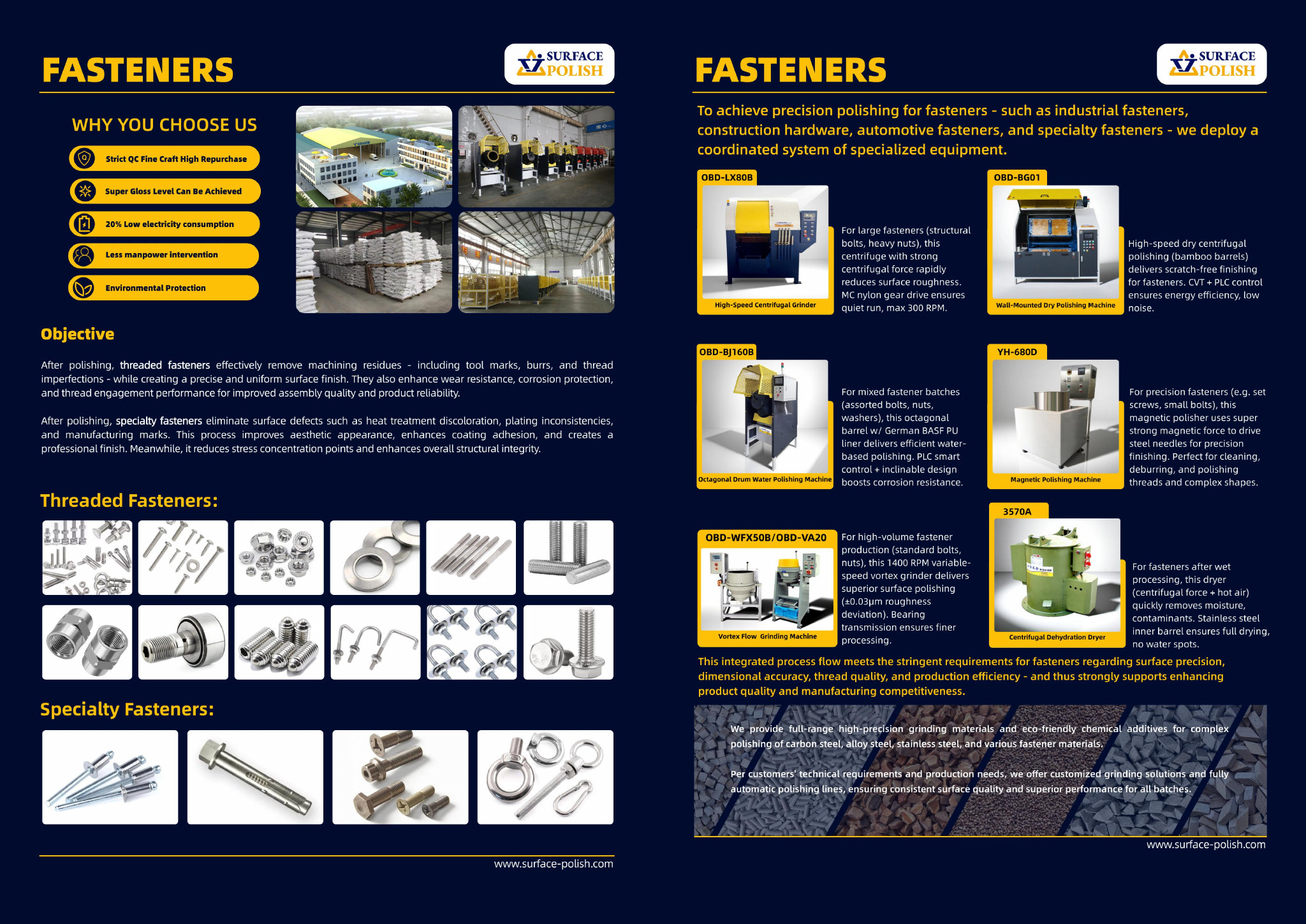
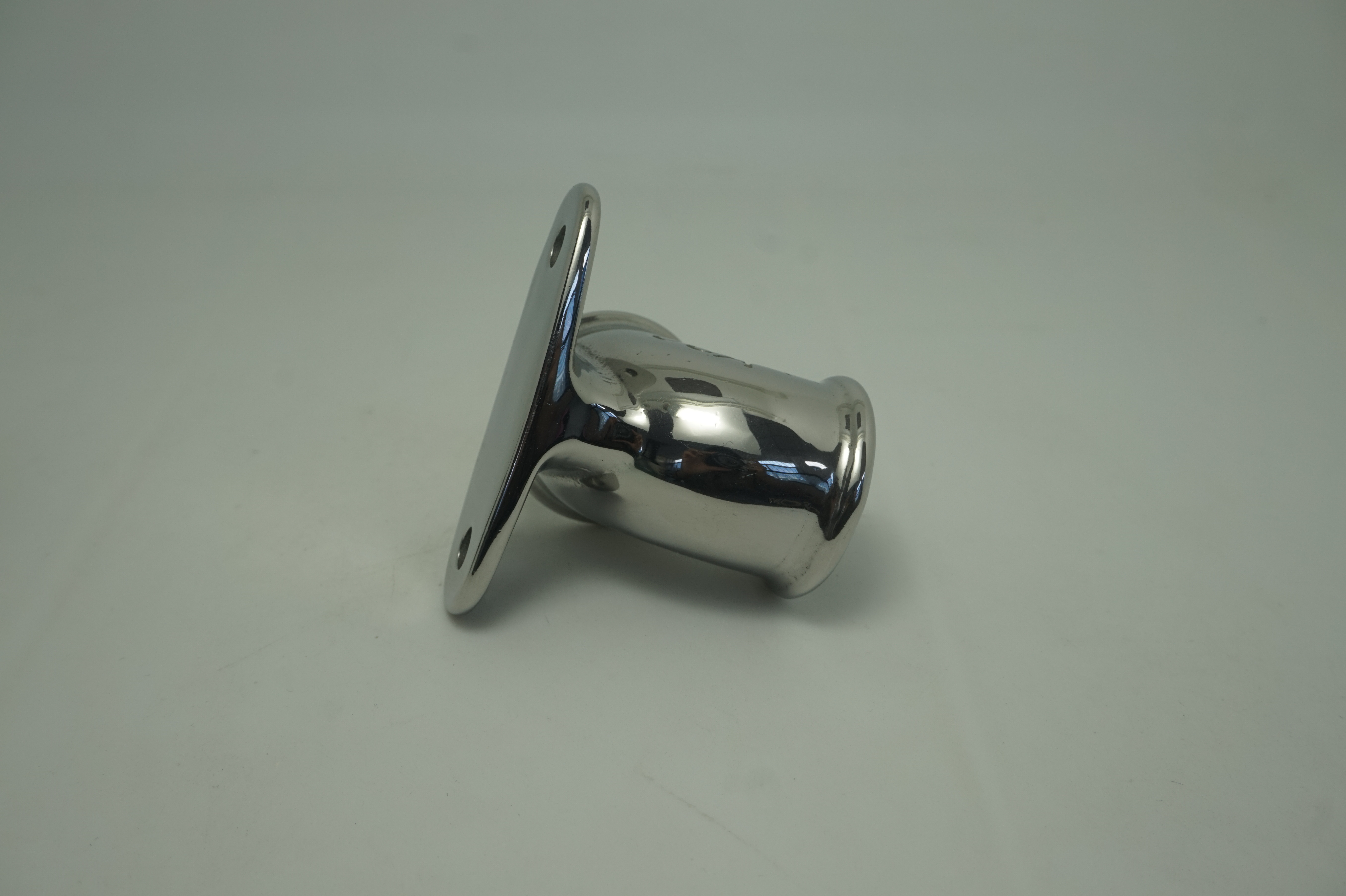
Send representative parts, including the most difficult geometry in the family, and SurfacePolish runs them through a mechanical finishing route and returns the tested parts with observations and a proposed media, compound and cycle direction. The report describes what was seen on those parts under those settings. It is not a guarantee of a roughness value, an edge dimension, a cycle time, a capacity, a cost or a delivery date, and it does not qualify a process for any regulated use. Production variation in material, welding and fit-up is not represented by a small trial load, so your own verification still decides.
It can, and the source is usually the tooling or the consumable rather than the stainless itself. Carbon steel brushes, wire wheels, blasting grit, iron-bearing media, shared racks and contaminated rinse water can all deposit free iron that appears later as a rust bloom. Control means dedicated stainless tooling and racks, documented grades for everything that touches the surface, and a cleaning step after mechanical work. Detection is by a ferroxyl-type test or an equivalent method chosen by your own quality function, applied at agreed locations including crevices. The acceptance decision and its critical locations remain yours.
Chloride is the first thing to establish on stainless, because a chloride-bearing fluid left in contact with a sensitised or stressed surface is a pitting risk, and residue trapped in a crevice is worse than residue on an open face. Ask for compound composition data and set your own limit against your material and service conditions, and check the rinse water too, since a plant supply can carry chloride that the compound does not. Concentration and flow affect how much residue remains, and rinsing and drying determine whether it stays. Mechanical finishing does not remove the need for those limits; it makes them part of the specification.
Use Arnhem, Netherlands as the destination on the enquiry and state whether the deliverable is equipment, media and compound, a representative sample review or a line concept. A destination does not imply local stock, a local service point or a local delivery time.
Buyers here would reference the CE machinery regime (Machinery Regulation from 20 January 2027) and the Dutch/EN-ISO surface-finishing standards published by NEN, such as NEN-EN-ISO 2080. Hydrogen and pressure-equipment projects typically add their own material, cleanliness and traceability requirements on top of those base standards.
Sources were retrieved on 2026-09-29 and describe the local industrial and trade context only. They do not evidence any SurfacePolish project, shipment, installation or service in Arnhem.
The buyer wants the weld seams dressed and the sheet refined without thinning the panel or softening the folded edge.
Send the material, dimensions, approximate weight, batch quantity, the incoming condition and photographs of the difficult features. Mark which features must not be contacted by media and state how the result will be inspected. This form carries source reference PSEO-0664; quote it if you prefer an additional manual reference.
Open the SurfacePolish enquiry form Email a prepared enquiry
No price, lead time, certification or result is promised here. Confirm whether a sample trial is available for the specific part and what the trial can and cannot show.
Page PSEO-0664 · revised 2026-09-29 · cross-border equipment, media and scoped sample review. City context is sourced and cited above.
Use this local checker to identify missing part and inspection information. It prepares a technical-review brief; it does not approve a machine, process recipe or production result.
Complete the part details to prepare a review brief.
Email : info@surface-polish.com


 IPv6 network supported


 +86-592-2381506