A bulk handling fabricator in Groningen, Netherlands serving food processing equipment has a 2.4 m 304 auger with a helical weld along its flights. The part is far too long for a bowl machine, and its drive-end bore has a tolerance that finishing must not disturb, so the buyer needs a route that suits long geometry. SurfacePolish supplies finishing equipment, media and compounds across borders and runs a free sample trial. This brief is written for a buyer in Groningen working on food processing equipment; it describes equipment, media and a scoped sample review, not a local polishing service.
What must the finished surface survive in service, including cleaning cycles, and how will that be checked without leaning on a finishing trial?
Where will roughness be measured, with which cut-off and in which direction, and does that location represent the surface the product actually sees?
Does the route have to remove heat tint and restore a passive condition, or refine a surface that is already clean, and who verifies that difference?
Reachability decides the route more often than the finish target does. Measure the internal diameter of every tube, the depth and diameter of every blind hole, the width of every crevice and gasket groove and the corner radius at every internal weld. Ratios matter more than absolute size: a bore that is wide but very deep, or a groove narrower than the smallest available medium, stays untouched by any tumbling process however long the cycle runs. Ask whether a borescope can be inserted and at what angle, because a surface that cannot be seen cannot be inspected after finishing. List the zones a machine cannot reach, and decide in advance whether those zones are finished by another method, accepted as-is with a stated condition, or designed out of the part.
Where a weld cap stands proud and has to come down, a grinding finishing machine removes material far faster than any tumbling route, and a disc finishing machine delivers high energy to flat faces and convex zones. This is the stage that takes off heat tint and the top of the cap, but it is also where damage is created: an over-ground toe leaves an undercut that traps product, a fast wheel can smear oxide into the surface rather than lift it, and abrasive tooling that has touched carbon steel can deposit free iron. Ground zones then need refining, because the scratch pattern left by coarse abrasive is not a finish. The sequence is what matters: remove the cap, blend the toe, refine the zone, then verify. Grinding alone rarely satisfies a stated product-contact surface requirement.
| Machine route | Where it fits | What it will not do |
|---|---|---|
| Dry polishing machine and dryer | Dry burnishing where a wet cycle is unwanted, and drying parts after a wet cycle so crevices do not stay wet. | Removes no oxide and needs dust extraction; a dryer manages water, it does not change the finish left by the wet stage. |
| Magnetic finishing machine | Small precise parts and short internal features such as slots, small bores and blind recesses. | Part size and surface area are limited, large panels and long tubes are out of scope, and it will not dress a weld cap. |
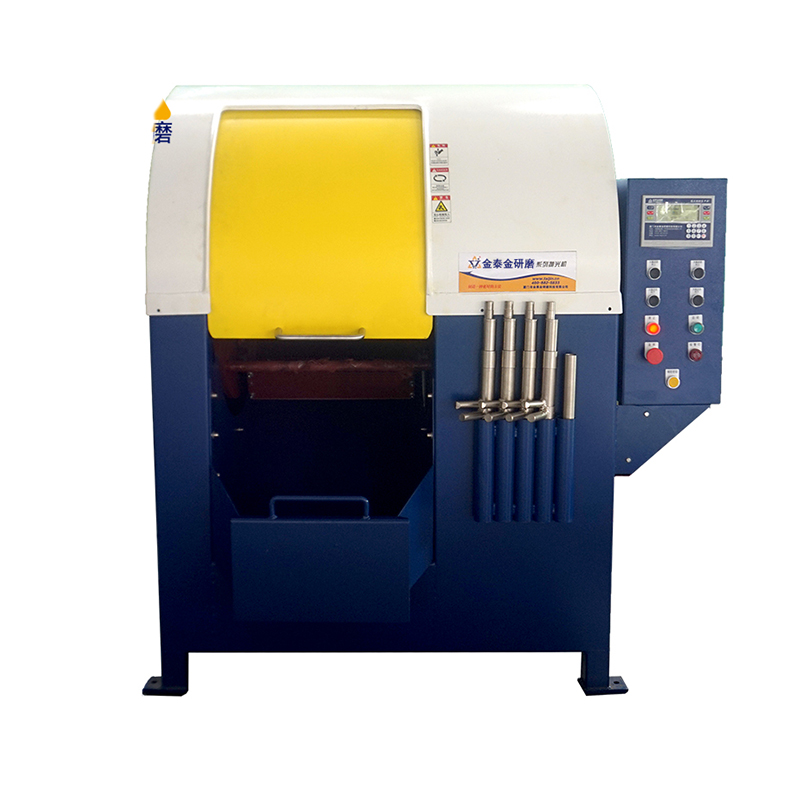
| Grinding finishing machine | Removing a proud weld cap, heavy scale and heat tint before any tumbling or refinement stage. | Leaves a scratch pattern that needs refining, can smear oxide, and iron-bearing tooling can deposit free iron on stainless. |
| Barrel finishing machine, rotary barrel tumbler | Large batches of small robust fittings, fasteners and valve trim that can tumble freely without damage. | Part-on-part contact is unavoidable, and fine threads, sealing lips and thin diaphragms are poor candidates. |
Media that leaves the chamber with the parts is a defect, not a housekeeping issue, so separation is designed rather than improvised. Screens sized below the smallest medium and above the largest acceptable chip, magnetic separators for steel media, and a counted retrieval step for any feature that can trap a piece all belong in the plan. Media wear management is the other half: as ceramic wears the load loses cut, so a schedule for top-up, screening out fines and removing broken pieces keeps the process from drifting. Compound carryover into threads, gasket grooves and tube ends is controlled by rinse volume, rinse water quality, orientation while draining and drying. Sludge and spent compound disposal is a production cost and a housekeeping discipline that should be costed before a line is specified.
| Media | Best fit | Watch out for |
|---|---|---|
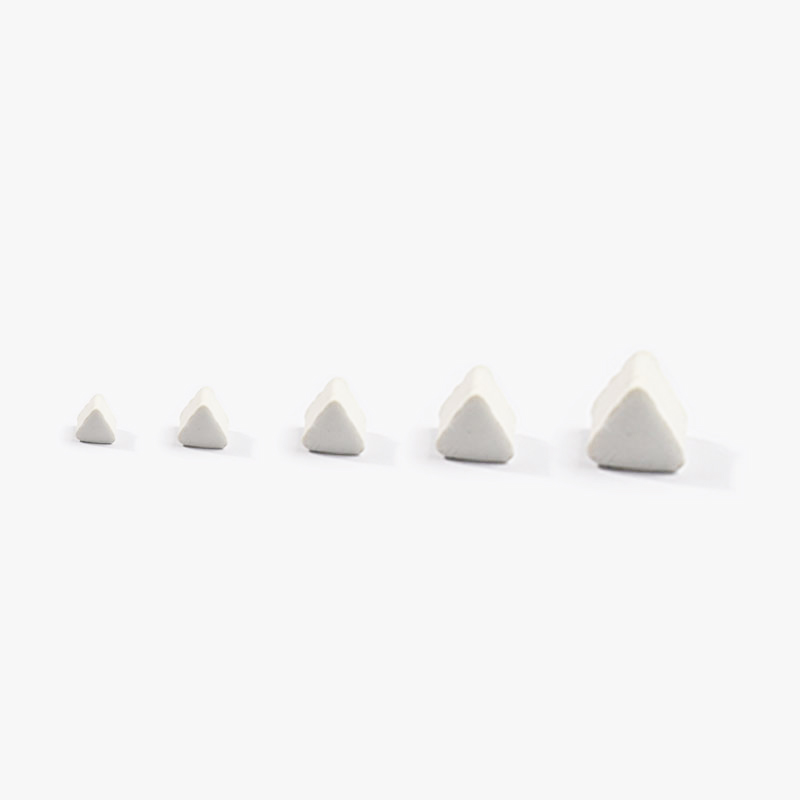
| Ceramic media, small cylinders and spheres | General deburring and light radius work on hygienic fittings, with less edge cutting than an angle-cut shape. | Small sizes lodge in gasket grooves and drilled openings, and a sphere refines slowly where oxide is thick. |
| Liquid compound, abrasive cleaning slurry family | Cleaning, descaling and fine abrasive work through the cycle, with dosing and flow matched to the load and the alloy. | Chloride content and pH matter on stainless, foam can cushion the cut, and residue left in a crevice becomes a later defect. |
| Dry media, walnut shell and corn cob | Light dry burnishing and cosmetic refinement where retained water in a crevice or assembly is a problem. | Generates dust requiring extraction, removes no oxide, and leaves a surface character different from a wet abrasive cycle. |
| Steel media, balls and diagonals | Bright surface refinement on robust stainless parts where a dense medium is wanted to work into recesses. | Can transfer iron to stainless, imprint soft or thin features, flatten a deliberate edge radius, and needs magnetic recovery. |
Banding, patchy gloss and untouched shadow zones come from the load, not from the medium. Parts sitting in a dead corner of a chamber, a tub fixture that holds a weld away from the media mass, a load that is too full or too empty, or a cycle cut short so only the accessible faces were refined will all produce a finish that fails when the whole surface is examined. The failure is easy to miss because the first glance lands on the brightest area. Detection is systematic: roughness readings at several marked locations rather than one, photographs at fixed angles around the part, and a borescope record of internal surfaces at an agreed view. Comparing a part from the top and the bottom of the load shows the spread quickly.
| Failure mode | Likely cause | How to catch it |
|---|---|---|
| Heat tint or oxide remaining at the weld toe and in the crevice beside it | Cycle too gentle or too short for the oxide thickness, or a medium size class too large to enter the toe line. | Inspect the toe at magnification under raking light against an agreed visual reference, photograph at a fixed angle before and after, and apply the buyer's own free-iron or passive-condition method where specified. |
| Compound residue or dried film trapped in crevices and threads | Insufficient rinse volume, a rinse that does not reach the recess, or draining in an orientation that holds fluid in place. | Wipe or swab the recess with a clean white cloth and inspect, run a water-break or residue check on product-contact surfaces, and re-check after changing rinse volume or orientation. |
| Discolouration, water spotting or flash rust after the cycle | Contaminated or hard rinse water, incomplete draining of a crevice, or a part left wet before drying. | Inspect after drying under consistent lighting, check the rinse water source and quality, and verify that orientation during draining lets every recess empty. |
| Thin-wall distortion or dishing on tanks, panels and chutes | Heavy media load striking unsupported thin sheet, or a chamber fill level that lets parts fall rather than tumble. | Measure wall flatness and key dimensions before and after, inspect under raking light for oil-canning, and run the test at the production fill level rather than a light one. |
Groningen's industrial base is the Eemsdelta port and industry complex. Groningen Seaports manages the industrial areas of the Eemshaven and the port of Delfzijl, including the inland harbours Farmsumerhaven and Oosterhornhaven, the business parks Fivelpoort, Farmsumerpoort, De Delta, Weiwerd and MKB Park Eemshaven, and Groningen Railport in Veendam. The company concentrates on two clusters: energy and energy-related activity, circular industry and biobased chemistry; its stated 2030 vision is that the Eemshaven's energy and data sector is of international importance and that the chemical and recycling industry in Delfzijl is fully biobased. It runs the Chemport Innovation Center for scale-ups and participates in the Portlands Campus with maritime, energy and chemistry companies and knowledge institutions.
The nearest part of that base to this brief is machinery: The Chemport Innovation Center hosts scale-up companies testing production innovations, including Butter Bridge, which is building a pilot plant to test an electric melting furnace for recovering critical raw materials from industrial by-products and residual streams.
The Eemshaven and Delfzijl complex combines energy installations, offshore wind logistics, chemical and recycling plants and maritime services, so finishing demand is dominated by maintenance and fabrication work: pipe spools, valves, pump and turbine components, heat-exchanger parts and structural steel, where weld dressing, edge control and surface preparation before coating matter. Stainless and corrosion-resistant alloys are common because of the marine and chemical service environment.
A buyer here should settle the material and environment combination first — carbon steel for structures versus stainless or duplex for wet, saline or chemical service — and then decide whether the requirement is pre-coating surface preparation or in-service edge and burr control.
Freight context: Eemshaven (seaport and offshore wind logistics), Port of Delfzijl, Farmsumerhaven and Oosterhornhaven inland harbours, Groningen Railport in Veendam. Groningen Seaports operates both sea and inland harbours plus a rail terminal, and handled 116 offshore wind foundations in 2025, so the region has direct deep-sea and project-cargo capability for machinery. Rail freight to the region declined in 2025 after DB Cargo scaled back its Delfzijl service, which makes road transport the practical default for inland onward movement of machine tools.
The Dutch standards body is NEN (Nederlands Normalisatie-instituut), which publishes and maintains the NEN and NEN-EN-ISO standards; the content of a standard is set by a NEN standards committee made up of the organisations concerned, not by NEN itself. For surface finishing NEN publishes NEN-EN-ISO 2080, which defines the terms for the general types of surface-finishing processes with emphasis on practical use in metal finishing, under the standards committee for metallic coatings and corrosion of metals and alloys. Machinery safety, EMC, low-voltage, ATEX, RoHS and ecodesign requirements reach Dutch buyers through the CE directives and regulations referenced by KVK, with the Machinery Regulation applying from 20 January 2027.
Goods entering the Netherlands from outside the EU must be declared to Dutch Customs (Douane, part of the Belastingdienst); the importer needs an EORI number, import duty is calculated on the customs value (goods value plus transport and insurance to the EU external border), and import VAT is paid at the border unless an article 23 permit or a fiscal representative is used. CE marking is mandatory for most machinery placed on the EEA market: the Machinery Regulation replaced the Machinery Directive and manufacturers must comply with the new requirements by 20 January 2027. The importer must verify that the conformity assessment was carried out correctly, that CE marking is applied properly, that the technical file is present and complete, and that the user manual is supplied in the correct language; the manufacturer's EC Declaration of Conformity must be kept. Dutch companies imported over EUR 140 billion of machinery and appliances in 2024, 24% of total Dutch goods imports.
SurfacePolish supplies from Xiamen, China. The buyer's own destination rules, conformity marking, tariff classification and documentation responsibilities stay with the buyer; confirm them against the authorities named above before ordering.
Mechanical finishing leaves media, compound, swarf and water wherever they were not removed, so cleanliness is part of acceptance rather than a separate concern. Agree how the part is rinsed, how it is dried, what residue check applies, and whether a water-break or wipe test is used on product-contact surfaces. Crevices, threads, gasket grooves and tube ends deserve their own check because that is where material collects. If the buyer's specification requires chemical passivation, that is a separate downstream operation with its own method and verification, and mechanical finishing neither performs nor replaces it, though the surface condition it leaves affects how that step behaves. Where free iron is a concern, the buyer's own test method and critical locations define acceptance, and both belong in writing before a batch is accepted.
Media is a consumable with a working life, and treating it as a fixed asset is a common reason a validated-looking process drifts. Plan for screening fines and broken pieces out, topping up to hold the size class and the load volume, and recording what was added and when. Compound concentration, dosing rate and rinse water quality need the same discipline, including a chloride check where the buyer's own requirements limit it, because concentration that creeps upward changes both the cut and the residue left behind. Sludge and spent compound have to be removed on a schedule, not when the chamber looks bad. Store media and compound so they cannot pick up contamination from a carbon steel fabrication area. Write the routine down, because a process that depends on one experienced operator is not yet a line.

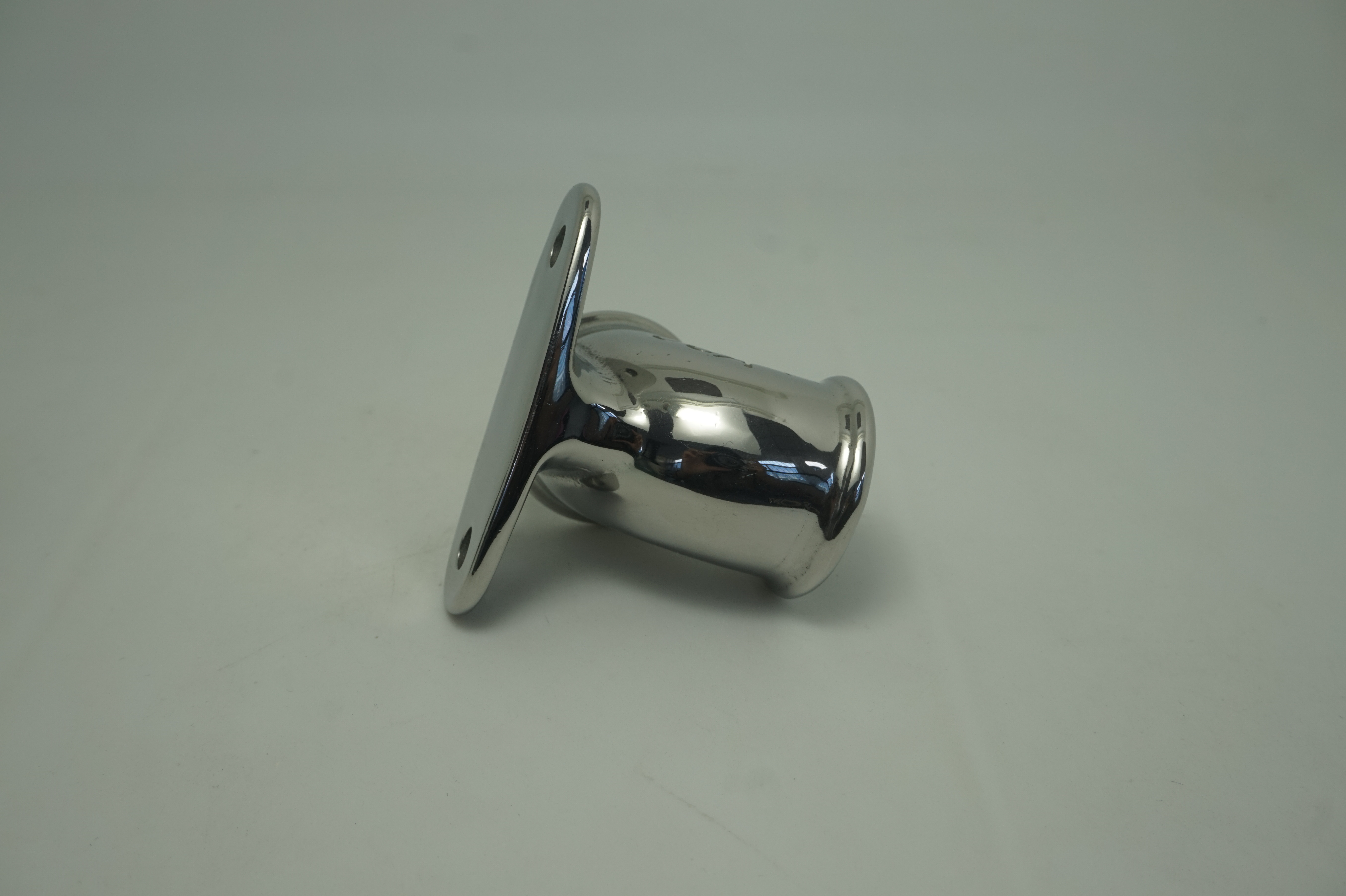
Send representative parts, including the most difficult geometry in the family, and SurfacePolish runs them through a mechanical finishing route and returns the tested parts with observations and a proposed media, compound and cycle direction. The report describes what was seen on those parts under those settings. It is not a guarantee of a roughness value, an edge dimension, a cycle time, a capacity, a cost or a delivery date, and it does not qualify a process for any regulated use. Production variation in material, welding and fit-up is not represented by a small trial load, so your own verification still decides.
It can, and the source is usually the tooling or the consumable rather than the stainless itself. Carbon steel brushes, wire wheels, blasting grit, iron-bearing media, shared racks and contaminated rinse water can all deposit free iron that appears later as a rust bloom. Control means dedicated stainless tooling and racks, documented grades for everything that touches the surface, and a cleaning step after mechanical work. Detection is by a ferroxyl-type test or an equivalent method chosen by your own quality function, applied at agreed locations including crevices. The acceptance decision and its critical locations remain yours.
Treat every recess as a retrieval point rather than hoping it stays clear. Choose a medium size class well below the smallest opening, mask or plug features that were never meant to see media, count media into and out of a load, and add a defined check such as a borescope at an agreed angle plus a pin gauge on critical holes. Where a groove is too narrow for any medium to enter, it will also be too narrow for oxide removal, so the two facts belong in the same conversation. Buyers in Groningen shipping parts for a trial should send the tightest feature they have.
Use Groningen, Netherlands as the destination on the enquiry and state whether the deliverable is equipment, media and compound, a representative sample review or a line concept. A destination does not imply local stock, a local service point or a local delivery time.
Buyers here would reference the CE machinery regime (Machinery Regulation from 20 January 2027) and the Dutch/EN-ISO surface-finishing standards published by NEN, such as NEN-EN-ISO 2080. Equipment destined for chemical, marine or offshore-wind service normally carries additional client specifications for material conformity, corrosion protection and coating preparation.
Sources were retrieved on 2026-09-29 and describe the local industrial and trade context only. They do not evidence any SurfacePolish project, shipment, installation or service in Groningen.
The buyer wants the helical weld dressed and the flights refined while holding the drive-end bore and the shaft straightness.
Send the material, dimensions, approximate weight, batch quantity, the incoming condition and photographs of the difficult features. Mark which features must not be contacted by media and state how the result will be inspected. This form carries source reference PSEO-0674; quote it if you prefer an additional manual reference.
Open the SurfacePolish enquiry form Email a prepared enquiry
No price, lead time, certification or result is promised here. Confirm whether a sample trial is available for the specific part and what the trial can and cannot show.
Page PSEO-0674 · revised 2026-09-29 · cross-border equipment, media and scoped sample review. City context is sourced and cited above.
Use this local checker to identify missing part and inspection information. It prepares a technical-review brief; it does not approve a machine, process recipe or production result.
Complete the part details to prepare a review brief.
Email : info@surface-polish.com


 IPv6 network supported


 +86-592-2381506