A valve maker in Bordeaux, France supplying food processing equipment has a 316L butterfly valve whose body bore and disc need refinement without touching a fine sealing lip. The part cannot be tumbled freely because the lip would round over, so the buyer needs to understand which mechanical route suits the geometry and what it leaves behind. SurfacePolish supplies finishing equipment, media and compounds across borders, with a free sample trial. This brief is written for a buyer in Bordeaux working on food processing equipment; it describes equipment, media and a scoped sample review, not a local polishing service.
What free-iron and chloride exposure does the process itself introduce, and can the buyer's own cleanliness test detect it before the part is released?
Where will roughness be measured, with which cut-off and in which direction, and does that location represent the surface the product actually sees?
What must the finished surface survive in service, including cleaning cycles, and how will that be checked without leaning on a finishing trial?
Welds are where hygienic stainless equipment most often fails a surface requirement, so screen the weld itself rather than the nominal part. Record the process, whether the cap is left proud or ground flush, whether there is spatter, undercut, overlap or a stop-start, and the colour of any heat tint from straw through blue to grey-black, since colour is a rough practical indicator of oxide thickness. Note whether the weld sits in a product-contact zone, at a gasket seat, or in a crevice where two surfaces meet. A weld that will be dressed mechanically needs enough cap material to remove without undercutting the parent metal, while a weld that will only be brushed needs a different acceptance conversation. Photograph each weld family before and after any dressing already applied.
Where a weld cap stands proud and has to come down, a grinding finishing machine removes material far faster than any tumbling route, and a disc finishing machine delivers high energy to flat faces and convex zones. This is the stage that takes off heat tint and the top of the cap, but it is also where damage is created: an over-ground toe leaves an undercut that traps product, a fast wheel can smear oxide into the surface rather than lift it, and abrasive tooling that has touched carbon steel can deposit free iron. Ground zones then need refining, because the scratch pattern left by coarse abrasive is not a finish. The sequence is what matters: remove the cap, blend the toe, refine the zone, then verify. Grinding alone rarely satisfies a stated product-contact surface requirement.
| Machine route | Where it fits | What it will not do |
|---|---|---|
| Magnetic finishing machine | Small precise parts and short internal features such as slots, small bores and blind recesses. | Part size and surface area are limited, large panels and long tubes are out of scope, and it will not dress a weld cap. |
| Disc finishing machine | High-energy work on flat faces, flanges and convex zones where material removal or fast refinement is wanted. | Poor reach into recesses and around complex geometry, and it can dish a flat face if the cycle is not controlled. |
| Tub vibrator | Long parts, tube spools, chute sections and small vessels that a bowl cannot accept, with the part repositioned as needed. | Coverage depends on how the part sits in the media mass, so banding and shadow zones are common without a planned fixture. |
| Dry polishing machine and dryer | Dry burnishing where a wet cycle is unwanted, and drying parts after a wet cycle so crevices do not stay wet. | Removes no oxide and needs dust extraction; a dryer manages water, it does not change the finish left by the wet stage. |
The compound does the cleaning, descaling, foam control and fine abrasive work that media alone cannot, and its chemistry family has to match the alloy. On stainless the critical questions are pH through the cycle and the chloride content of both the compound and the water used to mix and rinse it, because a chloride-bearing fluid on a sensitised or stressed surface is a pitting risk, and a residue left in a crevice is worse. Concentration and flow rate set how fast the work proceeds and how well the load is kept clean; too little compound leaves swarf and sludge on the part, while too much can foam, cushion the media and slow the cut. Water hardness affects how the compound behaves and how the rinsed surface dries. Ask for composition data and set limits.
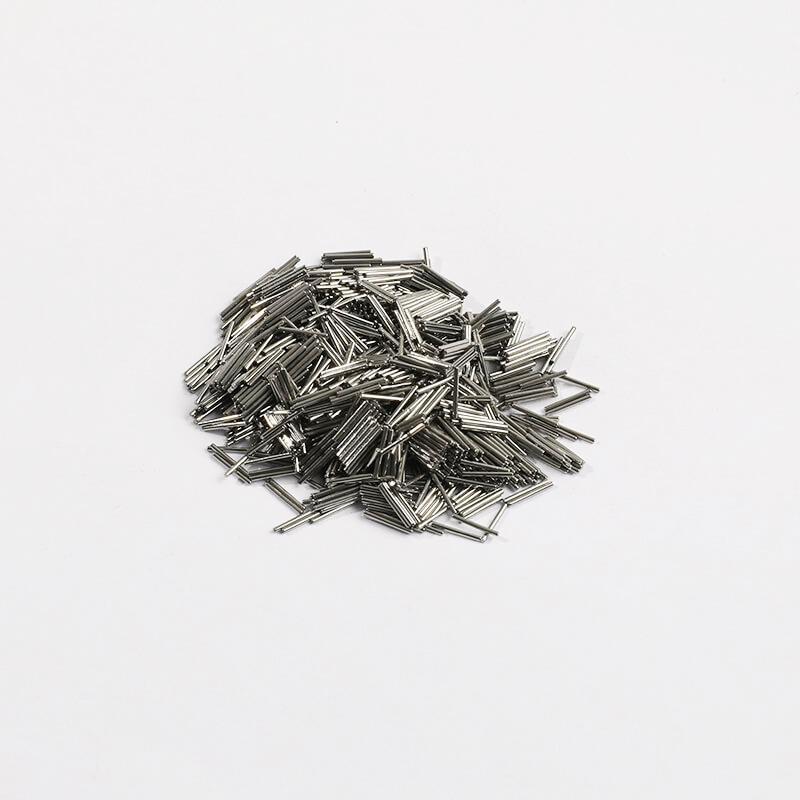
| Media | Best fit | Watch out for |
|---|---|---|
| Steel pins and fine media for magnetic finishing | Small precise components, short bores, slots and blind features that shaped tumbling media cannot enter. | Limited to small parts, will not remove a proud weld cap, and pins must be counted and recovered from every opening. |
| Ceramic media, angle-cut triangles | Heavier weld-zone refinement and edge blending on 304 and 316L parts where a corner or a toe line has to be reached. | Wears down and changes its effective size class, produces sludge, and can over-round a thin edge or a soft detail. |
| Steel media, balls and diagonals | Bright surface refinement on robust stainless parts where a dense medium is wanted to work into recesses. | Can transfer iron to stainless, imprint soft or thin features, flatten a deliberate edge radius, and needs magnetic recovery. |
| Liquid compound, abrasive cleaning slurry family | Cleaning, descaling and fine abrasive work through the cycle, with dosing and flow matched to the load and the alloy. | Chloride content and pH matter on stainless, foam can cushion the cut, and residue left in a crevice becomes a later defect. |
Free iron on stainless usually comes from tooling and consumables rather than from the part: carbon steel brushes, wire wheels, blasting grit or shot, iron-bearing media, shared racks, gloves that have handled mild steel and water from a contaminated line. It appears days or weeks later as a bloom of rust, often localised near a weld or a crevice. Detection uses a ferroxyl-type test or an equivalent method chosen by the buyer's own quality function, applied at the agreed locations including crevices and internal surfaces after finishing and rinsing. Control is separation: dedicated stainless tooling, media and racks; documented grade of every consumable that touches the surface; and a cleaning step after mechanical work. An upstream acid pickle or electrochemical polish brings its own concerns, including hydrogen, and sits outside what finishing equipment does.
| Failure mode | Likely cause | How to catch it |
|---|---|---|
| Rust bloom or free-iron staining appearing after finishing | Carbon steel brushes, iron-bearing media, shared racks or contaminated rinse water depositing free iron on a 304 or 316L surface. | Run a ferroxyl-type test or the buyer's own equivalent at agreed locations including crevices and internal surfaces, after rinsing and drying, and record the result with the batch. |
| Discolouration, water spotting or flash rust after the cycle | Contaminated or hard rinse water, incomplete draining of a crevice, or a part left wet before drying. | Inspect after drying under consistent lighting, check the rinse water source and quality, and verify that orientation during draining lets every recess empty. |
| A shiny but burnished surface with intact oxide beneath it | Abrasive media smearing the oxide instead of cutting through it, often where a cleaning compound was relied on to do the cutting. | Examine the transition zone rather than the cap, compare a mechanically worked area with a freshly ground control area, and cross-section one sample part under magnification. |
| Compound residue or dried film trapped in crevices and threads | Insufficient rinse volume, a rinse that does not reach the recess, or draining in an orientation that holds fluid in place. | Wipe or swab the recess with a clean white cloth and inspect, run a water-break or residue check on product-contact surfaces, and re-check after changing rinse volume or orientation. |
Bordeaux combines an Atlantic port economy with an aerospace and defence industrial base: the Port de Bordeaux operates seven specialised terminals along the Gironde estuary and Garonne, receives close to a thousand vessels a year, and states that the industrial-port complex accounts for 8 620 jobs, with a stated strategic aim of building a new industrial-port model around energy transition. INSEE counted 14 432 establishments in the commune at the end of 2024, 3,2 % in industry, and 211 556 jobs at the place of work in 2023. The wider Gironde industrial base includes aeronautics and defence (Dassault Aviation, Thales and ArianeGroup sites around Merignac, Saint-Medard-en-Jalles and Le Haillan), naval and yacht refit activity in the port, and food and wine-related manufacturing.
For this brief the relevant part of that base is food: The port's core and future traffic lines and the Bordeaux/Gironde trade economy include food and wine-related flows, with the port organised as a multi-terminal commercial port along the estuary.
Aerostructures, space hardware and defence equipment built in the Bordeaux area need controlled edge quality on machined and formed parts, deburring of fluid and pneumatic components, and surface preparation for bonding and coating, all with the traceability that EN 9100 work demands. The port's naval refit and yacht activity adds a second, very different requirement - large-surface preparation, weld dressing and finish on hulls and superstructures in a marine corrosion environment. Food and wine equipment in the region adds stainless fabrication where surface roughness and residue-free cleaning matter hygienically.
A Bordeaux buyer should settle whether the finishing operation supports a bonded or coated surface, because in that case surface chemistry and cleanliness, not just roughness, decide whether the process is acceptable - and those parameters must be specified before a machine or media is selected.
Freight context: Port de Bordeaux (7 terminals: Bassens, Bacalan, Le Verdon, Blaye, Pauillac, Ambares, Bordeaux), Bordeaux-Merignac Airport. The port operates 24 hours a day, 365 days a year and states that its seven specialised terminals along the Gironde and Garonne receive close to a thousand vessels a year, with the industrial-port complex supporting 8 620 jobs. For equipment imports this means the machine can be landed directly on the estuary at Bassens or Verdon and moved by road, with Bordeaux-Merignac handling urgent parts and media samples.
France applies the EU common commercial policy, so industrial machinery arriving from China enters under the Union Customs Code and the Common Customs Tariff rather than under any bilateral French regime; the EU has no free-trade agreement with China, so no preferential duty rate applies and normal third-country duties are due on the customs value. Importers classify the machine in the tariff nomenclature and lodge a customs declaration; French Customs publishes the common and national tariff through its RITA online service and states that three notions are fundamental: the tariff classification of the product, its origin or destination, and the value of the goods.
For imports from outside the EU the declarant must file a customs declaration whose form and content are fixed by the Union Customs Code and its implementing provisions; French Customs identifies classification, origin and value as the three fundamental notions and makes the common/national tariff consultable via RITA. The customs authority is the Direction generale des douanes et droits indirects (DGDDI), which also runs the Info Douane Service for formalities questions. Buyers should expect to need an EORI number and an EU VAT treatment, because customs and tax authorisations are handled together (SOPRANO). For machinery, the CE marking and the applicable EU product-safety directives are the compliance gate items to settle before shipment, and the French market surveillance authority is the DGCCRF; the tariff rate itself must be confirmed per HS code in RITA or the EU Access2Markets tariff tool, since it varies by machine type.
SurfacePolish supplies from Xiamen, China. The buyer's own destination rules, conformity marking, tariff classification and documentation responsibilities stay with the buyer; confirm them against the authorities named above before ordering.
An Ra number without a location, cut-off and direction is close to meaningless. Fix the measurement location on the drawing, including whether it sits on base metal, a dressed weld or the heat-affected zone, since those are different surfaces. Choose the cut-off and evaluation length to suit the expected roughness and record both, because the same surface returns different values under different settings. Traverse across the lay rather than along it when the requirement concerns the surface the product sees, and take several readings at each agreed location rather than one. Use a calibrated instrument with a reference specimen and record the instrument and the operator. Remember what roughness does not describe: a crevice, an oxide film, a contaminated surface or a sharp edge can all coexist with an acceptable Ra value.
A trial is only as informative as the parts that go into it, so send pieces that carry the deciding geometry rather than whatever is easiest to pack. Include the tightest crevice, the smallest bore, the longest tube, the thinnest wall, the most awkward weld toe and the surface that must stay untouched, even when those features sit on different parts. Send at least one part already rejected for a finishing-related reason so the failure can be examined directly, and note which operations have already been applied. State the grade and provide the material certificate, and mark up the drawing with the zones to be finished, protected and inspected. Package parts so they arrive in the condition they left in, and label each one for identification on return.
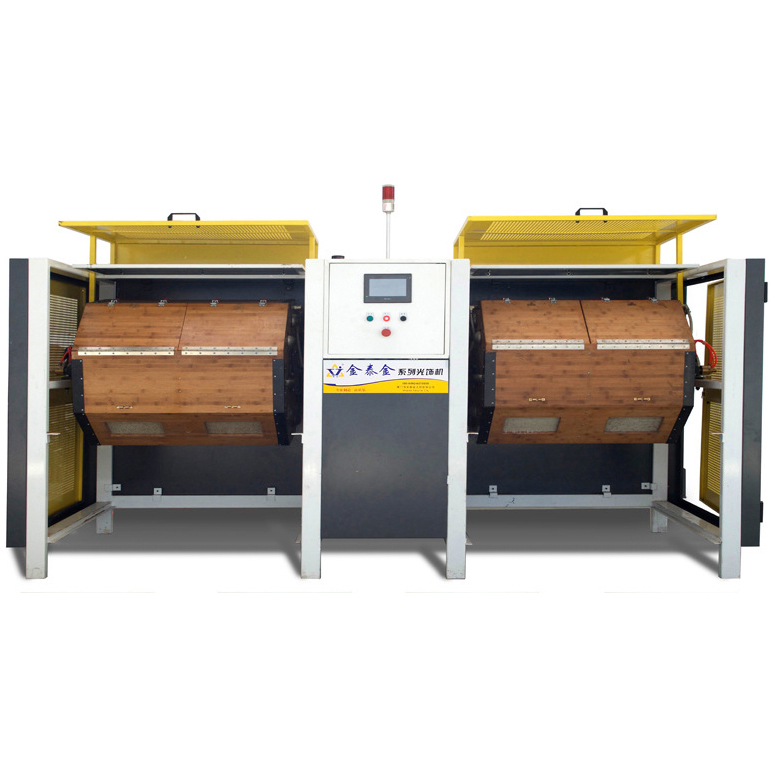
Treat every recess as a retrieval point rather than hoping it stays clear. Choose a medium size class well below the smallest opening, mask or plug features that were never meant to see media, count media into and out of a load, and add a defined check such as a borescope at an agreed angle plus a pin gauge on critical holes. Where a groove is too narrow for any medium to enter, it will also be too narrow for oxide removal, so the two facts belong in the same conversation. Buyers in Bordeaux shipping parts for a trial should send the tightest feature they have.
No. Mechanical finishing removes material and can strip oxide and free iron from the surfaces it touches, but it does not restore a passive film and it does not perform a chemical passivation step. Passivation, whether by a paste, a bath or an electrochemical process, is a separate operation with its own method and verification that belongs to your own specification and supply chain. Mechanical work can leave a surface in better or worse condition for that step, which is one reason media and compound selection on 316L should consider what comes afterwards rather than only the finish you see at the end of the cycle.
Generally no, and this is the clearest practical difference between the routes. Tumbling media, whether ceramic, plastic or steel, has to physically enter a bore to work on it, and a tube whose length is many times its diameter and whose bore is narrow will not admit media in a way that produces an even result. Some internal work is possible with a magnetic finishing machine on short bores and small precise parts, but long runs of small-bore sanitary tubing are out of reach for a mechanical process. Zones a machine cannot reach have to be finished another way, accepted as they are, or designed out.
Use Bordeaux, France as the destination on the enquiry and state whether the deliverable is equipment, media and compound, a representative sample review or a line concept. A destination does not imply local stock, a local service point or a local delivery time.
A Bordeaux buyer would reference ISO/NF EN surface-texture standards for finish and EN 9100 for aerospace and defence work, plus customer specifications for bonding, sealing and cleanliness; ISO 9001 is the general baseline and marine work is governed by classification-society and owner requirements on top. Material conformity certificates and process traceability are standard expectations in the aerospace and naval supply chains here.
Sources were retrieved on 2026-09-29 and describe the local industrial and trade context only. They do not evidence any SurfacePolish project, shipment, installation or service in Bordeaux.
The buyer must improve the product-contact bore and weld-free body surfaces while keeping the sealing lip sharp and the gasket groove free of lodged media.
Send the material, dimensions, approximate weight, batch quantity, the incoming condition and photographs of the difficult features. Mark which features must not be contacted by media and state how the result will be inspected. This form carries source reference PSEO-0574; quote it if you prefer an additional manual reference.
Open the SurfacePolish enquiry form Email a prepared enquiry
No price, lead time, certification or result is promised here. Confirm whether a sample trial is available for the specific part and what the trial can and cannot show.
Page PSEO-0574 · revised 2026-09-29 · cross-border equipment, media and scoped sample review. City context is sourced and cited above.
Use this local checker to identify missing part and inspection information. It prepares a technical-review brief; it does not approve a machine, process recipe or production result.
Complete the part details to prepare a review brief.
Email : info@surface-polish.com


 IPv6 network supported


 +86-592-2381506