A fittings supplier in Strasbourg, France supplying food processing equipment has 600 small 316L components that need consistent refinement at volume. Free tumbling would be efficient, but machined gasket faces and mixed sizes make part-on-part contact and over-rounding real concerns, so the load and medium have to be planned. SurfacePolish supplies machines, media and compounds across borders and runs a free sample trial. This brief is written for a buyer in Strasbourg working on food processing equipment; it describes equipment, media and a scoped sample review, not a local polishing service.
Where will roughness be measured, with which cut-off and in which direction, and does that location represent the surface the product actually sees?
What must the finished surface survive in service, including cleaning cycles, and how will that be checked without leaning on a finishing trial?
Which internal surfaces can a mechanical route physically reach, and what happens to the zones it cannot?
Before any trial, fix the starting condition in a way that can be compared later. Take roughness readings at agreed locations, photograph the part under consistent lighting, note visible burrs, tint and scratches, and keep one untouched part as a reference. Describe the batch: how many pieces of each size, whether they are identical, and whether mixed sizes will share a chamber. Decide how parts will be separated, racked or compartmented, and which surfaces may touch each other or a fixture. Handling rules matter as much as process settings on stainless, because a bench, a rack or a glove that has touched carbon steel can leave the contamination that later appears as a rust bloom. Write the baseline down, because a trial without an incoming record produces observations nobody can interpret.
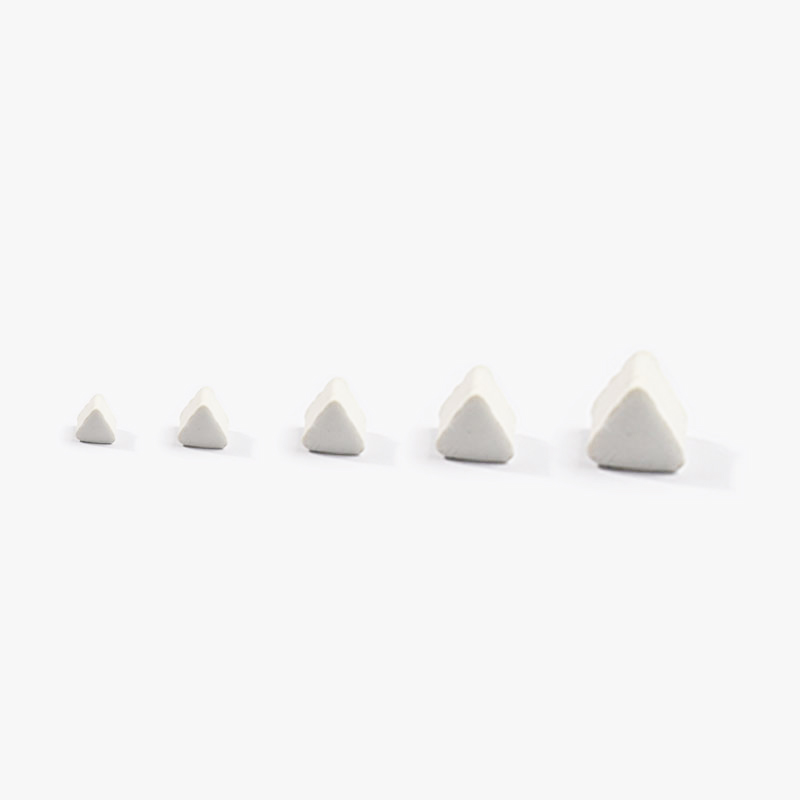
Ceramic media in angle-cut triangles, cylinders, stars and small spheres is the workhorse for stainless weld refinement and deburring. Bonding and shape class set the cut: an angle-cut triangle reaches into corners and along a weld toe, a cylinder rolls and blends, and a small sphere refines without cutting an edge hard. Size drives reach as much as aggression does, because a piece larger than the crevice simply cannot enter it. Ceramic wears down and changes its effective size class over its working life, so top-up and screening are part of holding a finish steady. Wear also produces sludge and fine debris that must be rinsed away, and a chipped piece is an embedding risk. Buying medium on price alone usually shows up later as inconsistent finish and higher consumption.
| Media | Best fit | Watch out for |
|---|---|---|
| Ceramic media, small cylinders and spheres | General deburring and light radius work on hygienic fittings, with less edge cutting than an angle-cut shape. | Small sizes lodge in gasket grooves and drilled openings, and a sphere refines slowly where oxide is thick. |
| Ceramic media, angle-cut triangles | Heavier weld-zone refinement and edge blending on 304 and 316L parts where a corner or a toe line has to be reached. | Wears down and changes its effective size class, produces sludge, and can over-round a thin edge or a soft detail. |
| Steel media, balls and diagonals | Bright surface refinement on robust stainless parts where a dense medium is wanted to work into recesses. | Can transfer iron to stainless, imprint soft or thin features, flatten a deliberate edge radius, and needs magnetic recovery. |
| Plastic media, cones and triangles | Gentle edge blending and cosmetic refinement on softer non-ferrous fittings, thin sections and delicate parts. | Cannot remove heat tint, mill scale or a weld cap, so it must follow the operation that does that work. |
Where a weld cap stands proud and has to come down, a grinding finishing machine removes material far faster than any tumbling route, and a disc finishing machine delivers high energy to flat faces and convex zones. This is the stage that takes off heat tint and the top of the cap, but it is also where damage is created: an over-ground toe leaves an undercut that traps product, a fast wheel can smear oxide into the surface rather than lift it, and abrasive tooling that has touched carbon steel can deposit free iron. Ground zones then need refining, because the scratch pattern left by coarse abrasive is not a finish. The sequence is what matters: remove the cap, blend the toe, refine the zone, then verify. Grinding alone rarely satisfies a stated product-contact surface requirement.
| Machine route | Where it fits | What it will not do |
|---|---|---|
| Disc finishing machine | High-energy work on flat faces, flanges and convex zones where material removal or fast refinement is wanted. | Poor reach into recesses and around complex geometry, and it can dish a flat face if the cycle is not controlled. |
| Magnetic finishing machine | Small precise parts and short internal features such as slots, small bores and blind recesses. | Part size and surface area are limited, large panels and long tubes are out of scope, and it will not dress a weld cap. |
| Grinding finishing machine | Removing a proud weld cap, heavy scale and heat tint before any tumbling or refinement stage. | Leaves a scratch pattern that needs refining, can smear oxide, and iron-bearing tooling can deposit free iron on stainless. |
| Vibratory finishing machine, bowl type | Edge and weld-toe blending plus surface refinement on mid-sized parts, with a visible load and adjustable energy. | Chamber geometry caps part size, and the inside of a long tube or a narrow crevice stays out of reach. |
Abrasive media working on a tinted weld can smear and burnish the oxide into a smooth, shiny, deceptive layer instead of cutting through it. The surface reads better visually than the starting condition while the chromium-depleted zone underneath is unchanged, and roughness readings may even improve because the profile has been flattened. This is most likely where a cycle is too gentle or too short for the oxide thickness, or where the compound is cleaning rather than cutting. Detection means looking at the transition zone rather than the cap: a dye-based or free-iron check, a cross-section of a sample part, or a controlled comparison between a mechanically worked area and a freshly ground area. Refinement should only follow a stage that genuinely removed the oxide, which is why sequence matters more than final polish.
| Failure mode | Likely cause | How to catch it |
|---|---|---|
| Rust bloom or free-iron staining appearing after finishing | Carbon steel brushes, iron-bearing media, shared racks or contaminated rinse water depositing free iron on a 304 or 316L surface. | Run a ferroxyl-type test or the buyer's own equivalent at agreed locations including crevices and internal surfaces, after rinsing and drying, and record the result with the batch. |
| Cross-contamination from tooling, racks or media shared with carbon steel | No dedicated stainless area, undocumented consumable grades, or media stored where mild steel fabrication dust settles. | Audit which tools, racks and media touch the part, record their grades, store media covered and segregated, and confirm cleanliness with the buyer's own test after a tooling change. |
| Thin-wall distortion or dishing on tanks, panels and chutes | Heavy media load striking unsupported thin sheet, or a chamber fill level that lets parts fall rather than tumble. | Measure wall flatness and key dimensions before and after, inspect under raking light for oil-canning, and run the test at the production fill level rather than a light one. |
| Uneven finish, banding or untouched shadow zones across one part | Part position in the chamber, a fixture holding a surface out of the media mass, or a load that is too full or too empty for even contact. | Take roughness readings at several marked locations instead of one, photograph at fixed angles around the part, and compare parts from the top and bottom of the same load. |
Strasbourg's industrial economy is a Rhine one: the Ports de Strasbourg (Groupe PAS) state the port is the second largest French river port, operate 40 hectares of available land and a new trimodal platform on the Rhine, and the port authority's own news flow is dominated by industrial and heavy-industry development on its estates, including development plans by Kawasaki Heavy Industries for the Grand Est region. INSEE counted 11 376 establishments in the commune at the end of 2024 with a 3,8 % industry share and 178 849 jobs at the place of work in 2023. The Alsace industrial base around the city is a mixed one - automotive equipment suppliers, mechanical engineering, pharmaceuticals and medical devices, and food processing - supported by the ADIRA regional development agency, which reports 418 business development projects handled in 2025 and more than EUR 1,376 billion invested by the companies it supported in Alsace.
For this brief the relevant part of that base is food: ADIRA's Alsace economic development work and the port's industrial-port estates cover the region's agro-industrial base; the port authority operates river and rail logistics used by bulk and food flows.
Alsace's automotive equipment and mechanical engineering base deburrs high-volume machined and stamped parts, where burr removal and edge quality are specified by the vehicle-maker and verified by cleanliness testing rather than visual inspection. The region's pharmaceutical and medical-device plants add stainless and hygienic-surface requirements in which surface roughness and residue-free cleaning are functional, and the port's heavy-industry estates generate large fabricated steelwork where weld dressing and coating preparation are the finishing tasks. The Rhine location also means German and Swiss customer specifications frequently apply alongside the French ones.
A Strasbourg buyer should settle which customer's specification governs - French, German or Swiss - before fixing edge and cleanliness acceptance criteria, because documentation, surface-roughness callouts and acceptance tests can differ between those customer chains for the same part.
Freight context: Ports de Strasbourg (Groupe PAS, Rhine river port), Strasbourg-Entzheim Airport, Strasbourg trimodal (road-rail-water) platform. The Ports de Strasbourg state the port is the second largest French river port and offer 40 hectares of available land plus a new trimodal platform on the Rhine, giving direct barge access to the Rhine corridor and the North Sea ports as well as rail and road links to Germany and Switzerland. That is the practical route for receiving containerised machines and media and for shipping sample parts into the German-speaking industrial belt.
The working language of French industrial procurement is French: tenders, drawings, inspection plans and technical dossiers are normally issued and answered in French, and quotations that omit French documentation slow down qualification. Buyers qualify a machine against a written specification and expect traceable material certificates, machine safety documentation and, where applicable, a CE declaration of conformity and a risk assessment; acceptance is often staged (documentary review, factory acceptance test, then commissioning). Payment and documentation norms are conventional EU practice: euro invoicing, SEPA or SWIFT bank transfer, Incoterms agreed in writing, and customs paperwork (commercial invoice, packing list, transport document, proof of origin where a preference is claimed) prepared for the declarant or customs representative. Because customs and tax authorisations are handled jointly through SOPRANO, non-EU sellers are normally advised to sell to an established French/EU importing entity rather than to act as importer of record themselves.
For imports from outside the EU the declarant must file a customs declaration whose form and content are fixed by the Union Customs Code and its implementing provisions; French Customs identifies classification, origin and value as the three fundamental notions and makes the common/national tariff consultable via RITA. The customs authority is the Direction generale des douanes et droits indirects (DGDDI), which also runs the Info Douane Service for formalities questions. Buyers should expect to need an EORI number and an EU VAT treatment, because customs and tax authorisations are handled together (SOPRANO). For machinery, the CE marking and the applicable EU product-safety directives are the compliance gate items to settle before shipment, and the French market surveillance authority is the DGCCRF; the tariff rate itself must be confirmed per HS code in RITA or the EU Access2Markets tariff tool, since it varies by machine type.
SurfacePolish supplies from Xiamen, China. The buyer's own destination rules, conformity marking, tariff classification and documentation responsibilities stay with the buyer; confirm them against the authorities named above before ordering.
Mechanical finishing leaves media, compound, swarf and water wherever they were not removed, so cleanliness is part of acceptance rather than a separate concern. Agree how the part is rinsed, how it is dried, what residue check applies, and whether a water-break or wipe test is used on product-contact surfaces. Crevices, threads, gasket grooves and tube ends deserve their own check because that is where material collects. If the buyer's specification requires chemical passivation, that is a separate downstream operation with its own method and verification, and mechanical finishing neither performs nor replaces it, though the surface condition it leaves affects how that step behaves. Where free iron is a concern, the buyer's own test method and critical locations define acceptance, and both belong in writing before a batch is accepted.
Media is a consumable with a working life, and treating it as a fixed asset is a common reason a validated-looking process drifts. Plan for screening fines and broken pieces out, topping up to hold the size class and the load volume, and recording what was added and when. Compound concentration, dosing rate and rinse water quality need the same discipline, including a chloride check where the buyer's own requirements limit it, because concentration that creeps upward changes both the cut and the residue left behind. Sludge and spent compound have to be removed on a schedule, not when the chamber looks bad. Store media and compound so they cannot pick up contamination from a carbon steel fabrication area. Write the routine down, because a process that depends on one experienced operator is not yet a line.
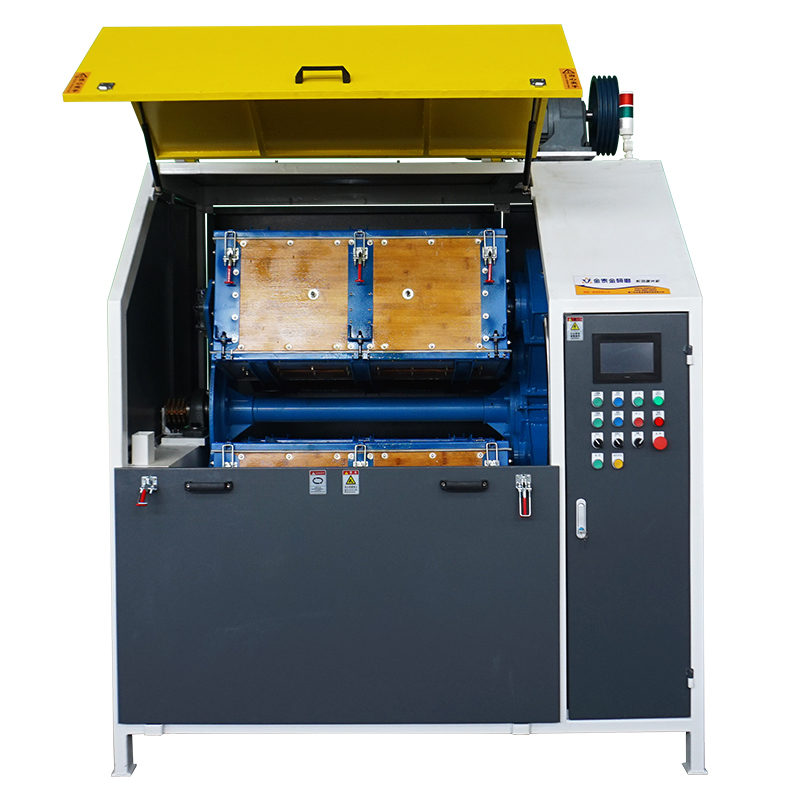
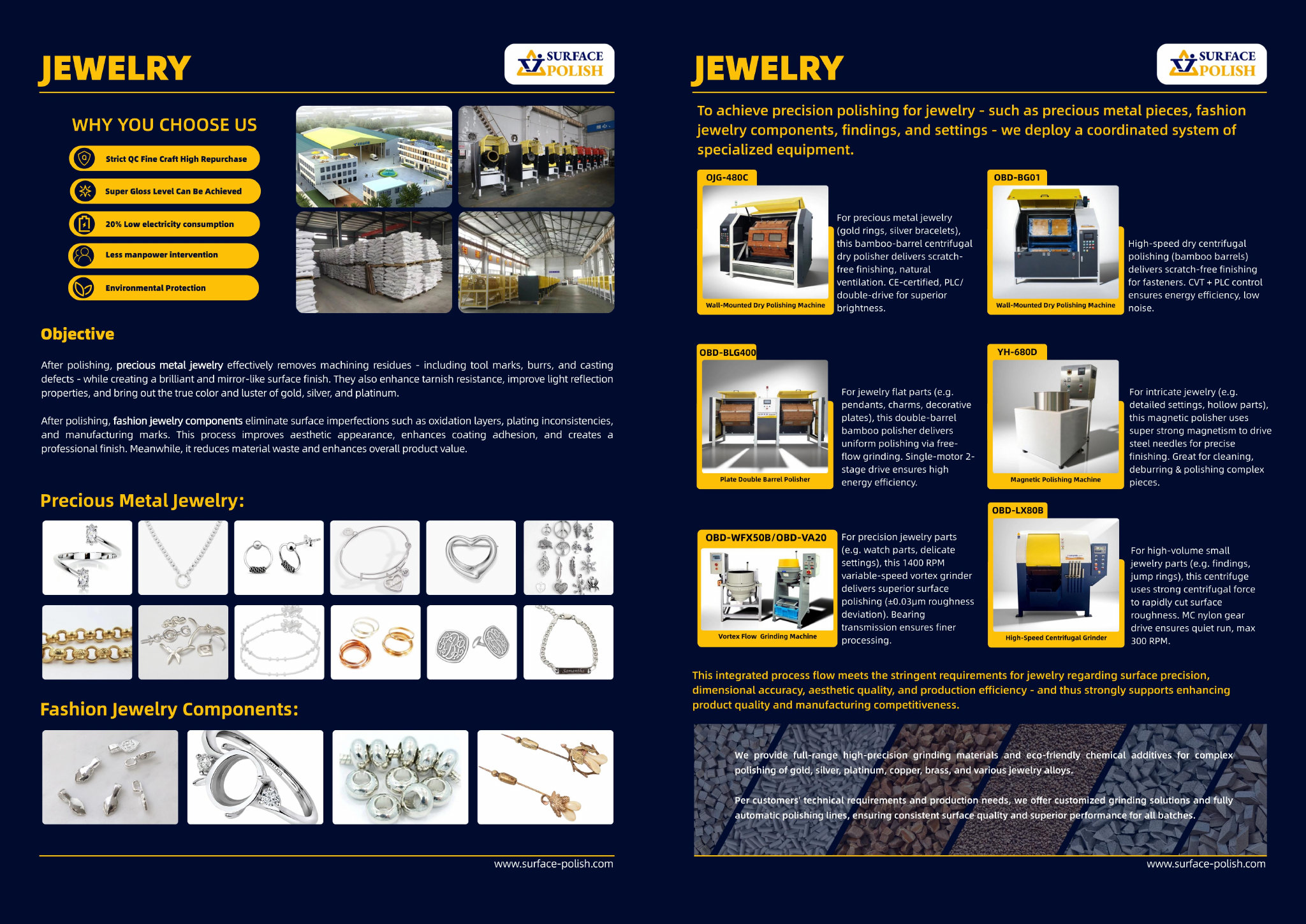
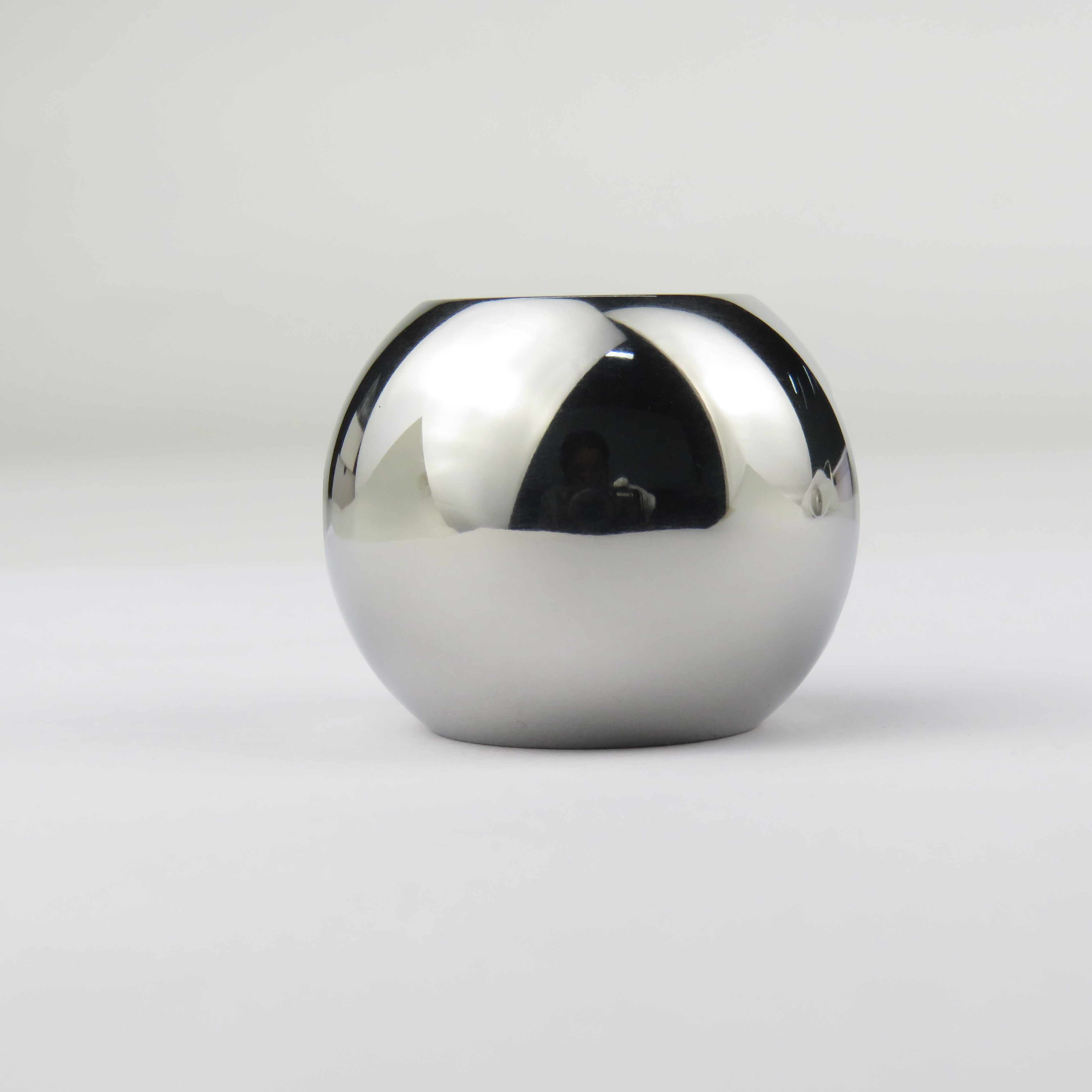
Send representative parts, including the most difficult geometry in the family, and SurfacePolish runs them through a mechanical finishing route and returns the tested parts with observations and a proposed media, compound and cycle direction. The report describes what was seen on those parts under those settings. It is not a guarantee of a roughness value, an edge dimension, a cycle time, a capacity, a cost or a delivery date, and it does not qualify a process for any regulated use. Production variation in material, welding and fit-up is not represented by a small trial load, so your own verification still decides.
Specify it with a location, a cut-off and a direction, not as a single number. Mark the measurement points on the drawing and say whether each sits on base metal, a dressed weld or the heat-affected zone, because those are different surfaces. State the cut-off and evaluation length, and require readings across the lay at each point rather than one convenient traverse. Also state what Ra is not being asked to prove: it does not describe a crevice, an oxide film, embedded contamination or an edge condition. A buyer in France should record the instrument and the calibration specimen on every report.
They are different operations rather than interchangeable ones. Mechanical finishing can remove a weld cap and oxide where a medium or tool physically reaches, and it refines the surface it contacts. Electrochemical polishing removes a thin layer more uniformly and can reach inside small-bore tubing and enclosed channels that no tumbling medium enters. A mechanical route is usually the practical answer for accessible weld zones and external surfaces, and it cannot level the inside of a long narrow tube. Whether that reach matters on your part is the decision; a trial at Strasbourg can show what was reached on the parts tested.
Use Strasbourg, France as the destination on the enquiry and state whether the deliverable is equipment, media and compound, a representative sample review or a line concept. A destination does not imply local stock, a local service point or a local delivery time.
A Strasbourg buyer would reference ISO/NF EN surface-texture standards and, for automotive supply, IATF 16949 with customer-specific edge and cleanliness requirements; medical and pharmaceutical equipment brings ISO 13485 or hygienic-design requirements with defined surface roughness. Because Alsace suppliers frequently deliver into Germany and Switzerland, DIN/EN standard versions and German-language documentation are commonly required alongside the French.
Sources were retrieved on 2026-09-29 and describe the local industrial and trade context only. They do not evidence any SurfacePolish project, shipment, installation or service in Strasbourg.
The buyer needs consistent edge and surface refinement across a large fitting batch without damaging machined gasket faces or losing parts in the load.
Send the material, dimensions, approximate weight, batch quantity, the incoming condition and photographs of the difficult features. Mark which features must not be contacted by media and state how the result will be inspected. This form carries source reference PSEO-0584; quote it if you prefer an additional manual reference.
Open the SurfacePolish enquiry form Email a prepared enquiry
No price, lead time, certification or result is promised here. Confirm whether a sample trial is available for the specific part and what the trial can and cannot show.
Page PSEO-0584 · revised 2026-09-29 · cross-border equipment, media and scoped sample review. City context is sourced and cited above.
Use this local checker to identify missing part and inspection information. It prepares a technical-review brief; it does not approve a machine, process recipe or production result.
Complete the part details to prepare a review brief.
Email : info@surface-polish.com


 IPv6 network supported


 +86-592-2381506