A fabricator in Bristol, United Kingdom supplying food processing equipment has a 316L tube spool whose internal orbital weld still shows heat tint. They searched for electropolishing, and what they really need is a decision: which route reaches that bore, and what a mechanical route can achieve on the outside of the joint. SurfacePolish supplies finishing machines, media and compounds across borders and runs a free sample trial on parts sent to Xiamen. This brief is written for a buyer in Bristol working on food processing equipment; it describes equipment, media and a scoped sample review, not a local polishing service.
Where will roughness be measured, with which cut-off and in which direction, and does that location represent the surface the product actually sees?
Which surfaces on this part touch product, and what does each one have to satisfy in roughness, oxide freedom, edge condition and cleanliness?
Does the route have to remove heat tint and restore a passive condition, or refine a surface that is already clean, and who verifies that difference?
Reachability decides the route more often than the finish target does. Measure the internal diameter of every tube, the depth and diameter of every blind hole, the width of every crevice and gasket groove and the corner radius at every internal weld. Ratios matter more than absolute size: a bore that is wide but very deep, or a groove narrower than the smallest available medium, stays untouched by any tumbling process however long the cycle runs. Ask whether a borescope can be inserted and at what angle, because a surface that cannot be seen cannot be inspected after finishing. List the zones a machine cannot reach, and decide in advance whether those zones are finished by another method, accepted as-is with a stated condition, or designed out of the part.
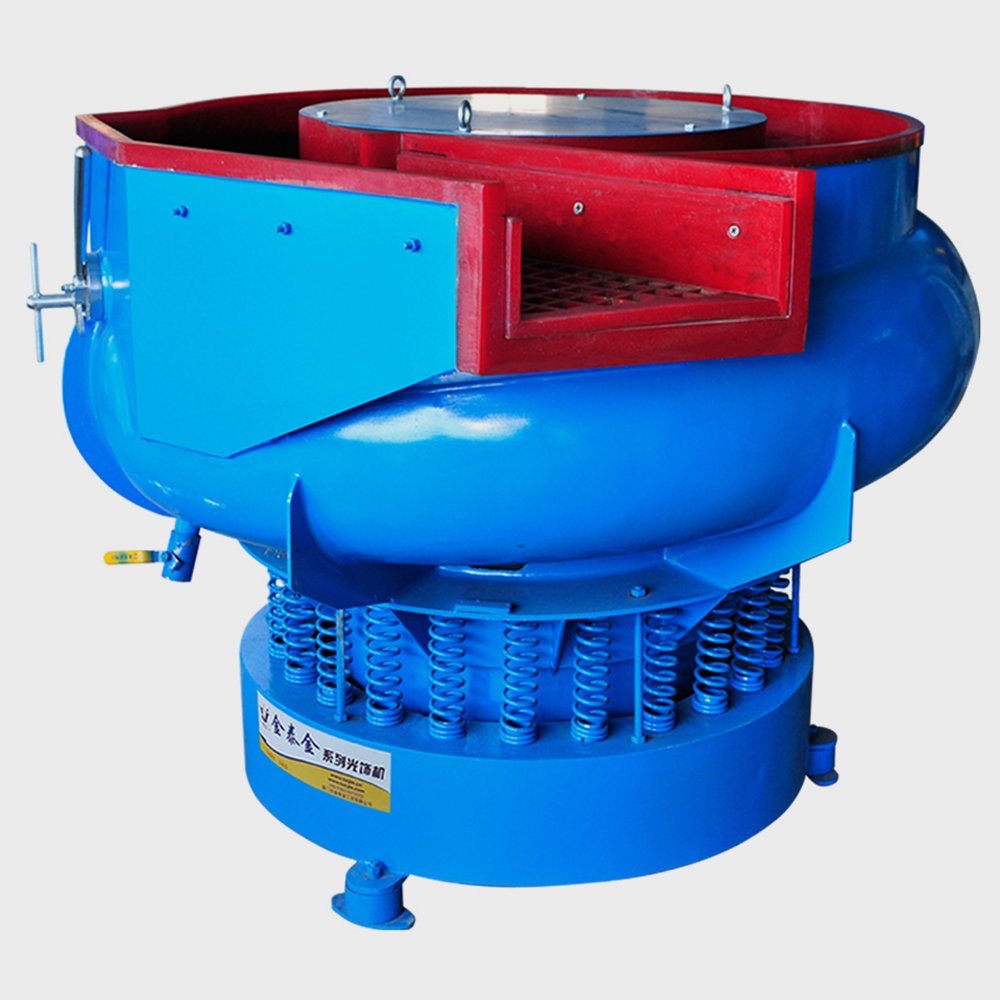
A tub vibrator gives a long, open chamber that accepts parts a bowl cannot, including tube spools, chute sections, small vessels and long fabrications. The part can be repositioned, rotated or left static depending on what has to be reached, and the open design makes it easier to watch what is happening to a weld during the cycle. The trade-off is evenness: coverage depends on how the part sits relative to the media mass, so banding and untouched shadow zones are common unless fixture and part orientation are planned. Internal surfaces of a long small-bore tube remain out of reach regardless of tub size. Tub capacity, media volume, how the part is supported and how it is lifted in and out should be settled before the route is accepted.
| Machine route | Where it fits | What it will not do |
|---|---|---|
| Centrifugal barrel finishing machine | Higher-energy cycles that shorten the time to blend an edge or refine a small part in quantity. | The added energy increases over-rounding and imprinting risk, and delicate or mixed-size loads need careful planning. |
| Dry polishing machine and dryer | Dry burnishing where a wet cycle is unwanted, and drying parts after a wet cycle so crevices do not stay wet. | Removes no oxide and needs dust extraction; a dryer manages water, it does not change the finish left by the wet stage. |
| Magnetic finishing machine | Small precise parts and short internal features such as slots, small bores and blind recesses. | Part size and surface area are limited, large panels and long tubes are out of scope, and it will not dress a weld cap. |
| Vibratory finishing machine, bowl type | Edge and weld-toe blending plus surface refinement on mid-sized parts, with a visible load and adjustable energy. | Chamber geometry caps part size, and the inside of a long tube or a narrow crevice stays out of reach. |
The compound does the cleaning, descaling, foam control and fine abrasive work that media alone cannot, and its chemistry family has to match the alloy. On stainless the critical questions are pH through the cycle and the chloride content of both the compound and the water used to mix and rinse it, because a chloride-bearing fluid on a sensitised or stressed surface is a pitting risk, and a residue left in a crevice is worse. Concentration and flow rate set how fast the work proceeds and how well the load is kept clean; too little compound leaves swarf and sludge on the part, while too much can foam, cushion the media and slow the cut. Water hardness affects how the compound behaves and how the rinsed surface dries. Ask for composition data and set limits.
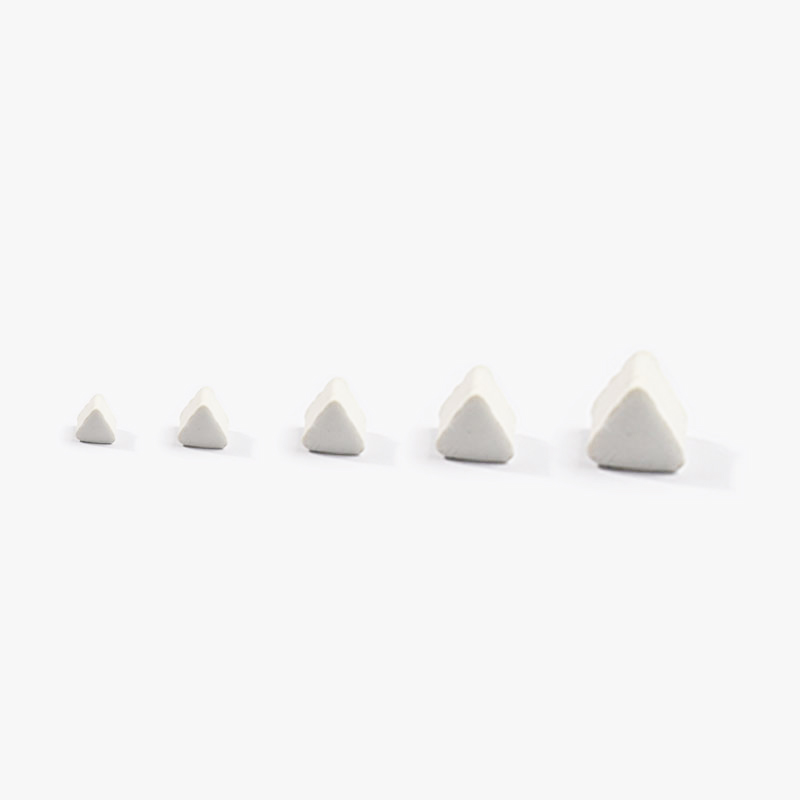
| Media | Best fit | Watch out for |
|---|---|---|
| Ceramic media, angle-cut triangles | Heavier weld-zone refinement and edge blending on 304 and 316L parts where a corner or a toe line has to be reached. | Wears down and changes its effective size class, produces sludge, and can over-round a thin edge or a soft detail. |
| Plastic media, cones and triangles | Gentle edge blending and cosmetic refinement on softer non-ferrous fittings, thin sections and delicate parts. | Cannot remove heat tint, mill scale or a weld cap, so it must follow the operation that does that work. |
| Steel pins and fine media for magnetic finishing | Small precise components, short bores, slots and blind features that shaped tumbling media cannot enter. | Limited to small parts, will not remove a proud weld cap, and pins must be counted and recovered from every opening. |
| Dry media, walnut shell and corn cob | Light dry burnishing and cosmetic refinement where retained water in a crevice or assembly is a problem. | Generates dust requiring extraction, removes no oxide, and leaves a surface character different from a wet abrasive cycle. |
Heat tint is an oxide layer whose thickness varies across a weld, thickest where the metal was hottest and often receding into a crevice or along the toe line where no medium reaches. A mechanical cycle can polish the visible cap and leave the toe untouched, so a part passes a glance and still carries oxide in exactly the location that matters. Colour is a practical indicator: straw and light blue suggest a thinner film, while grey and black scale suggests a heavier one that needs real removal before any refinement means anything. Detection is by inspection at magnification, comparison with an agreed visual reference, and the buyer's own test for free iron or passive condition where their specification asks for one. Photograph the toe at a fixed angle before and after each stage.
| Failure mode | Likely cause | How to catch it |
|---|---|---|
| Uneven finish, banding or untouched shadow zones across one part | Part position in the chamber, a fixture holding a surface out of the media mass, or a load that is too full or too empty for even contact. | Take roughness readings at several marked locations instead of one, photograph at fixed angles around the part, and compare parts from the top and bottom of the same load. |
| Compound residue or dried film trapped in crevices and threads | Insufficient rinse volume, a rinse that does not reach the recess, or draining in an orientation that holds fluid in place. | Wipe or swab the recess with a clean white cloth and inspect, run a water-break or residue check on product-contact surfaces, and re-check after changing rinse volume or orientation. |
| A shiny but burnished surface with intact oxide beneath it | Abrasive media smearing the oxide instead of cutting through it, often where a cleaning compound was relied on to do the cutting. | Examine the transition zone rather than the cap, compare a mechanically worked area with a freshly ground control area, and cross-section one sample part under magnification. |
| Discolouration, water spotting or flash rust after the cycle | Contaminated or hard rinse water, incomplete draining of a crevice, or a part left wet before drying. | Inspect after drying under consistent lighting, check the rinse water source and quality, and verify that orientation during draining lets every recess empty. |
Bristol is the largest city in the West of England Mayoral Combined Authority area, which the authority states it invests for alongside Bath and North East Somerset and South Gloucestershire. Invest Bristol & Bath, the region's inward investment service, lists aerospace and advanced engineering, composites, clean tech and energy, life sciences, logistics and distribution, and space among its key sectors. ADS South West, the regional branch of the ADS trade association, took over the former West of England Aerospace Forum's operations from 1 April 2026 and keeps small bases in both Bristol and Yeovil, which it calls two hubs of manufacturing excellence. Make UK records the South West as one of the strongest-performing English regions.
The nearest part of that base to this brief is medical: Invest Bristol & Bath lists life sciences as a key sector for the Bristol and Bath region.
Bristol's aerospace and composites cluster means machined and formed parts are accepted against a defined surface and edge condition, and composites add a second requirement because trimmed edges and prepared bonding surfaces must be conditioned without damaging the laminate. The West of England Combined Authority publishes a growth strategy for the region and operates a Growth Hub and the Invest Bristol & Bath service, which are the documented regional entry points for business and investment support.
A Bristol buyer should establish whether the acceptance criterion is an edge condition on a machined metal part or a surface-preparation standard on a composite, because the two call for different media, different process control and different inspection evidence.
Freight context: West of England road and rail freight corridor serving Bristol (Invest Bristol & Bath lists logistics and distribution as a key sector). Invest Bristol & Bath maintains a dedicated connectivity page for the region and lists logistics and distribution among its key sectors. The Bristol Port Company site and Bristol Airport site both returned bot-protection responses during this research, so no port- or airport-authority tonnage or cargo figure is quoted here.
Importers need a GB-prefixed Economic Operators Registration and Identification (EORI) number, an import declaration carrying the correct commodity code, and retained commercial invoices plus the Import VAT Certificate (C79) so import VAT can be reclaimed. Machinery placed on the Great Britain market must be marked UKCA or CE: the manufacturer must draw up and retain technical documentation including a Declaration of Conformity, apply the correct marking with identification details, and cooperate with market surveillance; an authorised representative must be established in the UK. Under the Product Safety and Metrology (Amendment) Regulations 2024 the UK continues to recognise CE marking alongside or in place of UKCA for the Great Britain market, so either route can be used for most product types. Duty and import VAT are calculated from the customs value declared, and the commodity code also determines whether an import licence is needed.
BSI is the UK's National Standards Body, and British Standards (BS, including adopted BS EN ISO texts) are the documents a UK buyer's surface-finish, edge and cleanliness specifications are normally written against and purchased through. On the plant side, HSE maintains the work equipment and machinery topic covering the safe supply and use of machinery, and the COSHH regime, which requires employers to identify, assess and control risks from hazardous substances - the regime that applies to finishing compounds, abrasive media and the dust and effluent they generate.
SurfacePolish supplies from Xiamen, China. The buyer's own destination rules, conformity marking, tariff classification and documentation responsibilities stay with the buyer; confirm them against the authorities named above before ordering.
An Ra number without a location, cut-off and direction is close to meaningless. Fix the measurement location on the drawing, including whether it sits on base metal, a dressed weld or the heat-affected zone, since those are different surfaces. Choose the cut-off and evaluation length to suit the expected roughness and record both, because the same surface returns different values under different settings. Traverse across the lay rather than along it when the requirement concerns the surface the product sees, and take several readings at each agreed location rather than one. Use a calibrated instrument with a reference specimen and record the instrument and the operator. Remember what roughness does not describe: a crevice, an oxide film, a contaminated surface or a sharp edge can all coexist with an acceptable Ra value.
A trial load is small, hand-observed and run by someone who knows what is being tested; a producing line is larger, repeatable and operated by whoever is on shift. That gap is where results are lost. Fix the load fill level, the part-to-media ratio, the fixture positions and the cycle time as written settings, then check that a shift operator can reproduce them. Expect drift from media wear, compound concentration, water quality and part mix, and put a check in place that detects it before a batch is finished rather than after. Mixed-size loads, changes in upstream welding and new material heats are all reasons to re-verify. Where a finish depends on a hand operation, variation between operators becomes part of process capability and has to be managed, not assumed away.

No. SurfacePolish supplies mechanical finishing equipment, media and compounds across borders and runs a free sample trial on parts sent to the factory in Xiamen. Electropolishing is an electrochemical operation that is neither supplied nor performed, and no chemical pickling or passivation step is offered either. Where the two routes are compared on this page it is to help a buyer decide what they actually need, not to present a mechanical process as a substitute. If your specification requires an electrochemical finish, that work has to be sourced and verified by you.
Start from geometry, not finish numbers. Map every internal surface, its bore diameter, its depth and whether a tool or medium can enter it; that map usually settles which zones an electrochemical route can level and which a mechanical route can touch. Then compare what each route leaves behind: a mechanically worked surface can carry a scratch pattern and embedded debris, while an electrochemical route changes the surface uniformly but brings its own process controls and an acid step. Cost per part, downstream passivation and your own inspection evidence should drive the decision, and a comparison trial at Bristol can show the mechanical side on your geometry.
Specify it with a location, a cut-off and a direction, not as a single number. Mark the measurement points on the drawing and say whether each sits on base metal, a dressed weld or the heat-affected zone, because those are different surfaces. State the cut-off and evaluation length, and require readings across the lay at each point rather than one convenient traverse. Also state what Ra is not being asked to prove: it does not describe a crevice, an oxide film, embedded contamination or an edge condition. A buyer in United Kingdom should record the instrument and the calibration specimen on every report.
Use Bristol, United Kingdom as the destination on the enquiry and state whether the deliverable is equipment, media and compound, a representative sample review or a line concept. A destination does not imply local stock, a local service point or a local delivery time.
UKCA or CE marking with a Declaration of Conformity applies to machinery placed on the Great Britain market, HSE's work equipment and machinery topic and COSHH cover operation and hazardous substances, and aerospace work in the region is additionally governed by prime contractors' quality and assurance requirements, which ADS South West represents through its South West Council.
Sources were retrieved on 2026-09-29 and describe the local industrial and trade context only. They do not evidence any SurfacePolish project, shipment, installation or service in Bristol.
The buyer must get the internal weld zone clean and oxide-free but cannot get a mechanical tool or tumbling media into a bore that long.
Send the material, dimensions, approximate weight, batch quantity, the incoming condition and photographs of the difficult features. Mark which features must not be contacted by media and state how the result will be inspected. This form carries source reference PSEO-0274; quote it if you prefer an additional manual reference.
Open the SurfacePolish enquiry form Email a prepared enquiry
No price, lead time, certification or result is promised here. Confirm whether a sample trial is available for the specific part and what the trial can and cannot show.
Page PSEO-0274 · revised 2026-09-29 · cross-border equipment, media and scoped sample review. City context is sourced and cited above.
Use this local checker to identify missing part and inspection information. It prepares a technical-review brief; it does not approve a machine, process recipe or production result.
Complete the part details to prepare a review brief.
Email : info@surface-polish.com


 IPv6 network supported


 +86-592-2381506