A fabricator in Geelong, Australia supplying food processing equipment has a 316L tube spool whose internal orbital weld still shows heat tint. They searched for electropolishing, and what they really need is a decision: which route reaches that bore, and what a mechanical route can achieve on the outside of the joint. SurfacePolish supplies finishing machines, media and compounds across borders and runs a free sample trial on parts sent to Xiamen. This brief is written for a buyer in Geelong working on food processing equipment; it describes equipment, media and a scoped sample review, not a local polishing service.
Where will roughness be measured, with which cut-off and in which direction, and does that location represent the surface the product actually sees?
Which surfaces on this part touch product, and what does each one have to satisfy in roughness, oxide freedom, edge condition and cleanliness?
What free-iron and chloride exposure does the process itself introduce, and can the buyer's own cleanliness test detect it before the part is released?
Welds are where hygienic stainless equipment most often fails a surface requirement, so screen the weld itself rather than the nominal part. Record the process, whether the cap is left proud or ground flush, whether there is spatter, undercut, overlap or a stop-start, and the colour of any heat tint from straw through blue to grey-black, since colour is a rough practical indicator of oxide thickness. Note whether the weld sits in a product-contact zone, at a gasket seat, or in a crevice where two surfaces meet. A weld that will be dressed mechanically needs enough cap material to remove without undercutting the parent metal, while a weld that will only be brushed needs a different acceptance conversation. Photograph each weld family before and after any dressing already applied.
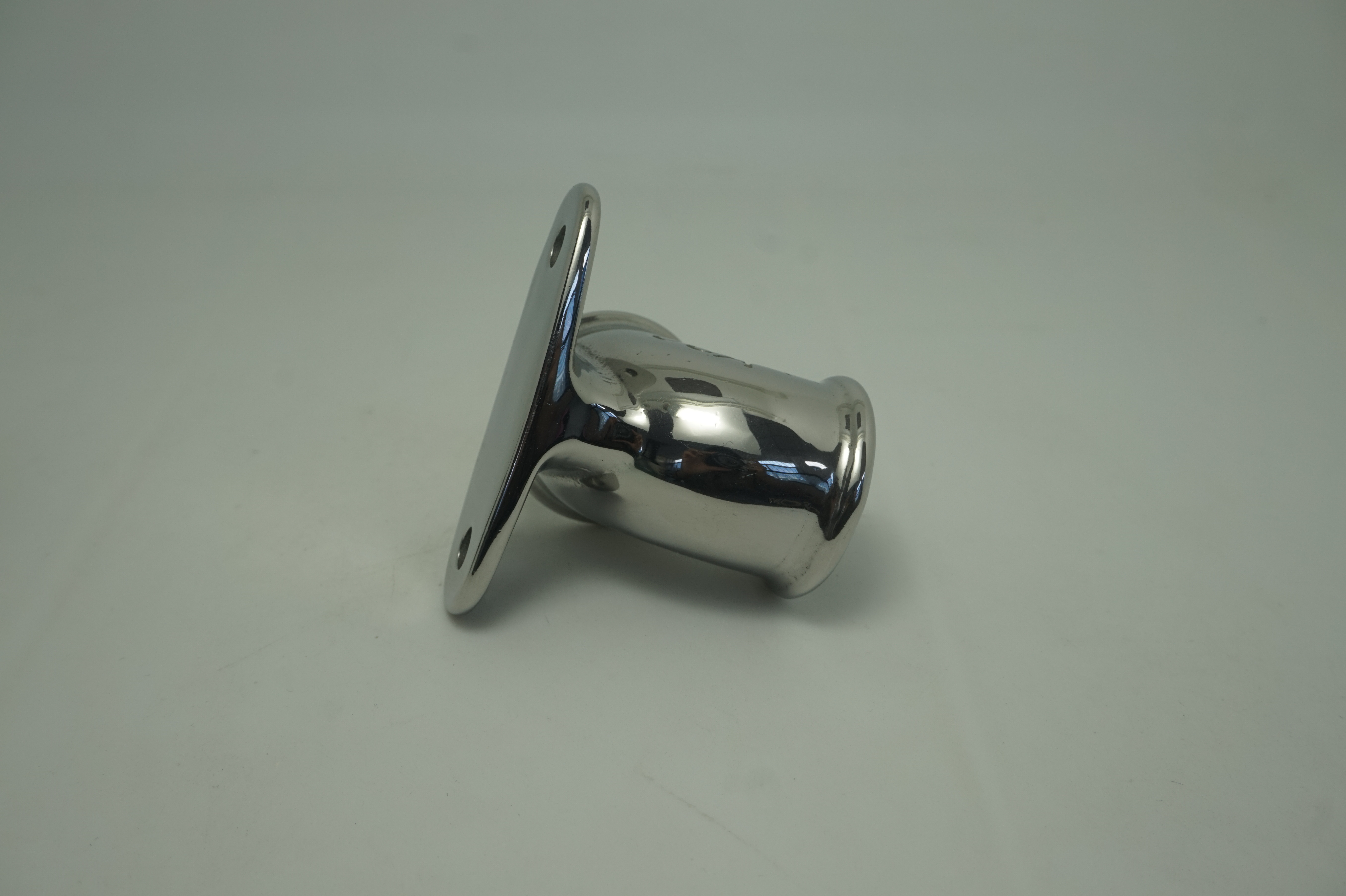
Where a weld cap stands proud and has to come down, a grinding finishing machine removes material far faster than any tumbling route, and a disc finishing machine delivers high energy to flat faces and convex zones. This is the stage that takes off heat tint and the top of the cap, but it is also where damage is created: an over-ground toe leaves an undercut that traps product, a fast wheel can smear oxide into the surface rather than lift it, and abrasive tooling that has touched carbon steel can deposit free iron. Ground zones then need refining, because the scratch pattern left by coarse abrasive is not a finish. The sequence is what matters: remove the cap, blend the toe, refine the zone, then verify. Grinding alone rarely satisfies a stated product-contact surface requirement.
| Machine route | Where it fits | What it will not do |
|---|---|---|
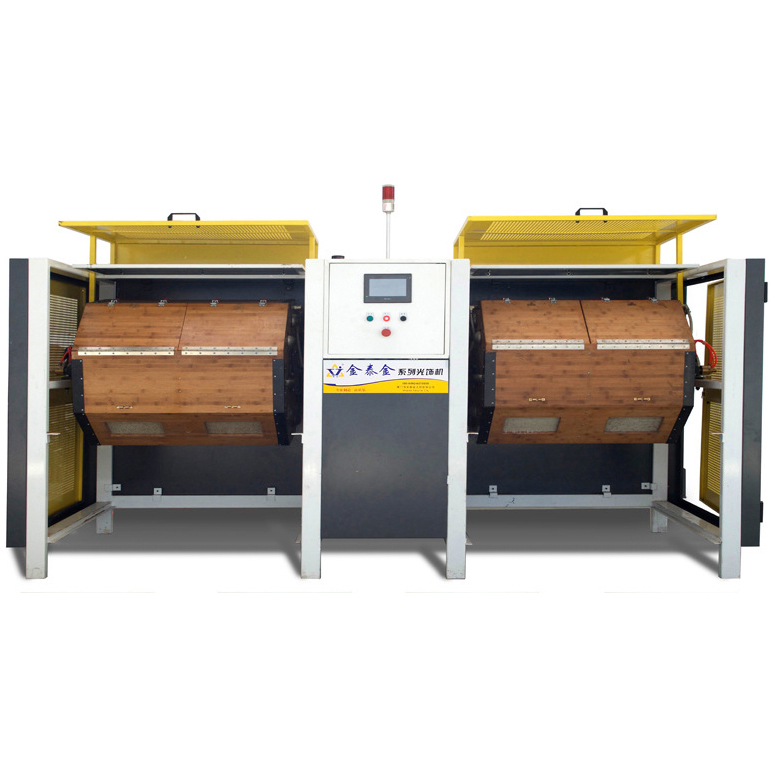
| Barrel finishing machine, rotary barrel tumbler | Large batches of small robust fittings, fasteners and valve trim that can tumble freely without damage. | Part-on-part contact is unavoidable, and fine threads, sealing lips and thin diaphragms are poor candidates. |
| Disc finishing machine | High-energy work on flat faces, flanges and convex zones where material removal or fast refinement is wanted. | Poor reach into recesses and around complex geometry, and it can dish a flat face if the cycle is not controlled. |
| Tub vibrator | Long parts, tube spools, chute sections and small vessels that a bowl cannot accept, with the part repositioned as needed. | Coverage depends on how the part sits in the media mass, so banding and shadow zones are common without a planned fixture. |
| Grinding finishing machine | Removing a proud weld cap, heavy scale and heat tint before any tumbling or refinement stage. | Leaves a scratch pattern that needs refining, can smear oxide, and iron-bearing tooling can deposit free iron on stainless. |
Media that leaves the chamber with the parts is a defect, not a housekeeping issue, so separation is designed rather than improvised. Screens sized below the smallest medium and above the largest acceptable chip, magnetic separators for steel media, and a counted retrieval step for any feature that can trap a piece all belong in the plan. Media wear management is the other half: as ceramic wears the load loses cut, so a schedule for top-up, screening out fines and removing broken pieces keeps the process from drifting. Compound carryover into threads, gasket grooves and tube ends is controlled by rinse volume, rinse water quality, orientation while draining and drying. Sludge and spent compound disposal is a production cost and a housekeeping discipline that should be costed before a line is specified.
| Media | Best fit | Watch out for |
|---|---|---|
| Plastic media, cones and triangles | Gentle edge blending and cosmetic refinement on softer non-ferrous fittings, thin sections and delicate parts. | Cannot remove heat tint, mill scale or a weld cap, so it must follow the operation that does that work. |
| Ceramic media, angle-cut triangles | Heavier weld-zone refinement and edge blending on 304 and 316L parts where a corner or a toe line has to be reached. | Wears down and changes its effective size class, produces sludge, and can over-round a thin edge or a soft detail. |
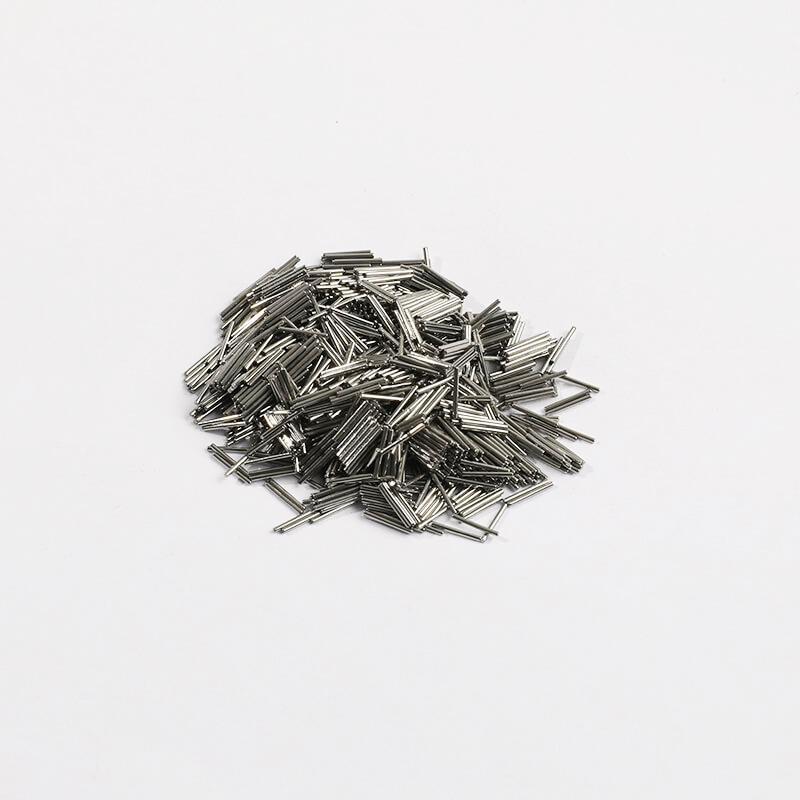
| Steel pins and fine media for magnetic finishing | Small precise components, short bores, slots and blind features that shaped tumbling media cannot enter. | Limited to small parts, will not remove a proud weld cap, and pins must be counted and recovered from every opening. |
| Dry media, walnut shell and corn cob | Light dry burnishing and cosmetic refinement where retained water in a crevice or assembly is a problem. | Generates dust requiring extraction, removes no oxide, and leaves a surface character different from a wet abrasive cycle. |
Banding, patchy gloss and untouched shadow zones come from the load, not from the medium. Parts sitting in a dead corner of a chamber, a tub fixture that holds a weld away from the media mass, a load that is too full or too empty, or a cycle cut short so only the accessible faces were refined will all produce a finish that fails when the whole surface is examined. The failure is easy to miss because the first glance lands on the brightest area. Detection is systematic: roughness readings at several marked locations rather than one, photographs at fixed angles around the part, and a borescope record of internal surfaces at an agreed view. Comparing a part from the top and the bottom of the load shows the spread quickly.
| Failure mode | Likely cause | How to catch it |
|---|---|---|
| Edge or weld toe rounded beyond the specified limit | Dense or large media running too long at high energy, or a part left free to tumble when it should have been fixtured. | Measure edges with an optical comparator or radius gauge and compare with the drawing limit, and measure a weld toe before and after the cycle on the same part. |
| A shiny but burnished surface with intact oxide beneath it | Abrasive media smearing the oxide instead of cutting through it, often where a cleaning compound was relied on to do the cutting. | Examine the transition zone rather than the cap, compare a mechanically worked area with a freshly ground control area, and cross-section one sample part under magnification. |
| Discolouration, water spotting or flash rust after the cycle | Contaminated or hard rinse water, incomplete draining of a crevice, or a part left wet before drying. | Inspect after drying under consistent lighting, check the rinse water source and quality, and verify that orientation during draining lets every recess empty. |
| Compound residue or dried film trapped in crevices and threads | Insufficient rinse volume, a rinse that does not reach the recess, or draining in an orientation that holds fluid in place. | Wipe or swab the recess with a clean white cloth and inspect, run a water-break or residue check on product-contact surfaces, and re-check after changing rinse volume or orientation. |
Geelong is one of Australia's foremost manufacturing centres with a long industrial history, and manufacturing is again its fastest-growing employment sector after the closures of the Alcoa aluminium smelter and the Ford engine plant. The Geelong Manufacturing Council reports that Greater Geelong reached a record 147,234 local jobs in 2024-25, with manufacturing recording the fastest expansion for the second consecutive year, rising 12.1 per cent to more than 11,400 jobs — a level not seen since before the Alcoa and Ford closures. The region has about 700 manufacturers across transport equipment, metals, extractive industries, chemicals and petroleum, cement, engineering, textiles, timber and food, contributing more than $1.7 billion in value add and around $5.8 billion in annual output; manufacturing categories tracked by the council include advanced manufacturing, automotive, metals, engineering, chemicals and refining, food, textiles and clean economy. Research infrastructure includes Deakin University, the Geelong Technology Precinct, CSIRO facilities, the Institute for Frontier Materials and Carbon Nexus. Defence manufacturing is a growing focus: Hanwha Defence Australia will build 129 Redback infantry fighting vehicles at its Avalon Airport Industrial Precinct facility, supported by local firms including Marand, UMS, Air Radiators, RPC Technologies, IXL Group and Carbon Revolution.
For this brief the relevant part of that base is food: The Geelong Manufacturing Council states 'Geelong is home to a large number of food processors and food and beverage product suppliers', sourcing products locally and from Victoria's Western District, with companies including Australian Lamb Company, MC Herd, Turosi, Farm Foods, Challenge Meats and Boomaroo Nurseries.
Geelong's mix of metals, engineering, transport equipment and defence manufacturing produces machined and fabricated metal components in steel, aluminium and stainless where deburring, edge radiusing and surface preparation directly affect coating adhesion, weld quality and assembly fit. The defence vehicle programme at Avalon and its local supply chain impose documented process and inspection requirements on supplied parts, so finishing steps need to be repeatable and traceable rather than operator-judged. Food processing equipment manufacturers in the region add a further requirement: stainless surfaces must be finished without leaving media residue or embedded particles that could create hygiene or corrosion problems.
A Geelong buyer should decide whether the finishing process must produce evidence suitable for a defence or automotive customer's quality system — documented media, cycle parameters and inspection records — or whether a general engineering finish is sufficient, because the documentation burden and the resulting equipment and media choice differ substantially.
Freight context: Port of Geelong (Victoria's second-largest port), Avalon Airport (international airport and Avalon Airport Industrial Precinct), Road and rail links to Melbourne, Ballarat, Colac and the Melbourne CBD, 75 km away. The Geelong Manufacturing Council states the region 'is well connected by road, rail, sea and air, and is home to Victoria's second-largest port and an international airport that supports national and international supply chains and logistics'. Avalon Airport also hosts the industrial precinct where Hanwha Defence Australia is building the Redback infantry fighting vehicles, so the airport precinct is both a freight gateway and a defence manufacturing site. Incoming finishing machines can arrive by sea through the Port of Geelong or by air through Avalon, with Melbourne's port and airport an alternative via the 75 km road and rail corridor.
Business is conducted in English and Australian industrial buyers are normally registered companies with an ABN that contract through a local importer or a licensed customs broker rather than directly with an overseas manufacturer. Because the first Australian supplier of in-scope electrical equipment becomes the legally responsible supplier, Chinese manufacturers are typically asked to provide test evidence, a compliance folder and a declaration so that their Australian importer can register and mark the product. Quotation and contracting expectations centre on a clear commercial entity, correct HS/tariff classification, documented country of origin for preferential duty, and an explicit statement of what is included in the delivered price and what is not.
The Australian Border Force (ABF) is the customs authority and clears imported goods through customs; all goods arriving in Australia must be declared unless an exception applies, goods valued at up to A$1,000 can be imported without a formal import declaration, and entry is made through the Integrated Cargo System (Form B650 for sea or air cargo). Generally all goods imported into Australia are liable for duties and taxes unless an exemption or concession applies, and most imports are subject to 10% GST, so classification, customs valuation and any preferential tariff claim drive the landed cost; a licensed customs broker is the normal route for a first-time importer. Electrical equipment can fall under the Electrical Equipment Safety System, under which the first Australian supplier registers as a Responsible Supplier, holds an ABN, makes a Responsible Supplier Declaration and marks the equipment with the Regulatory Compliance Mark (RCM) in accordance with AS/NZS 4417.1 and AS/NZS 4417.2. Imported goods may also require a trade description naming the country of manufacture, and machinery that is not in-scope electrical equipment still has to meet state work health and safety duties covering plant.
SurfacePolish supplies from Xiamen, China. The buyer's own destination rules, conformity marking, tariff classification and documentation responsibilities stay with the buyer; confirm them against the authorities named above before ordering.
Ask for a record that lets a later batch be compared with the one that was accepted. That means material grade and certificate, the media and compound used with composition data including chloride content, the cycle parameters, load composition and any fixture used, and inspection results with instrument, location and cut-off. Batch identity should be traceable from incoming material through finishing to dispatch, and any deviation should be recorded rather than corrected quietly. Where a sample trial has been run, treat its report as observations on the tested parts, under the settings used, not as a specification or a qualification. First-article discipline applies to production as much as to the trial: fully inspect the first parts of a new batch, retain one, and re-inspect whenever anything upstream changes.
A trial load is small, hand-observed and run by someone who knows what is being tested; a producing line is larger, repeatable and operated by whoever is on shift. That gap is where results are lost. Fix the load fill level, the part-to-media ratio, the fixture positions and the cycle time as written settings, then check that a shift operator can reproduce them. Expect drift from media wear, compound concentration, water quality and part mix, and put a check in place that detects it before a batch is finished rather than after. Mixed-size loads, changes in upstream welding and new material heats are all reasons to re-verify. Where a finish depends on a hand operation, variation between operators becomes part of process capability and has to be managed, not assumed away.
Specify it with a location, a cut-off and a direction, not as a single number. Mark the measurement points on the drawing and say whether each sits on base metal, a dressed weld or the heat-affected zone, because those are different surfaces. State the cut-off and evaluation length, and require readings across the lay at each point rather than one convenient traverse. Also state what Ra is not being asked to prove: it does not describe a crevice, an oxide film, embedded contamination or an edge condition. A buyer in Australia should record the instrument and the calibration specimen on every report.
Heat tint is oxide, so it is removed by cut rather than by cleaning. Ceramic media with an aggressive shape and bonding, or a grinding stage followed by refinement, are the usual mechanical answers on accessible weld zones. The limit is reach: a tint line that runs into a toe, a crevice or a small bore may survive a cycle that polishes the cap, which is why the toe should be inspected rather than judged by the shine of the weld face. Media size, shape and cycle energy must suit the oxide thickness. A trial on your own parts shows what was removed on the geometry tested.
Send representative parts, including the most difficult geometry in the family, and SurfacePolish runs them through a mechanical finishing route and returns the tested parts with observations and a proposed media, compound and cycle direction. The report describes what was seen on those parts under those settings. It is not a guarantee of a roughness value, an edge dimension, a cycle time, a capacity, a cost or a delivery date, and it does not qualify a process for any regulated use. Production variation in material, welding and fit-up is not represented by a small trial load, so your own verification still decides.
Use Geelong, Australia as the destination on the enquiry and state whether the deliverable is equipment, media and compound, a representative sample review or a line concept. A destination does not imply local stock, a local service point or a local delivery time.
Geelong manufacturers work to Australian Standards administered by Standards Australia, and defence suppliers in the Avalon/Geelong Defence Alliance supply chain additionally work to Commonwealth defence procurement specifications and quality-management requirements. Electrically powered machinery must comply with the EESS and be marked with the Regulatory Compliance Mark under AS/NZS 4417.1 and AS/NZS 4417.2 where in scope.
Sources were retrieved on 2026-09-29 and describe the local industrial and trade context only. They do not evidence any SurfacePolish project, shipment, installation or service in Geelong.
The buyer must get the internal weld zone clean and oxide-free but cannot get a mechanical tool or tumbling media into a bore that long.
Send the material, dimensions, approximate weight, batch quantity, the incoming condition and photographs of the difficult features. Mark which features must not be contacted by media and state how the result will be inspected. This form carries source reference PSEO-0784; quote it if you prefer an additional manual reference.
Open the SurfacePolish enquiry form Email a prepared enquiry
No price, lead time, certification or result is promised here. Confirm whether a sample trial is available for the specific part and what the trial can and cannot show.
Page PSEO-0784 · revised 2026-09-29 · cross-border equipment, media and scoped sample review. City context is sourced and cited above.
Use this local checker to identify missing part and inspection information. It prepares a technical-review brief; it does not approve a machine, process recipe or production result.
Complete the part details to prepare a review brief.
Email : info@surface-polish.com


 IPv6 network supported


 +86-592-2381506