A bulk handling fabricator in Liverpool, United Kingdom serving food processing equipment has a 2.4 m 304 auger with a helical weld along its flights. The part is far too long for a bowl machine, and its drive-end bore has a tolerance that finishing must not disturb, so the buyer needs a route that suits long geometry. SurfacePolish supplies finishing equipment, media and compounds across borders and runs a free sample trial. This brief is written for a buyer in Liverpool working on food processing equipment; it describes equipment, media and a scoped sample review, not a local polishing service.
Which surfaces on this part touch product, and what does each one have to satisfy in roughness, oxide freedom, edge condition and cleanliness?
Which internal surfaces can a mechanical route physically reach, and what happens to the zones it cannot?
What must the finished surface survive in service, including cleaning cycles, and how will that be checked without leaning on a finishing trial?
Grade and history determine what the surface can tolerate. Confirm whether the part is 304, 304L, 316 or 316L, whether it is annealed or cold worked, and whether a free-machining grade with added sulphur has been used in a product-contact position. Record every operation that has already touched the surface: forming, shot blasting, wire brushing with carbon steel, grinding with iron-bearing tooling, acid pickling, electrochemical polishing or an earlier mechanical polish. Each leaves a different starting condition and a different contamination risk. Note heat treatment and any sensitisation concern from welding or high-temperature service, because material condition affects how the surface behaves later and cannot be changed by finishing. Certificates for the delivered material and a written sequence of operations are the minimum evidence to request.
Plastic media in cones, triangles and cylinders cuts gently and is chosen when the requirement is a light edge blend or a cosmetic touch rather than weld-zone oxide removal. It suits softer non-ferrous fittings, thin sections and parts that must not lose measurable material, and it can wear more predictably than ceramic in some applications. What it cannot do is remove heat tint, mill scale or a proud weld cap, so it belongs late in a sequence, after the aggressive work, or on parts that never carried those conditions. Dry media such as walnut shell and corn cob works by light abrasion and burnishing on a dry machine, produces dust that needs extraction, and leaves a different surface character from a wet abrasive cycle. Neither plastic nor dry media substitutes for the operation that removes oxide.
| Media | Best fit | Watch out for |
|---|---|---|
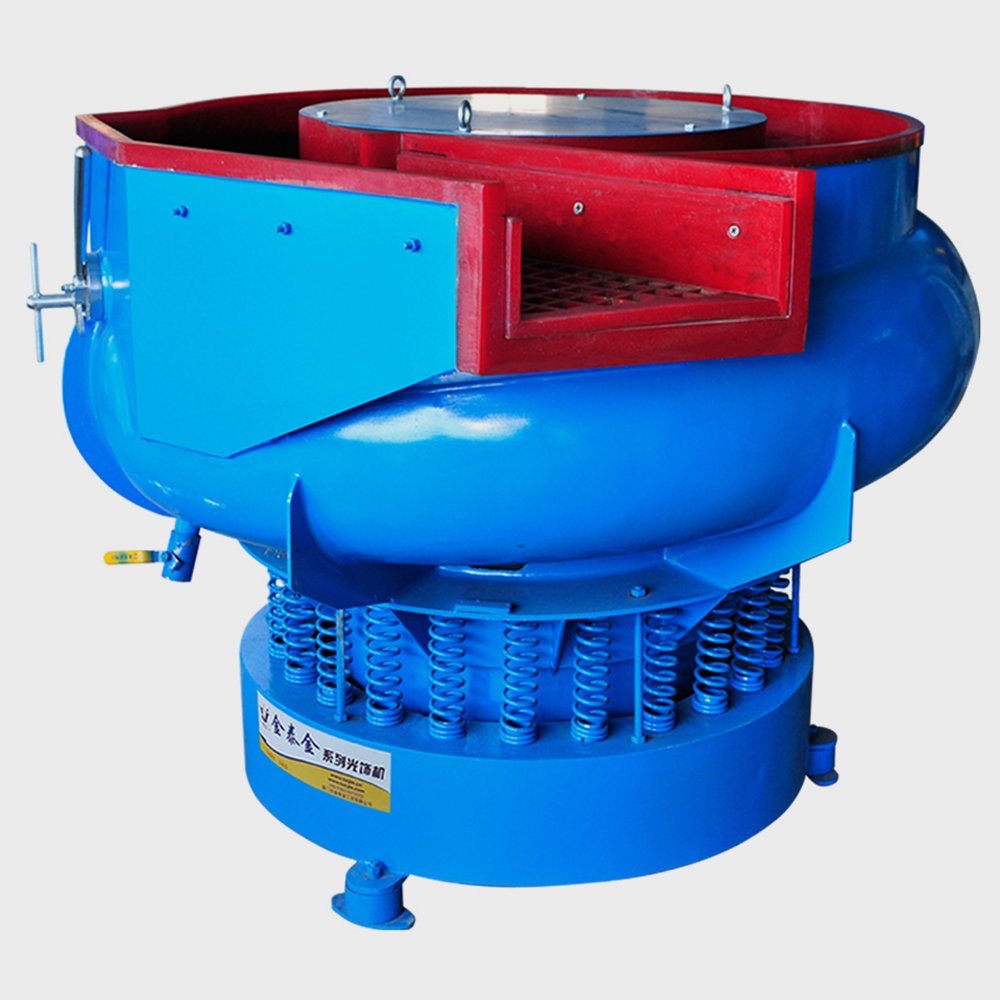
| Steel media, balls and diagonals | Bright surface refinement on robust stainless parts where a dense medium is wanted to work into recesses. | Can transfer iron to stainless, imprint soft or thin features, flatten a deliberate edge radius, and needs magnetic recovery. |
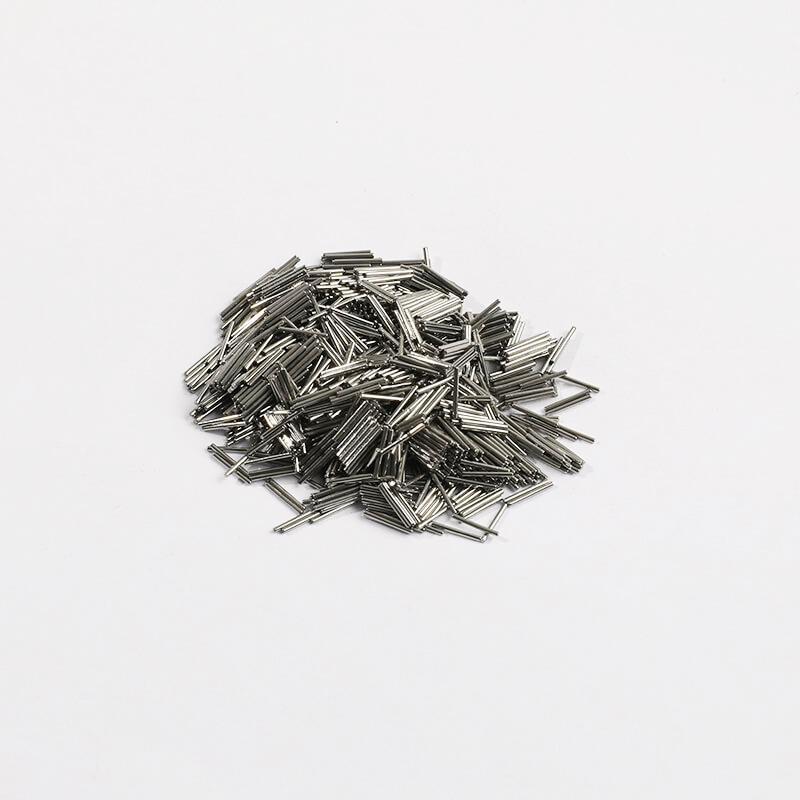
| Steel pins and fine media for magnetic finishing | Small precise components, short bores, slots and blind features that shaped tumbling media cannot enter. | Limited to small parts, will not remove a proud weld cap, and pins must be counted and recovered from every opening. |
| Ceramic media, small cylinders and spheres | General deburring and light radius work on hygienic fittings, with less edge cutting than an angle-cut shape. | Small sizes lodge in gasket grooves and drilled openings, and a sphere refines slowly where oxide is thick. |
| Plastic media, cones and triangles | Gentle edge blending and cosmetic refinement on softer non-ferrous fittings, thin sections and delicate parts. | Cannot remove heat tint, mill scale or a weld cap, so it must follow the operation that does that work. |
Magnetic finishing uses small steel pins or fine media driven by a rotating magnetic field, which lets it work inside small bores, slots and blind features that tumbling media cannot enter, and the pin-like medium is less likely to lodge than a shaped ceramic piece. It suits small precise components rather than large panels or long tubes, and it will not remove a proud weld cap. A dry route, using dry media on a dry polishing machine, is chosen when retained water in a crevice or an assembly is a problem, or when a light cosmetic refinement is wanted on a part that must not be wet. Dry processing generates dust and cannot remove heat tint or oxide, so it complements rather than replaces a wet abrasive stage. The dryer after a wet cycle is a process step, not an afterthought.
| Machine route | Where it fits | What it will not do |
|---|---|---|
| Magnetic finishing machine | Small precise parts and short internal features such as slots, small bores and blind recesses. | Part size and surface area are limited, large panels and long tubes are out of scope, and it will not dress a weld cap. |
| Barrel finishing machine, rotary barrel tumbler | Large batches of small robust fittings, fasteners and valve trim that can tumble freely without damage. | Part-on-part contact is unavoidable, and fine threads, sealing lips and thin diaphragms are poor candidates. |
| Dry polishing machine and dryer | Dry burnishing where a wet cycle is unwanted, and drying parts after a wet cycle so crevices do not stay wet. | Removes no oxide and needs dust extraction; a dryer manages water, it does not change the finish left by the wet stage. |
| Disc finishing machine | High-energy work on flat faces, flanges and convex zones where material removal or fast refinement is wanted. | Poor reach into recesses and around complex geometry, and it can dish a flat face if the cycle is not controlled. |
Heat tint is an oxide layer whose thickness varies across a weld, thickest where the metal was hottest and often receding into a crevice or along the toe line where no medium reaches. A mechanical cycle can polish the visible cap and leave the toe untouched, so a part passes a glance and still carries oxide in exactly the location that matters. Colour is a practical indicator: straw and light blue suggest a thinner film, while grey and black scale suggests a heavier one that needs real removal before any refinement means anything. Detection is by inspection at magnification, comparison with an agreed visual reference, and the buyer's own test for free iron or passive condition where their specification asks for one. Photograph the toe at a fixed angle before and after each stage.
| Failure mode | Likely cause | How to catch it |
|---|---|---|
| Cross-contamination from tooling, racks or media shared with carbon steel | No dedicated stainless area, undocumented consumable grades, or media stored where mild steel fabrication dust settles. | Audit which tools, racks and media touch the part, record their grades, store media covered and segregated, and confirm cleanliness with the buyer's own test after a tooling change. |
| Uneven finish, banding or untouched shadow zones across one part | Part position in the chamber, a fixture holding a surface out of the media mass, or a load that is too full or too empty for even contact. | Take roughness readings at several marked locations instead of one, photograph at fixed angles around the part, and compare parts from the top and bottom of the same load. |
| Thin-wall distortion or dishing on tanks, panels and chutes | Heavy media load striking unsupported thin sheet, or a chamber fill level that lets parts fall rather than tumble. | Measure wall flatness and key dimensions before and after, inspect under raking light for oil-canning, and run the test at the production fill level rather than a light one. |
| Edge or weld toe rounded beyond the specified limit | Dense or large media running too long at high energy, or a part left free to tumble when it should have been fixtured. | Measure edges with an optical comparator or radius gauge and compare with the drawing limit, and measure a weld toe before and after the cycle on the same part. |
Liverpool's industrial base is port-led: the Port of Liverpool operates two container terminals, the Royal Seaforth Container Terminal and the £400m Liverpool2 deep-water terminal, on both banks of the River Mersey. Peel Ports describes the port as the flagship handling hub of its 'Heart of Britain' steel and metals network and as a vital gateway for UK steel imports and distribution, and reports a record of over 702,000 tonnes of bulk steel and metals handled. Make UK classes the North West as the UK region with the highest total manufacturing output, and the Liverpool City Region Combined Authority is the area's statutory economic body.
The nearest part of that base to this brief is architectural: ABP describes the Port of Garston in Liverpool as handling a wide array of cargo including steel products at around 500,000 tonnes a year, the metals flow behind the city's fabrication and architectural metalwork firms.
Steel and metals handling at scale - the port reports a record of more than 702,000 tonnes of bulk steel and metals - supports a local base of stockholders, fabricators and processing firms whose plate, bar and sections need edge and surface conditioning before fabrication or dispatch. Media, machines and sample parts for that work can be landed at Liverpool2 or on the Manchester Ship Canal and moved inland on the same rail and road links that already carry the steel.
A Liverpool buyer should confirm the landed-cost and inland-movement plan at the same time as the machine specification, because equipment and media can clear through Liverpool2 or the Manchester Ship Canal, and the finishing acceptance criterion for steel work is normally defined by the customer's order rather than by a generic 'deburred' note.
Freight context: Port of Liverpool: Royal Seaforth Container Terminal and Liverpool2 (deep water), Port of Garston, Liverpool (ABP) - dry bulks and steel products, Liverpool Airport (11.5 miles from the port, per Peel Ports). Peel Ports states that the Port of Liverpool has direct deep-sea and short-sea connections including a niche Far East service, with a purpose-built rail terminal for onward movement, and lists road distances of 105 miles to Birmingham and 217 miles to London. ABP's Port of Garston, Liverpool handles around 500,000 tonnes of cargo a year including steel products, and ABP's Hams Hall terminal links the North West to Midlands distribution.
English is the working language of contracts, drawings and conformity paperwork, so quotations, technical files and Declarations of Conformity should be supplied in English. UK manufacturers have now recovered above 2019 output levels in every English region and devolved nation except Northern Ireland, and the sector is concentrated in food and drink and transport equipment, with the North West the largest manufacturing region by total output. Buyers typically expect the UKCA/CE route, a Declaration of Conformity and a UK-established economic operator to be identified before order, and they need commercial invoices, customs declarations and the C79 retained in a form their finance team can use for import VAT recovery. No source verified in this research establishes a mandated payment instrument, so payment structure should be treated as commercial negotiation rather than a regulatory requirement.
Importers need a GB-prefixed Economic Operators Registration and Identification (EORI) number, an import declaration carrying the correct commodity code, and retained commercial invoices plus the Import VAT Certificate (C79) so import VAT can be reclaimed. Machinery placed on the Great Britain market must be marked UKCA or CE: the manufacturer must draw up and retain technical documentation including a Declaration of Conformity, apply the correct marking with identification details, and cooperate with market surveillance; an authorised representative must be established in the UK. Under the Product Safety and Metrology (Amendment) Regulations 2024 the UK continues to recognise CE marking alongside or in place of UKCA for the Great Britain market, so either route can be used for most product types. Duty and import VAT are calculated from the customs value declared, and the commodity code also determines whether an import licence is needed.
SurfacePolish supplies from Xiamen, China. The buyer's own destination rules, conformity marking, tariff classification and documentation responsibilities stay with the buyer; confirm them against the authorities named above before ordering.
Ask for a record that lets a later batch be compared with the one that was accepted. That means material grade and certificate, the media and compound used with composition data including chloride content, the cycle parameters, load composition and any fixture used, and inspection results with instrument, location and cut-off. Batch identity should be traceable from incoming material through finishing to dispatch, and any deviation should be recorded rather than corrected quietly. Where a sample trial has been run, treat its report as observations on the tested parts, under the settings used, not as a specification or a qualification. First-article discipline applies to production as much as to the trial: fully inspect the first parts of a new batch, retain one, and re-inspect whenever anything upstream changes.
A trial load is small, hand-observed and run by someone who knows what is being tested; a producing line is larger, repeatable and operated by whoever is on shift. That gap is where results are lost. Fix the load fill level, the part-to-media ratio, the fixture positions and the cycle time as written settings, then check that a shift operator can reproduce them. Expect drift from media wear, compound concentration, water quality and part mix, and put a check in place that detects it before a batch is finished rather than after. Mixed-size loads, changes in upstream welding and new material heats are all reasons to re-verify. Where a finish depends on a hand operation, variation between operators becomes part of process capability and has to be managed, not assumed away.
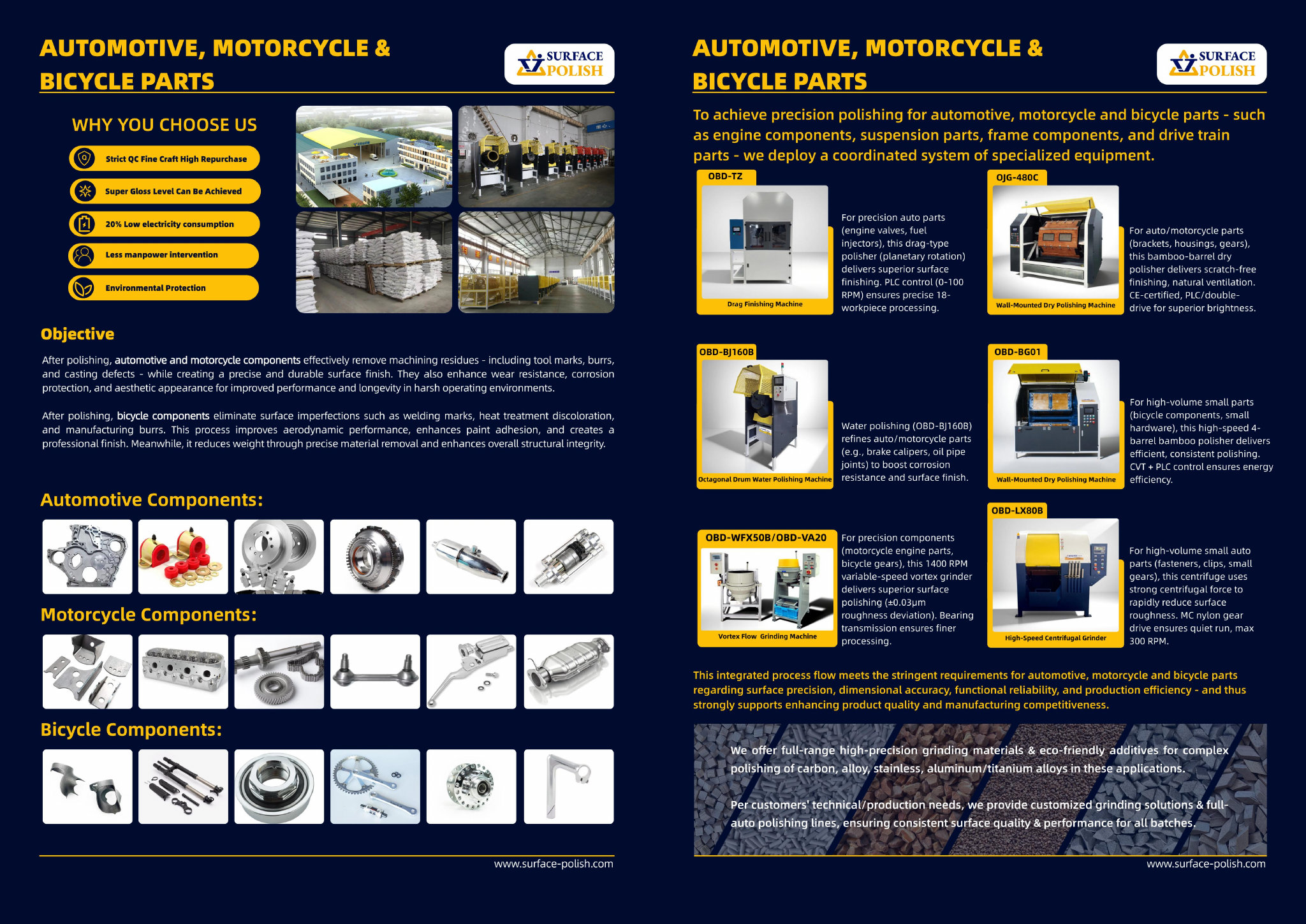
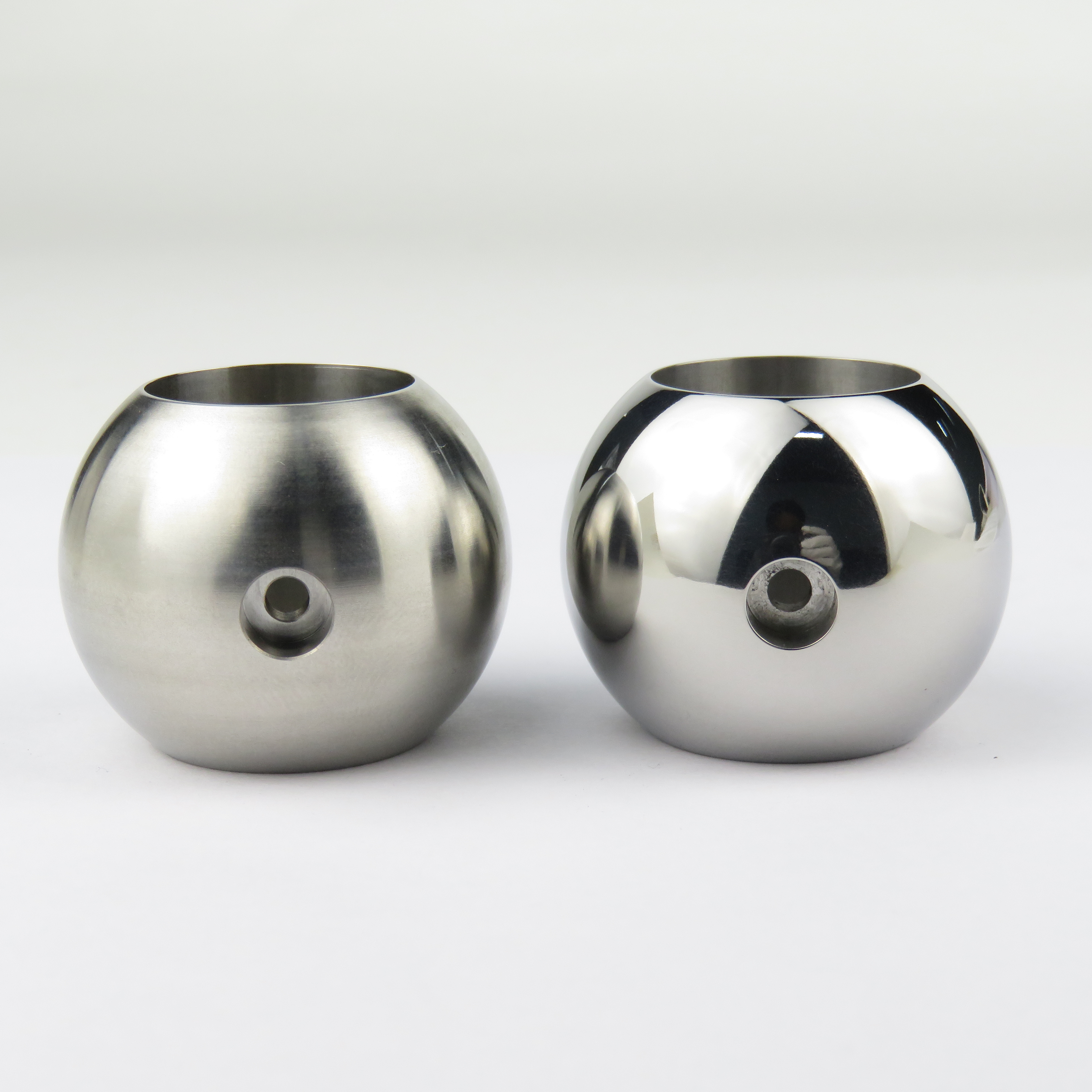
No. SurfacePolish supplies finishing machines, media and compounds, and no machine, medium, compound or process is presented as approved, certified or qualified for food contact, hygienic service or any regulated application. Certification of that kind depends on the finished equipment, its design, its materials and the way it is operated, and it is defined and verified by your own quality and regulatory functions against the requirements that apply to your market. What a supplier can provide is equipment and consumables information, including composition data for media and compounds, so your own assessment has something to work from. A sample trial is not a certification.
Generally no, and this is the clearest practical difference between the routes. Tumbling media, whether ceramic, plastic or steel, has to physically enter a bore to work on it, and a tube whose length is many times its diameter and whose bore is narrow will not admit media in a way that produces an even result. Some internal work is possible with a magnetic finishing machine on short bores and small precise parts, but long runs of small-bore sanitary tubing are out of reach for a mechanical process. Zones a machine cannot reach have to be finished another way, accepted as they are, or designed out.
It can, and the source is usually the tooling or the consumable rather than the stainless itself. Carbon steel brushes, wire wheels, blasting grit, iron-bearing media, shared racks and contaminated rinse water can all deposit free iron that appears later as a rust bloom. Control means dedicated stainless tooling and racks, documented grades for everything that touches the surface, and a cleaning step after mechanical work. Detection is by a ferroxyl-type test or an equivalent method chosen by your own quality function, applied at agreed locations including crevices. The acceptance decision and its critical locations remain yours.
Use Liverpool, United Kingdom as the destination on the enquiry and state whether the deliverable is equipment, media and compound, a representative sample review or a line concept. A destination does not imply local stock, a local service point or a local delivery time.
Equipment placed on the Great Britain market needs UKCA or CE marking with a Declaration of Conformity, and HSE's work equipment and machinery and COSHH regimes cover operation and the media, compounds and dust involved. Steel and metals buyers additionally work to the material, inspection and certification requirements written into their own order specification for the finished component.
Sources were retrieved on 2026-09-29 and describe the local industrial and trade context only. They do not evidence any SurfacePolish project, shipment, installation or service in Liverpool.
The buyer wants the helical weld dressed and the flights refined while holding the drive-end bore and the shaft straightness.
Send the material, dimensions, approximate weight, batch quantity, the incoming condition and photographs of the difficult features. Mark which features must not be contacted by media and state how the result will be inspected. This form carries source reference PSEO-0254; quote it if you prefer an additional manual reference.
Open the SurfacePolish enquiry form Email a prepared enquiry
No price, lead time, certification or result is promised here. Confirm whether a sample trial is available for the specific part and what the trial can and cannot show.
Page PSEO-0254 · revised 2026-09-29 · cross-border equipment, media and scoped sample review. City context is sourced and cited above.
Use this local checker to identify missing part and inspection information. It prepares a technical-review brief; it does not approve a machine, process recipe or production result.
Complete the part details to prepare a review brief.
Email : info@surface-polish.com


 IPv6 network supported


 +86-592-2381506