A pump manufacturer in London, United Kingdom serving food processing equipment is comparing routes for cast 316L volutes. Internal passages and a machined bore sit on the same part, and the buyer wants to know what a mechanical route can reach before committing to a finishing line. SurfacePolish supplies machines, media and compounds across borders and runs a free process sample trial on representative parts shipped to the factory in Xiamen. This brief is written for a buyer in London working on food processing equipment; it describes equipment, media and a scoped sample review, not a local polishing service.
Does the route have to remove heat tint and restore a passive condition, or refine a surface that is already clean, and who verifies that difference?
What free-iron and chloride exposure does the process itself introduce, and can the buyer's own cleanliness test detect it before the part is released?
Where will roughness be measured, with which cut-off and in which direction, and does that location represent the surface the product actually sees?
Reachability decides the route more often than the finish target does. Measure the internal diameter of every tube, the depth and diameter of every blind hole, the width of every crevice and gasket groove and the corner radius at every internal weld. Ratios matter more than absolute size: a bore that is wide but very deep, or a groove narrower than the smallest available medium, stays untouched by any tumbling process however long the cycle runs. Ask whether a borescope can be inserted and at what angle, because a surface that cannot be seen cannot be inspected after finishing. List the zones a machine cannot reach, and decide in advance whether those zones are finished by another method, accepted as-is with a stated condition, or designed out of the part.
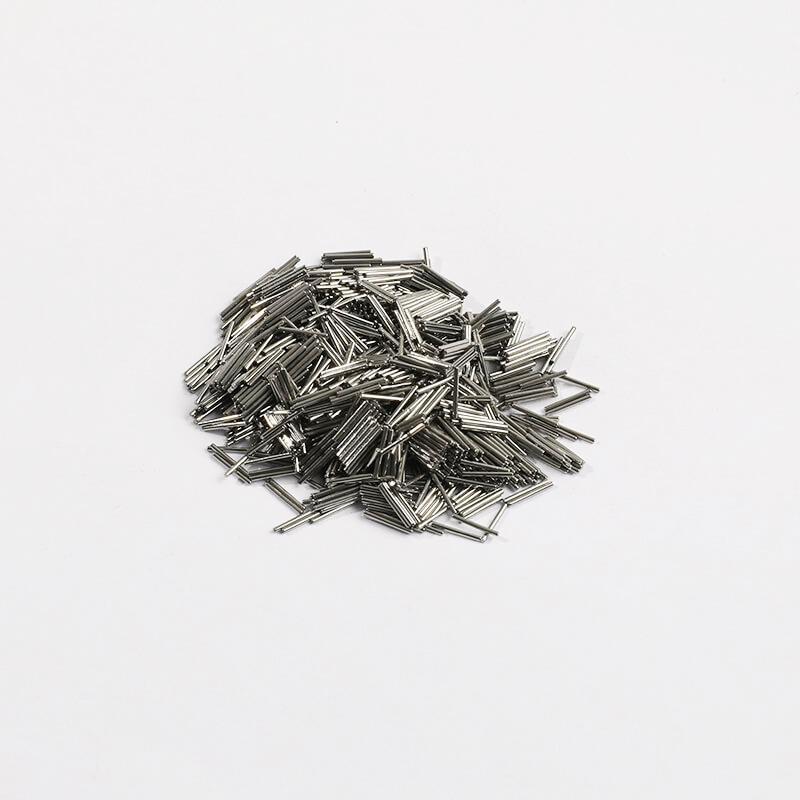
Magnetic finishing uses small steel pins or fine media driven by a rotating magnetic field, which lets it work inside small bores, slots and blind features that tumbling media cannot enter, and the pin-like medium is less likely to lodge than a shaped ceramic piece. It suits small precise components rather than large panels or long tubes, and it will not remove a proud weld cap. A dry route, using dry media on a dry polishing machine, is chosen when retained water in a crevice or an assembly is a problem, or when a light cosmetic refinement is wanted on a part that must not be wet. Dry processing generates dust and cannot remove heat tint or oxide, so it complements rather than replaces a wet abrasive stage. The dryer after a wet cycle is a process step, not an afterthought.
| Machine route | Where it fits | What it will not do |
|---|---|---|
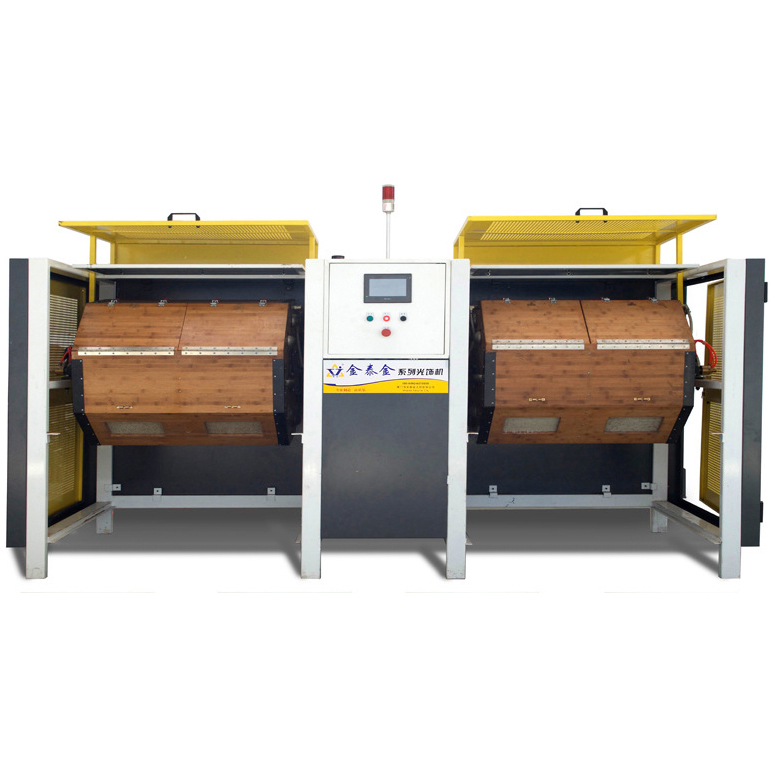
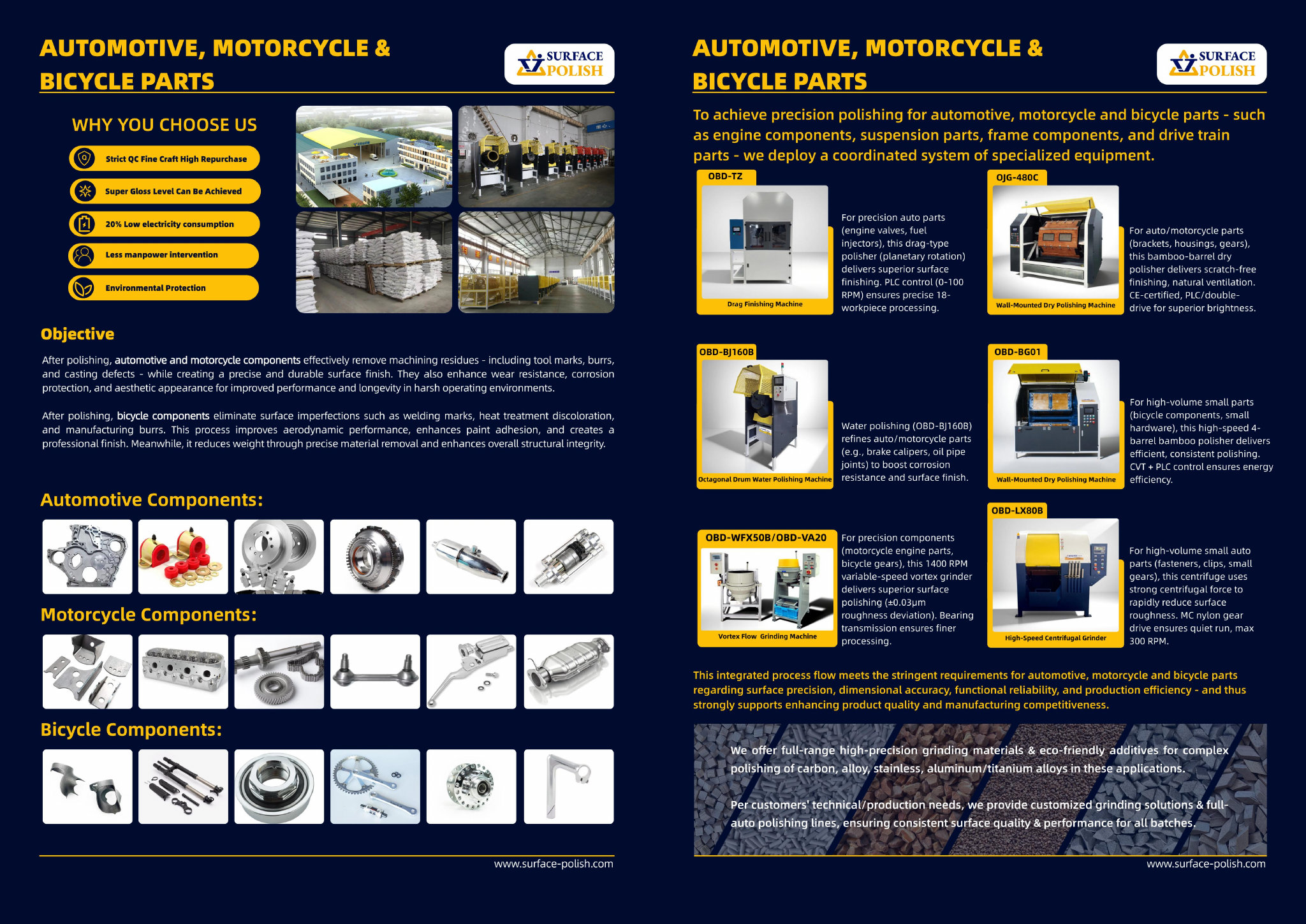
| Centrifugal barrel finishing machine | Higher-energy cycles that shorten the time to blend an edge or refine a small part in quantity. | The added energy increases over-rounding and imprinting risk, and delicate or mixed-size loads need careful planning. |
| Magnetic finishing machine | Small precise parts and short internal features such as slots, small bores and blind recesses. | Part size and surface area are limited, large panels and long tubes are out of scope, and it will not dress a weld cap. |
| Vibratory finishing machine, bowl type | Edge and weld-toe blending plus surface refinement on mid-sized parts, with a visible load and adjustable energy. | Chamber geometry caps part size, and the inside of a long tube or a narrow crevice stays out of reach. |
| Disc finishing machine | High-energy work on flat faces, flanges and convex zones where material removal or fast refinement is wanted. | Poor reach into recesses and around complex geometry, and it can dish a flat face if the cycle is not controlled. |
Steel media in balls, diagonals and pins is dense and produces a bright refined surface quickly, which makes it attractive where appearance matters. On stainless the trade-off is contamination: steel media and its wear debris can transfer iron to the surface, and that iron is exactly what later appears as a rust bloom in service. Magnetic separation makes steel media easy to recover, and its mass helps it work into recesses, but it can also imprint soft or thin features and flatten a deliberate edge radius. Whether steel is acceptable depends on the buyer's own cleanliness and free-iron requirements and on what happens downstream. If a stainless part will meet moisture or a chloride-bearing environment, settle the contamination question before steel media is written into the process.
| Media | Best fit | Watch out for |
|---|---|---|
| Steel pins and fine media for magnetic finishing | Small precise components, short bores, slots and blind features that shaped tumbling media cannot enter. | Limited to small parts, will not remove a proud weld cap, and pins must be counted and recovered from every opening. |
| Steel media, balls and diagonals | Bright surface refinement on robust stainless parts where a dense medium is wanted to work into recesses. | Can transfer iron to stainless, imprint soft or thin features, flatten a deliberate edge radius, and needs magnetic recovery. |
| Grinding media, coarse alumina-based | Removing a proud weld cap, heavy scale and heat tint before a refinement stage on accessible external surfaces. | Leaves a coarse scratch pattern that must be refined, removes material fast, and can gouge thin sheet or a soft alloy. |
| Ceramic media, small cylinders and spheres | General deburring and light radius work on hygienic fittings, with less edge cutting than an angle-cut shape. | Small sizes lodge in gasket grooves and drilled openings, and a sphere refines slowly where oxide is thick. |
Banding, patchy gloss and untouched shadow zones come from the load, not from the medium. Parts sitting in a dead corner of a chamber, a tub fixture that holds a weld away from the media mass, a load that is too full or too empty, or a cycle cut short so only the accessible faces were refined will all produce a finish that fails when the whole surface is examined. The failure is easy to miss because the first glance lands on the brightest area. Detection is systematic: roughness readings at several marked locations rather than one, photographs at fixed angles around the part, and a borescope record of internal surfaces at an agreed view. Comparing a part from the top and the bottom of the load shows the spread quickly.
| Failure mode | Likely cause | How to catch it |
|---|---|---|
| Gasket seat or sealing face dished so it no longer seals | Over-finishing a machined face, part-on-part contact in an unseparated load, or media hammering a face that should have been masked. | Check flatness of the sealing face with a straight edge, a feeler gauge or a surface plate before and after, and confirm against the sealing requirement the buyer's specification states. |
| A shiny but burnished surface with intact oxide beneath it | Abrasive media smearing the oxide instead of cutting through it, often where a cleaning compound was relied on to do the cutting. | Examine the transition zone rather than the cap, compare a mechanically worked area with a freshly ground control area, and cross-section one sample part under magnification. |
| Compound residue or dried film trapped in crevices and threads | Insufficient rinse volume, a rinse that does not reach the recess, or draining in an orientation that holds fluid in place. | Wipe or swab the recess with a clean white cloth and inspect, run a water-break or residue check on product-contact surfaces, and re-check after changing rinse volume or orientation. |
| Uneven finish, banding or untouched shadow zones across one part | Part position in the chamber, a fixture holding a surface out of the media mass, or a load that is too full or too empty for even contact. | Take roughness readings at several marked locations instead of one, photograph at fixed angles around the part, and compare parts from the top and bottom of the same load. |
London's published trade profile is services-led rather than goods-led: ONS estimates place London's total trade surplus at £59.4 billion in 2023, with services exports of £213.1 billion, while ONS also records the capital as having the value of services exports higher than any UK region in 2023. The Greater London Authority publishes the city's data through the London Datastore, which holds over a thousand datasets on the capital. Deep-sea container freight for the capital region is handled by Thames-side terminals such as DP World's London Gateway rather than by inner-London wharves.
For this brief the relevant part of that base is food: ONS records London as the UK region with the highest total trade surplus in 2023, reflecting the scale of the capital's traded-goods and services economy including its consumer and food supply base.
London's published trade profile is dominated by services rather than by goods production, so finishing capacity serving the capital is generally not located in the capital. Deburring, edge and cleanliness requirements for London-specified work therefore have to be written into the purchase specification and the technical file, with an acceptance test agreed in advance, rather than settled against an assumed local plant practice.
A London-based buyer should decide up front whether the finishing step will run in-house or at a supplier, and write the edge or cleanliness acceptance test into the purchase order, because the equipment is imported and the technical file and Declaration of Conformity must be held by a manufacturer or a UK-established economic operator.
Freight context: London Gateway (DP World), deep-sea container terminal on the Thames, Thames-side port estate controlled under the Port of London Authority regime. ONS records London as the UK region with the highest total trade surplus in 2023 (£59.4 billion) and shows the capital importing £89.8 billion of goods against £41.8 billion of goods exports, so incoming machinery and media for London buyers are landed and cleared outside the capital, principally at Thames-side deep-sea terminals.
Importers need a GB-prefixed Economic Operators Registration and Identification (EORI) number, an import declaration carrying the correct commodity code, and retained commercial invoices plus the Import VAT Certificate (C79) so import VAT can be reclaimed. Machinery placed on the Great Britain market must be marked UKCA or CE: the manufacturer must draw up and retain technical documentation including a Declaration of Conformity, apply the correct marking with identification details, and cooperate with market surveillance; an authorised representative must be established in the UK. Under the Product Safety and Metrology (Amendment) Regulations 2024 the UK continues to recognise CE marking alongside or in place of UKCA for the Great Britain market, so either route can be used for most product types. Duty and import VAT are calculated from the customs value declared, and the commodity code also determines whether an import licence is needed.
BSI is the UK's National Standards Body, and British Standards (BS, including adopted BS EN ISO texts) are the documents a UK buyer's surface-finish, edge and cleanliness specifications are normally written against and purchased through. On the plant side, HSE maintains the work equipment and machinery topic covering the safe supply and use of machinery, and the COSHH regime, which requires employers to identify, assess and control risks from hazardous substances - the regime that applies to finishing compounds, abrasive media and the dust and effluent they generate.
SurfacePolish supplies from Xiamen, China. The buyer's own destination rules, conformity marking, tariff classification and documentation responsibilities stay with the buyer; confirm them against the authorities named above before ordering.
Visual acceptance is only repeatable when the viewing conditions are fixed. Agree the light source, distance, angle and magnification, whether raking light is used to reveal tint and scratches, and whether comparison is made against a physical reference or a photograph taken at the same settings. Define what counts as a defect: a colour band, a scratch, the scratch pattern left by coarse abrasive, a water spot, a handling mark. Internal surfaces need their own method, usually a borescope at an agreed insertion depth and view angle, with images retained so a later batch can be compared. Photographs are the practical record in a cross-border discussion, because a described appearance travels badly while a fixed-angle image travels well. Both sides should work from the same written standard.
A trial load is small, hand-observed and run by someone who knows what is being tested; a producing line is larger, repeatable and operated by whoever is on shift. That gap is where results are lost. Fix the load fill level, the part-to-media ratio, the fixture positions and the cycle time as written settings, then check that a shift operator can reproduce them. Expect drift from media wear, compound concentration, water quality and part mix, and put a check in place that detects it before a batch is finished rather than after. Mixed-size loads, changes in upstream welding and new material heats are all reasons to re-verify. Where a finish depends on a hand operation, variation between operators becomes part of process capability and has to be managed, not assumed away.
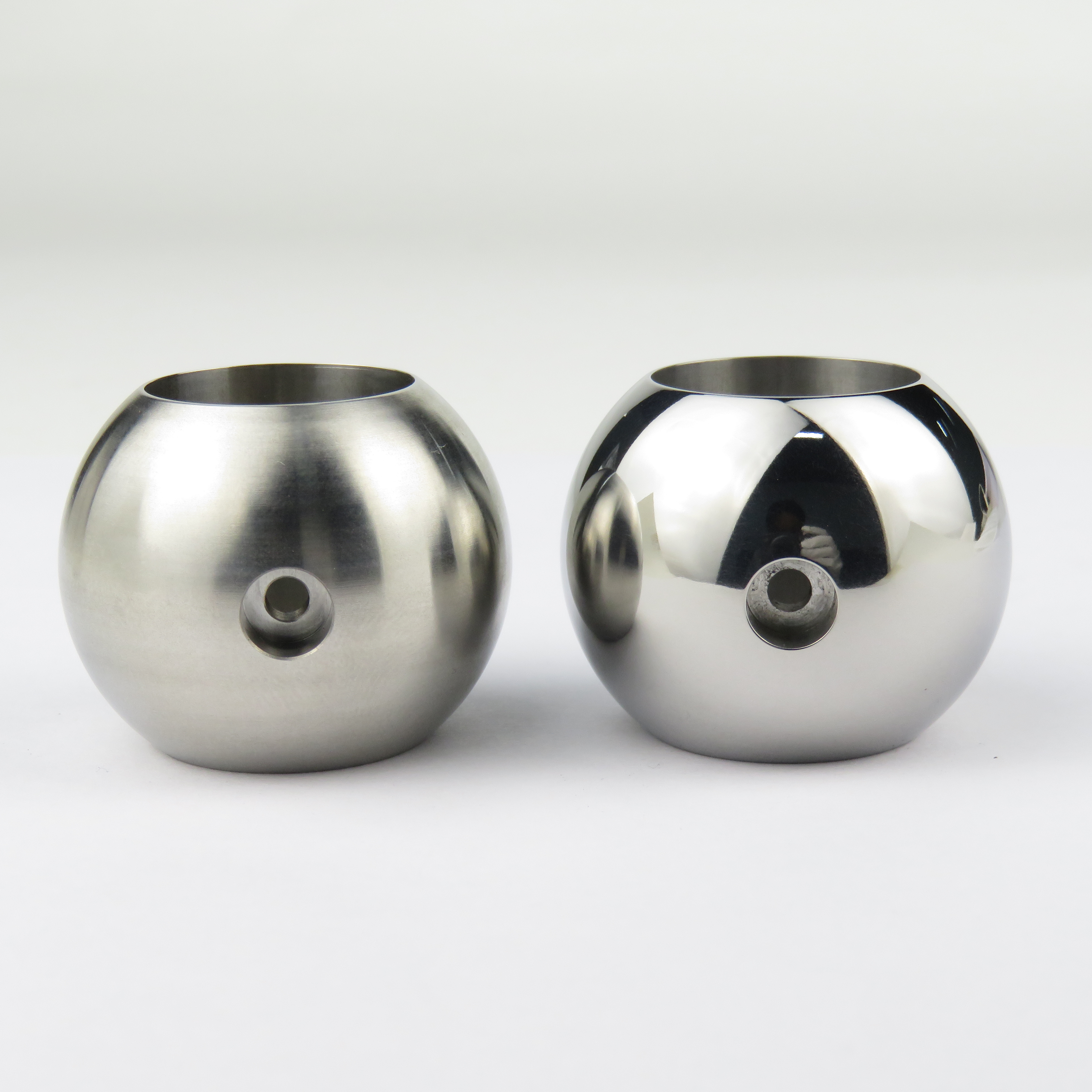
They are different operations rather than interchangeable ones. Mechanical finishing can remove a weld cap and oxide where a medium or tool physically reaches, and it refines the surface it contacts. Electrochemical polishing removes a thin layer more uniformly and can reach inside small-bore tubing and enclosed channels that no tumbling medium enters. A mechanical route is usually the practical answer for accessible weld zones and external surfaces, and it cannot level the inside of a long narrow tube. Whether that reach matters on your part is the decision; a trial at London can show what was reached on the parts tested.
No. Mechanical finishing removes material and can strip oxide and free iron from the surfaces it touches, but it does not restore a passive film and it does not perform a chemical passivation step. Passivation, whether by a paste, a bath or an electrochemical process, is a separate operation with its own method and verification that belongs to your own specification and supply chain. Mechanical work can leave a surface in better or worse condition for that step, which is one reason media and compound selection on 316L should consider what comes afterwards rather than only the finish you see at the end of the cycle.
Heat tint is oxide, so it is removed by cut rather than by cleaning. Ceramic media with an aggressive shape and bonding, or a grinding stage followed by refinement, are the usual mechanical answers on accessible weld zones. The limit is reach: a tint line that runs into a toe, a crevice or a small bore may survive a cycle that polishes the cap, which is why the toe should be inspected rather than judged by the shine of the weld face. Media size, shape and cycle energy must suit the oxide thickness. A trial on your own parts shows what was removed on the geometry tested.
Use London, United Kingdom as the destination on the enquiry and state whether the deliverable is equipment, media and compound, a representative sample review or a line concept. A destination does not imply local stock, a local service point or a local delivery time.
London buyers work to the same Great Britain regime as the rest of England: UKCA or CE marking with a Declaration of Conformity, HSE duties on work equipment and machinery, and COSHH for the compounds, media and dust arising from finishing.
Sources were retrieved on 2026-09-29 and describe the local industrial and trade context only. They do not evidence any SurfacePolish project, shipment, installation or service in London.
The buyer needs the internal cast surfaces and the gasket face refined without changing the shaft bore or the sealing geometry.
Send the material, dimensions, approximate weight, batch quantity, the incoming condition and photographs of the difficult features. Mark which features must not be contacted by media and state how the result will be inspected. This form carries source reference PSEO-0224; quote it if you prefer an additional manual reference.
Open the SurfacePolish enquiry form Email a prepared enquiry
No price, lead time, certification or result is promised here. Confirm whether a sample trial is available for the specific part and what the trial can and cannot show.
Page PSEO-0224 · revised 2026-09-29 · cross-border equipment, media and scoped sample review. City context is sourced and cited above.
Use this local checker to identify missing part and inspection information. It prepares a technical-review brief; it does not approve a machine, process recipe or production result.
Complete the part details to prepare a review brief.
Email : info@surface-polish.com


 IPv6 network supported


 +86-592-2381506