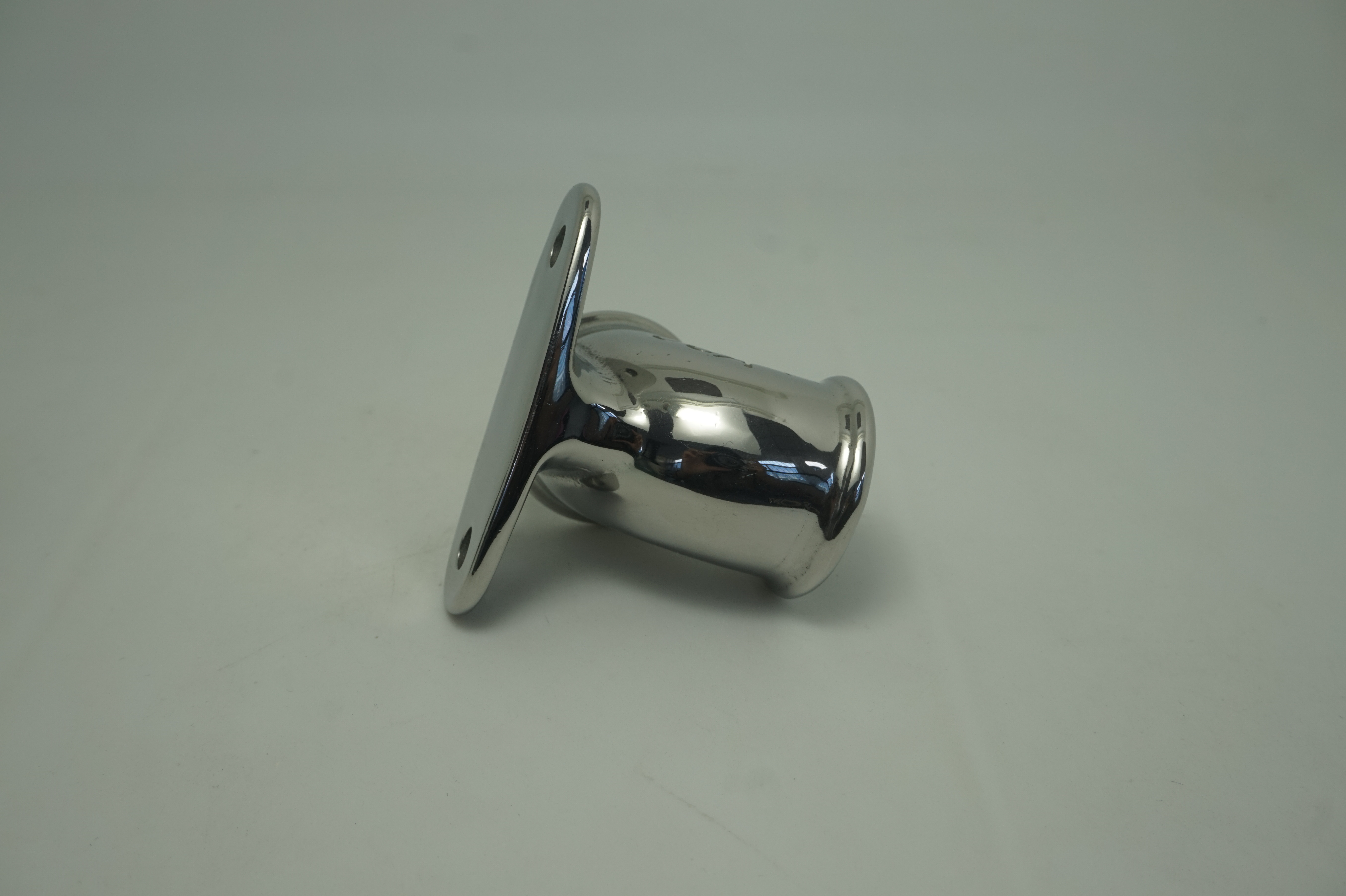
A cleaning equipment maker in Nottingham, United Kingdom supplying food processing equipment has a 316L spray ball whose drilled holes and thread start carry burrs. The internal channel is small and enclosed, so any medium that enters may never come out, and the buyer needs to weigh that risk before selecting a machine. SurfacePolish supplies finishing equipment, media and compounds across borders, and runs a free sample trial on shipped parts. This brief is written for a buyer in Nottingham working on food processing equipment; it describes equipment, media and a scoped sample review, not a local polishing service.
Which surfaces on this part touch product, and what does each one have to satisfy in roughness, oxide freedom, edge condition and cleanliness?
Which internal surfaces can a mechanical route physically reach, and what happens to the zones it cannot?
What must the finished surface survive in service, including cleaning cycles, and how will that be checked without leaning on a finishing trial?
Before any trial, fix the starting condition in a way that can be compared later. Take roughness readings at agreed locations, photograph the part under consistent lighting, note visible burrs, tint and scratches, and keep one untouched part as a reference. Describe the batch: how many pieces of each size, whether they are identical, and whether mixed sizes will share a chamber. Decide how parts will be separated, racked or compartmented, and which surfaces may touch each other or a fixture. Handling rules matter as much as process settings on stainless, because a bench, a rack or a glove that has touched carbon steel can leave the contamination that later appears as a rust bloom. Write the baseline down, because a trial without an incoming record produces observations nobody can interpret.
Steel media in balls, diagonals and pins is dense and produces a bright refined surface quickly, which makes it attractive where appearance matters. On stainless the trade-off is contamination: steel media and its wear debris can transfer iron to the surface, and that iron is exactly what later appears as a rust bloom in service. Magnetic separation makes steel media easy to recover, and its mass helps it work into recesses, but it can also imprint soft or thin features and flatten a deliberate edge radius. Whether steel is acceptable depends on the buyer's own cleanliness and free-iron requirements and on what happens downstream. If a stainless part will meet moisture or a chloride-bearing environment, settle the contamination question before steel media is written into the process.
| Media | Best fit | Watch out for |
|---|---|---|
| Ceramic media, angle-cut triangles | Heavier weld-zone refinement and edge blending on 304 and 316L parts where a corner or a toe line has to be reached. | Wears down and changes its effective size class, produces sludge, and can over-round a thin edge or a soft detail. |
| Plastic media, cones and triangles | Gentle edge blending and cosmetic refinement on softer non-ferrous fittings, thin sections and delicate parts. | Cannot remove heat tint, mill scale or a weld cap, so it must follow the operation that does that work. |
| Grinding media, coarse alumina-based | Removing a proud weld cap, heavy scale and heat tint before a refinement stage on accessible external surfaces. | Leaves a coarse scratch pattern that must be refined, removes material fast, and can gouge thin sheet or a soft alloy. |
| Ceramic media, small cylinders and spheres | General deburring and light radius work on hygienic fittings, with less edge cutting than an angle-cut shape. | Small sizes lodge in gasket grooves and drilled openings, and a sphere refines slowly where oxide is thick. |
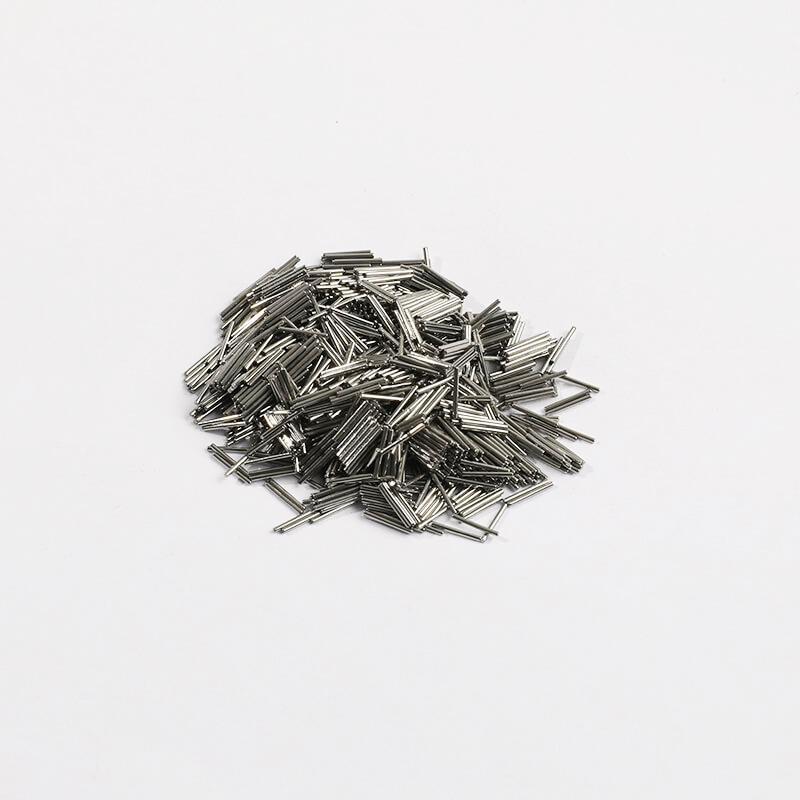
Magnetic finishing uses small steel pins or fine media driven by a rotating magnetic field, which lets it work inside small bores, slots and blind features that tumbling media cannot enter, and the pin-like medium is less likely to lodge than a shaped ceramic piece. It suits small precise components rather than large panels or long tubes, and it will not remove a proud weld cap. A dry route, using dry media on a dry polishing machine, is chosen when retained water in a crevice or an assembly is a problem, or when a light cosmetic refinement is wanted on a part that must not be wet. Dry processing generates dust and cannot remove heat tint or oxide, so it complements rather than replaces a wet abrasive stage. The dryer after a wet cycle is a process step, not an afterthought.
| Machine route | Where it fits | What it will not do |
|---|---|---|
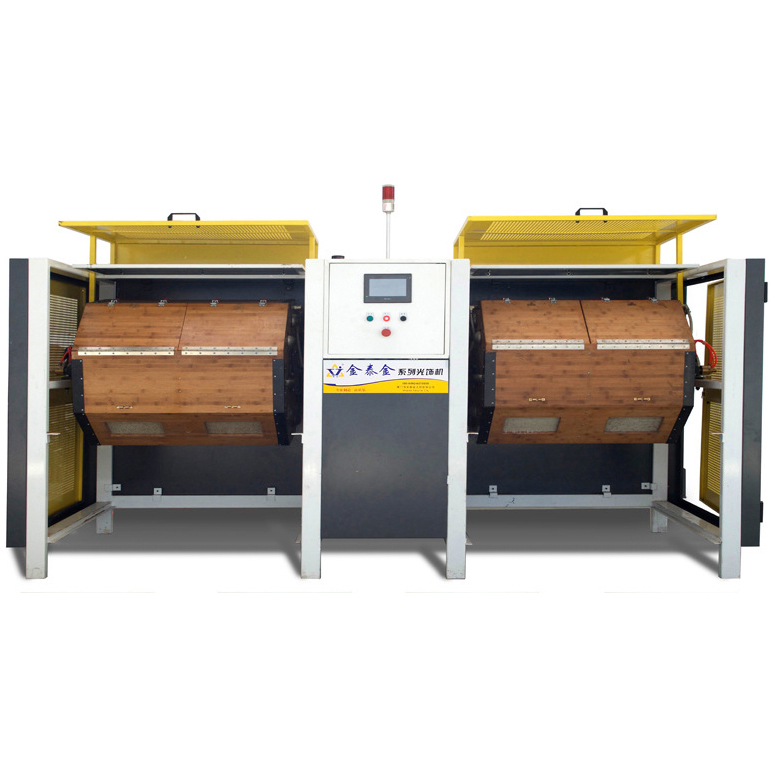
| Barrel finishing machine, rotary barrel tumbler | Large batches of small robust fittings, fasteners and valve trim that can tumble freely without damage. | Part-on-part contact is unavoidable, and fine threads, sealing lips and thin diaphragms are poor candidates. |
| Tub vibrator | Long parts, tube spools, chute sections and small vessels that a bowl cannot accept, with the part repositioned as needed. | Coverage depends on how the part sits in the media mass, so banding and shadow zones are common without a planned fixture. |
| Dry polishing machine and dryer | Dry burnishing where a wet cycle is unwanted, and drying parts after a wet cycle so crevices do not stay wet. | Removes no oxide and needs dust extraction; a dryer manages water, it does not change the finish left by the wet stage. |
| Vibratory finishing machine, bowl type | Edge and weld-toe blending plus surface refinement on mid-sized parts, with a visible load and adjustable energy. | Chamber geometry caps part size, and the inside of a long tube or a narrow crevice stays out of reach. |
Abrasive media working on a tinted weld can smear and burnish the oxide into a smooth, shiny, deceptive layer instead of cutting through it. The surface reads better visually than the starting condition while the chromium-depleted zone underneath is unchanged, and roughness readings may even improve because the profile has been flattened. This is most likely where a cycle is too gentle or too short for the oxide thickness, or where the compound is cleaning rather than cutting. Detection means looking at the transition zone rather than the cap: a dye-based or free-iron check, a cross-section of a sample part, or a controlled comparison between a mechanically worked area and a freshly ground area. Refinement should only follow a stage that genuinely removed the oxide, which is why sequence matters more than final polish.
| Failure mode | Likely cause | How to catch it |
|---|---|---|
| Thin-wall distortion or dishing on tanks, panels and chutes | Heavy media load striking unsupported thin sheet, or a chamber fill level that lets parts fall rather than tumble. | Measure wall flatness and key dimensions before and after, inspect under raking light for oil-canning, and run the test at the production fill level rather than a light one. |
| Rust bloom or free-iron staining appearing after finishing | Carbon steel brushes, iron-bearing media, shared racks or contaminated rinse water depositing free iron on a 304 or 316L surface. | Run a ferroxyl-type test or the buyer's own equivalent at agreed locations including crevices and internal surfaces, after rinsing and drying, and record the result with the batch. |
| Compound residue or dried film trapped in crevices and threads | Insufficient rinse volume, a rinse that does not reach the recess, or draining in an orientation that holds fluid in place. | Wipe or swab the recess with a clean white cloth and inspect, run a water-break or residue check on product-contact surfaces, and re-check after changing rinse volume or orientation. |
| Edge or weld toe rounded beyond the specified limit | Dense or large media running too long at high energy, or a part left free to tumble when it should have been fixtured. | Measure edges with an optical comparator or radius gauge and compare with the drawing limit, and measure a weld toe before and after the cycle on the same part. |
Nottingham is a Nottinghamshire authority inside the East Midlands Freeport, the only inland UK freeport, whose three sites are East Midlands Airport and Gateway Industrial Cluster (EMAGIC) in Leicestershire, the Ratcliffe-on-Soar power station site in Nottinghamshire, and the East Midlands Intermodal Park in Derbyshire. The freeport states its sites are connected by road, rail and air and within easy reach of East Midlands Airport, which it calls the UK's largest dedicated airfreight airport, and it reports that a share of the UK's major freight rail lines are serviced through the East Midlands. Nottingham City Council provides the city's business licensing, trading standards and procurement services, and the East Midlands Chamber is the regional chamber of commerce.
The nearest part of that base to this brief is energy: East Midlands Freeport lists the Ratcliffe-on-Soar power station site in Nottinghamshire among its three sites and states it is accelerating the region's commitment to decarbonisation through sustainable development and low-carbon energy investments.
The East Midlands Freeport is built around freight and low-carbon industry sites rather than a legacy machining cluster, so finishing requirements in the Nottingham area follow the parts being made and moved rather than any single local process tradition. Because the freeport's sites connect by road, rail and air and the East Midlands is a major goods-importing region, deburring, edge and cleanliness specifications should be taken from the component drawing and its downstream assembly rather than from a general local practice.
A Nottingham buyer should tie the finishing specification to the part's actual route out of a freeport or industrial site - air, rail or road - and confirm media and compound handling and waste arrangements before the machine is ordered.
Freight context: East Midlands Airport (described by East Midlands Freeport as the UK's largest dedicated airfreight airport), East Midlands Intermodal Park, Derbyshire, Ratcliffe-on-Soar power station site, Nottinghamshire. East Midlands Freeport describes itself as the only inland UK Freeport, with sites connected by road, rail and air and within easy reach of East Midlands Airport; it states that a share of the UK's major freight rail lines are serviced through the East Midlands.
BSI is the UK's National Standards Body, and British Standards (BS, including adopted BS EN ISO texts) are the documents a UK buyer's surface-finish, edge and cleanliness specifications are normally written against and purchased through. On the plant side, HSE maintains the work equipment and machinery topic covering the safe supply and use of machinery, and the COSHH regime, which requires employers to identify, assess and control risks from hazardous substances - the regime that applies to finishing compounds, abrasive media and the dust and effluent they generate.
English is the working language of contracts, drawings and conformity paperwork, so quotations, technical files and Declarations of Conformity should be supplied in English. UK manufacturers have now recovered above 2019 output levels in every English region and devolved nation except Northern Ireland, and the sector is concentrated in food and drink and transport equipment, with the North West the largest manufacturing region by total output. Buyers typically expect the UKCA/CE route, a Declaration of Conformity and a UK-established economic operator to be identified before order, and they need commercial invoices, customs declarations and the C79 retained in a form their finance team can use for import VAT recovery. No source verified in this research establishes a mandated payment instrument, so payment structure should be treated as commercial negotiation rather than a regulatory requirement.
SurfacePolish supplies from Xiamen, China. The buyer's own destination rules, conformity marking, tariff classification and documentation responsibilities stay with the buyer; confirm them against the authorities named above before ordering.
Acceptance has to exist before finishing begins, otherwise every batch becomes a negotiation about appearance. Write the requirement per zone: which surfaces are product-contact, what roughness band applies to each, which edges keep a radius, which faces stay flat, what cleanliness and residue condition is required, and which features come back untouched. Name the inspection method and instrument for each requirement and the person who accepts or rejects. Where a requirement comes from a design code or a customer specification, the buyer's own quality function states and verifies it. A first article fully inspected and retained as the physical reference removes most later argument, particularly on welds, where a kept part says far more than a written description. Re-confirm the requirement whenever drawing, material or upstream fabrication changes.
A trial load is small, hand-observed and run by someone who knows what is being tested; a producing line is larger, repeatable and operated by whoever is on shift. That gap is where results are lost. Fix the load fill level, the part-to-media ratio, the fixture positions and the cycle time as written settings, then check that a shift operator can reproduce them. Expect drift from media wear, compound concentration, water quality and part mix, and put a check in place that detects it before a batch is finished rather than after. Mixed-size loads, changes in upstream welding and new material heats are all reasons to re-verify. Where a finish depends on a hand operation, variation between operators becomes part of process capability and has to be managed, not assumed away.

Treat every recess as a retrieval point rather than hoping it stays clear. Choose a medium size class well below the smallest opening, mask or plug features that were never meant to see media, count media into and out of a load, and add a defined check such as a borescope at an agreed angle plus a pin gauge on critical holes. Where a groove is too narrow for any medium to enter, it will also be too narrow for oxide removal, so the two facts belong in the same conversation. Buyers in Nottingham shipping parts for a trial should send the tightest feature they have.
Generally no, and this is the clearest practical difference between the routes. Tumbling media, whether ceramic, plastic or steel, has to physically enter a bore to work on it, and a tube whose length is many times its diameter and whose bore is narrow will not admit media in a way that produces an even result. Some internal work is possible with a magnetic finishing machine on short bores and small precise parts, but long runs of small-bore sanitary tubing are out of reach for a mechanical process. Zones a machine cannot reach have to be finished another way, accepted as they are, or designed out.
No. SurfacePolish supplies finishing machines, media and compounds, and no machine, medium, compound or process is presented as approved, certified or qualified for food contact, hygienic service or any regulated application. Certification of that kind depends on the finished equipment, its design, its materials and the way it is operated, and it is defined and verified by your own quality and regulatory functions against the requirements that apply to your market. What a supplier can provide is equipment and consumables information, including composition data for media and compounds, so your own assessment has something to work from. A sample trial is not a certification.
Use Nottingham, United Kingdom as the destination on the enquiry and state whether the deliverable is equipment, media and compound, a representative sample review or a line concept. A destination does not imply local stock, a local service point or a local delivery time.
Equipment placed on the Great Britain market requires UKCA or CE marking with a Declaration of Conformity, and HSE's work equipment and machinery and COSHH regimes cover finishing machines, media and compounds. Nottingham City Council's trading standards service and business licensing function are the local points of contact for product and trading rules.
Sources were retrieved on 2026-09-29 and describe the local industrial and trade context only. They do not evidence any SurfacePolish project, shipment, installation or service in Nottingham.
The buyer must deburr the drilled holes and the thread start while keeping the internal channel clear of media.
Send the material, dimensions, approximate weight, batch quantity, the incoming condition and photographs of the difficult features. Mark which features must not be contacted by media and state how the result will be inspected. This form carries source reference PSEO-0294; quote it if you prefer an additional manual reference.
Open the SurfacePolish enquiry form Email a prepared enquiry
No price, lead time, certification or result is promised here. Confirm whether a sample trial is available for the specific part and what the trial can and cannot show.
Page PSEO-0294 · revised 2026-09-29 · cross-border equipment, media and scoped sample review. City context is sourced and cited above.
Use this local checker to identify missing part and inspection information. It prepares a technical-review brief; it does not approve a machine, process recipe or production result.
Complete the part details to prepare a review brief.
Email : info@surface-polish.com


 IPv6 network supported


 +86-592-2381506