A vessel builder in Mumbai, India working for food processing equipment has a 304 tank with fillet welds and heat tint across its interior. They want to know whether a tumbler can reach those surfaces, whether grinding and refining is the realistic route, and where the finished condition has to be supplemented. SurfacePolish supplies finishing equipment, media and compounds across borders and runs a free sample trial on the buyer's own parts. This brief is written for a buyer in Mumbai working on food processing equipment; it describes equipment, media and a scoped sample review, not a local polishing service.
What must the finished surface survive in service, including cleaning cycles, and how will that be checked without leaning on a finishing trial?
Which surfaces on this part touch product, and what does each one have to satisfy in roughness, oxide freedom, edge condition and cleanliness?
What free-iron and chloride exposure does the process itself introduce, and can the buyer's own cleanliness test detect it before the part is released?
Reachability decides the route more often than the finish target does. Measure the internal diameter of every tube, the depth and diameter of every blind hole, the width of every crevice and gasket groove and the corner radius at every internal weld. Ratios matter more than absolute size: a bore that is wide but very deep, or a groove narrower than the smallest available medium, stays untouched by any tumbling process however long the cycle runs. Ask whether a borescope can be inserted and at what angle, because a surface that cannot be seen cannot be inspected after finishing. List the zones a machine cannot reach, and decide in advance whether those zones are finished by another method, accepted as-is with a stated condition, or designed out of the part.
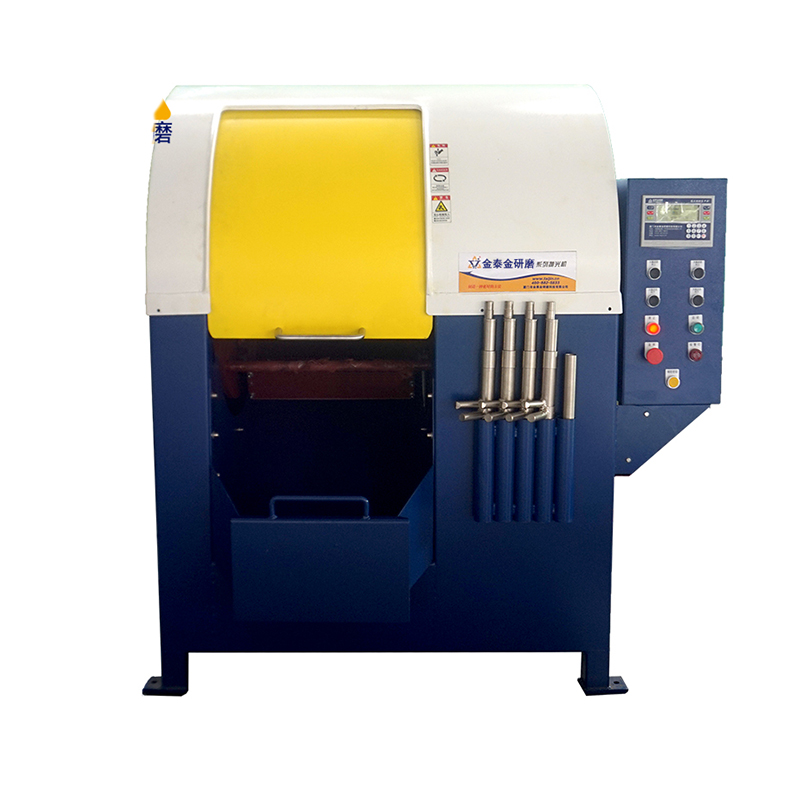
A bowl vibrator keeps a visible, continuously moving load and suits mid-sized parts where edges, weld toes and accessible external surfaces need blending and refinement. Energy is set by amplitude, motor speed and load fill, so one machine can deburr aggressively or refine gently, and the effect on a weld toe is judged by how much cap material the buyer is willing to lose. The bowl reaches external geometry and shallow recesses well, and it can carry compartments or fixtures to limit part-on-part contact on thin or appearance-critical pieces. It does not reach the inside of a long tube or a narrow crevice, and chamber geometry caps part size. Media class and fill level matter more than nominal machine size: an under-filled chamber raises impingement risk, and an over-filled one starves the part of contact.
| Machine route | Where it fits | What it will not do |
|---|---|---|
| Dry polishing machine and dryer | Dry burnishing where a wet cycle is unwanted, and drying parts after a wet cycle so crevices do not stay wet. | Removes no oxide and needs dust extraction; a dryer manages water, it does not change the finish left by the wet stage. |
| Vibratory finishing machine, bowl type | Edge and weld-toe blending plus surface refinement on mid-sized parts, with a visible load and adjustable energy. | Chamber geometry caps part size, and the inside of a long tube or a narrow crevice stays out of reach. |
| Tub vibrator | Long parts, tube spools, chute sections and small vessels that a bowl cannot accept, with the part repositioned as needed. | Coverage depends on how the part sits in the media mass, so banding and shadow zones are common without a planned fixture. |
| Magnetic finishing machine | Small precise parts and short internal features such as slots, small bores and blind recesses. | Part size and surface area are limited, large panels and long tubes are out of scope, and it will not dress a weld cap. |
Media that leaves the chamber with the parts is a defect, not a housekeeping issue, so separation is designed rather than improvised. Screens sized below the smallest medium and above the largest acceptable chip, magnetic separators for steel media, and a counted retrieval step for any feature that can trap a piece all belong in the plan. Media wear management is the other half: as ceramic wears the load loses cut, so a schedule for top-up, screening out fines and removing broken pieces keeps the process from drifting. Compound carryover into threads, gasket grooves and tube ends is controlled by rinse volume, rinse water quality, orientation while draining and drying. Sludge and spent compound disposal is a production cost and a housekeeping discipline that should be costed before a line is specified.
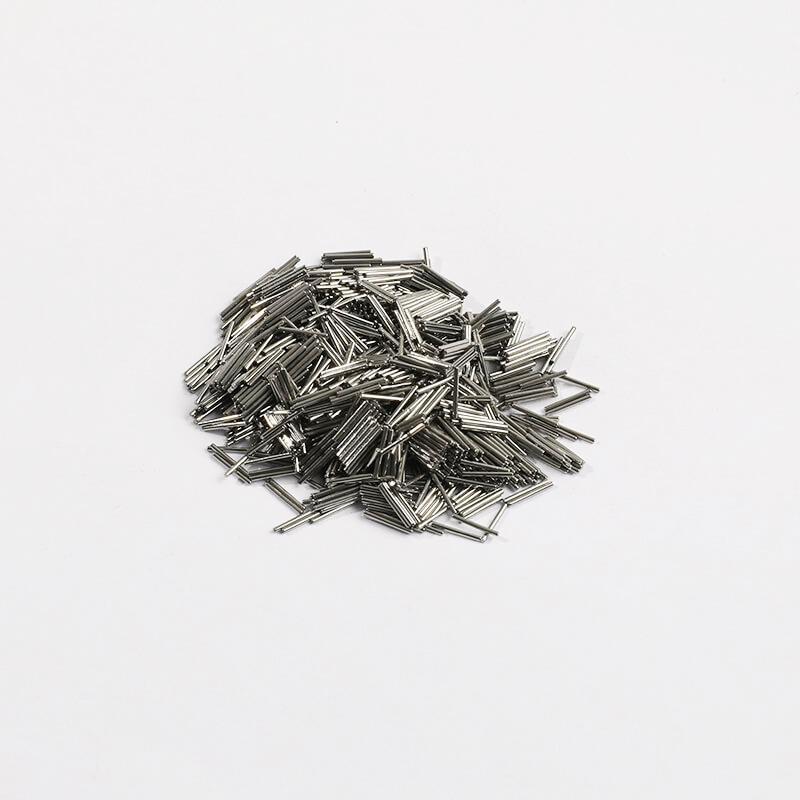
| Media | Best fit | Watch out for |
|---|---|---|
| Ceramic media, small cylinders and spheres | General deburring and light radius work on hygienic fittings, with less edge cutting than an angle-cut shape. | Small sizes lodge in gasket grooves and drilled openings, and a sphere refines slowly where oxide is thick. |
| Liquid compound, abrasive cleaning slurry family | Cleaning, descaling and fine abrasive work through the cycle, with dosing and flow matched to the load and the alloy. | Chloride content and pH matter on stainless, foam can cushion the cut, and residue left in a crevice becomes a later defect. |
| Steel media, balls and diagonals | Bright surface refinement on robust stainless parts where a dense medium is wanted to work into recesses. | Can transfer iron to stainless, imprint soft or thin features, flatten a deliberate edge radius, and needs magnetic recovery. |
| Plastic media, cones and triangles | Gentle edge blending and cosmetic refinement on softer non-ferrous fittings, thin sections and delicate parts. | Cannot remove heat tint, mill scale or a weld cap, so it must follow the operation that does that work. |
Banding, patchy gloss and untouched shadow zones come from the load, not from the medium. Parts sitting in a dead corner of a chamber, a tub fixture that holds a weld away from the media mass, a load that is too full or too empty, or a cycle cut short so only the accessible faces were refined will all produce a finish that fails when the whole surface is examined. The failure is easy to miss because the first glance lands on the brightest area. Detection is systematic: roughness readings at several marked locations rather than one, photographs at fixed angles around the part, and a borescope record of internal surfaces at an agreed view. Comparing a part from the top and the bottom of the load shows the spread quickly.
| Failure mode | Likely cause | How to catch it |
|---|---|---|
| Cross-contamination from tooling, racks or media shared with carbon steel | No dedicated stainless area, undocumented consumable grades, or media stored where mild steel fabrication dust settles. | Audit which tools, racks and media touch the part, record their grades, store media covered and segregated, and confirm cleanliness with the buyer's own test after a tooling change. |
| Gasket seat or sealing face dished so it no longer seals | Over-finishing a machined face, part-on-part contact in an unseparated load, or media hammering a face that should have been masked. | Check flatness of the sealing face with a straight edge, a feeler gauge or a surface plate before and after, and confirm against the sealing requirement the buyer's specification states. |
| Discolouration, water spotting or flash rust after the cycle | Contaminated or hard rinse water, incomplete draining of a crevice, or a part left wet before drying. | Inspect after drying under consistent lighting, check the rinse water source and quality, and verify that orientation during draining lets every recess empty. |
| Rust bloom or free-iron staining appearing after finishing | Carbon steel brushes, iron-bearing media, shared racks or contaminated rinse water depositing free iron on a 304 or 316L surface. | Run a ferroxyl-type test or the buyer's own equivalent at agreed locations including crevices and internal surfaces, after rinsing and drying, and record the result with the batch. |
Mumbai is the capital and the largest industrial and commercial centre of Maharashtra, the state Invest India records as contributing 13.5% of India's nominal GDP in FY 2023-24 and roughly 31% of the country's total FDI inflows (s1). The city is the base of the Bombay Chamber of Commerce and Industry, founded in 1836, which describes itself as located in Mumbai, the country's industrial, financial and commercial capital (s3). Industrial land across the state is organised through the Maharashtra Industrial Development Corporation, which has developed 289-292 industrial areas over more than 1.0 lakh hectares, including sector-specific parks for food processing, textiles, IT and biotechnology (s2). The region's freight system rests on the state's two major ports, with JNPT and Vadhvan port connectivity expanding, together with the Navi Mumbai International Airport that came into operation in 2025 (s2).
The nearest part of that base to this brief is marine: Maharashtra is described by Invest India as having 2 major ports and about 53 minor ports, with JNPT and Vadhvan port connectivity expanding in the Mumbai region, and the Bombay Chamber records that it has representation on the Port Trust (s2, s3).
The Mumbai region's port, engineering and general manufacturing base generates deburring and surface-finish work on machined and fabricated metal parts, and the harbour and marine cluster adds corrosion-resistant finishing requirements on marine hardware and structural components. Because much of the base is small and medium-sized contract manufacturing feeding larger OEMs, finish consistency, edge condition and cleanliness of the part as delivered to the customer are the practical quality levers rather than the capabilities of a single high-volume line.
A Mumbai buyer should settle whether the requirement is a specified surface roughness and edge condition on a named alloy, or a broader cosmetic finish, because that decides the process (vibratory, barrel or centrifugal), the media type and the cycle time - and whether any BIS obligation attaches to the imported consumable before landed cost is calculated.
Freight context: Jawaharlal Nehru Port (JNPT), Vadhvan Port, Mumbai Port, Navi Mumbai International Airport, Chhatrapati Shivaji Maharaj International Airport. The metropolitan region's container and bulk gateway is the state's major-port complex at JNPT and Vadhvan, with Navi Mumbai International Airport operational since 2025 (s2). Inbound finishing machines and outbound sample parts move through this port and airport pair, so HS classification, the bill of entry and the applicable customs duty are settled at the Nhava Sheva / Navi Mumbai end before inland delivery.
India classifies every imported item in the ITC(HS) schedule, a compilation of codes for all merchandise for export and import whose Schedule I lays down the import policy regime for each item, maintained at 8-digit level under the First Schedule of the Customs Tariff Act, 1975 and aligned at 6 digits with the WCO Harmonized System (c1, c3). Importability is judged by the policy in force on the date of import, and when a policy moves from free to restricted, goods already committed through an irrevocable commercial letter of credit opened before the change can still be imported up to the balance quantity, value and period in that ICLC (c4). Preferential customs treatment is available only through the preferential trade agreements, free trade agreements, CECAs and CEPAs that India notifies and that are in operation (c5), so Chinese-origin industrial machinery is assessed at the applicable rate of the customs tariff rather than under any India-China preferential rate; India's commerce leadership has separately pointed to exports under free trade pacts growing faster than imports (c12). For capital goods specifically, DGFT operates the Export Promotion Capital Goods (EPCG) scheme, whose stated objective is to facilitate import of capital goods for producing quality goods and services (c7), which Indian firms use when they want duty relief on imported plant against an export obligation.
An Importer-Exporter Code (IEC) issued by DGFT is a key business identification number which is mandatory for exports or imports, and since the introduction of GST the IEC number is the same as the PAN of the firm (c6). The post-incorporation clearance list published by Invest India includes the IEC, a Customs- Special Valuation Branch reference and the grant of a Bureau of Indian Standards (BIS) licence, and it names the Central Board of Excise and Customs among the agencies in the framework (c10). The Foreign Trade Policy fixes the mandatory import documents as a bill of lading / airway bill / lorry receipt / railway receipt, a commercial invoice cum packing list and a bill of entry, with additional documents or NOCs possible for goods subject to product-specific compliance (c3); it also states that domestic laws, rules, orders, technical specifications and environmental, safety and health norms applicable to domestically produced goods apply mutatis mutandis to imports unless specifically exempted (c2), which is the basis on which a BIS quality-control order can bite on imported machinery. A landed-cost plan therefore needs the correct ITC(HS) classification and the basic customs duty and IGST that follow from it, plus the IEC, the bill of entry documentation and any BIS licence or registration obligation, and a related-party import can additionally be pulled into special customs valuation.
SurfacePolish supplies from Xiamen, China. The buyer's own destination rules, conformity marking, tariff classification and documentation responsibilities stay with the buyer; confirm them against the authorities named above before ordering.
An Ra number without a location, cut-off and direction is close to meaningless. Fix the measurement location on the drawing, including whether it sits on base metal, a dressed weld or the heat-affected zone, since those are different surfaces. Choose the cut-off and evaluation length to suit the expected roughness and record both, because the same surface returns different values under different settings. Traverse across the lay rather than along it when the requirement concerns the surface the product sees, and take several readings at each agreed location rather than one. Use a calibrated instrument with a reference specimen and record the instrument and the operator. Remember what roughness does not describe: a crevice, an oxide film, a contaminated surface or a sharp edge can all coexist with an acceptable Ra value.
A trial load is small, hand-observed and run by someone who knows what is being tested; a producing line is larger, repeatable and operated by whoever is on shift. That gap is where results are lost. Fix the load fill level, the part-to-media ratio, the fixture positions and the cycle time as written settings, then check that a shift operator can reproduce them. Expect drift from media wear, compound concentration, water quality and part mix, and put a check in place that detects it before a batch is finished rather than after. Mixed-size loads, changes in upstream welding and new material heats are all reasons to re-verify. Where a finish depends on a hand operation, variation between operators becomes part of process capability and has to be managed, not assumed away.

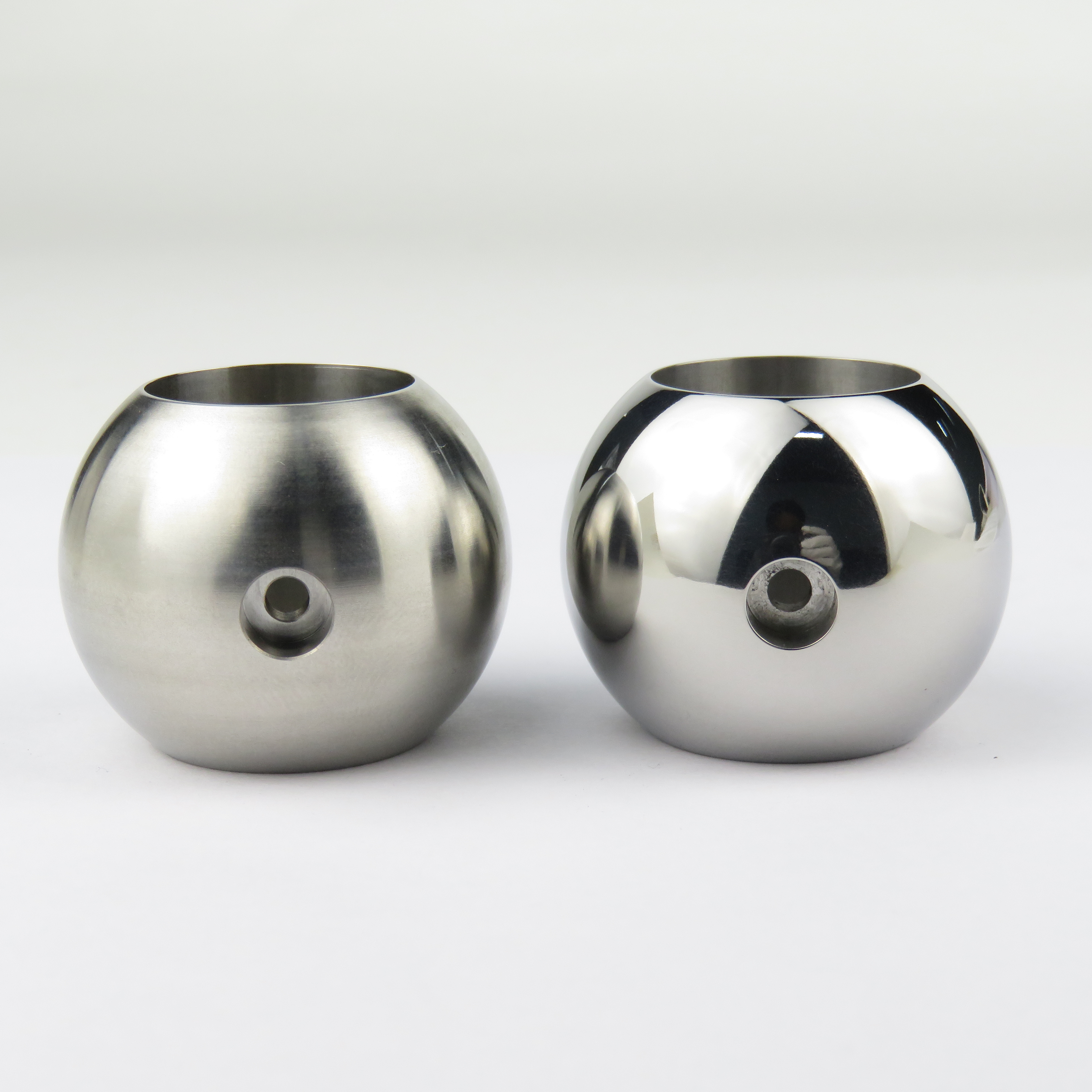
Heat tint is oxide, so it is removed by cut rather than by cleaning. Ceramic media with an aggressive shape and bonding, or a grinding stage followed by refinement, are the usual mechanical answers on accessible weld zones. The limit is reach: a tint line that runs into a toe, a crevice or a small bore may survive a cycle that polishes the cap, which is why the toe should be inspected rather than judged by the shine of the weld face. Media size, shape and cycle energy must suit the oxide thickness. A trial on your own parts shows what was removed on the geometry tested.
Treat every recess as a retrieval point rather than hoping it stays clear. Choose a medium size class well below the smallest opening, mask or plug features that were never meant to see media, count media into and out of a load, and add a defined check such as a borescope at an agreed angle plus a pin gauge on critical holes. Where a groove is too narrow for any medium to enter, it will also be too narrow for oxide removal, so the two facts belong in the same conversation. Buyers in Mumbai shipping parts for a trial should send the tightest feature they have.
No. SurfacePolish supplies mechanical finishing equipment, media and compounds across borders and runs a free sample trial on parts sent to the factory in Xiamen. Electropolishing is an electrochemical operation that is neither supplied nor performed, and no chemical pickling or passivation step is offered either. Where the two routes are compared on this page it is to help a buyer decide what they actually need, not to present a mechanical process as a substitute. If your specification requires an electrochemical finish, that work has to be sourced and verified by you.
Use Mumbai, India as the destination on the enquiry and state whether the deliverable is equipment, media and compound, a representative sample review or a line concept. A destination does not imply local stock, a local service point or a local delivery time.
Surface, coating and material specifications for a Mumbai buyer are written against Indian Standards (IS) published by the Bureau of Indian Standards, the National Standards Body of India (s4). Where the machine, media or compound falls under a BIS quality-control order, the licence or registration requirement attaches to the product placed on the Indian market, so the applicable IS number and certification route should be confirmed before the order is placed (s4).
Sources were retrieved on 2026-09-29 and describe the local industrial and trade context only. They do not evidence any SurfacePolish project, shipment, installation or service in Mumbai.
The buyer has to reduce weld discolouration across large internal surfaces without distorting thin panels or losing the manway gasket seat.
Send the material, dimensions, approximate weight, batch quantity, the incoming condition and photographs of the difficult features. Mark which features must not be contacted by media and state how the result will be inspected. This form carries source reference PSEO-0904; quote it if you prefer an additional manual reference.
Open the SurfacePolish enquiry form Email a prepared enquiry
No price, lead time, certification or result is promised here. Confirm whether a sample trial is available for the specific part and what the trial can and cannot show.
Page PSEO-0904 · revised 2026-09-29 · cross-border equipment, media and scoped sample review. City context is sourced and cited above.
Use this local checker to identify missing part and inspection information. It prepares a technical-review brief; it does not approve a machine, process recipe or production result.
Complete the part details to prepare a review brief.
Email : info@surface-polish.com


 IPv6 network supported


 +86-592-2381506