A bulk handling fabricator in Surat, India serving food processing equipment has a 2.4 m 304 auger with a helical weld along its flights. The part is far too long for a bowl machine, and its drive-end bore has a tolerance that finishing must not disturb, so the buyer needs a route that suits long geometry. SurfacePolish supplies finishing equipment, media and compounds across borders and runs a free sample trial. This brief is written for a buyer in Surat working on food processing equipment; it describes equipment, media and a scoped sample review, not a local polishing service.
Which surfaces on this part touch product, and what does each one have to satisfy in roughness, oxide freedom, edge condition and cleanliness?
What must the finished surface survive in service, including cleaning cycles, and how will that be checked without leaning on a finishing trial?
Which internal surfaces can a mechanical route physically reach, and what happens to the zones it cannot?
Grade and history determine what the surface can tolerate. Confirm whether the part is 304, 304L, 316 or 316L, whether it is annealed or cold worked, and whether a free-machining grade with added sulphur has been used in a product-contact position. Record every operation that has already touched the surface: forming, shot blasting, wire brushing with carbon steel, grinding with iron-bearing tooling, acid pickling, electrochemical polishing or an earlier mechanical polish. Each leaves a different starting condition and a different contamination risk. Note heat treatment and any sensitisation concern from welding or high-temperature service, because material condition affects how the surface behaves later and cannot be changed by finishing. Certificates for the delivered material and a written sequence of operations are the minimum evidence to request.
Media that leaves the chamber with the parts is a defect, not a housekeeping issue, so separation is designed rather than improvised. Screens sized below the smallest medium and above the largest acceptable chip, magnetic separators for steel media, and a counted retrieval step for any feature that can trap a piece all belong in the plan. Media wear management is the other half: as ceramic wears the load loses cut, so a schedule for top-up, screening out fines and removing broken pieces keeps the process from drifting. Compound carryover into threads, gasket grooves and tube ends is controlled by rinse volume, rinse water quality, orientation while draining and drying. Sludge and spent compound disposal is a production cost and a housekeeping discipline that should be costed before a line is specified.
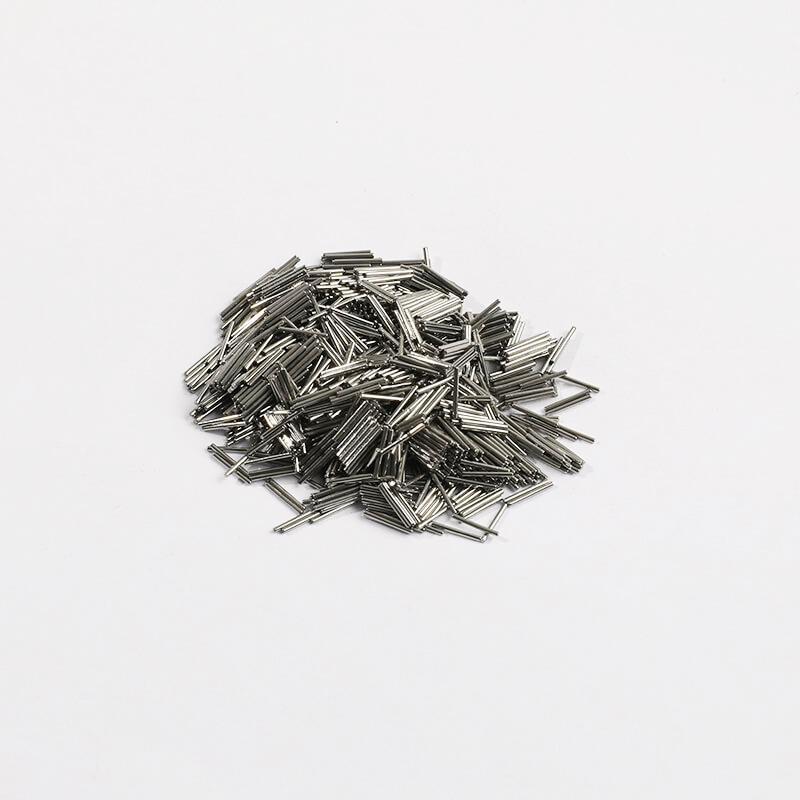
| Media | Best fit | Watch out for |
|---|---|---|
| Ceramic media, small cylinders and spheres | General deburring and light radius work on hygienic fittings, with less edge cutting than an angle-cut shape. | Small sizes lodge in gasket grooves and drilled openings, and a sphere refines slowly where oxide is thick. |
| Plastic media, cones and triangles | Gentle edge blending and cosmetic refinement on softer non-ferrous fittings, thin sections and delicate parts. | Cannot remove heat tint, mill scale or a weld cap, so it must follow the operation that does that work. |
| Steel media, balls and diagonals | Bright surface refinement on robust stainless parts where a dense medium is wanted to work into recesses. | Can transfer iron to stainless, imprint soft or thin features, flatten a deliberate edge radius, and needs magnetic recovery. |
| Dry media, walnut shell and corn cob | Light dry burnishing and cosmetic refinement where retained water in a crevice or assembly is a problem. | Generates dust requiring extraction, removes no oxide, and leaves a surface character different from a wet abrasive cycle. |
Barrel and rotary barrel machines suit small, robust fittings in quantity: ferrules, clamps, elbows, valve trim, pump internals and fasteners that tumble freely without damage. With no fixturing every surface sees media, which is efficient but means part-on-part contact is part of the process and cannot be excluded. Centrifugal barrel machines raise the energy considerably by rotating barrels around a central axis, which shortens the time needed to blend an edge or refine a small part, but the same energy increases the risk of over-rounding a soft detail or imprinting one part on another. Fine threads, sharp sealing lips and thin diaphragms are poor candidates. Load composition matters too: mixing heavy and light parts in one barrel usually means the light ones finish first and the heavy ones keep going.
| Machine route | Where it fits | What it will not do |
|---|---|---|
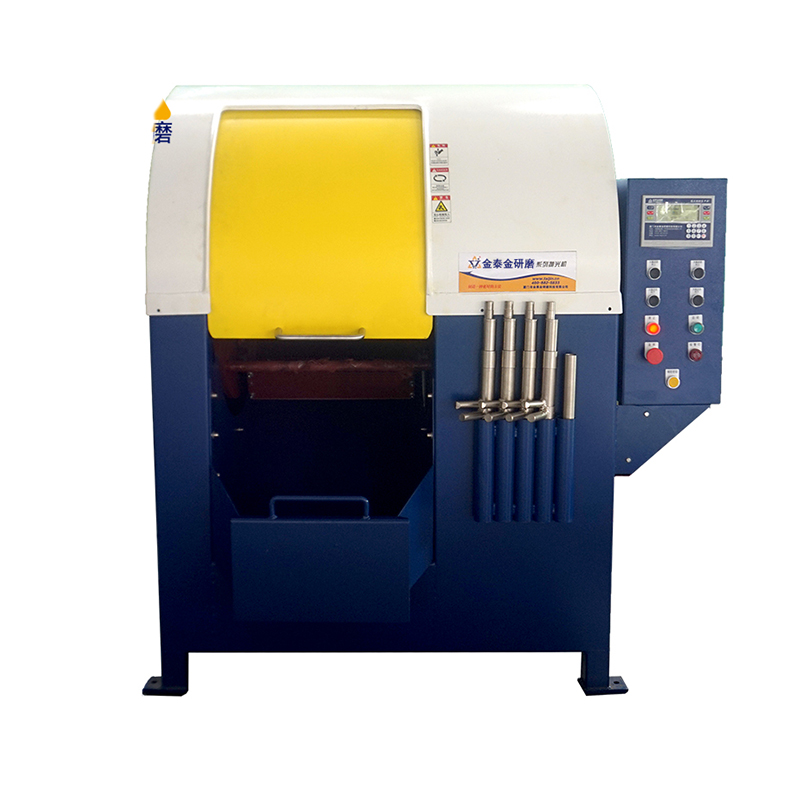
| Disc finishing machine | High-energy work on flat faces, flanges and convex zones where material removal or fast refinement is wanted. | Poor reach into recesses and around complex geometry, and it can dish a flat face if the cycle is not controlled. |
| Centrifugal barrel finishing machine | Higher-energy cycles that shorten the time to blend an edge or refine a small part in quantity. | The added energy increases over-rounding and imprinting risk, and delicate or mixed-size loads need careful planning. |
| Magnetic finishing machine | Small precise parts and short internal features such as slots, small bores and blind recesses. | Part size and surface area are limited, large panels and long tubes are out of scope, and it will not dress a weld cap. |
| Dry polishing machine and dryer | Dry burnishing where a wet cycle is unwanted, and drying parts after a wet cycle so crevices do not stay wet. | Removes no oxide and needs dust extraction; a dryer manages water, it does not change the finish left by the wet stage. |
Abrasive media working on a tinted weld can smear and burnish the oxide into a smooth, shiny, deceptive layer instead of cutting through it. The surface reads better visually than the starting condition while the chromium-depleted zone underneath is unchanged, and roughness readings may even improve because the profile has been flattened. This is most likely where a cycle is too gentle or too short for the oxide thickness, or where the compound is cleaning rather than cutting. Detection means looking at the transition zone rather than the cap: a dye-based or free-iron check, a cross-section of a sample part, or a controlled comparison between a mechanically worked area and a freshly ground area. Refinement should only follow a stage that genuinely removed the oxide, which is why sequence matters more than final polish.
| Failure mode | Likely cause | How to catch it |
|---|---|---|
| Edge or weld toe rounded beyond the specified limit | Dense or large media running too long at high energy, or a part left free to tumble when it should have been fixtured. | Measure edges with an optical comparator or radius gauge and compare with the drawing limit, and measure a weld toe before and after the cycle on the same part. |
| Cross-contamination from tooling, racks or media shared with carbon steel | No dedicated stainless area, undocumented consumable grades, or media stored where mild steel fabrication dust settles. | Audit which tools, racks and media touch the part, record their grades, store media covered and segregated, and confirm cleanliness with the buyer's own test after a tooling change. |
| Thin-wall distortion or dishing on tanks, panels and chutes | Heavy media load striking unsupported thin sheet, or a chamber fill level that lets parts fall rather than tumble. | Measure wall flatness and key dimensions before and after, inspect under raking light for oil-canning, and run the test at the production fill level rather than a light one. |
| Uneven finish, banding or untouched shadow zones across one part | Part position in the chamber, a fixture holding a surface out of the media mass, or a load that is too full or too empty for even contact. | Take roughness readings at several marked locations instead of one, photograph at fixed angles around the part, and compare parts from the top and bottom of the same load. |
Surat is a processing and port-industrial city. The district administration states that Surat is the world's largest diamond manufacturing centre with over 5,000 diamond manufacturing units and that three-quarters of the world's diamonds are cut and polished there, while the Southern Gujarat Chamber of Commerce and Industry (SGCCI) records a diamond-cutting workforce of more than 1.5 million people. SGCCI describes Surat as India's most prominent man-made textile centre and notes a strong MSME manufacturing base in South Gujarat. The district's heaviest industry sits in the Hazira belt about 15 km from the city, which SGCCI says has attracted investment from Reliance, ONGC, Essar, L & T, KRIBHCO, GAIL, Shell, Niko, NTPC, ABG Shipyard, IOCL, HPCL and BPCL, and Reliance confirms a carbon fibre facility at Hazira.
The nearest part of that base to this brief is energy: The Hazira industrial belt listed by SGCCI includes Reliance, ONGC, GAIL, Shell, Niko, NTPC and KRIBHCO, and Reliance states that its Hazira carbon fibre facility is set to become one of the largest of its kind.
Surat's metal-finishing demand is concentrated around diamond and textile processing and the Hazira process belt: machine parts, dies, jigs and stainless components that need burr removal and edge control before use, plus tooling and hardware where surface condition matters. Fabrication and maintenance workshops in the belt also finish replacement parts and stainless components, where the practical question is whether a vibratory or barrel process can reach the required edge condition without altering dimensions or leaving compound residue. Because much of the supporting industry is MSME-scale, batches are often small and mixed-material, which affects media choice.
A Surat buyer should first decide whether finishing is needed for edge control and deburring of machined components or for surface preparation of cast, formed or welded parts, then confirm on sample parts that the media and compound suit the specific alloy and geometry — a step that matters when parts come from mixed small-batch production.
Freight context: Hazira port, Surat, Surat International Airport (Airports Authority of India), NH8 / NH6 road corridors. The district administration states that Hazira port is connected by NH8 to Ahmedabad and Mumbai, with NH6 linking the Maharashtra border-Surat-Hazira, and AAI material refers to Surat International Airport. Sea freight for the Hazira belt enters through Hazira; imported machines and sample parts are cleared under the standard Indian customs procedure at the port or airport of entry.
India's foreign-trade, customs and standards machinery works in English: the Foreign Trade Policy, DGFT's IEC and scheme material, the BIS standards catalogue and Invest India's investor guide are all published in English, and the mandatory import documents are the internationally conventional bill of lading, commercial invoice cum packing list and bill of entry (c1, c3, c6, c10). Payment in the import channel is bank-intermediated; the Foreign Trade Policy treats the irrevocable commercial letter of credit as the instrument that fixes an importer's commitment when import policy changes (c4), so a supplier should expect LC or advance terms rather than open-account credit on a first order. Indian industry associations are explicit about import substitution: the Bombay Chamber of Commerce and Industry states that one of its major focuses today is how to expand manufacturing setups and substitute imported products (c13), so a cross-border equipment seller should expect questions about local support, spares, training and total cost of ownership rather than price alone, and should hold the IEC, GST registration, bill of entry documentation and any BIS obligation as part of the commercial discussion.
The Bureau of Indian Standards (BIS) describes itself as the National Standards Body of India and runs the country's product certification system, including products under compulsory certification, a foreign manufacturers certification scheme with nomination of an authorised Indian representative, and a registration scheme for manufacturers (c8, c9). Indian Standards (IS) issued by BIS are the reference texts Indian buyers write surface, coating and material specifications against, and BIS-recognised or BIS-empanelled laboratories are the test facilities used for certification work. Where a machine, media or compound falls under a BIS quality-control order, the licence or registration duty attaches to the product placed on the Indian market, so an overseas supplier should settle the applicable IS standard and the certification route before quoting.
SurfacePolish supplies from Xiamen, China. The buyer's own destination rules, conformity marking, tariff classification and documentation responsibilities stay with the buyer; confirm them against the authorities named above before ordering.
Acceptance has to exist before finishing begins, otherwise every batch becomes a negotiation about appearance. Write the requirement per zone: which surfaces are product-contact, what roughness band applies to each, which edges keep a radius, which faces stay flat, what cleanliness and residue condition is required, and which features come back untouched. Name the inspection method and instrument for each requirement and the person who accepts or rejects. Where a requirement comes from a design code or a customer specification, the buyer's own quality function states and verifies it. A first article fully inspected and retained as the physical reference removes most later argument, particularly on welds, where a kept part says far more than a written description. Re-confirm the requirement whenever drawing, material or upstream fabrication changes.
A trial is only as informative as the parts that go into it, so send pieces that carry the deciding geometry rather than whatever is easiest to pack. Include the tightest crevice, the smallest bore, the longest tube, the thinnest wall, the most awkward weld toe and the surface that must stay untouched, even when those features sit on different parts. Send at least one part already rejected for a finishing-related reason so the failure can be examined directly, and note which operations have already been applied. State the grade and provide the material certificate, and mark up the drawing with the zones to be finished, protected and inspected. Package parts so they arrive in the condition they left in, and label each one for identification on return.
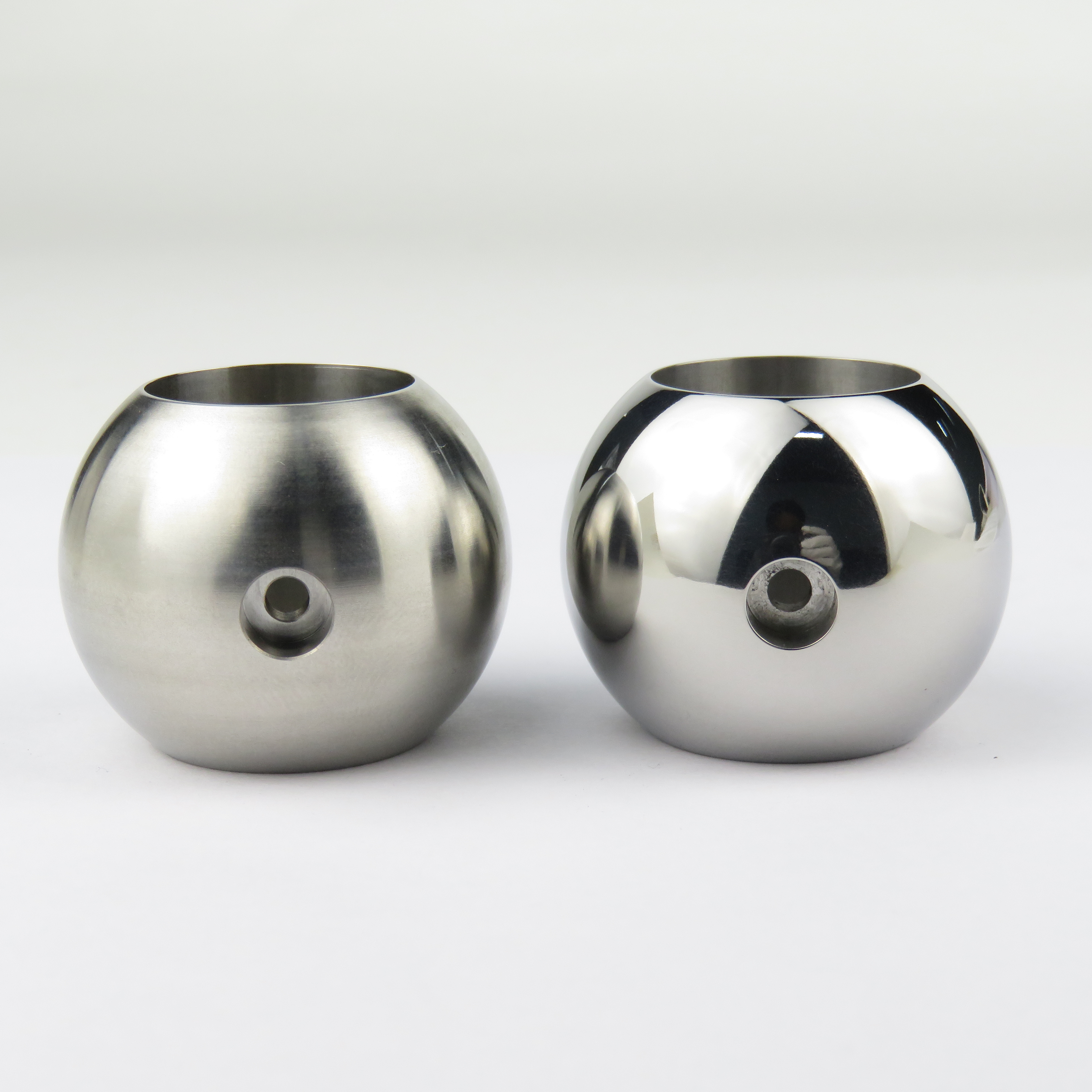
Start from geometry, not finish numbers. Map every internal surface, its bore diameter, its depth and whether a tool or medium can enter it; that map usually settles which zones an electrochemical route can level and which a mechanical route can touch. Then compare what each route leaves behind: a mechanically worked surface can carry a scratch pattern and embedded debris, while an electrochemical route changes the surface uniformly but brings its own process controls and an acid step. Cost per part, downstream passivation and your own inspection evidence should drive the decision, and a comparison trial at Surat can show the mechanical side on your geometry.
Heat tint is oxide, so it is removed by cut rather than by cleaning. Ceramic media with an aggressive shape and bonding, or a grinding stage followed by refinement, are the usual mechanical answers on accessible weld zones. The limit is reach: a tint line that runs into a toe, a crevice or a small bore may survive a cycle that polishes the cap, which is why the toe should be inspected rather than judged by the shine of the weld face. Media size, shape and cycle energy must suit the oxide thickness. A trial on your own parts shows what was removed on the geometry tested.
Generally no, and this is the clearest practical difference between the routes. Tumbling media, whether ceramic, plastic or steel, has to physically enter a bore to work on it, and a tube whose length is many times its diameter and whose bore is narrow will not admit media in a way that produces an even result. Some internal work is possible with a magnetic finishing machine on short bores and small precise parts, but long runs of small-bore sanitary tubing are out of reach for a mechanical process. Zones a machine cannot reach have to be finished another way, accepted as they are, or designed out.
Use Surat, India as the destination on the enquiry and state whether the deliverable is equipment, media and compound, a representative sample review or a line concept. A destination does not imply local stock, a local service point or a local delivery time.
The Bureau of Indian Standards (BIS) is the national standards body, and BIS describes its certification scheme as basically voluntary in nature, with compliance made compulsory for a number of products by the Central Government. Process and chemical units in Gujarat additionally work to their customers' material and inspection specifications as general industry practice.
Sources were retrieved on 2026-09-29 and describe the local industrial and trade context only. They do not evidence any SurfacePolish project, shipment, installation or service in Surat.
The buyer wants the helical weld dressed and the flights refined while holding the drive-end bore and the shaft straightness.
Send the material, dimensions, approximate weight, batch quantity, the incoming condition and photographs of the difficult features. Mark which features must not be contacted by media and state how the result will be inspected. This form carries source reference PSEO-0974; quote it if you prefer an additional manual reference.
Open the SurfacePolish enquiry form Email a prepared enquiry
No price, lead time, certification or result is promised here. Confirm whether a sample trial is available for the specific part and what the trial can and cannot show.
Page PSEO-0974 · revised 2026-09-29 · cross-border equipment, media and scoped sample review. City context is sourced and cited above.
Use this local checker to identify missing part and inspection information. It prepares a technical-review brief; it does not approve a machine, process recipe or production result.
Complete the part details to prepare a review brief.
Email : info@surface-polish.com


 IPv6 network supported


 +86-592-2381506