A bulk handling fabricator in Rennes, France serving food processing equipment has a 2.4 m 304 auger with a helical weld along its flights. The part is far too long for a bowl machine, and its drive-end bore has a tolerance that finishing must not disturb, so the buyer needs a route that suits long geometry. SurfacePolish supplies finishing equipment, media and compounds across borders and runs a free sample trial. This brief is written for a buyer in Rennes working on food processing equipment; it describes equipment, media and a scoped sample review, not a local polishing service.
Does the route have to remove heat tint and restore a passive condition, or refine a surface that is already clean, and who verifies that difference?
What free-iron and chloride exposure does the process itself introduce, and can the buyer's own cleanliness test detect it before the part is released?
Where will roughness be measured, with which cut-off and in which direction, and does that location represent the surface the product actually sees?
Reachability decides the route more often than the finish target does. Measure the internal diameter of every tube, the depth and diameter of every blind hole, the width of every crevice and gasket groove and the corner radius at every internal weld. Ratios matter more than absolute size: a bore that is wide but very deep, or a groove narrower than the smallest available medium, stays untouched by any tumbling process however long the cycle runs. Ask whether a borescope can be inserted and at what angle, because a surface that cannot be seen cannot be inspected after finishing. List the zones a machine cannot reach, and decide in advance whether those zones are finished by another method, accepted as-is with a stated condition, or designed out of the part.
Ceramic media in angle-cut triangles, cylinders, stars and small spheres is the workhorse for stainless weld refinement and deburring. Bonding and shape class set the cut: an angle-cut triangle reaches into corners and along a weld toe, a cylinder rolls and blends, and a small sphere refines without cutting an edge hard. Size drives reach as much as aggression does, because a piece larger than the crevice simply cannot enter it. Ceramic wears down and changes its effective size class over its working life, so top-up and screening are part of holding a finish steady. Wear also produces sludge and fine debris that must be rinsed away, and a chipped piece is an embedding risk. Buying medium on price alone usually shows up later as inconsistent finish and higher consumption.
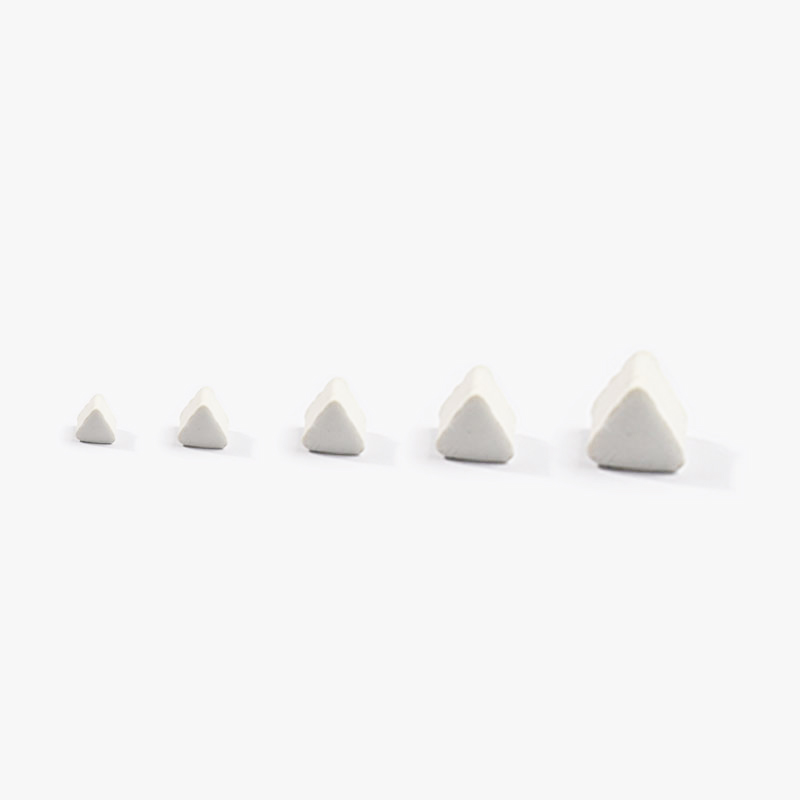
| Media | Best fit | Watch out for |
|---|---|---|
| Steel pins and fine media for magnetic finishing | Small precise components, short bores, slots and blind features that shaped tumbling media cannot enter. | Limited to small parts, will not remove a proud weld cap, and pins must be counted and recovered from every opening. |
| Dry media, walnut shell and corn cob | Light dry burnishing and cosmetic refinement where retained water in a crevice or assembly is a problem. | Generates dust requiring extraction, removes no oxide, and leaves a surface character different from a wet abrasive cycle. |
| Ceramic media, small cylinders and spheres | General deburring and light radius work on hygienic fittings, with less edge cutting than an angle-cut shape. | Small sizes lodge in gasket grooves and drilled openings, and a sphere refines slowly where oxide is thick. |
| Grinding media, coarse alumina-based | Removing a proud weld cap, heavy scale and heat tint before a refinement stage on accessible external surfaces. | Leaves a coarse scratch pattern that must be refined, removes material fast, and can gouge thin sheet or a soft alloy. |
Magnetic finishing uses small steel pins or fine media driven by a rotating magnetic field, which lets it work inside small bores, slots and blind features that tumbling media cannot enter, and the pin-like medium is less likely to lodge than a shaped ceramic piece. It suits small precise components rather than large panels or long tubes, and it will not remove a proud weld cap. A dry route, using dry media on a dry polishing machine, is chosen when retained water in a crevice or an assembly is a problem, or when a light cosmetic refinement is wanted on a part that must not be wet. Dry processing generates dust and cannot remove heat tint or oxide, so it complements rather than replaces a wet abrasive stage. The dryer after a wet cycle is a process step, not an afterthought.
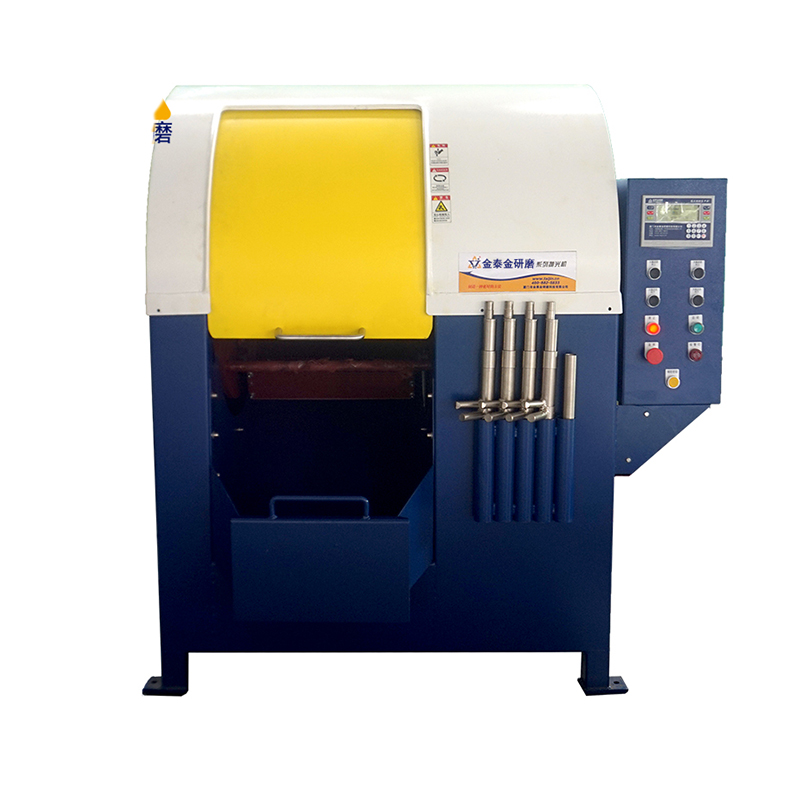
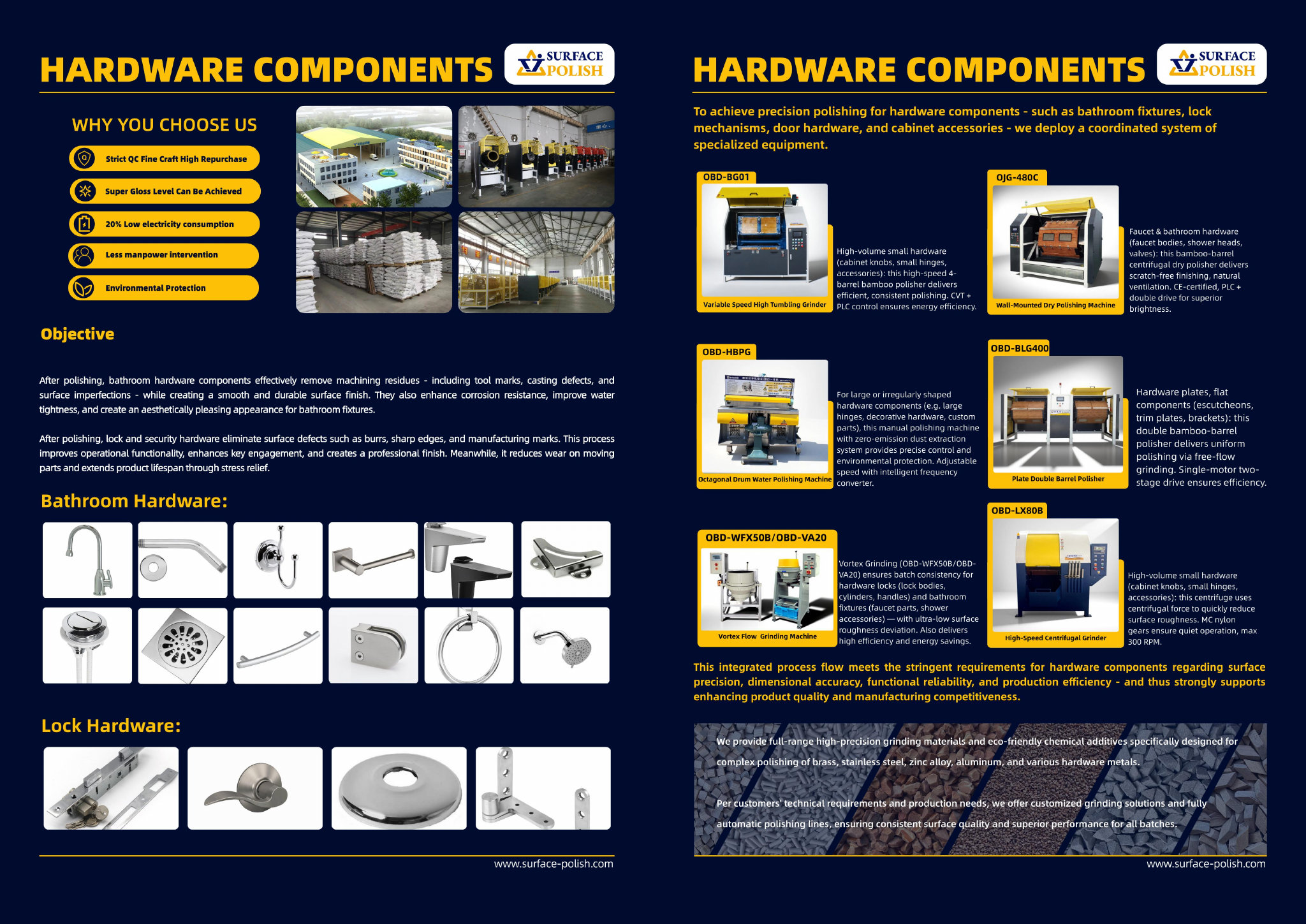
| Machine route | Where it fits | What it will not do |
|---|---|---|
| Tub vibrator | Long parts, tube spools, chute sections and small vessels that a bowl cannot accept, with the part repositioned as needed. | Coverage depends on how the part sits in the media mass, so banding and shadow zones are common without a planned fixture. |
| Vibratory finishing machine, bowl type | Edge and weld-toe blending plus surface refinement on mid-sized parts, with a visible load and adjustable energy. | Chamber geometry caps part size, and the inside of a long tube or a narrow crevice stays out of reach. |
| Grinding finishing machine | Removing a proud weld cap, heavy scale and heat tint before any tumbling or refinement stage. | Leaves a scratch pattern that needs refining, can smear oxide, and iron-bearing tooling can deposit free iron on stainless. |
| Magnetic finishing machine | Small precise parts and short internal features such as slots, small bores and blind recesses. | Part size and surface area are limited, large panels and long tubes are out of scope, and it will not dress a weld cap. |
Free iron on stainless usually comes from tooling and consumables rather than from the part: carbon steel brushes, wire wheels, blasting grit or shot, iron-bearing media, shared racks, gloves that have handled mild steel and water from a contaminated line. It appears days or weeks later as a bloom of rust, often localised near a weld or a crevice. Detection uses a ferroxyl-type test or an equivalent method chosen by the buyer's own quality function, applied at the agreed locations including crevices and internal surfaces after finishing and rinsing. Control is separation: dedicated stainless tooling, media and racks; documented grade of every consumable that touches the surface; and a cleaning step after mechanical work. An upstream acid pickle or electrochemical polish brings its own concerns, including hydrogen, and sits outside what finishing equipment does.
| Failure mode | Likely cause | How to catch it |
|---|---|---|
| Rust bloom or free-iron staining appearing after finishing | Carbon steel brushes, iron-bearing media, shared racks or contaminated rinse water depositing free iron on a 304 or 316L surface. | Run a ferroxyl-type test or the buyer's own equivalent at agreed locations including crevices and internal surfaces, after rinsing and drying, and record the result with the batch. |
| Ceramic or steel media fragments embedded in the surface | Chipped or worn media, excessive cycle energy on a soft or thin feature, or a broken piece recirculating in the load. | Inspect under magnification at low angle, screen the media for broken pieces, and check the surface before and after a refinement stage to see whether fragments were present earlier. |
| Uneven finish, banding or untouched shadow zones across one part | Part position in the chamber, a fixture holding a surface out of the media mass, or a load that is too full or too empty for even contact. | Take roughness readings at several marked locations instead of one, photograph at fixed angles around the part, and compare parts from the top and bottom of the same load. |
| Media lodged in gasket grooves, threads, blind holes or tube ends | Medium size class too close to the opening size, no masking or plugging, and no counted retrieval step at the end of the cycle. | Count media into and out of the load, use a borescope at an agreed angle plus a pin gauge on critical openings, and weigh or shake parts over a tray to reveal retained pieces. |
Rennes is the Breton capital of digital technology, health and agri-food, with an industrial renewal story attached to its former car plant: Rennes Metropole states that La Janais, historically linked to the automobile industry with the presence of Stellantis (formerly PSA), is being developed into a low-carbon industrial excellence hub, with the Bâtiment 78 offering 25 000 m2 of industrial premises, incubator, nursery and business hotel space for young industrial companies. INSEE counted 8 482 establishments in the commune at the end of 2024 with a 2,8 % industry share and 156 532 jobs at the place of work in 2023. The metropolitan strategy names digital, sustainable agriculture and food, health and biotech, creative industries, cybersecurity, circular economy and mobility as its strategic sectors, and Bretagne Developpement Innovation is the regional agency for those transitions.
For this brief the relevant part of that base is food: Rennes Metropole's strategic sector list names agriculture and sustainable food as a metropolitan field of national and international recognition.
The Rennes industrial base mixes automotive-supplier work at and around La Janais with mechanical and electrical equipment manufacture, agri-food equipment and medical technology. In the automotive-supplier part, deburring and edge control on machined and pressed parts is a specified, audited operation with cleanliness limits; in agri-food and medical equipment, stainless fabrication needs controlled surface roughness for cleanability and residue-free rinsing. The industrial-renewal programme at La Janais is explicitly aimed at low-carbon industry, so suppliers setting up there will be specifying new process equipment rather than adapting old lines.
A Rennes buyer should settle whether the finishing process will be installed in an existing plant with limited space and services, or specified as part of a new industrial building such as those on the La Janais hub, because footprint, drainage and ventilation constraints decide which machine types are realistically installable.
Freight context: Rennes Bretagne Airport, Port of Saint-Malo (regional cross-Channel and freight), Rennes rail-road combined terminal. Rennes has no major seaport of its own and relies on Saint-Malo and the Loire estuary ports for sea freight, with Rennes Bretagne Airport for urgent air movements; the metropolitan area's economic programme notes that industrial land is being densified rather than expanded (65 ha of need between 2025 and 2035, 60 % of it from renewal of existing business zones). That makes delivery access, floor loading and installation space at existing plants the practical planning constraint.
The working language of French industrial procurement is French: tenders, drawings, inspection plans and technical dossiers are normally issued and answered in French, and quotations that omit French documentation slow down qualification. Buyers qualify a machine against a written specification and expect traceable material certificates, machine safety documentation and, where applicable, a CE declaration of conformity and a risk assessment; acceptance is often staged (documentary review, factory acceptance test, then commissioning). Payment and documentation norms are conventional EU practice: euro invoicing, SEPA or SWIFT bank transfer, Incoterms agreed in writing, and customs paperwork (commercial invoice, packing list, transport document, proof of origin where a preference is claimed) prepared for the declarant or customs representative. Because customs and tax authorisations are handled jointly through SOPRANO, non-EU sellers are normally advised to sell to an established French/EU importing entity rather than to act as importer of record themselves.
France applies the EU common commercial policy, so industrial machinery arriving from China enters under the Union Customs Code and the Common Customs Tariff rather than under any bilateral French regime; the EU has no free-trade agreement with China, so no preferential duty rate applies and normal third-country duties are due on the customs value. Importers classify the machine in the tariff nomenclature and lodge a customs declaration; French Customs publishes the common and national tariff through its RITA online service and states that three notions are fundamental: the tariff classification of the product, its origin or destination, and the value of the goods.
SurfacePolish supplies from Xiamen, China. The buyer's own destination rules, conformity marking, tariff classification and documentation responsibilities stay with the buyer; confirm them against the authorities named above before ordering.
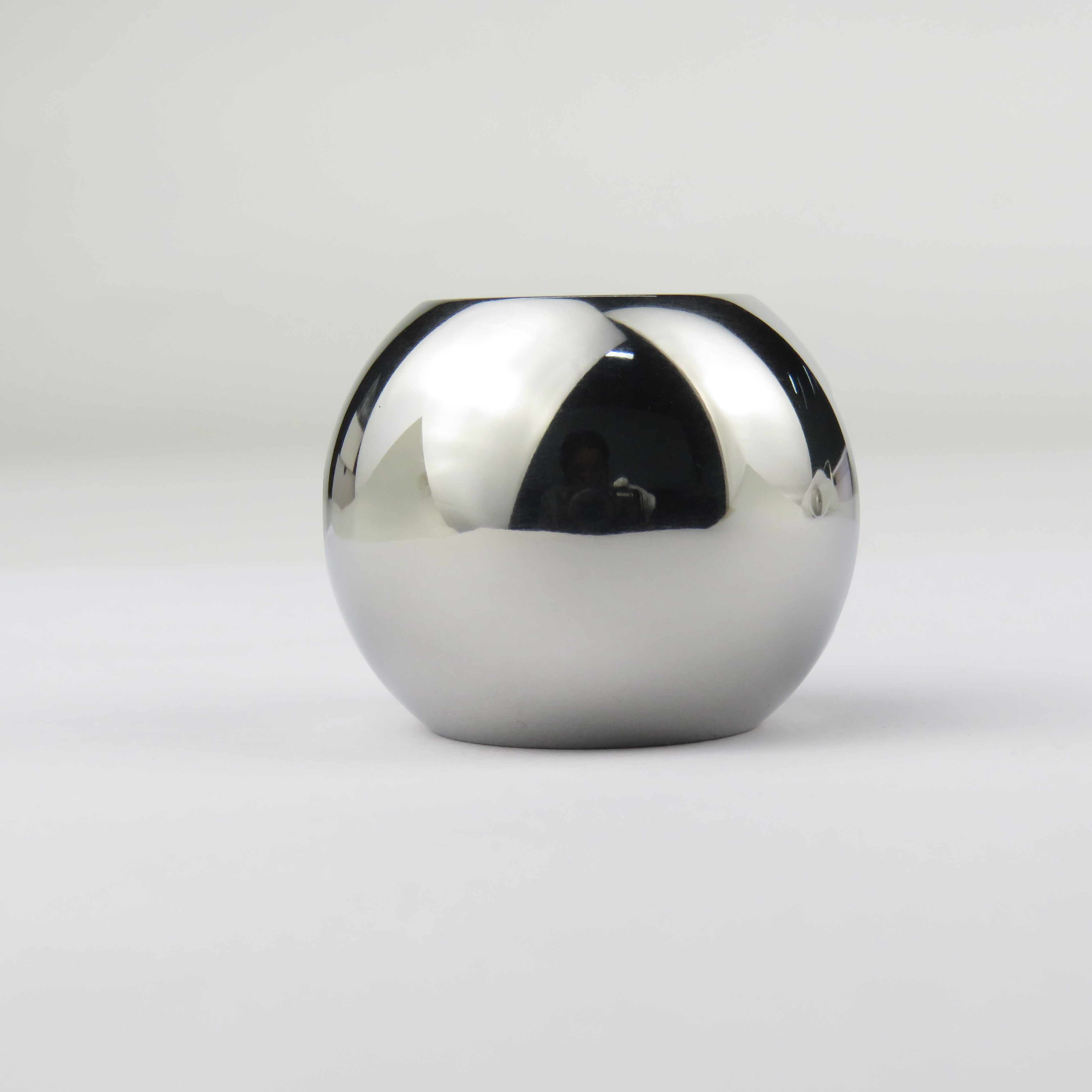
Acceptance has to exist before finishing begins, otherwise every batch becomes a negotiation about appearance. Write the requirement per zone: which surfaces are product-contact, what roughness band applies to each, which edges keep a radius, which faces stay flat, what cleanliness and residue condition is required, and which features come back untouched. Name the inspection method and instrument for each requirement and the person who accepts or rejects. Where a requirement comes from a design code or a customer specification, the buyer's own quality function states and verifies it. A first article fully inspected and retained as the physical reference removes most later argument, particularly on welds, where a kept part says far more than a written description. Re-confirm the requirement whenever drawing, material or upstream fabrication changes.
A trial load is small, hand-observed and run by someone who knows what is being tested; a producing line is larger, repeatable and operated by whoever is on shift. That gap is where results are lost. Fix the load fill level, the part-to-media ratio, the fixture positions and the cycle time as written settings, then check that a shift operator can reproduce them. Expect drift from media wear, compound concentration, water quality and part mix, and put a check in place that detects it before a batch is finished rather than after. Mixed-size loads, changes in upstream welding and new material heats are all reasons to re-verify. Where a finish depends on a hand operation, variation between operators becomes part of process capability and has to be managed, not assumed away.
Treat every recess as a retrieval point rather than hoping it stays clear. Choose a medium size class well below the smallest opening, mask or plug features that were never meant to see media, count media into and out of a load, and add a defined check such as a borescope at an agreed angle plus a pin gauge on critical holes. Where a groove is too narrow for any medium to enter, it will also be too narrow for oxide removal, so the two facts belong in the same conversation. Buyers in Rennes shipping parts for a trial should send the tightest feature they have.
Send representative parts, including the most difficult geometry in the family, and SurfacePolish runs them through a mechanical finishing route and returns the tested parts with observations and a proposed media, compound and cycle direction. The report describes what was seen on those parts under those settings. It is not a guarantee of a roughness value, an edge dimension, a cycle time, a capacity, a cost or a delivery date, and it does not qualify a process for any regulated use. Production variation in material, welding and fit-up is not represented by a small trial load, so your own verification still decides.
No. SurfacePolish supplies mechanical finishing equipment, media and compounds across borders and runs a free sample trial on parts sent to the factory in Xiamen. Electropolishing is an electrochemical operation that is neither supplied nor performed, and no chemical pickling or passivation step is offered either. Where the two routes are compared on this page it is to help a buyer decide what they actually need, not to present a mechanical process as a substitute. If your specification requires an electrochemical finish, that work has to be sourced and verified by you.
Use Rennes, France as the destination on the enquiry and state whether the deliverable is equipment, media and compound, a representative sample review or a line concept. A destination does not imply local stock, a local service point or a local delivery time.
A Rennes buyer would reference ISO/NF EN surface-texture standards for finish and the automotive IATF 16949 regime with customer-specific edge and cleanliness requirements where vehicle work is involved, and hygiene-related surface requirements for food equipment; ISO 9001 is the general baseline and ISO 13485 applies to medical devices. AFNOR publishes the NF/NF EN versions of the ISO standards used on local drawings.
Sources were retrieved on 2026-09-29 and describe the local industrial and trade context only. They do not evidence any SurfacePolish project, shipment, installation or service in Rennes.
The buyer wants the helical weld dressed and the flights refined while holding the drive-end bore and the shaft straightness.
Send the material, dimensions, approximate weight, batch quantity, the incoming condition and photographs of the difficult features. Mark which features must not be contacted by media and state how the result will be inspected. This form carries source reference PSEO-0594; quote it if you prefer an additional manual reference.
Open the SurfacePolish enquiry form Email a prepared enquiry
No price, lead time, certification or result is promised here. Confirm whether a sample trial is available for the specific part and what the trial can and cannot show.
Page PSEO-0594 · revised 2026-09-29 · cross-border equipment, media and scoped sample review. City context is sourced and cited above.
Use this local checker to identify missing part and inspection information. It prepares a technical-review brief; it does not approve a machine, process recipe or production result.
Complete the part details to prepare a review brief.
Email : info@surface-polish.com


 IPv6 network supported


 +86-592-2381506