A buyer in Ahmedabad, India finishing thin-walled waveguide hardware for aerospace components needs an outer surface improvement without distorting 0.9 mm walls and needs evidence that nothing remains inside a closed volume. SurfacePolish supplies finishing equipment and consumables across borders and offers a free sample trial; trial output describes the parts tested and the settings used, and the buyer's own inspection remains the acceptance route. This brief is written for a buyer in Ahmedabad working on aerospace components; it describes equipment, media and a scoped sample review, not a local polishing service.
What edge condition is actually specified at each critical location, and which machine and media combination can hold inside that band?
Does the compound chemistry family create a hydrogen, staining or residue risk for this alloy and heat treatment, and who verifies that?
How will media be kept out of drilled passages, tapped holes and closed volumes, and what retrieval and verification step proves it?
Before any machine or medium is proposed, the finishing engineer needs a feature inventory of the actual part, not a family description. List threaded holes, dowel bores, seal lands, bearing journals, hydraulic and fuel passage orifices, weld lands, machined bosses and thin webs, then decide for each whether it is masked, plugged, finished to a limit or deliberately left untouched. The inventory is what makes the media size class and cycle intensity defensible. Two parts from the same drawing family can need different screening because one carries a cross-drilled passage and the other does not. Ask for a marked-up drawing, a photograph of a sectioned sample and, where possible, one part already rejected for a finishing-related reason. Feature inventory also sets handling: which surfaces may be touched, where parts may be stacked and how they are separated between operations.
Aerospace polishing work often needs more than one stage because a single machine and medium rarely satisfies both a defined edge requirement and a defined surface requirement on a complex part. A common shape is a heavier cutting stage to remove machining burrs and establish an edge radius, followed by a lighter refinement stage with finer media and a cleaner compound, then a rinse and dry stage sized for the part's internal features. Treat the transfer points as engineering decisions: parts sitting wet between stages can stain, media carried on the part can scratch the next face, and handling between operations produces more damage than the finishing itself on thin parts. Describe the line as a sequence with defined in-between cleanliness and handling, then check that each machine's chamber, media separation and drying capability matches its position in that sequence before any purchase discussion.
| Machine route | Where it fits | What it will not do |
|---|---|---|
| Centrifugal barrel finishing machine | Short cycles on small, hard, robust parts where high pressure at the part-media interface is acceptable. | High energy transfers into thin walls and fixtures and wears liners; part size and barrel geometry bound what can be run. |
| Vibratory tub or long-channel machine | Long shafts, tubes, housings and large parts that will not turn or circulate in a bowl. | Media circulation is less uniform along a long chamber, and bridging can leave sections of a long bore unprocessed. |
| Rotary barrel tumbling machine | Gentle, uniform processing of small robust parts in large quantities, such as bushings, spacers and fasteners. | Slow cycles, per-barrel weight limits, and limited access for inspecting or repositioning parts during the run. |
| Magnetic finishing machine | Small precise parts with internal edges and recesses that loose media cannot enter, using small pins or needles. | Bounded by part size and mass, by workpiece material attraction to the pins, and by the need to retrieve residual pins. |
Steel media works by burnishing: it displaces surface metal and compresses it rather than cutting it away, which produces a bright, uniform appearance and can improve surface texture without the dimensional change that a cutting medium causes. That property makes it attractive where features must keep their geometry and only the surface appearance needs to change. The conditions are strict. Burnishing needs a clean load, correct compound chemistry and controlled water, because any debris, iron contamination or hard water deposit is pressed into the surface rather than flushed away. Steel media is heavy and concentrates energy, so thin walls and unsupported sections need lower energy or fixturing. It also carries a cross-contamination risk: stainless and aluminum parts can pick up iron from carbon steel media, so keep baths and media dedicated. Select it after the removal requirement has been met, not as a substitute for deburring.
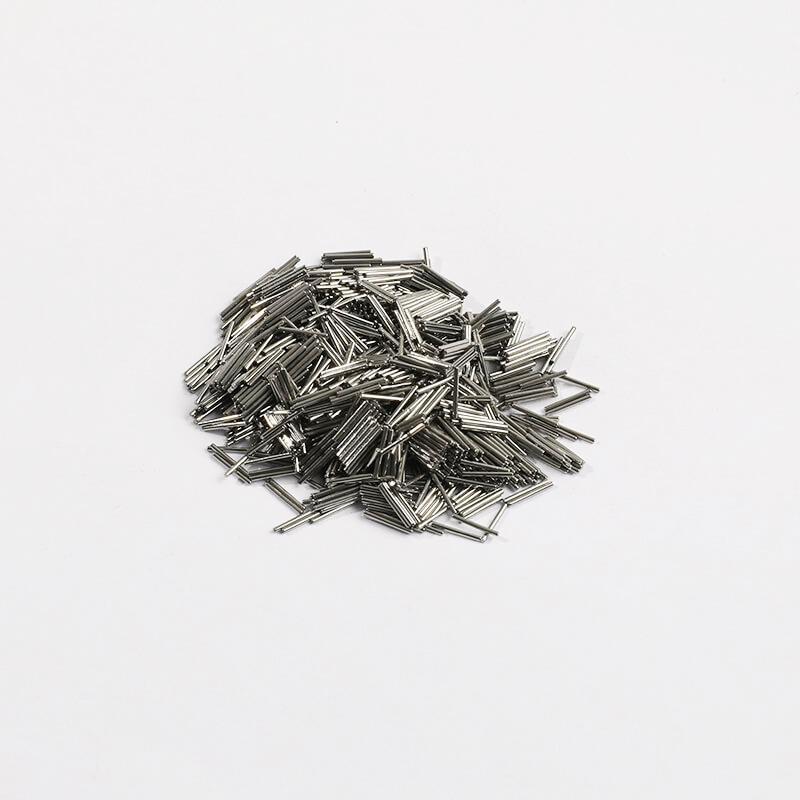
| Media | Best fit | Watch out for |
|---|---|---|
| Plastic media, cones and triangles | Gentle cutting on aluminium, thin-wall sections and surfaces that must not be scored. | Deforms and loads with metal fines so cut rate falls while the blend still looks intact; ineffective in deep recesses and tight radii. |
| Alkaline detergent compound | General cleaning and suspension of removed material on steel, stainless and aluminium where neutral to alkaline chemistry suits the alloy. | Running lean causes loading, heat and discoloration; running rich causes foam and residue that lodges in blind features. |
| Compound with corrosion inhibitor for sensitive alloys | Aluminium and stainless parts that must not stain or pit during processing and between-stage handling. | Inhibitor does not compensate for hard or chloride-bearing water, and residue left in recesses can mask later inspection. |
| Ceramic media, angle-cut and triangular shapes | Heavier deburring and edge blending on steel, stainless and titanium parts with accessible corners and recesses. | Wears down and changes effective size class, generates sludge, and can chip or over-round thin sections and soft alloys. |
Vibratory, barrel and centrifugal processes remove material at edges far faster than on adjacent faces, so an edge will keep rolling after the face has stopped changing. The defect is not visible damage but a dimension: a radius that has grown past the specified limit, a chamfer that has become a round, or a break edge that has disappeared. Fatigue-critical holes, seal grooves, thread entry chamfers and fastener bearing faces are where the consequence is greatest, because an over-rounded edge reduces bearing area and alters the stress path. Check by establishing the pre-finish edge state and measuring the finished state with radius gauges, an optical comparator or a cast impression, ideally at the same clock positions on several parts. Control it with media size class, cycle time, energy setting and, where limits are tight, a distinct edge operation instead of the bulk cycle.
| Failure mode | Likely cause | How to catch it |
|---|---|---|
| Iron contamination pickup on stainless or aluminium parts | Shared media, bath or chamber with carbon steel work, or recycled compound carrying steel fines. | Inspect for rust bloom, discoloured spots or magnetic particles after drying, and check which media and bath last ran in the machine. |
| Dried compound residue or water spotting in recesses | Rich compound, hard or chloride-bearing rinse water, or a drying method that does not move air through blind features. | Inspect recesses with a borescope, read rinse-water conductivity or hardness, and verify the drying method against the part's internal geometry. |
| Impingement marks or gouges on thin webs and sharp corners | Excess amplitude or speed with too little media in the chamber, or parts free to strike each other in an under-filled load. | Inspect the vulnerable features under magnification before and after, photograph under raking light, and compare the same feature across several parts from the load. |
| Media wedged at a cross-drilled passage intersection | Media small enough to enter the passage, plus no defined retrieval step in the routing before final cleaning. | Flush the passage with a measured volume, examine the flush medium and the passage with a borescope, and add a documented retrieval step such as directed air or a magnet. |
Ahmedabad is the largest city and commercial centre of Gujarat, a state that accounts for 29.88% of India's total exports in FY 2024-25 and 62% of the country's petrochemical production (s2). The state's industrial base is organised through more than 200 industrial estates covering 33,000+ hectares of industrial land, with sector-specific parks including PM-MITRA Park, a Ceramics Park and a Bulk Drug Park, plus GIFT City, India's first operational smart city and its only International Financial Services Centre (s2). Ahmedabad-specific infrastructure includes the country's first bullet train, connecting Ahmedabad and Mumbai over 508 km, and the state's largest waste-to-energy plant, established at Piplaj on a public-private basis (s1).
The nearest part of that base to this brief is semiconductor: Invest India's semiconductor sector page reports Micron Technology's semiconductor assembly plant in Gujarat, one of the country's approved ATMP/OSAT facilities (s3).
Ahmedabad's pharmaceutical, chemical and electronics/semiconductor supply base needs deburring and cleanliness on machined stainless parts, dies, tooling and precision components, where contamination and burr retention are functional risks rather than appearance issues. The broader engineering and automotive-component work in the Sanand-Changodar-Vatva belt adds conventional deburring, edge radiusing and surface preparation before coating or assembly, and pharma equipment fabrication adds passivation and product-contact cleanliness requirements.
An Ahmedabad buyer should settle whether the parts are pharmaceutical, chemical or food-contact components requiring documented cleanliness and passivation, or general engineering components needing edge control and finish, because that distinction decides the media chemistry, the rinse and drying regime, and what evidence of the process the customer's quality team will accept.
Freight context: Gujarat's major port (Kandla/Deendayal) and 48 non-major ports, Sardar Vallabhbhai Patel International Airport, Ahmedabad, GIFT City / DMIC corridor. Gujarat has 1 major port and 48 non-major ports and 19 operational airports, four of which are international, with 38% of the Delhi-Mumbai Industrial Corridor lying in the state (s4). Sea-borne machinery and media therefore land through the state's port system, while Ahmedabad's international airport handles air freight and sample parts, and the DMIC road and rail corridor links the metro to the northern and western hinterland.
The Bureau of Indian Standards (BIS) describes itself as the National Standards Body of India and runs the country's product certification system, including products under compulsory certification, a foreign manufacturers certification scheme with nomination of an authorised Indian representative, and a registration scheme for manufacturers (c8, c9). Indian Standards (IS) issued by BIS are the reference texts Indian buyers write surface, coating and material specifications against, and BIS-recognised or BIS-empanelled laboratories are the test facilities used for certification work. Where a machine, media or compound falls under a BIS quality-control order, the licence or registration duty attaches to the product placed on the Indian market, so an overseas supplier should settle the applicable IS standard and the certification route before quoting.
India classifies every imported item in the ITC(HS) schedule, a compilation of codes for all merchandise for export and import whose Schedule I lays down the import policy regime for each item, maintained at 8-digit level under the First Schedule of the Customs Tariff Act, 1975 and aligned at 6 digits with the WCO Harmonized System (c1, c3). Importability is judged by the policy in force on the date of import, and when a policy moves from free to restricted, goods already committed through an irrevocable commercial letter of credit opened before the change can still be imported up to the balance quantity, value and period in that ICLC (c4). Preferential customs treatment is available only through the preferential trade agreements, free trade agreements, CECAs and CEPAs that India notifies and that are in operation (c5), so Chinese-origin industrial machinery is assessed at the applicable rate of the customs tariff rather than under any India-China preferential rate; India's commerce leadership has separately pointed to exports under free trade pacts growing faster than imports (c12). For capital goods specifically, DGFT operates the Export Promotion Capital Goods (EPCG) scheme, whose stated objective is to facilitate import of capital goods for producing quality goods and services (c7), which Indian firms use when they want duty relief on imported plant against an export obligation.
SurfacePolish supplies from Xiamen, China. The buyer's own destination rules, conformity marking, tariff classification and documentation responsibilities stay with the buyer; confirm them against the authorities named above before ordering.
Appearance should be defined by an agreed physical master or a calibrated image set viewed under specified lighting and magnification, because written adjectives such as bright or uniform are not acceptance criteria. Beside appearance, insist on the checks that reflect how the part actually works. A seal land is checked for sealing condition, a bearing seat for fit and contact pattern, a sliding surface for freedom from raised material and a threaded feature for gauge entry. Edges are measured rather than viewed, using radius gauges, an optical comparator or a cast impression against the recorded pre-finish state. Functional checks should be performed with the buyer's own gauges where the buyer owns the acceptance decision, and the results recorded against the specified requirement instead of a pass or fail opinion. Where a check damages a part, define it as a sampling check on dedicated parts.
Send parts that represent the production condition, not the best examples from a setup rack. Include the part with the tightest internal feature, the thinnest wall and the most difficult edge, because those features decide the process more than the largest flat face does. Provide the material and heat treatment, the drawing requirements you can share, and a marked-up photograph that identifies the features which must not change and those which must. Include one or two parts in the incoming condition with no prior finishing, plus, where available, a part finished the way you want the result to look. State the batch size and how parts are separated in your own shop, since load pattern affects outcome as much as media choice. Where a family has variants, send the extremes of the family rather than a middle case.
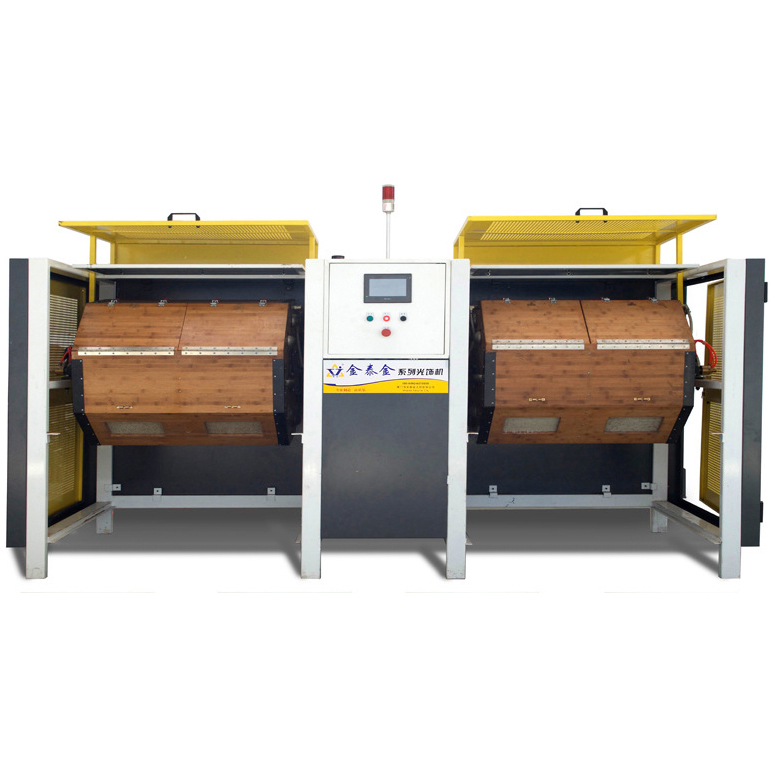

Small robust fittings often suit rotary or centrifugal barrel finishing, which process many pieces per load at low unit cost, while delicate parts may need a gentler vibratory route or magnetic finishing with small pins for internal edges. The deciding factors are the smallest feature to keep clear, the thinnest section, the edge limit and the batch size, not overall part size. Send the extreme cases from the family for a trial rather than a typical part, and ask for a comparison across two media classes with everything else held constant. SurfacePolish supplies all of these machine types across borders and can describe how each behaves on tested parts.
Ask for records that let a later batch be compared with the approved one: machine and bath identification, media type and size class, compound product and measured concentration, cycle time and energy setting, load weight or part count, rinse and dry method, and measurement results with the instrument, setup and locations. Photographs taken under consistent lighting before and after belong in the record, along with any deviation raised during the run. A document that only asserts quality is less useful than one that names the configuration. Hold the configuration under change control, so a new media supplier or compound batch triggers re-verification rather than silently altering the output.
No. A part can look bright and uniform while carrying embedded media fragments, a smeared surface layer, dried compound residue in a recess or an edge that has rolled past its limit. Acceptance needs measurement at defined locations, edge checks where edges are specified, and cleanliness checks of internal features, all recorded against the drawing requirement. Define appearance with a physical master or a calibrated image set under fixed lighting and magnification, since adjectives are not criteria. For a buyer in India, the practical rule is that appearance is one input among several, and no appearance result on its own establishes fitness for a regulated application.
Use Ahmedabad, India as the destination on the enquiry and state whether the deliverable is equipment, media and compound, a representative sample review or a line concept. A destination does not imply local stock, a local service point or a local delivery time.
Ahmedabad buyers specify finish, cleanliness and material conformity against Indian Standards (IS) published by the Bureau of Indian Standards, the National Standards Body of India (s5). Pharmaceutical and food-contact work additionally carries the customer's own cleaning, passivation and validation requirements, and where the machine or finishing consumable falls under a BIS quality-control order the licence or registration duty applies to the product on the Indian market (s5).
Sources were retrieved on 2026-09-29 and describe the local industrial and trade context only. They do not evidence any SurfacePolish project, shipment, installation or service in Ahmedabad.
The buyer needs the outer surface improved without distortion, and proof that no media remains inside a closed volume.
Send the material, dimensions, approximate weight, batch quantity, the incoming condition and photographs of the difficult features. Mark which features must not be contacted by media and state how the result will be inspected. This form carries source reference PSEO-0961; quote it if you prefer an additional manual reference.
Open the SurfacePolish enquiry form Email a prepared enquiry
No price, lead time, certification or result is promised here. Confirm whether a sample trial is available for the specific part and what the trial can and cannot show.
Page PSEO-0961 · revised 2026-09-29 · cross-border equipment, media and scoped sample review. City context is sourced and cited above.
Use this local checker to identify missing part and inspection information. It prepares a technical-review brief; it does not approve a machine, process recipe or production result.
Complete the part details to prepare a review brief.
Email : info@surface-polish.com


 IPv6 network supported


 +86-592-2381506