A finishing planner in Surat, India working on large aluminium structures for aerospace components needs pocket and hole edges blended on a frame over a metre long without distortion or impact damage. SurfacePolish supplies tub and long-chamber finishing machines and media across borders, and a free sample trial can test a segment or representative part before any line concept is discussed. This brief is written for a buyer in Surat working on aerospace components; it describes equipment, media and a scoped sample review, not a local polishing service.
How will media be kept out of drilled passages, tapped holes and closed volumes, and what retrieval and verification step proves it?
At what batch size, load pattern and media wear state does the trial result still describe what production will produce?
Which datum and mating surfaces carry assembly geometry, and is a flatness or fit check required on them after finishing?
Material leaves an edge far faster than it leaves an adjacent face on every mechanical finishing route, and on aerospace parts edge condition is frequently a specified requirement rather than a byproduct. Drawings may call out a defined radius, a broken edge or an edge that must remain sharp for a sealing or shearing function. Record the pre-finish edge state with an optical comparator, radius gauges or a cast impression before processing, then set the allowable band in writing. Fatigue-critical holes are the classic case: an edge that is too sharp concentrates stress, while one that is over-rounded changes the bearing area of a fastener head. Because stock removal at an edge is far faster than on a flat face, cycle intensity and media size class are the levers that control it. If edge limits are tight, plan an edge-specific operation rather than hoping a bulk cycle will land inside the band.
Vibratory finishing is usually the first route to evaluate for aerospace parts because it blends edges and refines surfaces while keeping part-on-part contact moderate and allowing visual access during the cycle. The real differences lie in the chamber: a bowl with a centre column circulates the load continuously, while a tub or long-channel machine moves it more linearly and suits long shafts, tubes and housings that will not turn in a bowl. Drive amplitude, motor setting and the media-to-part ratio decide how much energy reaches the surface, and the machine frame sets the practical part size. For thin-walled or delicate components, ask whether the load can be run in compartments or on fixtures rather than free-tumbling. Also settle unloading and separation early, because a vibratory machine that finishes well but traps media in a closed housing costs more in inspection time than it saves in cycle time.
| Machine route | Where it fits | What it will not do |
|---|---|---|
| Grinding finishing machine | Applications needing higher material removal before a refinement stage, such as heavy burrs or a defined stock removal. | Higher removal raises the risk of edge over-rounding and dimensional change on close-tolerance features. |
| Dry polishing machine and dryer | Post-wet drying and light dry finishing of parts with blind holes and passages where moisture carryover matters. | Dry media cut slowly, require dust extraction and medium condition control, and forced-air drying must be matched to internal geometry. |
| Centrifugal barrel finishing machine | Short cycles on small, hard, robust parts where high pressure at the part-media interface is acceptable. | High energy transfers into thin walls and fixtures and wears liners; part size and barrel geometry bound what can be run. |
| Vibratory tub or long-channel machine | Long shafts, tubes, housings and large parts that will not turn or circulate in a bowl. | Media circulation is less uniform along a long chamber, and bridging can leave sections of a long bore unprocessed. |
The compound is not a lubricant added at the end of the setup; it is the variable that keeps the process stable. Alkaline builders and detergents keep media and parts clean and suspend removed material, mildly acidic or chelated chemistry brightens certain alloys, and inhibitors are used to limit attack on sensitive surfaces. Concentration and flow rate at the machine are the actual levers: running lean loads the media, slows the cut and lets heat and discoloration develop, while running rich produces foam, residue that lodges in blind holes and unnecessary cost. Water quality belongs in the same discussion because hardness leaves scale and spotting, and chlorides present a pitting risk on stainless and aluminum. Set concentration by a measured dilution routine and a daily check, record it with the batch, and treat any drift as a process deviation rather than an operator preference.
| Media | Best fit | Watch out for |
|---|---|---|
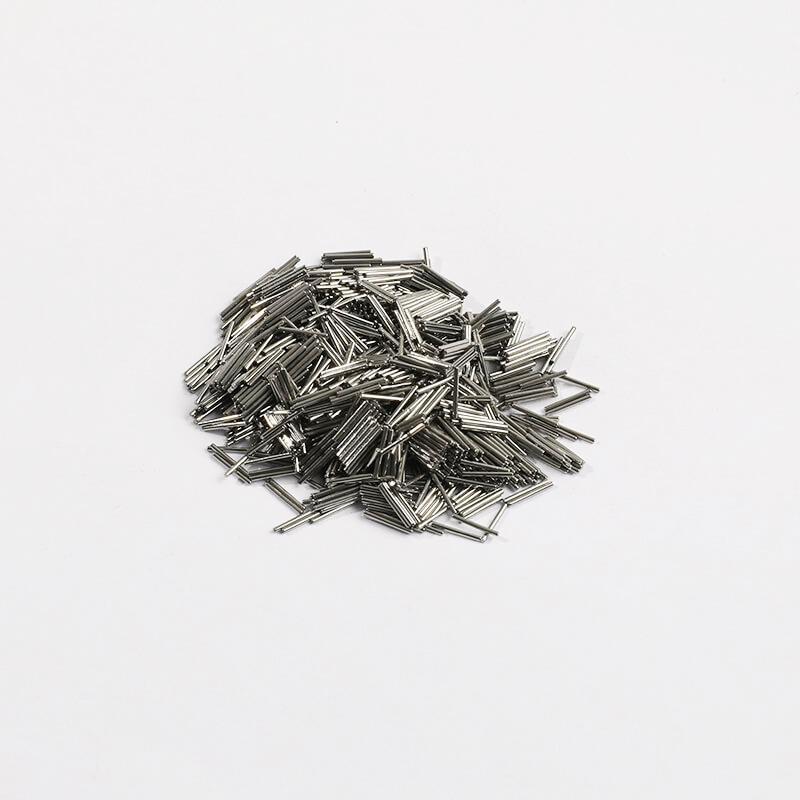
| Steel media for burnishing | Bright, uniform appearance with minimal dimensional change on parts whose geometry must stay as machined. | Presses debris and hard-water deposits into the surface, concentrates energy on thin sections, and carries iron cross-contamination risk. |
| Compound with corrosion inhibitor for sensitive alloys | Aluminium and stainless parts that must not stain or pit during processing and between-stage handling. | Inhibitor does not compensate for hard or chloride-bearing water, and residue left in recesses can mask later inspection. |
| Ceramic media, small size class for tight features | Reaching small holes, slots and fillets where a standard size class cannot enter, at reduced removal rate. | Screens differently from larger media, lodges more easily in drilled passages and must be kept below the smallest hole to stay clear. |
| Ceramic media, angle-cut and triangular shapes | Heavier deburring and edge blending on steel, stainless and titanium parts with accessible corners and recesses. | Wears down and changes effective size class, generates sludge, and can chip or over-round thin sections and soft alloys. |
Impingement shows up as a local patch of heavier material removal, a gouge or a flattened edge where media or another part struck the surface with too much energy. On aerospace work it appears most often on thin webs, long unsupported sections, sharp external corners and parts run at too high an amplitude in a lightly loaded chamber. The cause is rarely the medium alone; it is the combination of energy setting, media size and mass, load volume and the freedom of parts to move against each other. Check for it by inspecting known vulnerable features under magnification before and after, by photographing under raking light rather than diffuse light, and by comparing the same feature across several parts from the load. Mitigation follows the diagnosis: reduce amplitude, add media, compartmentalise or fixture the part, or move the operation to a gentler route.
| Failure mode | Likely cause | How to catch it |
|---|---|---|
| Thread entry chamfer rounded away or thread crests burnished | Unmasked threaded features run in a burnishing or high-energy cutting load. | Gauge the thread with the buyer's own gauge and inspect the entry chamfer under magnification against the recorded pre-finish condition. |
| Impingement marks or gouges on thin webs and sharp corners | Excess amplitude or speed with too little media in the chamber, or parts free to strike each other in an under-filled load. | Inspect the vulnerable features under magnification before and after, photograph under raking light, and compare the same feature across several parts from the load. |
| Dark or heat-tinted patch following the media flow | Lean compound concentration or restricted flow, letting metal fines and heat build up in the working mass. | Compare against the agreed appearance master under fixed lighting and check the measured compound concentration and flow rate recorded for the batch. |
| Embedded media fragments or metal smeared into the surface | Dirty or overloaded compound, media hardness mismatched to the alloy, or high-pressure burnishing that presses debris into the surface. | Borescope internal features, examine agreed locations at low magnification, and use dye penetrant only where the buyer's own procedure requires it. |
Surat is a processing and port-industrial city. The district administration states that Surat is the world's largest diamond manufacturing centre with over 5,000 diamond manufacturing units and that three-quarters of the world's diamonds are cut and polished there, while the Southern Gujarat Chamber of Commerce and Industry (SGCCI) records a diamond-cutting workforce of more than 1.5 million people. SGCCI describes Surat as India's most prominent man-made textile centre and notes a strong MSME manufacturing base in South Gujarat. The district's heaviest industry sits in the Hazira belt about 15 km from the city, which SGCCI says has attracted investment from Reliance, ONGC, Essar, L & T, KRIBHCO, GAIL, Shell, Niko, NTPC, ABG Shipyard, IOCL, HPCL and BPCL, and Reliance confirms a carbon fibre facility at Hazira.
The nearest part of that base to this brief is energy: The Hazira industrial belt listed by SGCCI includes Reliance, ONGC, GAIL, Shell, Niko, NTPC and KRIBHCO, and Reliance states that its Hazira carbon fibre facility is set to become one of the largest of its kind.
Surat's metal-finishing demand is concentrated around diamond and textile processing and the Hazira process belt: machine parts, dies, jigs and stainless components that need burr removal and edge control before use, plus tooling and hardware where surface condition matters. Fabrication and maintenance workshops in the belt also finish replacement parts and stainless components, where the practical question is whether a vibratory or barrel process can reach the required edge condition without altering dimensions or leaving compound residue. Because much of the supporting industry is MSME-scale, batches are often small and mixed-material, which affects media choice.
A Surat buyer should first decide whether finishing is needed for edge control and deburring of machined components or for surface preparation of cast, formed or welded parts, then confirm on sample parts that the media and compound suit the specific alloy and geometry — a step that matters when parts come from mixed small-batch production.
Freight context: Hazira port, Surat, Surat International Airport (Airports Authority of India), NH8 / NH6 road corridors. The district administration states that Hazira port is connected by NH8 to Ahmedabad and Mumbai, with NH6 linking the Maharashtra border-Surat-Hazira, and AAI material refers to Surat International Airport. Sea freight for the Hazira belt enters through Hazira; imported machines and sample parts are cleared under the standard Indian customs procedure at the port or airport of entry.
An Importer-Exporter Code (IEC) issued by DGFT is a key business identification number which is mandatory for exports or imports, and since the introduction of GST the IEC number is the same as the PAN of the firm (c6). The post-incorporation clearance list published by Invest India includes the IEC, a Customs- Special Valuation Branch reference and the grant of a Bureau of Indian Standards (BIS) licence, and it names the Central Board of Excise and Customs among the agencies in the framework (c10). The Foreign Trade Policy fixes the mandatory import documents as a bill of lading / airway bill / lorry receipt / railway receipt, a commercial invoice cum packing list and a bill of entry, with additional documents or NOCs possible for goods subject to product-specific compliance (c3); it also states that domestic laws, rules, orders, technical specifications and environmental, safety and health norms applicable to domestically produced goods apply mutatis mutandis to imports unless specifically exempted (c2), which is the basis on which a BIS quality-control order can bite on imported machinery. A landed-cost plan therefore needs the correct ITC(HS) classification and the basic customs duty and IGST that follow from it, plus the IEC, the bill of entry documentation and any BIS licence or registration obligation, and a related-party import can additionally be pulled into special customs valuation.
India classifies every imported item in the ITC(HS) schedule, a compilation of codes for all merchandise for export and import whose Schedule I lays down the import policy regime for each item, maintained at 8-digit level under the First Schedule of the Customs Tariff Act, 1975 and aligned at 6 digits with the WCO Harmonized System (c1, c3). Importability is judged by the policy in force on the date of import, and when a policy moves from free to restricted, goods already committed through an irrevocable commercial letter of credit opened before the change can still be imported up to the balance quantity, value and period in that ICLC (c4). Preferential customs treatment is available only through the preferential trade agreements, free trade agreements, CECAs and CEPAs that India notifies and that are in operation (c5), so Chinese-origin industrial machinery is assessed at the applicable rate of the customs tariff rather than under any India-China preferential rate; India's commerce leadership has separately pointed to exports under free trade pacts growing faster than imports (c12). For capital goods specifically, DGFT operates the Export Promotion Capital Goods (EPCG) scheme, whose stated objective is to facilitate import of capital goods for producing quality goods and services (c7), which Indian firms use when they want duty relief on imported plant against an export obligation.
SurfacePolish supplies from Xiamen, China. The buyer's own destination rules, conformity marking, tariff classification and documentation responsibilities stay with the buyer; confirm them against the authorities named above before ordering.
A roughness number is only meaningful with its measurement setup attached. Agree the exact locations, which surfaces are excluded, the evaluation length and cutoff, the filter and whether the requirement is stated as an average, a maximum or a profile parameter. Values taken at different cutoffs on the same surface will not agree, and values taken on a curved or interrupted surface such as a fillet, thread flank or cast skin are unreliable unless the setup is designed for it. Record instrument identification, stylus condition and the calibration status in use at the time, and keep the readings with the batch. For areal or functional appearance requirements, prefer a documented procedure over an informal comparison, and state plainly that roughness readings describe the sampled locations on the parts measured. Repeatability comes from repeating the same setup, not from taking more readings in different ways.
Send parts that represent the production condition, not the best examples from a setup rack. Include the part with the tightest internal feature, the thinnest wall and the most difficult edge, because those features decide the process more than the largest flat face does. Provide the material and heat treatment, the drawing requirements you can share, and a marked-up photograph that identifies the features which must not change and those which must. Include one or two parts in the incoming condition with no prior finishing, plus, where available, a part finished the way you want the result to look. State the batch size and how parts are separated in your own shop, since load pattern affects outcome as much as media choice. Where a family has variants, send the extremes of the family rather than a middle case.

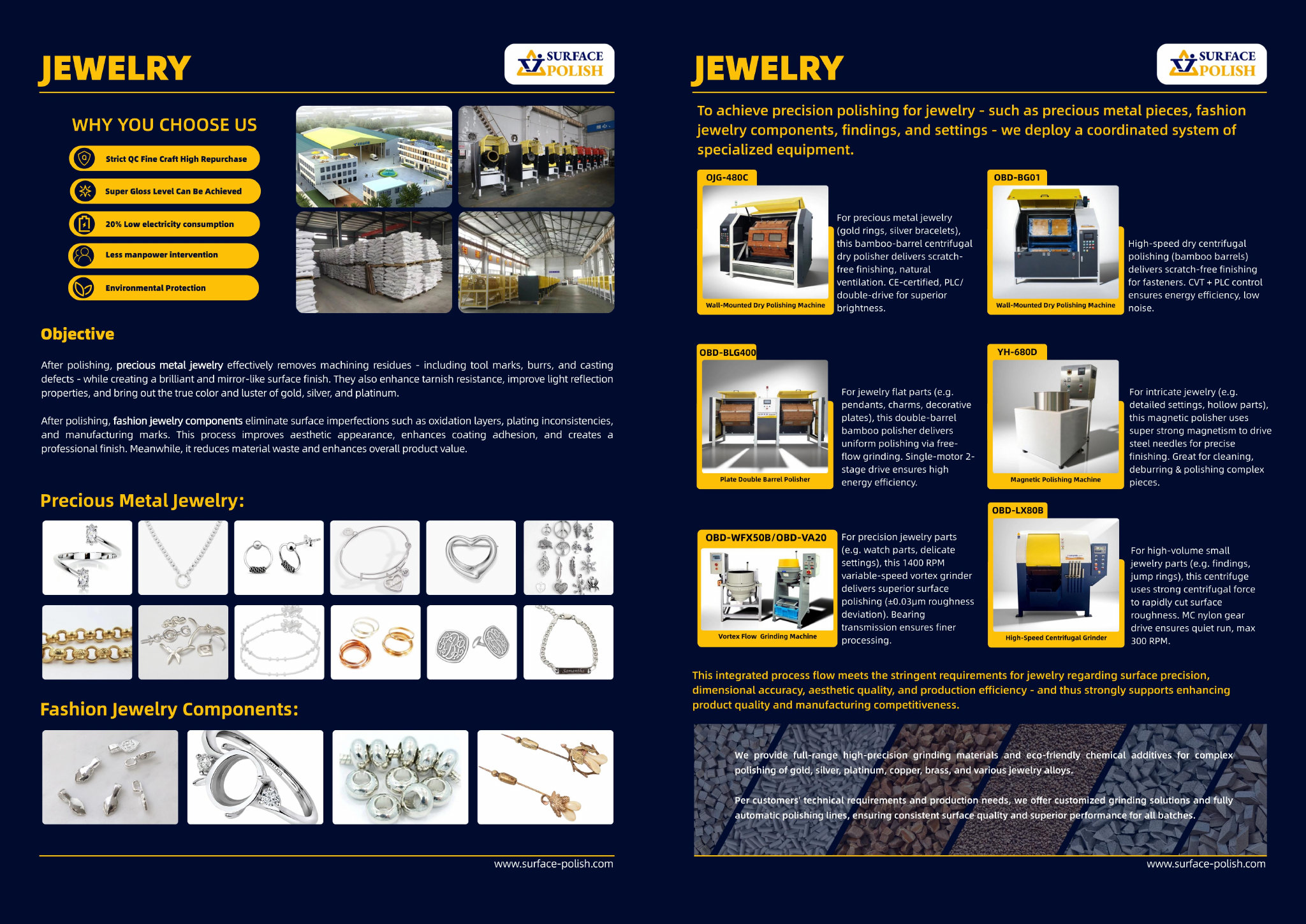
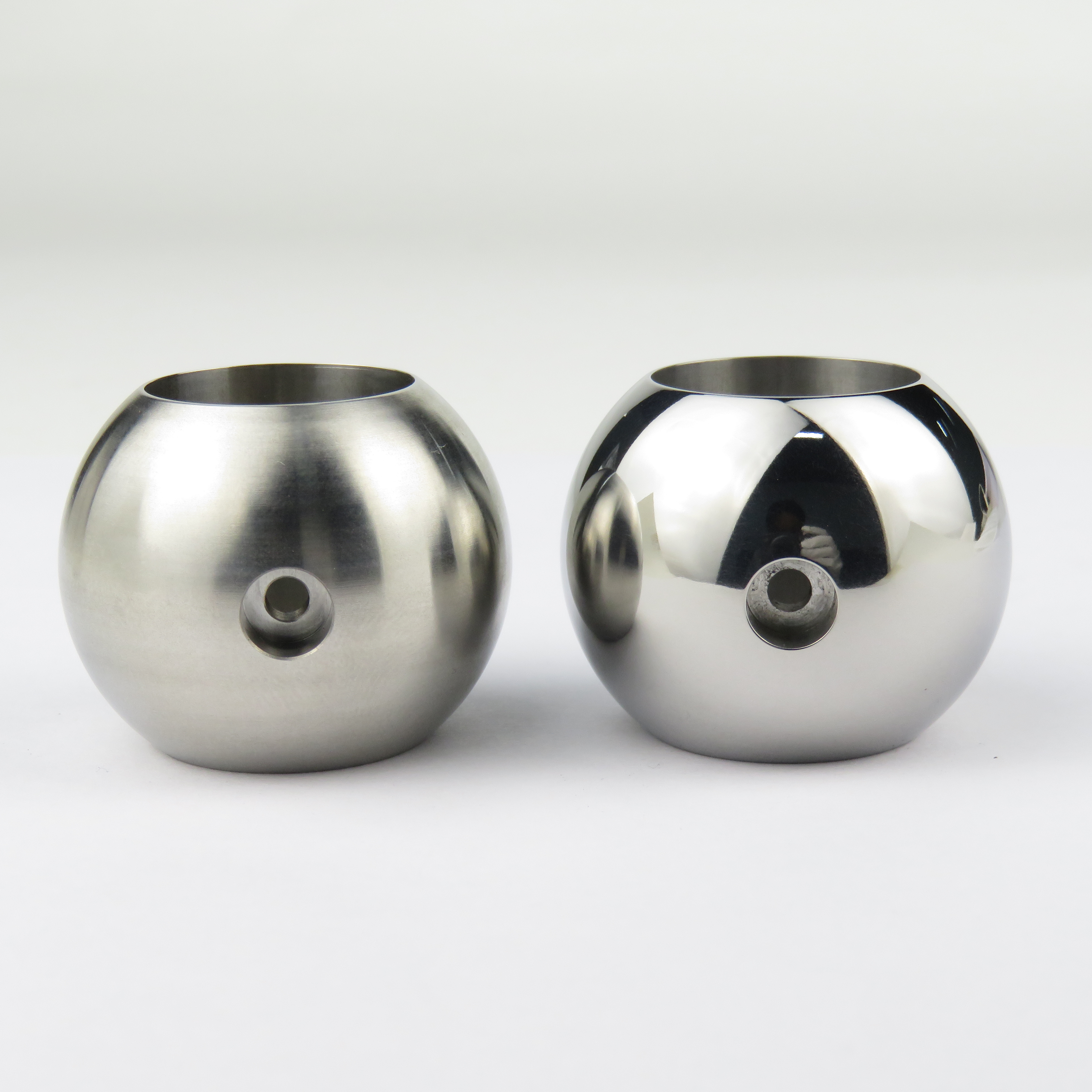
Mechanical finishing can improve surface texture, blend edges and remove burrs, and in some cases it reduces the need for an electrochemical step. It does not reproduce the specific surface chemistry or the material removal mechanism of electropolishing, so the two are not interchangeable without engineering review. SurfacePolish supplies mechanical finishing machines and consumables and does not perform or supply electropolishing. A sensible route for a buyer in Surat is to define the requirement first, then compare what mechanical methods can observe on the actual part, and treat any substitution decision as the buyer's engineering call rather than a supplier claim.
Specify the location, the evaluation length and cutoff, the filter, and whether the requirement is a maximum or an average, then keep that setup unchanged for every batch and comparison. Readings taken with different cutoffs on the same surface will not agree, and readings on interrupted or curved surfaces such as fillets or cast skins need a setup designed for them. Record the instrument and its calibration status with the results. When you compare a trial part from Xiamen with your production parts, India and China, use one instrument and one setup so the difference you are reading is the process, not the measurement.
High-strength steels carry a documented concern about hydrogen picked up from acidic or hydrogen-bearing chemistry, so the conservative route is a mechanical process with a neutral or alkaline compound and no acid stage. If your own specification permits acid-bearing chemistry, that decision and any subsequent treatment belong to your engineering and quality functions, not to the equipment supplier. SurfacePolish supplies compounds and media across borders and can run a trial with the chemistry family you nominate, reporting observations on the parts tested. Buyers in Surat should confirm hydrogen-related requirements with their own specialists before any process is set.
Use Surat, India as the destination on the enquiry and state whether the deliverable is equipment, media and compound, a representative sample review or a line concept. A destination does not imply local stock, a local service point or a local delivery time.
The Bureau of Indian Standards (BIS) is the national standards body, and BIS describes its certification scheme as basically voluntary in nature, with compliance made compulsory for a number of products by the Central Government. Process and chemical units in Gujarat additionally work to their customers' material and inspection specifications as general industry practice.
Sources were retrieved on 2026-09-29 and describe the local industrial and trade context only. They do not evidence any SurfacePolish project, shipment, installation or service in Surat.
The buyer needs edge blending along pocket floors and hole edges on a long frame without distortion or impact damage.
Send the material, dimensions, approximate weight, batch quantity, the incoming condition and photographs of the difficult features. Mark which features must not be contacted by media and state how the result will be inspected. This form carries source reference PSEO-0971; quote it if you prefer an additional manual reference.
Open the SurfacePolish enquiry form Email a prepared enquiry
No price, lead time, certification or result is promised here. Confirm whether a sample trial is available for the specific part and what the trial can and cannot show.
Page PSEO-0971 · revised 2026-09-29 · cross-border equipment, media and scoped sample review. City context is sourced and cited above.
Use this local checker to identify missing part and inspection information. It prepares a technical-review brief; it does not approve a machine, process recipe or production result.
Complete the part details to prepare a review brief.
Email : info@surface-polish.com


 IPv6 network supported


 +86-592-2381506