A buyer in Breda, Netherlands working on aerospace components has an actuator housing that must be deburred without rounding a thin flange or leaving media in two blind M6 holes. SurfacePolish supplies finishing machines and consumables across borders and runs a free sample trial: the parts travel to Xiamen, and the tested parts come back with a proposed media, compound and cycle direction for the buyer's own engineering review. This brief is written for a buyer in Breda working on aerospace components; it describes equipment, media and a scoped sample review, not a local polishing service.
Which features on this part must not be touched by media, and how will each one be masked, plugged, fixtured or deliberately finished?
How will media be kept out of drilled passages, tapped holes and closed volumes, and what retrieval and verification step proves it?
Does the compound chemistry family create a hydrogen, staining or residue risk for this alloy and heat treatment, and who verifies that?
Incoming condition often decides whether one finishing route is enough or whether the part needs two stages. Machining burrs, mill scale, heat-tint discoloration from welding, an existing polished band and a heavy as-cast skin all behave differently under the same medium, so record the starting surface with a roughness reading, consistent lighting photographs and a note on burr location and size. Batch size and part mix matter as much: a load of thirty small fittings behaves differently from a load of four large housings, and mixing families in one cycle risks damage to the lighter parts. Cleanliness before finishing also counts, because cutting fluid, marking ink and adhesive residue can load the medium and confound comparison. Ask yourself what the part looked like before, because without that baseline a trial result cannot be attributed to the process under test.
Aerospace polishing work often needs more than one stage because a single machine and medium rarely satisfies both a defined edge requirement and a defined surface requirement on a complex part. A common shape is a heavier cutting stage to remove machining burrs and establish an edge radius, followed by a lighter refinement stage with finer media and a cleaner compound, then a rinse and dry stage sized for the part's internal features. Treat the transfer points as engineering decisions: parts sitting wet between stages can stain, media carried on the part can scratch the next face, and handling between operations produces more damage than the finishing itself on thin parts. Describe the line as a sequence with defined in-between cleanliness and handling, then check that each machine's chamber, media separation and drying capability matches its position in that sequence before any purchase discussion.
| Machine route | Where it fits | What it will not do |
|---|---|---|
| Grinding finishing machine | Applications needing higher material removal before a refinement stage, such as heavy burrs or a defined stock removal. | Higher removal raises the risk of edge over-rounding and dimensional change on close-tolerance features. |
| Centrifugal barrel finishing machine | Short cycles on small, hard, robust parts where high pressure at the part-media interface is acceptable. | High energy transfers into thin walls and fixtures and wears liners; part size and barrel geometry bound what can be run. |
| Dry polishing machine and dryer | Post-wet drying and light dry finishing of parts with blind holes and passages where moisture carryover matters. | Dry media cut slowly, require dust extraction and medium condition control, and forced-air drying must be matched to internal geometry. |
| Vibratory tub or long-channel machine | Long shafts, tubes, housings and large parts that will not turn or circulate in a bowl. | Media circulation is less uniform along a long chamber, and bridging can leave sections of a long bore unprocessed. |
Media wear is a slow process change that eventually shows up as an unexplained shift in finish. As media break down and round off, the blend loses cutting power, screens differently and settles at a different bulk density, so the same timer setting no longer produces the same surface. Track size class, weight of make-up media per cycle and the interval between full replacements, and keep a record so a change in results can be traced to the blend. Separation is a matching problem: media must be retained in the machine and cleared from the parts, and the method used depends on the media shape and the features it can enter. Screens, magnetic separators and bar-end magnets all have limits. For parts with drilled passages, add a retrieval step to the routing and reconcile media counts per batch so a lodged piece is found before it leaves the shop as contamination.
| Media | Best fit | Watch out for |
|---|---|---|
| Alkaline detergent compound | General cleaning and suspension of removed material on steel, stainless and aluminium where neutral to alkaline chemistry suits the alloy. | Running lean causes loading, heat and discoloration; running rich causes foam and residue that lodges in blind features. |
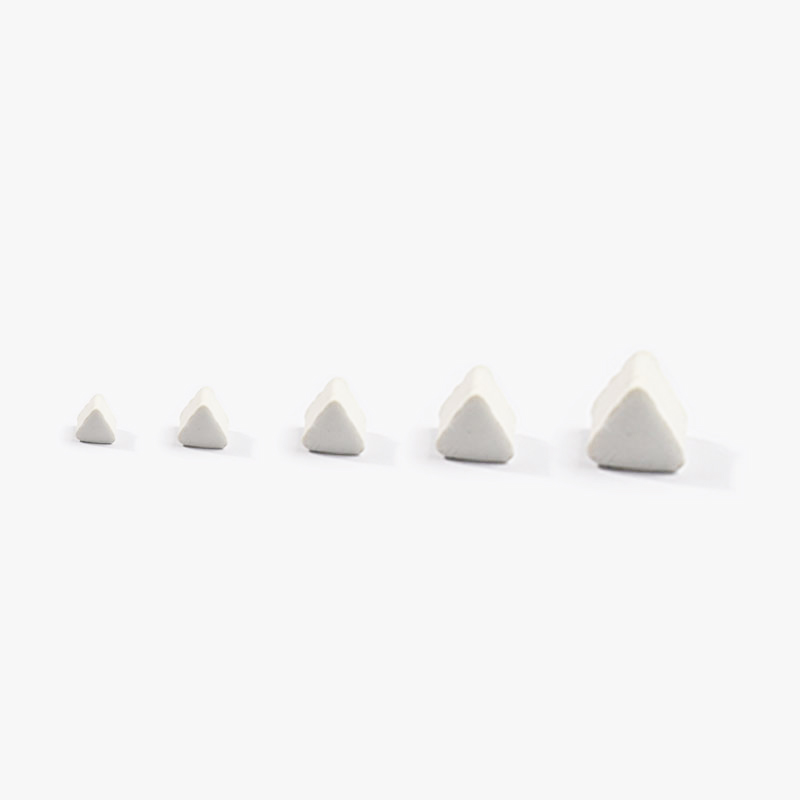
| Ceramic media, angle-cut and triangular shapes | Heavier deburring and edge blending on steel, stainless and titanium parts with accessible corners and recesses. | Wears down and changes effective size class, generates sludge, and can chip or over-round thin sections and soft alloys. |
| Ceramic media, small size class for tight features | Reaching small holes, slots and fillets where a standard size class cannot enter, at reduced removal rate. | Screens differently from larger media, lodges more easily in drilled passages and must be kept below the smallest hole to stay clear. |
| Compound with corrosion inhibitor for sensitive alloys | Aluminium and stainless parts that must not stain or pit during processing and between-stage handling. | Inhibitor does not compensate for hard or chloride-bearing water, and residue left in recesses can mask later inspection. |
Embedment occurs when fragments of media or removed metal are pressed into the surface rather than flushed away, and it is easy to miss because the part can look bright and uniform. Softer alloys, burnishing routes, high media pressure in centrifugal machines and dirty compound all raise the risk. Smearing is a related failure on titanium and some stainless grades, where material is displaced across the surface instead of cut, leaving a folded layer that later inspection may read as a defect. Check with a borescope on internal features, a dye penetrant inspection only where the buyer's own procedure calls for it, and low-magnification microscopy at agreed locations. Prevention rests on maintaining compound flow and cleanliness, matching media hardness to the alloy, avoiding acid-bearing chemistry where hydrogen is a concern, and cleaning the load between stages rather than carrying debris forward.
| Failure mode | Likely cause | How to catch it |
|---|---|---|
| Uneven finish across a batch or across one part | Load volume outside the chamber's working range, parts blocking one another, mixed part sizes, or inconsistent fixturing and media distribution. | Measure surface texture at several recorded locations on multiple parts from the same load and record the load pattern alongside the results. |
| Dried compound residue or water spotting in recesses | Rich compound, hard or chloride-bearing rinse water, or a drying method that does not move air through blind features. | Inspect recesses with a borescope, read rinse-water conductivity or hardness, and verify the drying method against the part's internal geometry. |
| Local flatness or geometry change on a datum face | Media contact on a surface where appearance was treated as the only requirement and flatness was not protected. | Confirm the datum condition with the buyer's own method, such as a CMM or a surface plate check against the stated requirement, on parts from the first and last part of the load. |
| Media lodged in a blind tapped hole or counterbore | Media size class too close to the hole diameter, soft or worn media that wedge, or an unmasked hole not intended to see media. | Check with a known pin gauge and a borescope at an agreed angle, and reconcile a counted media batch before and after the cycle. |
Breda combines logistics and distribution with an applied-technology and creative-technology base. The municipality is developing Innovatiedistrict Breda around two clusters, Robotics & AI and Games & Creative Technology, across the Slingerweg area, 't Zoet, the harbour area, the Chassekwartier and the Avans, BUas and Curio campuses. The Slingerweg area is being positioned as a hotspot for innovative makers with an emphasis on robotisation, where the Breda Robotics cluster and the Triple O Campus are located and more than 100 companies in the technology and creativity sector work. The city also operates the B'WISE startup incubator and provides business locations such as Rithmeesterpark, and its own business portal notes that local firms operate internationally in logistics.
The nearest part of that base to this brief is automation: The municipality is building Innovatiedistrict Breda on two clusters, Robotics & AI and Games & Creative Technology, and states that it started establishing innovative makers at Slingerweg in 2023, including the Breda Robotics cluster.
Breda's maker and robotics base, together with its logistics and business parks, generates demand for deburring and edge finishing of machined metal and plastic parts, sheet-metal enclosures, robot and machine frames and prototypes. Prototyping and small-series production place a premium on fast changeover and on processes that cope with mixed materials rather than on raw throughput.
A buyer should settle the batch profile first — prototype and small series versus repeat production — together with the material mix of aluminium, stainless, steel and plastics, because that determines whether a barrel, vibratory or disc process is the right starting point.
Freight context: Havengebied (harbour area within Innovatiedistrict Breda), Rithmeesterpark business park. Breda is a West-Brabant distribution location with business parks and a harbour area inside the innovation district, and local firms operate internationally in logistics. Machinery imported from outside the EU is declared to Dutch Customs at its point of entry, which for sea freight to this region will normally mean Rotterdam or Moerdijk.
The Netherlands applies the EU's common commercial policy, so imports of Chinese industrial machinery enter under EU customs rules and WTO tariff treatment rather than under a bilateral EU-China free-trade agreement; the European Commission also maintains trade-defence measures on selected Chinese product categories, and China is a WTO member. EU-China trade in goods reached EUR 732 billion in 2024, and in 2025 manufactured goods were 97.3% of EU imports from China, with machinery and vehicles alone accounting for 54.4% — the single largest category. Chinese finishing machines, media and compounds therefore arrive in a very large, well-established EU import stream, and the buyer should expect MFN duty plus trade-defence measures where a specific product is covered.
Business is conducted in Dutch, but engineering and procurement communication in these sectors is routinely handled in English. Buyers are KVK-registered legal entities and expect a clear commercial entity to contract with, an EORI number for customs, correct HS/TARIC classification, and a full CE technical file including the EC Declaration of Conformity and a manual in the correct language; a technical construction file held by the manufacturer is normally part of the qualification pack. For EU-internal supply the invoice carries 0% VAT with the customer's VAT identification number and the customer accounts for 21% Dutch VAT in its own return, so a Chinese seller shipping directly from outside the EU must be clear about who is importer of record and who carries the duty and import VAT. Trade and investment support is organised through bodies such as KVK, RVO, the regional development agencies and the Trade and Innovate NL network, and the Dutch technology industry is represented by FME.
SurfacePolish supplies from Xiamen, China. The buyer's own destination rules, conformity marking, tariff classification and documentation responsibilities stay with the buyer; confirm them against the authorities named above before ordering.
Appearance should be defined by an agreed physical master or a calibrated image set viewed under specified lighting and magnification, because written adjectives such as bright or uniform are not acceptance criteria. Beside appearance, insist on the checks that reflect how the part actually works. A seal land is checked for sealing condition, a bearing seat for fit and contact pattern, a sliding surface for freedom from raised material and a threaded feature for gauge entry. Edges are measured rather than viewed, using radius gauges, an optical comparator or a cast impression against the recorded pre-finish state. Functional checks should be performed with the buyer's own gauges where the buyer owns the acceptance decision, and the results recorded against the specified requirement instead of a pass or fail opinion. Where a check damages a part, define it as a sampling check on dedicated parts.
Expect the first production batches to differ from trial parts, because a trial is run with extra attention on one or two pieces while a line runs a full load with a different operator, a partly worn blend and normal handling between operations. Reduce that gap by planning a ramp-up sequence: run a low quantity, inspect the first part fully, compare it against the retained trial part at the agreed locations, then increase load size only after the comparison holds. Re-inspect at defined intervals through the ramp and keep a reference part from each stage. Be clear about what a sample trial cannot establish. Observations apply to the parts tested and to the setup used. A trial does not establish fitness for a regulated or safety-critical application, does not replace the buyer's own qualification or structural testing, and does not transfer responsibility for acceptance, which always remains with the buyer's engineering and quality functions.
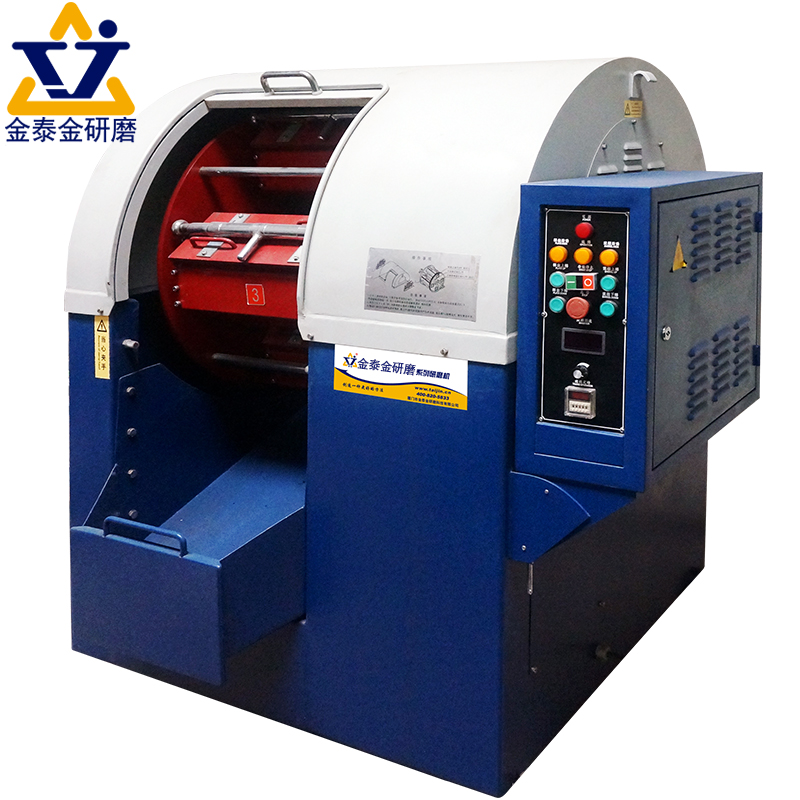

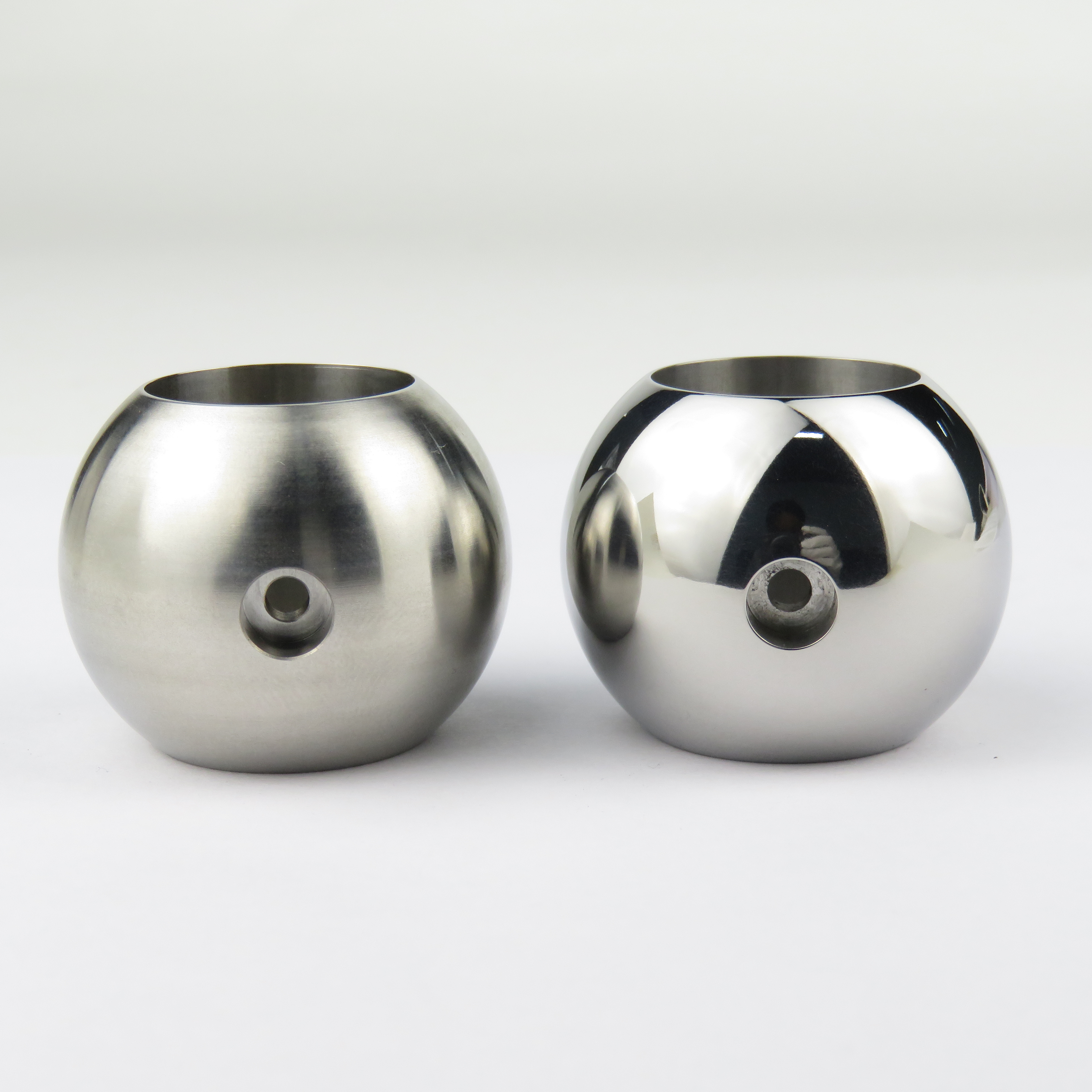
Small robust fittings often suit rotary or centrifugal barrel finishing, which process many pieces per load at low unit cost, while delicate parts may need a gentler vibratory route or magnetic finishing with small pins for internal edges. The deciding factors are the smallest feature to keep clear, the thinnest section, the edge limit and the batch size, not overall part size. Send the extreme cases from the family for a trial rather than a typical part, and ask for a comparison across two media classes with everything else held constant. SurfacePolish supplies all of these machine types across borders and can describe how each behaves on tested parts.
Specify the location, the evaluation length and cutoff, the filter, and whether the requirement is a maximum or an average, then keep that setup unchanged for every batch and comparison. Readings taken with different cutoffs on the same surface will not agree, and readings on interrupted or curved surfaces such as fillets or cast skins need a setup designed for them. Record the instrument and its calibration status with the results. When you compare a trial part from Xiamen with your production parts, Netherlands and China, use one instrument and one setup so the difference you are reading is the process, not the measurement.
Record the edge condition before finishing, set the allowable band in writing, and measure afterwards with radius gauges, an optical comparator or a cast impression at fixed positions. Because edges lose material much faster than adjacent faces, the cycle continues to change them after the face has stabilised, so time, energy setting and media size class are the controlling variables. If the band is tight, plan a separate edge operation rather than relying on a bulk cycle. A sample trial can show how a named edge behaves under two media classes on the parts you send, which gives your engineering group data to set a limit instead of an opinion.
Use Breda, Netherlands as the destination on the enquiry and state whether the deliverable is equipment, media and compound, a representative sample review or a line concept. A destination does not imply local stock, a local service point or a local delivery time.
Buyers here would reference the CE machinery regime (Machinery Regulation from 20 January 2027) and the Dutch/EN-ISO surface-finishing standards published by NEN, such as NEN-EN-ISO 2080. Where parts feed logistics-equipment or robotics customers, the customer's own supplier specification for edges, roughness and cleanliness is normally the binding requirement.
Sources were retrieved on 2026-09-29 and describe the local industrial and trade context only. They do not evidence any SurfacePolish project, shipment, installation or service in Breda.
The buyer needs to remove machining burrs and blend edges without rounding the flange or lodging media in the blind tapped holes.
Send the material, dimensions, approximate weight, batch quantity, the incoming condition and photographs of the difficult features. Mark which features must not be contacted by media and state how the result will be inspected. This form carries source reference PSEO-0681; quote it if you prefer an additional manual reference.
Open the SurfacePolish enquiry form Email a prepared enquiry
No price, lead time, certification or result is promised here. Confirm whether a sample trial is available for the specific part and what the trial can and cannot show.
Page PSEO-0681 · revised 2026-09-29 · cross-border equipment, media and scoped sample review. City context is sourced and cited above.
Use this local checker to identify missing part and inspection information. It prepares a technical-review brief; it does not approve a machine, process recipe or production result.
Complete the part details to prepare a review brief.
Email : info@surface-polish.com


 IPv6 network supported


 +86-592-2381506