A buyer in Maastricht, Netherlands finishing titanium brackets for aerospace components has to reach fillet radii and lightening-hole edges without cutting through a shot-peened layer or smearing the alloy. SurfacePolish sells finishing equipment and media across borders and offers a free sample trial in which representative parts are processed and returned with a suggested media, compound and cycle direction plus notes on feature protection. This brief is written for a buyer in Maastricht working on aerospace components; it describes equipment, media and a scoped sample review, not a local polishing service.
Does the compound chemistry family create a hydrogen, staining or residue risk for this alloy and heat treatment, and who verifies that?
How will media be kept out of drilled passages, tapped holes and closed volumes, and what retrieval and verification step proves it?
What edge condition is actually specified at each critical location, and which machine and media combination can hold inside that band?
Alloy and temper decide which media and compound families are realistic before any machine is discussed. Unaged aluminum alloys are soft and galling-prone, precipitation-hardening stainless steels are harder and respond to cutting media, and titanium has low thermal conductivity and a tendency to smear rather than cut cleanly. High-strength steels also bring a documented concern about hydrogen picked up from acidic chemistry. Heat treatment matters twice, because the same alloy in a solution-treated and an aged condition finishes differently and a part that has already been aged cannot be straightened after processing. Record alloy, temper, hardness range, prior manufacturing operations such as welding or grinding, and any stress-relief history. Then match media hardness and compound pH to the material instead of reusing a successful recipe from an unrelated part, because the same blend that brightens one alloy can stain another.
Disc finishing machines generate fast cycles by driving media and parts between a rotating disc and the chamber wall, which raises energy at the part surface and shortens the time needed to blend an edge or refine a face. That energy is the trade: flat plates, simple brackets and robust turned parts finish quickly and evenly, while assemblies with thin sections, brazed joints, unsupported flanges or already-tight edge limits can suffer edge rolling, local distortion or part-on-part marking. Geometry limits are real, since a part that is larger than the working gap or too light to stay in the media stream will not be processed predictably. The route deserves evaluation when removal rate and cycle time dominate and the part is simple and robust. Where a part is complex or expensive, disc finishing is more often a stage for one defined face than a whole-part answer.
| Machine route | Where it fits | What it will not do |
|---|---|---|
| Rotary barrel tumbling machine | Gentle, uniform processing of small robust parts in large quantities, such as bushings, spacers and fasteners. | Slow cycles, per-barrel weight limits, and limited access for inspecting or repositioning parts during the run. |
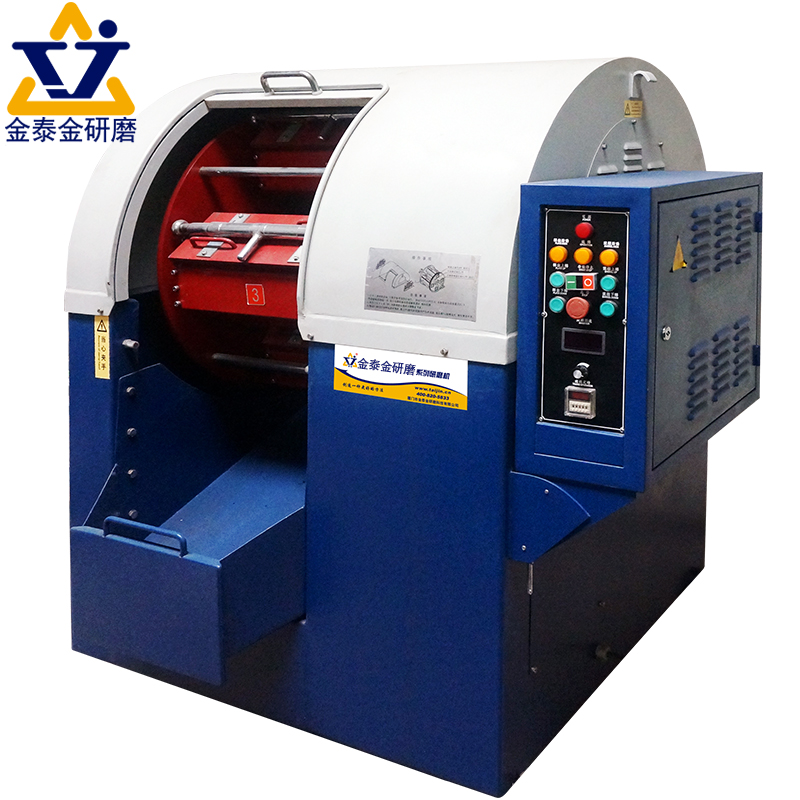
| Centrifugal barrel finishing machine | Short cycles on small, hard, robust parts where high pressure at the part-media interface is acceptable. | High energy transfers into thin walls and fixtures and wears liners; part size and barrel geometry bound what can be run. |
| Dry polishing machine and dryer | Post-wet drying and light dry finishing of parts with blind holes and passages where moisture carryover matters. | Dry media cut slowly, require dust extraction and medium condition control, and forced-air drying must be matched to internal geometry. |
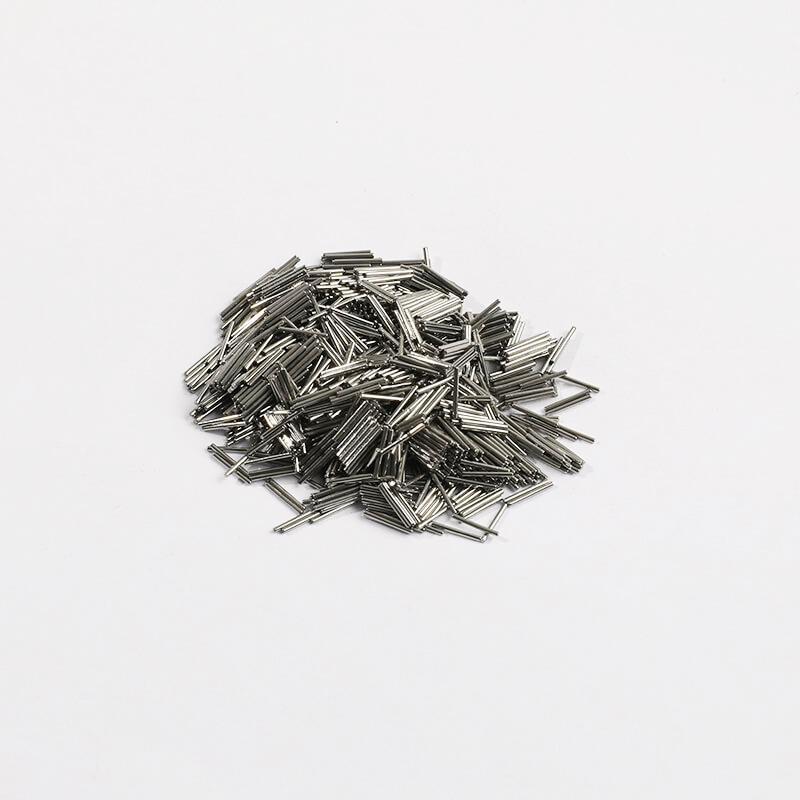
| Magnetic finishing machine | Small precise parts with internal edges and recesses that loose media cannot enter, using small pins or needles. | Bounded by part size and mass, by workpiece material attraction to the pins, and by the need to retrieve residual pins. |
Steel media works by burnishing: it displaces surface metal and compresses it rather than cutting it away, which produces a bright, uniform appearance and can improve surface texture without the dimensional change that a cutting medium causes. That property makes it attractive where features must keep their geometry and only the surface appearance needs to change. The conditions are strict. Burnishing needs a clean load, correct compound chemistry and controlled water, because any debris, iron contamination or hard water deposit is pressed into the surface rather than flushed away. Steel media is heavy and concentrates energy, so thin walls and unsupported sections need lower energy or fixturing. It also carries a cross-contamination risk: stainless and aluminum parts can pick up iron from carbon steel media, so keep baths and media dedicated. Select it after the removal requirement has been met, not as a substitute for deburring.
| Media | Best fit | Watch out for |
|---|---|---|
| Mildly acidic or chelated brightening compound | Brightening certain stainless grades where the buyer's specification permits that chemistry family. | Not appropriate where hydrogen uptake is a concern on high-strength steel, and requires close pH control and good rinse water quality. |
| Dry media: walnut shell and corn cob | Light deburring, drying support and residue removal on parts where moisture carryover is the governing concern. | Slower cutting, generates dust requiring extraction, and its condition and moisture content must be controlled to stay repeatable. |
| Compound with corrosion inhibitor for sensitive alloys | Aluminium and stainless parts that must not stain or pit during processing and between-stage handling. | Inhibitor does not compensate for hard or chloride-bearing water, and residue left in recesses can mask later inspection. |
| Alkaline detergent compound | General cleaning and suspension of removed material on steel, stainless and aluminium where neutral to alkaline chemistry suits the alloy. | Running lean causes loading, heat and discoloration; running rich causes foam and residue that lodges in blind features. |
Impingement shows up as a local patch of heavier material removal, a gouge or a flattened edge where media or another part struck the surface with too much energy. On aerospace work it appears most often on thin webs, long unsupported sections, sharp external corners and parts run at too high an amplitude in a lightly loaded chamber. The cause is rarely the medium alone; it is the combination of energy setting, media size and mass, load volume and the freedom of parts to move against each other. Check for it by inspecting known vulnerable features under magnification before and after, by photographing under raking light rather than diffuse light, and by comparing the same feature across several parts from the load. Mitigation follows the diagnosis: reduce amplitude, add media, compartmentalise or fixture the part, or move the operation to a gentler route.
| Failure mode | Likely cause | How to catch it |
|---|---|---|
| Media lodged in a blind tapped hole or counterbore | Media size class too close to the hole diameter, soft or worn media that wedge, or an unmasked hole not intended to see media. | Check with a known pin gauge and a borescope at an agreed angle, and reconcile a counted media batch before and after the cycle. |
| Dried compound residue or water spotting in recesses | Rich compound, hard or chloride-bearing rinse water, or a drying method that does not move air through blind features. | Inspect recesses with a borescope, read rinse-water conductivity or hardness, and verify the drying method against the part's internal geometry. |
| Edge radius grown past the drawing limit | Cycle time, energy setting or media size class allowing continued edge removal after the adjacent face has stabilised. | Compare the recorded pre-finish edge state with the finished state using radius gauges, an optical comparator or a cast impression at fixed positions. |
| Media wedged at a cross-drilled passage intersection | Media small enough to enter the passage, plus no defined retrieval step in the routing before final cleaning. | Flush the passage with a measured volume, examine the flush medium and the passage with a borescope, and add a documented retrieval step such as directed air or a magnet. |
Maastricht's economy combines a life-sciences campus with an established production base in the city and its surrounding region. The Brightlands Maastricht Health Campus is part of the Brightlands open-innovation community in Limburg, which reports over 32,000 innovative entrepreneurs, researchers and students working on sustainability, health and digitisation, and the campus concentrates researchers, entrepreneurs and students on healthcare, medicine and life sciences with imaging and analytical facilities used by medical start-ups. Alongside that, the Maastricht Maakt industry platform represents 16 production companies in the city, with employers including Tata Steel, Sappi, the Regout Group, SteelSolutions, Mosa, FENZI AGT and SunChemical, and says its operators, technicians and logistics staff work in sectors such as chemistry, food and production. Sappi's Maastricht mill employs nearly 500 people and produces around 260,000 tons of coated woodfree paper and paperboard a year. Maastricht Aachen Airport is part of the national aviation infrastructure and, after Schiphol, the only Dutch airport with a cargo function; the province of Limburg is a shareholder and funds the airport.
The nearest part of that base to this brief is medical: Brightlands Maastricht Health Campus states that researchers, entrepreneurs and students there work together on innovations in healthcare, medicine and life sciences, within a Limburg community of over 32,000 innovative entrepreneurs, researchers and students.
Maastricht and the surrounding Limburg region combine medical-technology work, steel and metal processing, paper production and glass and food manufacturing. Medical-technology and life-sciences activity on the Brightlands Maastricht Health Campus involves stainless and titanium instruments, implants, device housings and precision components, where deburring, edge rounding, passivation and residue-free cleaning are quality requirements, while the city's steel, metal and equipment producers need burr and edge control on machined and cut parts before assembly, coating or further processing. Limburg's wider Brightlands network also includes the Chemelot chemical campus, which adds stainless process and laboratory equipment with comparable cleanliness and corrosion expectations.
A buyer here should settle the documentation and cleanliness standard first, because medical and life-sciences supply chains normally require validated, repeatable processes with defined residue limits, whereas general metal parts usually need no more than a specified burr height and Ra.
Freight context: Maastricht Aachen Airport (cargo function). Maastricht Aachen Airport is the only Dutch airport other than Schiphol with a cargo function and is part of the national aviation infrastructure, which gives the region an air-freight option for urgent parts or samples; the province of Limburg is a shareholder and has funded infrastructure and route development. Machinery arriving by sea is declared to Dutch Customs at its EU point of entry, and the importer needs an EORI number.
Goods entering the Netherlands from outside the EU must be declared to Dutch Customs (Douane, part of the Belastingdienst); the importer needs an EORI number, import duty is calculated on the customs value (goods value plus transport and insurance to the EU external border), and import VAT is paid at the border unless an article 23 permit or a fiscal representative is used. CE marking is mandatory for most machinery placed on the EEA market: the Machinery Regulation replaced the Machinery Directive and manufacturers must comply with the new requirements by 20 January 2027. The importer must verify that the conformity assessment was carried out correctly, that CE marking is applied properly, that the technical file is present and complete, and that the user manual is supplied in the correct language; the manufacturer's EC Declaration of Conformity must be kept. Dutch companies imported over EUR 140 billion of machinery and appliances in 2024, 24% of total Dutch goods imports.
The Netherlands applies the EU's common commercial policy, so imports of Chinese industrial machinery enter under EU customs rules and WTO tariff treatment rather than under a bilateral EU-China free-trade agreement; the European Commission also maintains trade-defence measures on selected Chinese product categories, and China is a WTO member. EU-China trade in goods reached EUR 732 billion in 2024, and in 2025 manufactured goods were 97.3% of EU imports from China, with machinery and vehicles alone accounting for 54.4% — the single largest category. Chinese finishing machines, media and compounds therefore arrive in a very large, well-established EU import stream, and the buyer should expect MFN duty plus trade-defence measures where a specific product is covered.
SurfacePolish supplies from Xiamen, China. The buyer's own destination rules, conformity marking, tariff classification and documentation responsibilities stay with the buyer; confirm them against the authorities named above before ordering.
Parts can meet every roughness and appearance requirement and still be unusable because of what remains on them. Define the cleanliness check explicitly: which features are examined, with what instrument, at what magnification, and what counts as a reject. Borescope inspection of blind holes and passage intersections, flushing with a measured volume, examining the flush medium, and a defined particulate or residue check are all practical options, but the method must be fixed in advance. Three further checks are commonly omitted. Include media carryover, iron contamination pickup on stainless and aluminum, and residual compound film in recesses, and confirm that rinse water quality is controlled, since hard or chloride-bearing water can leave deposits that later read as corrosion. Keep the cleaning and drying method in the acceptance record, because it is part of the result, not workshop housekeeping.
Comparative trials lose their value when several things change together. Fix the machine, load volume, part count, compound concentration and cycle time, then change one variable: media material first, then size class, then compound, then time or energy setting. Ask for the same recorded locations to be measured with the same instrument and the same setting across all variants, and for photographs taken under identical lighting, so the comparison is between processes rather than between photographers. Retain all tested parts, including the ones that went wrong, because a rejected variant often explains which mechanism caused a defect and therefore which limit must be respected in production. A comparison of two media blends run with different cycle times and different operators tells you nothing about the media, which is the most common reason a trial result fails to transfer into a line.
Ask for records that let a later batch be compared with the approved one: machine and bath identification, media type and size class, compound product and measured concentration, cycle time and energy setting, load weight or part count, rinse and dry method, and measurement results with the instrument, setup and locations. Photographs taken under consistent lighting before and after belong in the record, along with any deviation raised during the run. A document that only asserts quality is less useful than one that names the configuration. Hold the configuration under change control, so a new media supplier or compound batch triggers re-verification rather than silently altering the output.
Small robust fittings often suit rotary or centrifugal barrel finishing, which process many pieces per load at low unit cost, while delicate parts may need a gentler vibratory route or magnetic finishing with small pins for internal edges. The deciding factors are the smallest feature to keep clear, the thinnest section, the edge limit and the batch size, not overall part size. Send the extreme cases from the family for a trial rather than a typical part, and ask for a comparison across two media classes with everything else held constant. SurfacePolish supplies all of these machine types across borders and can describe how each behaves on tested parts.
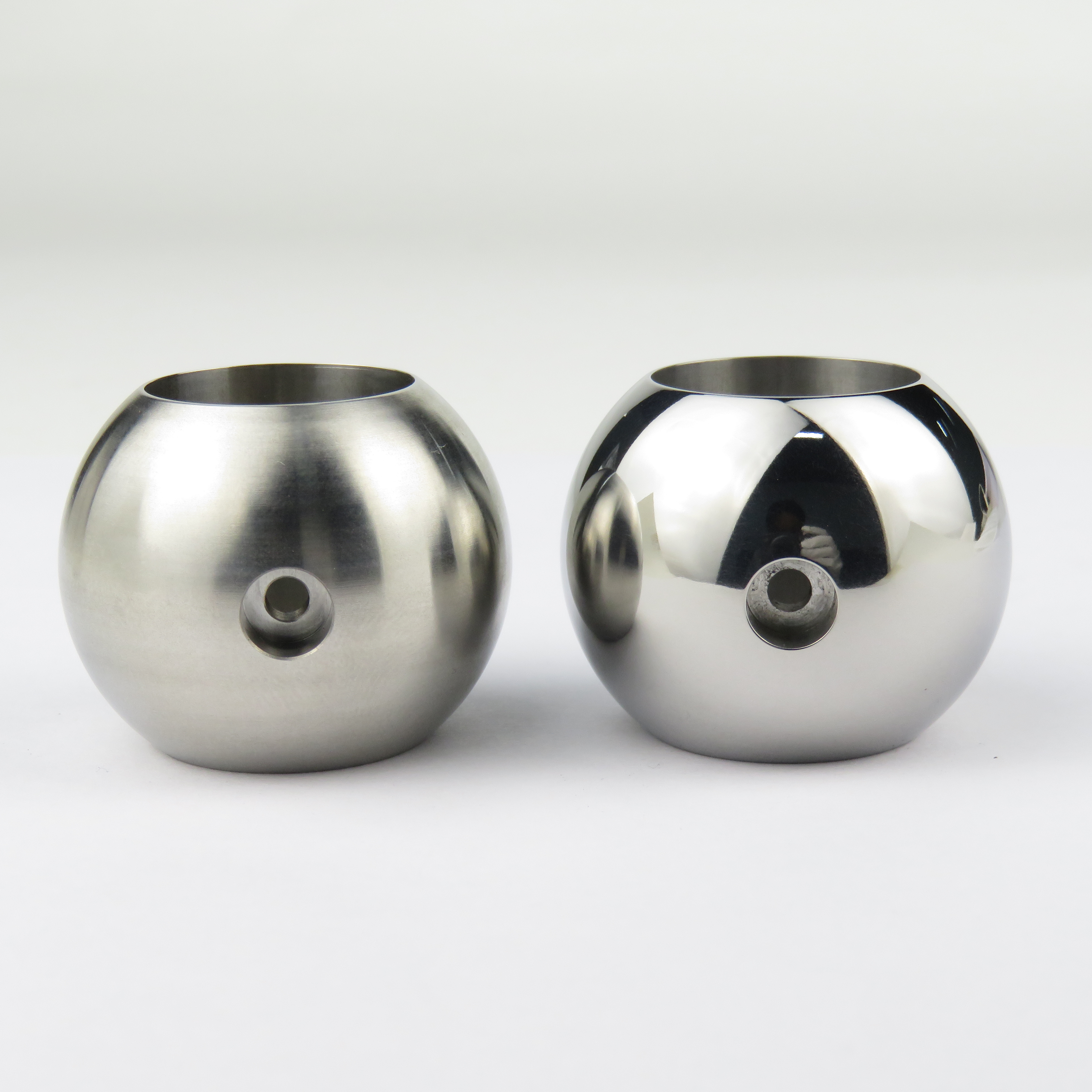
Mechanical finishing can improve surface texture, blend edges and remove burrs, and in some cases it reduces the need for an electrochemical step. It does not reproduce the specific surface chemistry or the material removal mechanism of electropolishing, so the two are not interchangeable without engineering review. SurfacePolish supplies mechanical finishing machines and consumables and does not perform or supply electropolishing. A sensible route for a buyer in Maastricht is to define the requirement first, then compare what mechanical methods can observe on the actual part, and treat any substitution decision as the buyer's engineering call rather than a supplier claim.
Use Maastricht, Netherlands as the destination on the enquiry and state whether the deliverable is equipment, media and compound, a representative sample review or a line concept. A destination does not imply local stock, a local service point or a local delivery time.
Buyers here would reference the CE machinery regime (Machinery Regulation from 20 January 2027) and the Dutch/EN-ISO surface-finishing standards published by NEN, such as NEN-EN-ISO 2080. For medical and life-sciences customers the binding requirements are normally the customer's own cleanliness and validation specification, with ISO 13485 as the customary quality-system reference for medical devices.
Sources were retrieved on 2026-09-29 and describe the local industrial and trade context only. They do not evidence any SurfacePolish project, shipment, installation or service in Maastricht.
The buyer must not remove the peened layer or smear titanium while trying to reach the fillets and hole edges.
Send the material, dimensions, approximate weight, batch quantity, the incoming condition and photographs of the difficult features. Mark which features must not be contacted by media and state how the result will be inspected. This form carries source reference PSEO-0691; quote it if you prefer an additional manual reference.
Open the SurfacePolish enquiry form Email a prepared enquiry
No price, lead time, certification or result is promised here. Confirm whether a sample trial is available for the specific part and what the trial can and cannot show.
Page PSEO-0691 · revised 2026-09-29 · cross-border equipment, media and scoped sample review. City context is sourced and cited above.
Use this local checker to identify missing part and inspection information. It prepares a technical-review brief; it does not approve a machine, process recipe or production result.
Complete the part details to prepare a review brief.
Email : info@surface-polish.com


 IPv6 network supported


 +86-592-2381506