A buyer in Cologne, Germany working with nickel-alloy combustor hardware for aerospace components needs heat tint and drilling burr removed from 0.6 mm cooling holes without changing hole geometry. SurfacePolish is a cross-border equipment and media supplier rather than a local shop; its free sample trial can test finer media and lower-energy routes on the parts sent, and the findings are reported as observations to be verified by the buyer. This brief is written for a buyer in Cologne working on aerospace components; it describes equipment, media and a scoped sample review, not a local polishing service.
Which features on this part must not be touched by media, and how will each one be masked, plugged, fixtured or deliberately finished?
Which datum and mating surfaces carry assembly geometry, and is a flatness or fit check required on them after finishing?
What edge condition is actually specified at each critical location, and which machine and media combination can hold inside that band?
Incoming condition often decides whether one finishing route is enough or whether the part needs two stages. Machining burrs, mill scale, heat-tint discoloration from welding, an existing polished band and a heavy as-cast skin all behave differently under the same medium, so record the starting surface with a roughness reading, consistent lighting photographs and a note on burr location and size. Batch size and part mix matter as much: a load of thirty small fittings behaves differently from a load of four large housings, and mixing families in one cycle risks damage to the lighter parts. Cleanliness before finishing also counts, because cutting fluid, marking ink and adhesive residue can load the medium and confound comparison. Ask yourself what the part looked like before, because without that baseline a trial result cannot be attributed to the process under test.
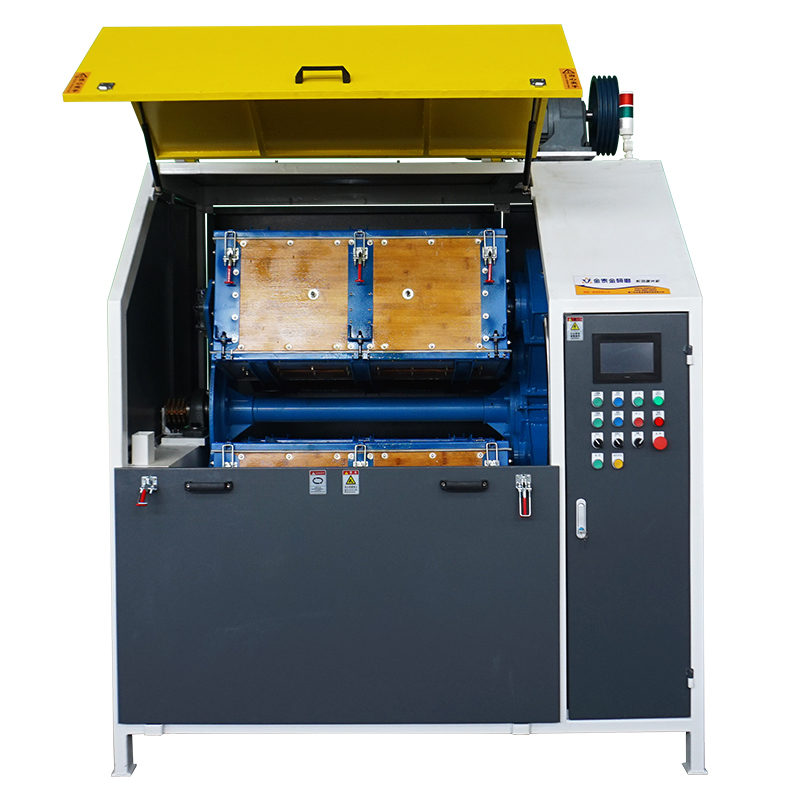
Disc finishing machines generate fast cycles by driving media and parts between a rotating disc and the chamber wall, which raises energy at the part surface and shortens the time needed to blend an edge or refine a face. That energy is the trade: flat plates, simple brackets and robust turned parts finish quickly and evenly, while assemblies with thin sections, brazed joints, unsupported flanges or already-tight edge limits can suffer edge rolling, local distortion or part-on-part marking. Geometry limits are real, since a part that is larger than the working gap or too light to stay in the media stream will not be processed predictably. The route deserves evaluation when removal rate and cycle time dominate and the part is simple and robust. Where a part is complex or expensive, disc finishing is more often a stage for one defined face than a whole-part answer.
| Machine route | Where it fits | What it will not do |
|---|---|---|
| Vibratory tub or long-channel machine | Long shafts, tubes, housings and large parts that will not turn or circulate in a bowl. | Media circulation is less uniform along a long chamber, and bridging can leave sections of a long bore unprocessed. |
| Disc finishing machine | Fast cycles on flat plates, brackets and robust turned parts with simple geometry. | High energy risks edge roll, distortion of thin sections and part-on-part marking; part size is bounded by the working gap. |
| Vibratory finishing machine, bowl type | General edge blending and surface refinement on medium-sized parts with a continuous, visible load. | Part size is capped by chamber geometry, and thin or delicate parts may need compartments or fixtures to limit part-on-part contact. |
| Centrifugal barrel finishing machine | Short cycles on small, hard, robust parts where high pressure at the part-media interface is acceptable. | High energy transfers into thin walls and fixtures and wears liners; part size and barrel geometry bound what can be run. |
Plastic media removes material gently through a light cutting and burnishing action and is the usual first candidate for aluminum, thin-wall sections and parts where a soft surface must not be scored. Its lower density and hardness mean it conforms rather than cuts deeply, which protects delicate features but also makes it slower and less effective in deep recesses and tight radii where a harder medium is needed to reach. Wear behaviour is different from ceramic: plastic media deform, lose sharpness and load with metal fines, so a blend can look intact while its cut rate has collapsed. Dry media in the same family, such as walnut shell and corn cob, is used for light deburring and drying support rather than for aggressive stock removal. Choose plastic when feature preservation dominates and the required removal is light; verify by measuring the same locations before and after rather than judging by appearance.
| Media | Best fit | Watch out for |
|---|---|---|
| Dry media: walnut shell and corn cob | Light deburring, drying support and residue removal on parts where moisture carryover is the governing concern. | Slower cutting, generates dust requiring extraction, and its condition and moisture content must be controlled to stay repeatable. |
| Mildly acidic or chelated brightening compound | Brightening certain stainless grades where the buyer's specification permits that chemistry family. | Not appropriate where hydrogen uptake is a concern on high-strength steel, and requires close pH control and good rinse water quality. |
| Alkaline detergent compound | General cleaning and suspension of removed material on steel, stainless and aluminium where neutral to alkaline chemistry suits the alloy. | Running lean causes loading, heat and discoloration; running rich causes foam and residue that lodges in blind features. |
| Ceramic media, angle-cut and triangular shapes | Heavier deburring and edge blending on steel, stainless and titanium parts with accessible corners and recesses. | Wears down and changes effective size class, generates sludge, and can chip or over-round thin sections and soft alloys. |
A lodged piece of media is the failure mode that puts a finished aerospace part at greatest risk, because it may survive cleaning and only appear at final inspection or, worse, in service. Lodging happens where a feature's smallest dimension is close to the media size, which is why blind tapped holes, cross-drilled passage intersections, keyways, undercuts, dovetails and small counterbores are the usual sites. It is aggravated by soft or worn media that deform and wedge, by running a broad size-class blend, and by unmasked holes that were never intended to see media. Check with a known pin gauge, a borescope at an agreed viewing angle and a defined count of media in the batch before and after, and add a documented retrieval step such as bar-end magnets, directed air or a flush. The reliable prevention is size discipline: media sized well below the smallest hole to be left clear.
| Failure mode | Likely cause | How to catch it |
|---|---|---|
| Iron contamination pickup on stainless or aluminium parts | Shared media, bath or chamber with carbon steel work, or recycled compound carrying steel fines. | Inspect for rust bloom, discoloured spots or magnetic particles after drying, and check which media and bath last ran in the machine. |
| Dimensional drift on a close-tolerance bore or spigot | Total removal accumulating over a long cycle or repeated passes without a start-of-run measurement on a critical feature. | Measure critical dimensions on the first part and at defined intervals through the batch, keeping the process effect separate from incoming variation. |
| Thread entry chamfer rounded away or thread crests burnished | Unmasked threaded features run in a burnishing or high-energy cutting load. | Gauge the thread with the buyer's own gauge and inspect the entry chamfer under magnification against the recorded pre-finish condition. |
| Dark or heat-tinted patch following the media flow | Lean compound concentration or restricted flow, letting metal fines and heat build up in the working mass. | Compare against the agreed appearance master under fixed lighting and check the measured compound concentration and flow rate recorded for the batch. |
Cologne is primarily a services city, but the city's own statistical office records 79,173 jobs in the secondary (production) sector in 2023 out of 586,747 socially insured jobs, and counts 'Verarbeitendes Gewerbe' (manufacturing) among the five core branches that together hold about half of all Cologne jobs. The largest manufacturing cluster sits in the northern districts: Ford-Werke has its headquarters and vehicle plant in Niehl, an area the city statistics office describes as having around 25,400 mainly industrial jobs, and in the south-east DEUTZ AG has its registered office in Köln-Porz. The economic development agency of the city (KölnBusiness) organises its sector work around logistics and wholesale, health and life sciences, ICT, insurance and research, and the Rheinland around Cologne is a specialised aerospace location. Cologne/Bonn Airport alone employs around 15,000 people in 130 companies and public bodies.
For this brief the relevant part of that base is aerospace: The airport authority describes the Rheinland around Cologne as a Europe-wide unique, highly specialised aerospace location, developed further with the German Aerospace Center (DLR) and the Bundeswehr.
Cologne's production jobs are concentrated in vehicle assembly and engine manufacture (Ford in Niehl, DEUTZ in Porz) and in the machine-building supplier tier that serves them, where castings, gears, shafts, housings and machined edges must be deburred and given a defined surface finish before assembly or coating. Automotive and engine customers in this region normally specify cleanliness and edge conditions in the drawing or in a factory standard rather than leaving them open, so a Cologne buyer's process decision is usually about meeting an existing surface and cleanliness callout, not about choosing a finish freely.
Settle first which cleanliness and surface specification governs the part (VDA 19.1/ISO 16232 cleanliness class and the drawing's roughness/edge callout) and whether the process must be qualified and traceable as a safety-relevant automotive or engine component before comparing finishing equipment or media.
Freight context: Köln Bonn Airport (CGN), Köln/Bonn, RheinCargo Rhine ports and rail terminals in the Cologne area (Niehl/Deutz/Wesseling), Combined road/rail terminals operated by RheinCargo. RheinCargo moves more than 50 million tonnes a year by rail and port across its network, and Cologne/Bonn Airport handles both passenger and air freight traffic with around 15,000 people working in 130 companies and authorities on a roughly 1,000-hectare site. Incoming finishing machines and sample parts can therefore arrive by air freight at CGN or by inland vessel/rail through the Rhine port system.
German is the working language of drawings, contracts, test reports and conformity documentation, and German buyers normally expect English-language technical documentation to be supplied alongside it. Procurement is documentation-driven: the EU declaration of conformity, the technical file, and the identity of the EU-based importer or authorised representative are settled before the order, and the EORI registration and customs declaration are the importer's responsibility rather than the exporter's (c3, c4, c5). Germany is the world's leading machinery and equipment manufacturer, so quotations compete against established domestic builders on technical documentation and measurable process data rather than on price alone (c9). Payment, delivery and risk terms are normally fixed by written contract with a named Incoterm, and classification (commodity code) is commonly confirmed in writing before shipment because it drives the duty and the import declaration.
Germany sits inside the EU customs union, so Chinese-origin industrial machinery enters against the EU's common commercial tariff rather than a German national tariff, and the duty that applies is determined by the commodity code declared on the import declaration. China is one of the EU's largest goods trading partners and the EU has long run a goods deficit with it, while the Commission characterises the relationship as simultaneously partnership, competition and systemic rivalry (c1, c2). The Commission publishes the EU's trade agreements; no agreement with China appears in that overview, so Chinese-origin goods cannot claim a preferential origin rate and are assessed under the standard tariff (c8). German customs is administered by the Zoll under the Generalzolldirektion, and the importer must hold an EORI number - valid throughout the European Union and replacing the former German customs number - before goods can be cleared (c5, c6).
SurfacePolish supplies from Xiamen, China. The buyer's own destination rules, conformity marking, tariff classification and documentation responsibilities stay with the buyer; confirm them against the authorities named above before ordering.
Parts can meet every roughness and appearance requirement and still be unusable because of what remains on them. Define the cleanliness check explicitly: which features are examined, with what instrument, at what magnification, and what counts as a reject. Borescope inspection of blind holes and passage intersections, flushing with a measured volume, examining the flush medium, and a defined particulate or residue check are all practical options, but the method must be fixed in advance. Three further checks are commonly omitted. Include media carryover, iron contamination pickup on stainless and aluminum, and residual compound film in recesses, and confirm that rinse water quality is controlled, since hard or chloride-bearing water can leave deposits that later read as corrosion. Keep the cleaning and drying method in the acceptance record, because it is part of the result, not workshop housekeeping.
Scale-up fails more often on bookkeeping than on metallurgy. Define the load before the first production batch: the range of part count or weight, how parts are separated, whether families may be mixed, and by what rule a load is split when a different feature set arrives. Record the cycle as it was actually run, including the media blend, compound concentration measured at the machine, water source, run time and the reason for any deviation, because a deviation that is not written down reappears as an unexplained appearance change. Set a media maintenance plan with a screening interval, a make-up rate by weight, a bath cleaning routine and a replacement trigger based on measured condition rather than on a calendar alone. Media wear changes the process gradually, so the record is the only way to notice drift before parts are affected.
Keep dedicated media, baths and, where practical, dedicated machines or chambers for each material family, because stainless and aluminium can pick up iron from carbon steel media and soft alloys absorb debris from harder work. Change or filter compound on a schedule rather than when the bath looks dirty, control rinse water quality since hardness and chlorides leave deposits, and clean parts between stages instead of carrying sludge forward. Record which media ran in which machine and when the bath was last cleaned. For a buyer in Cologne running mixed families, separating the load plan is usually cheaper than cleaning contamination out of finished parts.
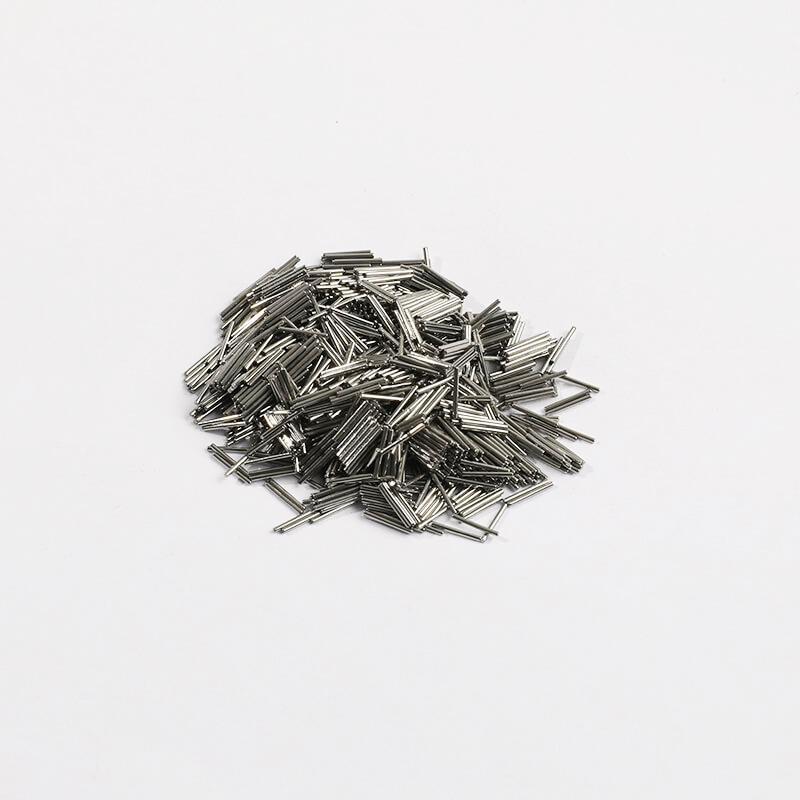
Small robust fittings often suit rotary or centrifugal barrel finishing, which process many pieces per load at low unit cost, while delicate parts may need a gentler vibratory route or magnetic finishing with small pins for internal edges. The deciding factors are the smallest feature to keep clear, the thinnest section, the edge limit and the batch size, not overall part size. Send the extreme cases from the family for a trial rather than a typical part, and ask for a comparison across two media classes with everything else held constant. SurfacePolish supplies all of these machine types across borders and can describe how each behaves on tested parts.
SurfacePolish is not a local polishing shop and has no branch, dealer or technician presence in Cologne or anywhere else outside its own factory. What is offered is cross-border supply of finishing machines and consumables, a scoped discussion of a finishing line concept, and a free sample trial in which representative parts are shipped to the factory, processed and returned with observations and a proposed media and cycle direction. Buyers who need on-site processing should source that locally. Buyers building an in-house finishing capability can use the trial to choose equipment and media for their own line.
Use Cologne, Germany as the destination on the enquiry and state whether the deliverable is equipment, media and compound, a representative sample review or a line concept. A destination does not imply local stock, a local service point or a local delivery time.
A Cologne buyer in the vehicle and engine supply chain will normally work to IATF 16949 with VDA 6.3 process audits and to the technical-cleanliness regime VDA 19.1 / ISO 16232 for residual particle limits, alongside surface-texture specifications such as ISO 21920 and material certificates to EN 10204 (3.1). For the machines themselves, placement on the EU market requires CE marking under the EU Machinery Regulation.
Sources were retrieved on 2026-09-29 and describe the local industrial and trade context only. They do not evidence any SurfacePolish project, shipment, installation or service in Cologne.
The buyer must remove heat tint and light burr from 0.6 mm holes without enlarging the holes or embedding media.
Send the material, dimensions, approximate weight, batch quantity, the incoming condition and photographs of the difficult features. Mark which features must not be contacted by media and state how the result will be inspected. This form carries source reference PSEO-0351; quote it if you prefer an additional manual reference.
Open the SurfacePolish enquiry form Email a prepared enquiry
No price, lead time, certification or result is promised here. Confirm whether a sample trial is available for the specific part and what the trial can and cannot show.
Page PSEO-0351 · revised 2026-09-29 · cross-border equipment, media and scoped sample review. City context is sourced and cited above.
Use this local checker to identify missing part and inspection information. It prepares a technical-review brief; it does not approve a machine, process recipe or production result.
Complete the part details to prepare a review brief.
Email : info@surface-polish.com


 IPv6 network supported


 +86-592-2381506