A buyer in Newcastle, Australia working with nickel-alloy combustor hardware for aerospace components needs heat tint and drilling burr removed from 0.6 mm cooling holes without changing hole geometry. SurfacePolish is a cross-border equipment and media supplier rather than a local shop; its free sample trial can test finer media and lower-energy routes on the parts sent, and the findings are reported as observations to be verified by the buyer. This brief is written for a buyer in Newcastle working on aerospace components; it describes equipment, media and a scoped sample review, not a local polishing service.
Which features on this part must not be touched by media, and how will each one be masked, plugged, fixtured or deliberately finished?
How will media be kept out of drilled passages, tapped holes and closed volumes, and what retrieval and verification step proves it?
What edge condition is actually specified at each critical location, and which machine and media combination can hold inside that band?
Alloy and temper decide which media and compound families are realistic before any machine is discussed. Unaged aluminum alloys are soft and galling-prone, precipitation-hardening stainless steels are harder and respond to cutting media, and titanium has low thermal conductivity and a tendency to smear rather than cut cleanly. High-strength steels also bring a documented concern about hydrogen picked up from acidic chemistry. Heat treatment matters twice, because the same alloy in a solution-treated and an aged condition finishes differently and a part that has already been aged cannot be straightened after processing. Record alloy, temper, hardness range, prior manufacturing operations such as welding or grinding, and any stress-relief history. Then match media hardness and compound pH to the material instead of reusing a successful recipe from an unrelated part, because the same blend that brightens one alloy can stain another.
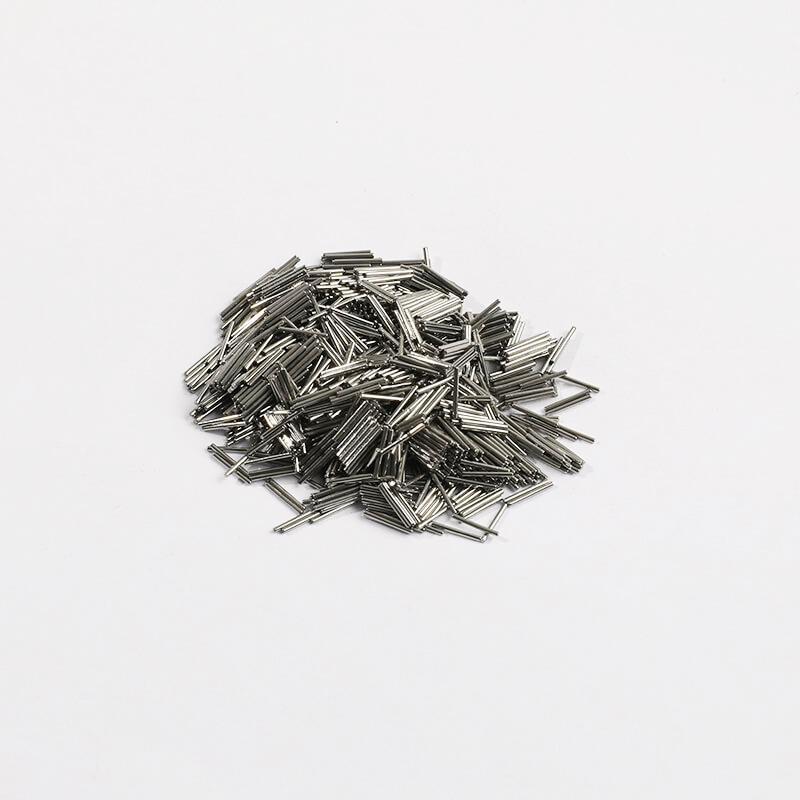
Steel media works by burnishing: it displaces surface metal and compresses it rather than cutting it away, which produces a bright, uniform appearance and can improve surface texture without the dimensional change that a cutting medium causes. That property makes it attractive where features must keep their geometry and only the surface appearance needs to change. The conditions are strict. Burnishing needs a clean load, correct compound chemistry and controlled water, because any debris, iron contamination or hard water deposit is pressed into the surface rather than flushed away. Steel media is heavy and concentrates energy, so thin walls and unsupported sections need lower energy or fixturing. It also carries a cross-contamination risk: stainless and aluminum parts can pick up iron from carbon steel media, so keep baths and media dedicated. Select it after the removal requirement has been met, not as a substitute for deburring.
| Media | Best fit | Watch out for |
|---|---|---|
| Ceramic media, angle-cut and triangular shapes | Heavier deburring and edge blending on steel, stainless and titanium parts with accessible corners and recesses. | Wears down and changes effective size class, generates sludge, and can chip or over-round thin sections and soft alloys. |
| Steel media for burnishing | Bright, uniform appearance with minimal dimensional change on parts whose geometry must stay as machined. | Presses debris and hard-water deposits into the surface, concentrates energy on thin sections, and carries iron cross-contamination risk. |
| Ceramic media, small size class for tight features | Reaching small holes, slots and fillets where a standard size class cannot enter, at reduced removal rate. | Screens differently from larger media, lodges more easily in drilled passages and must be kept below the smallest hole to stay clear. |
| Mildly acidic or chelated brightening compound | Brightening certain stainless grades where the buyer's specification permits that chemistry family. | Not appropriate where hydrogen uptake is a concern on high-strength steel, and requires close pH control and good rinse water quality. |
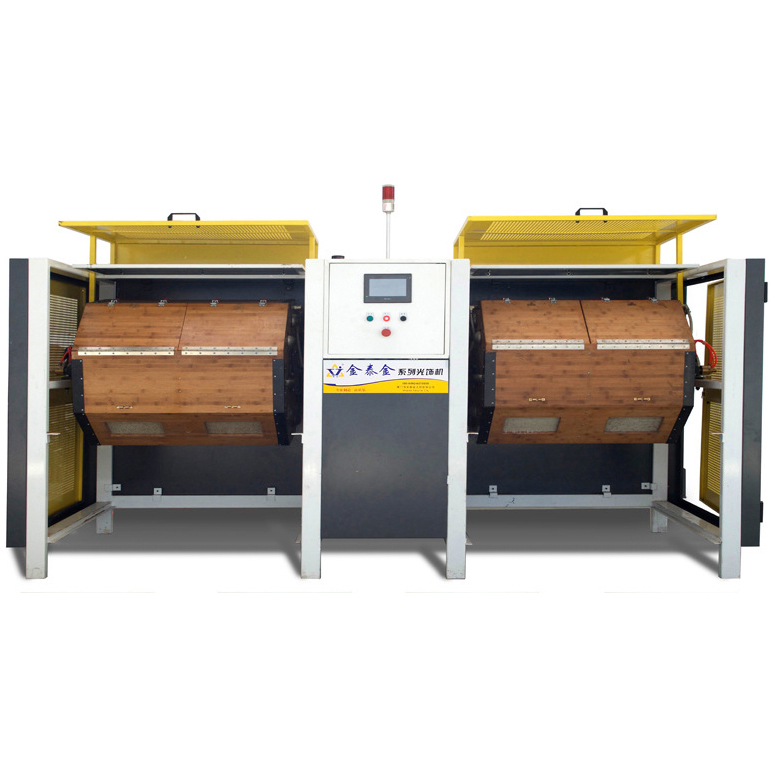
Vibratory finishing is usually the first route to evaluate for aerospace parts because it blends edges and refines surfaces while keeping part-on-part contact moderate and allowing visual access during the cycle. The real differences lie in the chamber: a bowl with a centre column circulates the load continuously, while a tub or long-channel machine moves it more linearly and suits long shafts, tubes and housings that will not turn in a bowl. Drive amplitude, motor setting and the media-to-part ratio decide how much energy reaches the surface, and the machine frame sets the practical part size. For thin-walled or delicate components, ask whether the load can be run in compartments or on fixtures rather than free-tumbling. Also settle unloading and separation early, because a vibratory machine that finishes well but traps media in a closed housing costs more in inspection time than it saves in cycle time.
| Machine route | Where it fits | What it will not do |
|---|---|---|
| Vibratory finishing machine, bowl type | General edge blending and surface refinement on medium-sized parts with a continuous, visible load. | Part size is capped by chamber geometry, and thin or delicate parts may need compartments or fixtures to limit part-on-part contact. |
| Disc finishing machine | Fast cycles on flat plates, brackets and robust turned parts with simple geometry. | High energy risks edge roll, distortion of thin sections and part-on-part marking; part size is bounded by the working gap. |
| Rotary barrel tumbling machine | Gentle, uniform processing of small robust parts in large quantities, such as bushings, spacers and fasteners. | Slow cycles, per-barrel weight limits, and limited access for inspecting or repositioning parts during the run. |
| Centrifugal barrel finishing machine | Short cycles on small, hard, robust parts where high pressure at the part-media interface is acceptable. | High energy transfers into thin walls and fixtures and wears liners; part size and barrel geometry bound what can be run. |
A lodged piece of media is the failure mode that puts a finished aerospace part at greatest risk, because it may survive cleaning and only appear at final inspection or, worse, in service. Lodging happens where a feature's smallest dimension is close to the media size, which is why blind tapped holes, cross-drilled passage intersections, keyways, undercuts, dovetails and small counterbores are the usual sites. It is aggravated by soft or worn media that deform and wedge, by running a broad size-class blend, and by unmasked holes that were never intended to see media. Check with a known pin gauge, a borescope at an agreed viewing angle and a defined count of media in the batch before and after, and add a documented retrieval step such as bar-end magnets, directed air or a flush. The reliable prevention is size discipline: media sized well below the smallest hole to be left clear.
| Failure mode | Likely cause | How to catch it |
|---|---|---|
| Thread entry chamfer rounded away or thread crests burnished | Unmasked threaded features run in a burnishing or high-energy cutting load. | Gauge the thread with the buyer's own gauge and inspect the entry chamfer under magnification against the recorded pre-finish condition. |
| Local flatness or geometry change on a datum face | Media contact on a surface where appearance was treated as the only requirement and flatness was not protected. | Confirm the datum condition with the buyer's own method, such as a CMM or a surface plate check against the stated requirement, on parts from the first and last part of the load. |
| Media wedged at a cross-drilled passage intersection | Media small enough to enter the passage, plus no defined retrieval step in the routing before final cleaning. | Flush the passage with a measured volume, examine the flush medium and the passage with a borescope, and add a documented retrieval step such as directed air or a magnet. |
| Impingement marks or gouges on thin webs and sharp corners | Excess amplitude or speed with too little media in the chamber, or parts free to strike each other in an under-filled load. | Inspect the vulnerable features under magnification before and after, photograph under raking light, and compare the same feature across several parts from the load. |
Newcastle is the manufacturing and export centre of the Hunter, which the NSW Government describes as the largest regional economy in Australia, with a population of 774,587 and named key industries of advanced manufacturing, defence and aerospace, renewable energy, food and wine, tourism, education, mining and health care. The region's industrial identity was built on coal and heavy industry, and mining and energy remain foundational, but the current growth is in advanced manufacturing and defence: the NSW Government identifies Williamtown, the Hunter Energy Hub at Muswellbrook, the Port of Newcastle and the John Hunter Health Innovation Precinct as growth precincts. Newcastle Airport, 20 minutes north of the city, anchors a defence and aerospace hub with the Astra Aerolab precinct adjoining RAAF Base Williamtown, specialising in defence sustainment and manufacturing; the airport's terminal and runway upgrades are intended to open up air freight as well as tourism. The Port of Newcastle is described by the NSW Government as Australia's third-largest port and by the port authority as the largest port on the East Coast and Australia's oldest export port, and the Hunter's research base includes the CSIRO Energy Centre and the University of Newcastle.
For this brief the relevant part of that base is aerospace: The NSW Government states Newcastle International Airport 'is 20 minutes north of Newcastle and is a defence and aerospace hub' bringing together international prime contractors, SMEs and R&D institutions, and Australia's newest defence and aerospace precinct, Astra Aerolab, adjoins the airport and RAAF Base Williamtown, specialising in defence sustainment and manufacturing capabilities.
The Hunter's advanced manufacturing and defence supply chains work in steel, aluminium and exotic alloys for mining equipment, rail, defence structures and aircraft sustainment components, where cut edges and weld-prep surfaces must be deburred and radiused before welding, coating or assembly. Components destined for defence sustainment work and for mining equipment operating in abrasive conditions are typically specified with defined edge condition and surface preparation requirements, and heavy plate and machined parts often need a finishing step that removes oxide and burrs without changing dimensions. Fabricators supplying both sectors also need to control media contamination between ferrous and aluminium work to avoid cross-metal corrosion.
A Hunter buyer should settle early whether the finishing step is being used for weld preparation, for edge radius control on a load-bearing or fatigue-critical defence or mining component, or simply for cosmetic clean-up, because those three cases imply different media, different process times and different inspection evidence.
Freight context: Port of Newcastle (largest port on the East Coast, Australia's oldest export port, operated landside by Port of Newcastle), Newcastle Airport (international terminal, Code E runway, adjoining Astra Aerolab and RAAF Base Williamtown), M1 Pacific Motorway and Hexham Straight road freight corridor; Sydney-Newcastle railway. RDA Hunter records the Port of Newcastle handling between 150 million and 166 million tonnes of trade annually with deepwater capacity currently operating at roughly 50%, plus significant industrial land connected by road and rail. Newcastle Airport's new international terminal, part of a $110 million expansion within a broader $250 million precinct investment, introduced swing-gate functionality and wide-body aircraft capability, and RDA Hunter states the improvements boost freight capability. Incoming finishing machines and sample parts can therefore arrive by sea through Newcastle or by air through Newcastle Airport, with the M1/Hexham Straight programme improving corridor reliability.
Australia and China are parties to the China-Australia Free Trade Agreement (ChAFTA), signed on 17 June 2015 and in force since 20 December 2015; the Australian Border Force maintains a dedicated ChAFTA page and working tariff schedule, and FTAs give importers a route to preferential rates of duty where the rules of origin are met. China was Australia's largest source of imports in 2025 at $130.2b, up 12.5% on 2024, and 56% (69,567) of Australian business importers traded at least once with China in 2020-21. A Chinese supplier of finishing machines, media or compounds is therefore shipping into Australia's single largest import stream, and preferential duty depends on origin documentation rather than on a blanket zero-tariff guarantee for every product line.
The Australian Border Force (ABF) is the customs authority and clears imported goods through customs; all goods arriving in Australia must be declared unless an exception applies, goods valued at up to A$1,000 can be imported without a formal import declaration, and entry is made through the Integrated Cargo System (Form B650 for sea or air cargo). Generally all goods imported into Australia are liable for duties and taxes unless an exemption or concession applies, and most imports are subject to 10% GST, so classification, customs valuation and any preferential tariff claim drive the landed cost; a licensed customs broker is the normal route for a first-time importer. Electrical equipment can fall under the Electrical Equipment Safety System, under which the first Australian supplier registers as a Responsible Supplier, holds an ABN, makes a Responsible Supplier Declaration and marks the equipment with the Regulatory Compliance Mark (RCM) in accordance with AS/NZS 4417.1 and AS/NZS 4417.2. Imported goods may also require a trade description naming the country of manufacture, and machinery that is not in-scope electrical equipment still has to meet state work health and safety duties covering plant.
SurfacePolish supplies from Xiamen, China. The buyer's own destination rules, conformity marking, tariff classification and documentation responsibilities stay with the buyer; confirm them against the authorities named above before ordering.
Parts can meet every roughness and appearance requirement and still be unusable because of what remains on them. Define the cleanliness check explicitly: which features are examined, with what instrument, at what magnification, and what counts as a reject. Borescope inspection of blind holes and passage intersections, flushing with a measured volume, examining the flush medium, and a defined particulate or residue check are all practical options, but the method must be fixed in advance. Three further checks are commonly omitted. Include media carryover, iron contamination pickup on stainless and aluminum, and residual compound film in recesses, and confirm that rinse water quality is controlled, since hard or chloride-bearing water can leave deposits that later read as corrosion. Keep the cleaning and drying method in the acceptance record, because it is part of the result, not workshop housekeeping.
Comparative trials lose their value when several things change together. Fix the machine, load volume, part count, compound concentration and cycle time, then change one variable: media material first, then size class, then compound, then time or energy setting. Ask for the same recorded locations to be measured with the same instrument and the same setting across all variants, and for photographs taken under identical lighting, so the comparison is between processes rather than between photographers. Retain all tested parts, including the ones that went wrong, because a rejected variant often explains which mechanism caused a defect and therefore which limit must be respected in production. A comparison of two media blends run with different cycle times and different operators tells you nothing about the media, which is the most common reason a trial result fails to transfer into a line.
Specify the location, the evaluation length and cutoff, the filter, and whether the requirement is a maximum or an average, then keep that setup unchanged for every batch and comparison. Readings taken with different cutoffs on the same surface will not agree, and readings on interrupted or curved surfaces such as fillets or cast skins need a setup designed for them. Record the instrument and its calibration status with the results. When you compare a trial part from Xiamen with your production parts, Australia and China, use one instrument and one setup so the difference you are reading is the process, not the measurement.
Send parts in the production condition, including the case with the thinnest wall, tightest internal feature and most difficult edge, not a convenient spare. Include material and heat treatment data, the drawing requirements you can share, and a marked-up photograph showing features that must not change. Add one part in the incoming condition and, if available, one finished the way you want the result to look. State the batch size and how you separate parts in your own shop. International shipments should be declared for temporary processing with a parts list, and buyers in Australia can ask us for a packing list format before dispatch.
Size the media well below the smallest hole to keep clear, and treat every drilled passage as a retrieval point rather than hoping it stays empty. Mask or plug features that were never meant to see media, count media into and out of the batch, and add a defined check such as a borescope at an agreed angle plus a pin gauge. For Australia buyers shipping parts for a trial, send the part with the tightest hole so the media class is chosen against real geometry rather than an average. SurfacePolish reports what was found on the parts tested; your own cleanliness inspection remains the acceptance decision.
Use Newcastle, Australia as the destination on the enquiry and state whether the deliverable is equipment, media and compound, a representative sample review or a line concept. A destination does not imply local stock, a local service point or a local delivery time.
Newcastle buyers work to Australian Standards administered by Standards Australia, and electrical equipment must carry the Regulatory Compliance Mark under AS/NZS 4417.1 and AS/NZS 4417.2 where in scope. Defence and aerospace suppliers in the Williamtown/Astra Aerolab supply chain additionally work to Defence procurement specifications and mission-assurance requirements, and mining equipment suppliers commonly reference client-specific surface and inspection requirements.
Sources were retrieved on 2026-09-29 and describe the local industrial and trade context only. They do not evidence any SurfacePolish project, shipment, installation or service in Newcastle.
The buyer must remove heat tint and light burr from 0.6 mm holes without enlarging the holes or embedding media.
Send the material, dimensions, approximate weight, batch quantity, the incoming condition and photographs of the difficult features. Mark which features must not be contacted by media and state how the result will be inspected. This form carries source reference PSEO-0761; quote it if you prefer an additional manual reference.
Open the SurfacePolish enquiry form Email a prepared enquiry
No price, lead time, certification or result is promised here. Confirm whether a sample trial is available for the specific part and what the trial can and cannot show.
Page PSEO-0761 · revised 2026-09-29 · cross-border equipment, media and scoped sample review. City context is sourced and cited above.
Use this local checker to identify missing part and inspection information. It prepares a technical-review brief; it does not approve a machine, process recipe or production result.
Complete the part details to prepare a review brief.
Email : info@surface-polish.com


 IPv6 network supported


 +86-592-2381506