A buyer in Marseille, France finishing titanium brackets for aerospace components has to reach fillet radii and lightening-hole edges without cutting through a shot-peened layer or smearing the alloy. SurfacePolish sells finishing equipment and media across borders and offers a free sample trial in which representative parts are processed and returned with a suggested media, compound and cycle direction plus notes on feature protection. This brief is written for a buyer in Marseille working on aerospace components; it describes equipment, media and a scoped sample review, not a local polishing service.
Which datum and mating surfaces carry assembly geometry, and is a flatness or fit check required on them after finishing?
How will media be kept out of drilled passages, tapped holes and closed volumes, and what retrieval and verification step proves it?
What edge condition is actually specified at each critical location, and which machine and media combination can hold inside that band?
Datum and mating surfaces constrain the whole finishing decision because they establish assembly geometry. Media contact on a datum face can shift hole position, introduce local flatness variation or change a press-fit condition, and none of that is visible in ordinary shop inspection. Identify on the drawing which surfaces are datums and which mate with another part, then treat the finish callout on those surfaces separately from cosmetic areas. A part may tolerate a brighter appearance on an outboard face while its bolted flange must simply remain flat within its stated requirement. Protection strategy follows the same logic: a datum is often masked, fixtured against a support or finished with a lighter medium rather than with the same blend as the rest of the part. Discuss finish location with the designer before promising a blanket surface condition.
The compound is not a lubricant added at the end of the setup; it is the variable that keeps the process stable. Alkaline builders and detergents keep media and parts clean and suspend removed material, mildly acidic or chelated chemistry brightens certain alloys, and inhibitors are used to limit attack on sensitive surfaces. Concentration and flow rate at the machine are the actual levers: running lean loads the media, slows the cut and lets heat and discoloration develop, while running rich produces foam, residue that lodges in blind holes and unnecessary cost. Water quality belongs in the same discussion because hardness leaves scale and spotting, and chlorides present a pitting risk on stainless and aluminum. Set concentration by a measured dilution routine and a daily check, record it with the batch, and treat any drift as a process deviation rather than an operator preference.
| Media | Best fit | Watch out for |
|---|---|---|
| Plastic media, cones and triangles | Gentle cutting on aluminium, thin-wall sections and surfaces that must not be scored. | Deforms and loads with metal fines so cut rate falls while the blend still looks intact; ineffective in deep recesses and tight radii. |
| Ceramic media, small size class for tight features | Reaching small holes, slots and fillets where a standard size class cannot enter, at reduced removal rate. | Screens differently from larger media, lodges more easily in drilled passages and must be kept below the smallest hole to stay clear. |
| Compound with corrosion inhibitor for sensitive alloys | Aluminium and stainless parts that must not stain or pit during processing and between-stage handling. | Inhibitor does not compensate for hard or chloride-bearing water, and residue left in recesses can mask later inspection. |
| Dry media: walnut shell and corn cob | Light deburring, drying support and residue removal on parts where moisture carryover is the governing concern. | Slower cutting, generates dust requiring extraction, and its condition and moisture content must be controlled to stay repeatable. |
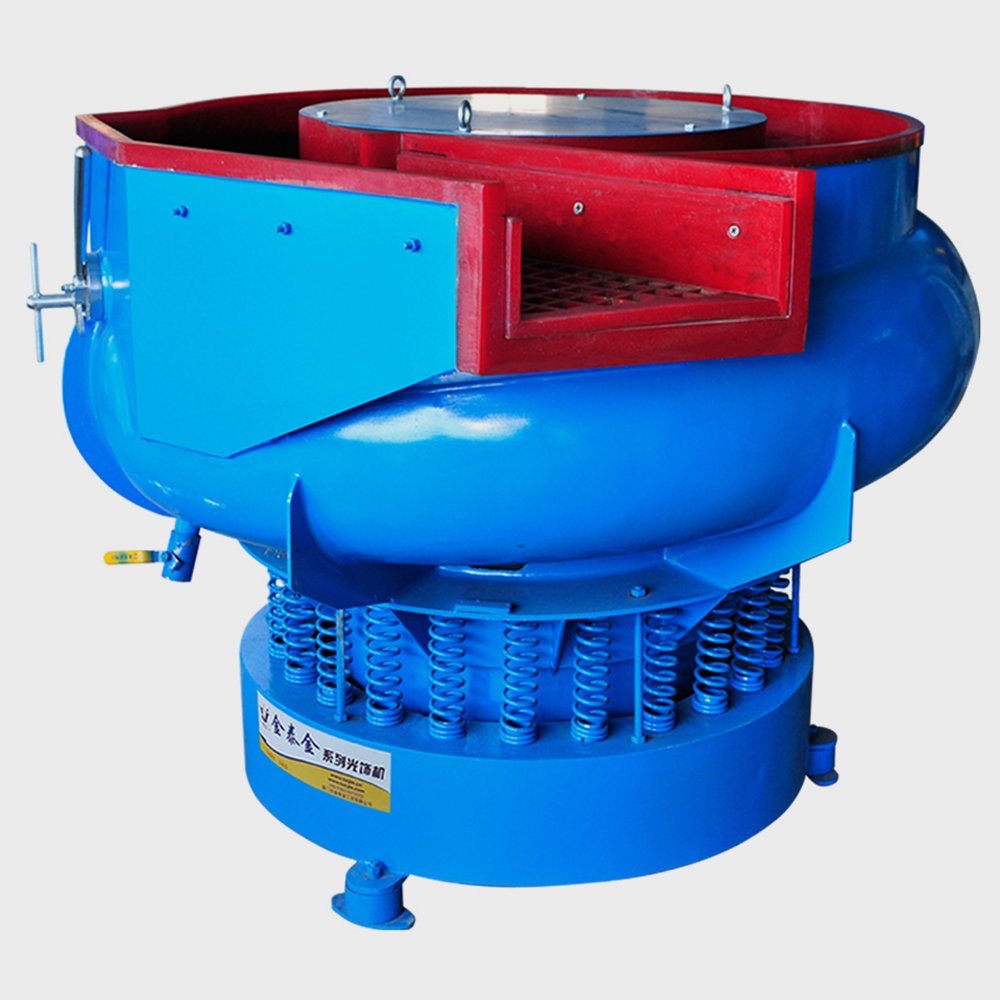
Vibratory finishing is usually the first route to evaluate for aerospace parts because it blends edges and refines surfaces while keeping part-on-part contact moderate and allowing visual access during the cycle. The real differences lie in the chamber: a bowl with a centre column circulates the load continuously, while a tub or long-channel machine moves it more linearly and suits long shafts, tubes and housings that will not turn in a bowl. Drive amplitude, motor setting and the media-to-part ratio decide how much energy reaches the surface, and the machine frame sets the practical part size. For thin-walled or delicate components, ask whether the load can be run in compartments or on fixtures rather than free-tumbling. Also settle unloading and separation early, because a vibratory machine that finishes well but traps media in a closed housing costs more in inspection time than it saves in cycle time.
| Machine route | Where it fits | What it will not do |
|---|---|---|
| Vibratory finishing machine, bowl type | General edge blending and surface refinement on medium-sized parts with a continuous, visible load. | Part size is capped by chamber geometry, and thin or delicate parts may need compartments or fixtures to limit part-on-part contact. |
| Rotary barrel tumbling machine | Gentle, uniform processing of small robust parts in large quantities, such as bushings, spacers and fasteners. | Slow cycles, per-barrel weight limits, and limited access for inspecting or repositioning parts during the run. |
| Vibratory tub or long-channel machine | Long shafts, tubes, housings and large parts that will not turn or circulate in a bowl. | Media circulation is less uniform along a long chamber, and bridging can leave sections of a long bore unprocessed. |
| Dry polishing machine and dryer | Post-wet drying and light dry finishing of parts with blind holes and passages where moisture carryover matters. | Dry media cut slowly, require dust extraction and medium condition control, and forced-air drying must be matched to internal geometry. |
Embedment occurs when fragments of media or removed metal are pressed into the surface rather than flushed away, and it is easy to miss because the part can look bright and uniform. Softer alloys, burnishing routes, high media pressure in centrifugal machines and dirty compound all raise the risk. Smearing is a related failure on titanium and some stainless grades, where material is displaced across the surface instead of cut, leaving a folded layer that later inspection may read as a defect. Check with a borescope on internal features, a dye penetrant inspection only where the buyer's own procedure calls for it, and low-magnification microscopy at agreed locations. Prevention rests on maintaining compound flow and cleanliness, matching media hardness to the alloy, avoiding acid-bearing chemistry where hydrogen is a concern, and cleaning the load between stages rather than carrying debris forward.
| Failure mode | Likely cause | How to catch it |
|---|---|---|
| Impingement marks or gouges on thin webs and sharp corners | Excess amplitude or speed with too little media in the chamber, or parts free to strike each other in an under-filled load. | Inspect the vulnerable features under magnification before and after, photograph under raking light, and compare the same feature across several parts from the load. |
| Dark or heat-tinted patch following the media flow | Lean compound concentration or restricted flow, letting metal fines and heat build up in the working mass. | Compare against the agreed appearance master under fixed lighting and check the measured compound concentration and flow rate recorded for the batch. |
| Dimensional drift on a close-tolerance bore or spigot | Total removal accumulating over a long cycle or repeated passes without a start-of-run measurement on a critical feature. | Measure critical dimensions on the first part and at defined intervals through the batch, keeping the process effect separate from incoming variation. |
| Thread entry chamfer rounded away or thread crests burnished | Unmasked threaded features run in a burnishing or high-energy cutting load. | Gauge the thread with the buyer's own gauge and inspect the entry chamfer under magnification against the recorded pre-finish condition. |
Marseille's industrial identity is inseparable from the port: the Grand Port Maritime de Marseille operates the Fos-sur-Mer industrial-port zone, created by the State in 1964 and described by the port as one of the largest in Europe at 10 000 hectares, concentrating steel, energy and petrochemical plants including ArcelorMittal, Marcegaglia, KEM One, Air Liquide and Covestro, with two methane terminals and two wind farms, and the port is adding new industrial projects (H4 sustainable aviation fuel, Gravithy direct-reduced iron, a Marcegaglia electric steel plant, Neocarb e-fuels). In the commune, INSEE counted 31 646 establishments at the end of 2024, 4,2 % of them industrial, and 10,4 % in construction - the highest construction share of the ten cities studied. Marseille is also the Mediterranean's leading ship-repair centre, with ten repair forms in the Marseille basins and Forme 10, which the port describes as the third largest ship-repair dock in the world.
The nearest part of that base to this brief is energy: The port authority's industry page lists refineries, two methane terminals, two wind farms and petrochemical and energy plants including ArcelorMittal, Air Liquide, Covestro and Kem One in the 10 000 ha Fos industrial-port zone.
Fos and the Marseille basins are a heavy-metal environment: steel strip, tube and long products, welded structures, pumps, valves and process equipment need scale and heat-tint removal, weld dressing and controlled surface finish for coating adhesion and corrosion resistance. Ship repair adds a second, different surface problem - large-area preparation, weld seam dressing on hulls and tanks, and cleanliness before coating - carried out under tight dry-docking schedules. Both environments put a premium on equipment that is robust, dust- and slurry-tolerant, and simple to maintain, rather than on fine cosmetic polishing.
A buyer in Marseille should settle whether the finishing cell will work on large welded structures and repair work with variable geometry, or on repeatable machined components, because that determines whether the shop needs a flexible manual/barrel process with forgiving media or a tightly controlled, documented series process.
Freight context: Grand Port Maritime de Marseille (Marseille and Fos-sur-Mer), Marseille Provence Airport, Fos container and ro-ro terminals. Marseille-Fos is the Mediterranean deep-sea gateway for southern France, with container traffic up 9 % in 2024 to 1,45 MEVP and revenue of EUR 224,5 million; the port is multimodal (maritime, river, rail, road) and handles heavy and oversized industrial cargo. For a finishing-equipment buyer this is the natural discharge port for containerised machines and the natural export route for sample parts, with Fos better suited to heavy lifts than the city basins.
France applies the EU common commercial policy, so industrial machinery arriving from China enters under the Union Customs Code and the Common Customs Tariff rather than under any bilateral French regime; the EU has no free-trade agreement with China, so no preferential duty rate applies and normal third-country duties are due on the customs value. Importers classify the machine in the tariff nomenclature and lodge a customs declaration; French Customs publishes the common and national tariff through its RITA online service and states that three notions are fundamental: the tariff classification of the product, its origin or destination, and the value of the goods.
The working language of French industrial procurement is French: tenders, drawings, inspection plans and technical dossiers are normally issued and answered in French, and quotations that omit French documentation slow down qualification. Buyers qualify a machine against a written specification and expect traceable material certificates, machine safety documentation and, where applicable, a CE declaration of conformity and a risk assessment; acceptance is often staged (documentary review, factory acceptance test, then commissioning). Payment and documentation norms are conventional EU practice: euro invoicing, SEPA or SWIFT bank transfer, Incoterms agreed in writing, and customs paperwork (commercial invoice, packing list, transport document, proof of origin where a preference is claimed) prepared for the declarant or customs representative. Because customs and tax authorisations are handled jointly through SOPRANO, non-EU sellers are normally advised to sell to an established French/EU importing entity rather than to act as importer of record themselves.
SurfacePolish supplies from Xiamen, China. The buyer's own destination rules, conformity marking, tariff classification and documentation responsibilities stay with the buyer; confirm them against the authorities named above before ordering.
Appearance should be defined by an agreed physical master or a calibrated image set viewed under specified lighting and magnification, because written adjectives such as bright or uniform are not acceptance criteria. Beside appearance, insist on the checks that reflect how the part actually works. A seal land is checked for sealing condition, a bearing seat for fit and contact pattern, a sliding surface for freedom from raised material and a threaded feature for gauge entry. Edges are measured rather than viewed, using radius gauges, an optical comparator or a cast impression against the recorded pre-finish state. Functional checks should be performed with the buyer's own gauges where the buyer owns the acceptance decision, and the results recorded against the specified requirement instead of a pass or fail opinion. Where a check damages a part, define it as a sampling check on dedicated parts.
Scale-up fails more often on bookkeeping than on metallurgy. Define the load before the first production batch: the range of part count or weight, how parts are separated, whether families may be mixed, and by what rule a load is split when a different feature set arrives. Record the cycle as it was actually run, including the media blend, compound concentration measured at the machine, water source, run time and the reason for any deviation, because a deviation that is not written down reappears as an unexplained appearance change. Set a media maintenance plan with a screening interval, a make-up rate by weight, a bath cleaning routine and a replacement trigger based on measured condition rather than on a calendar alone. Media wear changes the process gradually, so the record is the only way to notice drift before parts are affected.
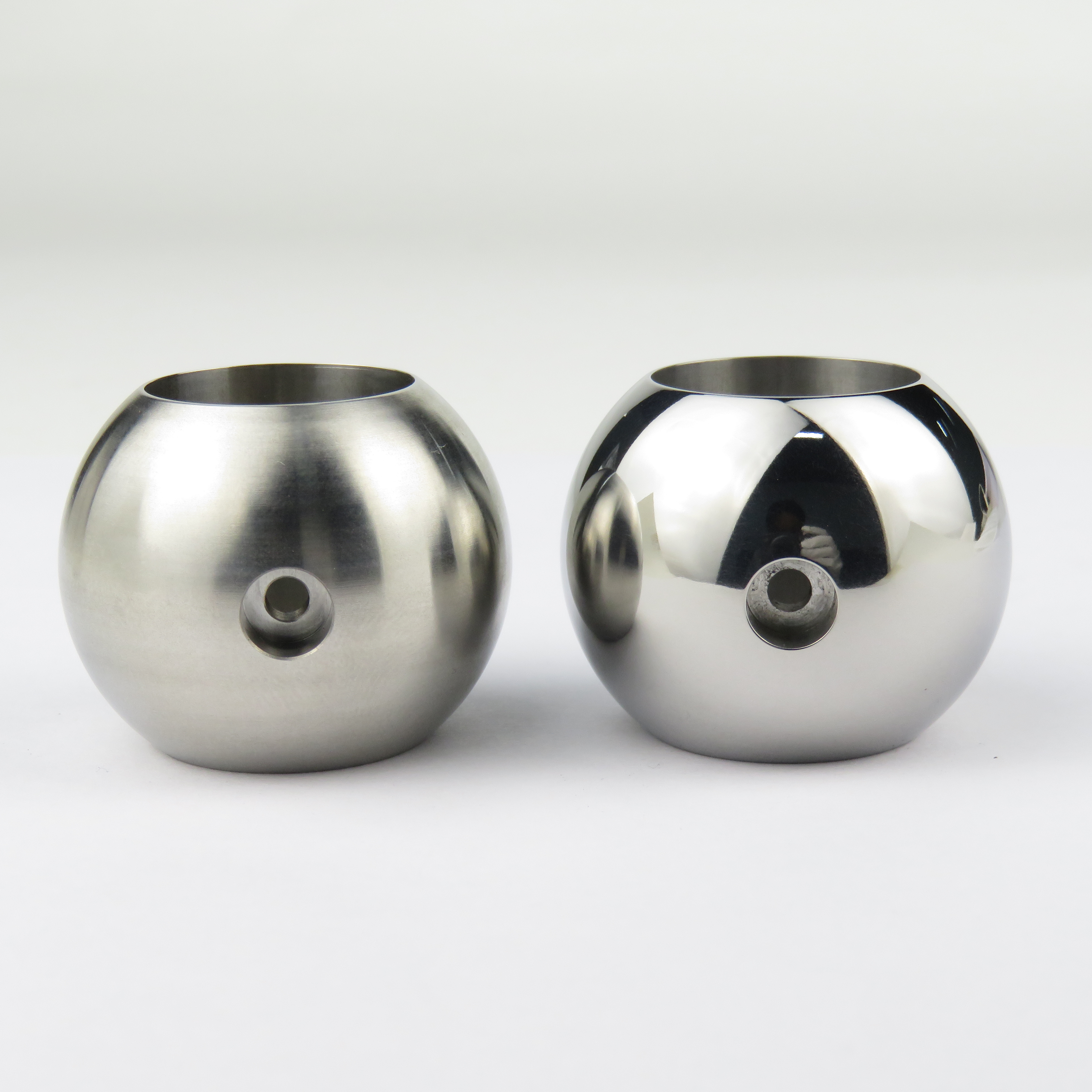
No. A part can look bright and uniform while carrying embedded media fragments, a smeared surface layer, dried compound residue in a recess or an edge that has rolled past its limit. Acceptance needs measurement at defined locations, edge checks where edges are specified, and cleanliness checks of internal features, all recorded against the drawing requirement. Define appearance with a physical master or a calibrated image set under fixed lighting and magnification, since adjectives are not criteria. For a buyer in France, the practical rule is that appearance is one input among several, and no appearance result on its own establishes fitness for a regulated application.
Send parts in the production condition, including the case with the thinnest wall, tightest internal feature and most difficult edge, not a convenient spare. Include material and heat treatment data, the drawing requirements you can share, and a marked-up photograph showing features that must not change. Add one part in the incoming condition and, if available, one finished the way you want the result to look. State the batch size and how you separate parts in your own shop. International shipments should be declared for temporary processing with a parts list, and buyers in France can ask us for a packing list format before dispatch.
High-strength steels carry a documented concern about hydrogen picked up from acidic or hydrogen-bearing chemistry, so the conservative route is a mechanical process with a neutral or alkaline compound and no acid stage. If your own specification permits acid-bearing chemistry, that decision and any subsequent treatment belong to your engineering and quality functions, not to the equipment supplier. SurfacePolish supplies compounds and media across borders and can run a trial with the chemistry family you nominate, reporting observations on the parts tested. Buyers in Marseille should confirm hydrogen-related requirements with their own specialists before any process is set.
Use Marseille, France as the destination on the enquiry and state whether the deliverable is equipment, media and compound, a representative sample review or a line concept. A destination does not imply local stock, a local service point or a local delivery time.
A Marseille buyer would reference ISO/NF EN surface-texture standards for finish, the EN 1090 and pressure-equipment regimes for welded steel structures and vessels, and coating-system specifications where surface preparation precedes painting; marine and offshore work is normally governed by classification-society and owner specifications on top of the ISO 9001 baseline. Material conformity certificates and traceability are standard requirements in the steel and petrochemical supply chain.
Sources were retrieved on 2026-09-29 and describe the local industrial and trade context only. They do not evidence any SurfacePolish project, shipment, installation or service in Marseille.
The buyer must not remove the peened layer or smear titanium while trying to reach the fillets and hole edges.
Send the material, dimensions, approximate weight, batch quantity, the incoming condition and photographs of the difficult features. Mark which features must not be contacted by media and state how the result will be inspected. This form carries source reference PSEO-0531; quote it if you prefer an additional manual reference.
Open the SurfacePolish enquiry form Email a prepared enquiry
No price, lead time, certification or result is promised here. Confirm whether a sample trial is available for the specific part and what the trial can and cannot show.
Page PSEO-0531 · revised 2026-09-29 · cross-border equipment, media and scoped sample review. City context is sourced and cited above.
Use this local checker to identify missing part and inspection information. It prepares a technical-review brief; it does not approve a machine, process recipe or production result.
Complete the part details to prepare a review brief.
Email : info@surface-polish.com


 IPv6 network supported


 +86-592-2381506