A buyer in Montreal, Canada finishing titanium brackets for aerospace components has to reach fillet radii and lightening-hole edges without cutting through a shot-peened layer or smearing the alloy. SurfacePolish sells finishing equipment and media across borders and offers a free sample trial in which representative parts are processed and returned with a suggested media, compound and cycle direction plus notes on feature protection. This brief is written for a buyer in Montreal working on aerospace components; it describes equipment, media and a scoped sample review, not a local polishing service.
Which features on this part must not be touched by media, and how will each one be masked, plugged, fixtured or deliberately finished?
Does the compound chemistry family create a hydrogen, staining or residue risk for this alloy and heat treatment, and who verifies that?
At what batch size, load pattern and media wear state does the trial result still describe what production will produce?
Alloy and temper decide which media and compound families are realistic before any machine is discussed. Unaged aluminum alloys are soft and galling-prone, precipitation-hardening stainless steels are harder and respond to cutting media, and titanium has low thermal conductivity and a tendency to smear rather than cut cleanly. High-strength steels also bring a documented concern about hydrogen picked up from acidic chemistry. Heat treatment matters twice, because the same alloy in a solution-treated and an aged condition finishes differently and a part that has already been aged cannot be straightened after processing. Record alloy, temper, hardness range, prior manufacturing operations such as welding or grinding, and any stress-relief history. Then match media hardness and compound pH to the material instead of reusing a successful recipe from an unrelated part, because the same blend that brightens one alloy can stain another.
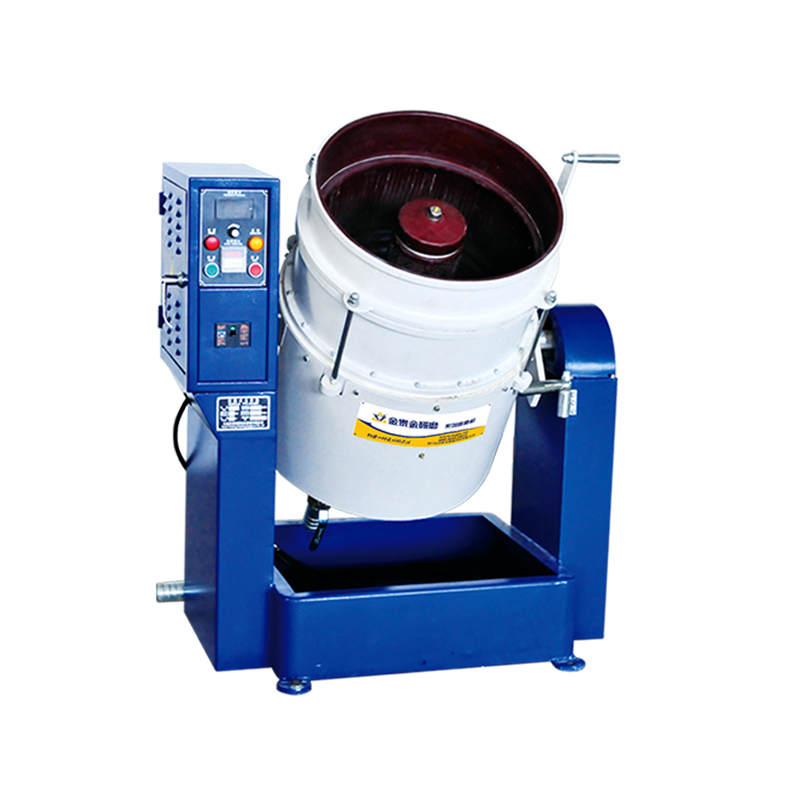
Rotary barrel tumbling is the gentlest of the mechanical routes and rewards parts that can tolerate slow, uniform abrasion: small fittings, spacers, bushings, fasteners and formed hardware that would be marked by higher-energy machines. Centrifugal barrel finishing raises the same principle to high speed, using barrels mounted on a rotating turret so the media presses against the parts with much greater force, which shortens cycles considerably for small, hard, robust components. Both routes share constraints that matter on aerospace work. Thin walls and long unsupported sections are at risk, fixtures and barrel liners wear, and the geometry of the barrel and the pattern of loading determine which faces actually see media. Weight limits per barrel also cap batch size. Evaluate these routes for small parts by the thousand, and treat fixture design and liner condition as first-order process variables rather than workshop detail.
| Machine route | Where it fits | What it will not do |
|---|---|---|
| Dry polishing machine and dryer | Post-wet drying and light dry finishing of parts with blind holes and passages where moisture carryover matters. | Dry media cut slowly, require dust extraction and medium condition control, and forced-air drying must be matched to internal geometry. |
| Vibratory finishing machine, bowl type | General edge blending and surface refinement on medium-sized parts with a continuous, visible load. | Part size is capped by chamber geometry, and thin or delicate parts may need compartments or fixtures to limit part-on-part contact. |
| Rotary barrel tumbling machine | Gentle, uniform processing of small robust parts in large quantities, such as bushings, spacers and fasteners. | Slow cycles, per-barrel weight limits, and limited access for inspecting or repositioning parts during the run. |
| Disc finishing machine | Fast cycles on flat plates, brackets and robust turned parts with simple geometry. | High energy risks edge roll, distortion of thin sections and part-on-part marking; part size is bounded by the working gap. |
Steel media works by burnishing: it displaces surface metal and compresses it rather than cutting it away, which produces a bright, uniform appearance and can improve surface texture without the dimensional change that a cutting medium causes. That property makes it attractive where features must keep their geometry and only the surface appearance needs to change. The conditions are strict. Burnishing needs a clean load, correct compound chemistry and controlled water, because any debris, iron contamination or hard water deposit is pressed into the surface rather than flushed away. Steel media is heavy and concentrates energy, so thin walls and unsupported sections need lower energy or fixturing. It also carries a cross-contamination risk: stainless and aluminum parts can pick up iron from carbon steel media, so keep baths and media dedicated. Select it after the removal requirement has been met, not as a substitute for deburring.
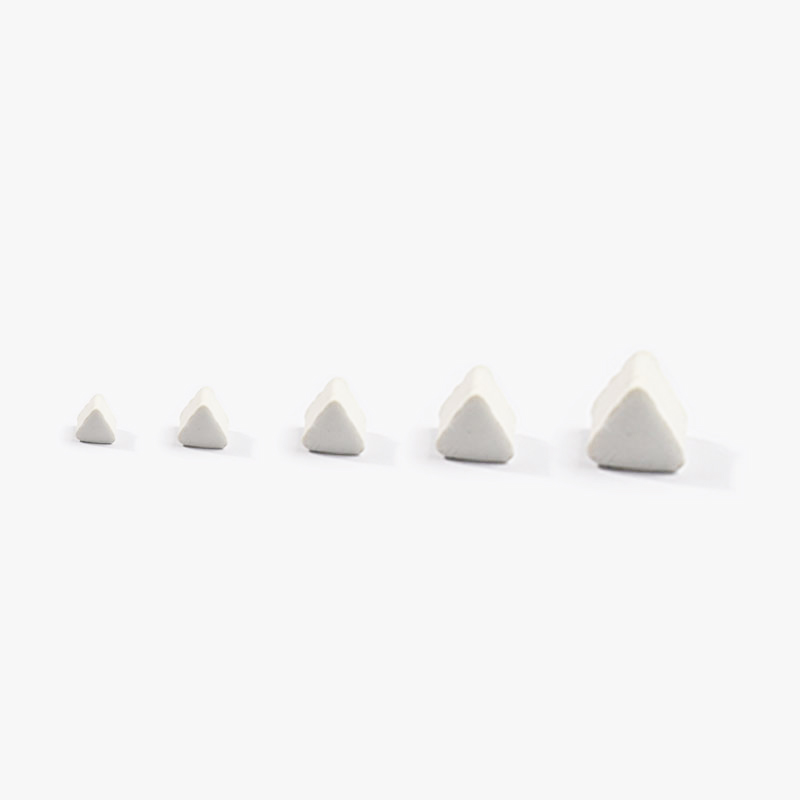
| Media | Best fit | Watch out for |
|---|---|---|
| Ceramic media, small size class for tight features | Reaching small holes, slots and fillets where a standard size class cannot enter, at reduced removal rate. | Screens differently from larger media, lodges more easily in drilled passages and must be kept below the smallest hole to stay clear. |
| Dry media: walnut shell and corn cob | Light deburring, drying support and residue removal on parts where moisture carryover is the governing concern. | Slower cutting, generates dust requiring extraction, and its condition and moisture content must be controlled to stay repeatable. |
| Alkaline detergent compound | General cleaning and suspension of removed material on steel, stainless and aluminium where neutral to alkaline chemistry suits the alloy. | Running lean causes loading, heat and discoloration; running rich causes foam and residue that lodges in blind features. |
| Mildly acidic or chelated brightening compound | Brightening certain stainless grades where the buyer's specification permits that chemistry family. | Not appropriate where hydrogen uptake is a concern on high-strength steel, and requires close pH control and good rinse water quality. |
Discolouration and residue usually arrive together and point at chemistry rather than mechanics. A lean compound lets metal fines and heat build up, producing a dark or heat-tinted patch that follows the media flow pattern. Rich, hard or contaminated water leaves dried salts and films, especially in blind holes where rinse water does not circulate. Uneven finish across one part or across a batch typically has a loading cause: parts blocking each other, too large a load, unmixed sizes, inconsistent fixturing or a chamber run below its proper load volume. Check by comparing appearance against an agreed physical master under fixed lighting, by reading rinse-water conductivity or chloride level, and by measuring surface texture at multiple recorded locations instead of one convenient spot. Then separate the two problems, because chemistry fixes do not solve loading variation and loading changes will not remove a residue film.
| Failure mode | Likely cause | How to catch it |
|---|---|---|
| Thread entry chamfer rounded away or thread crests burnished | Unmasked threaded features run in a burnishing or high-energy cutting load. | Gauge the thread with the buyer's own gauge and inspect the entry chamfer under magnification against the recorded pre-finish condition. |
| Impingement marks or gouges on thin webs and sharp corners | Excess amplitude or speed with too little media in the chamber, or parts free to strike each other in an under-filled load. | Inspect the vulnerable features under magnification before and after, photograph under raking light, and compare the same feature across several parts from the load. |
| Iron contamination pickup on stainless or aluminium parts | Shared media, bath or chamber with carbon steel work, or recycled compound carrying steel fines. | Inspect for rust bloom, discoloured spots or magnetic particles after drying, and check which media and bath last ran in the machine. |
| Dark or heat-tinted patch following the media flow | Lean compound concentration or restricted flow, letting metal fines and heat build up in the working mass. | Compare against the agreed appearance master under fixed lighting and check the measured compound concentration and flow rate recorded for the batch. |
Montreal's industrial identity is anchored in aerospace, and the province-level cluster is organised, funded and internationally visible: when announcing defence-supply-chain funding at Aéro Montréal's 2026 International Aerospace Innovation Forum, the federal government described Aéro Montréal as the "Quebec aerospace industrial cluster" and paired it with Propulsion Québec for electric and smart transportation and with Sous-traitance industrielle Québec (STIQ) for manufacturing businesses. The same announcement shows how deliberately the region builds supplier capability, with CAD 4,495,000 of non-repayable federal funding to prepare Quebec SMEs for defence-sector requirements, and STIQ's share explicitly targeted at "manufacturing businesses in order to prepare them to meet defence sector requirements". Manufacturing is broad beyond aerospace, and the federal funding is deliberately aimed at the supplier tier: STIQ's contribution is targeted at manufacturing businesses across Quebec to prepare them to meet defence sector requirements, which is the metal-fabrication, machining and process-equipment base that Greater Montreal depends on for aerospace and transport-equipment work. The region's economic development agency also runs formal industrial clusters, including a green and smart buildings cluster whose members develop and manufacture architectural products and innovative building technologies, plus a life sciences and health technologies cluster.
For this brief the relevant part of that base is aerospace: Federal funding was announced at Aéro Montréal's 2026 International Aerospace Innovation Forum to help Quebec SMEs integrate into defence supply chains, with Aéro Montréal and Propulsion Québec sharing CAD 2.5 million and the release naming Aéro Montréal as the "Quebec aerospace industrial cluster".
Aerospace and defence supply chains are the sharpest finishing driver in Montreal: structural and engine components, hydraulic and pneumatic fittings, and machined aluminium and titanium parts are specified with controlled edge condition, surface integrity and cleanliness because burrs and residual media create foreign-object-debris and fatigue risks. The cluster funding is explicitly aimed at moving SMEs into defence supply chains, and defence primes impose documented process control, which pushes suppliers toward repeatable, verifiable deburring and surface conditioning rather than manual operator judgement. Architectural-products and metal fabrication work in the same region adds a second, more cosmetic requirement set, where a uniform brushed or satin finish on visible stainless and aluminium is the acceptance criterion.
A Montreal aerospace or defence supplier should first settle whether the finishing step has to be a controlled, traceable process that can survive a prime-contractor audit, including media lot control, compound chemistry control and records, because adding those controls after machine selection is expensive. The second question is language and documentation: quotations, machine labelling, manuals and training material for a Quebec plant normally have to be usable in French, and that should be settled before order rather than during commissioning.
Freight context: Port of Montreal, Montréal-Trudeau International Airport, Mirabel (Mirabel airport and industrial park), CN and CPKC rail corridors. Montreal sits on the St. Lawrence corridor and combines a container and bulk seaport with a major international airport and a dedicated aerospace industrial park at Mirabel, which is what makes the region workable for both importing a machine and shipping sample parts to a supplier. For a cross-border equipment sale, the practical sequence is that machines move as sea freight into a St. Lawrence or coastal container port and are trucked or railed to the plant, while test parts and media samples can move by air through Montréal-Trudeau.
Canada's national standards system is coordinated by the Standards Council of Canada (SCC), which accredits standards-development organizations, certification bodies and testing laboratories; the SCC and CSA Group websites could not be retrieved for citation during this research, so this entry rests on the accessible Government of Canada and CCOHS material below. The Canadian Centre for Occupational Health and Safety describes standards as documents that "establish specifications and procedures to ensure the reliability of the products, methods, and services people use every day on the job", and Innovation, Science and Economic Development Canada (ISED) maintains the federal entry point for "[t]he different types of standards and certifying bodies that can be used by your business". In practice a Canadian buyer of finishing equipment references (a) the Canadian electrical safety certification of the machine and its control panel, (b) provincial occupational health and safety regulation for machine guarding, lockout and dust/ventilation control, which in Canada is enforced by the provinces rather than by a single federal inspectorate, and (c) the buyer's own customer-specific surface finish, edge-condition and cleanliness specifications, which are contractual rather than national standards. Finishing-process standards in the ISO 25.080 machine-tool and ISO 8500-series surface-preparation families are the usual technical reference points, but product-level standards sold by CSA Group were not retrievable for verification here.
China is one of Canada's ten principal merchandise trading partners and the second-largest single-country source of Canadian imports after the United States: Statistics Canada reported CAD 5,369 million of balance-of-payments imports from China in January 2025, against a CAD 2,299 million bilateral merchandise deficit that month. Canada has no free trade agreement with China, so Chinese-origin industrial machinery enters under the Most-Favoured-Nation (MFN) tariff column of the Canadian Customs Tariff; the preferential treatments listed in the tariff (CUSMA/UST and MXT, CETA/CEUT, CPTPP/CPTPT, UKT, KRT and others) do not include China, and preferential rates require proof of origin plus the applicable shipping rules, so a China-origin machine cannot claim them. Tariff classification is mandatory work, not a formality: vibratory, barrel, centrifugal and disc finishing machines are classified in Chapter 84 ("Nuclear reactors, boilers, machinery and mechanical appliances; parts thereof") according to the function of the machine, and the ten-digit Canadian tariff item drives both the duty rate and the statistics. A further landed-cost risk sits outside the tariff schedule: under the Special Import Measures Act (SIMA), the CBSA and the Canadian International Trade Tribunal may apply anti-dumping and countervailing duties to named goods, so a buyer should check the measures-in-force list for the specific product before assuming the MFN rate is the final duty.
SurfacePolish supplies from Xiamen, China. The buyer's own destination rules, conformity marking, tariff classification and documentation responsibilities stay with the buyer; confirm them against the authorities named above before ordering.
A roughness number is only meaningful with its measurement setup attached. Agree the exact locations, which surfaces are excluded, the evaluation length and cutoff, the filter and whether the requirement is stated as an average, a maximum or a profile parameter. Values taken at different cutoffs on the same surface will not agree, and values taken on a curved or interrupted surface such as a fillet, thread flank or cast skin are unreliable unless the setup is designed for it. Record instrument identification, stylus condition and the calibration status in use at the time, and keep the readings with the batch. For areal or functional appearance requirements, prefer a documented procedure over an informal comparison, and state plainly that roughness readings describe the sampled locations on the parts measured. Repeatability comes from repeating the same setup, not from taking more readings in different ways.
Before parts are packed, record the starting state so a result can be attributed to something. Take surface texture readings at agreed locations, photographs under consistent lighting and magnification, a note on edge condition measured or described, and a description of burrs with their location and approximate size. Write down what the trial must answer, in priority order: whether a specified edge requirement can be met without masking a named hole, whether a finish can be reached on a sealed face while a mating surface stays flat, whether a specific residue can be avoided in a blind passage, or whether a defined family can run in one load without marking the small parts. A trial with a written question list produces usable data; a trial sent as a general request tends to produce a general answer that cannot be scaled or repeated.
High-strength steels carry a documented concern about hydrogen picked up from acidic or hydrogen-bearing chemistry, so the conservative route is a mechanical process with a neutral or alkaline compound and no acid stage. If your own specification permits acid-bearing chemistry, that decision and any subsequent treatment belong to your engineering and quality functions, not to the equipment supplier. SurfacePolish supplies compounds and media across borders and can run a trial with the chemistry family you nominate, reporting observations on the parts tested. Buyers in Montreal should confirm hydrogen-related requirements with their own specialists before any process is set.
Ask for records that let a later batch be compared with the approved one: machine and bath identification, media type and size class, compound product and measured concentration, cycle time and energy setting, load weight or part count, rinse and dry method, and measurement results with the instrument, setup and locations. Photographs taken under consistent lighting before and after belong in the record, along with any deviation raised during the run. A document that only asserts quality is less useful than one that names the configuration. Hold the configuration under change control, so a new media supplier or compound batch triggers re-verification rather than silently altering the output.
Only partly. A trial is run with extra attention on a small number of pieces, while production runs a full load with a different operator, a partly worn media blend and the normal handling between operations. Treat trial output as evidence about the parts tested and the settings used, then plan a ramp-up in which the first production part is fully inspected and compared against the retained trial part at the same locations. Where results diverge, check the media blend and load pattern first, since those drift before a machine setting changes. SurfacePolish reports observations and a proposed direction; qualification and acceptance stay with the buyer.
Use Montreal, Canada as the destination on the enquiry and state whether the deliverable is equipment, media and compound, a representative sample review or a line concept. A destination does not imply local stock, a local service point or a local delivery time.
A Montreal buyer works in French for documentation and in the Quebec occupational health and safety regime, which is administered separately from the other provinces, alongside Canadian electrical safety certification of the machine. Where the buyer is in the aerospace or defence supply chain, the governing requirement set is the prime contractor's process specification and its audit of the finishing operation, including traceability of media and compounds, rather than a single national finishing standard.
Sources were retrieved on 2026-09-29 and describe the local industrial and trade context only. They do not evidence any SurfacePolish project, shipment, installation or service in Montreal.
The buyer must not remove the peened layer or smear titanium while trying to reach the fillets and hole edges.
Send the material, dimensions, approximate weight, batch quantity, the incoming condition and photographs of the difficult features. Mark which features must not be contacted by media and state how the result will be inspected. This form carries source reference PSEO-0111; quote it if you prefer an additional manual reference.
Open the SurfacePolish enquiry form Email a prepared enquiry
No price, lead time, certification or result is promised here. Confirm whether a sample trial is available for the specific part and what the trial can and cannot show.
Page PSEO-0111 · revised 2026-09-29 · cross-border equipment, media and scoped sample review. City context is sourced and cited above.
Use this local checker to identify missing part and inspection information. It prepares a technical-review brief; it does not approve a machine, process recipe or production result.
Complete the part details to prepare a review brief.
Email : info@surface-polish.com


 IPv6 network supported


 +86-592-2381506