A buyer in Quebec City, Canada working on aerospace components has an actuator housing that must be deburred without rounding a thin flange or leaving media in two blind M6 holes. SurfacePolish supplies finishing machines and consumables across borders and runs a free sample trial: the parts travel to Xiamen, and the tested parts come back with a proposed media, compound and cycle direction for the buyer's own engineering review. This brief is written for a buyer in Quebec City working on aerospace components; it describes equipment, media and a scoped sample review, not a local polishing service.
How will media be kept out of drilled passages, tapped holes and closed volumes, and what retrieval and verification step proves it?
Which datum and mating surfaces carry assembly geometry, and is a flatness or fit check required on them after finishing?
Does the compound chemistry family create a hydrogen, staining or residue risk for this alloy and heat treatment, and who verifies that?
Incoming condition often decides whether one finishing route is enough or whether the part needs two stages. Machining burrs, mill scale, heat-tint discoloration from welding, an existing polished band and a heavy as-cast skin all behave differently under the same medium, so record the starting surface with a roughness reading, consistent lighting photographs and a note on burr location and size. Batch size and part mix matter as much: a load of thirty small fittings behaves differently from a load of four large housings, and mixing families in one cycle risks damage to the lighter parts. Cleanliness before finishing also counts, because cutting fluid, marking ink and adhesive residue can load the medium and confound comparison. Ask yourself what the part looked like before, because without that baseline a trial result cannot be attributed to the process under test.
Rotary barrel tumbling is the gentlest of the mechanical routes and rewards parts that can tolerate slow, uniform abrasion: small fittings, spacers, bushings, fasteners and formed hardware that would be marked by higher-energy machines. Centrifugal barrel finishing raises the same principle to high speed, using barrels mounted on a rotating turret so the media presses against the parts with much greater force, which shortens cycles considerably for small, hard, robust components. Both routes share constraints that matter on aerospace work. Thin walls and long unsupported sections are at risk, fixtures and barrel liners wear, and the geometry of the barrel and the pattern of loading determine which faces actually see media. Weight limits per barrel also cap batch size. Evaluate these routes for small parts by the thousand, and treat fixture design and liner condition as first-order process variables rather than workshop detail.
| Machine route | Where it fits | What it will not do |
|---|---|---|
| Vibratory tub or long-channel machine | Long shafts, tubes, housings and large parts that will not turn or circulate in a bowl. | Media circulation is less uniform along a long chamber, and bridging can leave sections of a long bore unprocessed. |
| Grinding finishing machine | Applications needing higher material removal before a refinement stage, such as heavy burrs or a defined stock removal. | Higher removal raises the risk of edge over-rounding and dimensional change on close-tolerance features. |
| Disc finishing machine | Fast cycles on flat plates, brackets and robust turned parts with simple geometry. | High energy risks edge roll, distortion of thin sections and part-on-part marking; part size is bounded by the working gap. |
| Rotary barrel tumbling machine | Gentle, uniform processing of small robust parts in large quantities, such as bushings, spacers and fasteners. | Slow cycles, per-barrel weight limits, and limited access for inspecting or repositioning parts during the run. |
Plastic media removes material gently through a light cutting and burnishing action and is the usual first candidate for aluminum, thin-wall sections and parts where a soft surface must not be scored. Its lower density and hardness mean it conforms rather than cuts deeply, which protects delicate features but also makes it slower and less effective in deep recesses and tight radii where a harder medium is needed to reach. Wear behaviour is different from ceramic: plastic media deform, lose sharpness and load with metal fines, so a blend can look intact while its cut rate has collapsed. Dry media in the same family, such as walnut shell and corn cob, is used for light deburring and drying support rather than for aggressive stock removal. Choose plastic when feature preservation dominates and the required removal is light; verify by measuring the same locations before and after rather than judging by appearance.
| Media | Best fit | Watch out for |
|---|---|---|
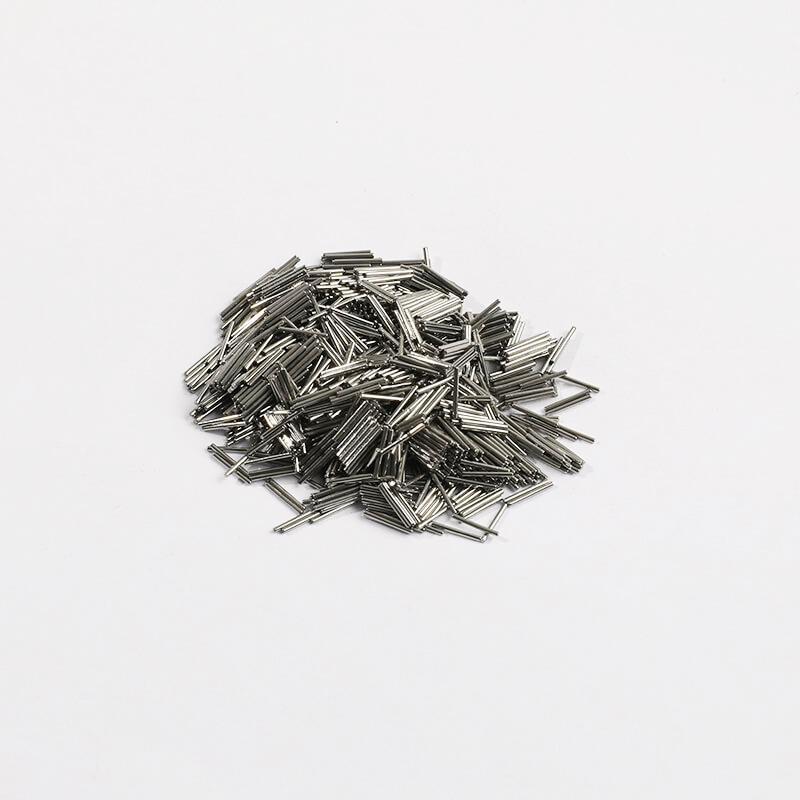
| Ceramic media, small size class for tight features | Reaching small holes, slots and fillets where a standard size class cannot enter, at reduced removal rate. | Screens differently from larger media, lodges more easily in drilled passages and must be kept below the smallest hole to stay clear. |
| Mildly acidic or chelated brightening compound | Brightening certain stainless grades where the buyer's specification permits that chemistry family. | Not appropriate where hydrogen uptake is a concern on high-strength steel, and requires close pH control and good rinse water quality. |
| Alkaline detergent compound | General cleaning and suspension of removed material on steel, stainless and aluminium where neutral to alkaline chemistry suits the alloy. | Running lean causes loading, heat and discoloration; running rich causes foam and residue that lodges in blind features. |
| Plastic media, cones and triangles | Gentle cutting on aluminium, thin-wall sections and surfaces that must not be scored. | Deforms and loads with metal fines so cut rate falls while the blend still looks intact; ineffective in deep recesses and tight radii. |
Vibratory, barrel and centrifugal processes remove material at edges far faster than on adjacent faces, so an edge will keep rolling after the face has stopped changing. The defect is not visible damage but a dimension: a radius that has grown past the specified limit, a chamfer that has become a round, or a break edge that has disappeared. Fatigue-critical holes, seal grooves, thread entry chamfers and fastener bearing faces are where the consequence is greatest, because an over-rounded edge reduces bearing area and alters the stress path. Check by establishing the pre-finish edge state and measuring the finished state with radius gauges, an optical comparator or a cast impression, ideally at the same clock positions on several parts. Control it with media size class, cycle time, energy setting and, where limits are tight, a distinct edge operation instead of the bulk cycle.
| Failure mode | Likely cause | How to catch it |
|---|---|---|
| Dark or heat-tinted patch following the media flow | Lean compound concentration or restricted flow, letting metal fines and heat build up in the working mass. | Compare against the agreed appearance master under fixed lighting and check the measured compound concentration and flow rate recorded for the batch. |
| Impingement marks or gouges on thin webs and sharp corners | Excess amplitude or speed with too little media in the chamber, or parts free to strike each other in an under-filled load. | Inspect the vulnerable features under magnification before and after, photograph under raking light, and compare the same feature across several parts from the load. |
| Media wedged at a cross-drilled passage intersection | Media small enough to enter the passage, plus no defined retrieval step in the routing before final cleaning. | Flush the passage with a measured volume, examine the flush medium and the passage with a borescope, and add a documented retrieval step such as directed air or a magnet. |
| Dimensional drift on a close-tolerance bore or spigot | Total removal accumulating over a long cycle or repeated passes without a start-of-run measurement on a critical feature. | Measure critical dimensions on the first part and at defined intervals through the batch, keeping the process effect separate from incoming variation. |
Quebec City's manufacturing base is diverse and mid-sized rather than dominated by a single sector: the regional development agency reports 32,000 manufacturing jobs, about 1,350 manufacturing companies and 7.8 per cent of total regional GDP from manufacturing, and it names Canam, Kerry Food, Garant, Dupont, Manac, Bimbo, Bibby Ste-Croix, Montel, Suspension Simard and Ressorts Liberté among the manufacturers established in the region. The agency positions the region on a combination of qualified labour, government funding programmes, a multimodal logistics platform connected by land, rail, sea and air, and low-cost hydroelectric power provided through Hydro-Québec. Life sciences and health technologies is a second measurable cluster, with the region reporting 9,200 jobs in the sector (6,750 direct), 121 companies, CAD 1.3 billion in sales and 84 R&D centres, chairs and research laboratories. The region also runs formal industrial clusters, and the provincial aerospace cluster Aéro Montréal operates at scale across Quebec with federal funding announced at its 2026 International Aerospace Innovation Forum.
For this brief the relevant part of that base is aerospace: Federal funding announced at Aéro Montréal's 2026 International Aerospace Innovation Forum supports Quebec SMEs integrating into national and international defence supply chains, with Aéro Montréal described as the Quebec aerospace industrial cluster and sharing CAD 2.5 million to guide aerospace and electric and smart transportation businesses.
Québec City's manufacturing mix produces three distinct finishing drivers: transport-equipment and metal fabrication work at firms such as Manac and Canam, where cut, punched and welded steel and aluminium components need de-burring and edge conditioning before assembly or coating; food manufacturing at plants such as Kerry and Bimbo, where stainless process and packaging equipment must be cleanable and weld-dressed; and medical technology and life sciences manufacturing, where smaller precision components require controlled surface condition and cleanliness. Because the region's manufacturing is broad and batch-oriented, the recurring requirement is flexibility across part families rather than a single high-volume dedicated process.
A Québec City buyer should settle language and documentation requirements at the quotation stage, because machine labelling, manuals, training material and safety signage normally have to be usable in French in a Quebec plant and retrofitting that after delivery is both slow and expensive. The second question is which part family the equipment will actually run most often, since the region's manufacturers are typically high-mix: media selection, fixture design and changeover time should be decided against the real product mix rather than against a demonstration part.
Freight context: Port of Québec (Québec Port Authority), Québec City Jean Lesage International Airport, CN rail corridor, Multimodal logistics platform connected by land, rail, sea and air. The regional development agency describes Québec City as having an efficient logistics platform connected by land, rail, sea and air, positioned as a gateway to the North American market, and notes that the region's free trade agreements including CETA and CUSMA open access to a market of over one billion consumers. In practice, machinery from Asia arrives through a coastal or St. Lawrence container port with onward rail or truck movement, while the airport handles urgent parts and sample shipments.
Canada's national standards system is coordinated by the Standards Council of Canada (SCC), which accredits standards-development organizations, certification bodies and testing laboratories; the SCC and CSA Group websites could not be retrieved for citation during this research, so this entry rests on the accessible Government of Canada and CCOHS material below. The Canadian Centre for Occupational Health and Safety describes standards as documents that "establish specifications and procedures to ensure the reliability of the products, methods, and services people use every day on the job", and Innovation, Science and Economic Development Canada (ISED) maintains the federal entry point for "[t]he different types of standards and certifying bodies that can be used by your business". In practice a Canadian buyer of finishing equipment references (a) the Canadian electrical safety certification of the machine and its control panel, (b) provincial occupational health and safety regulation for machine guarding, lockout and dust/ventilation control, which in Canada is enforced by the provinces rather than by a single federal inspectorate, and (c) the buyer's own customer-specific surface finish, edge-condition and cleanliness specifications, which are contractual rather than national standards. Finishing-process standards in the ISO 25.080 machine-tool and ISO 8500-series surface-preparation families are the usual technical reference points, but product-level standards sold by CSA Group were not retrievable for verification here.
Canada is a bilingual market for selling purposes: English is the working language of procurement outside Quebec, while Quebec buyers (Montreal, Quebec City) normally expect French-language quotations, technical documentation and after-sales support, and Quebec's Charter of the French Language makes French the default for commercial documentation in the province. Procurement expectations are formal and auditable: a Canadian industrial buyer will typically ask for the tariff classification and country of origin up front, expect a commercial invoice that satisfies the CBSA invoice requirements, and expect the seller to provide proof of origin for any preferential claim. Payment norms are bank-to-bank, with wire transfer or letter of credit rather than platform payment, and Canadian buyers commonly net-30 to net-60 from invoice, so a cross-border seller should price the working-capital gap into the offer. Certificates of origin for export documentation are issued through chambers of commerce, which is why chambers such as the Hamilton Chamber of Commerce and the Winnipeg Chamber of Commerce offer document certification. The current trade environment adds policy risk to landed cost: Canadian federal programs are explicitly framed around responding to U.S. tariffs, with the FedDev Ontario Regional Tariff Response Initiative described as supporting "businesses to respond to tariff pressures" in southern Ontario, and tariff and surtax measures can change by Order in Council, so quotations should state the tariff basis and the date on which the landed-cost calculation was made.
SurfacePolish supplies from Xiamen, China. The buyer's own destination rules, conformity marking, tariff classification and documentation responsibilities stay with the buyer; confirm them against the authorities named above before ordering.
Acceptance begins with a written decision about how many parts are examined and which one is the reference. A workable plan names the sample size per batch, the inspection frequency, the measurement locations and the person responsible for accepting or rejecting. A first article should be fully inspected against the drawing and the agreed requirements, then retained as the physical reference for later comparison, because appearance memory is unreliable across shifts. For lower-volume aerospace work, the sensible pattern is to inspect the first part of each batch completely, examine a defined sample through the run and inspect critical features on every part when the feature is safety-relevant or the process is not yet stable. Fix these rules before the first production batch, when there is still room to argue about the requirement rather than about the parts.
Comparative trials lose their value when several things change together. Fix the machine, load volume, part count, compound concentration and cycle time, then change one variable: media material first, then size class, then compound, then time or energy setting. Ask for the same recorded locations to be measured with the same instrument and the same setting across all variants, and for photographs taken under identical lighting, so the comparison is between processes rather than between photographers. Retain all tested parts, including the ones that went wrong, because a rejected variant often explains which mechanism caused a defect and therefore which limit must be respected in production. A comparison of two media blends run with different cycle times and different operators tells you nothing about the media, which is the most common reason a trial result fails to transfer into a line.
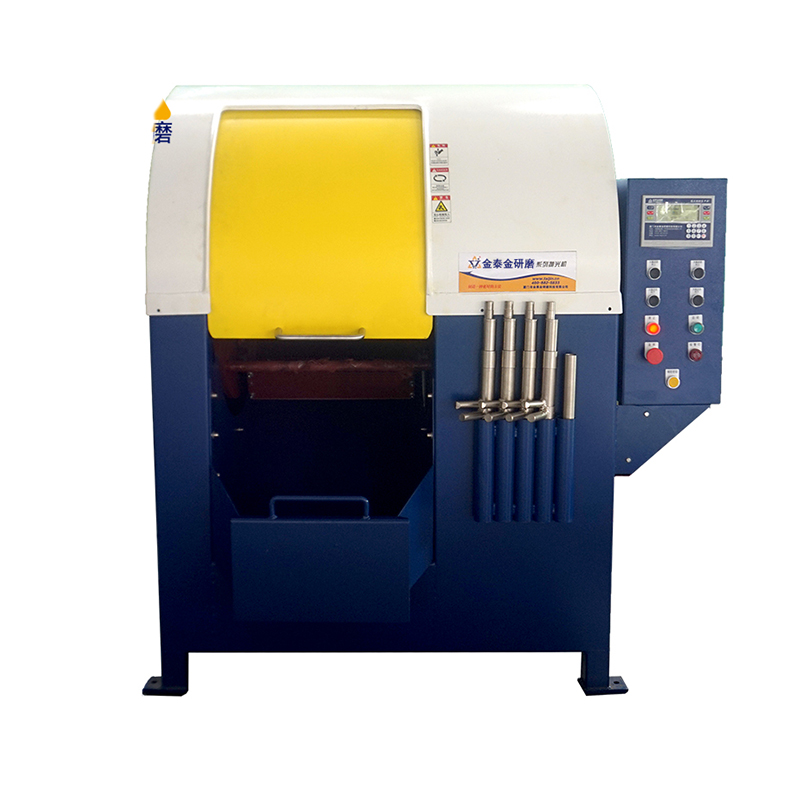
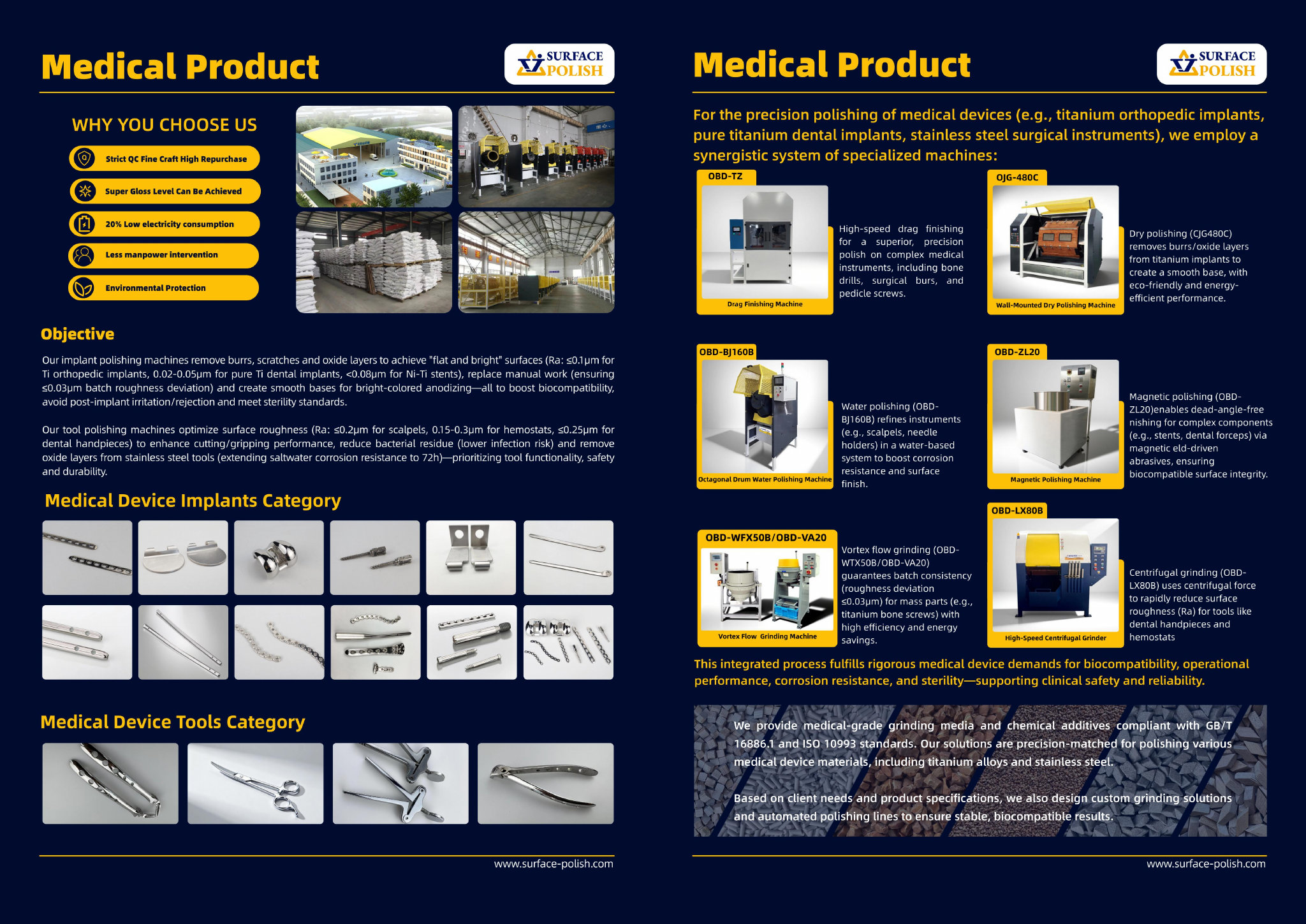
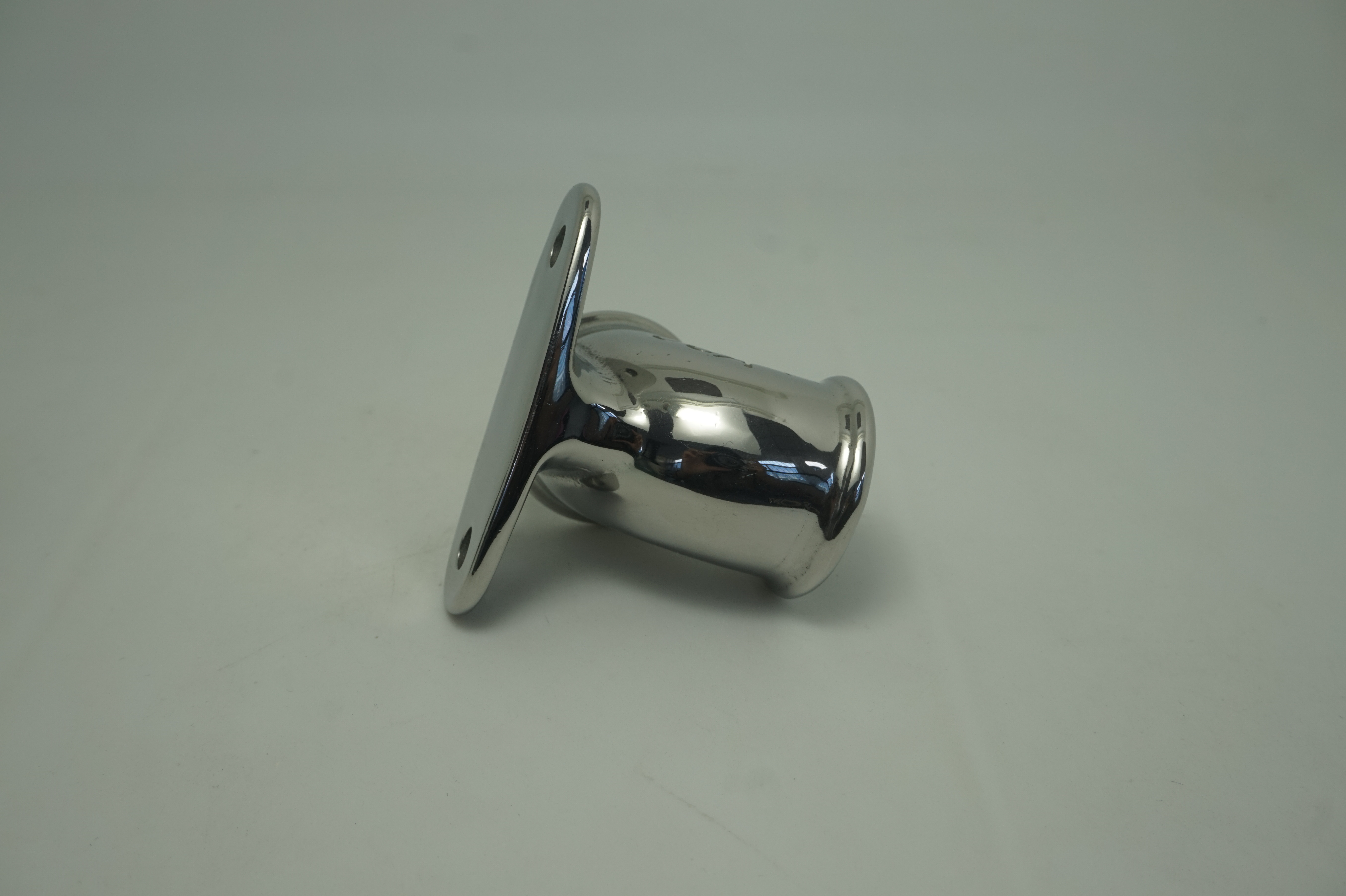
Send parts in the production condition, including the case with the thinnest wall, tightest internal feature and most difficult edge, not a convenient spare. Include material and heat treatment data, the drawing requirements you can share, and a marked-up photograph showing features that must not change. Add one part in the incoming condition and, if available, one finished the way you want the result to look. State the batch size and how you separate parts in your own shop. International shipments should be declared for temporary processing with a parts list, and buyers in Canada can ask us for a packing list format before dispatch.
Small robust fittings often suit rotary or centrifugal barrel finishing, which process many pieces per load at low unit cost, while delicate parts may need a gentler vibratory route or magnetic finishing with small pins for internal edges. The deciding factors are the smallest feature to keep clear, the thinnest section, the edge limit and the batch size, not overall part size. Send the extreme cases from the family for a trial rather than a typical part, and ask for a comparison across two media classes with everything else held constant. SurfacePolish supplies all of these machine types across borders and can describe how each behaves on tested parts.
SurfacePolish is not a local polishing shop and has no branch, dealer or technician presence in Quebec City or anywhere else outside its own factory. What is offered is cross-border supply of finishing machines and consumables, a scoped discussion of a finishing line concept, and a free sample trial in which representative parts are shipped to the factory, processed and returned with observations and a proposed media and cycle direction. Buyers who need on-site processing should source that locally. Buyers building an in-house finishing capability can use the trial to choose equipment and media for their own line.
Use Quebec City, Canada as the destination on the enquiry and state whether the deliverable is equipment, media and compound, a representative sample review or a line concept. A destination does not imply local stock, a local service point or a local delivery time.
A Québec City buyer works in French for technical documentation and under Quebec's own occupational health and safety regime, alongside Canadian electrical safety certification of the equipment. The Charter of the French Language makes French the default language for commercial documentation in Quebec, and where the buyer serves life sciences or food customers, the applicable health-product or food-safety requirements govern product-contact surfaces and cleaning.
Sources were retrieved on 2026-09-29 and describe the local industrial and trade context only. They do not evidence any SurfacePolish project, shipment, installation or service in Quebec City.
The buyer needs to remove machining burrs and blend edges without rounding the flange or lodging media in the blind tapped holes.
Send the material, dimensions, approximate weight, batch quantity, the incoming condition and photographs of the difficult features. Mark which features must not be contacted by media and state how the result will be inspected. This form carries source reference PSEO-0191; quote it if you prefer an additional manual reference.
Open the SurfacePolish enquiry form Email a prepared enquiry
No price, lead time, certification or result is promised here. Confirm whether a sample trial is available for the specific part and what the trial can and cannot show.
Page PSEO-0191 · revised 2026-09-29 · cross-border equipment, media and scoped sample review. City context is sourced and cited above.
Use this local checker to identify missing part and inspection information. It prepares a technical-review brief; it does not approve a machine, process recipe or production result.
Complete the part details to prepare a review brief.
Email : info@surface-polish.com


 IPv6 network supported


 +86-592-2381506