A buyer in Bristol, United Kingdom in industrial machinery needs a 2.5 m stainless guard extrusion finished to a uniform bright band while a narrow slot along its face stays clear of media and keeps its edges. SurfacePolish supplies finishing machines, media and compounds across borders and offers a free sample trial, returning tested sections with observations and a proposed direction. This brief is written for a buyer in Bristol working on industrial machinery; it describes equipment, media and a scoped sample review, not a local polishing service.
Can available media actually reach the geometry, and what finish is realistic in the recesses and internal features it cannot reach?
What is the substrate condition - cast, welded, forged or machined - and which defects already in it will become visible once the metal is smooth?
Which faces must reach a mirror and which only need to be clean and uniform, and how is each one judged?
Bright finishing does not fill a defect, it magnifies it. A reflection compresses the whole surface into a narrow viewing angle, so a gas pore in a casting, a slag inclusion at a weld toe or a non-metallic stringer in free-machining bar becomes a visible comet trail once the surrounding metal is smooth. Screen the incoming substrate before any media is chosen: examine under glancing light, wipe the surface clean of oil, and where the drawing allows, run a dye penetrant check across weld toes and machined transitions. If the defect density is high, no sequence of cut, colour and lustre stages will produce a uniform image, and the honest answer is that the casting, the weld or the requirement itself has to change.
Compound does more than lubricate: it carries abrasive, controls pH, keeps fines in suspension, prevents rust and determines how cleanly a part leaves the machine. Cutting stages usually run a more aggressive abrasive-bearing compound, while colour and lustre stages run a cleaner, higher-lubricity product with little or no abrasive so the surface is refined rather than scratched. pH matters by material family, since strongly alkaline compounds attack aluminium and acidic conditions can stain some steels, so match the family to the alloy and rinse promptly. Foam control matters too, because a foaming charge cushions contact and slows cutting unpredictably. Treat the compound specification and dose as part of the process recipe rather than as a consumable line item.
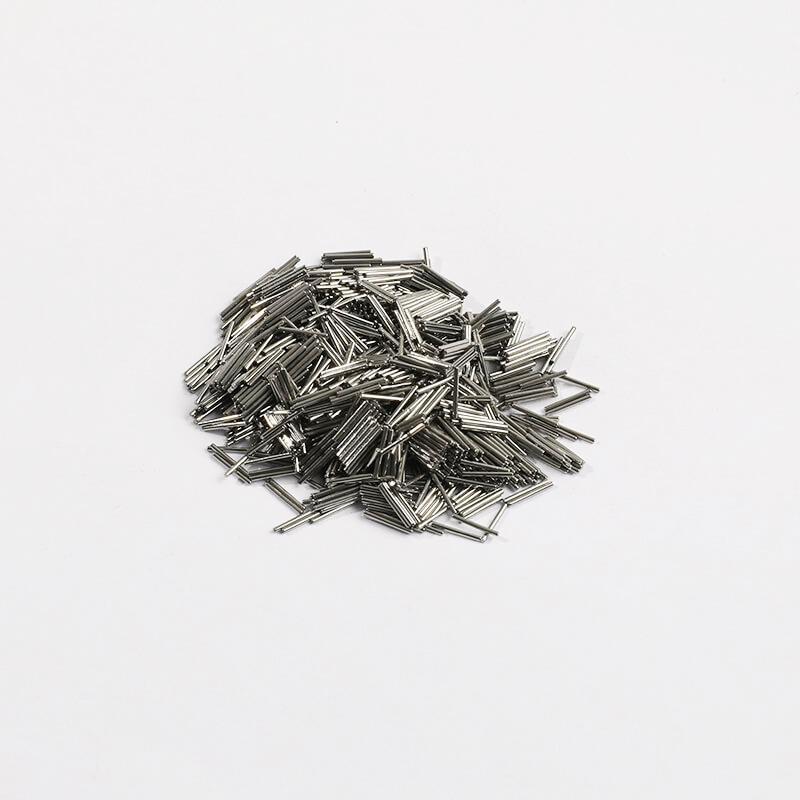
| Media | Best fit | Watch out for |
|---|---|---|
| Plastic or polyester media | Gentle processing of aluminium, brass, copper and thin panels where metal smearing, nicks and distortion must be avoided. | Low density gives little contact force, so cycles run long and heavy grinding marks may survive; plastic also wears quickly and can float above the working mass. |
| Coarse ceramic angle-cut cylinders or triangles | First cut stage on rigid parts with open faces, removing grinding or machining damage on cast iron, steel and stainless before refinement. | Leaves a deep pattern the next stage must fully erase, chips thin edges, and its wear debris carries fine abrasive into later stages if the charge is not screened. |
| Dry media - walnut shell | Dry polishing, light deburring and lubricity on parts where a residual oil film is acceptable, and drying or lustre steps after wet processing. | Not a stock-removal medium, generates dust that needs extraction, and can leave an oily film that interferes with a later cleaning or coating requirement. |
| Small high-density ceramic spheres or ovals | Colour and pre-lustre stages where a uniform, soft-looking finish matters more than stock removal, including curved and contoured faces. | Very slow cut, easily lost through screens sized for larger media, and ineffective in deep recesses because it cannot reach or press against the surface. |
For housings, cover plates, brackets and frames that are rigid and mostly open, a vibratory bowl or tub gives the most forgiving cut-to-colour sequence. The charge moves as a mass, so there is no fixturing to design and no clamping marks, and cycle energy can be tuned through amplitude, media density and load ratio. The limit is reach: media cannot present abrasive uniformly into a pocket whose mouth is narrower than its base, and broad flat faces finish more slowly than edges because contact pressure there is lower. Part-on-part contact also leaves nicks on thin or sharply detailed features, so small, slender or intricate parts usually belong in a gentler route even when their surface requirement is identical.
| Machine route | Where it fits | What it will not do |
|---|---|---|
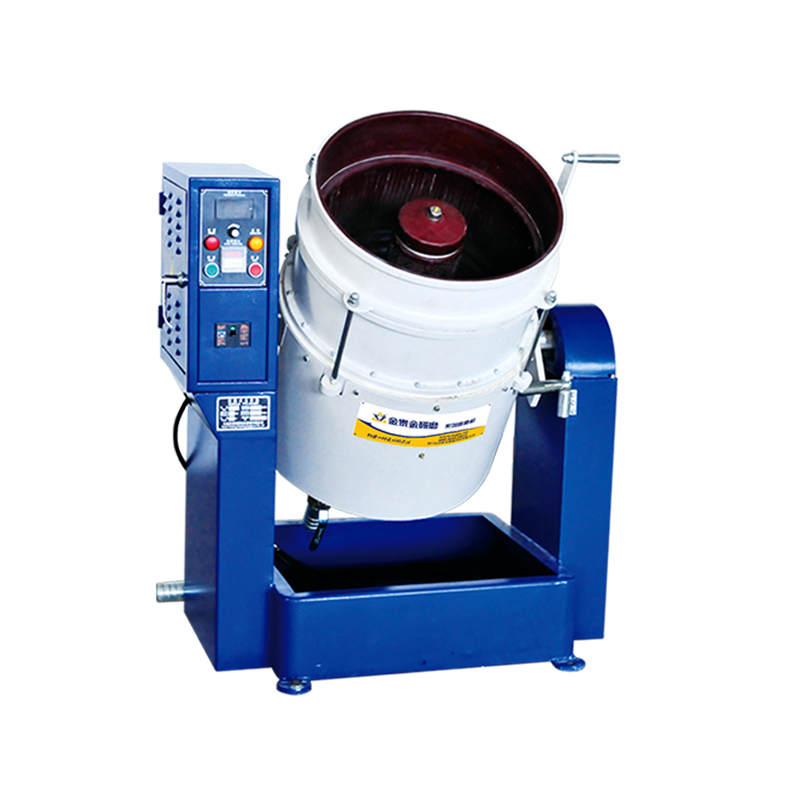
| Disc finishing machine | Fast, high-energy cut down on small to medium parts with simple geometry where cycle time matters and edge rounding is tolerable. | Part-on-part contact and wall pressure can chip or deform parts, and the difference between sufficient and excessive removal is narrow. |
| Barrel finishing machine / rotary barrel tumbler | Dense, uniform colour on small hardware that tolerates sliding contact, especially with steel media for a burnished appearance. | Nothing longer than the barrel diagonal can be processed, and slender parts can bend or nick against neighbours in the load. |
| Tub vibrator | Long and large parts such as shafts, extrusions and frame members that cannot be folded into a barrel, including external grooves. | Poor at bores running parallel to the long axis, and slender parts still need support or balanced loading to hold straightness. |
| Centrifugal barrel finishing machine | High-speed cut down and refinement on small to medium parts where a short, energetic cycle is needed before colour stages. | Aggressive on edges and thin sections, requires tight cycle control, and does not replace a finer refinement stage. |
Beyond a certain point, more polishing makes a surface worse. Excess cycle time or contact pressure rolls metal over instead of cutting it, burying abrasive and debris under a smeared skin that looks bright until it is disturbed. On dry or high-speed operations, friction raises local temperature enough to tint the surface and soften a hardened layer, and thin sections can distort from the heat. High-energy routes add part-on-part impingement, leaving nicks and small dents that polishing cannot remove. Watch for a bright surface that dulls or streaks when wiped with a clean cloth, for colour variation near edges where contact is highest, and for dimensional or flatness change. The remedy is a shorter or gentler cycle, better cooling and a real end point instead of a longer run.
| Failure mode | Likely cause | How to catch it |
|---|---|---|
| Sleeks, fine unidirectional lines across a bright face | Contaminated charge or rinse, a metal particle trapped between media and part, or a polishing direction that was never rotated between successive stages. | Orient the light along and then across the lines, note where each family appears on the part, and inspect the charge and rinse screens for embedded foreign particles. |
| Haze, a general loss of image clarity with no directional pattern | Worn media shedding an oversized fine fraction, agglomerated abrasive in the compound line, or fine grit carried into a late stage from screens, machine walls or a shared rinse. | View under raking light at low magnification against a master, then trace the pattern by machine and by rinse line to separate a charge problem from a rinse or transfer problem. |
| Heat tint or discolouration concentrated near edges and thin sections | Friction at a dry or high-speed stage raising local temperature, poor cooling or compound flow, or a load that packs parts against each other with no media between them. | Compare colour against a master in consistent lighting, look for a gradient from edge inward, and check whether the tint follows load contact points or the whole face. |
| Embedded media particles or finishing pins in a soft surface | High contact pressure on aluminium, brass or copper, worn media with sharp fractured edges, or magnetic-finishing pins driven into a surface that cannot resist them. | Examine at magnification under raking light, wipe with a clean cloth and check for pulled particles, and consider a dye penetrant or etching check on a sample part. |
Bristol is the largest city in the West of England Mayoral Combined Authority area, which the authority states it invests for alongside Bath and North East Somerset and South Gloucestershire. Invest Bristol & Bath, the region's inward investment service, lists aerospace and advanced engineering, composites, clean tech and energy, life sciences, logistics and distribution, and space among its key sectors. ADS South West, the regional branch of the ADS trade association, took over the former West of England Aerospace Forum's operations from 1 April 2026 and keeps small bases in both Bristol and Yeovil, which it calls two hubs of manufacturing excellence. Make UK records the South West as one of the strongest-performing English regions.
For this brief the relevant part of that base is machinery: Invest Bristol & Bath lists aerospace and advanced engineering, and composites, among the region's key sectors - the machining, forming and composites base that produces parts needing edge and surface control.
Bristol's aerospace and composites cluster means machined and formed parts are accepted against a defined surface and edge condition, and composites add a second requirement because trimmed edges and prepared bonding surfaces must be conditioned without damaging the laminate. The West of England Combined Authority publishes a growth strategy for the region and operates a Growth Hub and the Invest Bristol & Bath service, which are the documented regional entry points for business and investment support.
A Bristol buyer should establish whether the acceptance criterion is an edge condition on a machined metal part or a surface-preparation standard on a composite, because the two call for different media, different process control and different inspection evidence.
Freight context: West of England road and rail freight corridor serving Bristol (Invest Bristol & Bath lists logistics and distribution as a key sector). Invest Bristol & Bath maintains a dedicated connectivity page for the region and lists logistics and distribution among its key sectors. The Bristol Port Company site and Bristol Airport site both returned bot-protection responses during this research, so no port- or airport-authority tonnage or cargo figure is quoted here.
English is the working language of contracts, drawings and conformity paperwork, so quotations, technical files and Declarations of Conformity should be supplied in English. UK manufacturers have now recovered above 2019 output levels in every English region and devolved nation except Northern Ireland, and the sector is concentrated in food and drink and transport equipment, with the North West the largest manufacturing region by total output. Buyers typically expect the UKCA/CE route, a Declaration of Conformity and a UK-established economic operator to be identified before order, and they need commercial invoices, customs declarations and the C79 retained in a form their finance team can use for import VAT recovery. No source verified in this research establishes a mandated payment instrument, so payment structure should be treated as commercial negotiation rather than a regulatory requirement.
BSI is the UK's National Standards Body, and British Standards (BS, including adopted BS EN ISO texts) are the documents a UK buyer's surface-finish, edge and cleanliness specifications are normally written against and purchased through. On the plant side, HSE maintains the work equipment and machinery topic covering the safe supply and use of machinery, and the COSHH regime, which requires employers to identify, assess and control risks from hazardous substances - the regime that applies to finishing compounds, abrasive media and the dust and effluent they generate.
SurfacePolish supplies from Xiamen, China. The buyer's own destination rules, conformity marking, tariff classification and documentation responsibilities stay with the buyer; confirm them against the authorities named above before ordering.
Ra and gloss are not interchangeable and should not be traded for one another. Ra is a two-dimensional profile average over a defined cutoff, so a face can hold a low Ra while still showing waviness, orange peel or directional marks that dominate the reflected image; conversely, a surface with a slightly higher Ra can look brighter because its texture scatters light uniformly. If the requirement is appearance, specify appearance: a reflectance or gloss reading at a stated angle and instrument geometry, plus a physical master and viewing conditions. If the requirement is texture or function, specify the profile parameter, the cutoff and the evaluation length. Ask for both where both matter, and record which one governs acceptance at each location.
Send parts that represent the real production spread, not the one clean sample on the desk. Include the thinnest wall, the tightest internal feature that must stay clear, the worst edge, and one as-received reject if you have one. Add a witness coupon of the same material and condition for texture measurement, and label every piece so a returned part can be matched to its settings. Supply the material and heat treatment, the drawing extract covering the finished faces, and the acceptance requirement you intend to apply. Photograph the incoming condition at fixed scale before packing, protect edges and bright faces in transit, and state what the trial must answer. Unlabelled, unrepresentative parts produce observations that cannot be used.

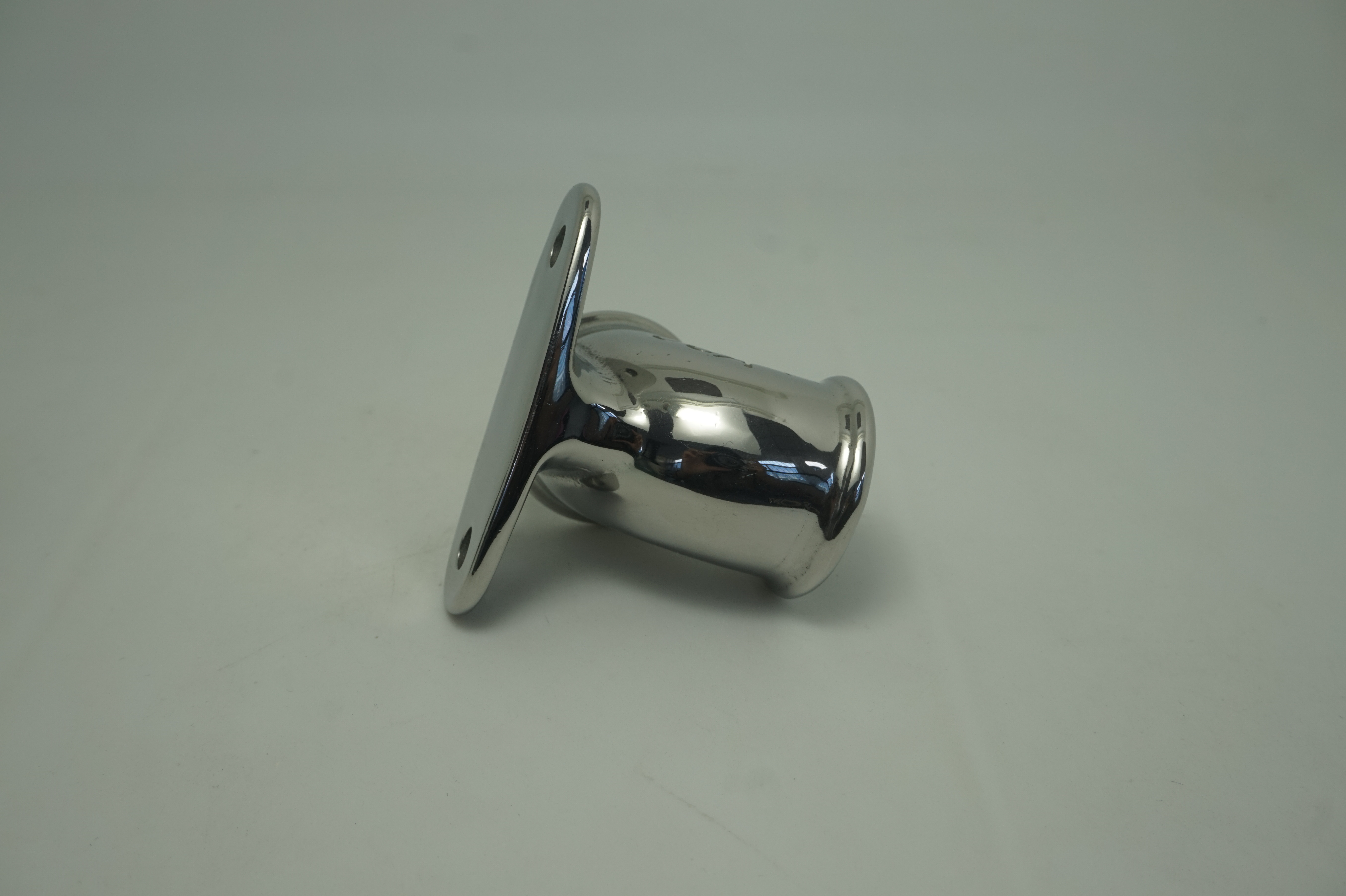
No to both. SurfacePolish is a cross-border supplier of finishing machines, media and compounds, and it does not supply or perform electropolishing or operate a plant, branch, dealer or technician service in United Kingdom or any other market. What is offered is equipment and consumables, a scoped discussion of a finishing line concept, and a free sample trial in which representative parts are shipped to Xiamen and returned with observations and a proposed process direction. Where an electrochemical finish is under consideration, the discussion stays a comparison with a mechanical route.
A mirror surface is damaged by contact, so handling begins before the parts leave the machine. Rinse and dry thoroughly to remove compound and fines, because residue trapped in a cavity bleeds out later and a damp surface can stain stainless. Then protect: interleave or sleeve faces that will touch, keep parts separated in trays, avoid sliding them across each other, and use gloves or a clean cloth when they are picked up. Agree packaging with the buyer, including whether parts travel individually wrapped, and inspect on arrival for marks that occurred in transit.
Each stage removes the pattern left by the one before it. A coarse cut removes grinding or machining damage, a refinement stage erases the cut pattern, a colour stage removes the refinement marks, and a lustre stage produces the final reflected image. Skipping or shortening a stage leaves a ghost of it in the surface that finer work only polishes around. Because the steps use different media, compounds and often different machines, a line is planned as a route with a defined finish at each stage, including the rinses and drying between them.
Use Bristol, United Kingdom as the destination on the enquiry and state whether the deliverable is equipment, media and compound, a representative sample review or a line concept. A destination does not imply local stock, a local service point or a local delivery time.
UKCA or CE marking with a Declaration of Conformity applies to machinery placed on the Great Britain market, HSE's work equipment and machinery topic and COSHH cover operation and hazardous substances, and aerospace work in the region is additionally governed by prime contractors' quality and assurance requirements, which ADS South West represents through its South West Council.
Sources were retrieved on 2026-09-29 and describe the local industrial and trade context only. They do not evidence any SurfacePolish project, shipment, installation or service in Bristol.
The buyer needs the long bright band finished uniformly while keeping the narrow slot clear of media and preserving its edges.
Send the material, dimensions, approximate weight, batch quantity, the incoming condition and photographs of the difficult features. Mark which features must not be contacted by media and state how the result will be inspected. This form carries source reference PSEO-0279; quote it if you prefer an additional manual reference.
Open the SurfacePolish enquiry form Email a prepared enquiry
No price, lead time, certification or result is promised here. Confirm whether a sample trial is available for the specific part and what the trial can and cannot show.
Page PSEO-0279 · revised 2026-09-29 · cross-border equipment, media and scoped sample review. City context is sourced and cited above.
Use this local checker to identify missing part and inspection information. It prepares a technical-review brief; it does not approve a machine, process recipe or production result.
Complete the part details to prepare a review brief.
Email : info@surface-polish.com


 IPv6 network supported


 +86-592-2381506