An industrial machinery buyer in Hamilton, Canada needs a copper electrode plate finished bright and clean, with no embedded media or compound residue left on the contact face. SurfacePolish supplies finishing machines, media and compounds internationally and offers a free sample trial, returning the tested plates with observations and a proposed media, compound and cycle direction rather than a guarantee. This brief is written for a buyer in Hamilton working on industrial machinery; it describes equipment, media and a scoped sample review, not a local polishing service.
How much stock may the sequence remove before datums, seal faces, flatness or edge form fall outside their allowance?
Can available media actually reach the geometry, and what finish is realistic in the recesses and internal features it cannot reach?
How will the finish be measured or viewed, with which instrument, angle, cutoff and master, and who holds that master?
Two parts with the same alloy name can behave differently under the same media. Hardened tool steel resists cutting and holds a polish longer, while annealed low-carbon steel cuts quickly and can smear under high contact pressure. Austenitic stainless work hardens, so a heavy first pass can leave a skin harder than the bulk, after which fine media stop removing material and only burnish it. Aluminium and brass are soft enough that media pressure rolls metal instead of cutting it, producing a wave rather than a cut. Ask for the actual condition - hardness range, heat treatment, cold work, and whether the part was cast, forged or machined from bar - then confirm it on a sample rather than trusting a datasheet to describe the surface the media will meet.
Rotary barrels work by sliding contact and suit parts that tolerate tumbling, giving a dense, uniform colour on small hardware. They cannot process anything longer than the barrel diagonal, so long shafts, extrusions and frame members belong in a tub vibrator, where a part can pass through the mass without being folded. Slender parts need support or careful load balancing, because the same energy that brightens a shaft can bow it or nick it against a neighbour. Barrel and tub routes reach some external areas a bowl cannot, such as a long groove, but they are poor at bores running parallel to the long axis. Verify straightness and roundness after the cycle, not only appearance.
| Machine route | Where it fits | What it will not do |
|---|---|---|
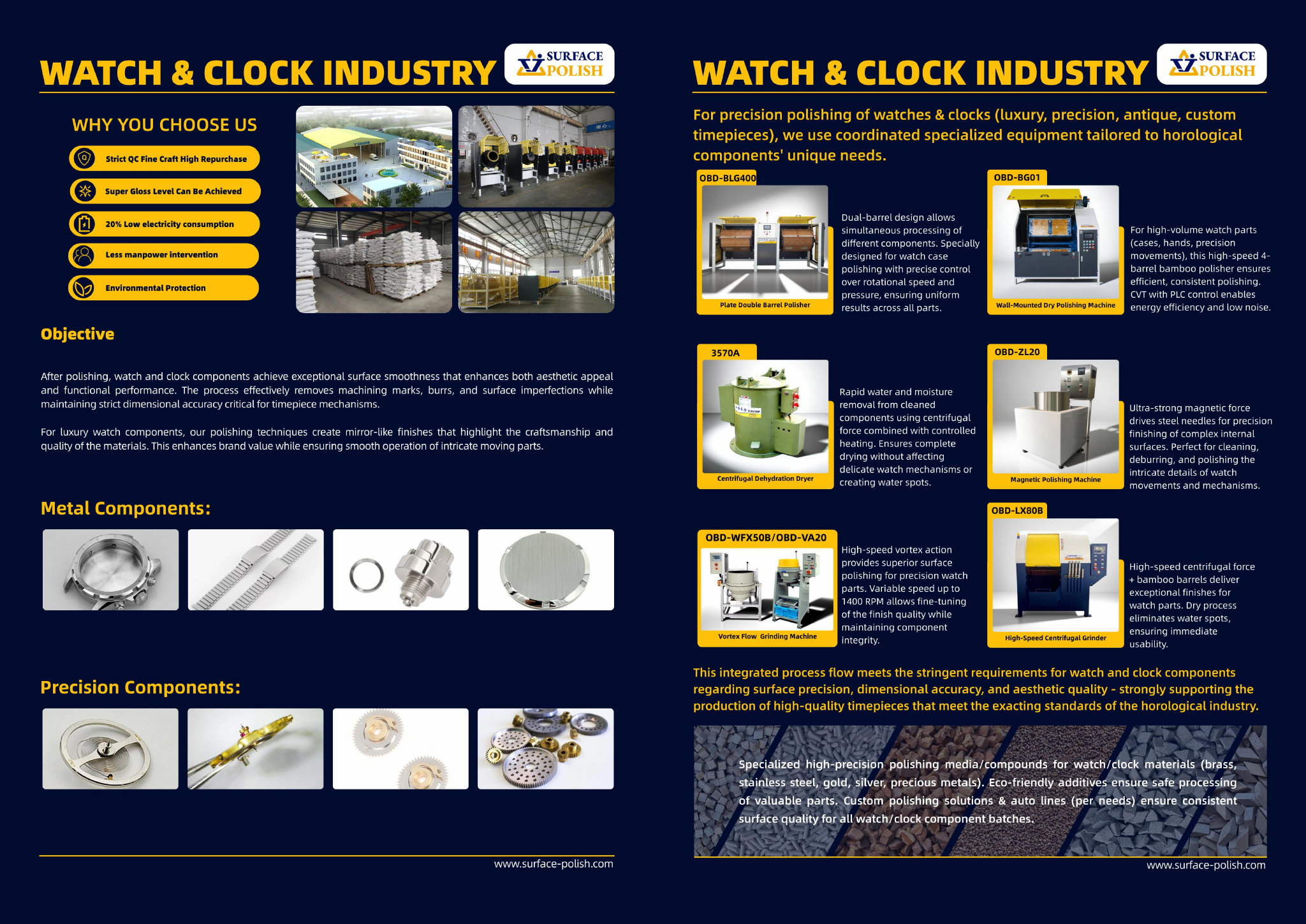
| Grinding finishing machine | The heavier stock-removal stage before a mirror sequence, cutting back grinding damage, scale and recast layers on robust parts. | High removal also rounds edges and can work harden or distort thin sections, so it needs a defined depth target and a sample check. |
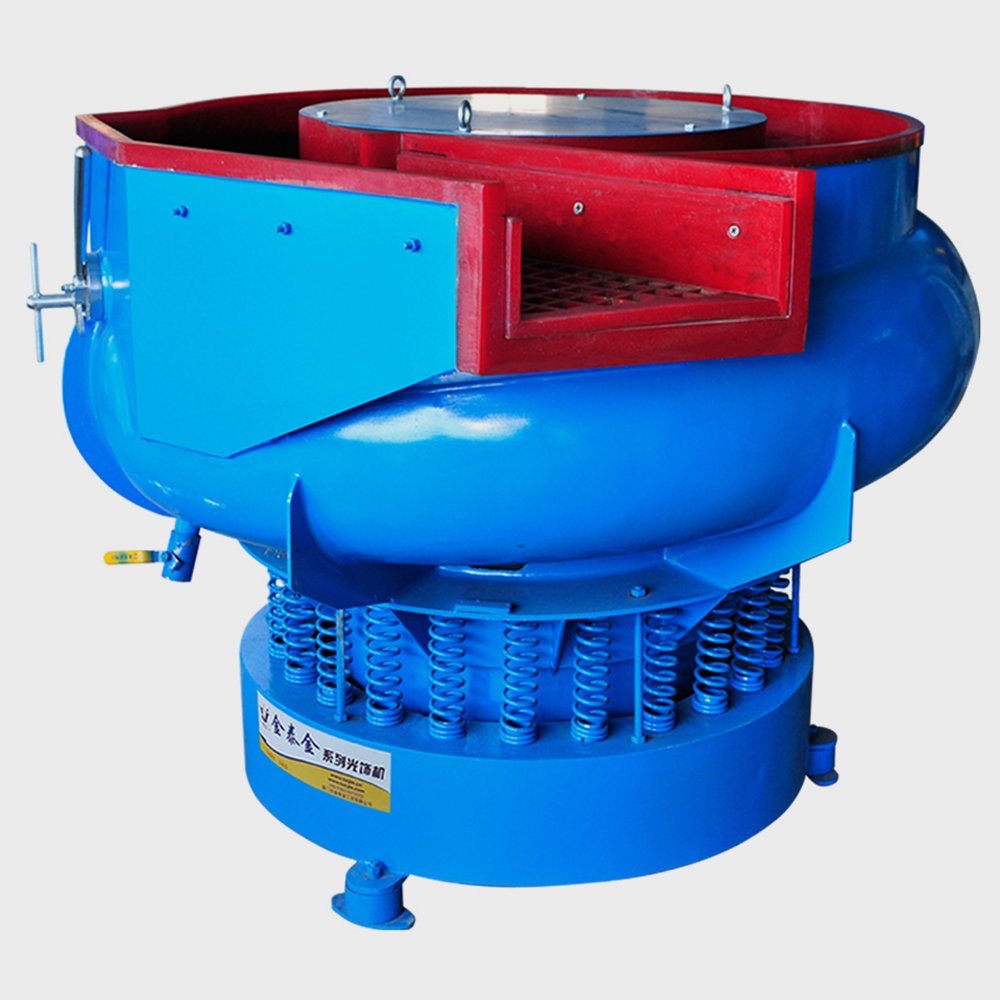
| Vibratory finishing machine (bowl or tub) | Cut-to-colour sequences on rigid, mostly open parts such as housings, covers, brackets and frames, with adjustable energy and no fixturing. | Cannot present media uniformly into pockets with narrow mouths or deep internal bores, and broad flat faces finish more slowly than edges. |
| Barrel finishing machine / rotary barrel tumbler | Dense, uniform colour on small hardware that tolerates sliding contact, especially with steel media for a burnished appearance. | Nothing longer than the barrel diagonal can be processed, and slender parts can bend or nick against neighbours in the load. |
| Dry polishing machine and dryer | Final lustre, dry colour and post-wet drying where the last reflected image cannot be produced by a wet mass-finishing stage. | Works on accessible faces only, generates dust and heat that need control, and offers no way to correct a defect left by an earlier stage. |
Compound concentration is a process variable that drifts. Dosing on a timer is convenient but ignores carry-out, evaporation and the fines load, so a batch that starts at target can finish well above or below it. Meter dose against water flow, check pH and, where available, conductivity at the start and end of a cycle, and record those values with the batch. Water quality shapes the final image: hard water leaves mineral spots that read as haze, and high chloride or iron content can stain stainless during rinsing. The rinse after each stage deserves the same control as the finishing stage, with enough volume and flow to remove compound and loose fines before the part dries, because dried residue is far harder to remove without disturbing the finish.
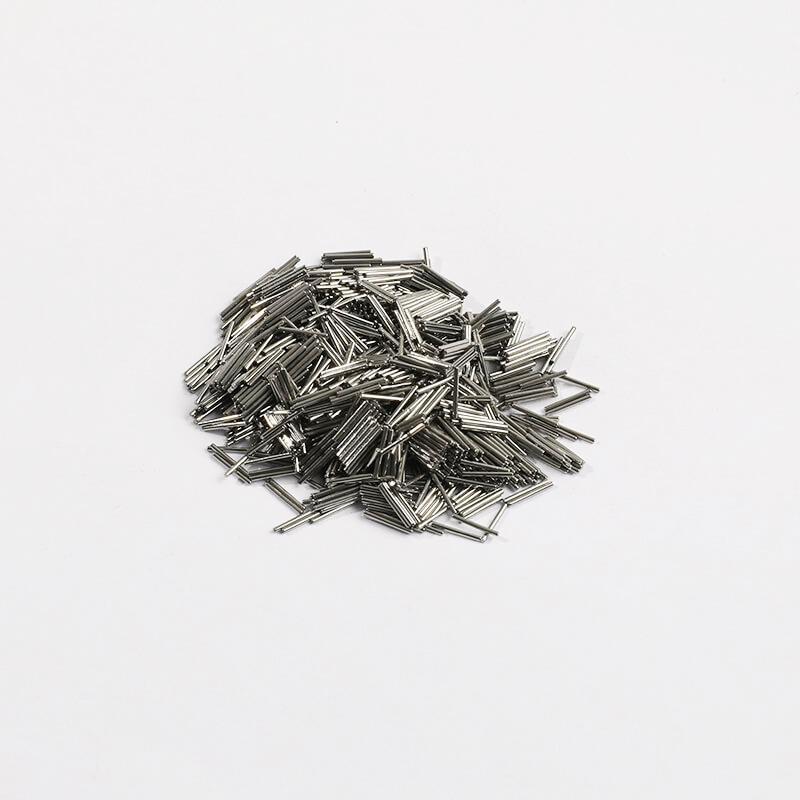
| Media | Best fit | Watch out for |
|---|---|---|
| Hardened steel media, balls and shaped shot | Bright burnishing of stainless and hardened steel, and the final wet lustre stage where a dense medium can peen a surface smooth. | Can transfer iron and rust to stainless, dents soft or thin parts, and must be kept in a dedicated charge away from ceramic media. |
| Medium ceramic triangles or angle-cut shapes | Blending, edge conditioning and the refinement step that removes the coarse cut pattern on housings, brackets, covers and frames. | Media that cannot enter a slot or recess leaves those areas at a different finish, so those faces need a separate operation or a stated lower standard. |
| Coarse ceramic angle-cut cylinders or triangles | First cut stage on rigid parts with open faces, removing grinding or machining damage on cast iron, steel and stainless before refinement. | Leaves a deep pattern the next stage must fully erase, chips thin edges, and its wear debris carries fine abrasive into later stages if the charge is not screened. |
| Small high-density ceramic spheres or ovals | Colour and pre-lustre stages where a uniform, soft-looking finish matters more than stock removal, including curved and contoured faces. | Very slow cut, easily lost through screens sized for larger media, and ineffective in deep recesses because it cannot reach or press against the surface. |
Haze is a general loss of image clarity without a clear directional pattern, and sleeks are the fine unidirectional lines that often accompany it. Both usually come from contamination: worn media shedding an oversized fine fraction, abrasive agglomerating in a compound line, machine walls and screens carrying grit from a previous coarse stage, or parts that were never rinsed between stages. The pattern is diagnostic, because haze appearing in one machine points at the charge while haze on parts from a shared rinse points at the water or the transfer. Check under raking light and low magnification against a master, and verify charge and rinse first: replacing compound before cleaning the machine usually repeats the defect.
| Failure mode | Likely cause | How to catch it |
|---|---|---|
| Orange peel, a slow wave that distorts the reflected image | Soft or work-hardened surface deformed rather than cut, a heavy cut stage followed by too little refinement, or a dry or buffing stage at high speed with excess pressure. | Reflect a straight edge or fluorescent tube in the face at a shallow angle, compare the shape of the image against a physical master in the same lighting, and repeat at several viewing angles. |
| Dimensional drift or lost flatness on datums, seals and bearing seats | Uneven stock removal across a large or asymmetric face, over-long cycles, or unprotected functional features exposed to the full charge energy. | Measure flatness and critical dimensions with a CMM or surface plate at the same marked points used for the incoming survey, and compare the change against the allowance. |
| Media lodged in blind holes, slots, undercuts or threaded features | Media size too close to the opening, a slot or cavity that traps the charge, or no defined retrieval step before rinsing and drying. | Reconcile a counted media charge before and after the cycle, borescope each cavity at an agreed angle, and pin or thread gauge the features the charge could enter. |
| Embedded media particles or finishing pins in a soft surface | High contact pressure on aluminium, brass or copper, worn media with sharp fractured edges, or magnetic-finishing pins driven into a surface that cannot resist them. | Examine at magnification under raking light, wipe with a clean cloth and check for pulled particles, and consider a dye penetrant or etching check on a sample part. |
Hamilton is Ontario's steel city, and the federal government describes its industrial base in those terms: the region plays a critical role in Ontario's economy, "supported by a diverse industrial base that includes advanced manufacturing, automation technologies, steel production, packaging solutions, and specialized industrial equipment". In August 2026, FedDev Ontario announced a combined investment of over CAD 12.5 million for nine Hamilton-area businesses responding to tariff-related pressures, and the backgrounder names the actual mix: custom robotic welding systems and CNC machining, steel fabrication of pressure equipment, hot-rolled steel bar production, prefabricated steel buildings, grease cartridges and industrial packaging, high-performance technical textiles for aviation, rail, defence and medical markets, and high-efficiency heating equipment. The national steel industry association frames the wider context, reporting over 40 producing facilities across Canada and a CAD 4.2 billion contribution to GDP from Canadian steel producers, and listing ArcelorMittal among its members. Automation is not incidental here — one of the funded Hamilton-area firms, Automation Design and Installation Inc., designs and manufactures custom robotic welding systems and automation solutions and is expanding into the mining and nuclear sectors.
For this brief the relevant part of that base is machinery: FedDev Ontario describes Hamilton's industrial base as including advanced manufacturing, automation technologies, steel production, packaging solutions and specialized industrial equipment, and funded Hooper Welding Enterprises' steel fabrication of pressure equipment and Canadian Metal Buildings' prefabricated steel building operations.
Hamilton's steel and heavy-fabrication base produces rolled bar, pressure equipment, welded structures and machined components where scale, edge condition and coating preparation are recurring production issues: mill scale and oxide on hot-rolled product, weld spatter and heat-tint on fabricated stainless, and burrs on cut and machined edges. Pressure-equipment fabrication adds a code-driven requirement, because a ground or dressed weld and a clean base metal surface are part of what the fabricator's quality system has to demonstrate. The robotics and automation cluster is a second, distinct driver: custom welding and machining cells are built to run unattended, which raises the value of a deburring or finishing step that is equally repeatable and not dependent on an operator standing at the machine.
A Hamilton buyer should settle whether the finishing step exists to meet a code or customer surface requirement or simply to prepare a surface for coating, because the first case requires documented, inspectable results and the second is a cost-and-throughput decision; conflating the two usually produces either an over-specified machine or an audit finding. The second question is how the finishing step will be loaded and unloaded inside a fabrication shop that is already organised around heavy lifts and long cycle times, since material handling, not the finishing process itself, is where most of the labour and the safety risk sits in heavy fabrication.
Freight context: Port of Hamilton (Hamilton-Oshawa Port Authority), John C. Munro Hamilton International Airport, CN and CPKC rail corridors, Great Lakes / St. Lawrence Seaway marine corridor. Hamilton combines a Great Lakes seaport with an international airport and direct Class 1 rail service, which is what allows heavy steel and fabricated industrial equipment to move in and out by water and rail rather than only by road. The Hamilton Chamber of Commerce, one of the oldest in Canada, also issues certificates of origin and maintains a tariff and trade resource hub, reflecting how much of the local manufacturing base is export-facing.
China is one of Canada's ten principal merchandise trading partners and the second-largest single-country source of Canadian imports after the United States: Statistics Canada reported CAD 5,369 million of balance-of-payments imports from China in January 2025, against a CAD 2,299 million bilateral merchandise deficit that month. Canada has no free trade agreement with China, so Chinese-origin industrial machinery enters under the Most-Favoured-Nation (MFN) tariff column of the Canadian Customs Tariff; the preferential treatments listed in the tariff (CUSMA/UST and MXT, CETA/CEUT, CPTPP/CPTPT, UKT, KRT and others) do not include China, and preferential rates require proof of origin plus the applicable shipping rules, so a China-origin machine cannot claim them. Tariff classification is mandatory work, not a formality: vibratory, barrel, centrifugal and disc finishing machines are classified in Chapter 84 ("Nuclear reactors, boilers, machinery and mechanical appliances; parts thereof") according to the function of the machine, and the ten-digit Canadian tariff item drives both the duty rate and the statistics. A further landed-cost risk sits outside the tariff schedule: under the Special Import Measures Act (SIMA), the CBSA and the Canadian International Trade Tribunal may apply anti-dumping and countervailing duties to named goods, so a buyer should check the measures-in-force list for the specific product before assuming the MFN rate is the final duty.
Canada is a bilingual market for selling purposes: English is the working language of procurement outside Quebec, while Quebec buyers (Montreal, Quebec City) normally expect French-language quotations, technical documentation and after-sales support, and Quebec's Charter of the French Language makes French the default for commercial documentation in the province. Procurement expectations are formal and auditable: a Canadian industrial buyer will typically ask for the tariff classification and country of origin up front, expect a commercial invoice that satisfies the CBSA invoice requirements, and expect the seller to provide proof of origin for any preferential claim. Payment norms are bank-to-bank, with wire transfer or letter of credit rather than platform payment, and Canadian buyers commonly net-30 to net-60 from invoice, so a cross-border seller should price the working-capital gap into the offer. Certificates of origin for export documentation are issued through chambers of commerce, which is why chambers such as the Hamilton Chamber of Commerce and the Winnipeg Chamber of Commerce offer document certification. The current trade environment adds policy risk to landed cost: Canadian federal programs are explicitly framed around responding to U.S. tariffs, with the FedDev Ontario Regional Tariff Response Initiative described as supporting "businesses to respond to tariff pressures" in southern Ontario, and tariff and surtax measures can change by Order in Council, so quotations should state the tariff basis and the date on which the landed-cost calculation was made.
SurfacePolish supplies from Xiamen, China. The buyer's own destination rules, conformity marking, tariff classification and documentation responsibilities stay with the buyer; confirm them against the authorities named above before ordering.
Ra and gloss are not interchangeable and should not be traded for one another. Ra is a two-dimensional profile average over a defined cutoff, so a face can hold a low Ra while still showing waviness, orange peel or directional marks that dominate the reflected image; conversely, a surface with a slightly higher Ra can look brighter because its texture scatters light uniformly. If the requirement is appearance, specify appearance: a reflectance or gloss reading at a stated angle and instrument geometry, plus a physical master and viewing conditions. If the requirement is texture or function, specify the profile parameter, the cutoff and the evaluation length. Ask for both where both matter, and record which one governs acceptance at each location.
Send parts that represent the real production spread, not the one clean sample on the desk. Include the thinnest wall, the tightest internal feature that must stay clear, the worst edge, and one as-received reject if you have one. Add a witness coupon of the same material and condition for texture measurement, and label every piece so a returned part can be matched to its settings. Supply the material and heat treatment, the drawing extract covering the finished faces, and the acceptance requirement you intend to apply. Photograph the incoming condition at fixed scale before packing, protect edges and bright faces in transit, and state what the trial must answer. Unlabelled, unrepresentative parts produce observations that cannot be used.
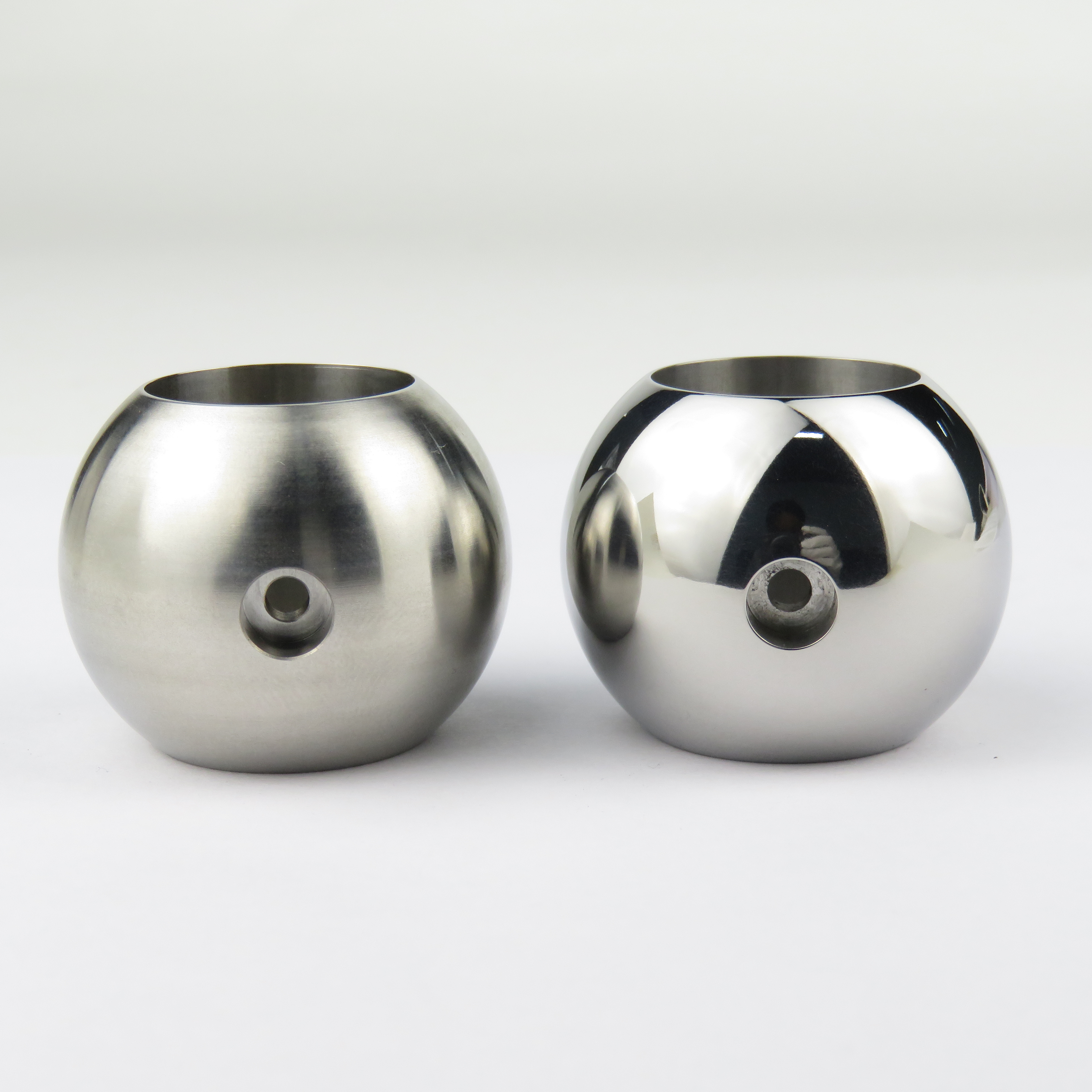
A mirror surface is damaged by contact, so handling begins before the parts leave the machine. Rinse and dry thoroughly to remove compound and fines, because residue trapped in a cavity bleeds out later and a damp surface can stain stainless. Then protect: interleave or sleeve faces that will touch, keep parts separated in trays, avoid sliding them across each other, and use gloves or a clean cloth when they are picked up. Agree packaging with the buyer, including whether parts travel individually wrapped, and inspect on arrival for marks that occurred in transit.
Haze and sleeks usually come from contamination rather than from a wrong final medium. Worn media shed an oversized fine fraction, abrasive can agglomerate in the compound line, screens and machine walls carry grit from an earlier coarse stage, and a shared or under-controlled rinse moves particles forward. Inspect under raking light against a master and trace the pattern: defects that appear in one machine point to the charge, while those spread across machines point to rinsing or handling. Clean the charge, screen the media and re-establish the rinse before changing the compound.
Sometimes, but geometry decides. Media has to sit against the surface and move along it, so recesses with narrow mouths, deep bores, broad flat faces and internal corners may finish unevenly or not at all. A mass-finishing route can still deliver an excellent result on open faces while internal detail reaches a lower, more uniform standard, and it is often sensible to define the requirement per face. Where a small internal edge is the visible feature, a magnetic finishing step or a controlled hand operation may be the only practical route; where a part is too heavy or too long for the envelope, none of it applies.
Use Hamilton, Canada as the destination on the enquiry and state whether the deliverable is equipment, media and compound, a representative sample review or a line concept. A destination does not imply local stock, a local service point or a local delivery time.
A Hamilton fabricator normally works to the material and fabrication standards named on the customer's drawing, the welding and pressure-equipment code applicable to the vessel or structure being built, and the customer's coating or surface-preparation specification. Plant-side requirements come from Ontario occupational health and safety regulation, including guarding, lockout and welding fume control, and equipment must carry Canadian electrical safety certification.
Sources were retrieved on 2026-09-29 and describe the local industrial and trade context only. They do not evidence any SurfacePolish project, shipment, installation or service in Hamilton.
The buyer wants a clean bright face with no embedded abrasive or residue, because contamination would affect the electrical contact.
Send the material, dimensions, approximate weight, batch quantity, the incoming condition and photographs of the difficult features. Mark which features must not be contacted by media and state how the result will be inspected. This form carries source reference PSEO-0169; quote it if you prefer an additional manual reference.
Open the SurfacePolish enquiry form Email a prepared enquiry
No price, lead time, certification or result is promised here. Confirm whether a sample trial is available for the specific part and what the trial can and cannot show.
Page PSEO-0169 · revised 2026-09-29 · cross-border equipment, media and scoped sample review. City context is sourced and cited above.
Use this local checker to identify missing part and inspection information. It prepares a technical-review brief; it does not approve a machine, process recipe or production result.
Complete the part details to prepare a review brief.
Email : info@surface-polish.com


 IPv6 network supported


 +86-592-2381506