A buyer in Hanover, Germany in industrial machinery needs a 2.5 m stainless guard extrusion finished to a uniform bright band while a narrow slot along its face stays clear of media and keeps its edges. SurfacePolish supplies finishing machines, media and compounds across borders and offers a free sample trial, returning tested sections with observations and a proposed direction. This brief is written for a buyer in Hanover working on industrial machinery; it describes equipment, media and a scoped sample review, not a local polishing service.
Can available media actually reach the geometry, and what finish is realistic in the recesses and internal features it cannot reach?
Which faces must reach a mirror and which only need to be clean and uniform, and how is each one judged?
What batch size, part mix and media maintenance routine will production really run, and does the trial describe that condition?
Bright polishing rounds edges, and the more energy and time the sequence needs, the more rounding appears. Some edges are cosmetic and rounding is welcome; others define function, such as a scraper edge on a machine-tool slideway, a knife edge on a metering blade, a thread start, or the lapped lip of a valve seat. Mark those features on the drawing and state a maximum edge radius or a no-touch zone before media is selected. Inspection can use radius gauges, a cast impression or an optical comparator against the incoming edge form. Where a crisp edge and a bright face conflict, the practical order is to finish the face first and restore the edge with a controlled hand operation, or to accept a slightly duller face that preserves the edge.
Compound concentration is a process variable that drifts. Dosing on a timer is convenient but ignores carry-out, evaporation and the fines load, so a batch that starts at target can finish well above or below it. Meter dose against water flow, check pH and, where available, conductivity at the start and end of a cycle, and record those values with the batch. Water quality shapes the final image: hard water leaves mineral spots that read as haze, and high chloride or iron content can stain stainless during rinsing. The rinse after each stage deserves the same control as the finishing stage, with enough volume and flow to remove compound and loose fines before the part dries, because dried residue is far harder to remove without disturbing the finish.
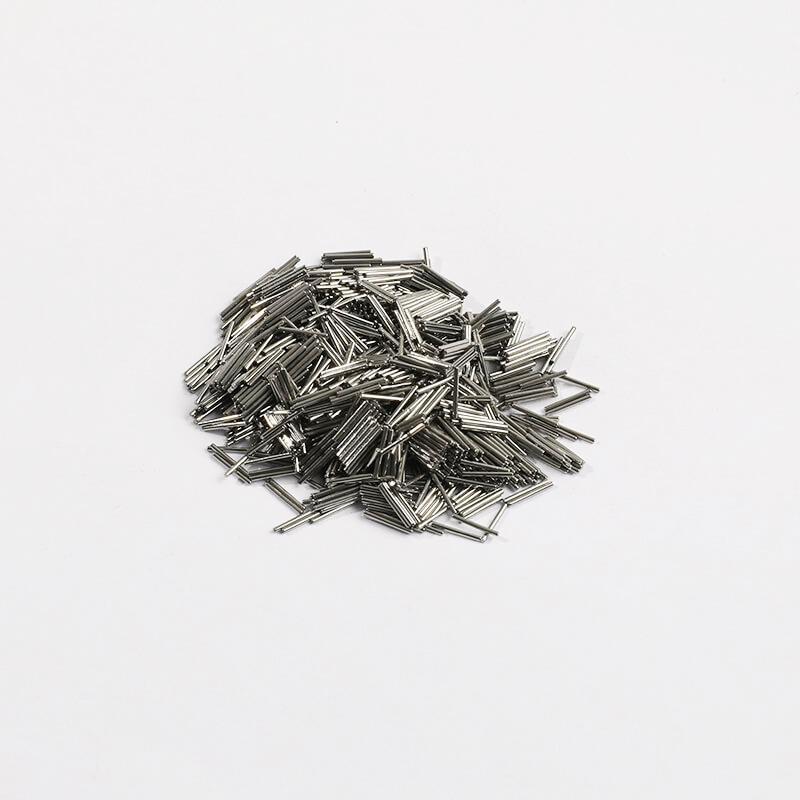
| Media | Best fit | Watch out for |
|---|---|---|
| Magnetic finishing pins and needles | Small precise parts with internal edges, cross holes, slots and fine detail that no tumbling medium of usable size can reach. | Limited by working envelope and part mass, removes very little material, and pins can embed in soft metals or remain in cavities if retrieval is not checked. |
| Hardened steel media, balls and shaped shot | Bright burnishing of stainless and hardened steel, and the final wet lustre stage where a dense medium can peen a surface smooth. | Can transfer iron and rust to stainless, dents soft or thin parts, and must be kept in a dedicated charge away from ceramic media. |
| Small high-density ceramic spheres or ovals | Colour and pre-lustre stages where a uniform, soft-looking finish matters more than stock removal, including curved and contoured faces. | Very slow cut, easily lost through screens sized for larger media, and ineffective in deep recesses because it cannot reach or press against the surface. |
| Dry media - corn cob | Softer dry lustre and drying steps, absorbent polishing of small parts, and light work on brass, aluminium and plated-look surfaces. | Breaks down faster than walnut shell and must be replaced regularly; it removes almost no material and cannot correct a surface defect. |
Magnetic finishing drives small pins or needles with a moving magnetic field, so the abrasive follows internal edges, cross holes, slots and fine detail that no tumbling medium of usable size can enter. It is the practical route for small precise parts such as valve spools, small gears, nozzle bodies and instrument components where a bright edge or a cleaned intersection matters. It removes very little material, so it is a refinement and edge-conditioning step rather than a way to erase coarse grinding marks. Working envelope and part mass are the main limits: large faces and heavy parts do not fit, and the effect falls off where the field cannot drive the pins. Check coverage on a sample with magnification and a borescope.
| Machine route | Where it fits | What it will not do |
|---|---|---|
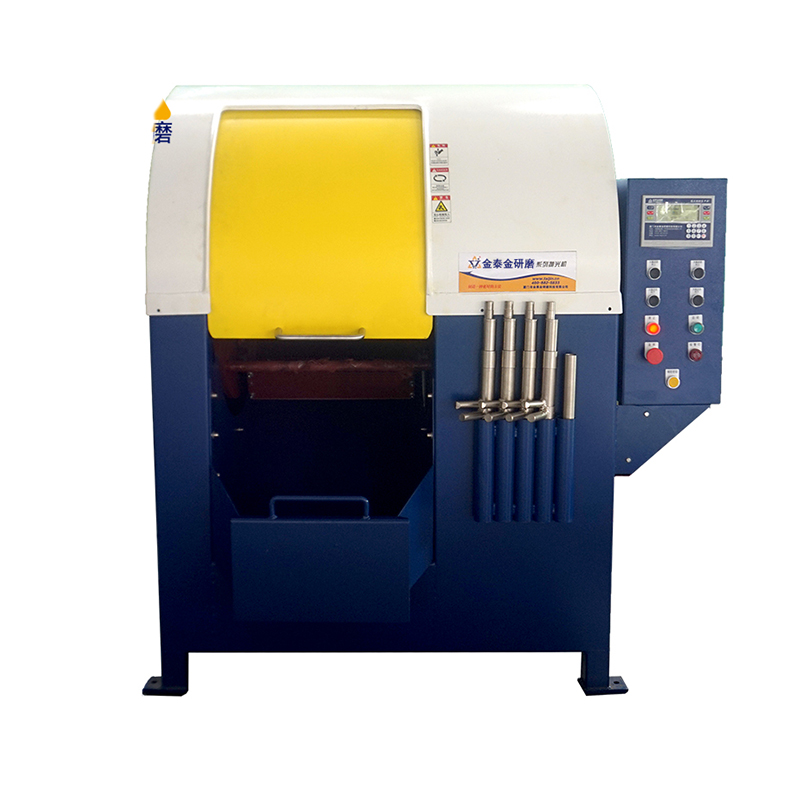
| Vibratory finishing machine (bowl or tub) | Cut-to-colour sequences on rigid, mostly open parts such as housings, covers, brackets and frames, with adjustable energy and no fixturing. | Cannot present media uniformly into pockets with narrow mouths or deep internal bores, and broad flat faces finish more slowly than edges. |
| Barrel finishing machine / rotary barrel tumbler | Dense, uniform colour on small hardware that tolerates sliding contact, especially with steel media for a burnished appearance. | Nothing longer than the barrel diagonal can be processed, and slender parts can bend or nick against neighbours in the load. |
| Tub vibrator | Long and large parts such as shafts, extrusions and frame members that cannot be folded into a barrel, including external grooves. | Poor at bores running parallel to the long axis, and slender parts still need support or balanced loading to hold straightness. |
| Grinding finishing machine | The heavier stock-removal stage before a mirror sequence, cutting back grinding damage, scale and recast layers on robust parts. | High removal also rounds edges and can work harden or distort thin sections, so it needs a defined depth target and a sample check. |
Haze is a general loss of image clarity without a clear directional pattern, and sleeks are the fine unidirectional lines that often accompany it. Both usually come from contamination: worn media shedding an oversized fine fraction, abrasive agglomerating in a compound line, machine walls and screens carrying grit from a previous coarse stage, or parts that were never rinsed between stages. The pattern is diagnostic, because haze appearing in one machine points at the charge while haze on parts from a shared rinse points at the water or the transfer. Check under raking light and low magnification against a master, and verify charge and rinse first: replacing compound before cleaning the machine usually repeats the defect.
| Failure mode | Likely cause | How to catch it |
|---|---|---|
| Sleeks, fine unidirectional lines across a bright face | Contaminated charge or rinse, a metal particle trapped between media and part, or a polishing direction that was never rotated between successive stages. | Orient the light along and then across the lines, note where each family appears on the part, and inspect the charge and rinse screens for embedded foreign particles. |
| Smearing or a rolled surface with abrasive and debris buried in it | Excessive cycle time or contact pressure, insufficient compound lubricity, or a final stage run at energy the material cannot absorb without deforming. | Wipe a defined area with a clean white cloth and look for streaks or dulling, then examine at magnification and compare microhardness or etch response against an unmachined reference. |
| Heat tint or discolouration concentrated near edges and thin sections | Friction at a dry or high-speed stage raising local temperature, poor cooling or compound flow, or a load that packs parts against each other with no media between them. | Compare colour against a master in consistent lighting, look for a gradient from edge inward, and check whether the tint follows load contact points or the whole face. |
| Media lodged in blind holes, slots, undercuts or threaded features | Media size too close to the opening, a slot or cavity that traps the charge, or no defined retrieval step before rinsing and drying. | Reconcile a counted media charge before and after the cycle, borescope each cavity at an agreed angle, and pin or thread gauge the features the charge could enter. |
Hanover is the capital of Lower Saxony and combines a large manufacturing plant with a trade-fair and logistics economy. Volkswagen Nutzfahrzeuge (Volkswagen Commercial Vehicles) is based at the Hanover site and describes itself as one of Lower Saxony's largest employers, which anchors a vehicle-industry supplier base in the region. The city's exhibition grounds host the HANNOVER MESSE, presented by the city as the world's largest industrial trade fair, with exhibitors from mechanical engineering, the electrical and digital industry and the energy sector, and its main display areas are automation and digitalisation, energy and industrial infrastructure, and research and technology transfer. Hanover's port group (Städtische Häfen Hannover) operates four ports on the Mittellandkanal and its branch canals, with the Lindener Hafen serving chemicals, mineral oil, forwarding, the vehicle industry, construction, recycling and steel trade, and the airport adds an air-freight centre with around 60,000 tonnes annual capacity. EuroBLECH, the international sheet-metal working technology fair, is also held on the Hanover exhibition grounds.
For this brief the relevant part of that base is machinery: The HANNOVER MESSE in Hanover is presented as the world's largest industrial trade fair with exhibiting companies from mechanical engineering, and the Lindener Hafen lists steel trading and construction among its dominant industries.
Hanover's production base is commercial-vehicle manufacturing with its supplier tier, steel trading and steel processing, and the sheet-metal working technology community that gathers at EuroBLECH on the city's exhibition grounds. Those processes - cutting, forming, punching, welding and machining of steel and sheet - are exactly where burrs, sharp edges and oxide or oil films must be removed before welding, coating or assembly. Because a large share of Hanover's metalworking demand is job-shop and supplier production rather than one dominant end product, finishing choices usually have to cover a mixed part spectrum in one installation.
Because Hanover's metalworking base is broad and supplier-driven, the first question is which part spectrum and edge/cleanliness standard one installation must cover (for example EN 1090 steel construction edges versus VDA 19.1 cleanliness for vehicle parts), and whether the process must be reproducible across mixed batch sizes rather than optimised for a single part.
Freight context: Hannover Airport (HAJ) with its air-freight centre, Hafen Hannover: Lindener Hafen, Nordhafen with the Container Terminal Hannover, and the Rail Terminal Hannover-Leinetor, Mittellandkanal / Stichkanal connections and the Hanover motorway junction (A2/A7). The port operates two combined-transport facilities with services to northern Italy and the German North Sea ports, so seaborne containers destined for Hanover can be handled inland rather than only at the coast, and Hannover Airport adds an air-freight centre with around 60,000 tonnes annual capacity. For incoming finishing machines and sample parts, Hanover offers inland-waterway/rail container handling, road freight on the A2/A7 and air freight at HAJ.
German is the working language of drawings, contracts, test reports and conformity documentation, and German buyers normally expect English-language technical documentation to be supplied alongside it. Procurement is documentation-driven: the EU declaration of conformity, the technical file, and the identity of the EU-based importer or authorised representative are settled before the order, and the EORI registration and customs declaration are the importer's responsibility rather than the exporter's (c3, c4, c5). Germany is the world's leading machinery and equipment manufacturer, so quotations compete against established domestic builders on technical documentation and measurable process data rather than on price alone (c9). Payment, delivery and risk terms are normally fixed by written contract with a named Incoterm, and classification (commodity code) is commonly confirmed in writing before shipment because it drives the duty and the import declaration.
Machinery placed on the German market must be CE marked, and the manufacturer is responsible for the conformity assessment, the technical file, the EU declaration of conformity and for affixing the mark; importers and distributors are separately obliged to ensure that only compliant, CE-marked products are placed on the EEA market (c3, c4). The customs authority is German customs (Zoll), part of the Generalzolldirektion, and the operator identification it issues, the EORI number, is a prerequisite for customs clearance in the European Union (c5, c6). In general EU practice a buyer's landed-cost plan therefore needs to cover the commodity-code classification that sets the duty rate, import VAT and the customs declaration, on top of the CE technical file and an identified EU-based economic operator who can act as importer or authorised representative; the technical documentation and the declaration of conformity must be available in the language required by the buyer's market surveillance authority.
SurfacePolish supplies from Xiamen, China. The buyer's own destination rules, conformity marking, tariff classification and documentation responsibilities stay with the buyer; confirm them against the authorities named above before ordering.
Ask for a settings record with every batch: machine and stage, media type and size class, charge mass and age, compound product and measured dose, load ratio, cycle time and rinse conditions. Retain a fully inspected first article as the physical reference, together with its measurement data and photographs at fixed scale and lighting. Write the disposition rule in advance, covering what passes, what is reworked and what is scrapped, and name who decides. The record should state plainly that the reported condition applies to the parts tested, at the locations measured, with the settings used; it is a description, not a guarantee of future output or of fitness for any regulated application. Certificate and approval requests belong with the buyer's own quality function.
A trial runs a small, hand-selected load on equipment that has just been set up. Production runs mixed batches on a media charge of unknown age, with transfer time between stages, variable rinse quality, operators on different shifts, and parts arriving with different incoming damage. Plan a defined pilot batch that uses the intended line configuration and a full first-article inspection, then compare it with the trial observations before committing volume. Watch the variables that scale badly: drying time in a humid season, water chemistry, load density and the handling between cut, colour and lustre stages. Treat the pilot as the real test of stability and keep its settings record with the parts so any drift can be traced.
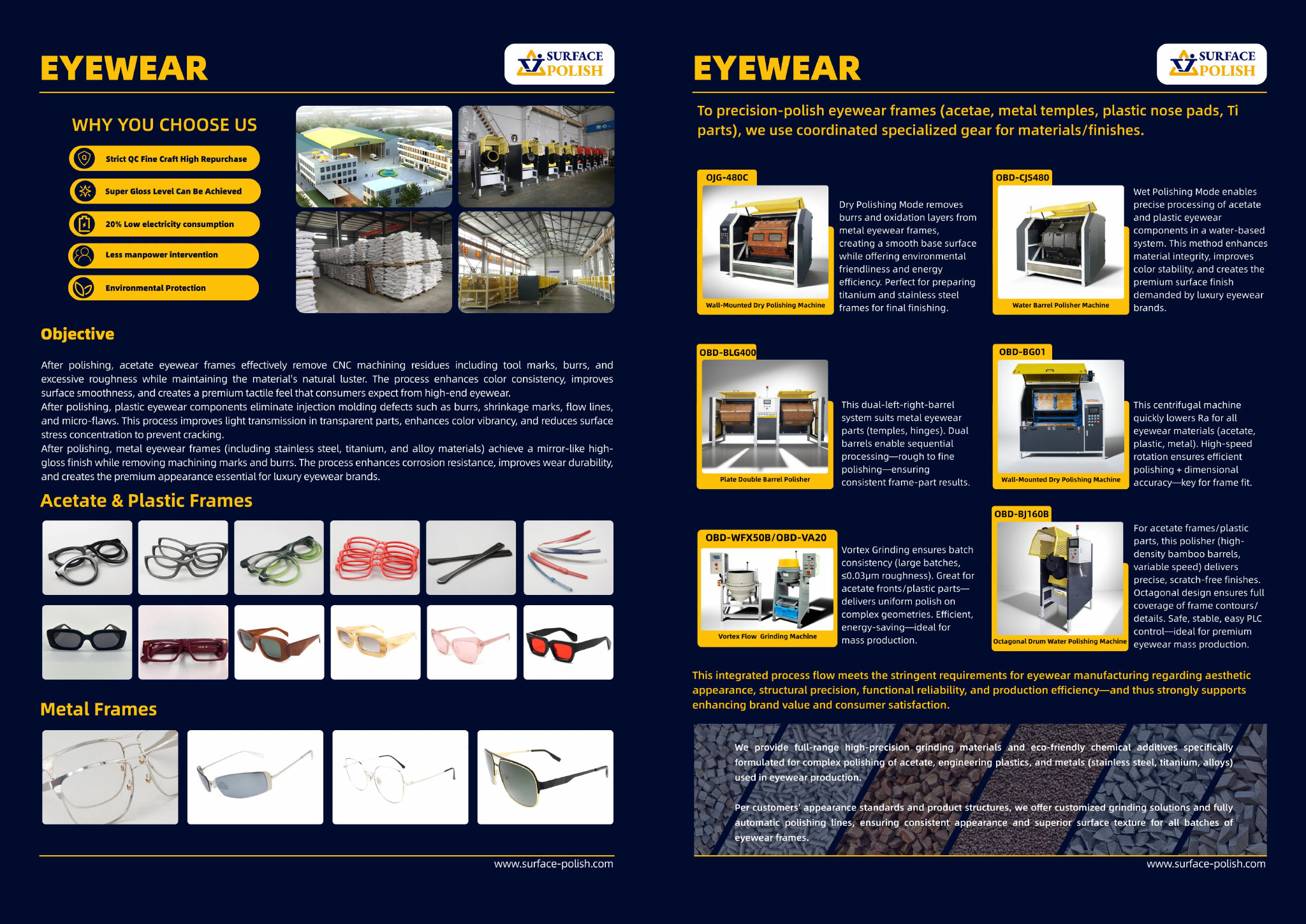
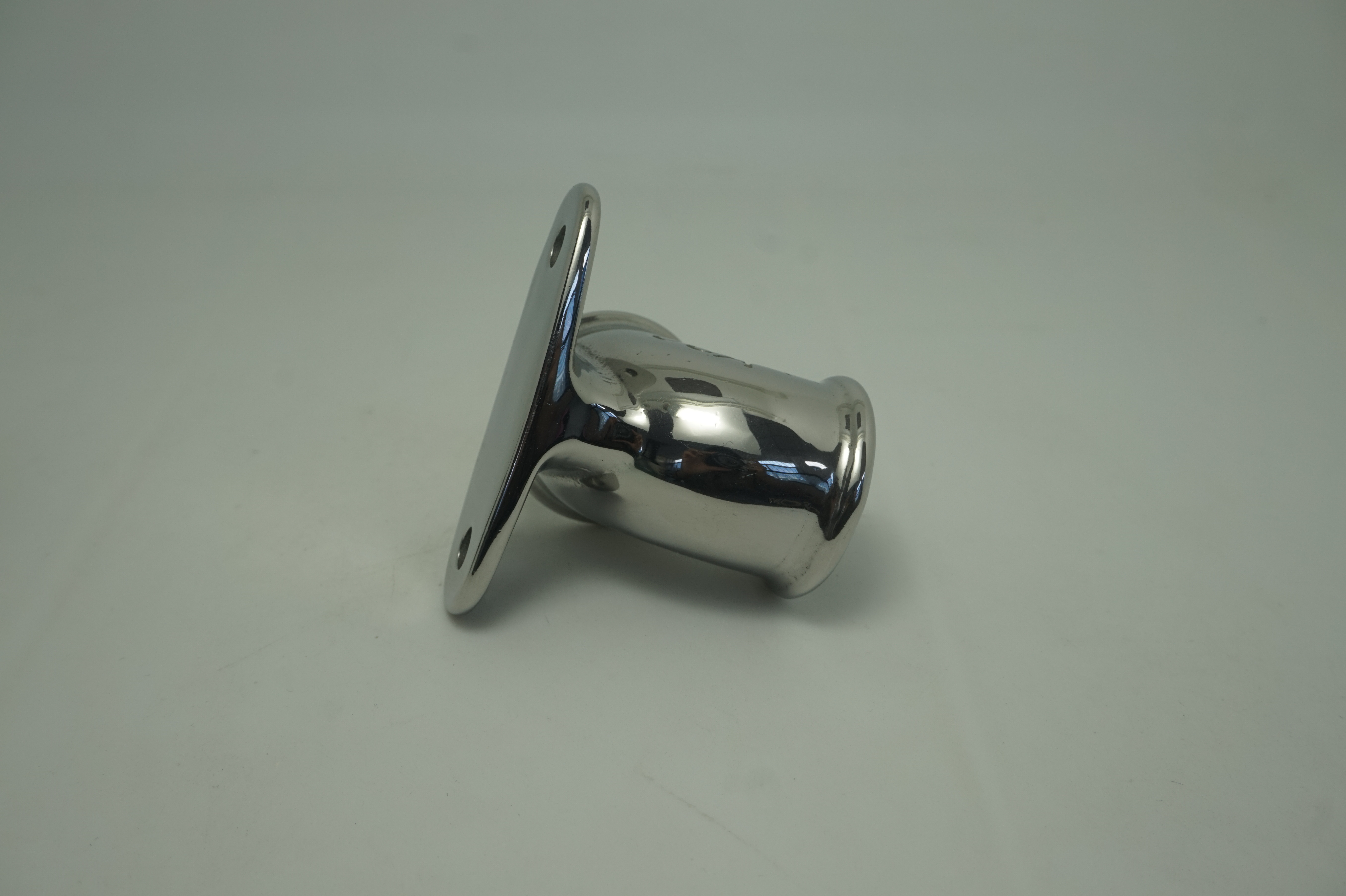
A mirror surface is damaged by contact, so handling begins before the parts leave the machine. Rinse and dry thoroughly to remove compound and fines, because residue trapped in a cavity bleeds out later and a damp surface can stain stainless. Then protect: interleave or sleeve faces that will touch, keep parts separated in trays, avoid sliding them across each other, and use gloves or a clean cloth when they are picked up. Agree packaging with the buyer, including whether parts travel individually wrapped, and inspect on arrival for marks that occurred in transit.
Design the charge around the smallest opening rather than the average part. Use media clearly smaller than the hole, or mask and plug the features before the cycle, count the media into and out of the load as a reconciliation, and add a retrieval step with a defined check such as a borescope or pin gauge. For Germany buyers sending parts for a trial, include the part with the tightest feature so the media class is chosen against real geometry. The small pins used in magnetic finishing embed easily in soft metal, so those features need extra inspection.
Rounding depends on the energy and duration of the sequence and on how exposed the edge is. A light refinement pass may barely touch it, while a long cut stage on a soft alloy can visibly round it. Mark the edges that must stay crisp, state a maximum radius or a no-touch zone before media is selected, and measure with a radius gauge, an optical comparator or a cast impression against the incoming form. Where a bright face and a crisp edge conflict, the practical order is to finish the face and then restore or protect the edge rather than to keep polishing.
Use Hanover, Germany as the destination on the enquiry and state whether the deliverable is equipment, media and compound, a representative sample review or a line concept. A destination does not imply local stock, a local service point or a local delivery time.
Hanover buyers work within the DIN system: surface-texture specification to ISO 21920, technical cleanliness to VDA 19.1 / ISO 16232 where hydraulic or powertrain parts are involved, material certificates to EN 10204 (3.1), and for steel construction work the EN 1090 execution classes. Automotive suppliers operate to IATF 16949 with VDA 6.3, and machines placed on the EEA market must carry CE marking under the EU Machinery Regulation.
Sources were retrieved on 2026-09-29 and describe the local industrial and trade context only. They do not evidence any SurfacePolish project, shipment, installation or service in Hanover.
The buyer needs the long bright band finished uniformly while keeping the narrow slot clear of media and preserving its edges.
Send the material, dimensions, approximate weight, batch quantity, the incoming condition and photographs of the difficult features. Mark which features must not be contacted by media and state how the result will be inspected. This form carries source reference PSEO-0399; quote it if you prefer an additional manual reference.
Open the SurfacePolish enquiry form Email a prepared enquiry
No price, lead time, certification or result is promised here. Confirm whether a sample trial is available for the specific part and what the trial can and cannot show.
Page PSEO-0399 · revised 2026-09-29 · cross-border equipment, media and scoped sample review. City context is sourced and cited above.
Use this local checker to identify missing part and inspection information. It prepares a technical-review brief; it does not approve a machine, process recipe or production result.
Complete the part details to prepare a review brief.
Email : info@surface-polish.com


 IPv6 network supported


 +86-592-2381506