A buyer producing industrial machinery in Houston, United States has a long stainless pump shaft that must be brightened without bowing, losing roundness at the bearing seat or rounding the keyway edges. SurfacePolish supplies finishing machines, media and compounds internationally and runs a free sample trial on parts shipped to Xiamen, returning observations and a proposed direction rather than a promised result. This brief is written for a buyer in Houston working on industrial machinery; it describes equipment, media and a scoped sample review, not a local polishing service.
What batch size, part mix and media maintenance routine will production really run, and does the trial describe that condition?
Can available media actually reach the geometry, and what finish is realistic in the recesses and internal features it cannot reach?
How will the finish be measured or viewed, with which instrument, angle, cutoff and master, and who holds that master?
Two parts with the same alloy name can behave differently under the same media. Hardened tool steel resists cutting and holds a polish longer, while annealed low-carbon steel cuts quickly and can smear under high contact pressure. Austenitic stainless work hardens, so a heavy first pass can leave a skin harder than the bulk, after which fine media stop removing material and only burnish it. Aluminium and brass are soft enough that media pressure rolls metal instead of cutting it, producing a wave rather than a cut. Ask for the actual condition - hardness range, heat treatment, cold work, and whether the part was cast, forged or machined from bar - then confirm it on a sample rather than trusting a datasheet to describe the surface the media will meet.
Compound does more than lubricate: it carries abrasive, controls pH, keeps fines in suspension, prevents rust and determines how cleanly a part leaves the machine. Cutting stages usually run a more aggressive abrasive-bearing compound, while colour and lustre stages run a cleaner, higher-lubricity product with little or no abrasive so the surface is refined rather than scratched. pH matters by material family, since strongly alkaline compounds attack aluminium and acidic conditions can stain some steels, so match the family to the alloy and rinse promptly. Foam control matters too, because a foaming charge cushions contact and slows cutting unpredictably. Treat the compound specification and dose as part of the process recipe rather than as a consumable line item.
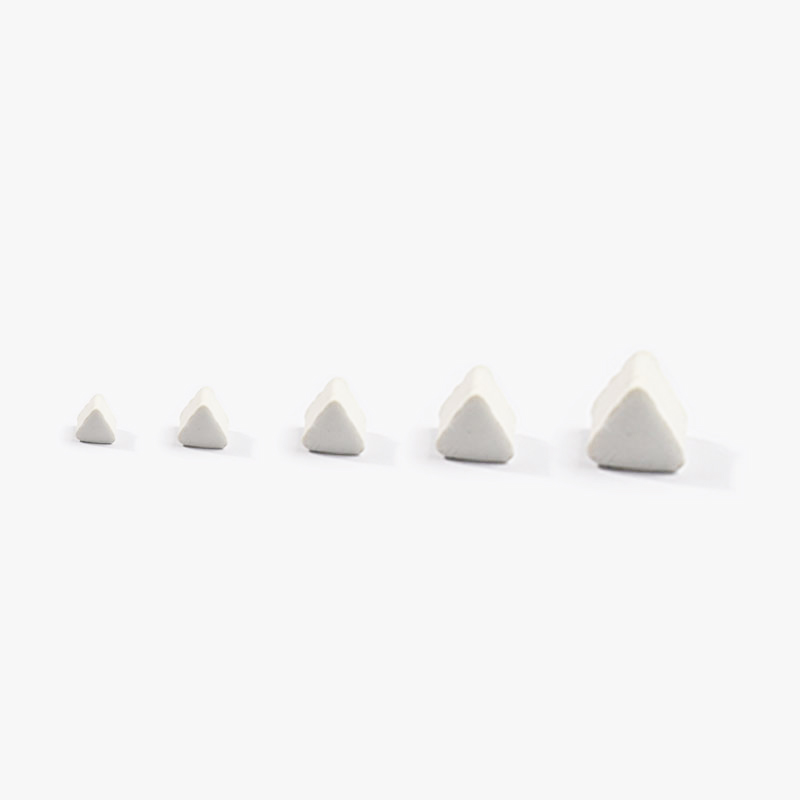
| Media | Best fit | Watch out for |
|---|---|---|
| Magnetic finishing pins and needles | Small precise parts with internal edges, cross holes, slots and fine detail that no tumbling medium of usable size can reach. | Limited by working envelope and part mass, removes very little material, and pins can embed in soft metals or remain in cavities if retrieval is not checked. |
| Medium ceramic triangles or angle-cut shapes | Blending, edge conditioning and the refinement step that removes the coarse cut pattern on housings, brackets, covers and frames. | Media that cannot enter a slot or recess leaves those areas at a different finish, so those faces need a separate operation or a stated lower standard. |
| Plastic or polyester media | Gentle processing of aluminium, brass, copper and thin panels where metal smearing, nicks and distortion must be avoided. | Low density gives little contact force, so cycles run long and heavy grinding marks may survive; plastic also wears quickly and can float above the working mass. |
| Dry media - corn cob | Softer dry lustre and drying steps, absorbent polishing of small parts, and light work on brass, aluminium and plated-look surfaces. | Breaks down faster than walnut shell and must be replaced regularly; it removes almost no material and cannot correct a surface defect. |
When a part must lose a measurable amount of stock before colour stages, disc finishing and centrifugal barrel machines deliver far more energy than a conventional vibrator. That energy shortens the cut stage but also rounds edges, work hardens soft alloys and can distort thin sections. Load the parts so they cannot jam against the disc wall, and bracket cycle time tightly, because the difference between enough removal and too much is small. Centrifugal barrels suit small to medium parts with simple geometry. Neither route removes the need for refinement: the surface they leave still needs finer media and a polishing compound before a reflected image becomes coherent, and the depth achieved has to be verified on a sample rather than assumed from a setting.
| Machine route | Where it fits | What it will not do |
|---|---|---|
| Centrifugal barrel finishing machine | High-speed cut down and refinement on small to medium parts where a short, energetic cycle is needed before colour stages. | Aggressive on edges and thin sections, requires tight cycle control, and does not replace a finer refinement stage. |
| Disc finishing machine | Fast, high-energy cut down on small to medium parts with simple geometry where cycle time matters and edge rounding is tolerable. | Part-on-part contact and wall pressure can chip or deform parts, and the difference between sufficient and excessive removal is narrow. |
| Barrel finishing machine / rotary barrel tumbler | Dense, uniform colour on small hardware that tolerates sliding contact, especially with steel media for a burnished appearance. | Nothing longer than the barrel diagonal can be processed, and slender parts can bend or nick against neighbours in the load. |
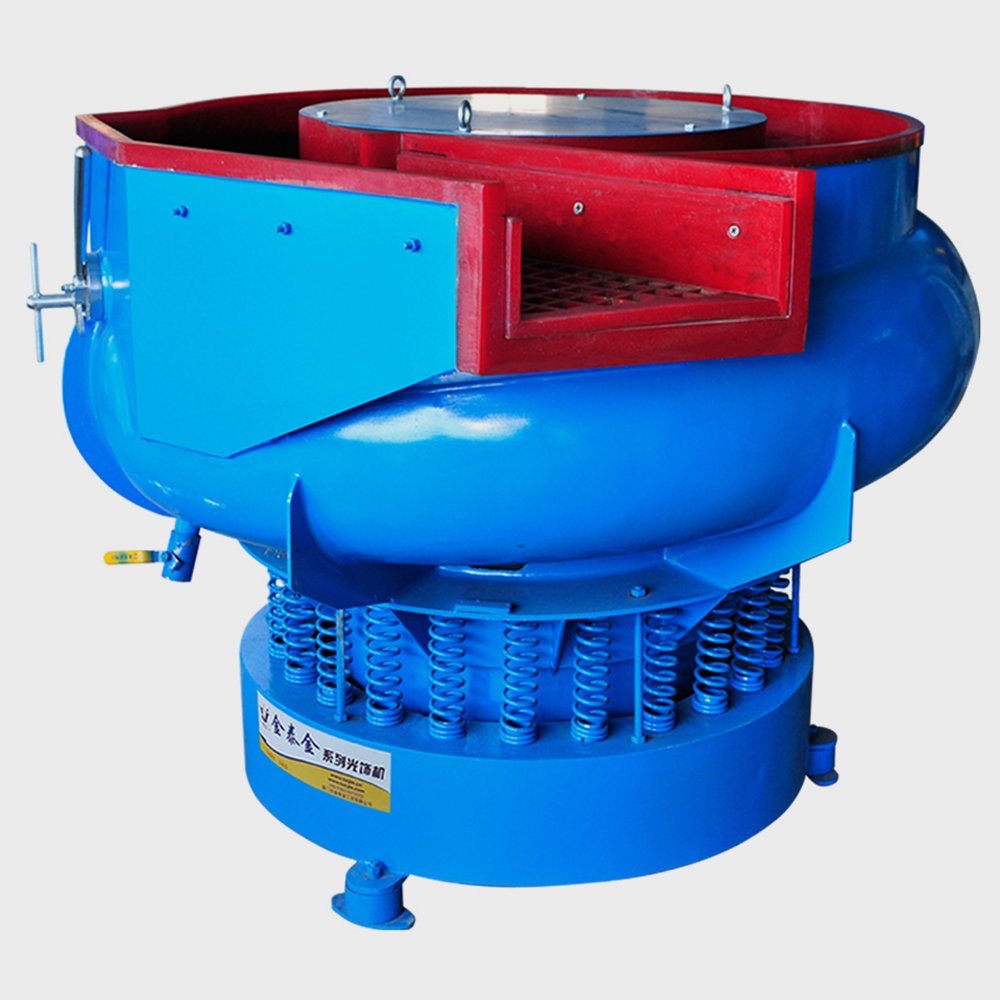
| Vibratory finishing machine (bowl or tub) | Cut-to-colour sequences on rigid, mostly open parts such as housings, covers, brackets and frames, with adjustable energy and no fixturing. | Cannot present media uniformly into pockets with narrow mouths or deep internal bores, and broad flat faces finish more slowly than edges. |
Haze is a general loss of image clarity without a clear directional pattern, and sleeks are the fine unidirectional lines that often accompany it. Both usually come from contamination: worn media shedding an oversized fine fraction, abrasive agglomerating in a compound line, machine walls and screens carrying grit from a previous coarse stage, or parts that were never rinsed between stages. The pattern is diagnostic, because haze appearing in one machine points at the charge while haze on parts from a shared rinse points at the water or the transfer. Check under raking light and low magnification against a master, and verify charge and rinse first: replacing compound before cleaning the machine usually repeats the defect.
| Failure mode | Likely cause | How to catch it |
|---|---|---|
| Smearing or a rolled surface with abrasive and debris buried in it | Excessive cycle time or contact pressure, insufficient compound lubricity, or a final stage run at energy the material cannot absorb without deforming. | Wipe a defined area with a clean white cloth and look for streaks or dulling, then examine at magnification and compare microhardness or etch response against an unmachined reference. |
| Orange peel, a slow wave that distorts the reflected image | Soft or work-hardened surface deformed rather than cut, a heavy cut stage followed by too little refinement, or a dry or buffing stage at high speed with excess pressure. | Reflect a straight edge or fluorescent tube in the face at a shallow angle, compare the shape of the image against a physical master in the same lighting, and repeat at several viewing angles. |
| Iron pickup or rust bloom on a stainless surface | Carbon steel particles or steel media sharing a machine or charge, contaminated rinse water, or a damp surface left in contact with packaging after drying. | Wipe or swab the surface and look for a brown trace, check the charge and machine for ferrous pieces, and inspect parts after a short dwell in the packaging they will ship in. |
| Haze, a general loss of image clarity with no directional pattern | Worn media shedding an oversized fine fraction, agglomerated abrasive in the compound line, or fine grit carried into a late stage from screens, machine walls or a shared rinse. | View under raking light at low magnification against a master, then trace the pattern by machine and by rinse line to separate a charge problem from a rinse or transfer problem. |
Greater Houston's manufacturing base is concentrated in fabricated metal, machinery and chemical manufacturing, which the Greater Houston Partnership describes as areas of unparalleled regional leadership and expertise, with medical devices and therapeutics named as an emerging strength alongside a globally leading healthcare industry. The Partnership also positions Houston as the beating heart of the global energy industry and the epicenter of the energy evolution across oil and gas, renewables, hydrogen, carbon capture and biofuels. Aerospace is anchored by NASA's Johnson Space Center in Houston, which the Partnership credits with mission control and astronaut training and which NASA describes as the centre for America's astronaut corps, the Mission Control Center and the human spaceflight programmes for Moon Base, Low Earth Orbit and Orion. Freight and trade infrastructure is substantial: Houston Airports handled 598,139 metric tons of cargo in fiscal year 2026, and the Partnership cites a top-ranking port, two international airports and 86 consulates as the basis of the city's global-commerce position.
For this brief the relevant part of that base is machinery: The Greater Houston Partnership describes the region as possessing unparalleled leadership and expertise in fabricated metal, machinery and chemical manufacturing.
The finishing burden sits in three places: oil-and-gas and petrochemical hardware such as valves, flanges, pump and compressor parts and heat-exchanger components, where weld dressing, burr removal and surface finish affect sealing, flow and corrosion resistance; fabricated-metal and machinery work where edge quality and Ra are specified on machined, laser-cut and formed parts; and medical-device and energy-equipment stainless parts where cleanliness and passivation matter. Much of this is alloy-specific - duplex and super-duplex stainless, nickel alloys and carbon steel behave very differently in the same finishing process - so media and compound selection rather than machine size usually decides whether the surface passes.
The question to settle first is what the surface has to do - seal, flow, resist corrosion, or present a cleanable hygienic face - because for Houston's mix of oil-and-gas, chemical, fabricated-metal and medical parts that answer decides whether the priority is edge radius and Ra, weld dressing, or media and compound chemistry that will not embed contamination in stainless.
Freight context: George Bush Intercontinental Airport (IAH), William P. Hobby Airport (HOU), Ellington Airport / Houston Spaceport (EFD), Port of Houston / Houston Ship Channel (the region's top-ranking port). Houston Airports set a fiscal-year cargo record in FY2026 with 598,139 metric tons through IAH and HOU, of which IAH accounted for 588,002 metric tons and more than 98% of system cargo. The Greater Houston Partnership describes Houston as having 86 consulates, two international airports and a top-ranking port, making it a hub for global commerce; machinery and sample parts arriving from China would be entered through CBP at the seaport or airport of arrival.
The United States has no single mandatory national finishing standard. The national standards system is voluntary and consensus-based, coordinated at national level by the American National Standards Institute (ANSI): ANSI published the United States Standards Strategy (USSS) 2025 on 6 January 2026, a strategy that 'guides how the U.S. develops standards and participates in international standardization', while the National Institute of Standards and Technology (NIST) is the federal measurement and standards agency and states that 'Technical standards keep us safe, enable technology to advance, and help businesses succeed.' In practice a buyer specifies surface finish, deburring, cleaning and coating requirements on the drawing or in the purchase order using the voluntary consensus standards maintained by bodies such as ASME and ASTM International and their ISO equivalents, and the acceptance criterion is the buyer's own specification rather than a government-issued finishing standard. Where a part is destined for a regulated product - pressure equipment, food-contact equipment, aerospace or medical devices - the relevant industry code or the customer's qualification requirement governs instead.
Business is conducted in US English. Units matter: US drawings and purchase orders frequently use inches, microinch Ra and US gallons, and a supplier that quotes only metric can be asked to reissue documentation. Buyers are US legal entities with an EIN and expect an identifiable contracting entity, a correct HTSUS classification, a commercial invoice, packing list and bill of lading, country-of-origin marking, and an importer of record for customs. Procurement is normally evidence-driven: process selection is expected to be justified by a trial run on the buyer's own sample parts with measured results (burr height, edge radius, Ra, cleanliness) and by media and compound data sheets, rather than by a capability claim. Payment terms in general US industrial practice are open account with net-30 to net-60 terms for established buyers, with letters of credit or advance payment more common for a first order from a new overseas supplier; no US buyer assumes Incoterms, warranty terms or spare-parts lead times unless they are stated in the quotation.
SurfacePolish supplies from Xiamen, China. The buyer's own destination rules, conformity marking, tariff classification and documentation responsibilities stay with the buyer; confirm them against the authorities named above before ordering.
Ask for a settings record with every batch: machine and stage, media type and size class, charge mass and age, compound product and measured dose, load ratio, cycle time and rinse conditions. Retain a fully inspected first article as the physical reference, together with its measurement data and photographs at fixed scale and lighting. Write the disposition rule in advance, covering what passes, what is reworked and what is scrapped, and name who decides. The record should state plainly that the reported condition applies to the parts tested, at the locations measured, with the settings used; it is a description, not a guarantee of future output or of fitness for any regulated application. Certificate and approval requests belong with the buyer's own quality function.
A useful trial changes one variable at a time. If two media classes are being compared, hold the machine, load ratio, compound dose and cycle time constant, and identify which returned parts came from which set. Measure the same marked points before and after, with the same instrument and settings, and judge appearance against the same master and lighting. Where two sequences are compared, record each stage separately so any difference can be attributed rather than read only from the final image. Blind the evaluation if two people will judge, and ask for the raw settings and photographs to come back with the parts. A comparison where several variables moved at once produces a direction that cannot be defended later.
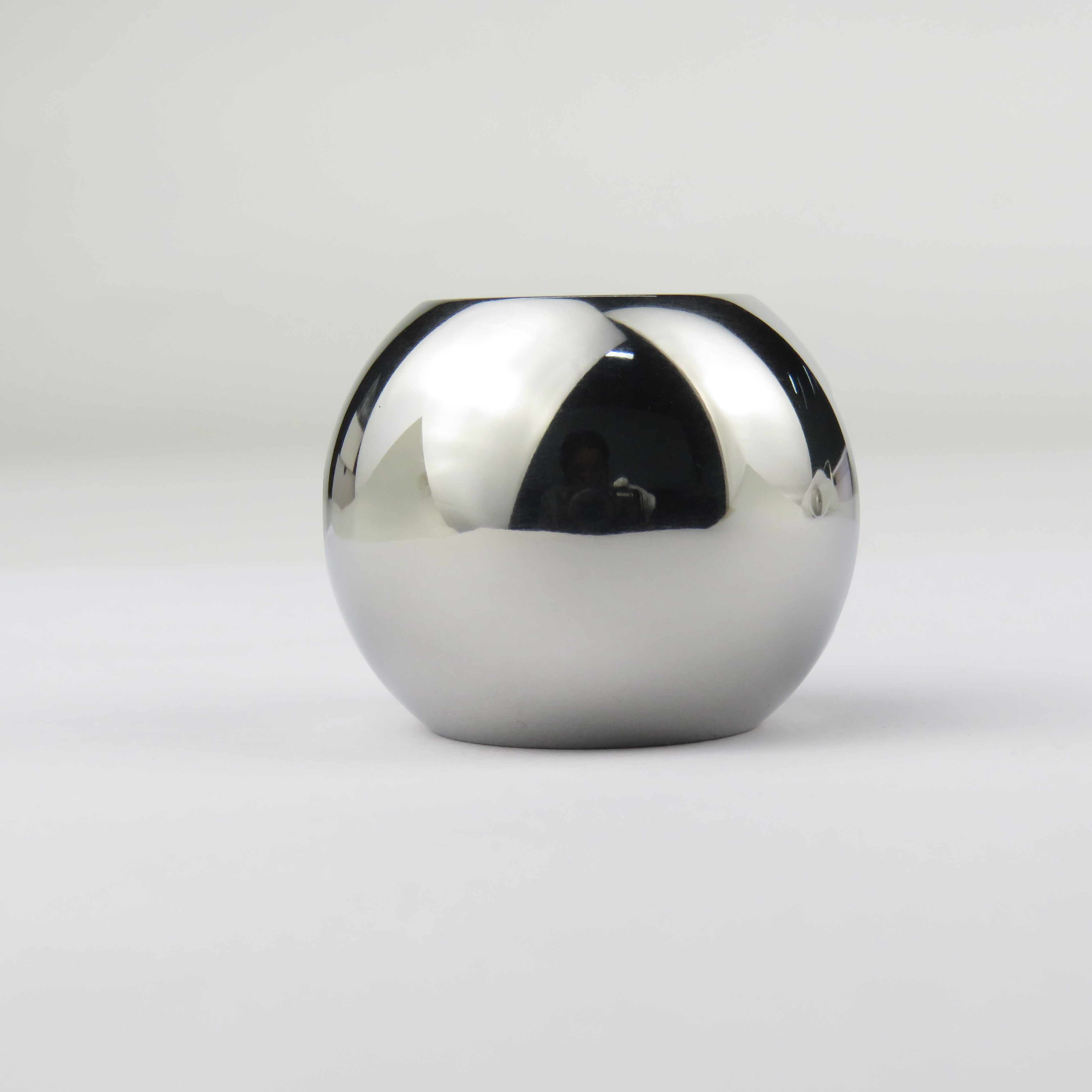
Haze and sleeks usually come from contamination rather than from a wrong final medium. Worn media shed an oversized fine fraction, abrasive can agglomerate in the compound line, screens and machine walls carry grit from an earlier coarse stage, and a shared or under-controlled rinse moves particles forward. Inspect under raking light against a master and trace the pattern: defects that appear in one machine point to the charge, while those spread across machines point to rinsing or handling. Clean the charge, screen the media and re-establish the rinse before changing the compound.
No, and any supplier offering one before seeing the parts is guessing. A trial produces observations on the specific parts tested, under the settings used, and those observations are described rather than warranted. Achievable reflectivity depends on the substrate, the geometry, the edge allowance and the incoming damage, and it can vary across a single face and between parts in one batch. Define how you will measure or view the finish, agree a physical master, and treat the trial result plus your own verification as the basis for a decision.
No to both. SurfacePolish is a cross-border supplier of finishing machines, media and compounds, and it does not supply or perform electropolishing or operate a plant, branch, dealer or technician service in United States or any other market. What is offered is equipment and consumables, a scoped discussion of a finishing line concept, and a free sample trial in which representative parts are shipped to Xiamen and returned with observations and a proposed process direction. Where an electrochemical finish is under consideration, the discussion stays a comparison with a mechanical route.
Use Houston, United States as the destination on the enquiry and state whether the deliverable is equipment, media and compound, a representative sample review or a line concept. A destination does not imply local stock, a local service point or a local delivery time.
A Houston buyer starts from the US voluntary-consensus system coordinated by ANSI and then layers on sector requirements: pressure-containing and rotating equipment for oil, gas and petrochemical service is specified against the relevant ASME and API codes and the buyer's corrosion and materials requirements for wet or sour service, while medical and energy-equipment stainless parts carry customer cleanliness specifications. Surface-finish and deburring acceptance is normally fixed on the drawing or in the purchase order rather than by a single national finishing standard.
Sources were retrieved on 2026-09-29 and describe the local industrial and trade context only. They do not evidence any SurfacePolish project, shipment, installation or service in Houston.
The buyer needs a bright shaft without bowing it in the charge and without losing roundness or the bearing seat fit.
Send the material, dimensions, approximate weight, batch quantity, the incoming condition and photographs of the difficult features. Mark which features must not be contacted by media and state how the result will be inspected. This form carries source reference PSEO-0029; quote it if you prefer an additional manual reference.
Open the SurfacePolish enquiry form Email a prepared enquiry
No price, lead time, certification or result is promised here. Confirm whether a sample trial is available for the specific part and what the trial can and cannot show.
Page PSEO-0029 · revised 2026-09-29 · cross-border equipment, media and scoped sample review. City context is sourced and cited above.
Use this local checker to identify missing part and inspection information. It prepares a technical-review brief; it does not approve a machine, process recipe or production result.
Complete the part details to prepare a review brief.
Email : info@surface-polish.com


 IPv6 network supported


 +86-592-2381506