An industrial machinery buyer in Liverpool, United Kingdom needs a copper electrode plate finished bright and clean, with no embedded media or compound residue left on the contact face. SurfacePolish supplies finishing machines, media and compounds internationally and offers a free sample trial, returning the tested plates with observations and a proposed media, compound and cycle direction rather than a guarantee. This brief is written for a buyer in Liverpool working on industrial machinery; it describes equipment, media and a scoped sample review, not a local polishing service.
Which faces must reach a mirror and which only need to be clean and uniform, and how is each one judged?
How much stock may the sequence remove before datums, seal faces, flatness or edge form fall outside their allowance?
How will the finish be measured or viewed, with which instrument, angle, cutoff and master, and who holds that master?
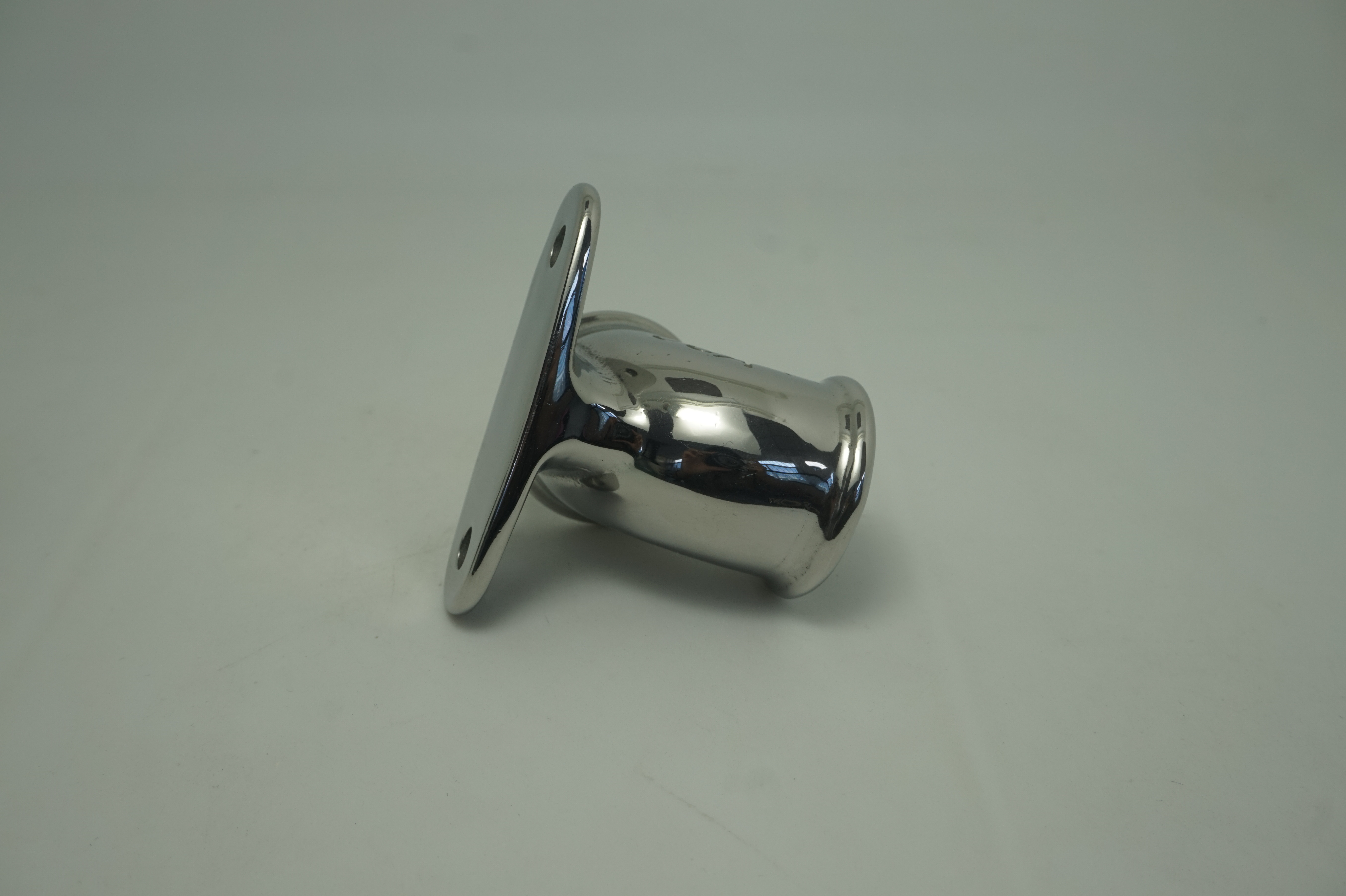
Bright polishing rounds edges, and the more energy and time the sequence needs, the more rounding appears. Some edges are cosmetic and rounding is welcome; others define function, such as a scraper edge on a machine-tool slideway, a knife edge on a metering blade, a thread start, or the lapped lip of a valve seat. Mark those features on the drawing and state a maximum edge radius or a no-touch zone before media is selected. Inspection can use radius gauges, a cast impression or an optical comparator against the incoming edge form. Where a crisp edge and a bright face conflict, the practical order is to finish the face first and restore the edge with a controlled hand operation, or to accept a slightly duller face that preserves the edge.
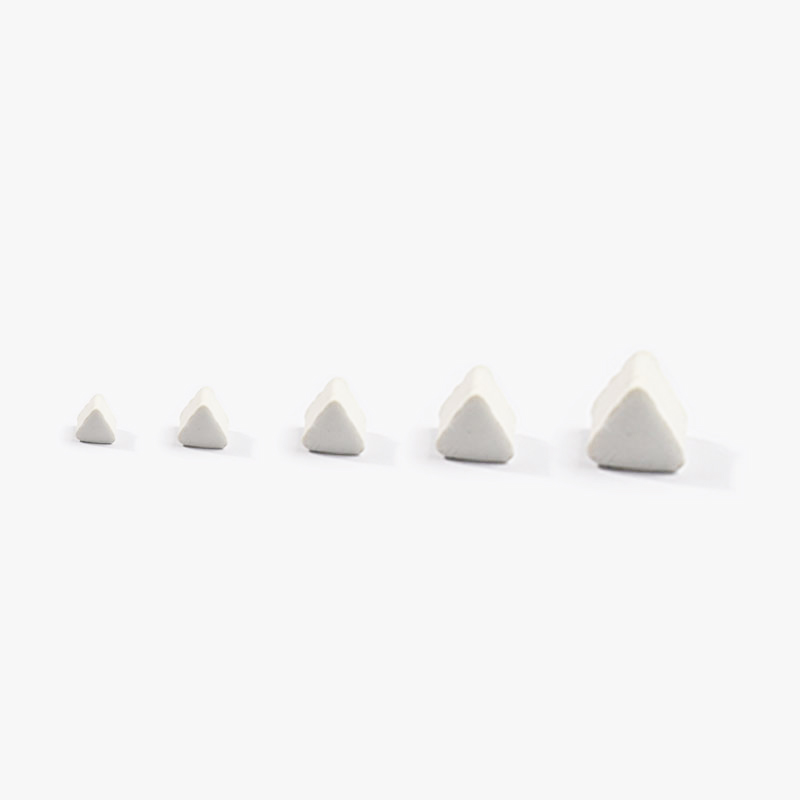
Ceramic media cuts well and holds shape, which keeps the working geometry predictable, but dense ceramic can chip thin edges and its wear debris becomes fine abrasive that carries into later stages. Plastic media is light and gentle, which suits aluminium and brass, though lower density means less contact force and a longer cut stage. Steel media burnishes rather than cuts and gives the brightest wet result on stainless and hardened steel, but it can transfer iron and rust if compound and rinse do not protect the load. Dry media such as walnut shell or corn cob is used for lubricity and drying rather than stock removal. Every medium wears, so measure size loss and replace on a schedule: a worn charge finishes differently and no longer describes an earlier trial result.
| Media | Best fit | Watch out for |
|---|---|---|
| Coarse ceramic angle-cut cylinders or triangles | First cut stage on rigid parts with open faces, removing grinding or machining damage on cast iron, steel and stainless before refinement. | Leaves a deep pattern the next stage must fully erase, chips thin edges, and its wear debris carries fine abrasive into later stages if the charge is not screened. |
| Medium ceramic triangles or angle-cut shapes | Blending, edge conditioning and the refinement step that removes the coarse cut pattern on housings, brackets, covers and frames. | Media that cannot enter a slot or recess leaves those areas at a different finish, so those faces need a separate operation or a stated lower standard. |
| Plastic or polyester media | Gentle processing of aluminium, brass, copper and thin panels where metal smearing, nicks and distortion must be avoided. | Low density gives little contact force, so cycles run long and heavy grinding marks may survive; plastic also wears quickly and can float above the working mass. |
| Dry media - corn cob | Softer dry lustre and drying steps, absorbent polishing of small parts, and light work on brass, aluminium and plated-look surfaces. | Breaks down faster than walnut shell and must be replaced regularly; it removes almost no material and cannot correct a surface defect. |
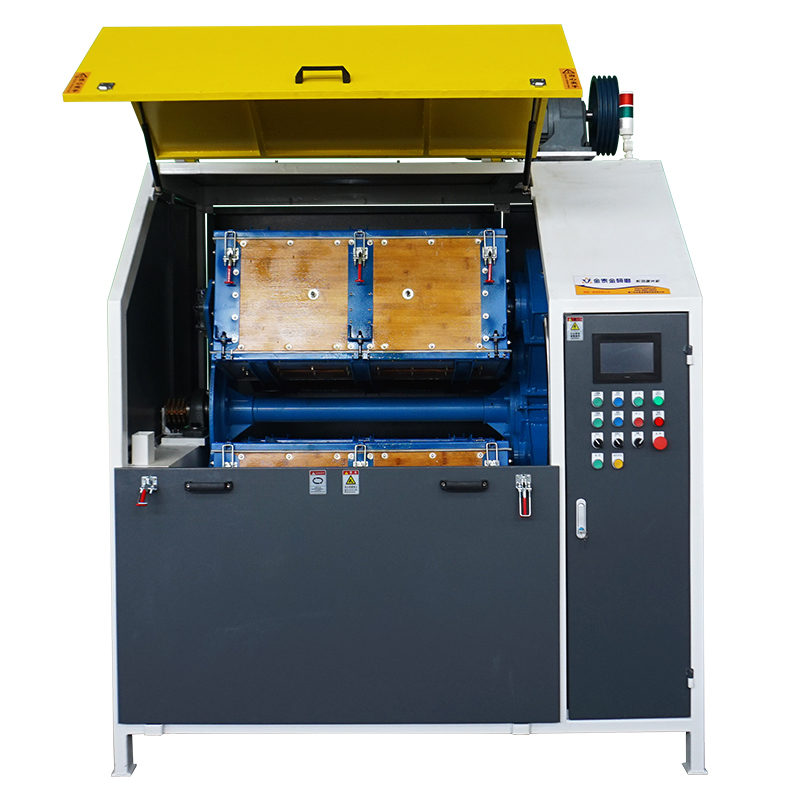
For housings, cover plates, brackets and frames that are rigid and mostly open, a vibratory bowl or tub gives the most forgiving cut-to-colour sequence. The charge moves as a mass, so there is no fixturing to design and no clamping marks, and cycle energy can be tuned through amplitude, media density and load ratio. The limit is reach: media cannot present abrasive uniformly into a pocket whose mouth is narrower than its base, and broad flat faces finish more slowly than edges because contact pressure there is lower. Part-on-part contact also leaves nicks on thin or sharply detailed features, so small, slender or intricate parts usually belong in a gentler route even when their surface requirement is identical.
| Machine route | Where it fits | What it will not do |
|---|---|---|
| Magnetic finishing machine | Refinement and edge conditioning of small precise parts with internal edges, cross holes and fine detail that media cannot enter. | Working envelope and part mass restrict size, removal is very small, and coverage falls off wherever the field cannot drive the pins. |
| Dry polishing machine and dryer | Final lustre, dry colour and post-wet drying where the last reflected image cannot be produced by a wet mass-finishing stage. | Works on accessible faces only, generates dust and heat that need control, and offers no way to correct a defect left by an earlier stage. |
| Vibratory finishing machine (bowl or tub) | Cut-to-colour sequences on rigid, mostly open parts such as housings, covers, brackets and frames, with adjustable energy and no fixturing. | Cannot present media uniformly into pockets with narrow mouths or deep internal bores, and broad flat faces finish more slowly than edges. |
| Tub vibrator | Long and large parts such as shafts, extrusions and frame members that cannot be folded into a barrel, including external grooves. | Poor at bores running parallel to the long axis, and slender parts still need support or balanced loading to hold straightness. |
Two of the most expensive defects are invisible in a reflected image. Media lodges in blind holes, slots, undercuts and threaded features, and it can survive rinsing, drying and even assembly, while the small pins used in magnetic finishing can embed in soft surfaces. At the same time, long cycles quietly round edges past their limit and remove material from datums, seals and bearing seats, so a part passes a visual check and fails a fit check. Control both with geometry rather than appearance: reconcile a counted charge, borescope or pin gauge every cavity, measure edge radii and critical dimensions against incoming values, and set a maximum cycle time that the edge and dimensional allowances actually support.
| Failure mode | Likely cause | How to catch it |
|---|---|---|
| Ghost pattern of an earlier coarse stage showing through the final finish | A cut or refinement stage removed too little material, a later stage reused a contaminated charge, or the crosshatch direction was not changed between steps. | Reflect a light source at a shallow angle and rotate the part; a mark that disappears at one angle and returns at another is still in the surface rather than on it. |
| Smearing or a rolled surface with abrasive and debris buried in it | Excessive cycle time or contact pressure, insufficient compound lubricity, or a final stage run at energy the material cannot absorb without deforming. | Wipe a defined area with a clean white cloth and look for streaks or dulling, then examine at magnification and compare microhardness or etch response against an unmachined reference. |
| Iron pickup or rust bloom on a stainless surface | Carbon steel particles or steel media sharing a machine or charge, contaminated rinse water, or a damp surface left in contact with packaging after drying. | Wipe or swab the surface and look for a brown trace, check the charge and machine for ferrous pieces, and inspect parts after a short dwell in the packaging they will ship in. |
| Sleeks, fine unidirectional lines across a bright face | Contaminated charge or rinse, a metal particle trapped between media and part, or a polishing direction that was never rotated between successive stages. | Orient the light along and then across the lines, note where each family appears on the part, and inspect the charge and rinse screens for embedded foreign particles. |
Liverpool's industrial base is port-led: the Port of Liverpool operates two container terminals, the Royal Seaforth Container Terminal and the £400m Liverpool2 deep-water terminal, on both banks of the River Mersey. Peel Ports describes the port as the flagship handling hub of its 'Heart of Britain' steel and metals network and as a vital gateway for UK steel imports and distribution, and reports a record of over 702,000 tonnes of bulk steel and metals handled. Make UK classes the North West as the UK region with the highest total manufacturing output, and the Liverpool City Region Combined Authority is the area's statutory economic body.
For this brief the relevant part of that base is machinery: Make UK records North West England as topping the UK charts for total manufacturing output, and the Port of Liverpool handles the steel imports that feed that base.
Steel and metals handling at scale - the port reports a record of more than 702,000 tonnes of bulk steel and metals - supports a local base of stockholders, fabricators and processing firms whose plate, bar and sections need edge and surface conditioning before fabrication or dispatch. Media, machines and sample parts for that work can be landed at Liverpool2 or on the Manchester Ship Canal and moved inland on the same rail and road links that already carry the steel.
A Liverpool buyer should confirm the landed-cost and inland-movement plan at the same time as the machine specification, because equipment and media can clear through Liverpool2 or the Manchester Ship Canal, and the finishing acceptance criterion for steel work is normally defined by the customer's order rather than by a generic 'deburred' note.
Freight context: Port of Liverpool: Royal Seaforth Container Terminal and Liverpool2 (deep water), Port of Garston, Liverpool (ABP) - dry bulks and steel products, Liverpool Airport (11.5 miles from the port, per Peel Ports). Peel Ports states that the Port of Liverpool has direct deep-sea and short-sea connections including a niche Far East service, with a purpose-built rail terminal for onward movement, and lists road distances of 105 miles to Birmingham and 217 miles to London. ABP's Port of Garston, Liverpool handles around 500,000 tonnes of cargo a year including steel products, and ABP's Hams Hall terminal links the North West to Midlands distribution.
Importers need a GB-prefixed Economic Operators Registration and Identification (EORI) number, an import declaration carrying the correct commodity code, and retained commercial invoices plus the Import VAT Certificate (C79) so import VAT can be reclaimed. Machinery placed on the Great Britain market must be marked UKCA or CE: the manufacturer must draw up and retain technical documentation including a Declaration of Conformity, apply the correct marking with identification details, and cooperate with market surveillance; an authorised representative must be established in the UK. Under the Product Safety and Metrology (Amendment) Regulations 2024 the UK continues to recognise CE marking alongside or in place of UKCA for the Great Britain market, so either route can be used for most product types. Duty and import VAT are calculated from the customs value declared, and the commodity code also determines whether an import licence is needed.
BSI is the UK's National Standards Body, and British Standards (BS, including adopted BS EN ISO texts) are the documents a UK buyer's surface-finish, edge and cleanliness specifications are normally written against and purchased through. On the plant side, HSE maintains the work equipment and machinery topic covering the safe supply and use of machinery, and the COSHH regime, which requires employers to identify, assess and control risks from hazardous substances - the regime that applies to finishing compounds, abrasive media and the dust and effluent they generate.
SurfacePolish supplies from Xiamen, China. The buyer's own destination rules, conformity marking, tariff classification and documentation responsibilities stay with the buyer; confirm them against the authorities named above before ordering.
Cosmetic acceptance is only half a disposition. Measure the dimensions and flatness that assembly depends on, gauge or thread-check features that media could enter or round, and run the functional check the part actually needs, whether that is seal condition, bearing fit, sliding contact, flow or leak. Cleanliness needs its own verification rather than an assumption: flush blind holes and passage intersections, borescope them at an agreed angle, and examine what the flush carries out. Wipe a defined area with a clean white cloth and record what appears, since compound residue and iron pickup often show only after drying. Confirm cleanliness after drying, not before, and record the method so the next batch is judged on the same basis.
A trial reports what was observed on the parts it received, under the settings used. It cannot prove that every casting in a lot will respond the same way, that a worn media charge will behave identically over months, or that the finish satisfies a regulated or safety-critical requirement; those are questions for the buyer's own engineering and quality functions, using their own verification. It also cannot promise a reflectance value, an Ra value, a cycle time, a price or a capacity. Before shipping parts, decide whether a mirror finish is plausible at all: check the substrate for porosity and inclusions, confirm that available media can reach the geometry, and define the acceptance method first. If the requirement cannot be measured or viewed consistently, no trial result will settle it.
No, and any supplier offering one before seeing the parts is guessing. A trial produces observations on the specific parts tested, under the settings used, and those observations are described rather than warranted. Achievable reflectivity depends on the substrate, the geometry, the edge allowance and the incoming damage, and it can vary across a single face and between parts in one batch. Define how you will measure or view the finish, agree a physical master, and treat the trial result plus your own verification as the basis for a decision.
The pits were in the casting before polishing. Bright finishing compresses the surface into a narrow reflected image, so gas porosity, shrinkage voids and non-metallic inclusions become far more visible once the surrounding metal is smooth, and additional fine polishing only makes them clearer. The options are to move the requirement to a satin or blasted finish that tolerates the surface, change the casting route or the location of the visible face, or accept a written level of visible pits. A trial can show how current castings respond; it cannot remove a defect below the surface.
Ra alone is not enough. It is an average over a defined cutoff length, so a surface with a low Ra can still show waviness, orange peel or directional marks that dominate what a viewer sees, while a slightly rougher surface can look brighter if it scatters light evenly. Specify the measurement setup as well as the value, and where appearance is what matters, add a reflectance or gloss reading at a stated angle together with a physical master and viewing conditions. For Liverpool buyers working to a functional surface requirement, specify the profile and the appearance requirement separately.
Use Liverpool, United Kingdom as the destination on the enquiry and state whether the deliverable is equipment, media and compound, a representative sample review or a line concept. A destination does not imply local stock, a local service point or a local delivery time.
Equipment placed on the Great Britain market needs UKCA or CE marking with a Declaration of Conformity, and HSE's work equipment and machinery and COSHH regimes cover operation and the media, compounds and dust involved. Steel and metals buyers additionally work to the material, inspection and certification requirements written into their own order specification for the finished component.
Sources were retrieved on 2026-09-29 and describe the local industrial and trade context only. They do not evidence any SurfacePolish project, shipment, installation or service in Liverpool.
The buyer wants a clean bright face with no embedded abrasive or residue, because contamination would affect the electrical contact.
Send the material, dimensions, approximate weight, batch quantity, the incoming condition and photographs of the difficult features. Mark which features must not be contacted by media and state how the result will be inspected. This form carries source reference PSEO-0259; quote it if you prefer an additional manual reference.
Open the SurfacePolish enquiry form Email a prepared enquiry
No price, lead time, certification or result is promised here. Confirm whether a sample trial is available for the specific part and what the trial can and cannot show.
Page PSEO-0259 · revised 2026-09-29 · cross-border equipment, media and scoped sample review. City context is sourced and cited above.
Use this local checker to identify missing part and inspection information. It prepares a technical-review brief; it does not approve a machine, process recipe or production result.
Complete the part details to prepare a review brief.
Email : info@surface-polish.com


 IPv6 network supported


 +86-592-2381506