A buyer in Wollongong, Australia working in industrial machinery wants a thin steel fascia brightened evenly without thinning the sheet, distorting the folded return or leaving handling scratches visible in the reflection. SurfacePolish supplies finishing machines, media and compounds across borders and runs a free sample trial that returns the tested panels with observations and a proposed media, compound and cycle direction. This brief is written for a buyer in Wollongong working on industrial machinery; it describes equipment, media and a scoped sample review, not a local polishing service.
Can available media actually reach the geometry, and what finish is realistic in the recesses and internal features it cannot reach?
What batch size, part mix and media maintenance routine will production really run, and does the trial describe that condition?
Which faces must reach a mirror and which only need to be clean and uniform, and how is each one judged?
Bright polishing rounds edges, and the more energy and time the sequence needs, the more rounding appears. Some edges are cosmetic and rounding is welcome; others define function, such as a scraper edge on a machine-tool slideway, a knife edge on a metering blade, a thread start, or the lapped lip of a valve seat. Mark those features on the drawing and state a maximum edge radius or a no-touch zone before media is selected. Inspection can use radius gauges, a cast impression or an optical comparator against the incoming edge form. Where a crisp edge and a bright face conflict, the practical order is to finish the face first and restore the edge with a controlled hand operation, or to accept a slightly duller face that preserves the edge.
Media handling is where good sequences are quietly spoiled. Parts must be separated from the charge completely, using screens or a separation deck matched to the smallest media in use, with a counted charge so losses stay visible. Screen out worn media on a schedule and top the charge up, because a blend of very small and original-size media finishes unevenly. Keep steel and ceramic media in dedicated machines or dedicated charges: a few steel pieces in a ceramic load leave bright speckle and iron pickup on stainless, while ceramic fines in a steel charge cause sleeks. Store dry media sealed against moisture, and clean the machine between material families when switching from ferrous to stainless work.
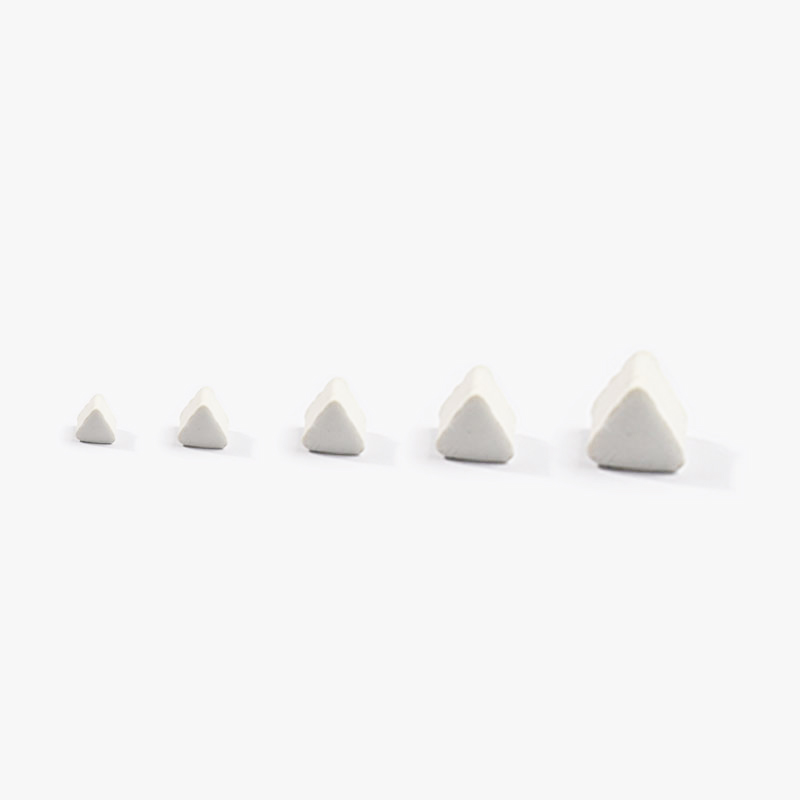
| Media | Best fit | Watch out for |
|---|---|---|
| Medium ceramic triangles or angle-cut shapes | Blending, edge conditioning and the refinement step that removes the coarse cut pattern on housings, brackets, covers and frames. | Media that cannot enter a slot or recess leaves those areas at a different finish, so those faces need a separate operation or a stated lower standard. |
| Small high-density ceramic spheres or ovals | Colour and pre-lustre stages where a uniform, soft-looking finish matters more than stock removal, including curved and contoured faces. | Very slow cut, easily lost through screens sized for larger media, and ineffective in deep recesses because it cannot reach or press against the surface. |
| Magnetic finishing pins and needles | Small precise parts with internal edges, cross holes, slots and fine detail that no tumbling medium of usable size can reach. | Limited by working envelope and part mass, removes very little material, and pins can embed in soft metals or remain in cavities if retrieval is not checked. |
| Dry media - corn cob | Softer dry lustre and drying steps, absorbent polishing of small parts, and light work on brass, aluminium and plated-look surfaces. | Breaks down faster than walnut shell and must be replaced regularly; it removes almost no material and cannot correct a surface defect. |
For housings, cover plates, brackets and frames that are rigid and mostly open, a vibratory bowl or tub gives the most forgiving cut-to-colour sequence. The charge moves as a mass, so there is no fixturing to design and no clamping marks, and cycle energy can be tuned through amplitude, media density and load ratio. The limit is reach: media cannot present abrasive uniformly into a pocket whose mouth is narrower than its base, and broad flat faces finish more slowly than edges because contact pressure there is lower. Part-on-part contact also leaves nicks on thin or sharply detailed features, so small, slender or intricate parts usually belong in a gentler route even when their surface requirement is identical.
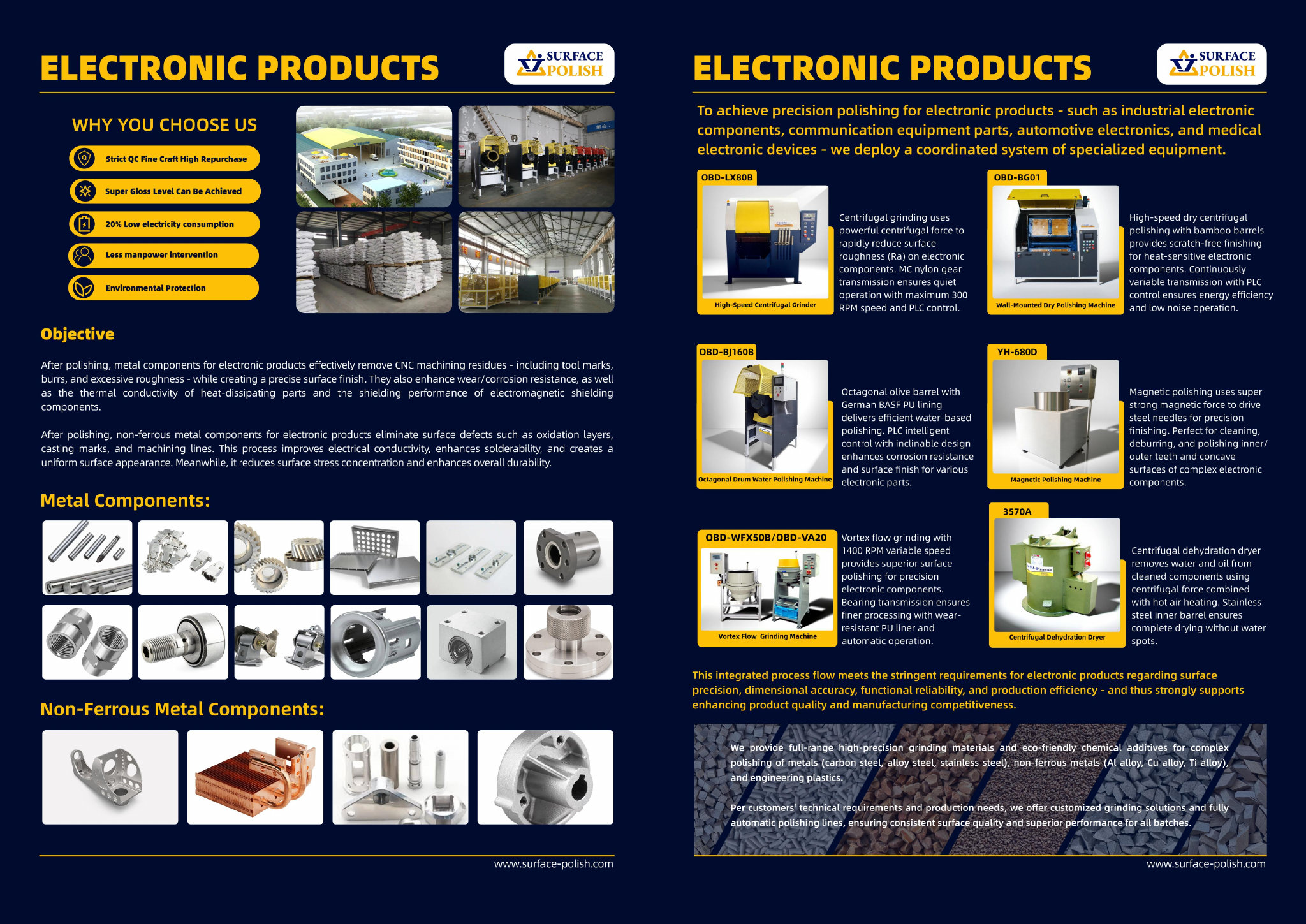
| Machine route | Where it fits | What it will not do |
|---|---|---|
| Dry polishing machine and dryer | Final lustre, dry colour and post-wet drying where the last reflected image cannot be produced by a wet mass-finishing stage. | Works on accessible faces only, generates dust and heat that need control, and offers no way to correct a defect left by an earlier stage. |
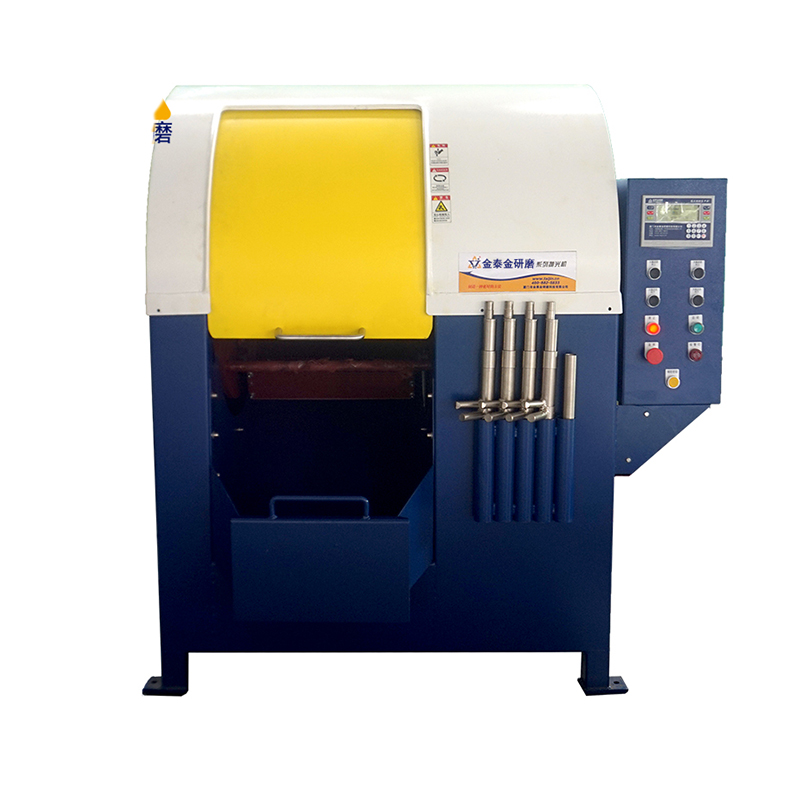
| Centrifugal barrel finishing machine | High-speed cut down and refinement on small to medium parts where a short, energetic cycle is needed before colour stages. | Aggressive on edges and thin sections, requires tight cycle control, and does not replace a finer refinement stage. |
| Tub vibrator | Long and large parts such as shafts, extrusions and frame members that cannot be folded into a barrel, including external grooves. | Poor at bores running parallel to the long axis, and slender parts still need support or balanced loading to hold straightness. |
| Magnetic finishing machine | Refinement and edge conditioning of small precise parts with internal edges, cross holes and fine detail that media cannot enter. | Working envelope and part mass restrict size, removal is very small, and coverage falls off wherever the field cannot drive the pins. |
Haze is a general loss of image clarity without a clear directional pattern, and sleeks are the fine unidirectional lines that often accompany it. Both usually come from contamination: worn media shedding an oversized fine fraction, abrasive agglomerating in a compound line, machine walls and screens carrying grit from a previous coarse stage, or parts that were never rinsed between stages. The pattern is diagnostic, because haze appearing in one machine points at the charge while haze on parts from a shared rinse points at the water or the transfer. Check under raking light and low magnification against a master, and verify charge and rinse first: replacing compound before cleaning the machine usually repeats the defect.
| Failure mode | Likely cause | How to catch it |
|---|---|---|
| Sleeks, fine unidirectional lines across a bright face | Contaminated charge or rinse, a metal particle trapped between media and part, or a polishing direction that was never rotated between successive stages. | Orient the light along and then across the lines, note where each family appears on the part, and inspect the charge and rinse screens for embedded foreign particles. |
| Smearing or a rolled surface with abrasive and debris buried in it | Excessive cycle time or contact pressure, insufficient compound lubricity, or a final stage run at energy the material cannot absorb without deforming. | Wipe a defined area with a clean white cloth and look for streaks or dulling, then examine at magnification and compare microhardness or etch response against an unmachined reference. |
| Edge radius beyond the allowed limit | A cut stage longer or more energetic than the edge allowance supports, insufficient masking or fixturing, or a sequence repeated to remove a defect and run past the edge allowance. | Measure with a radius gauge, a cast impression or an optical comparator at the marked edges, and compare against the edge form and dimensions recorded before finishing. |
| Media lodged in blind holes, slots, undercuts or threaded features | Media size too close to the opening, a slot or cavity that traps the charge, or no defined retrieval step before rinsing and drying. | Reconcile a counted media charge before and after the cycle, borescope each cavity at an agreed angle, and pin or thread gauge the features the charge could enter. |
Wollongong is described by the NSW Government as Australia's 10th-largest city and the urban centre of the Illawarra and Shoalhaven region, which has a population of 422,558 and a large existing advanced manufacturing and engineering workforce. The region was traditionally known for steelmaking and coal mining, and that base still shows in the port's cargo: Port Kembla, NSW's third-largest port, facilitates the region's significant steel and mining industries and is the largest motor vehicle importation terminal in NSW. The NSW Government names defence, ICT, advanced manufacturing and professional services as the region's key industries, and the Australian Navy's Fleet Air Arm base at HMAS Albatross together with the Albatross Aviation Technology Park has made the Illawarra the home of naval aviation in Australia. Growth precincts are the Illawarra Renewable Energy Zone and the Port Kembla Hydrogen Hub, with an ambition to create Australia's first 5GW+ scale green hydrogen hub; the University of Wollongong produces 1,000 ICT and 600 engineering graduates a year with research in ICT, engineering, cyber and advanced materials.
For this brief the relevant part of that base is machinery: The NSW Government describes the Illawarra and Shoalhaven as having 'a large existing advanced manufacturing and engineering workforce' and names advanced manufacturing among its key industries, with the region traditionally known for steelmaking.
The Illawarra's steel and heavy engineering base means large volumes of flame-cut, laser-cut and machined steel plate and structural components that require edge deburring, slag and oxide removal and radius control before welding, painting or galvanising. Port Kembla's role as a vehicle import terminal and the region's naval aviation and defence work add stainless, aluminium and higher-value machined components where surface finish and cleanliness affect coating adhesion, corrosion performance and fit. Fabricators and maintainers in the region also handle refurbishment work where removing corrosion and old coatings without changing base dimensions is the constraint.
A Wollongong buyer should determine whether the finishing operation is part of weld preparation on structural steel, part of a corrosion-protection system where surface profile and cleanliness govern coating adhesion, or a final cosmetic requirement on visible work — and should confirm whether the specification demands a measurable anchor profile or edge radius rather than an unquantified 'clean' surface.
Freight context: Port Kembla (NSW's third-largest port, operated landside by NSW Ports), Shellharbour Airport, Illawarra rail and road corridor into Sydney, including the M1 Princes Motorway. Port Authority NSW records that over 800 commercial vessels call into Port Kembla each year, connecting the Illawarra's industries with the world; the port is the principal grain export port for southern and south-western NSW as well as the largest motor vehicle import terminal in NSW. The NSW Government notes the region is well connected to domestic and international markets with road and rail services into Sydney and other east coast hubs, plus Shellharbour Airport. Sea freight through Port Kembla is the natural route for incoming finishing machines, and the vehicle-import trade means regular scheduled roll-on/roll-off and container services into the port.
The Australian Border Force (ABF) is the customs authority and clears imported goods through customs; all goods arriving in Australia must be declared unless an exception applies, goods valued at up to A$1,000 can be imported without a formal import declaration, and entry is made through the Integrated Cargo System (Form B650 for sea or air cargo). Generally all goods imported into Australia are liable for duties and taxes unless an exemption or concession applies, and most imports are subject to 10% GST, so classification, customs valuation and any preferential tariff claim drive the landed cost; a licensed customs broker is the normal route for a first-time importer. Electrical equipment can fall under the Electrical Equipment Safety System, under which the first Australian supplier registers as a Responsible Supplier, holds an ABN, makes a Responsible Supplier Declaration and marks the equipment with the Regulatory Compliance Mark (RCM) in accordance with AS/NZS 4417.1 and AS/NZS 4417.2. Imported goods may also require a trade description naming the country of manufacture, and machinery that is not in-scope electrical equipment still has to meet state work health and safety duties covering plant.
The national standards body is Standards Australia, which publishes Australian Standards (AS) and joint Australian/New Zealand Standards (AS/NZS); on their own, standards are voluntary and there is no general requirement for the public to comply, but state and Commonwealth governments often refer to AS or AS/NZS standards in legislation and they can then become mandatory. For finishing and machinery work, the applicable documents are the ones cited in the buyer's own contract, purchase specification, licence condition or safety management system, together with the marking rules in AS/NZS 4417.1 and AS/NZS 4417.2 for in-scope electrical equipment sold under the EESS.
SurfacePolish supplies from Xiamen, China. The buyer's own destination rules, conformity marking, tariff classification and documentation responsibilities stay with the buyer; confirm them against the authorities named above before ordering.
A roughness number without its setup is not a specification. Decide the cutoff length, filter, evaluation length, number of traces and their direction relative to the preceding polish direction, then keep every one of those settings unchanged between the incoming survey and the final inspection. Curved and narrow faces need a fixture or a witness coupon processed in the same charge, because a stylus cannot follow a small radius reliably and a hand-held trace on a curved surface is not comparable. Where a face is critical, mark the exact measurement positions on the drawing or with a permanent label and record them. Optical instruments avoid stylus damage on soft polished surfaces but see a different frequency band than a contact profilometer, so do not mix instrument types within one comparison.
A trial runs a small, hand-selected load on equipment that has just been set up. Production runs mixed batches on a media charge of unknown age, with transfer time between stages, variable rinse quality, operators on different shifts, and parts arriving with different incoming damage. Plan a defined pilot batch that uses the intended line configuration and a full first-article inspection, then compare it with the trial observations before committing volume. Watch the variables that scale badly: drying time in a humid season, water chemistry, load density and the handling between cut, colour and lustre stages. Treat the pilot as the real test of stability and keep its settings record with the parts so any drift can be traced.
Design the charge around the smallest opening rather than the average part. Use media clearly smaller than the hole, or mask and plug the features before the cycle, count the media into and out of the load as a reconciliation, and add a retrieval step with a defined check such as a borescope or pin gauge. For Australia buyers sending parts for a trial, include the part with the tightest feature so the media class is chosen against real geometry. The small pins used in magnetic finishing embed easily in soft metal, so those features need extra inspection.
No to both. SurfacePolish is a cross-border supplier of finishing machines, media and compounds, and it does not supply or perform electropolishing or operate a plant, branch, dealer or technician service in Australia or any other market. What is offered is equipment and consumables, a scoped discussion of a finishing line concept, and a free sample trial in which representative parts are shipped to Xiamen and returned with observations and a proposed process direction. Where an electrochemical finish is under consideration, the discussion stays a comparison with a mechanical route.
Orange peel is a wave in the surface, produced when metal is deformed rather than cut, usually on softer alloys, on work-hardened layers, or when a heavy cut stage is followed by too little refinement. It shows as a distorted reflected line when you view a straight edge in the face. Polishing with finer media does not remove it, because the wave extends below the depth a fine stage can reach; the sequence has to return to a cutting stage and then refine properly. If the wave comes from the incoming material or a forming operation, it may not be removable at all.
Use Wollongong, Australia as the destination on the enquiry and state whether the deliverable is equipment, media and compound, a representative sample review or a line concept. A destination does not imply local stock, a local service point or a local delivery time.
Illawarra buyers reference Australian Standards maintained by Standards Australia for material conformity and surface condition, and steel suppliers and fabricators commonly work to Australian steel and welding standards together with client specification. Electrically powered equipment placed on the market must comply with the EESS and carry the Regulatory Compliance Mark under AS/NZS 4417.1 and AS/NZS 4417.2.
Sources were retrieved on 2026-09-29 and describe the local industrial and trade context only. They do not evidence any SurfacePolish project, shipment, installation or service in Wollongong.
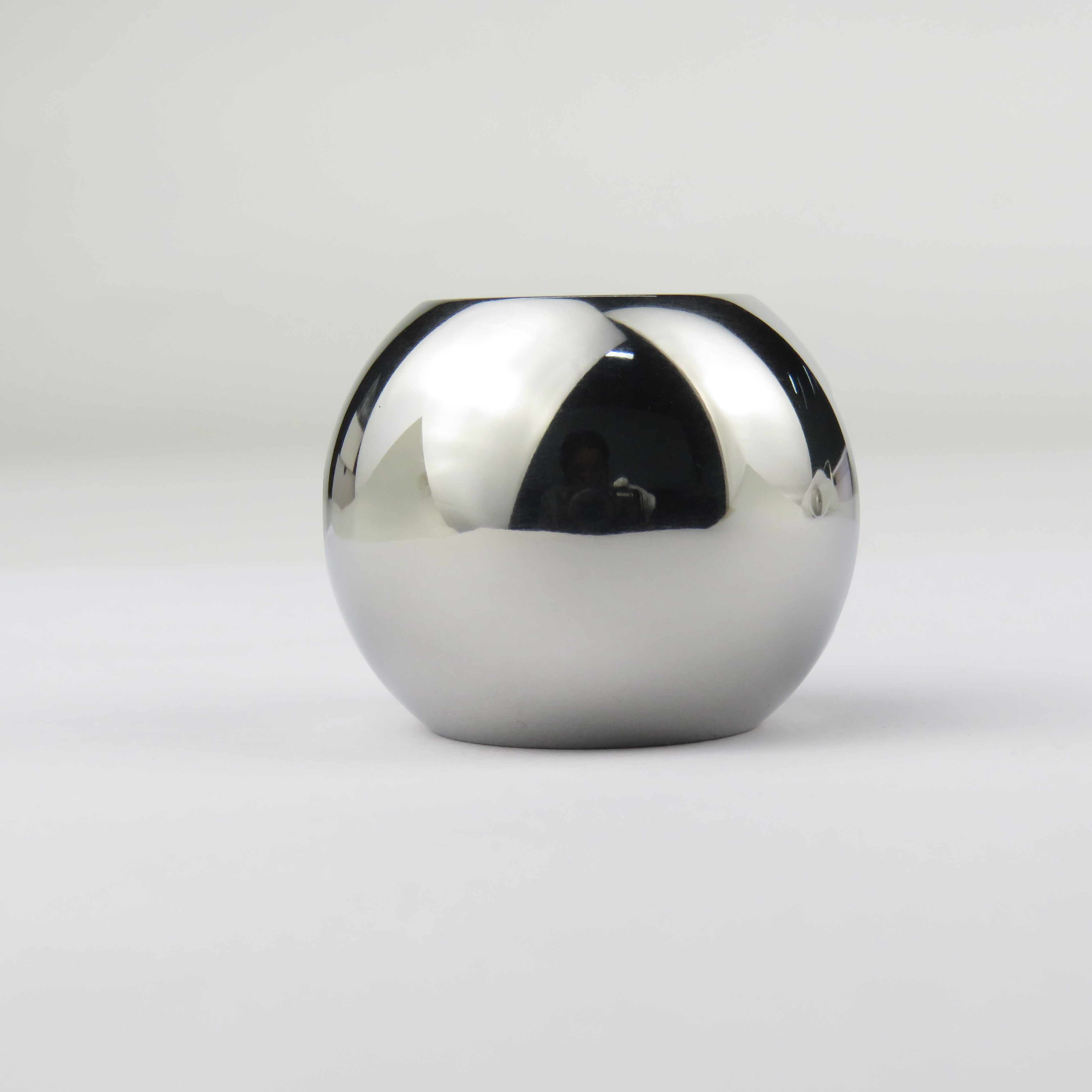
The buyer needs the fascia reflective and uniform without thinning the panel, distorting the fold or leaving the handling scratches visible.
Send the material, dimensions, approximate weight, batch quantity, the incoming condition and photographs of the difficult features. Mark which features must not be contacted by media and state how the result will be inspected. This form carries source reference PSEO-0779; quote it if you prefer an additional manual reference.
Open the SurfacePolish enquiry form Email a prepared enquiry
No price, lead time, certification or result is promised here. Confirm whether a sample trial is available for the specific part and what the trial can and cannot show.
Page PSEO-0779 · revised 2026-09-29 · cross-border equipment, media and scoped sample review. City context is sourced and cited above.
Use this local checker to identify missing part and inspection information. It prepares a technical-review brief; it does not approve a machine, process recipe or production result.
Complete the part details to prepare a review brief.
Email : info@surface-polish.com


 IPv6 network supported


 +86-592-2381506