A buyer in Delhi, India in energy equipment has a cast stainless pump housing where the machined bore lip, split flange gasket face and drain port need deburring while the as-cast texture stays as specified. SurfacePolish supplies finishing machines, media and compounds across borders, and a free sample trial sends representative parts to Xiamen and returns them with an observation record and a proposed media, compound and cycle direction. This brief is written for a buyer in Delhi working on energy equipment; it describes equipment, media and a scoped sample review, not a local polishing service.
Does the drawing state an edge break or an edge round at each controlled edge, and what maximum radius applies where over-rounding is the risk?
What must the part be clean of, and what method and limit does the buyer use to verify cleanliness before assembly, welding, coating or a leak test?
What is the smallest internal passage, cross-drilling or tapped hole the charge must never plug, and how would a lodged medium be found and removed?
Read the drawing surface by surface before any medium is discussed. On an energy-equipment part the surfaces that decide acceptance are rarely the largest: a raised-face gasket land, a valve seat bore, a stem guide diameter, a cross-drilling intersection, a thread entry and a locating spigot each behave differently under an abrasive charge. Separate them into surfaces that seal or locate, surfaces that only carry flow, and surfaces that are cosmetic. A pump housing and a manifold block may share a material grade and still need opposite treatment because one carries a machined gasket land and the other only drilled passages. Mark the protected list on the buyer's own drawing revision, then decide for each item whether it is masked, fixtured out of the mass, finished to a band, or left as-machined. That list also governs handling between operations.
Match media hardness and density to the workpiece, not to the finish someone wants to see. A heavy-cut ceramic cuts carbon and stainless steel edges and also cuts them quickly, which is useful for a thick Poisson burr on a flange and risky on a soft aluminium housing where the same charge peens and smears the surface. Plastic media gives up cut rate to stay gentle on soft alloys and thin sections, and steel media changes the mechanism: instead of cutting, it burnishes and can work-harden a surface. Alumina-bearing or grinding media sit at the aggressive end and suit robust, hard parts with generous edge limits. The decision is a three-way match between part hardness, burr root thickness and the tightest edge allowance. Where a hard body carries a delicate machined land, two stages beat one harder charge.
| Media | Best fit | Watch out for |
|---|---|---|
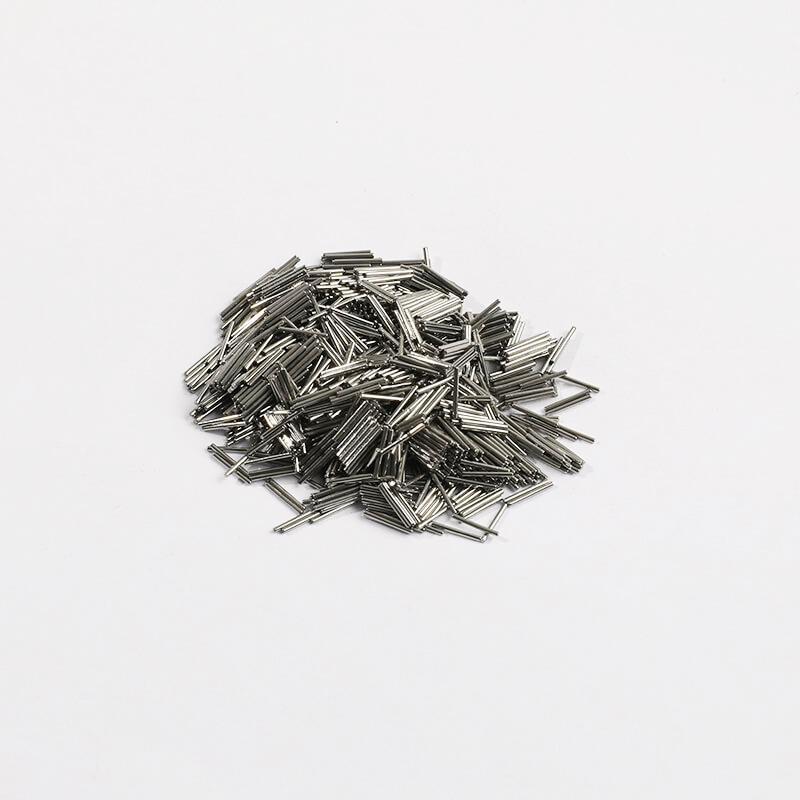
| Magnetic pin or needle charge | Reaching small internal intersections, radial holes and thread entries on small precision parts such as spools, sleeves and drilled fittings | Limited by part size and shape, pins must be retrieved and inspected for breakage, and the result depends heavily on fixture and field design |
| Alumina-bearing grinding media in a dense ceramic bond | Heavy stock removal and consistent cutting on hard or work-hardened parts with generous edge limits, such as robust flanges and heavy fittings | High removal energy rounds functional edges quickly and is a poor match for thin plates, thin-wall castings and lapped sealing faces |
| Dry media, corn cob granules with a polishing compound | Final dry polish, light edge blending and drying after a wet stage on small parts and fittings | Almost no cutting action, absorbs compound and contaminates quickly, and must be kept separate per material family to avoid carry-over |
| Heavy-cut ceramic, angle-cut triangles in a coarse size class | Removing a substantial or thick burr root from open external edges, flange corners, cast bosses and large tapped entries on steel and stainless parts | Cuts controlled edges and gasket lands as readily as burrs, leaves a coarse surface, and lodges in slots whose width approaches the media section |
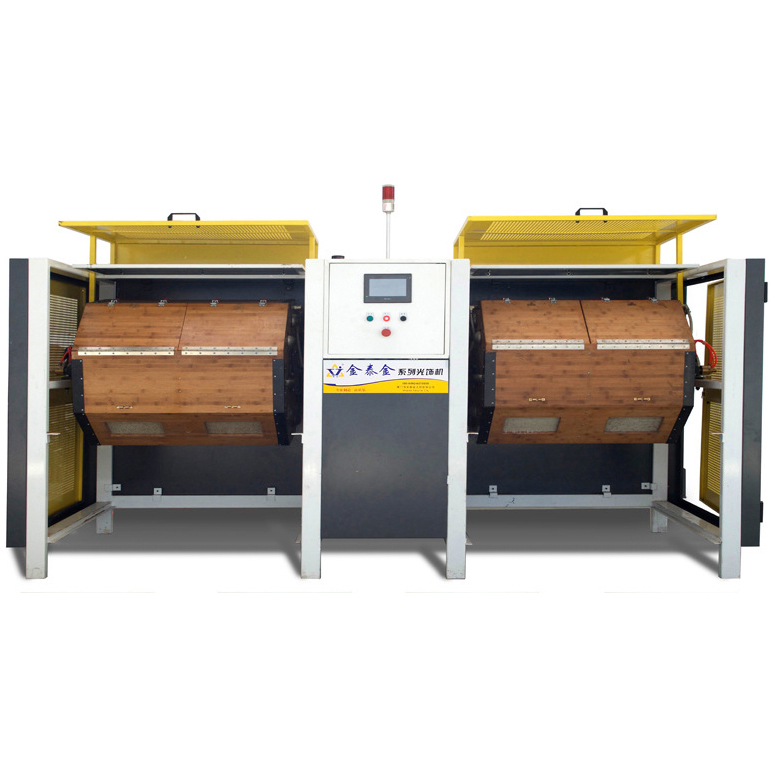
High-pressure routes, disc machines, grinding finishing machines and centrifugal barrels, earn their place when a heavy burr or a large batch makes the gentle options impractical. The trade is paid in three currencies. Edge rounding accelerates, so controlled edges need masking, orientation control or a shorter cycle. Distortion risk rises on thin walls, thin plates and unsupported sections, because the same pressure that cuts a burr can also move material. And the charge has to be balanced: centrifugal barrels in particular need an even barrel weight and a planned stop time, or the load shifts and results vary between barrels. Ask whether the part family has enough edge tolerance and section stiffness to absorb that energy. If it does not, the gentler route usually costs less overall.
| Machine route | Where it fits | What it will not do |
|---|---|---|
| Disc finishing machine | Fast, high-energy cycles on small to medium robust parts, including batches of fittings and small housings that need a quick cut | High contact pressure rounds edges quickly and can mark or deform thin and soft parts, with results sensitive to load and disc condition |
| Dry polishing machine and dryer | Drying after a wet cycle and dry light polishing or deburring of small parts, including features where residual moisture is a problem | Removes little or no material, needs dust extraction when dry media is used, and does not replace a cutting stage for a substantial burr |
| Vibratory finishing machine (bowl) | General deburring and refinement of valve bodies, flange plates, pump components and fittings that fit the bowl and can move freely in the charge | No access to deep internal passages, constant part-on-part contact, and finished faces need separation or fixture protection |
| Centrifugal barrel finishing machine | Short high-pressure cycles on small precision parts such as spools, sleeves, small valve bodies and drilled fittings | Rounds edges and can distort thin unsupported sections quickly, and needs balanced barrel loading, controlled stop time and careful fixturing |
Edge rounding past the drawing limit is the quietest failure in this process, because the part usually looks better, not worse. A blended edge photographs cleanly, passes a visual check and still fails the function it was specified for: a seat land that no longer seals across its designed contact band, a thread entry that loses its lead, a knife edge on a heat-exchanger plate that no longer crimps or seals. The change is cumulative, so a cycle that rounds an edge by an acceptable amount on the first part may take it past the limit on the twentieth. Catch it by measuring a defined edge feature before and after with a radius gauge, an optical comparator or a moulded replica, and by writing a maximum radius at each controlled edge.
| Failure mode | Likely cause | How to catch it |
|---|---|---|
| Part-on-part or fixture witness marks and peening on a finished face | Insufficient separation in the load, too high a load ratio for the part mass, sharp or worn fixture contact points, or the same faces bearing contact throughout the cycle | Inspect at magnification under angled light against a retained reference, map the mark positions against the load arrangement, and check fixtures and compartments for burrs and wear |
| Controlled edge rounded past the drawing limit, or an edge left sharper than the specified break | Cycle too long or energy too high for the edge allowance, dense or coarse media, an unmasked functional edge, or a drawing requirement that never stated a maximum radius | Measure a defined edge feature before and after with a radius gauge, optical comparator or moulded replica, compare against the maximum on the drawing, and check the same feature on parts from different positions in the load |
| Uneven result across a batch, with over-finished edges in one zone and untouched areas in another | Part position in the charge, shielding by fixtures or other parts, a worn charge that cuts differently from a fresh one, or masking that leaked | Mark fixed measurement and inspection points on several parts, compare parts from the top, middle and bottom of the load, and record charge age against the result |
| Staining, pitting or a corrosion question on a hardened high-strength part after a wet cycle | Acid-bearing compound or contaminated rinse water, long dwell between finishing and drying, or no protective rinse for the interval before the buyer's next operation | Inspect within an agreed interval after drying, wipe a defined area with a white cloth, compare against a retained reference, and route any embrittlement question to whoever owns the downstream coating or plating specification |
Delhi is India's capital territory and the fourth largest Indian state or UT by FDI inflows, with 10,64,499 MSMEs registered in Delhi since inception, of which 276,746 are women-owned (s1). Industrial infrastructure is delivered by the Delhi State Industrial and Infrastructure Development Corporation Ltd. (DSIIDC), a government undertaking established in February 1971 that has developed industrial areas and sheds including Bawana Industrial Area and Narela Industrial Complex, and is building a Knowledge Based Industrial Park at Baprola and a built-up factory complex at Rani Khera (s3). The territory's freight and connectivity base includes Indira Gandhi International Airport, five major railway stations handling 496 passenger and 210 freight trains a day, and the Delhi-Mumbai Expressway running through six states (s1).
For this brief the relevant part of that base is energy: Delhi's total installed renewable power capacity was 397.40 MW as of February 2025, with a Solar Policy for generation-based incentives and more than one lakh electric vehicles in the city (s2).
Delhi's industrial estates concentrate small and medium engineering units producing sheet-metal enclosures, machined components, medical and scientific hardware, and electrical assemblies, where burrs on punched or machined edges and cleanliness before coating or assembly are recurring quality issues. Additive, laser-cut and sheet-metal work in the NCR typically needs edge radiusing and a uniform finish before powder coating or anodising, and medical or instrument parts carry a cleanliness expectation on top of the finish.
A Delhi buyer should settle whether the parts need burr removal only, a specified surface roughness, or a cleanliness level suitable for a medical or instrument application, because the three require different process media and validation evidence - and should confirm whether the machine or consumable itself carries a BIS obligation before comparing landed cost.
Freight context: Indira Gandhi International Airport, Delhi NCR major railway stations (freight and passenger), Delhi-Mumbai Expressway, ICD Tughlakabad (inland container depot). Delhi is a landlocked territory whose international gateway is Indira Gandhi International Airport, supported by five major railway stations handling 210 freight trains a day and the Delhi-Mumbai Expressway (s1). Air-freighted equipment or sample parts clear through the airport's cargo channel, while sea-borne consignments are normally discharged at a west-coast port and railed or trucked inland to an NCR inland container depot.
The Bureau of Indian Standards (BIS) describes itself as the National Standards Body of India and runs the country's product certification system, including products under compulsory certification, a foreign manufacturers certification scheme with nomination of an authorised Indian representative, and a registration scheme for manufacturers (c8, c9). Indian Standards (IS) issued by BIS are the reference texts Indian buyers write surface, coating and material specifications against, and BIS-recognised or BIS-empanelled laboratories are the test facilities used for certification work. Where a machine, media or compound falls under a BIS quality-control order, the licence or registration duty attaches to the product placed on the Indian market, so an overseas supplier should settle the applicable IS standard and the certification route before quoting.
An Importer-Exporter Code (IEC) issued by DGFT is a key business identification number which is mandatory for exports or imports, and since the introduction of GST the IEC number is the same as the PAN of the firm (c6). The post-incorporation clearance list published by Invest India includes the IEC, a Customs- Special Valuation Branch reference and the grant of a Bureau of Indian Standards (BIS) licence, and it names the Central Board of Excise and Customs among the agencies in the framework (c10). The Foreign Trade Policy fixes the mandatory import documents as a bill of lading / airway bill / lorry receipt / railway receipt, a commercial invoice cum packing list and a bill of entry, with additional documents or NOCs possible for goods subject to product-specific compliance (c3); it also states that domestic laws, rules, orders, technical specifications and environmental, safety and health norms applicable to domestically produced goods apply mutatis mutandis to imports unless specifically exempted (c2), which is the basis on which a BIS quality-control order can bite on imported machinery. A landed-cost plan therefore needs the correct ITC(HS) classification and the basic customs duty and IGST that follow from it, plus the IEC, the bill of entry documentation and any BIS licence or registration obligation, and a related-party import can additionally be pulled into special customs valuation.
SurfacePolish supplies from Xiamen, China. The buyer's own destination rules, conformity marking, tariff classification and documentation responsibilities stay with the buyer; confirm them against the authorities named above before ordering.
An acceptance record is only as strong as the chain behind it. A measured roughness or edge radius means little unless the record links the part to the batch, the batch to the charge, and the charge to the media type, size class, charge age, compound and settings used on that day. Request the settings record with the returned parts, plus the media and compound identification, the cycle count on the charge and the maintenance history. On the measuring side, know the calibration status of the instrument and the uncertainty attached to the value, because a reading quoted to two decimal places on an uncalibrated gauge is not evidence. Decide which records the buyer owns and which are requested from the supplier.
A sample trial reports what happened to the parts that were tested under the settings that were used. It cannot establish capability across other heats, casting lots or machining sources; it cannot demonstrate uniformity across a full production charge, because a trial load is small; and it cannot show how the process behaves after a charge has worn, how a coating or weld will take to the finished surface, how the part will behave in a corrosive or high-cycle service environment, or whether any cleanliness, hydrogen or regulatory requirement is met. Those questions belong to the buyer's own qualification. Close the gap deliberately: define a verification batch on production equipment, decide how many charges will be monitored, and state in advance what result would stop the route.

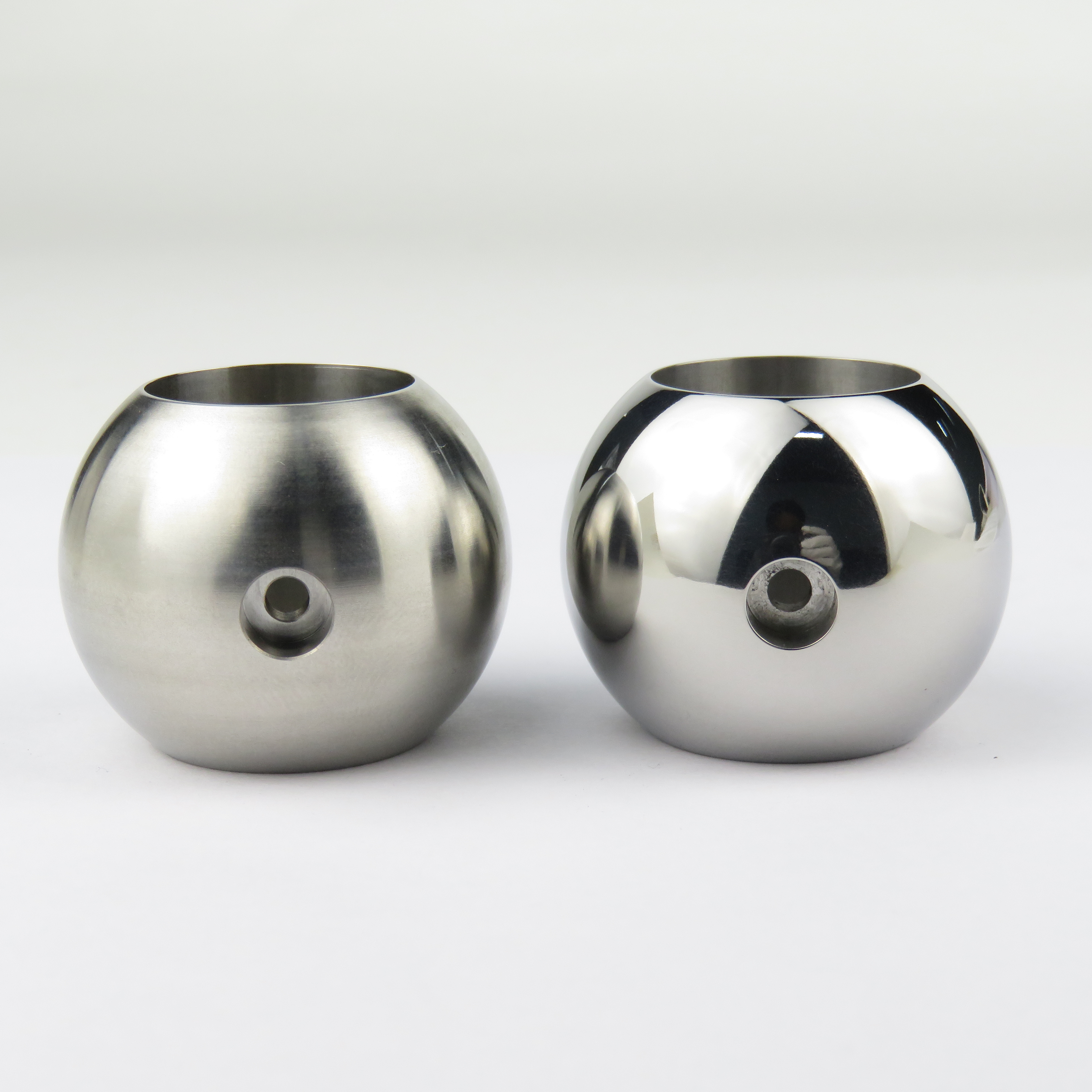
An edge break means the sharp corner is removed, usually to a small defined size, and the intent is that no sharp edge or wire edge remains. An edge round means the edge is held inside a controlled radius band, often with both a minimum and a maximum, because the function depends on the contour, for example where a seal seats or a coating must cover the edge uniformly. Specifying only the word deburr leaves the size open, and mass finishing rounds every edge in proportion to the energy used. For each controlled edge, state which of the two applies, the size or band, and how it will be measured.
The visible lip is the part of the burr that is easy to see and easy to blend flat. The root is the material still connected to the parent surface underneath it, and it is the part that can break free later as a particle, especially in a flowing gas or hydraulic circuit. A light refinement pass can roll the lip over and make the edge look finished while leaving the root attached. Deburring is therefore judged on whether the root has been removed, which usually means removing a small amount of parent material at the edge rather than only wiping the surface. Agree how that judgement will be made.
They can be run in the same equipment, but not safely in the same charge without a cleaning discipline. Carbon steel and cast iron leave fines and graphite that transfer to stainless parts, show up as rust staining or embedded particles, and are difficult to see at the machine. The practical approach is a dedicated charge per material family where volume allows, or a purge between families: run the machine with media and clean compound, flush the rinse tank, change or clean the drying medium and cloths, and inspect the media for embedded ferrous fines. Tell the finishing route which families will alternate, because changeover time is a real cost.
Use Delhi, India as the destination on the enquiry and state whether the deliverable is equipment, media and compound, a representative sample review or a line concept. A destination does not imply local stock, a local service point or a local delivery time.
Delhi buyers specify finish, cleanliness and material conformity against Indian Standards (IS) published by the Bureau of Indian Standards, the National Standards Body of India (s5). For medical and instrument work the buyer will usually add its own cleanliness and validation requirements on top of the IS reference, and where a product falls under a BIS quality-control order the licence or registration applies to the item placed on the Indian market (s5).
Sources were retrieved on 2026-09-29 and describe the local industrial and trade context only. They do not evidence any SurfacePolish project, shipment, installation or service in Delhi.
The buyer wants the machining burrs at the bore lip, split flange gasket face and drain port removed without polishing away the as-cast texture the specification protects.
Send the material, dimensions, approximate weight, batch quantity, the incoming condition and photographs of the difficult features. Mark which features must not be contacted by media and state how the result will be inspected. This form carries source reference PSEO-0918; quote it if you prefer an additional manual reference.
Open the SurfacePolish enquiry form Email a prepared enquiry
No price, lead time, certification or result is promised here. Confirm whether a sample trial is available for the specific part and what the trial can and cannot show.
Page PSEO-0918 · revised 2026-09-29 · cross-border equipment, media and scoped sample review. City context is sourced and cited above.
Use this local checker to identify missing part and inspection information. It prepares a technical-review brief; it does not approve a machine, process recipe or production result.
Complete the part details to prepare a review brief.
Email : info@surface-polish.com


 IPv6 network supported


 +86-592-2381506