A buyer in Hamburg, Germany working on energy equipment has a duplex stainless valve body whose internal cross-drilling burrs must come off without touching the gasket land. SurfacePolish supplies finishing machines, media and compounds across borders and runs a free sample trial: representative parts travel to Xiamen and come back with an observation record and a proposed media, compound and cycle direction. This brief is written for a buyer in Hamburg working on energy equipment; it describes equipment, media and a scoped sample review, not a local polishing service.
Does the drawing state an edge break or an edge round at each controlled edge, and what maximum radius applies where over-rounding is the risk?
Which material families and heat-treatment states share the equipment, and what separation is needed to avoid ferrous or graphite carry-over onto stainless parts?
What must the part be clean of, and what method and limit does the buyer use to verify cleanliness before assembly, welding, coating or a leak test?
Deburring specifications fail more often on the incoming condition than on the finishing parameters. Two machining suppliers can deliver the same part number with visibly different burr height, edge sharpness, tool marks and trapped chips, because feed, tool wear and coolant strategy differ. A cycle that clears one supplier's burr may leave the other's root attached. Before writing any requirement, record what arrives: where the burrs sit, how tall they are, how sharp the edges are, the roughness at named points and the mass of the part. Keep one as-received reject in the sample set so the route is tested against the worst credible input rather than an average one. When the requirement is written, state the starting condition it assumes.
The compound is a chemistry decision that outlives the finishing cycle. It controls cutting behaviour, keeps the media and the part clean, suspends fines, and determines what film remains on the part when it leaves the machine. Acidic families clean and brighten some stainless grades but leave a surface that must be rinsed and neutralised carefully, and they are the wrong choice where a hardened, high-strength steel later sees a plating or coating step. Alkaline and neutral cleaning families are gentler on mixed loads but may not hold the same cutting performance. Silicate-bearing or film-forming compounds can leave a tenacious residue in a gasket groove or a blind hole. Check compatibility in both directions: the material being finished, and the residue against the buyer's next operation.
| Media | Best fit | Watch out for |
|---|---|---|
| Alumina-bearing grinding media in a dense ceramic bond | Heavy stock removal and consistent cutting on hard or work-hardened parts with generous edge limits, such as robust flanges and heavy fittings | High removal energy rounds functional edges quickly and is a poor match for thin plates, thin-wall castings and lapped sealing faces |
| Heavy-cut ceramic, angle-cut triangles in a coarse size class | Removing a substantial or thick burr root from open external edges, flange corners, cast bosses and large tapped entries on steel and stainless parts | Cuts controlled edges and gasket lands as readily as burrs, leaves a coarse surface, and lodges in slots whose width approaches the media section |
| Dry media, corn cob granules with a polishing compound | Final dry polish, light edge blending and drying after a wet stage on small parts and fittings | Almost no cutting action, absorbs compound and contaminates quickly, and must be kept separate per material family to avoid carry-over |
| Plastic media triangles and pyramids in a soft to medium grade | Deburring aluminium, brass and other soft or thin-walled parts where surface marking and edge rounding must stay minimal | Slow cut rate, media deforms and wears out of shape, and a worn charge behaves noticeably differently from a fresh one |
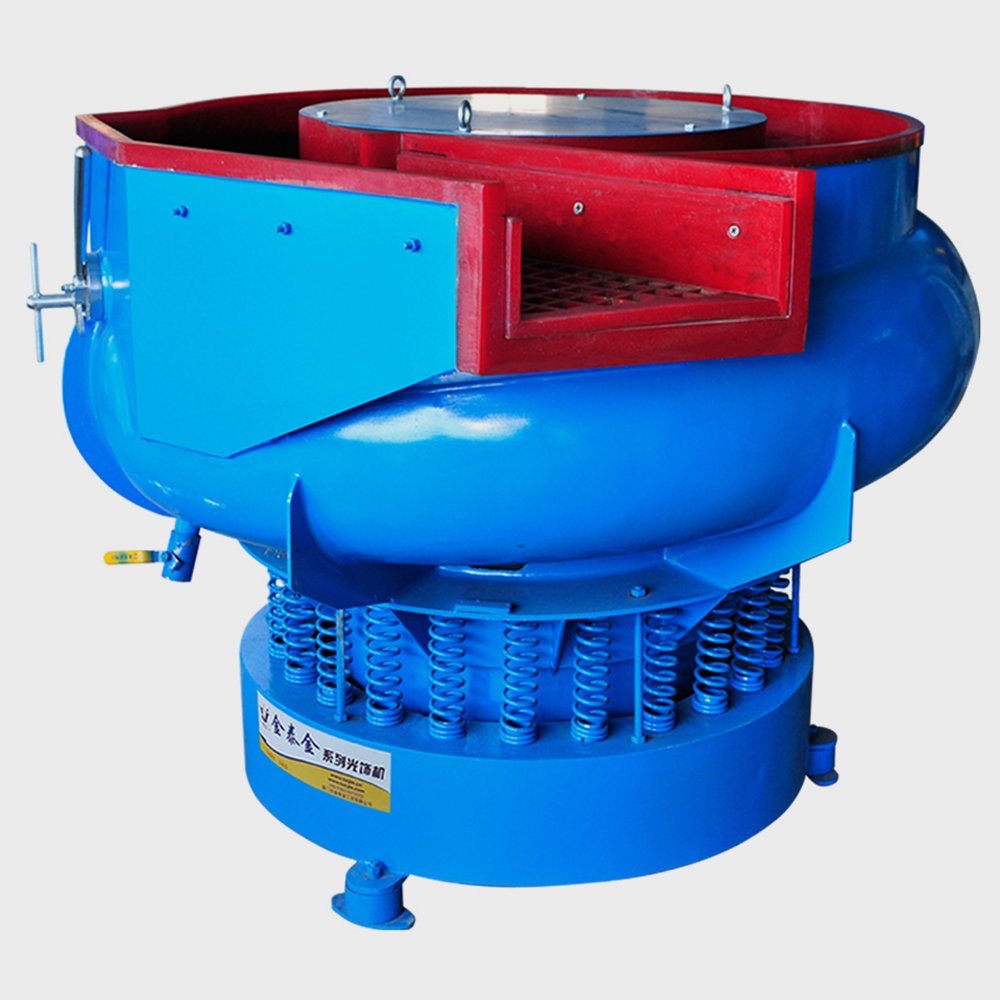
High-pressure routes, disc machines, grinding finishing machines and centrifugal barrels, earn their place when a heavy burr or a large batch makes the gentle options impractical. The trade is paid in three currencies. Edge rounding accelerates, so controlled edges need masking, orientation control or a shorter cycle. Distortion risk rises on thin walls, thin plates and unsupported sections, because the same pressure that cuts a burr can also move material. And the charge has to be balanced: centrifugal barrels in particular need an even barrel weight and a planned stop time, or the load shifts and results vary between barrels. Ask whether the part family has enough edge tolerance and section stiffness to absorb that energy. If it does not, the gentler route usually costs less overall.
| Machine route | Where it fits | What it will not do |
|---|---|---|
| Grinding finishing machine | Heavier stock removal and thick burr roots on robust parts where clearing material in a shorter cycle matters more than the surface result | Aggressive edge rounding and a coarser surface, so it fits lapped seats, thin sections and tight edge bands poorly |
| Centrifugal barrel finishing machine | Short high-pressure cycles on small precision parts such as spools, sleeves, small valve bodies and drilled fittings | Rounds edges and can distort thin unsupported sections quickly, and needs balanced barrel loading, controlled stop time and careful fixturing |
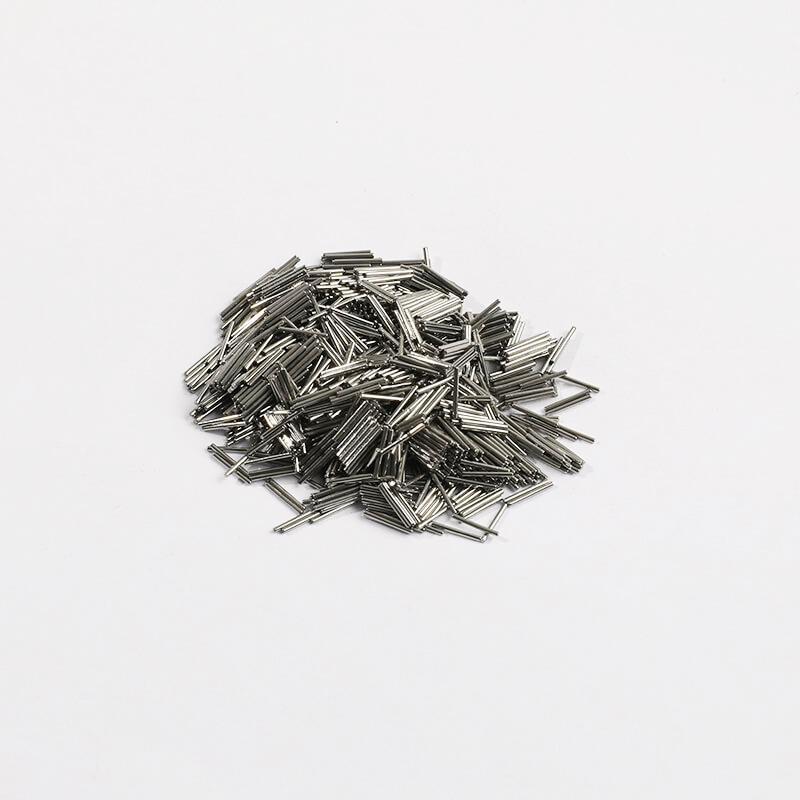
| Magnetic finishing machine | Small precision parts with internal intersections, radial holes and thread entries that a bulk charge cannot reach | Limited by part size and material, pins must be retrieved and checked, and it does not level or refine large flat surfaces |
| Barrel finishing machine and rotary barrel tumbler | Gentle, low-impingement deburring of small, fragile or precision parts and mixed fitting batches where edge protection matters more than speed | Long cycles, no visibility while the barrel runs, and internal features can collect media and compound that must be retrieved at unload |
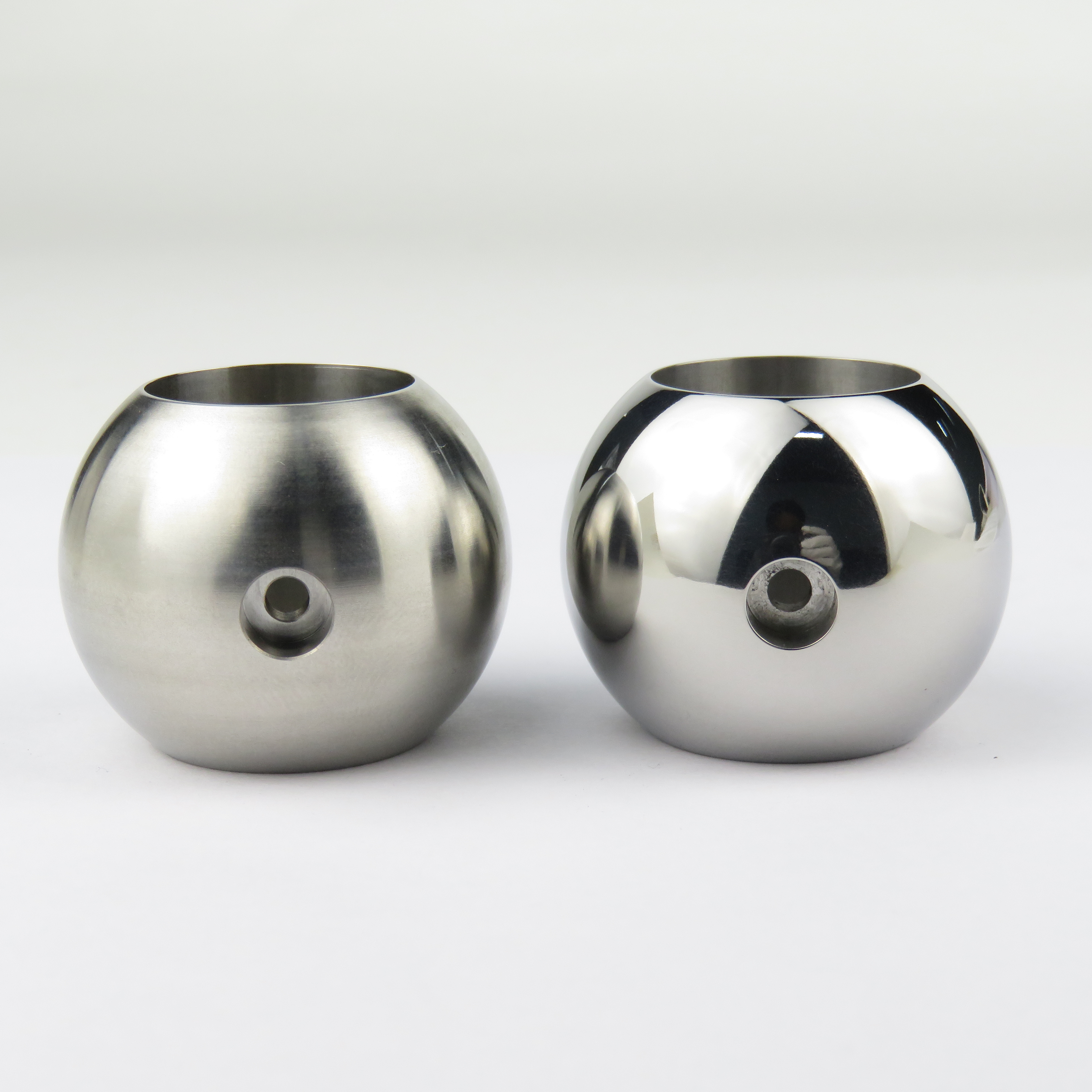
Edge rounding past the drawing limit is the quietest failure in this process, because the part usually looks better, not worse. A blended edge photographs cleanly, passes a visual check and still fails the function it was specified for: a seat land that no longer seals across its designed contact band, a thread entry that loses its lead, a knife edge on a heat-exchanger plate that no longer crimps or seals. The change is cumulative, so a cycle that rounds an edge by an acceptable amount on the first part may take it past the limit on the twentieth. Catch it by measuring a defined edge feature before and after with a radius gauge, an optical comparator or a moulded replica, and by writing a maximum radius at each controlled edge.
| Failure mode | Likely cause | How to catch it |
|---|---|---|
| Burr lip folded flat over the edge with the root still attached | Too light a cut for the burr thickness, a refinement-only pass used as the only stage, or a soft ductile material that rolls instead of fracturing | Draw a probe or lint-free wipe along the edge, examine at magnification under angled light, and take a sectioned or moulded replica sample where the feature is critical |
| Media lodged in a cross-drilling, blind tapped hole, keyway, groove or internal passage | Size class chosen against an average feature rather than the smallest one, media fractured into smaller pieces during the cycle, or a secondary burr that closed part of the opening | Borescope agreed passages at a fixed angle, pin gauge every tapped hole, count the charge in and out where practical, flush through a filter and inspect the residue, and compare part mass before and after |
| Burr still present on an internal cross-drilling intersection after finishing | No credible access route for the charge, a medium too large to enter the passage, or a cycle too short for the intersection to see enough contact | Borescope the intersection at the agreed angle on sample parts, section one representative part to expose the wall, and compare against the recorded as-received condition |
| Loss of flatness or a dimensional shift on thin plates, thin walls and long unsupported sections | Part-on-part impacts and fixture pressure in a high-energy route, too high a load ratio, or insufficient support along a slender part | Check flatness on a surface plate or a coordinate measuring machine at marked points before and after finishing, and check the same points across parts from different load positions |
Hamburg's industrial identity is built on its port and on aviation: 8.3 million TEU were handled in the Port of Hamburg in 2025, growth of 7.3 percent, and HHLA operates three container terminals in the city at Altenwerder, Burchardkai and Tollerort (s1, s2). Airbus states that Hamburg is the headquarters for Airbus Commercial Aircraft in Germany, the largest Airbus site in the country and a key centre for developing and manufacturing jetliners (s3). The city presents Hamburg as the economic heart of northern Europe on the strength of its mix of economic potential and quality of life (s4), with Hamburg Invest as the central contact for companies investing, expanding or locating in the metropolitan region (s5). The Handelskammer Hamburg frames the city as a business location defined by its port, airport and critical infrastructure (s6), and a dedicated cluster agency works the renewable-energy industry of the metropolitan region (s7).
For this brief the relevant part of that base is energy: Erneuerbare Energien Hamburg Clusteragentur GmbH is the city's renewable-energy cluster agency and publishes on the renewable-energy industry of the Hamburg metropolitan region (s7).
Hamburg combines large-scale port and terminal engineering with aircraft component manufacture, both of which involve stainless and aluminium structures that are welded, cut and machined before assembly and then judged on edge condition, burr removal and surface preparation before painting, sealing or coating. Aviation work brings documented process control and cleanliness requirements, while the port and terminal side contributes heavy fabrication and repair work where de-scaling, edge rounding and surface preparation are routine.
A Hamburg buyer should first decide whether the process has to fit aviation-style documented process control or whether a general workshop specification is enough, and then check whether the same equipment must handle both aluminium and stainless parts, since media and compound selection differ and cross-contamination between the two is the usual failure point.
Freight context: Port of Hamburg (HHLA container terminals Altenwerder, Burchardkai and Tollerort), Hamburg Airport (HAM). The Port of Hamburg handled 8.3 million TEU in 2025 (up 7.3 percent), with HHLA operating the three city container terminals (s1, s2). The port is the natural entry point for a full finishing machine shipped from Asia, and Hamburg Airport plus the port's air-freight and courier links are the practical route for sample parts that have to reach a plant quickly.
Germany sits inside the EU customs union, so Chinese-origin industrial machinery enters against the EU's common commercial tariff rather than a German national tariff, and the duty that applies is determined by the commodity code declared on the import declaration. China is one of the EU's largest goods trading partners and the EU has long run a goods deficit with it, while the Commission characterises the relationship as simultaneously partnership, competition and systemic rivalry (c1, c2). The Commission publishes the EU's trade agreements; no agreement with China appears in that overview, so Chinese-origin goods cannot claim a preferential origin rate and are assessed under the standard tariff (c8). German customs is administered by the Zoll under the Generalzolldirektion, and the importer must hold an EORI number - valid throughout the European Union and replacing the former German customs number - before goods can be cleared (c5, c6).
DIN, the German Institute for Standardization, is the German standards body: German technical rules and standards from Germany and worldwide are distributed through DIN Media, its publishing house, and DIN adopts European and international standards at national level (c7). In practice a German buyer's surface, edge and cleanliness specifications are written against DIN/EN/ISO texts, while machinery conformity itself runs through the European CE route (CE marking plus technical file and EU declaration of conformity) rather than a separate national approval (c3, c7). In the automotive supply chain the VDA, whose members are the more than 620 companies producing for the German automotive industry, is the association through which sector supplier requirements and quality-management material are organised (c10).
SurfacePolish supplies from Xiamen, China. The buyer's own destination rules, conformity marking, tariff classification and documentation responsibilities stay with the buyer; confirm them against the authorities named above before ordering.
A sampling plan for mass-finished parts has to survive two kinds of variation: variation across the batch and drift over the life of the charge. Within a batch, parts at the top of a load, parts that sat in a shielded pocket and parts nearest the machine wall may not match. Across a charge life, the twentieth run with the same media behaves differently from the first. Define the sample size, the frequency, which features are checked on each sample and which checks are destructive. Deliberately include the tightest passage, the thinnest wall and the most protected edge, and take samples from the first and last part of a run as well as from the middle. Hold the first accepted part as the reference.
Consistency in production comes from a maintenance schedule for the consumables, not from locking the machine settings. Compound concentration drifts as it is carried out on parts and as the bath is topped up with water; media wears and breaks; fines accumulate in the bath and in the rinse; screens clog. Each of those changes the process gradually, so the first sign is usually a slow trend in edge condition or surface result rather than a sudden failure. Set the schedule before production starts: how often concentration and pH are checked and corrected, when the charge is screened, when media is measured against the specified size class and topped up or replaced, when the bath is dumped and the machine purged, and when the rinse water is changed.
Mass finishing removes material mainly at edges and corners, so a critical dimension across a flat face usually moves very little, but thin and slender parts can distort. Part-on-part impacts, fixture pressure and long cycles in a high-energy machine can dish a heat-exchanger plate, bend a thin diaphragm or spring a long unsupported section. The effect depends on section stiffness, load ratio, media mass and support method, and it can be small enough to be missed until assembly. If flatness matters, say so before the trial, nominate the measurement points, and check the same points after finishing rather than judging the plate by eye.
An edge break means the sharp corner is removed, usually to a small defined size, and the intent is that no sharp edge or wire edge remains. An edge round means the edge is held inside a controlled radius band, often with both a minimum and a maximum, because the function depends on the contour, for example where a seal seats or a coating must cover the edge uniformly. Specifying only the word deburr leaves the size open, and mass finishing rounds every edge in proportion to the energy used. For each controlled edge, state which of the two applies, the size or band, and how it will be measured.
They can be run in the same equipment, but not safely in the same charge without a cleaning discipline. Carbon steel and cast iron leave fines and graphite that transfer to stainless parts, show up as rust staining or embedded particles, and are difficult to see at the machine. The practical approach is a dedicated charge per material family where volume allows, or a purge between families: run the machine with media and clean compound, flush the rinse tank, change or clean the drying medium and cloths, and inspect the media for embedded ferrous fines. Tell the finishing route which families will alternate, because changeover time is a real cost.
Use Hamburg, Germany as the destination on the enquiry and state whether the deliverable is equipment, media and compound, a representative sample review or a line concept. A destination does not imply local stock, a local service point or a local delivery time.
Surface, edge and cleanliness requirements in Hamburg are written against DIN/EN/ISO texts, with CE marking and the EU declaration of conformity as the route for placing machinery on the German market (c3, c7). Aerospace customers apply their own qualification and documentation regimes on top of that, while the VDA framework governs automotive supplier requirements where Hamburg plants feed automotive programmes (c10).
Sources were retrieved on 2026-09-29 and describe the local industrial and trade context only. They do not evidence any SurfacePolish project, shipment, installation or service in Hamburg.
The buyer must clear the internal intersection burrs and thread entries without rounding the gasket land or lodging media in the side ports.
Send the material, dimensions, approximate weight, batch quantity, the incoming condition and photographs of the difficult features. Mark which features must not be contacted by media and state how the result will be inspected. This form carries source reference PSEO-0338; quote it if you prefer an additional manual reference.
Open the SurfacePolish enquiry form Email a prepared enquiry
No price, lead time, certification or result is promised here. Confirm whether a sample trial is available for the specific part and what the trial can and cannot show.
Page PSEO-0338 · revised 2026-09-29 · cross-border equipment, media and scoped sample review. City context is sourced and cited above.
Use this local checker to identify missing part and inspection information. It prepares a technical-review brief; it does not approve a machine, process recipe or production result.
Complete the part details to prepare a review brief.
Email : info@surface-polish.com


 IPv6 network supported


 +86-592-2381506