A buyer in Leeds, United Kingdom in energy equipment has a forged F316 weld-neck flange whose bore and bolt-hole entry burrs must be removed without disturbing the serrated raised face. SurfacePolish supplies finishing machines, media and compounds across borders and runs a free sample trial, returning representative parts from Xiamen with an observation record and a proposed media, compound and cycle direction. This brief is written for a buyer in Leeds working on energy equipment; it describes equipment, media and a scoped sample review, not a local polishing service.
Does the drawing state an edge break or an edge round at each controlled edge, and what maximum radius applies where over-rounding is the risk?
Is deburring done before or after heat treatment, and in what metallurgical and surface condition does the part arrive at the finishing step?
What must the part be clean of, and what method and limit does the buyer use to verify cleanliness before assembly, welding, coating or a leak test?
Treat the batch, not the individual part, as the unit that gets controlled. A charge holds a defined mass of parts sharing a material family, a burr condition and an edge requirement. Mix a thin heat-exchanger plate with a heavy valve body and the light part absorbs energy it did not need while the heavy part shields its own critical edges. Batch definition also fixes traceability. If two heats of duplex stainless or two casting lots run together, a defect found later cannot be tied back to a charge, a media age or a compound batch. Keep part numbers, material grades and heat-treatment states in separate runs, label the charge, and record how many parts were loaded and in what orientation.
A working charge is a consumable with a life curve, and most batch inconsistency is a media condition problem rather than a machine problem. Media wears down, changes size and shape, loses its cutting edge, and eventually fractures into smaller pieces and fines. As it wears, the cut rate falls and the finish improves, so a setting that was correct on a fresh charge drifts over a few hundred cycles. The charge mass also falls as media breaks, which changes the load ratio and the energy per part. Screen out broken pieces and fines, measure a sample against the size class originally specified, top up to a defined mass, and replace on a wear trigger rather than on appearance. Keep the media history with the batch record.
| Media | Best fit | Watch out for |
|---|---|---|
| Plastic media triangles and pyramids in a soft to medium grade | Deburring aluminium, brass and other soft or thin-walled parts where surface marking and edge rounding must stay minimal | Slow cut rate, media deforms and wears out of shape, and a worn charge behaves noticeably differently from a fresh one |
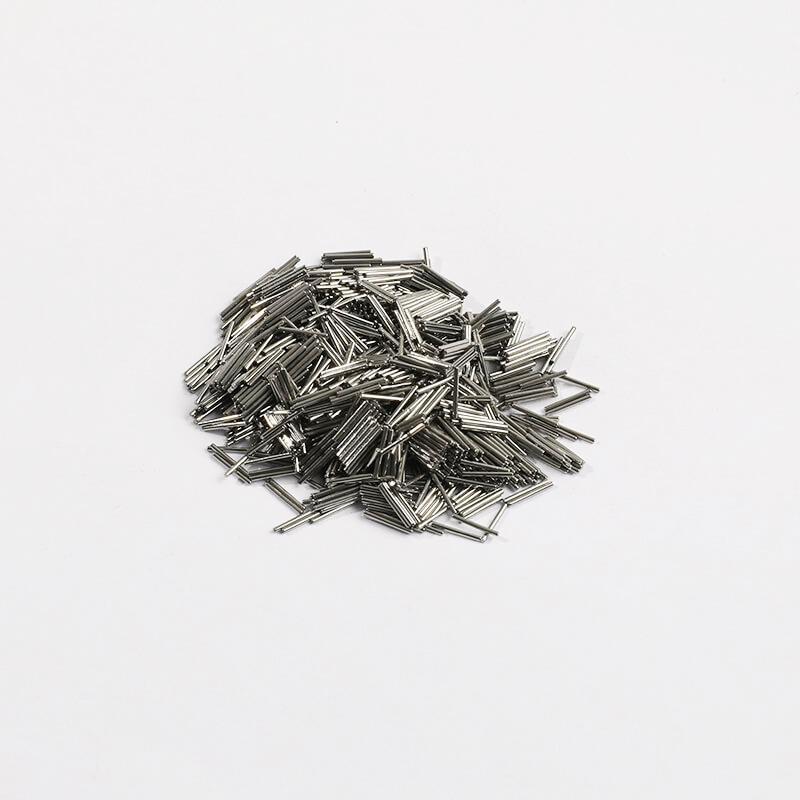
| Magnetic pin or needle charge | Reaching small internal intersections, radial holes and thread entries on small precision parts such as spools, sleeves and drilled fittings | Limited by part size and shape, pins must be retrieved and inspected for breakage, and the result depends heavily on fixture and field design |
| Hardened steel media, balls and pins | Burnishing and bright finishing of stainless and hardened parts, and light edge consolidation where a cutting action is not wanted | Changes the surface by deformation rather than cutting, can work-harden or smear a soft surface, and needs corrosion protection and separation from acidic compounds |
| Dry media, corn cob granules with a polishing compound | Final dry polish, light edge blending and drying after a wet stage on small parts and fittings | Almost no cutting action, absorbs compound and contaminates quickly, and must be kept separate per material family to avoid carry-over |
Route selection starts from the tightest edge limit on the drawing, then works backwards to the least energetic machine that can still remove the burr root in a workable cycle. Energy in mass finishing comes from relative motion and contact pressure, so a disc machine or a high-amplitude bowl cuts faster and rounds every edge in proportion. That is efficient where the edge requirement is generous and wasteful where a seat land or a thread entry must keep a defined break. A gentler barrel or tub route spends more time to buy back edge control. Ask what the drawing allows at each controlled edge, how much of the burr is root rather than lip, and whether the part can tolerate the longer cycle the gentler route needs.
| Machine route | Where it fits | What it will not do |
|---|---|---|
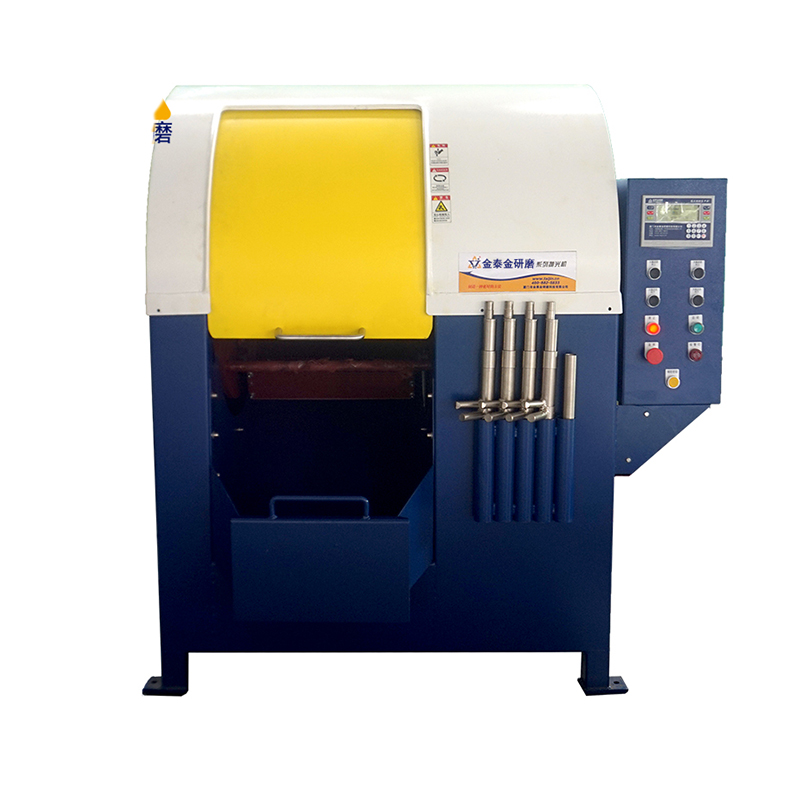
| Barrel finishing machine and rotary barrel tumbler | Gentle, low-impingement deburring of small, fragile or precision parts and mixed fitting batches where edge protection matters more than speed | Long cycles, no visibility while the barrel runs, and internal features can collect media and compound that must be retrieved at unload |
| Dry polishing machine and dryer | Drying after a wet cycle and dry light polishing or deburring of small parts, including features where residual moisture is a problem | Removes little or no material, needs dust extraction when dry media is used, and does not replace a cutting stage for a substantial burr |
| Vibratory finishing machine (bowl) | General deburring and refinement of valve bodies, flange plates, pump components and fittings that fit the bowl and can move freely in the charge | No access to deep internal passages, constant part-on-part contact, and finished faces need separation or fixture protection |
| Centrifugal barrel finishing machine | Short high-pressure cycles on small precision parts such as spools, sleeves, small valve bodies and drilled fittings | Rounds edges and can distort thin unsupported sections quickly, and needs balanced barrel loading, controlled stop time and careful fixturing |
A burr can be bent flat instead of removed, and a bent burr is more dangerous than an obvious one. Light contact rolls a thin lip over the edge and blends it into the surface; under a bench light the edge looks finished, while the root is still attached and now forms a thin flag that can fatigue or break off in service. This is a particular risk on ductile materials, on thread entries, and on edges that were only lightly touched by a refinement pass. Visual inspection alone will not reliably separate a removed burr from a folded one. Use a tactile check with a probe or a lint-free wipe drawn along the edge, look at the edge at magnification under angled light, and take a sectioned or replica sample where the feature is critical.
| Failure mode | Likely cause | How to catch it |
|---|---|---|
| Tenacious compound film or reaction residue left in a gasket groove, thread or blind hole | A film-forming or silicate-bearing compound, insufficient rinse volume or temperature, or drying the part before it is genuinely clean | Wipe a defined area with solvent against a clean reference, check for a continuous water film on a rinsed sample, and inspect recessed features at magnification before packing |
| Uneven result across a batch, with over-finished edges in one zone and untouched areas in another | Part position in the charge, shielding by fixtures or other parts, a worn charge that cuts differently from a fresh one, or masking that leaked | Mark fixed measurement and inspection points on several parts, compare parts from the top, middle and bottom of the load, and record charge age against the result |
| Staining, pitting or a corrosion question on a hardened high-strength part after a wet cycle | Acid-bearing compound or contaminated rinse water, long dwell between finishing and drying, or no protective rinse for the interval before the buyer's next operation | Inspect within an agreed interval after drying, wipe a defined area with a white cloth, compare against a retained reference, and route any embrittlement question to whoever owns the downstream coating or plating specification |
| Media lodged in a cross-drilling, blind tapped hole, keyway, groove or internal passage | Size class chosen against an average feature rather than the smallest one, media fractured into smaller pieces during the cycle, or a secondary burr that closed part of the opening | Borescope agreed passages at a fixed angle, pin gauge every tapped hole, count the charge in and out where practical, flush through a filter and inspect the residue, and compare part mass before and after |
Leeds is in West Yorkshire and forms part of the Yorkshire and The Humber region, whose manufacturing output Make UK now records as having exceeded 2019 levels along with every other English region, with aerospace and defence investment fuelling growth in the strongest-performing areas. The West & North Yorkshire Chamber of Commerce represents the city through its Leeds Chamber and publishes Local Skills Improvement Plans for West Yorkshire. Leeds Bradford Airport is the city's airport, marketing flights to over 80 destinations from Yorkshire, while Yorkshire's sea freight moves through the Humber ports, where ABP operates Immingham, the UK's largest port by tonnage at around 46 million tonnes a year, and Hull.
For this brief the relevant part of that base is energy: Yorkshire's sea freight, including the Humber ports that ABP describes as handling around 46 million tonnes a year at Immingham, carries the bulk and project cargo associated with energy and heavy industry.
Leeds finishing demand is best treated as regional rather than city-specific: Yorkshire and The Humber has an active goods-producing base whose output feeds national assembly and construction supply chains, and machined or formed parts entering those chains still need burrs and edges controlled. The acceptance criterion - surface texture, edge condition or cleanliness - is what determines the process, and it is normally set by the customer's drawing rather than by local convention.
A Leeds buyer should establish first whether the part's acceptance criterion is a surface-texture value, an edge condition or a cleanliness level, then confirm media and compound compatibility with the workpiece material before committing to a machine type.
Freight context: Leeds Bradford Airport, Port of Immingham (ABP) - the UK's largest port by tonnage, on the Humber, Port of Hull (ABP) - container terminal and Humber offshore wind base. Leeds Bradford Airport presents itself as the airport for the heart of Yorkshire, and ABP's Humber ports are the region's deep-sea and short-sea gateways: ABP states that Immingham handles around 46 million tonnes of cargo a year and that Hull is the UK's leading softwood timber port and the focus of the offshore wind sector on the Humber.
Importers need a GB-prefixed Economic Operators Registration and Identification (EORI) number, an import declaration carrying the correct commodity code, and retained commercial invoices plus the Import VAT Certificate (C79) so import VAT can be reclaimed. Machinery placed on the Great Britain market must be marked UKCA or CE: the manufacturer must draw up and retain technical documentation including a Declaration of Conformity, apply the correct marking with identification details, and cooperate with market surveillance; an authorised representative must be established in the UK. Under the Product Safety and Metrology (Amendment) Regulations 2024 the UK continues to recognise CE marking alongside or in place of UKCA for the Great Britain market, so either route can be used for most product types. Duty and import VAT are calculated from the customs value declared, and the commodity code also determines whether an import licence is needed.
BSI is the UK's National Standards Body, and British Standards (BS, including adopted BS EN ISO texts) are the documents a UK buyer's surface-finish, edge and cleanliness specifications are normally written against and purchased through. On the plant side, HSE maintains the work equipment and machinery topic covering the safe supply and use of machinery, and the COSHH regime, which requires employers to identify, assess and control risks from hazardous substances - the regime that applies to finishing compounds, abrasive media and the dust and effluent they generate.
SurfacePolish supplies from Xiamen, China. The buyer's own destination rules, conformity marking, tariff classification and documentation responsibilities stay with the buyer; confirm them against the authorities named above before ordering.
A sampling plan for mass-finished parts has to survive two kinds of variation: variation across the batch and drift over the life of the charge. Within a batch, parts at the top of a load, parts that sat in a shielded pocket and parts nearest the machine wall may not match. Across a charge life, the twentieth run with the same media behaves differently from the first. Define the sample size, the frequency, which features are checked on each sample and which checks are destructive. Deliberately include the tightest passage, the thinnest wall and the most protected edge, and take samples from the first and last part of a run as well as from the middle. Hold the first accepted part as the reference.
The value of a sample trial comes from the range of parts sent, not from the quantity. A box of identical nominal parts tests one geometry and one burr condition; it cannot show how the proposed route behaves on the tightest passage, the thinnest wall or the hardest material in the family. Send a small set chosen to cover the extremes: the part with the smallest internal opening, the part with the longest unsupported section, the part with the most protected edge, one part in the hardest heat-treatment state the family sees, and one as-received reject that already fails. Label every part so its identity survives the trip, and send enough pieces that some can be sectioned or measured destructively.

No. A trial reports what was observed on the parts that were sent, under the settings that were used on the machine that ran them. It does not establish what will happen across other heats, casting lots, machining sources or a full production charge, and it does not demonstrate how the process behaves once the media has worn. Treat the returned parts and the observation record as a direction to test at production scale. The next step is a production-representative batch on the machine the buyer will use, with the buyer's own first-article discipline, agreed sampling and the features that matter measured against the recorded baseline.
Use more than one method, because each misses something. Visual inspection under angled light at magnification catches obvious sharp edges, wire edges and remaining burr fragments. A tactile check with a probe, a fine needle or a lint-free wipe drawn along the edge catches lips that have been folded flat. A radius gauge, optical comparator or moulded replica gives an edge size, and a profilometer or surface roughness tester with a suitable cut-off and traversing direction gives a profile across the edge when the geometry allows it. Microscopy helps on small features and when documenting a dispute. Compare against a master agreed before the batch.
They can be run in the same equipment, but not safely in the same charge without a cleaning discipline. Carbon steel and cast iron leave fines and graphite that transfer to stainless parts, show up as rust staining or embedded particles, and are difficult to see at the machine. The practical approach is a dedicated charge per material family where volume allows, or a purge between families: run the machine with media and clean compound, flush the rinse tank, change or clean the drying medium and cloths, and inspect the media for embedded ferrous fines. Tell the finishing route which families will alternate, because changeover time is a real cost.
Use Leeds, United Kingdom as the destination on the enquiry and state whether the deliverable is equipment, media and compound, a representative sample review or a line concept. A destination does not imply local stock, a local service point or a local delivery time.
UKCA or CE marking with a Declaration of Conformity is required for machinery placed on the Great Britain market, HSE's work equipment and machinery topic and COSHH cover safe operation and hazardous substances, and buyers in aerospace-linked West Yorkshire supply chains normally receive these requirements already flowed down from the prime contractor's specification.
Sources were retrieved on 2026-09-29 and describe the local industrial and trade context only. They do not evidence any SurfacePolish project, shipment, installation or service in Leeds.
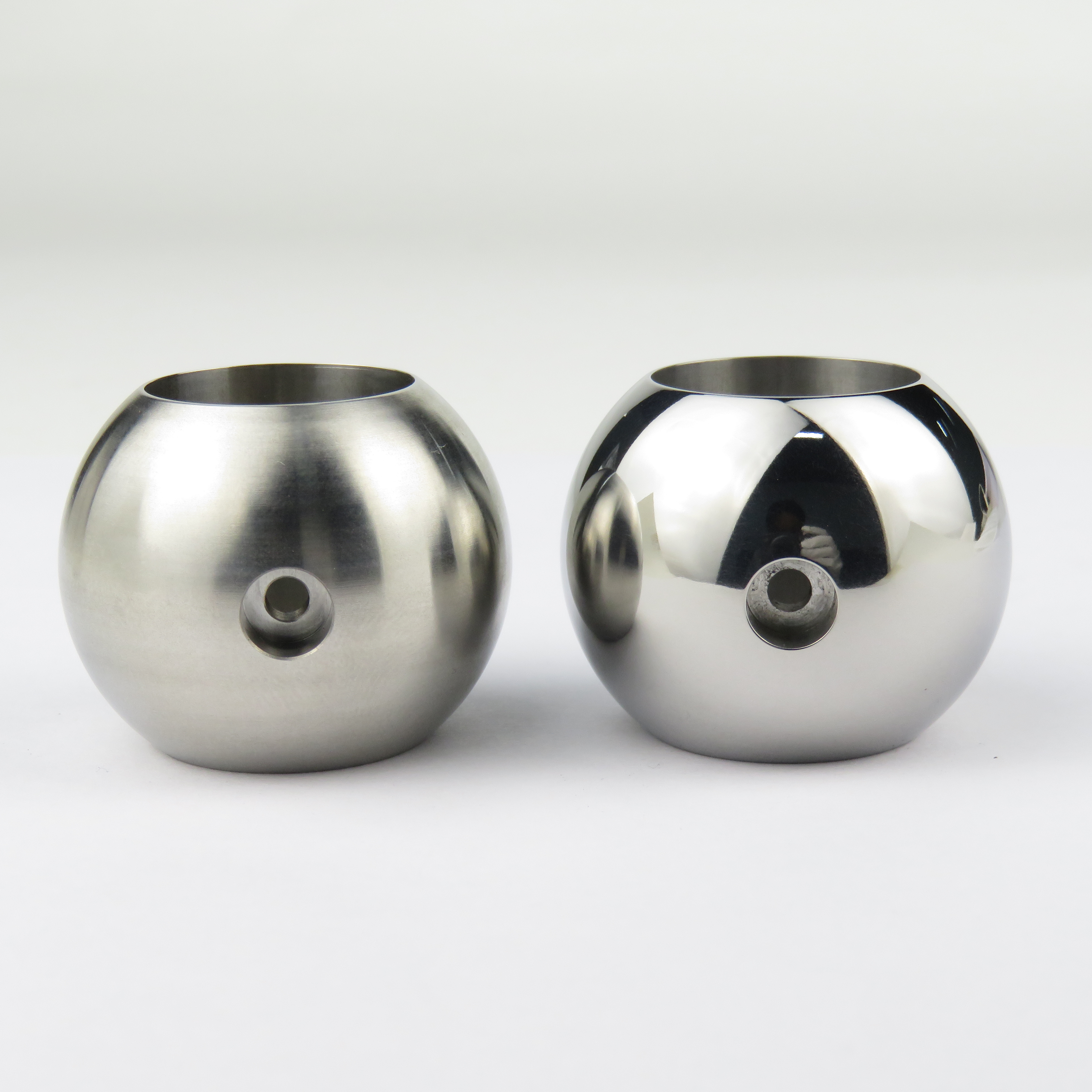
The buyer must remove the machining burr at the bore and bolt-hole entries while leaving the serrated raised face untouched.
Send the material, dimensions, approximate weight, batch quantity, the incoming condition and photographs of the difficult features. Mark which features must not be contacted by media and state how the result will be inspected. This form carries source reference PSEO-0248; quote it if you prefer an additional manual reference.
Open the SurfacePolish enquiry form Email a prepared enquiry
No price, lead time, certification or result is promised here. Confirm whether a sample trial is available for the specific part and what the trial can and cannot show.
Page PSEO-0248 · revised 2026-09-29 · cross-border equipment, media and scoped sample review. City context is sourced and cited above.
Use this local checker to identify missing part and inspection information. It prepares a technical-review brief; it does not approve a machine, process recipe or production result.
Complete the part details to prepare a review brief.
Email : info@surface-polish.com


 IPv6 network supported


 +86-592-2381506