A buyer in Rotterdam, Netherlands in energy equipment has a cast stainless pump housing where the machined bore lip, split flange gasket face and drain port need deburring while the as-cast texture stays as specified. SurfacePolish supplies finishing machines, media and compounds across borders, and a free sample trial sends representative parts to Xiamen and returns them with an observation record and a proposed media, compound and cycle direction. This brief is written for a buyer in Rotterdam working on energy equipment; it describes equipment, media and a scoped sample review, not a local polishing service.
What must the part be clean of, and what method and limit does the buyer use to verify cleanliness before assembly, welding, coating or a leak test?
Which material families and heat-treatment states share the equipment, and what separation is needed to avoid ferrous or graphite carry-over onto stainless parts?
Is deburring done before or after heat treatment, and in what metallurgical and surface condition does the part arrive at the finishing step?
Deburring sits in a sequence, and its position relative to heat treatment changes the job. Material in the soft, as-machined state tears and smears, so a burr on a low-carbon flange or an austenitic body tends to roll rather than fracture. The same feature in a hardened or precipitation-hardened condition behaves differently: edges chip, and the burr root can be brittle enough to flake rather than peel. Heat treatment also brings scale, a decarburised skin or a changed surface that has to be removed before any finish is meaningful. Decide whether the part is deburred before hardening and receives a light edge blend afterwards, or whether all edge work happens after the final thermal step. That decision belongs with the buyer's process engineer, because it moves the operation between departments and can change which features are accessible.
Compound delivered at the wrong concentration or flow makes the same media behave like a different charge. Too little and the abrasive cut becomes dry and marking increases; too much and cutting slows while foam and carry-over rise. Flow rate matters as much as dose, because it is the flow that carries fines away from the part and keeps the working zone consistent across a long cycle. Water quality belongs in the same discussion: hardness, pH and dissolved solids in the make-up water shift the compound's behaviour, and a plant that changes its water source can change its results without touching a machine setting. Where the fluid is recirculated, filtration and turnover decide how much swarf and broken media stay in suspension and how often the bath is dumped.
| Media | Best fit | Watch out for |
|---|---|---|
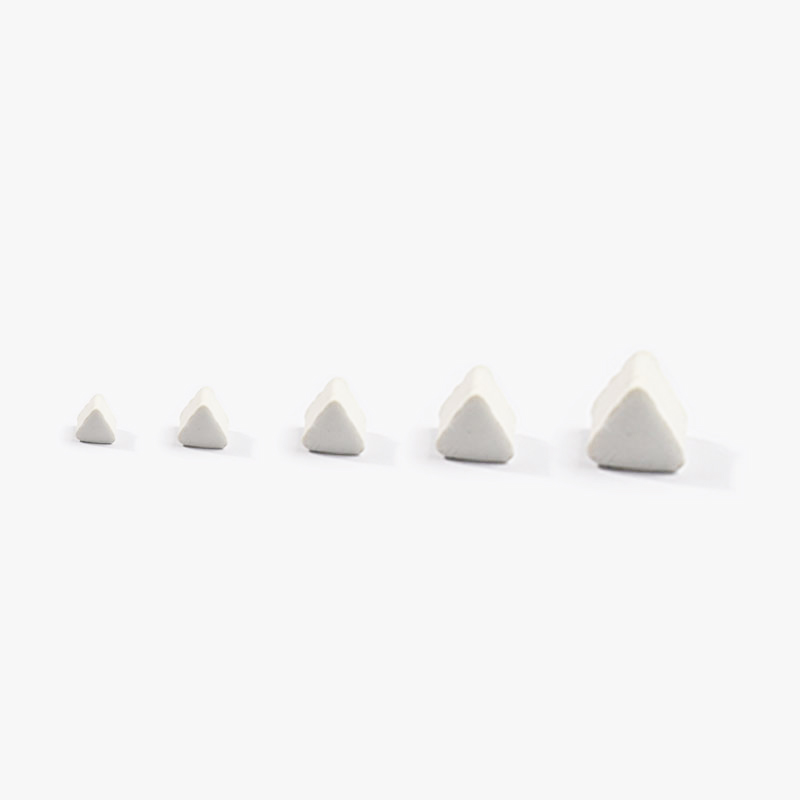
| Fine ceramic spheres or small porcelain shapes in a light size class | Refinement and edge blending after a cutting stage, and light deburring of small fittings, thread entries and tighter external geometry | Small sizes enter and retain in fine passages and cross-drillings, and the charge changes size and cut rate as it wears |
| Alumina-bearing grinding media in a dense ceramic bond | Heavy stock removal and consistent cutting on hard or work-hardened parts with generous edge limits, such as robust flanges and heavy fittings | High removal energy rounds functional edges quickly and is a poor match for thin plates, thin-wall castings and lapped sealing faces |
| Plastic media triangles and pyramids in a soft to medium grade | Deburring aluminium, brass and other soft or thin-walled parts where surface marking and edge rounding must stay minimal | Slow cut rate, media deforms and wears out of shape, and a worn charge behaves noticeably differently from a fresh one |
| Heavy-cut ceramic, angle-cut triangles in a coarse size class | Removing a substantial or thick burr root from open external edges, flange corners, cast bosses and large tapped entries on steel and stainless parts | Cuts controlled edges and gasket lands as readily as burrs, leaves a coarse surface, and lodges in slots whose width approaches the media section |
Internal intersections are a different problem from external surface refinement, and no amount of extra energy in a bowl fixes them. A cross-drilling meeting a main bore creates a burr on the inside wall that external media rarely reaches. Access routes include a small media size class that can enter the passage, magnetic finishing where a pin or needle charge is driven into the feature on small parts, or a targeted mechanical method outside mass finishing. Each has a boundary: a size class small enough to enter a passage is also small enough to lodge in it, magnetic pins are limited by part size and by retrieval, and blind features with no exit cannot be flushed clean. Decide per feature which access route is credible, and how the result will be seen.
| Machine route | Where it fits | What it will not do |
|---|---|---|
| Magnetic finishing machine | Small precision parts with internal intersections, radial holes and thread entries that a bulk charge cannot reach | Limited by part size and material, pins must be retrieved and checked, and it does not level or refine large flat surfaces |
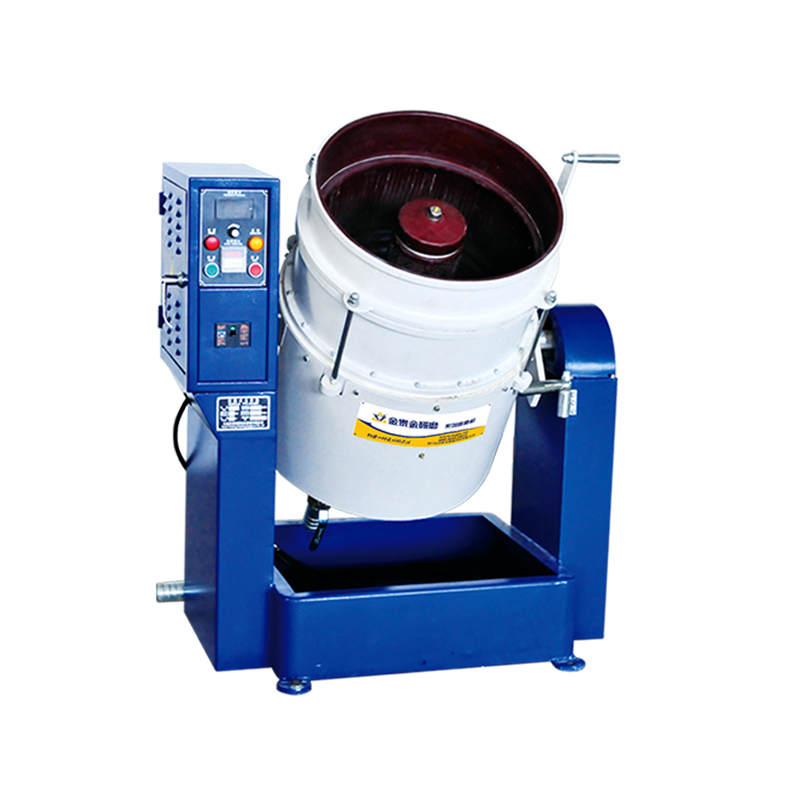
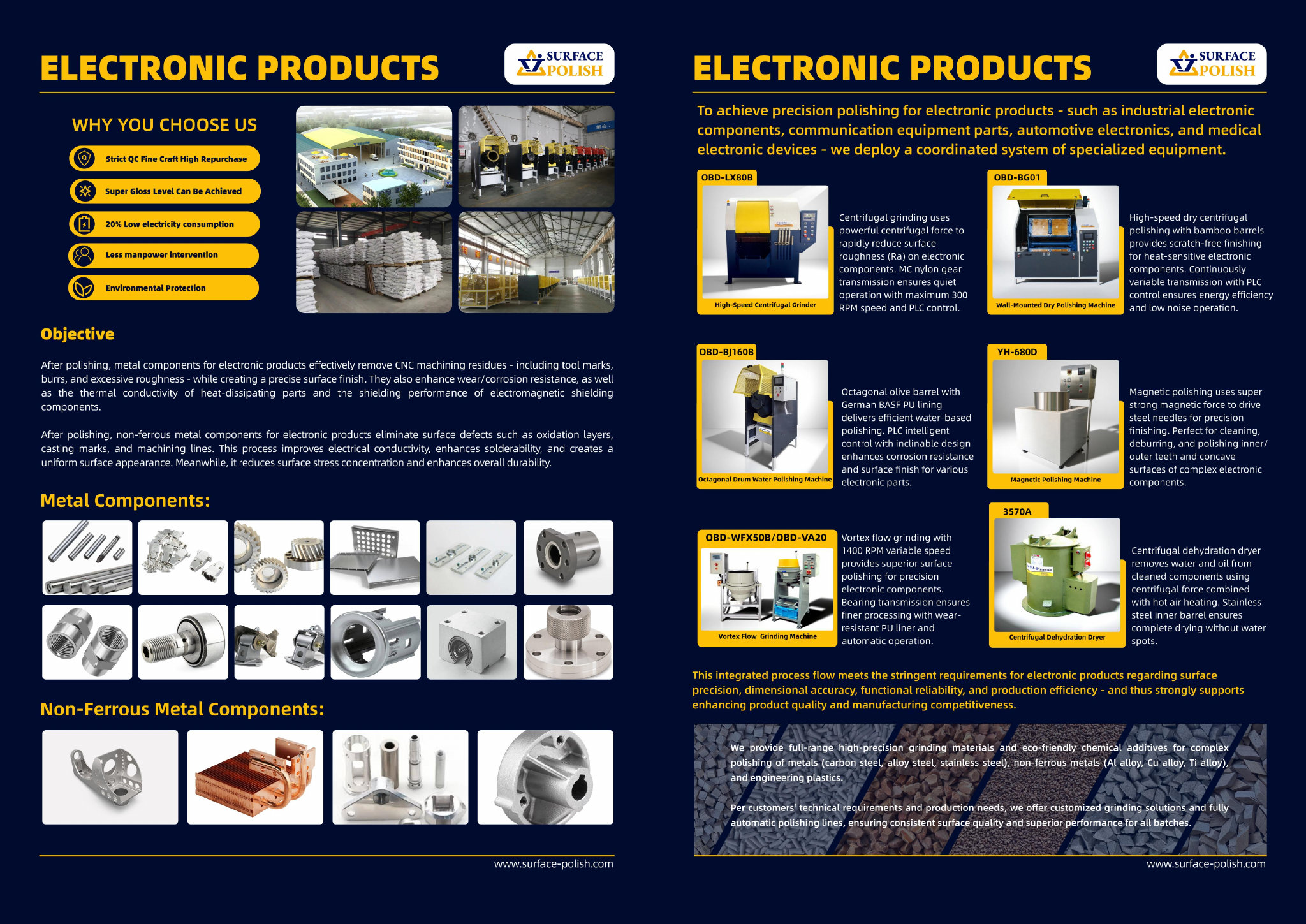
| Vibratory finishing machine (bowl) | General deburring and refinement of valve bodies, flange plates, pump components and fittings that fit the bowl and can move freely in the charge | No access to deep internal passages, constant part-on-part contact, and finished faces need separation or fixture protection |
| Dry polishing machine and dryer | Drying after a wet cycle and dry light polishing or deburring of small parts, including features where residual moisture is a problem | Removes little or no material, needs dust extraction when dry media is used, and does not replace a cutting stage for a substantial burr |
| Centrifugal barrel finishing machine | Short high-pressure cycles on small precision parts such as spools, sleeves, small valve bodies and drilled fittings | Rounds edges and can distort thin unsupported sections quickly, and needs balanced barrel loading, controlled stop time and careful fixturing |
Contamination in this process is mostly invisible at the machine and is discovered downstream. Three forms matter on energy-equipment parts. Media fragments and abrasive fines can embed in soft surfaces or in a machined groove and later appear as particles in a fluid system. Material carryover happens when carbon steel fines or cast-iron graphite from an earlier batch stay in the charge, the machine, the rinse tank or the drying cloth and transfer to stainless parts. Compound residue and its reaction products can sit in a gasket groove, a thread or a blind hole and interfere with welding, passivation or a coating step. Control is separation and cleaning discipline, verified with a wipe or tape lift, magnification, and a flush residue check.
| Failure mode | Likely cause | How to catch it |
|---|---|---|
| Part-on-part or fixture witness marks and peening on a finished face | Insufficient separation in the load, too high a load ratio for the part mass, sharp or worn fixture contact points, or the same faces bearing contact throughout the cycle | Inspect at magnification under angled light against a retained reference, map the mark positions against the load arrangement, and check fixtures and compartments for burrs and wear |
| Controlled edge rounded past the drawing limit, or an edge left sharper than the specified break | Cycle too long or energy too high for the edge allowance, dense or coarse media, an unmasked functional edge, or a drawing requirement that never stated a maximum radius | Measure a defined edge feature before and after with a radius gauge, optical comparator or moulded replica, compare against the maximum on the drawing, and check the same feature on parts from different positions in the load |
| Tenacious compound film or reaction residue left in a gasket groove, thread or blind hole | A film-forming or silicate-bearing compound, insufficient rinse volume or temperature, or drying the part before it is genuinely clean | Wipe a defined area with solvent against a clean reference, check for a continuous water film on a rinsed sample, and inspect recessed features at magnification before packing |
| Burr still present on an internal cross-drilling intersection after finishing | No credible access route for the charge, a medium too large to enter the passage, or a cycle too short for the intersection to see enough contact | Borescope the intersection at the agreed angle on sample parts, section one representative part to expose the wall, and compare against the recorded as-received condition |
Rotterdam is the Dutch mainport and the centre of Europe's largest maritime, port and industrial complex, with refining, chemicals, bulk and container handling concentrated in the port and industrial area. Deltalinqs represents over 95% of the logistics, port and industrial enterprises in the mainport, with more than 700 member companies drawn from fourteen sectors; the mainport accounts for 2.9% of Dutch GDP and roughly 192,000 jobs in Rotterdam-Rijnmond, while the port as a whole supports over 500,000 jobs and more than EUR 60 billion of added value nationally. Municipal and provincial policy documents describe the cluster as the largest industry and energy cluster in Europe.
For this brief the relevant part of that base is energy: The municipality of Rotterdam and the province of Zuid-Holland, together with Deltalinqs and the Port of Rotterdam Authority, describe the port as the largest industry and energy cluster in Europe in their ten-point plan for the harbour.
Refining, chemical, bulk and maritime maintenance in the port generates a steady flow of valves, pump and heat-exchanger components, flanges and machined spares, where burrs, sharp edges and surface condition affect sealing, flow and coating adhesion. This is mostly repair and overhaul work rather than high-volume series production, so batch flexibility and cross-contamination control between carbon steel, stainless and higher-alloy parts matter more than cycle time.
A Rotterdam-area buyer should first settle which material families one finishing line must handle — carbon steel, stainless, duplex or nickel alloy — and whether the parts are pre-coating (needing a defined Ra and cleanliness) or in-service spares (needing edge and burr control only), because that fixes the media and compound choice.
Freight context: Port of Rotterdam (Europoort and Botlek industrial areas, Waalhaven). The port combines deep-sea, short-sea, inland barge and rail freight, and 192,000 jobs in Rotterdam-Rijnmond are linked to the harbour. Machines and sample parts arriving from outside the EU are declared to Dutch Customs at the point of entry; the Deltalinqs membership base is dominated by logistics, port and industrial enterprises.
The Netherlands applies the EU's common commercial policy, so imports of Chinese industrial machinery enter under EU customs rules and WTO tariff treatment rather than under a bilateral EU-China free-trade agreement; the European Commission also maintains trade-defence measures on selected Chinese product categories, and China is a WTO member. EU-China trade in goods reached EUR 732 billion in 2024, and in 2025 manufactured goods were 97.3% of EU imports from China, with machinery and vehicles alone accounting for 54.4% — the single largest category. Chinese finishing machines, media and compounds therefore arrive in a very large, well-established EU import stream, and the buyer should expect MFN duty plus trade-defence measures where a specific product is covered.
Goods entering the Netherlands from outside the EU must be declared to Dutch Customs (Douane, part of the Belastingdienst); the importer needs an EORI number, import duty is calculated on the customs value (goods value plus transport and insurance to the EU external border), and import VAT is paid at the border unless an article 23 permit or a fiscal representative is used. CE marking is mandatory for most machinery placed on the EEA market: the Machinery Regulation replaced the Machinery Directive and manufacturers must comply with the new requirements by 20 January 2027. The importer must verify that the conformity assessment was carried out correctly, that CE marking is applied properly, that the technical file is present and complete, and that the user manual is supplied in the correct language; the manufacturer's EC Declaration of Conformity must be kept. Dutch companies imported over EUR 140 billion of machinery and appliances in 2024, 24% of total Dutch goods imports.
SurfacePolish supplies from Xiamen, China. The buyer's own destination rules, conformity marking, tariff classification and documentation responsibilities stay with the buyer; confirm them against the authorities named above before ordering.
An acceptance record is only as strong as the chain behind it. A measured roughness or edge radius means little unless the record links the part to the batch, the batch to the charge, and the charge to the media type, size class, charge age, compound and settings used on that day. Request the settings record with the returned parts, plus the media and compound identification, the cycle count on the charge and the maintenance history. On the measuring side, know the calibration status of the instrument and the uncertainty attached to the value, because a reading quoted to two decimal places on an uncalibrated gauge is not evidence. Decide which records the buyer owns and which are requested from the supplier.
The value of a sample trial comes from the range of parts sent, not from the quantity. A box of identical nominal parts tests one geometry and one burr condition; it cannot show how the proposed route behaves on the tightest passage, the thinnest wall or the hardest material in the family. Send a small set chosen to cover the extremes: the part with the smallest internal opening, the part with the longest unsupported section, the part with the most protected edge, one part in the hardest heat-treatment state the family sees, and one as-received reject that already fails. Label every part so its identity survives the trip, and send enough pieces that some can be sectioned or measured destructively.
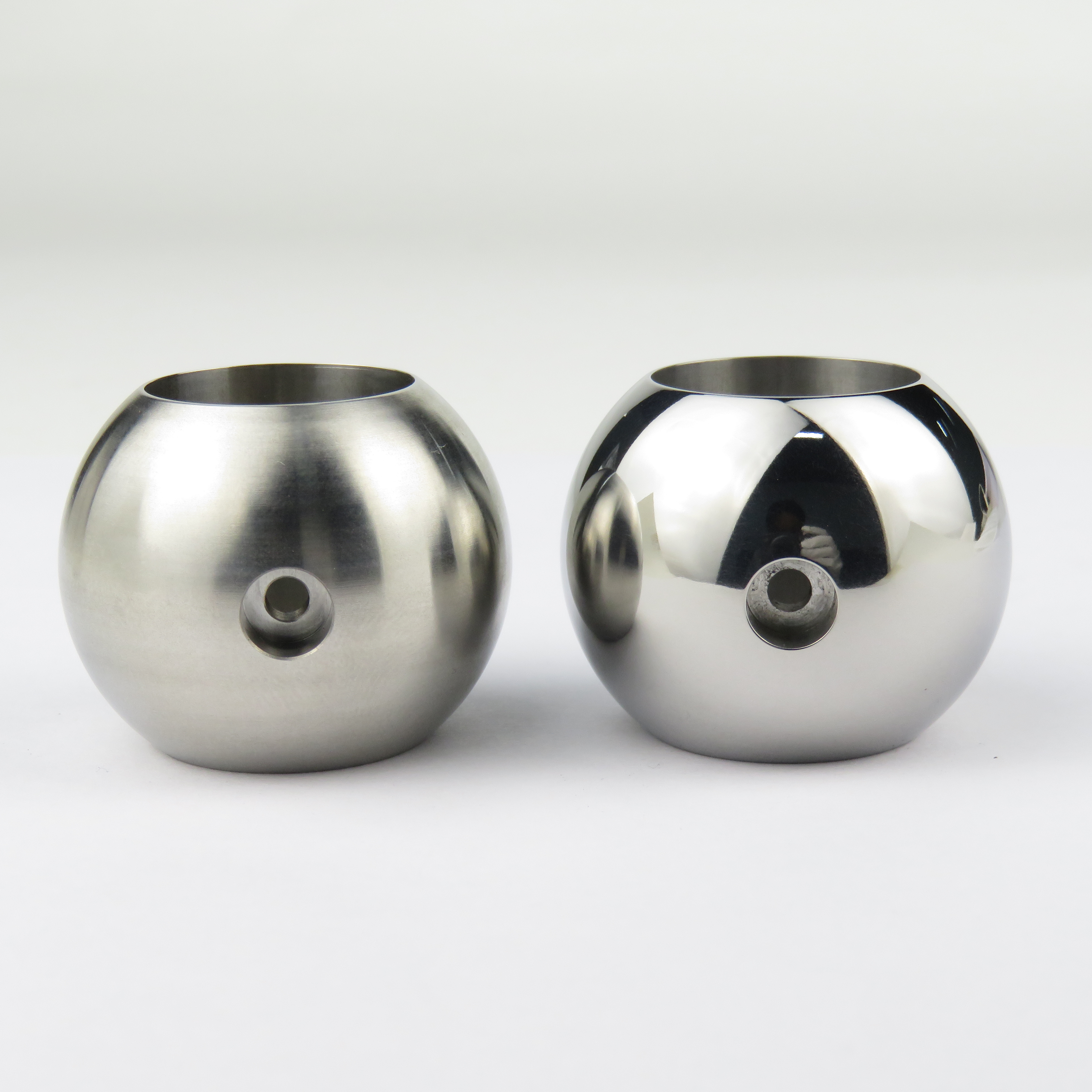
The finishing step is part of the route, and what it leaves behind matters to the next operation. Compound residue in a gasket groove or thread can interfere with welding, passivation or a coating bond, and a surface finished with an acid-bearing compound may need a defined rinse and neutralisation first. Mechanical work also changes the edge geometry a coating must cover, so an edge deliberately broken or rounded takes a coating differently from a sharp one. Tell the finishing route what comes next and agree the rinse, dry and handling between them. Where a hardened, high-strength steel is later plated, raise the embrittlement question with whoever owns that specification.
They solve different access problems. Thermal deburring oxidises thin burrs in a chamber and reaches internal intersections that no media can touch, but it acts on a whole part at once, needs a sealed chamber, and does not produce a controlled edge radius. Abrasive flow pushes a viscous abrasive medium through a passage and targets specific internal features, with dedicated fixturing per part. Mechanical mass finishing removes the burr root and blends the edge, and its limit is access. Many energy-equipment parts use more than one route: mechanical for external and reachable edges, another method for enclosed intersections. SurfacePolish supplies mechanical equipment and discusses the comparison only.
Protect it deliberately rather than relying on a gentle setting. Options include masking or plugging the face, fixturing the part so the land is held out of the mass, orienting the part so the land sees less contact, or choosing a media shape and size that blends rather than digs. Each has a cost: a masked face keeps its as-machined condition and can show a boundary line, a fixture shields the area behind it, and fixturing reduces how many parts fit in a load. Mark the land on the drawing, give it a maximum edge radius, and agree how it will be checked. Test the arrangement on the real part.
Use Rotterdam, Netherlands as the destination on the enquiry and state whether the deliverable is equipment, media and compound, a representative sample review or a line concept. A destination does not imply local stock, a local service point or a local delivery time.
Buyers here work to the CE machinery regime (Machinery Regulation replacing the Machinery Directive, compliance by 20 January 2027) and to the Dutch/EN-ISO surface-finishing standards published by NEN, such as NEN-EN-ISO 2080 for metal-finishing terminology. In the port and process industries, client specifications for coating preparation, cleanliness and material conformity usually sit on top of those base standards.
Sources were retrieved on 2026-09-29 and describe the local industrial and trade context only. They do not evidence any SurfacePolish project, shipment, installation or service in Rotterdam.
The buyer wants the machining burrs at the bore lip, split flange gasket face and drain port removed without polishing away the as-cast texture the specification protects.
Send the material, dimensions, approximate weight, batch quantity, the incoming condition and photographs of the difficult features. Mark which features must not be contacted by media and state how the result will be inspected. This form carries source reference PSEO-0618; quote it if you prefer an additional manual reference.
Open the SurfacePolish enquiry form Email a prepared enquiry
No price, lead time, certification or result is promised here. Confirm whether a sample trial is available for the specific part and what the trial can and cannot show.
Page PSEO-0618 · revised 2026-09-29 · cross-border equipment, media and scoped sample review. City context is sourced and cited above.
Use this local checker to identify missing part and inspection information. It prepares a technical-review brief; it does not approve a machine, process recipe or production result.
Complete the part details to prepare a review brief.
Email : info@surface-polish.com


 IPv6 network supported


 +86-592-2381506