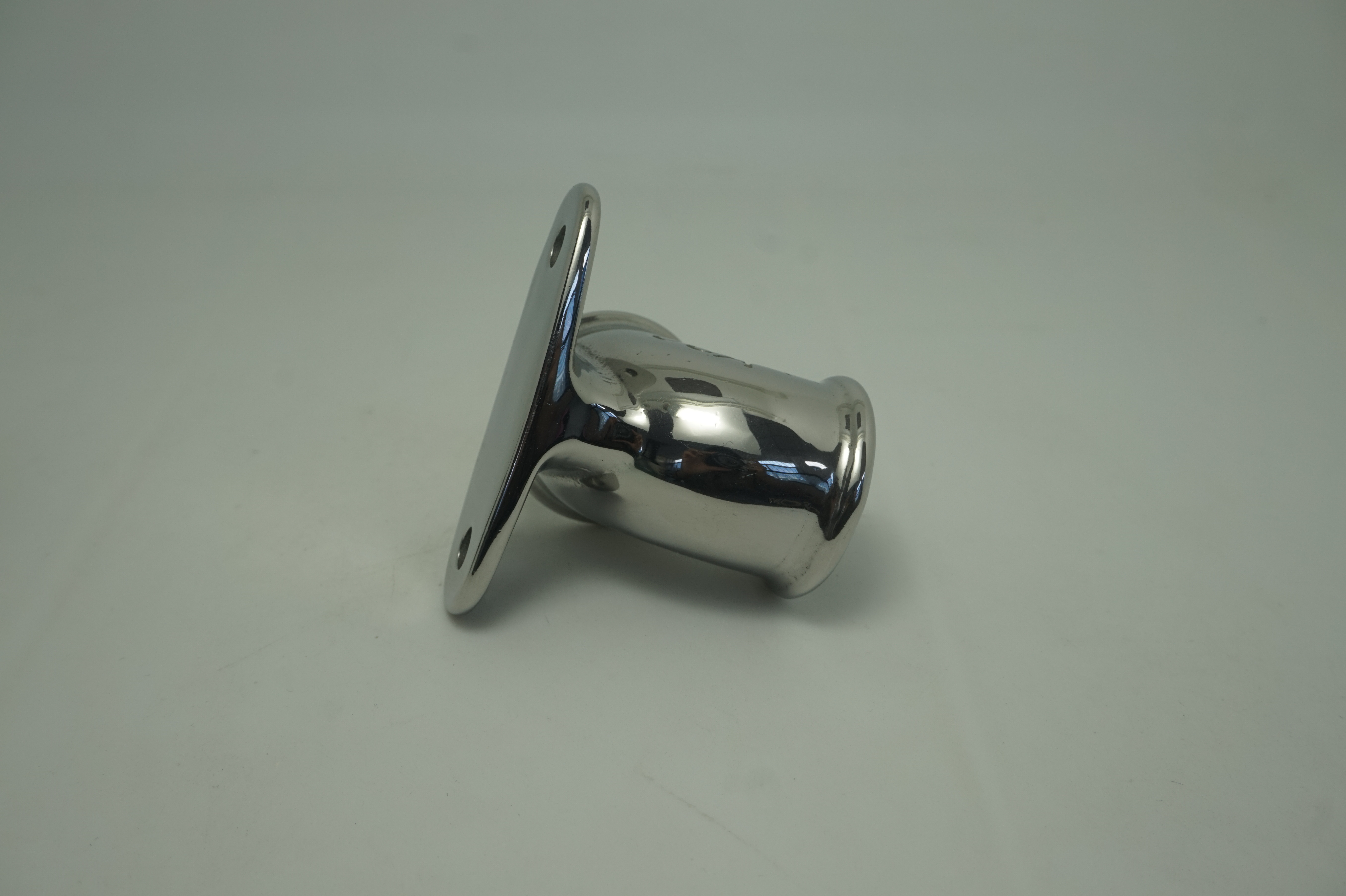
A buyer in Mississauga, Canada in marine components produces around 400 cast deck fittings a month in three sizes and is asking whether the finishing step is worth automating. SurfacePolish supplies finishing machines, media and compounds across borders and offers a free sample trial on representative castings, which return from Xiamen with an observed condition and a proposed media, compound and cycle direction and the handling pattern the volume implies. This brief is written for a buyer in Mississauga working on marine components; it describes equipment, media and a scoped sample review, not a local polishing service.
Which features on this part are functional, such as seal faces, journals, tapers, keyways and weld toes, and which are only cosmetic?
What starting condition and cleanliness baseline will the part arrive in, and who owns the pre-finish step?
Which acceptance criteria, measurement locations and functional checks must exist before any route, robot or otherwise, can be compared fairly?
Mass finishing works where a charge can flow across the surface. Sort the part into accessible and inaccessible zones and be literal about it. An open external weld run on a bracket, a cast cleat or the outside of a small valve body is reachable. The inside of a closed box section, the back of a stiffener, a narrow seawater passage and the root of a deep groove are not, whatever the medium is. Concave pockets hold media and release it slowly; sharp internal corners trap it. That map decides whether the whole part, or only some faces of it, can go to a tumbling route, and whether the remainder needs a tool that can be aimed at a surface, by hand or by an arm. Accessibility, more often than finish, is what ends the mass-finishing option.
A robot reproduces whatever the fixture gives it. A large marine part has to locate on a repeatable datum, be clamped without forcing a thin panel out of shape, and be supported so that it neither sags nor shifts as material comes off. For tool-carrier work, adding a positioner or turntable can present several faces to the arm without re-clamping, which often reduces the reach and payload the arm itself must supply, at the cost of an extra axis with its own repeatability. Build the fixture around surfaces that are not being finished, use the datums the drawing already uses, and decide early whether clamping marks are acceptable on a visible face. A trial that cannot reproduce the production fixture will not predict production variation, however good the tool path looks.
| Machine route | Where it fits | What it will not do |
|---|---|---|
| Grinding finishing machine | Taking off a heavy machining burr or a defined stock layer before a refinement pass on robust stainless and duplex work | High removal energy cuts functional edges fast, so geometry assessment and a short controlled cycle matter more than on any other route |
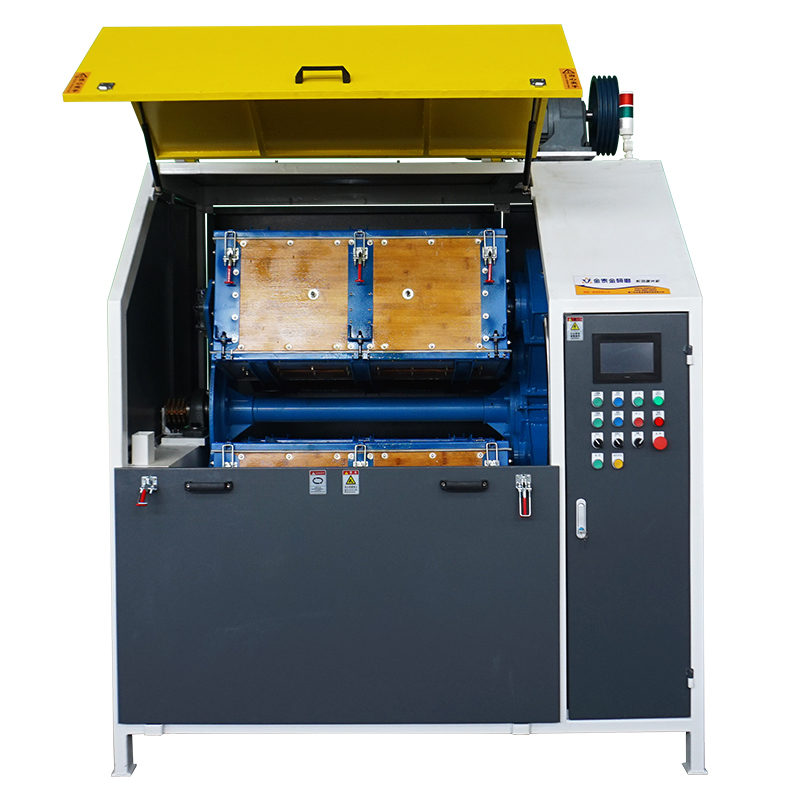
| Centrifugal barrel finishing machine | Short, aggressive cycles on small precision items such as valve trim, inserts and small stainless components with fine edge requirements | Rounds edges and can distort thin unsupported sections quickly, and results are sensitive to charge weight, speed and stop time |
| Magnetic finishing machine | Fine deburring and light refinement of small precise features such as narrow slots, small bores and stainless fittings | A small working envelope that excludes large fabrications, with pin media that can lodge in fine passages and must be retrieved |
| Dry polishing machine and dryer | Drying parts after a wet stage and producing a dry polished surface with organic media where a wet residue would be hard to remove | No cutting action, needs dust extraction, and organic media must be kept dry and clean or it transfers contamination to the part |
When a robot carries the tool, the consumable list changes from loose media to bonded abrasive, nonwoven and buffing products. Coated belts and flap wheels cut weld toes and blend edges; nonwoven wheels and discs refine and satin-finish; stitched or loose cotton wheels with a polishing compound build luster. Each type has a working speed, a contact pressure and a wear curve, and each wears in a way the cell must compensate for or an operator must adjust. Abrasive grain can embed in soft or gummy material such as bronze or aluminium, and a loaded belt cuts less and heats more. Polishing compound leaves a film that has to be removed before coating, passivation or a cleanliness check, so the tool set cannot be chosen separately from the path that carries it.
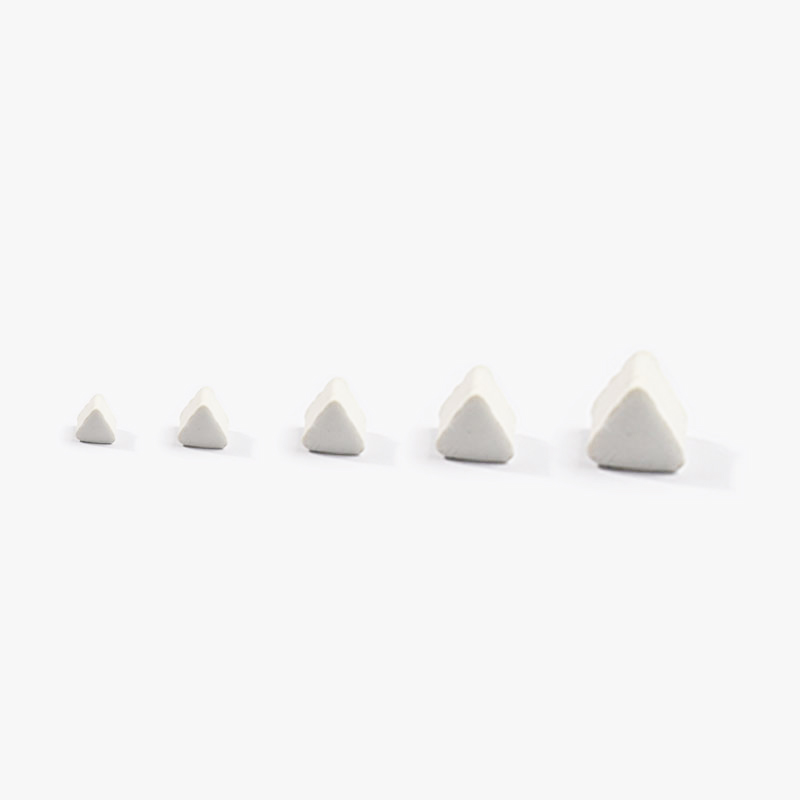
| Media | Best fit | Watch out for |
|---|---|---|
| Chloride-free mildly alkaline or near-neutral compound, liquid or powder | Cleaning, corrosion inhibition and fines suspension on stainless and duplex marine work where retained chlorides would risk pitting in service | Dose drifts with drag-out and water hardness, foam can hide the load, and rinse water must reach the same features the compound reached |
| Fine ceramic or porcelain shapes in a small size class | Refinement and light edge blending after a cutting stage, and reaching tighter external geometry on small valve parts and fittings | Small sizes enter and lodge in cross-drillings and fine slots, and media wear shrinks the charge so the finish drifts over its life |
| Aluminium oxide grinding media in a dense ceramic bond | Heavier stock removal or a more consistent cut on robust stainless and duplex parts with thick edges and cast skin | High removal energy rounds functional edges quickly and is a poor match for thin panels or a knife-edge seat |
| Heavy-cut ceramic angle-cut triangles in a coarse size class | Breaking the edge of a machined or cast marine fitting and removing a substantial burr on robust stainless before a refinement stage | Cuts corners and weld toes aggressively and can round a seat or keyway, and the coarse section may not enter narrow passages at all |
Automation introduces a family of defects that hand work hides. Where an arm slows at a corner, dwells at a waypoint or waits for a tool change, the tool removes more material and leaves a flat spot or a visible step. Where two passes meet, a slight mismatch shows as a band. Tool wear makes the last third of a long path cut differently from the first third unless the cell compensates, and a loaded belt heats the surface instead of cutting it. These show up as texture variation rather than a measurable defect, so they are often accepted at the bench and rejected by the customer. Photograph the surface under raking light, compare the first and last part of a run, measure at fixed points along the path, and treat any visible change at a transition as a signal to review the path or the compensation.
| Failure mode | Likely cause | How to catch it |
|---|---|---|
| Distortion and loss of flatness on a thin welded panel after dressing | Residual weld stress released by material removal, heat from a grinding or polishing pass, or a support scheme that allowed the panel to deflect while it was worked | Measure flatness with a straightedge and feeler or a dial gauge on a stand at marked grid points before and after, with the same support scheme used both times |
| Rust bloom and tea staining appearing on a finished stainless surface within days | Free iron from carbon steel media or brushes, a machine shared with carbon steel work, airborne grinding dust on a wet surface, bare-hand handling, or chloride carried in rinse water | Wipe a defined area with a white cloth and record what it shows, run a free-iron check if the buyer wants one, and inspect welds, pits and thread roots under good light after the part has stood for a period |
| Medium wedged in tube-sheet holes or perforated plate openings | Hole diameter close to the media section, cylindrical or conical media that aligns with the hole, or a charge left to drain in the part at unload | Pin gauge a sample of holes across the plate, tap and back-flush each sample, and inspect the plate under oblique light for a medium sitting flush with the surface |
| Over-grind step or gouge at a path transition or belt change | Two passes overlapping at different pressures, a fresh belt run at the setting that suited a worn one, or an operator touching up a transition by hand without recording it | Inspect each transition zone at a fixed viewing distance under consistent lighting, and compare the zone against the surrounding surface with a roughness reading on both sides |
Mississauga is one of the largest manufacturing and distribution municipalities in the Greater Toronto Area, and its economic development agency positions the city specifically around industrial supply chains: Invest Mississauga's leading-industries page invites businesses to "Join a growing community of globally connected businesses and robust supply chains in Mississauga", and it maintains a public economic development data centre for the city. The city's manufacturing base sits inside the Toronto region's food and beverage cluster, which the City of Toronto measures at more than 64,000 workers across the region with more than half of those jobs located inside the city of Toronto itself, leaving a substantial remainder in the surrounding 905 municipalities including Mississauga and Brampton. Mississauga also sits inside the automotive and advanced-manufacturing belt of southern Ontario, whose supply chains the federal government is actively supporting: FedDev Ontario announced a combined repayable investment of over CAD 12.5 million for Hamilton-area businesses alone as they "respond to tariff-related pressures, strengthen domestic supply chains, and position themselves for long-term growth".
The nearest part of that base to this brief is machinery: The same federal backgrounder documents Hamilton-area manufacturers of pressure equipment, hot-rolled steel bar, custom robotic welding systems, CNC machining and prefabricated steel buildings receiving investment to modernise plants and adopt advanced manufacturing technologies, which is the supply chain Mississauga's machinery and fabrication base sits in.
Mississauga's manufacturing mix of food and beverage processing, metal fabrication and automotive-tier parts creates three distinct finishing problems in one city: stainless process and packaging equipment where weld dressing and cleanable surfaces are required, sheet-metal and fabricated enclosures where a uniform finish on visible surfaces is part of the delivered product, and machined or stamped metal components where burrs interfere with assembly, sealing or coating adhesion. Because much of this work is high-mix and short-run, the practical constraint is changeover time and the cost of dedicating a finishing step to a small batch, which is what drives interest in flexible batch machines rather than large dedicated lines.
A Mississauga buyer should settle the batch-size and changeover question before choosing equipment, because a high-mix fabricator or food-equipment builder will lose more money to media changeover and cleaning between jobs than to slow cycle times within a job. The second question is whether the finishing step is there to protect a downstream process — coating adhesion, sealing, or a customer's burr limit on an automotive drawing — in which case the acceptance criterion and the inspection method need to be agreed in writing before the machine is specified.
Freight context: Toronto Pearson International Airport (immediately adjacent to Mississauga), CN and CPKC intermodal terminals in the Greater Toronto Area, Port of Toronto (inland marine gateway), Greater Toronto Area 400-series highway freight network. Mississauga's principal logistics advantage is its position directly beside Toronto Pearson International Airport, which makes air freight of sample parts, media and urgent spares practical, combined with dense rail intermodal and highway freight capacity across the GTA. Machines arriving from Asia would normally land at a coastal container port and be railed or trucked into the GTA, with the Port of Toronto providing an inland marine option for bulk and project cargo.
China is one of Canada's ten principal merchandise trading partners and the second-largest single-country source of Canadian imports after the United States: Statistics Canada reported CAD 5,369 million of balance-of-payments imports from China in January 2025, against a CAD 2,299 million bilateral merchandise deficit that month. Canada has no free trade agreement with China, so Chinese-origin industrial machinery enters under the Most-Favoured-Nation (MFN) tariff column of the Canadian Customs Tariff; the preferential treatments listed in the tariff (CUSMA/UST and MXT, CETA/CEUT, CPTPP/CPTPT, UKT, KRT and others) do not include China, and preferential rates require proof of origin plus the applicable shipping rules, so a China-origin machine cannot claim them. Tariff classification is mandatory work, not a formality: vibratory, barrel, centrifugal and disc finishing machines are classified in Chapter 84 ("Nuclear reactors, boilers, machinery and mechanical appliances; parts thereof") according to the function of the machine, and the ten-digit Canadian tariff item drives both the duty rate and the statistics. A further landed-cost risk sits outside the tariff schedule: under the Special Import Measures Act (SIMA), the CBSA and the Canadian International Trade Tribunal may apply anti-dumping and countervailing duties to named goods, so a buyer should check the measures-in-force list for the specific product before assuming the MFN rate is the final duty.
Canada's national standards system is coordinated by the Standards Council of Canada (SCC), which accredits standards-development organizations, certification bodies and testing laboratories; the SCC and CSA Group websites could not be retrieved for citation during this research, so this entry rests on the accessible Government of Canada and CCOHS material below. The Canadian Centre for Occupational Health and Safety describes standards as documents that "establish specifications and procedures to ensure the reliability of the products, methods, and services people use every day on the job", and Innovation, Science and Economic Development Canada (ISED) maintains the federal entry point for "[t]he different types of standards and certifying bodies that can be used by your business". In practice a Canadian buyer of finishing equipment references (a) the Canadian electrical safety certification of the machine and its control panel, (b) provincial occupational health and safety regulation for machine guarding, lockout and dust/ventilation control, which in Canada is enforced by the provinces rather than by a single federal inspectorate, and (c) the buyer's own customer-specific surface finish, edge-condition and cleanliness specifications, which are contractual rather than national standards. Finishing-process standards in the ISO 25.080 machine-tool and ISO 8500-series surface-preparation families are the usual technical reference points, but product-level standards sold by CSA Group were not retrievable for verification here.
SurfacePolish supplies from Xiamen, China. The buyer's own destination rules, conformity marking, tariff classification and documentation responsibilities stay with the buyer; confirm them against the authorities named above before ordering.
Acceptance should exist before finishing starts, on the drawing or in a document the drawing references. Name every controlled surface, the parameter and the cut-off to be used, the measurement direction and the locations where readings are taken, because a seal face, a bore and an outer wall respond differently to the same charge. State the maximum edge radius or the minimum remaining edge at any weld toe, bore lip, keyway or seat. Say what is acceptable visually and under what lighting and viewing distance. Add the functional checks and the cleanliness requirement, together with who performs them. Without this the first argument about a rejected lot becomes a discussion about opinion. A buyer who writes the criteria can also compare two route options on the same basis, whether the work is done in a machine, by hand or by an arm.
A sample trial reports what was observed on the parts tested under the settings used, and that is the limit of it. It cannot promise a roughness value, an edge radius, a tolerance, a cycle time, a capacity or a cost. It cannot verify the reach, payload or path accuracy of a robot the buyer has not yet chosen, nor the behaviour of a gripper, fixture or positioner that does not exist. It cannot qualify a process for a classification society, a coating specification or a service environment, and it cannot demonstrate corrosion performance or coating adhesion. Nor can it show production uniformity, because a few parts do not describe variation across a lot, a shift or a media charge. Those gaps close only through the buyer's own line trials, first-article discipline and acceptance testing.
Mask or shield it, or choose a route that does not reach it. A taper and a keyway are usually damaged by the same edge rounding that improves the rest of the part, and a seal face suffers from peening or from a coarse medium. Practical options are a mechanical mask or boot, leaving a stock allowance that is finished later by a controlled operation, holding the part in a fixture that excludes the protected zone, or selecting a gentler medium and a shorter cycle. Measure the feature before and after at marked points, and put a maximum radius or a minimum remaining edge on the drawing.
There is no universal number, but the shape of the answer is consistent: a small number of stable variants, each repeating often enough to amortise setup, with a predictable manual time content. Count the hours over a year, then subtract the hours a cell would still spend on loading, fixture changes, tool changes and inspection. If the remainder is small, a batch machine or a fixture change may be the better buy. Where a finishing route near Mississauga already produces an acceptable surface in bulk, automating load and unload is usually the smaller and more certain step than automating the finishing motion itself.
Usually contamination rather than the material itself. Carbon steel media, carbon steel brushes, a machine also used for carbon steel work, grinding dust settling on a wet surface, bare-hand handling and chloride carried in rinse water can all leave something behind that starts to stain. It often appears first at a weld, a pit or a thread root. Segregate stainless work, use dedicated tooling, control the rinse water, dry the part promptly, and check with a wipe test or a free-iron check if the buyer wants one. Whether passivation follows mechanical finishing is the buyer's decision and its own requirement to define in Canada.
Use Mississauga, Canada as the destination on the enquiry and state whether the deliverable is equipment, media and compound, a representative sample review or a line concept. A destination does not imply local stock, a local service point or a local delivery time.
A Mississauga buyer references Canadian electrical safety certification of the equipment, Ontario occupational health and safety requirements for guarding and lockout, and — for food and beverage customers — the food-safety expectations that apply to product-contact surfaces and cleaning procedures. Automotive-tier customers add their own drawing-level specifications for burr limits, edge condition and surface roughness.
Sources were retrieved on 2026-09-29 and describe the local industrial and trade context only. They do not evidence any SurfacePolish project, shipment, installation or service in Mississauga.
The buyer has steady volume and a narrow part family and wants to know whether the finishing step is worth automating.
Send the material, dimensions, approximate weight, batch quantity, the incoming condition and photographs of the difficult features. Mark which features must not be contacted by media and state how the result will be inspected. This form carries source reference PSEO-0156; quote it if you prefer an additional manual reference.
Open the SurfacePolish enquiry form Email a prepared enquiry
No price, lead time, certification or result is promised here. Confirm whether a sample trial is available for the specific part and what the trial can and cannot show.
Page PSEO-0156 · revised 2026-09-29 · cross-border equipment, media and scoped sample review. City context is sourced and cited above.
Use this local checker to identify missing part and inspection information. It prepares a technical-review brief; it does not approve a machine, process recipe or production result.
Complete the part details to prepare a review brief.
Email : info@surface-polish.com


 IPv6 network supported


 +86-592-2381506