A buyer in Nantes, France in marine components produces around 400 cast deck fittings a month in three sizes and is asking whether the finishing step is worth automating. SurfacePolish supplies finishing machines, media and compounds across borders and offers a free sample trial on representative castings, which return from Xiamen with an observed condition and a proposed media, compound and cycle direction and the handling pattern the volume implies. This brief is written for a buyer in Nantes working on marine components; it describes equipment, media and a scoped sample review, not a local polishing service.
What is the largest dimension and the greatest mass that must be presented, and can the part be turned or supported without distorting it?
Which acceptance criteria, measurement locations and functional checks must exist before any route, robot or otherwise, can be compared fairly?
Which features on this part are functional, such as seal faces, journals, tapers, keyways and weld toes, and which are only cosmetic?
Automation needs repetition more than it needs difficulty. A family with stable geometry, a fixed set of controlled features and demand that recurs every week is a candidate; a one-off fabrication with a different weld layout each time is not, however much hand work it consumes. Establish the annual and monthly quantity, how many variants sit in the family, the size difference between the largest and smallest variant, and the takt a cell would have to meet. Then count the manual hours honestly: finishing, setup and fixture change, handling, inspection and rework. If setup and changeover dominate those hours, a robot may reproduce the same inefficiency with more capital behind it. If a few stable variants consume predictable hours, the arithmetic changes and a feasibility discussion is worth having.
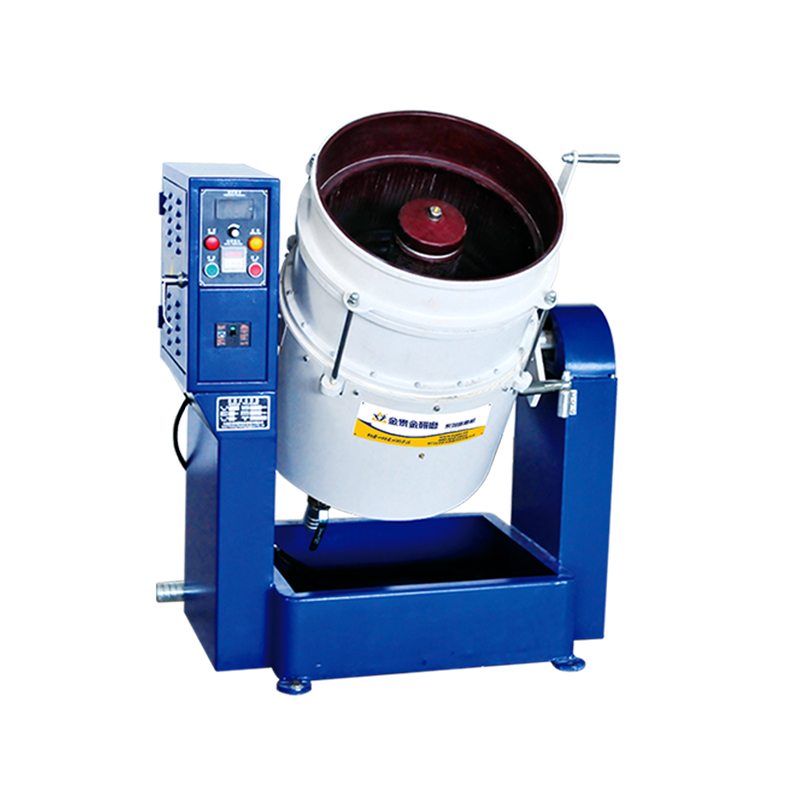
Vibratory finishing usually deserves the first look, because it removes the hand work a robot would otherwise have to reproduce. A bowl takes small and medium fittings, cast cleats, brackets, fasteners and machined valve internals and processes them in bulk with no part-specific path to teach. A tub takes long parts that cannot turn inside a bowl, such as rail sections, pipe spools and linear weldments, provided they can be supported along their length. Both routes trade part-on-part contact for simplicity, so visible faces need separation or racking. Their limits are geometric: no access to internal passages, no way to hold one radius precisely, and no tolerance for parts whose weight would crush the charge or be crushed by it. Where a bowl or tub reaches the surface, automating load and unload is a smaller problem than automating the finishing motion.
| Machine route | Where it fits | What it will not do |
|---|---|---|
| Rotary barrel finishing machine | Gentle deburring of small fragile components and mixed fitting batches with generous compound flow and low part-on-part energy | Long cycles with no visibility while running, and internal passages collect media and compound that must be retrieved at unload |
| Disc finishing machine | Fast, high-energy edge breaking and surface refinement on small robust fittings and uniform batches where cycle time matters | High impingement and edge-loss risk on thin or soft parts, and the geometry must suit the disc working gap rather than a large weldment |
| Tub vibrator | Long parts that cannot rotate in a bowl, such as rail sections, pipe spools, linear weldments and long shafts, provided they can be supported along their length | Lower energy per unit area, so heavy weld dressing takes longer, and a long tub needs floor space plus a support method that does not mark the part |
| Centrifugal barrel finishing machine | Short, aggressive cycles on small precision items such as valve trim, inserts and small stainless components with fine edge requirements | Rounds edges and can distort thin unsupported sections quickly, and results are sensitive to charge weight, speed and stop time |
Compound carries the work: it cleans the part and the media, holds fines in suspension, inhibits corrosion and controls foam. A mildly alkaline or near-neutral family is typical for ferrous work, and dose is set by measured concentration rather than by eye. On stainless and duplex marine parts the chloride content is the variable to control, because chlorides left in a pit, a crevice or a thread root can start pitting long after the part leaves the shop, and both tap water and recycled rinse water carry them. Confirm the water that will actually be used, add a rinse step that reaches the same features the finishing step reached, and dry the part rather than letting it drain and stain. Foam, residue and drag-out into a clean area are part of compound selection, not afterthoughts.
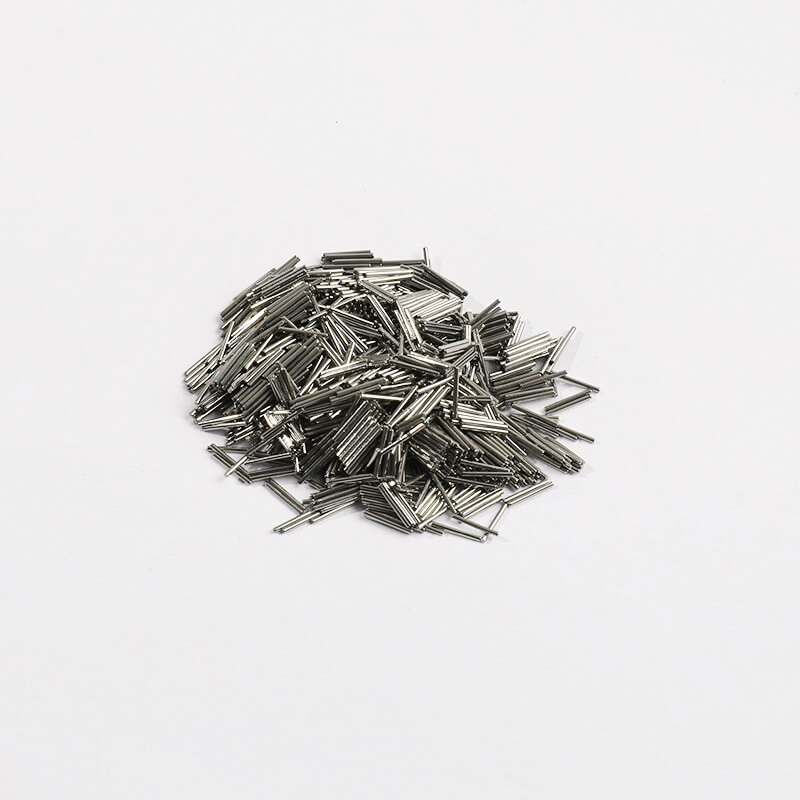
| Media | Best fit | Watch out for |
|---|---|---|
| Heavy-cut ceramic angle-cut triangles in a coarse size class | Breaking the edge of a machined or cast marine fitting and removing a substantial burr on robust stainless before a refinement stage | Cuts corners and weld toes aggressively and can round a seat or keyway, and the coarse section may not enter narrow passages at all |
| Fine ceramic or porcelain shapes in a small size class | Refinement and light edge blending after a cutting stage, and reaching tighter external geometry on small valve parts and fittings | Small sizes enter and lodge in cross-drillings and fine slots, and media wear shrinks the charge so the finish drifts over its life |
| Dry media such as walnut shell and corn cob with a dry polishing machine | Drying, light polishing and luster on parts that must leave the line dry, and on assemblies where a wet residue would be difficult to remove | Generates dust and needs extraction, cannot cut a burr, and organic media can carry moisture and contamination into a clean area |
| Bonded abrasive, nonwoven and buffing tool set for an arm or hand tool | Cutting weld toes, blending edges and building luster on large fabrications and free-form surfaces that no batch machine can reach | Each belt, wheel and compound has its own wear curve and pressure window; grain can embed in soft metal and polishing compound leaves a film that must be removed before coating or passivation |
Automation introduces a family of defects that hand work hides. Where an arm slows at a corner, dwells at a waypoint or waits for a tool change, the tool removes more material and leaves a flat spot or a visible step. Where two passes meet, a slight mismatch shows as a band. Tool wear makes the last third of a long path cut differently from the first third unless the cell compensates, and a loaded belt heats the surface instead of cutting it. These show up as texture variation rather than a measurable defect, so they are often accepted at the bench and rejected by the customer. Photograph the surface under raking light, compare the first and last part of a run, measure at fixed points along the path, and treat any visible change at a transition as a signal to review the path or the compensation.
| Failure mode | Likely cause | How to catch it |
|---|---|---|
| Weld toe, bore lip or free edge rounded past the drawing limit | Cycle too long, high-energy route or coarse dense media, a robot path that dwells at a corner, or a weld toe that was never given a maximum radius on the drawing | Measure the same edge before and after with an optical comparator, radius gauge or moulded replica, and compare against the maximum radius or minimum remaining edge specified |
| Over-grind step or gouge at a path transition or belt change | Two passes overlapping at different pressures, a fresh belt run at the setting that suited a worn one, or an operator touching up a transition by hand without recording it | Inspect each transition zone at a fixed viewing distance under consistent lighting, and compare the zone against the surrounding surface with a roughness reading on both sides |
| Medium wedged in tube-sheet holes or perforated plate openings | Hole diameter close to the media section, cylindrical or conical media that aligns with the hole, or a charge left to drain in the part at unload | Pin gauge a sample of holes across the plate, tap and back-flush each sample, and inspect the plate under oblique light for a medium sitting flush with the surface |
| Distortion and loss of flatness on a thin welded panel after dressing | Residual weld stress released by material removal, heat from a grinding or polishing pass, or a support scheme that allowed the panel to deflect while it was worked | Measure flatness with a straightedge and feeler or a dial gauge on a stand at marked grid points before and after, with the same support scheme used both times |
Nantes sits on the Loire estuary industrial axis, whose port authority - Nantes Saint-Nazaire Port, the fourth largest French seaport, handling about 30 million tonnes of traffic a year - describes itself as a logistics and industrial platform connected by sea, river, rail, road and air, with 1 460 ha of industrial-port land and more than 600 companies in the industrial-port complex. INSEE counted 11 718 establishments in the commune at the end of 2024 with 3,3 % in industry and 215 178 jobs at the place of work in 2023. The estuary economy combines shipbuilding and offshore-wind fabrication at Saint-Nazaire, aerostructures and composites, agri-food and agricultural machinery in the wider Loire region, and naval/aeronautical engineering in Nantes itself.
For this brief the relevant part of that base is marine: Nantes Saint-Nazaire Port handles 3 068 ship calls in 2025 including 401 tankers, 198 ro-ro, 637 solid bulk carriers, 258 liquid bulk carriers, 209 container ships and 84 LNG carriers, and runs dedicated ship construction and repair services on the estuary.
The Loire estuary combines two finishing problems: large welded and fabricated steelwork for shipbuilding, offshore wind and heavy industry, where weld dressing, edge preparation and surface cleanliness govern coating performance and fatigue life; and smaller precision components in aerostructures and mechanical equipment where deburring and surface finish are tolerance-driven. Agri-food equipment in the region adds stainless fabrication where surface smoothness and residue-free cleaning are hygiene requirements rather than cosmetic preferences. Both cases reward a process that can be documented and repeated, because the customers here are audited industrial buyers.
A Nantes buyer should settle whether the target is surface preparation before coating on large fabricated assemblies or deburring and finish on machined components, and then check that the proposed process can handle the part mix without cross-contamination between ferrous and stainless work.
Freight context: Nantes Saint-Nazaire Port (Nantes, Montoir-de-Bretagne, Saint-Nazaire, Donges), Nantes Atlantique Airport, Montoir container and ro-ro terminals. The port states it connects to five continents through regular maritime services linked to the main European transhipment hubs, with 209 container ship calls and 198 ro-ro calls in 2025, plus 800 freight trains and river barge convoys; 25 ha of industrial-port land reserve is available. That makes it practical to receive containerised finishing machines and bulk media through Montoir and to ship sample parts by air from Nantes Atlantique or by courier.
The French national standards body is AFNOR (Association francaise de normalisation), which coordinates French participation in standardisation and publishes the NF and NF EN standards that transpose ISO and CEN work; AFNOR also runs the certification activity attached to many of those standards. A French buyer of finishing equipment would normally reference ISO/NF EN surface-texture standards for roughness and profile parameters, ISO/NF EN cleanliness or residue specifications for critical parts, and management-system or sector schemes such as ISO 9001, IATF 16949 for automotive and EN 9100 for aerospace.
The working language of French industrial procurement is French: tenders, drawings, inspection plans and technical dossiers are normally issued and answered in French, and quotations that omit French documentation slow down qualification. Buyers qualify a machine against a written specification and expect traceable material certificates, machine safety documentation and, where applicable, a CE declaration of conformity and a risk assessment; acceptance is often staged (documentary review, factory acceptance test, then commissioning). Payment and documentation norms are conventional EU practice: euro invoicing, SEPA or SWIFT bank transfer, Incoterms agreed in writing, and customs paperwork (commercial invoice, packing list, transport document, proof of origin where a preference is claimed) prepared for the declarant or customs representative. Because customs and tax authorisations are handled jointly through SOPRANO, non-EU sellers are normally advised to sell to an established French/EU importing entity rather than to act as importer of record themselves.
SurfacePolish supplies from Xiamen, China. The buyer's own destination rules, conformity marking, tariff classification and documentation responsibilities stay with the buyer; confirm them against the authorities named above before ordering.
Some checks decide whether the part works, and those belong to the buyer's engineering and quality functions. A pressure or leak test on a valve or pump body, a flow check through a passage, a fit check of a shaft in its bearing or a flange against its mate, a dye penetrant inspection of a dressed weld, and any corrosion or coating adhesion evaluation are buyer-side calls. The same applies to cleanliness: the buyer defines the method and the limit, and decides whether a mechanically finished part needs a passivation treatment afterwards. SurfacePolish can describe what was done to a part and what was observed on it, but it does not qualify a part for a class society, a coating specification or a service environment. Ask what evidence is needed before work starts, then plan the trial records to match.
Before a cell can be justified, the manual work has to be counted in a form a cell design can use. Time the finishing operation per unit of surface: per metre of weld, per square metre of panel, per edge, per bore. Separate that from handling, meaning finding the part, loading it, turning it, changing a belt, inspecting it and putting it down, because handling is often what a robot is really bought for. Note the variability: how long the same feature takes on a good part and on a difficult one. Then estimate the volume over which those hours recur, and compare it with a cell that earns only while it is running and loaded. Where setup and changeover dominate the hours, automating the finishing motion will not change the economics much.
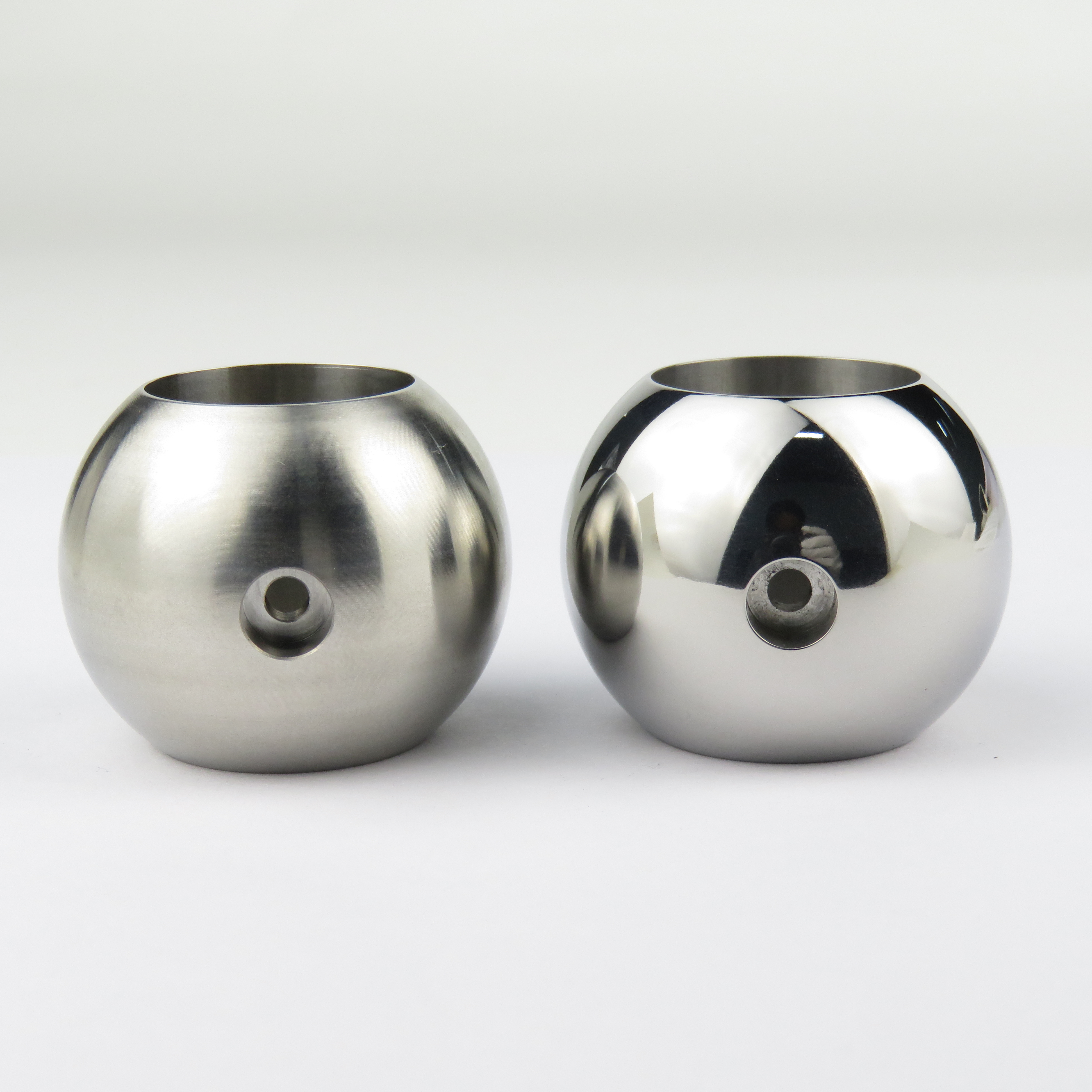
Size the medium below the smallest opening it could enter, and treat every passage as a retrieval point rather than assuming it stays clear. Map the tightest hole, slot or cross-drilling first, then pick a size class against that feature instead of an average. Add defined checks: borescope the smallest passage at an agreed angle, pin gauge and thread gauge the holes, and rinse through a filter so the discharge can be examined. For a trial shipped from France, send the part with the smallest passage so the medium choice is tested on the real feature rather than on a convenient sample.
No. SurfacePolish does not issue certification, qualification or approval for any regulated application, and nothing described here may be treated as such a claim. Requirements set by a classification society, a coating manufacturer or an end user are defined and verified by the buyer and its own inspection function. What SurfacePolish provides is equipment, media and compounds, a scoped discussion of a line concept, and observations from a sample trial on the parts tested under the settings used. Those observations can feed the buyer's own qualification work, but they do not replace it or shorten it.
Usually contamination rather than the material itself. Carbon steel media, carbon steel brushes, a machine also used for carbon steel work, grinding dust settling on a wet surface, bare-hand handling and chloride carried in rinse water can all leave something behind that starts to stain. It often appears first at a weld, a pit or a thread root. Segregate stainless work, use dedicated tooling, control the rinse water, dry the part promptly, and check with a wipe test or a free-iron check if the buyer wants one. Whether passivation follows mechanical finishing is the buyer's decision and its own requirement to define in France.
Use Nantes, France as the destination on the enquiry and state whether the deliverable is equipment, media and compound, a representative sample review or a line concept. A destination does not imply local stock, a local service point or a local delivery time.
A Nantes buyer would reference ISO/NF EN surface-texture standards for finish and roughness, EN 1090 and the classification-society rules for welded steel and marine structures, and hygiene-related surface requirements for food-contact equipment; ISO 9001 is the common baseline, with EN 9100 where aerospace work is involved. Coating and surface-preparation specifications for offshore and marine fabrication are usually set by the client or the classification society on top of those standards.
Sources were retrieved on 2026-09-29 and describe the local industrial and trade context only. They do not evidence any SurfacePolish project, shipment, installation or service in Nantes.
The buyer has steady volume and a narrow part family and wants to know whether the finishing step is worth automating.
Send the material, dimensions, approximate weight, batch quantity, the incoming condition and photographs of the difficult features. Mark which features must not be contacted by media and state how the result will be inspected. This form carries source reference PSEO-0556; quote it if you prefer an additional manual reference.
Open the SurfacePolish enquiry form Email a prepared enquiry
No price, lead time, certification or result is promised here. Confirm whether a sample trial is available for the specific part and what the trial can and cannot show.
Page PSEO-0556 · revised 2026-09-29 · cross-border equipment, media and scoped sample review. City context is sourced and cited above.
Use this local checker to identify missing part and inspection information. It prepares a technical-review brief; it does not approve a machine, process recipe or production result.
Complete the part details to prepare a review brief.
Email : info@surface-polish.com


 IPv6 network supported


 +86-592-2381506
