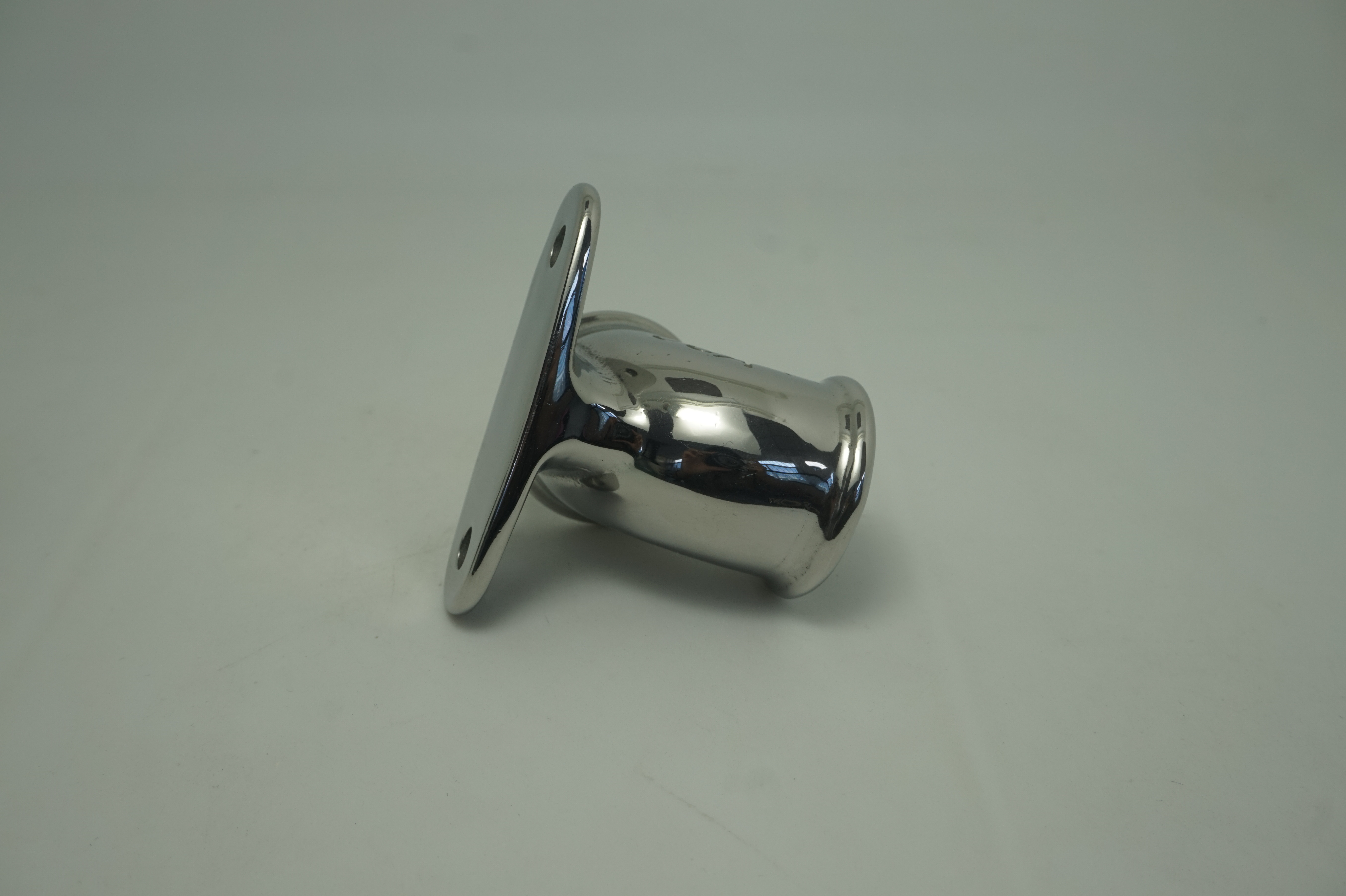
A buyer in Perth, Australia in marine components needs a duplex 2205 valve body cleaned up while its overlaid seat face holds dimension. SurfacePolish supplies finishing machines, media and compounds across borders, and offers a free sample trial in which representative parts are shipped to Xiamen and returned with an observed condition and a proposed media, compound and cycle direction for the buyer to assess against its own requirements. This brief is written for a buyer in Perth working on marine components; it describes equipment, media and a scoped sample review, not a local polishing service.
Which acceptance criteria, measurement locations and functional checks must exist before any route, robot or otherwise, can be compared fairly?
Does the part family repeat often enough, with stable geometry, to justify a cell rather than a batch machine or hand work?
Can the charge or the tool reach the surfaces that matter, and which enclosed passages and blind holes can never be reached at all?
Start by marking on the drawing which surfaces carry a function and which carry only appearance. On marine and offshore work the functional list is short and severe: seal faces on pump and valve bodies, bearing journals and taper seats on shaft components, keyways and splines, flange faces, bolted joint lands, fit bores, and the root of a weld that will be inspected. Everything else, such as the outside of a housing, a bracket web or a handrail run, can absorb a large change in texture. That split decides how much of the part may be exposed to a mass-finishing charge or to a robot-held abrasive without masking. One wrong assumption here, such as letting a coarse medium work a mating land, turns a reasonable route into scrap, so it is the first item a feasibility discussion should settle.
Do the arithmetic before drawing a cell. Reach is measured to the tool centre point, not to the mounting flange, and it must cover the far corner of the largest part with the arm still in a posture that has authority; a five-metre nominal reach does not mean a five-metre useful envelope. Payload is rated at the flange and includes the gripper, the tool, cable management and any offset that creates a moment. Stiffness matters more than the payload figure once a tool pushes against a surface, because compliance and lost motion appear as variation in depth of cut and as chatter on thin panels. Arm repeatability is not the same as accuracy of the finished surface, since the part, the fixture and any positioner each add error. Compliant or force-controlled tooling changes the requirement substantially and belongs in the discussion from the start.
| Machine route | Where it fits | What it will not do |
|---|---|---|
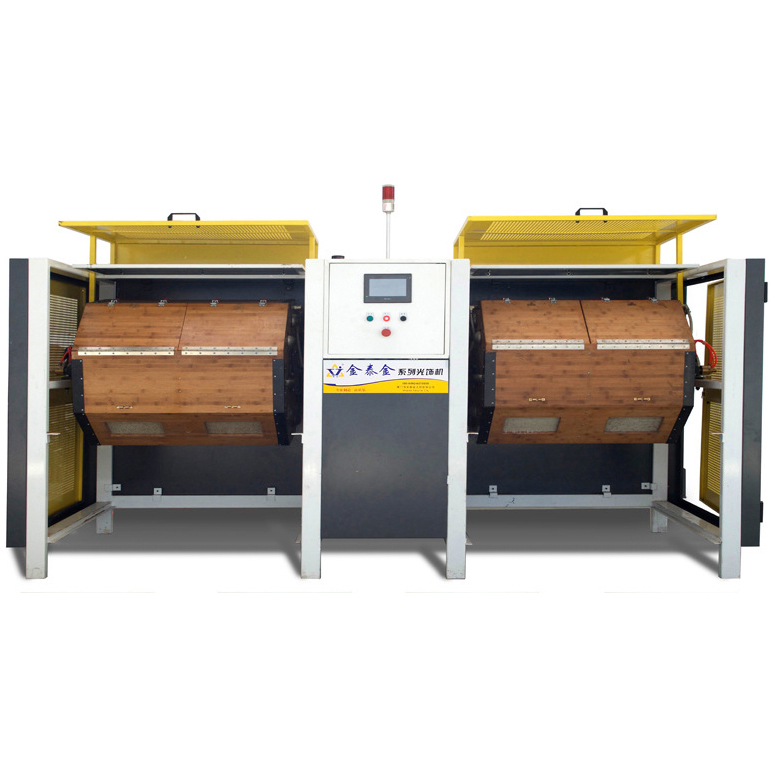
| Magnetic finishing machine | Fine deburring and light refinement of small precise features such as narrow slots, small bores and stainless fittings | A small working envelope that excludes large fabrications, with pin media that can lodge in fine passages and must be retrieved |
| Dry polishing machine and dryer | Drying parts after a wet stage and producing a dry polished surface with organic media where a wet residue would be hard to remove | No cutting action, needs dust extraction, and organic media must be kept dry and clean or it transfers contamination to the part |
| Rotary barrel finishing machine | Gentle deburring of small fragile components and mixed fitting batches with generous compound flow and low part-on-part energy | Long cycles with no visibility while running, and internal passages collect media and compound that must be retrieved at unload |
| Disc finishing machine | Fast, high-energy edge breaking and surface refinement on small robust fittings and uniform batches where cycle time matters | High impingement and edge-loss risk on thin or soft parts, and the geometry must suit the disc working gap rather than a large weldment |
Steel media produces a bright, burnished surface on stainless components with low stock removal and good edge blending. On marine work the contamination question comes first. Carbon steel media and carbon steel brushes leave free iron on an austenitic or duplex surface, and free iron in a chloride environment is where rust bloom begins. A steel charge needs its own machine or a documented separation protocol, a corrosion-inhibiting compound, magnetic or screen separation at unload, and a finishing sequence that removes transferred iron before the part ships. Stainless steel media reduces the risk but does not remove it. Whether the part is then passivated is the buyer's decision; a recognised practice such as ASTM B912 describes a passivation treatment for stainless steel and belongs in the requirements the buyer defines and verifies.
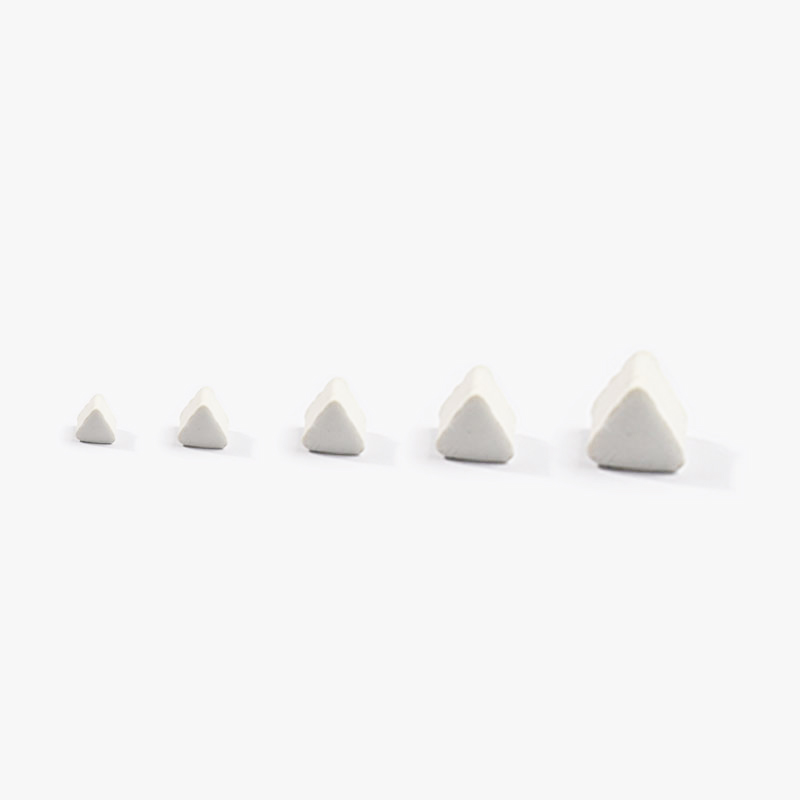
| Media | Best fit | Watch out for |
|---|---|---|
| Aluminium oxide grinding media in a dense ceramic bond | Heavier stock removal or a more consistent cut on robust stainless and duplex parts with thick edges and cast skin | High removal energy rounds functional edges quickly and is a poor match for thin panels or a knife-edge seat |
| Steel media including balls, pins and shaped shot | Bright burnished finishing and edge blending on stainless components where appearance matters and stock removal must stay low | Transfers iron to stainless and leaves free iron that blooms in chloride service, so it needs a dedicated charge, an inhibiting compound and magnetic or screen separation |
| Chloride-free mildly alkaline or near-neutral compound, liquid or powder | Cleaning, corrosion inhibition and fines suspension on stainless and duplex marine work where retained chlorides would risk pitting in service | Dose drifts with drag-out and water hardness, foam can hide the load, and rinse water must reach the same features the compound reached |
| Plastic triangles, cones and pyramids in a soft to medium grade | Deburring aluminium brackets, bronze castings and cosmetic faces where marking and edge loss must stay small | Slow cut rate, media deforms as it wears, and a worn charge behaves quite differently from a fresh one |
Removing material releases residual stress, and on a large thin fabrication that means movement. A scrubber panel welded into a frame can lose flatness after weld dressing, a long shaft can bend slightly as a skin is taken off, and a bore can close or open as the surrounding metal is worked. Clamping makes this worse when force is used to pull a warped part onto a fixture, because the part springs back on release. Measure flatness, straightness and critical diameters at marked points before and after, and record the support and clamping scheme used. In a cell, gripper force and fixture datums are part of the process rather than peripheral equipment. Where drift matters, the buyer should decide whether stress relief, a reduced stock allowance or a different finishing route is the right answer.
| Failure mode | Likely cause | How to catch it |
|---|---|---|
| Keyway, spline or taper geometry lost to edge rounding | The feature was exposed to the charge without masking, or a tool-carrier path ran along the flank of the feature instead of stopping short of it | Check width, flank angle and edge break with a gauge or comparator at marked stations before and after, and confirm the protected feature against the drawing tolerance |
| Dwell mark or flat spot where a robot-held tool paused, slowed or changed direction | Waypoint spacing or path speed poorly set, a tool change or program transition in the middle of a visible surface, or missing compensation for tool wear along the path | Photograph the surface under raking light and compare first and last parts of a run, and measure at fixed points along the path to locate any step or band |
| Distortion and loss of flatness on a thin welded panel after dressing | Residual weld stress released by material removal, heat from a grinding or polishing pass, or a support scheme that allowed the panel to deflect while it was worked | Measure flatness with a straightedge and feeler or a dial gauge on a stand at marked grid points before and after, with the same support scheme used both times |
| Dimensional drift on a bearing journal, bore or machined fit | Too much stock removed at the feature, stress redistribution in a long or thin part, or clamping force that pulled the part out of shape during finishing | Micrometer or bore gauge the same stations before and after at a controlled temperature, and re-check after the clamps are released to separate clamping deflection from real drift |
Perth's industrial base is built around resources and energy services. The City of Perth's investment material names resources and energy, health and life sciences, and education and innovation as key sectors, describing Perth as a global energy capital with an established health and life sciences research base. The Western Australian Government's Westport program is planning the relocation of container trade from Fremantle to Kwinana, and the same government is funding training for the Henderson Defence Precinct, which it describes as underpinning tens of billions of dollars of Commonwealth investment and more than 10,000 skilled jobs over two decades, including shipbuilding and maintenance trades.
For this brief the relevant part of that base is marine: The Western Australian Government is funding training for the Henderson Defence Precinct, including shipbuilding and maintenance trades.
Perth's resource, energy and defence work generates parts that must survive harsh service conditions: valve and pump components, machined housings, fabricated structures and shipbuilding assemblies where burrs, sharp edges and surface defects affect fit-up, coating and corrosion performance as well as the safety of personnel handling them. For maintenance and repair work in particular, the ability to reproduce a specified edge or surface condition on a single part - not just on a production run - is usually the constraint that matters.
A Perth buyer should decide whether the finishing requirement is a one-off repair or refurbishment condition or a repeatable production specification, because that choice determines whether a small batch machine and hand-controlled media will do or whether process control and repeatability need to be designed in from the start.
Freight context: Port of Fremantle, Kwinana (Westport program), Perth Airport. Western Australia's container trade currently moves through Fremantle, and the state's Westport program is planning to relocate container trade to Kwinana. Machinery and sample parts for Perth therefore enter through the Fremantle/Kwinana port system or by air through Perth Airport, with the port transition itself a factor in medium-term freight planning for importers.
The Australian Border Force (ABF) is the customs authority and clears imported goods through customs; all goods arriving in Australia must be declared unless an exception applies, goods valued at up to A$1,000 can be imported without a formal import declaration, and entry is made through the Integrated Cargo System (Form B650 for sea or air cargo). Generally all goods imported into Australia are liable for duties and taxes unless an exemption or concession applies, and most imports are subject to 10% GST, so classification, customs valuation and any preferential tariff claim drive the landed cost; a licensed customs broker is the normal route for a first-time importer. Electrical equipment can fall under the Electrical Equipment Safety System, under which the first Australian supplier registers as a Responsible Supplier, holds an ABN, makes a Responsible Supplier Declaration and marks the equipment with the Regulatory Compliance Mark (RCM) in accordance with AS/NZS 4417.1 and AS/NZS 4417.2. Imported goods may also require a trade description naming the country of manufacture, and machinery that is not in-scope electrical equipment still has to meet state work health and safety duties covering plant.
The national standards body is Standards Australia, which publishes Australian Standards (AS) and joint Australian/New Zealand Standards (AS/NZS); on their own, standards are voluntary and there is no general requirement for the public to comply, but state and Commonwealth governments often refer to AS or AS/NZS standards in legislation and they can then become mandatory. For finishing and machinery work, the applicable documents are the ones cited in the buyer's own contract, purchase specification, licence condition or safety management system, together with the marking rules in AS/NZS 4417.1 and AS/NZS 4417.2 for in-scope electrical equipment sold under the EESS.
SurfacePolish supplies from Xiamen, China. The buyer's own destination rules, conformity marking, tariff classification and documentation responsibilities stay with the buyer; confirm them against the authorities named above before ordering.
Some checks decide whether the part works, and those belong to the buyer's engineering and quality functions. A pressure or leak test on a valve or pump body, a flow check through a passage, a fit check of a shaft in its bearing or a flange against its mate, a dye penetrant inspection of a dressed weld, and any corrosion or coating adhesion evaluation are buyer-side calls. The same applies to cleanliness: the buyer defines the method and the limit, and decides whether a mechanically finished part needs a passivation treatment afterwards. SurfacePolish can describe what was done to a part and what was observed on it, but it does not qualify a part for a class society, a coating specification or a service environment. Ask what evidence is needed before work starts, then plan the trial records to match.
A comparison is useful only if one thing changes at a time. Run the same part, the same marks and the same measurement plan against two options, keeping compound, concentration, cycle or path, and charge age as close as possible. Where the trial runs in a machine, charge the two options separately rather than mixing them, and add the fresh-media effect to the list of variables, since a new charge cuts differently from an aged one. For a tool-carrier comparison, use the same belt or wheel specification and reset the tool life counter between runs. Randomise the order when more than two options are compared, and have the parts evaluated by someone who does not know which is which. Record everything on the same form and photograph each option under the same lighting.
Partly, and the split is the useful part of the question. A robot can hold a grinder, sander or polishing head over a repeatable path with controlled pressure, which suits long weld runs, flat panels and consistent edges. It struggles where access is restricted, where the surface is free-form and required pressure changes continuously, and where a person compensates for part-to-part variation by feel. Work out which features recur in the same place on every part and which move; automate the first group and leave the second with an operator, or send parts to a machine route that already produces the surface in bulk.
Size the medium below the smallest opening it could enter, and treat every passage as a retrieval point rather than assuming it stays clear. Map the tightest hole, slot or cross-drilling first, then pick a size class against that feature instead of an average. Add defined checks: borescope the smallest passage at an agreed angle, pin gauge and thread gauge the holes, and rinse through a filter so the discharge can be examined. For a trial shipped from Australia, send the part with the smallest passage so the medium choice is tested on the real feature rather than on a convenient sample.
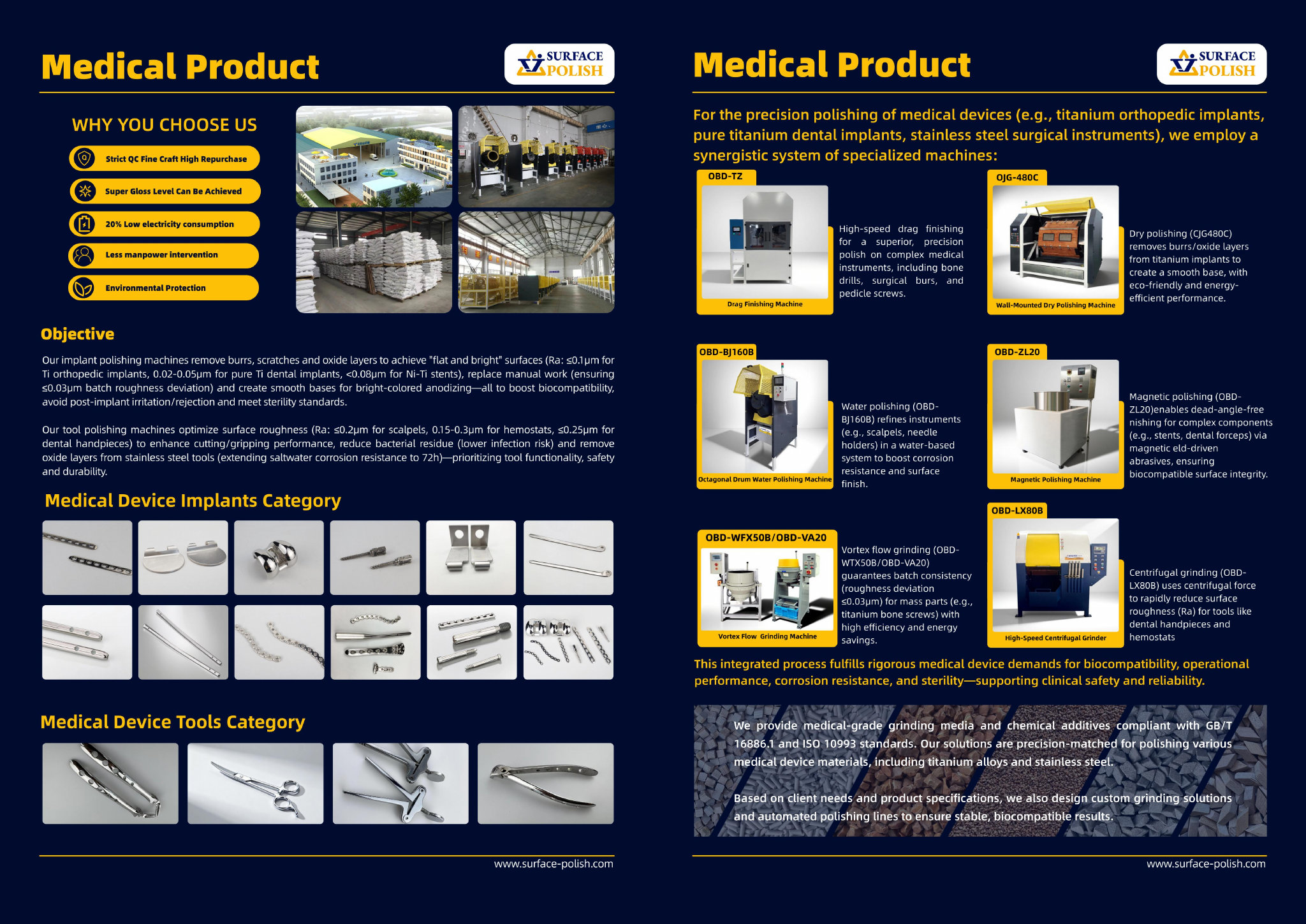
No. SurfacePolish supplies finishing machines, media and compounds across borders and discusses a finishing line concept within a defined scope. There is no robotic polishing cell to sell, install or commission, and no automation delivery promise attaches to anything described here. The robotic content is a feasibility and line-design discussion: what a robot can and cannot replace, what has to be fixed about a part, a fixture or a part family before automation is possible, and how a cell compares with a machine route or with hand work. Any cell a buyer builds is specified, integrated and accepted by the buyer and its own integrator, not by SurfacePolish.
Use Perth, Australia as the destination on the enquiry and state whether the deliverable is equipment, media and compound, a representative sample review or a line concept. A destination does not imply local stock, a local service point or a local delivery time.
Perth buyers use Australian Standards (AS) and joint AS/NZS standards named in their project specifications, which are voluntary unless state or Commonwealth legislation refers to them. Equipment sold with in-scope electrical components must meet the EESS and carry the Regulatory Compliance Mark to AS/NZS 4417.1 and AS/NZS 4417.2, while plant and machinery in Western Australian workplaces fall under the state's work health and safety duties.
Sources were retrieved on 2026-09-29 and describe the local industrial and trade context only. They do not evidence any SurfacePolish project, shipment, installation or service in Perth.
The buyer must blend the overlay without disturbing the seat geometry and remove casting skin on the outside without contaminating the duplex surface.
Send the material, dimensions, approximate weight, batch quantity, the incoming condition and photographs of the difficult features. Mark which features must not be contacted by media and state how the result will be inspected. This form carries source reference PSEO-0736; quote it if you prefer an additional manual reference.
Open the SurfacePolish enquiry form Email a prepared enquiry
No price, lead time, certification or result is promised here. Confirm whether a sample trial is available for the specific part and what the trial can and cannot show.
Page PSEO-0736 · revised 2026-09-29 · cross-border equipment, media and scoped sample review. City context is sourced and cited above.
Use this local checker to identify missing part and inspection information. It prepares a technical-review brief; it does not approve a machine, process recipe or production result.
Complete the part details to prepare a review brief.
Email : info@surface-polish.com


 IPv6 network supported


 +86-592-2381506