A buyer in The Hague, Netherlands in marine components is weighing whether a 1.8 m bronze propeller blade can be polished by machine or must stay hand work. SurfacePolish supplies finishing machines, media and compounds across borders and offers a free sample trial on representative sections, which return from Xiamen with an observed condition and a proposed media, compound and cycle direction to feed the buyer's own automation feasibility study. This brief is written for a buyer in The Hague working on marine components; it describes equipment, media and a scoped sample review, not a local polishing service.
What is the largest dimension and the greatest mass that must be presented, and can the part be turned or supported without distorting it?
Which acceptance criteria, measurement locations and functional checks must exist before any route, robot or otherwise, can be compared fairly?
What starting condition and cleanliness baseline will the part arrive in, and who owns the pre-finish step?
Two 316L parts made to the same drawing can behave differently because of how they were produced. Cast material carries a skin and porosity; wrought plate has a rolling direction; duplex and super-duplex grades respond to heat input differently from austenitic grades, and a weld heat-affected zone finishes at a different rate from the parent metal. Hardfacing, weld overlay, and bronze or nickel-aluminium-bronze castings each cut in their own way. Record the grade, the product form, the heat treatment or stress relief, the welding process and the as-received condition, whether machined, plasma cut, grit blasted or still carrying mill scale and heat tint. Note who owns the pre-finish cleanliness step and what the part must be free of, because oil, marking ink and salt carry-over contaminate a charge and change how it cuts.
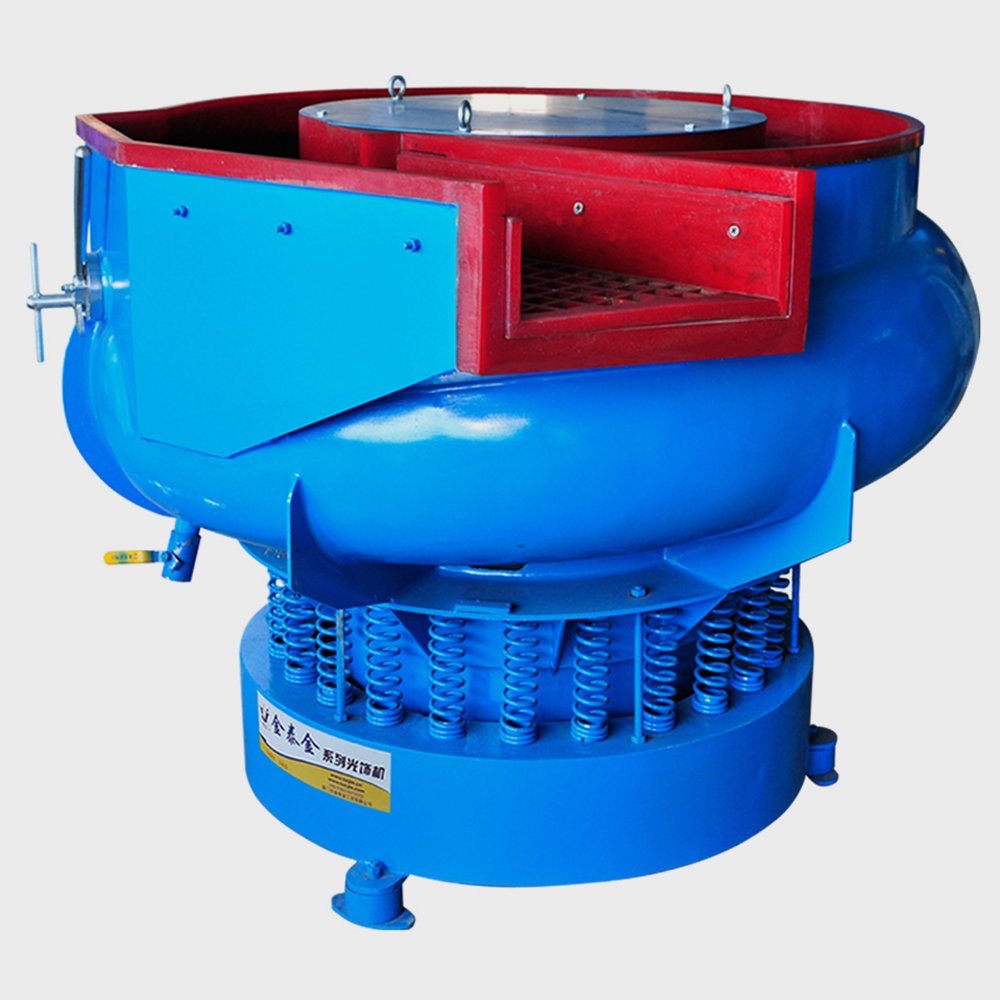
Vibratory finishing usually deserves the first look, because it removes the hand work a robot would otherwise have to reproduce. A bowl takes small and medium fittings, cast cleats, brackets, fasteners and machined valve internals and processes them in bulk with no part-specific path to teach. A tub takes long parts that cannot turn inside a bowl, such as rail sections, pipe spools and linear weldments, provided they can be supported along their length. Both routes trade part-on-part contact for simplicity, so visible faces need separation or racking. Their limits are geometric: no access to internal passages, no way to hold one radius precisely, and no tolerance for parts whose weight would crush the charge or be crushed by it. Where a bowl or tub reaches the surface, automating load and unload is a smaller problem than automating the finishing motion.
| Machine route | Where it fits | What it will not do |
|---|---|---|
| Magnetic finishing machine | Fine deburring and light refinement of small precise features such as narrow slots, small bores and stainless fittings | A small working envelope that excludes large fabrications, with pin media that can lodge in fine passages and must be retrieved |
| Grinding finishing machine | Taking off a heavy machining burr or a defined stock layer before a refinement pass on robust stainless and duplex work | High removal energy cuts functional edges fast, so geometry assessment and a short controlled cycle matter more than on any other route |
| Disc finishing machine | Fast, high-energy edge breaking and surface refinement on small robust fittings and uniform batches where cycle time matters | High impingement and edge-loss risk on thin or soft parts, and the geometry must suit the disc working gap rather than a large weldment |
| Centrifugal barrel finishing machine | Short, aggressive cycles on small precision items such as valve trim, inserts and small stainless components with fine edge requirements | Rounds edges and can distort thin unsupported sections quickly, and results are sensitive to charge weight, speed and stop time |
When a robot carries the tool, the consumable list changes from loose media to bonded abrasive, nonwoven and buffing products. Coated belts and flap wheels cut weld toes and blend edges; nonwoven wheels and discs refine and satin-finish; stitched or loose cotton wheels with a polishing compound build luster. Each type has a working speed, a contact pressure and a wear curve, and each wears in a way the cell must compensate for or an operator must adjust. Abrasive grain can embed in soft or gummy material such as bronze or aluminium, and a loaded belt cuts less and heats more. Polishing compound leaves a film that has to be removed before coating, passivation or a cleanliness check, so the tool set cannot be chosen separately from the path that carries it.
| Media | Best fit | Watch out for |
|---|---|---|
| Heavy-cut ceramic angle-cut triangles in a coarse size class | Breaking the edge of a machined or cast marine fitting and removing a substantial burr on robust stainless before a refinement stage | Cuts corners and weld toes aggressively and can round a seat or keyway, and the coarse section may not enter narrow passages at all |
| Plastic triangles, cones and pyramids in a soft to medium grade | Deburring aluminium brackets, bronze castings and cosmetic faces where marking and edge loss must stay small | Slow cut rate, media deforms as it wears, and a worn charge behaves quite differently from a fresh one |
| Fine ceramic or porcelain shapes in a small size class | Refinement and light edge blending after a cutting stage, and reaching tighter external geometry on small valve parts and fittings | Small sizes enter and lodge in cross-drillings and fine slots, and media wear shrinks the charge so the finish drifts over its life |
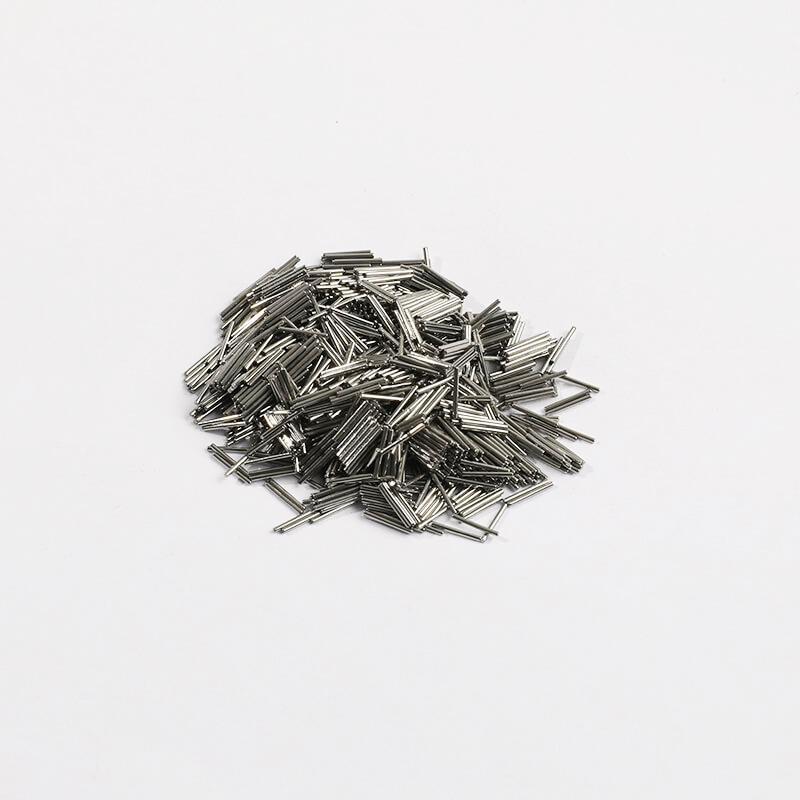
| Steel media including balls, pins and shaped shot | Bright burnished finishing and edge blending on stainless components where appearance matters and stock removal must stay low | Transfers iron to stainless and leaves free iron that blooms in chloride service, so it needs a dedicated charge, an inhibiting compound and magnetic or screen separation |
A finished stainless or duplex part that develops brown bloom within days is usually showing contamination rather than a material fault. Sources include carbon steel media or brushes, a machine that also runs carbon steel, grinding dust settling on a wet surface, handling with bare or dirty gloves, and chloride carried in rinse water or left standing in a crevice. The staining often starts at a weld, a pit or a thread root, where the surface is already disturbed. Segregate stainless work, use dedicated or stainless tooling, keep the part wet only with controlled water, dry it promptly, and check with a wipe test or a free-iron check if the buyer wants one. Pitting from retained chlorides is a slower relative of the same problem, so the rinse step deserves the attention the finishing step gets.
| Failure mode | Likely cause | How to catch it |
|---|---|---|
| Keyway, spline or taper geometry lost to edge rounding | The feature was exposed to the charge without masking, or a tool-carrier path ran along the flank of the feature instead of stopping short of it | Check width, flank angle and edge break with a gauge or comparator at marked stations before and after, and confirm the protected feature against the drawing tolerance |
| Compound film, burnished residue or dried detergent left on a sealing face | Rinse that did not reach the same features the finishing step reached, compound drag-out from the charge, or a part allowed to drain and dry in position instead of being dried deliberately | Wipe the sealing face with a clean white cloth and a defined solvent, inspect the wipe, and borescope any groove or land the rinse may not have reached |
| Medium or a broken medium fragment lodged in a seawater passage, drain boss or internal cavity | Media size class too close to the smallest opening, a worn charge breaking down into smaller pieces, or an enclosed feature that was never mapped before the route was chosen | Count the charge in and out where the batch allows, borescope the smallest passage at an agreed angle, and flush the passage into a filter so the discharge can be examined |
| Over-grind step or gouge at a path transition or belt change | Two passes overlapping at different pressures, a fresh belt run at the setting that suited a worn one, or an operator touching up a transition by hand without recording it | Inspect each transition zone at a fixed viewing distance under consistent lighting, and compare the zone against the surrounding surface with a roughness reading on both sides |
The Hague is the seat of the Dutch government and the international city of peace and justice, so its economic base is services, international organisations and technology rather than heavy manufacturing. The city supports Stichting The Hague Security Delta, which brings government, knowledge institutions and companies together on innovation, talent development and digital resilience, and it hosts the National Cyber Security Centre, Europol, Eurojust, NATO bodies and the HSD Campus. The Hague & Partners lists cybersecurity, IT and tech, impact, humanity, legal and policy, rule of law and new energy as the city's key sectors, and notes that many energy companies, including Shell, Orsted and Total, have located there. Scheveningen harbour is the city's port, for which the municipality maintains a harbour vision through 2050.
For this brief the relevant part of that base is marine: The municipality's Scheveningen harbour vision covers 2025-2050 and sets out a strong sustainable harbour for the city.
The Hague has little heavy manufacturing, so finishing demand is concentrated in maintenance of building-services, port and marine equipment around Scheveningen and in technical hardware used by the city's energy, IT and security organisations. For those users the typical requirement is small-batch edge control, cleaning and surface preparation of stainless, aluminium and steel components rather than production-scale deburring.
A buyer here should first decide whether the need is a small in-house finishing capability for maintenance and prototyping or an outsourced batch process, and then fix the material mix and the required edge and roughness specification, because a maintenance workload and a production workload point to different machine types.
Freight context: Scheveningen harbour, Rotterdam The Hague Airport. Scheveningen is the city's harbour and is covered by a municipal harbour vision through 2050; the city also has Rotterdam The Hague Airport and is roughly 30 minutes from Schiphol. Machines imported from outside the EU are declared to Dutch Customs at their point of entry, and machine tools arriving by sea will normally clear customs at Rotterdam before road transport to The Hague.
The Dutch standards body is NEN (Nederlands Normalisatie-instituut), which publishes and maintains the NEN and NEN-EN-ISO standards; the content of a standard is set by a NEN standards committee made up of the organisations concerned, not by NEN itself. For surface finishing NEN publishes NEN-EN-ISO 2080, which defines the terms for the general types of surface-finishing processes with emphasis on practical use in metal finishing, under the standards committee for metallic coatings and corrosion of metals and alloys. Machinery safety, EMC, low-voltage, ATEX, RoHS and ecodesign requirements reach Dutch buyers through the CE directives and regulations referenced by KVK, with the Machinery Regulation applying from 20 January 2027.
Business is conducted in Dutch, but engineering and procurement communication in these sectors is routinely handled in English. Buyers are KVK-registered legal entities and expect a clear commercial entity to contract with, an EORI number for customs, correct HS/TARIC classification, and a full CE technical file including the EC Declaration of Conformity and a manual in the correct language; a technical construction file held by the manufacturer is normally part of the qualification pack. For EU-internal supply the invoice carries 0% VAT with the customer's VAT identification number and the customer accounts for 21% Dutch VAT in its own return, so a Chinese seller shipping directly from outside the EU must be clear about who is importer of record and who carries the duty and import VAT. Trade and investment support is organised through bodies such as KVK, RVO, the regional development agencies and the Trade and Innovate NL network, and the Dutch technology industry is represented by FME.
SurfacePolish supplies from Xiamen, China. The buyer's own destination rules, conformity marking, tariff classification and documentation responsibilities stay with the buyer; confirm them against the authorities named above before ordering.
Treat the first article as the reference, not as a formality. Approve it against the written criteria, keep it with the settings used, and use it to reset expectations whenever a variable changes. Records worth having for each lot include the machine or cell identifier, the media type, size class, charge mass and charge age, the compound and its measured concentration, the cycle or path program and revision, the tool or belt type and its life counter, the fixture and datum scheme, and the inspection results with their measurement locations. For work done on a trial basis, the record should say plainly that the result applies to the parts and settings tested. Parts received without a settings record cannot be separated from the process that produced them, and repeatability becomes guesswork.
A sample trial reports what was observed on the parts tested under the settings used, and that is the limit of it. It cannot promise a roughness value, an edge radius, a tolerance, a cycle time, a capacity or a cost. It cannot verify the reach, payload or path accuracy of a robot the buyer has not yet chosen, nor the behaviour of a gripper, fixture or positioner that does not exist. It cannot qualify a process for a classification society, a coating specification or a service environment, and it cannot demonstrate corrosion performance or coating adhesion. Nor can it show production uniformity, because a few parts do not describe variation across a lot, a shift or a media charge. Those gaps close only through the buyer's own line trials, first-article discipline and acceptance testing.
No. SurfacePolish does not issue certification, qualification or approval for any regulated application, and nothing described here may be treated as such a claim. Requirements set by a classification society, a coating manufacturer or an end user are defined and verified by the buyer and its own inspection function. What SurfacePolish provides is equipment, media and compounds, a scoped discussion of a line concept, and observations from a sample trial on the parts tested under the settings used. Those observations can feed the buyer's own qualification work, but they do not replace it or shorten it.
There is no universal number, but the shape of the answer is consistent: a small number of stable variants, each repeating often enough to amortise setup, with a predictable manual time content. Count the hours over a year, then subtract the hours a cell would still spend on loading, fixture changes, tool changes and inspection. If the remainder is small, a batch machine or a fixture change may be the better buy. Where a finishing route near The Hague already produces an acceptable surface in bulk, automating load and unload is usually the smaller and more certain step than automating the finishing motion itself.
Usually contamination rather than the material itself. Carbon steel media, carbon steel brushes, a machine also used for carbon steel work, grinding dust settling on a wet surface, bare-hand handling and chloride carried in rinse water can all leave something behind that starts to stain. It often appears first at a weld, a pit or a thread root. Segregate stainless work, use dedicated tooling, control the rinse water, dry the part promptly, and check with a wipe test or a free-iron check if the buyer wants one. Whether passivation follows mechanical finishing is the buyer's decision and its own requirement to define in Netherlands.
Use The Hague, Netherlands as the destination on the enquiry and state whether the deliverable is equipment, media and compound, a representative sample review or a line concept. A destination does not imply local stock, a local service point or a local delivery time.
Buyers here would reference the CE machinery regime (Machinery Regulation from 20 January 2027) and the Dutch/EN-ISO surface-finishing standards published by NEN, such as NEN-EN-ISO 2080. Where equipment is used in marine or coastal conditions, corrosion-protection and coating-preparation specifications are normally added by the asset owner on top of those base standards.
Sources were retrieved on 2026-09-29 and describe the local industrial and trade context only. They do not evidence any SurfacePolish project, shipment, installation or service in The Hague.
The buyer is asking whether polishing of the blade face can be automated at all or must stay hand work.
Send the material, dimensions, approximate weight, batch quantity, the incoming condition and photographs of the difficult features. Mark which features must not be contacted by media and state how the result will be inspected. This form carries source reference PSEO-0656; quote it if you prefer an additional manual reference.
Open the SurfacePolish enquiry form Email a prepared enquiry
No price, lead time, certification or result is promised here. Confirm whether a sample trial is available for the specific part and what the trial can and cannot show.
Page PSEO-0656 · revised 2026-09-29 · cross-border equipment, media and scoped sample review. City context is sourced and cited above.
Use this local checker to identify missing part and inspection information. It prepares a technical-review brief; it does not approve a machine, process recipe or production result.
Complete the part details to prepare a review brief.
Email : info@surface-polish.com


 IPv6 network supported


 +86-592-2381506