A automotive parts buyer in Bergamo, Italy has a hardened stainless exhaust valve that must be deburred at the seat margin without rounding the seat edge or disturbing a nitrided stem. SurfacePolish supplies finishing machines and consumables across borders and runs a free sample trial in Xiamen, returning the tested parts with observations and a proposed media, compound and cycle direction for the buyer's own engineering review. This brief is written for a buyer in Bergamo working on automotive parts; it describes equipment, media and a scoped sample review, not a local polishing service.
Which dimensions, seal faces and thread forms carry functional geometry, and what limit on stock removal per cycle can those features tolerate?
How will free iron, embedded particles and cross-contamination from carbon steel be prevented, and how will each be detected on the finished part?
Which internal features must be deburred without lodging media, and what retrieval and verification step proves the passage and thread form are clean?
Magnetic response is a sorting aid, not a material identification. Ferritic exhaust grades are strongly attracted, martensitic wear grades are magnetic, austenitic grades are effectively non-magnetic in the annealed state but become weakly magnetic after cold work, and duplex grades sit in between depending on composition and condition. A mixed load is therefore a real risk on two counts: a ferritic part can transfer free iron onto an austenitic neighbour during a shared cycle, and a magnetic retrieval or separation step can quietly fail on a grade that was assumed to be magnetic. Identify parts positively before finishing using material certificates, heat numbers and markings, and keep loads segregated by grade. Where a part is small or unmarked, settle the identification question before any consumable is chosen, because the answer changes both media chemistry and separation design.
In stainless finishing the first machine question is not how bright the part must become but how much material the most sensitive edge can lose. Mechanical action removes stock far faster at edges, corners and thin sections than on a flat face, so the route follows the tightest edge requirement on the drawing. Where a hole edge or a stamped cover sits in a narrow allowable band, a gentler route such as barrel or rotary, or a vibratory bowl run at moderate energy with an edge-specific compound, is the defensible starting point. Where heavier deburring is needed and edges can tolerate more removal, a disc or centrifugal barrel route uses energy more productively. Record the decision as allowable stock removal per cycle at the tightest feature, because that framing is what lets a supplier recommendation and a buyer limit be compared honestly.
| Machine route | Where it fits | What it will not do |
|---|---|---|
| Vibratory finishing machine, bowl type | General deburring and surface refinement of medium-sized stainless automotive parts such as brackets, small housings and flange blanks in a visible batch load. | Part size and shape are capped by chamber geometry, and thin or threaded parts may need compartments or fixtures to control part-on-part contact. |
| Tub vibrator | Long stainless parts such as trim sections, exhaust profiles and shafts that cannot be loaded into a bowl without being cut down. | Media velocity varies along the length, so finish evenness must be verified at both ends, and the machine occupies more floor space and compound volume. |
| Continuous or indexed wet line with staged media charges | Multi-stage stainless finishing where deburring, refining and brightening are separated to control edge loss and texture progression. | Needs clear segregation between stages to prevent carry-over of coarse media or iron contamination, and adds handling and floor space. |
| Barrel finishing machine, rotary barrel tumbler | Gentle deburring and finishing of delicate, thin or threaded stainless parts such as small fittings, sensor bodies and precision pins. | Cycles run longer than in higher-energy machines, and coverage can be uneven on large or complex parts. |
Geometry, not preference, sets media shape and size. Angle-cut triangles and similar forms reach slots, corners and recesses and cut faster on burrs; cylinders and balls blend broad surfaces more evenly and are kinder to edges; small media reaches tighter features but carries more edge impact per contact and is harder to separate. The usable window for any feature lies between media that is too small and packs or lodges and media that is too large to enter at all. For cross-drillings, gear teeth and narrow slots, work from the smallest opening on the drawing and pick a size class that flows through it without wedging. For stainless appearance parts, check the surface texture the shape leaves behind, because some forms produce overlapping impacts that read as a texture rather than as a polish.
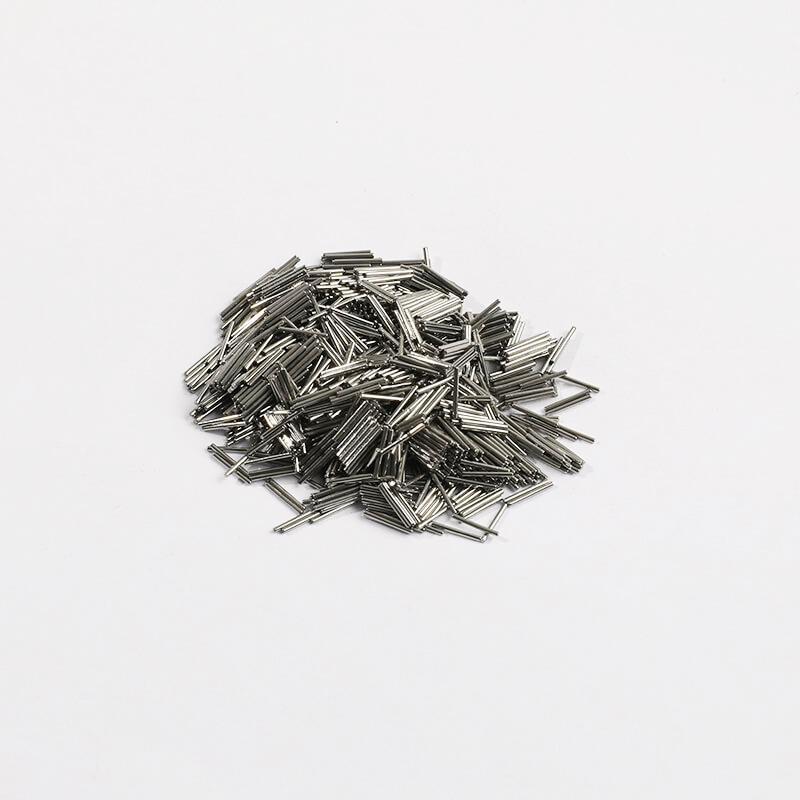
| Media | Best fit | Watch out for |
|---|---|---|
| Ceramic cylinders, balls and other rounded shapes | General surface refinement and blending on broad stainless faces where a more even texture and gentler edge action are wanted. | Does not reach sharp internal corners, and long enough running on thin sections can still round edges beyond a tight callout. |
| Grinding and cutting media, fused alumina and silicon carbide based | Aggressive stock removal on heavy stainless burrs, weld dressing and rough cast surfaces before a refining stage. | Removes edge material quickly, can embed abrasive fragments in soft or gummy surfaces, and is usually too coarse for a final appearance stage. |
| Plastic media, polyester and urea based | Gentle deburring of delicate or thin stainless parts and of softer metals in mixed production, where edge loss must be minimised. | Low cutting power on stainless, can load with metal particles, and is generally the wrong tool for generating a stainless appearance finish. |
| Alumina-based ceramic triangles and angle-cut forms | Heavy deburring, edge blending and machine-mark removal on stainless brackets, flanges and housings where corners and recesses must be reached. | Wears down in size and sharpness, so cutting rate falls without any setting change; broken pieces and fines can lodge in small features and must be screened out. |
The defect that ends most stainless finishing trials is not a bad appearance but an edge that moved further than the drawing allows. Threads and gear teeth are the classic casualties, because mechanical action removes material from crests quickly, changing effective pitch diameter and flank form; a part can still thread by hand and still fail a gage. Radiused or chamfered edges behave similarly, since the process removes stock precisely at the edge where a callout is tightest. Start the trial with an edge record and repeat it afterwards: thread and gear gages before and after, edge radius at marked locations with an optical comparator or a cast impression, and a written allowable band agreed before any cycle runs. Treat the shortest cycle that achieves the required appearance as the control condition, and be suspicious of any proposal that adds cycle time to improve a finish that was already acceptable.
| Failure mode | Likely cause | How to catch it |
|---|---|---|
| Rust blooms or speckling on austenitic or duplex parts after finishing | Free iron transferred from carbon steel, ferritic stainless or worn steel machine parts sharing the same media, chamber, racks or bench area. | Run a ferroxyl-type test for free iron at agreed locations, compare against an untouched part from the same batch, and repeat the check after a defined exposure period to catch delayed blooms. |
| Edge rounding beyond the specified radius on a functional edge | Cycle energy, time or media size class chosen for appearance rather than for the tightest edge callout on the drawing. | Measure edge radius at marked locations with an optical comparator or a cast impression before and after, and record the result against a written allowable band rather than judging it visually. |
| Discolouration or mottling that appears only after drying | Mineral or compound residue carried in the final rinse, hard or chloride-bearing water, or slow drying that leaves a film on the brightened surface. | Compare wet and dry appearance under fixed lighting on the same parts, wipe a sample with a white lint-free cloth and solvent, and check the site water supply for hardness and chloride content. |
| Media lodged in cross-drillings, tapped holes, hems or closed volumes | Media size class small enough to enter a passage but not guaranteed to exit, or a separation step that relies on gravity alone. | Weigh the part where sensitivity allows, inspect passages with a borescope at agreed angles, pass pin or plug gages through each passage, and reconcile media counted into and out of the batch. |
Bergamo's manufacturing base is concentrated in mechanical engineering and transport technologies. Of 138 European patent applications from provincial applicants published in 2023, 65 (47.1%) were in mechanical engineering and transport technologies, the largest single technology block, followed by chemical and pharmaceutical technologies with 24 applications (s1). The Chamber of Commerce's quarterly survey puts industrial production up +2.0% year on year in the second quarter of 2026 and artisan manufacturing up +3.1%, with the industrial production index at 120.2 (2015=100) and export demand supporting expectations (s2). Provincial exports were EUR 5,417 million in that quarter, led by machinery (EUR 1,219 million), chemical products (EUR 870 million), base metals (EUR 652 million), transport equipment (EUR 578 million, +2.8%), rubber and plastics (EUR 495 million) and food products (EUR 361 million) (s3). An artisan and small-firm tier with at least three employees also grew production by +3.1% (s2).
For this brief the relevant part of that base is automotive: Transport equipment exports were EUR 578 million in the second quarter of 2026, up +2.8%, and transport technologies form part of the province's largest patent class.
A base built on mechanical engineering, base metals and transport equipment is exactly the kind of production where deburring and edge-radius control determine assembly fit and fatigue behaviour, and where vibratory or centrifugal finishing competes directly with manual benching on machined and stamped parts. Because the same province exports EUR 652 million of base metals and EUR 578 million of transport equipment, surface condition is a customer-visible quality characteristic rather than an internal detail. Artisan-scale machine shops, which the chamber counts separately and which grew production +3.1%, are typically the firms that still finish by hand and are the most likely to look for a batch process.
The question to settle first is whether the requirement is a burr-height and edge-radius limit on machined or stamped metal parts, or a surface-texture value on a functional face, because those two answers lead to different processes and different media. For a province where a large share of output leaves as base metals and transport equipment, it is worth deciding that on the customer's own drawing and inspection plan rather than on a supplier's default recipe.
Freight context: Aeroporto di Milano Bergamo Il Caravaggio (BGY), Intermodal and rail freight on the Milan-Venice corridor. Bergamo's freight position is documented in the sources fetched here by export value rather than by hub statistics: EUR 5,417 million in the second quarter of 2026, slightly below regional and national growth (s3). The airport and intermodal nodes named above are regional geography and were not verified against an authority page in this session, because the Milan Bergamo airport site returned HTTP 403 to every request made from here. For a buyer, the practical consequence is that a delivered machine normally arrives by road from an intermodal terminal or port outside the province, so the delivery term and the point at which unloading responsibility passes should be fixed in the order.
Italy applies the EU's common commercial policy to imports from China, so Chinese industrial machinery enters under the EU Common Customs Tariff, where the duty rate depends on the type and origin of the goods and the working tariff is TARIC. Istat's August 2026 extra-EU trade release records a 16.0% year-on-year increase in Italian purchases from China, alongside strong growth from India, OPEC and Mercosur, so China remains one of the fastest-growing sources of Italian imports. Anti-dumping and other trade-defence measures apply case by case to specific product categories rather than to finishing machinery in general, so the applicable rate must be checked against the specific commodity code before a quotation is finalised.
Business is conducted in Italian; quotations, drawings, technical dossiers and declarations of conformity are normally expected in Italian, and correspondence in English is workable but rarely sufficient for a purchase order or for a conformity file. Italian industrial buyers qualify suppliers through a documented process: a part drawing with surface-texture indications, a sample or trial batch, and written acceptance criteria are the usual gate before a machine or media is specified into production. Payment and documentation norms follow Italian/EU practice - the importing entity's VAT and EORI details, invoice data matching the customs declaration, and standard EU commercial terms - so a cross-border seller should expect the conformity documentation (declaration of conformity, technical file, material certificates) to be requested before, not after, delivery.
SurfacePolish supplies from Xiamen, China. The buyer's own destination rules, conformity marking, tariff classification and documentation responsibilities stay with the buyer; confirm them against the authorities named above before ordering.
Appearance grading on stainless is best served by physical masters: one part at the acceptable limit and one at the marginal limit, viewed under the same lighting, at the same distance and at the same angle as production inspection. Lighting is the dominant variable in appearance judgment, so a master viewed beside a window in the morning will not agree with parts viewed under a machine light at night. Record the viewing conditions with the master, keep the master protected and dated, and photograph it as a supplement rather than as a replacement. For satin and brushed finishes, the master should also fix the direction and uniformity of the texture, since a part can meet a roughness figure and still look wrong beside a mating panel. Keep a small library of masters for the finishes this process actually produces, because a single nominal sample cannot cover a batch.
A trial is more useful as a structured comparison than as a single demonstration. Decide in advance what is being compared, such as two media shapes in the same size class, two compound families on one media charge, or two cycle lengths at one energy setting, and hold everything else constant. Keep a control part that receives no finishing at all, so that post-process differences can be attributed to the process rather than to handling. Name the features that must not change and the level of change that would be unacceptable, so that a result can be judged on the spot. Write down the questions the trial must answer before parts are shipped, and rank them, because the ranking is what tells the supplier which comparison matters most when cycle time is limited.
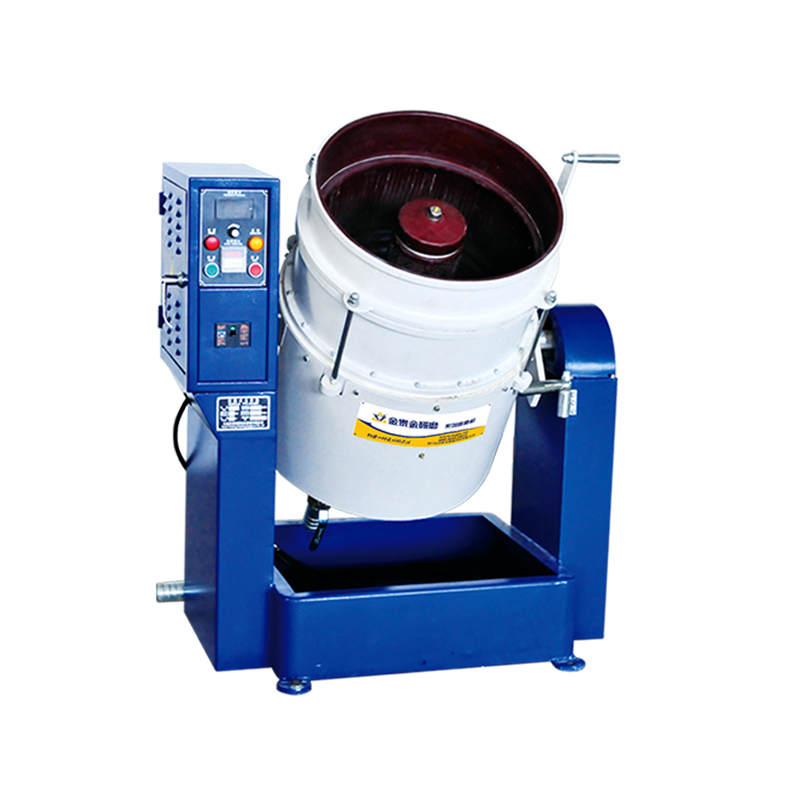
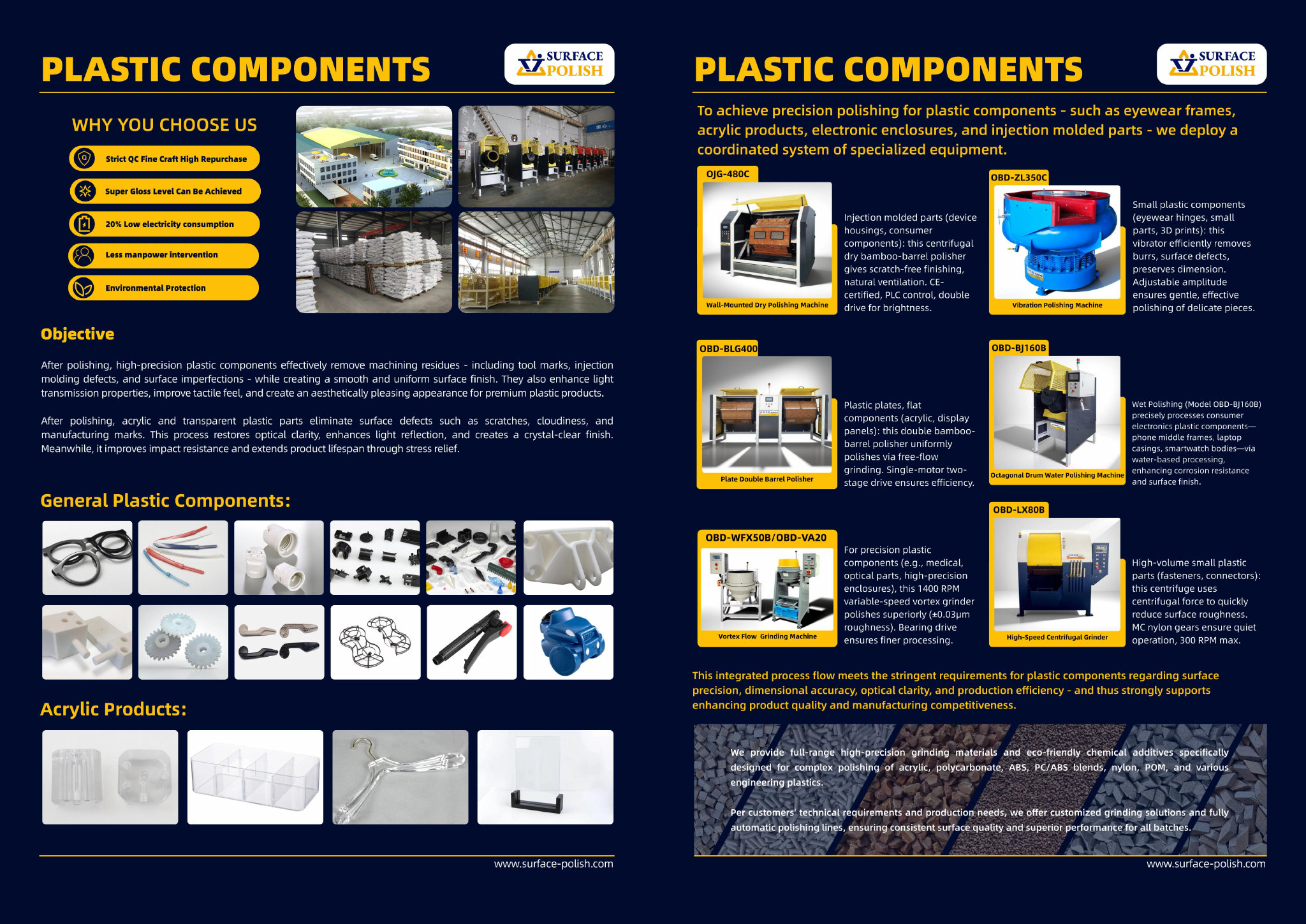
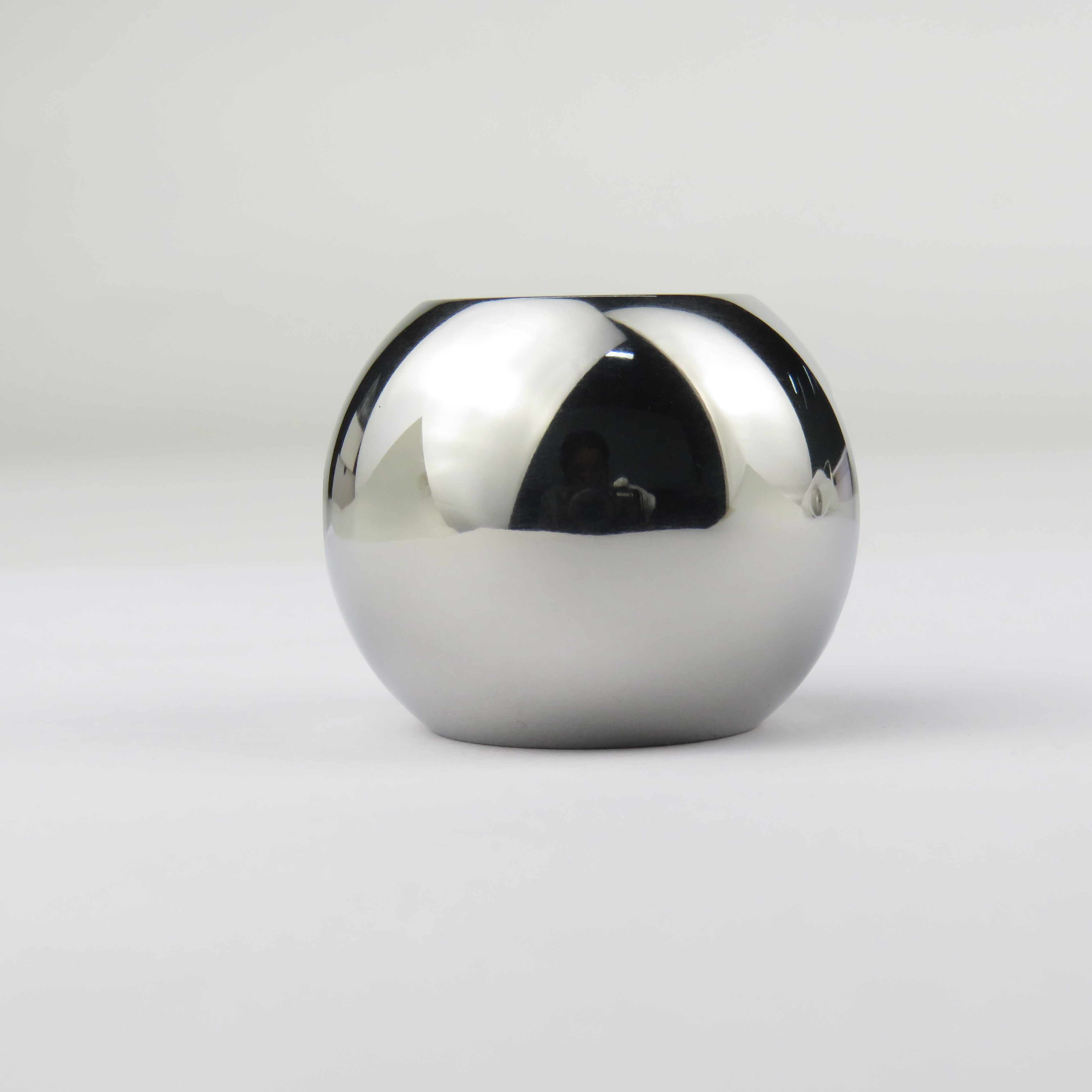
Cost is governed by cycle time and the number of parts that fit in a load, by media consumption and replacement rate, and by labour for loading, unloading, separation, inspection and masking. Parts with several protected features cost more before the machine starts, because plugging and fixturing consume labour. A cycle that needs several stages for deburring, refining and brightening multiplies handling. Drying time and cleanliness verification add further steps, and mixing stainless with carbon steel in shared equipment forces either segregation or extra contamination checks. Ask for cost as a function of volume and batch size rather than as a single figure.
Use a test that detects iron rather than one that detects appearance. A ferroxyl-type reagent applied at agreed locations, left for the specified time, and read against its own reference is the usual method, and it detects free iron before a rust bloom becomes visible. Test the same locations on every sample, keep an untouched control part from the same batch for comparison, and record the result with the date and the part identification. Because a bloom may appear only after days of exposure, agree a defined evaluation window and storage condition. SurfacePolish reports what a trial observed; test method and acceptance level remain the buyer's decision.
Speckled rust usually means free iron contamination rather than a material fault. Common sources are carbon steel parts run in the same machine or media, worn steel components in the chamber, steel racks and baskets, grinding dust settling on wet parts, and tools used elsewhere in the shop. A ferroxyl-type test at agreed locations confirms free iron, and a comparison against an untouched part from the same batch makes the result usable. Prevention is segregation: dedicated media and handling for stainless, covered storage, and a check on incoming media for metallic debris.
Use Bergamo, Italy as the destination on the enquiry and state whether the deliverable is equipment, media and compound, a representative sample review or a line concept. A destination does not imply local stock, a local service point or a local delivery time.
Bergamo machine builders and their customers normally reference ISO/UNI surface-texture and geometrical-tolerancing standards on drawings, and suppliers into the transport-equipment chain are qualified to IATF 16949 with the cleanliness specifications their own customers impose on fluid-power and driveline parts. Bergamo Sviluppo, the special agency of the Chamber of Commerce, operates a UNI desk and runs standards-project activity for local firms, so the chamber system is the practical route to the applicable UNI reference in this province.
Sources were retrieved on 2026-09-29 and describe the local industrial and trade context only. They do not evidence any SurfacePolish project, shipment, installation or service in Bergamo.
The buyer needs the stem and seat margins deburred and blended without rounding the seat edge or disturbing the nitrided layer.
Send the material, dimensions, approximate weight, batch quantity, the incoming condition and photographs of the difficult features. Mark which features must not be contacted by media and state how the result will be inspected. This form carries source reference PSEO-0462; quote it if you prefer an additional manual reference.
Open the SurfacePolish enquiry form Email a prepared enquiry
No price, lead time, certification or result is promised here. Confirm whether a sample trial is available for the specific part and what the trial can and cannot show.
Page PSEO-0462 · revised 2026-09-29 · cross-border equipment, media and scoped sample review. City context is sourced and cited above.
Use this local checker to identify missing part and inspection information. It prepares a technical-review brief; it does not approve a machine, process recipe or production result.
Complete the part details to prepare a review brief.
Email : info@surface-polish.com


 IPv6 network supported


 +86-592-2381506