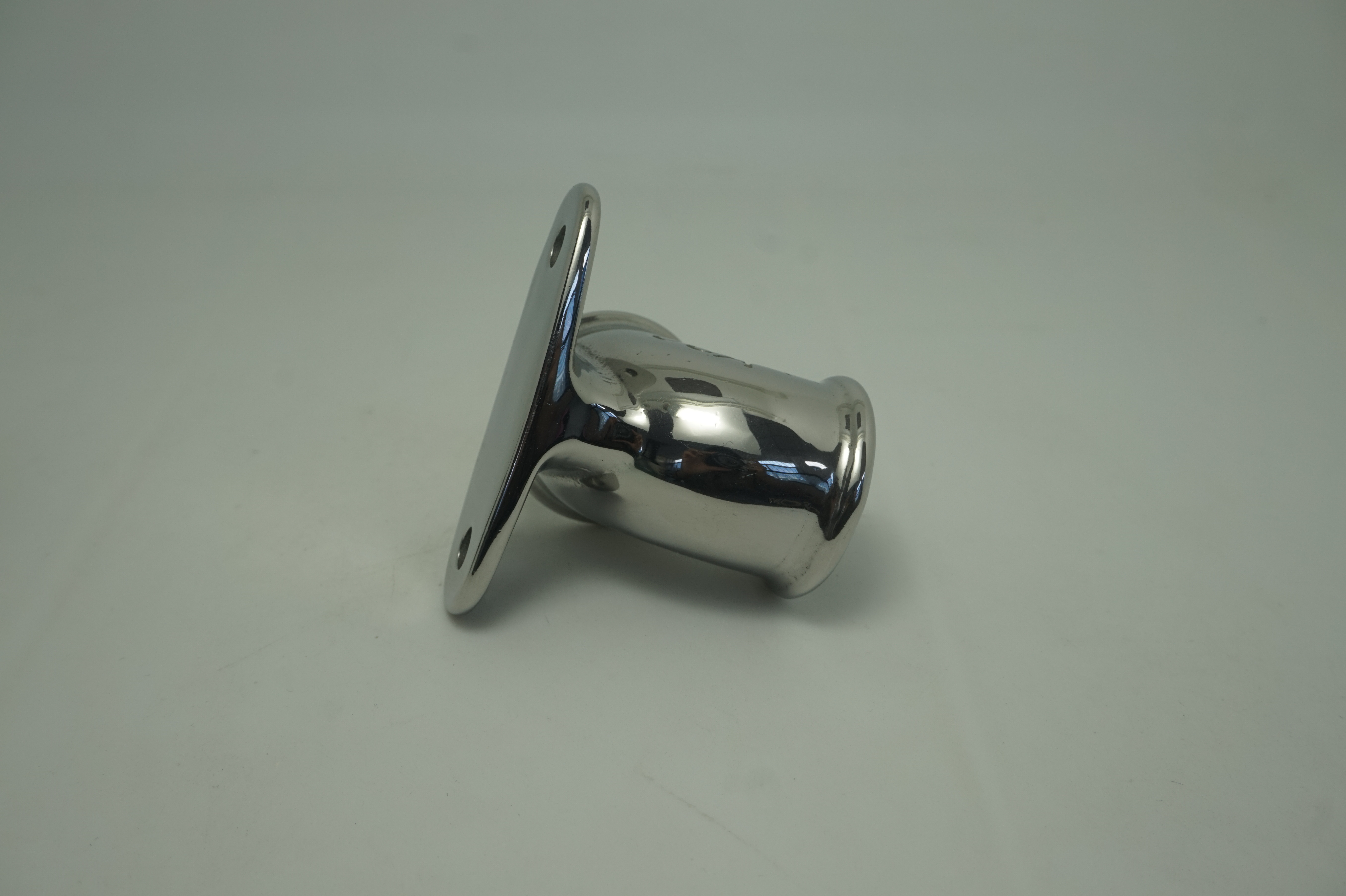
An automotive parts buyer in Coventry, United Kingdom has a cast stainless housing whose cross-drilled burrs must come off with no media left behind and no change to a precision bore or gasket face. SurfacePolish supplies finishing equipment and consumables across borders and offers a free sample trial on parts shipped to Xiamen, returning observations and a proposed media, compound and cycle direction for the buyer's own verification. This brief is written for a buyer in Coventry working on automotive parts; it describes equipment, media and a scoped sample review, not a local polishing service.
Which surfaces on this part carry a visible appearance grade, which are hidden, and which edges have a functional requirement rather than a cosmetic one?
At what batch size, load fill ratio and media wear state does a trial observation still describe what series production will produce?
Which dimensions, seal faces and thread forms carry functional geometry, and what limit on stock removal per cycle can those features tolerate?
Stainless automotive parts usually carry two requirements that pull against each other: an appearance grade on surfaces the customer sees, and an edge or function requirement on features that must keep working. Map the part into exterior visible surfaces, hidden surfaces, and edges with a functional role such as sealing, bearing, fatigue resistance or assembly clearance. An edge that only needs a burr broken can take an energetic cycle; a bore edge that sets a seal or a press fit cannot. Ask which faces are graded after assembly, because a bright panel that meets a specification by itself may look mismatched against the mating panel next to it. A marked-up drawing that states, per surface, whether it is graded, functional or indifferent is the cheapest document in the whole finishing project.
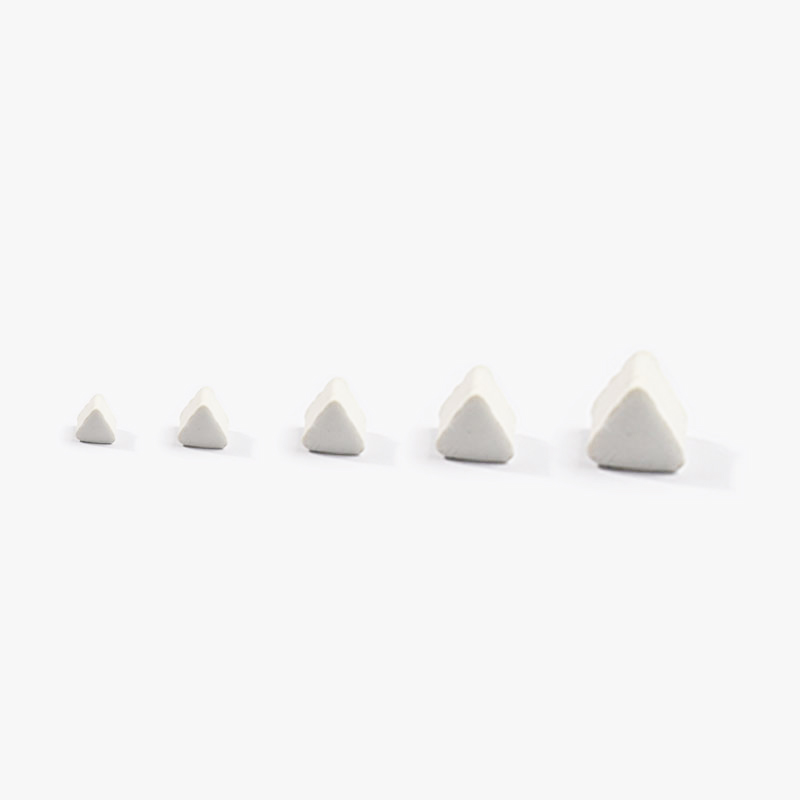
A medium can only cut what is softer than itself, and stainless work hardens at the surface during mechanical action, so a medium that is too soft burnishes and dulls instead of brightening. Alumina-based ceramic is the general-purpose choice for deburring, blending and satin finishes on stainless; steel media produces the brightest results on austenitic parts; plastic media suits softer or more delicate components and is usually the wrong tool for stainless cutting; dry media such as walnut shell or corn cob removes residue and moisture but does not generate a true stainless finish. The usual progression for an appearance part is a hard ceramic stage that removes the burr and machine marks, a finer stage that refines the texture, then a low-amplitude brightening stage. Whichever progression is proposed, treat it as a comparison to test on the real part rather than as a fixed recipe.
| Media | Best fit | Watch out for |
|---|---|---|
| Plastic media, polyester and urea based | Gentle deburring of delicate or thin stainless parts and of softer metals in mixed production, where edge loss must be minimised. | Low cutting power on stainless, can load with metal particles, and is generally the wrong tool for generating a stainless appearance finish. |
| Grinding and cutting media, fused alumina and silicon carbide based | Aggressive stock removal on heavy stainless burrs, weld dressing and rough cast surfaces before a refining stage. | Removes edge material quickly, can embed abrasive fragments in soft or gummy surfaces, and is usually too coarse for a final appearance stage. |
| Magnetic stainless pins and fine needles for magnetic finishing | Deburring and brightening of intricate small stainless features, slots, gear teeth and blind holes where media cannot be allowed to lodge. | Suits small part envelopes only, and the route needs testing on magnetic grades before it is assumed to apply to a given part. |
| Dry media, walnut shell and corn cob | Post-wet drying, light residue and scale removal, and dry polishing of surfaces that must not be re-wetted. | Does not cut stainless, generates dust, and leaves organic residue on parts if the medium is not kept clean and dry. |
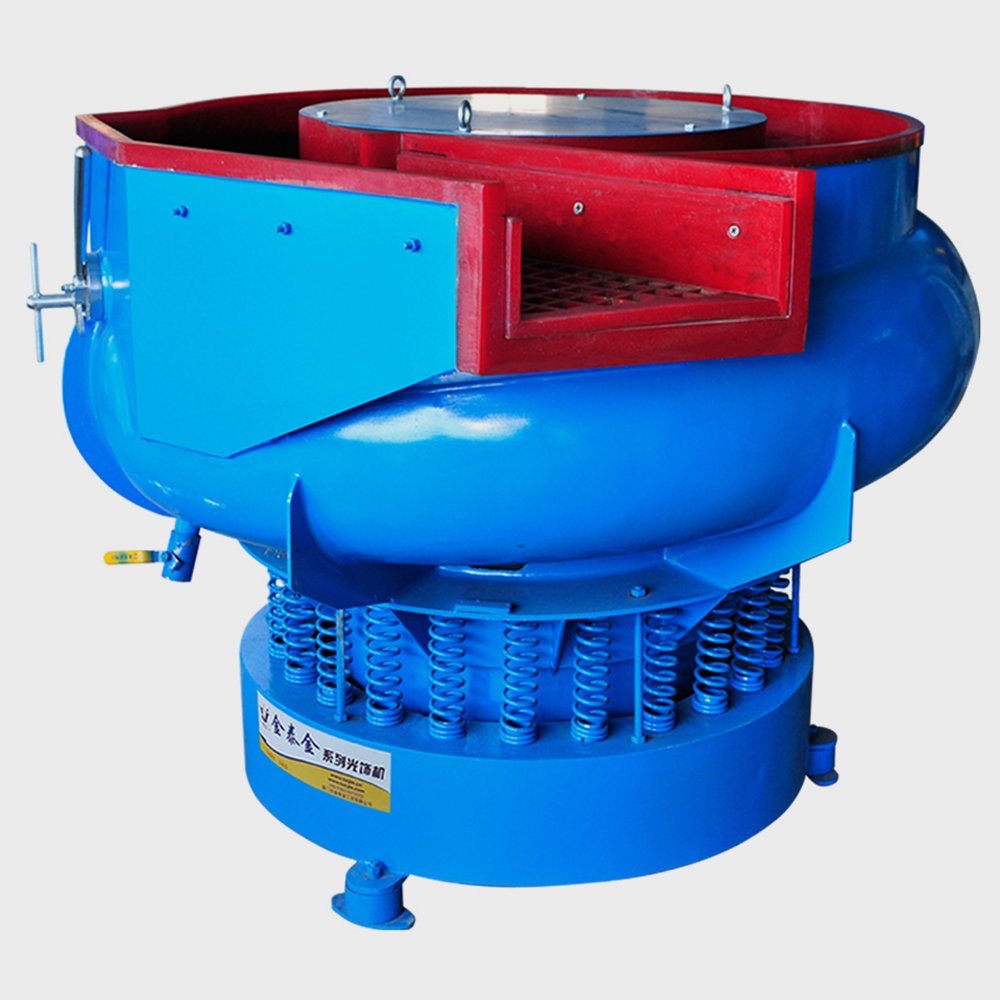
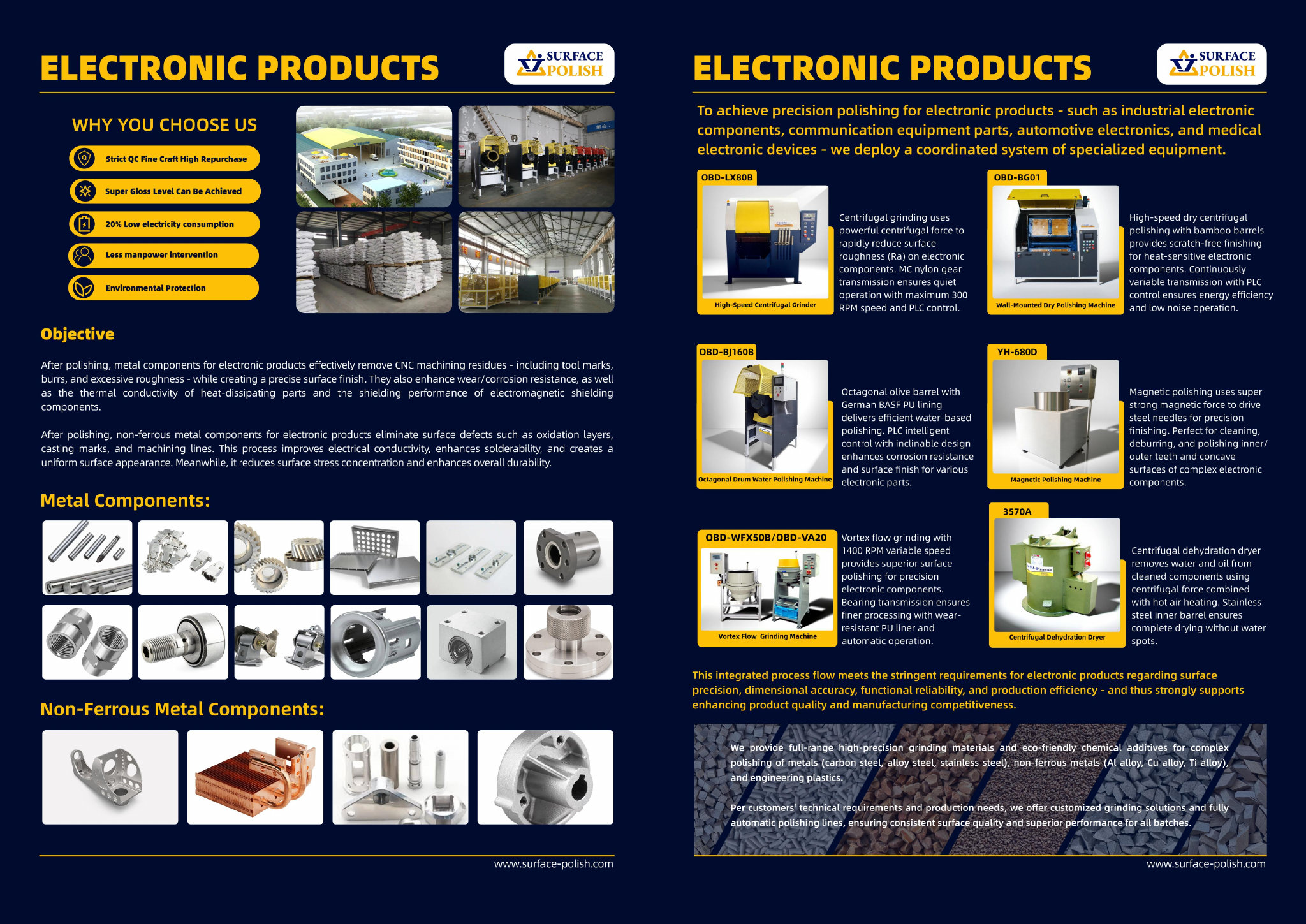
Disc finishing machines run a shallow, fast-moving charge that deburrs heavier machined stainless parts quickly: valve bodies, fittings, machined brackets and parts whose edges can lose material. The energy is an advantage for cycle time and a liability for thin walls and delicate features, so tooling and compartments often decide whether the route is acceptable at all. Centrifugal barrel finishing uses a planetary barrel motion that produces very high energy in short cycles, useful for aggressive edge radiusing on small, hard parts. The same energy rounds edges quickly, can exceed a tight radius callout within a short run, has part size and shape limits, and needs a larger load to justify the cycle. Treat both routes as candidates for heavy deburring and blending, and verify edge results on the actual part rather than assuming a shorter cycle means a safer one.
| Machine route | Where it fits | What it will not do |
|---|---|---|
| Vibratory finishing machine, bowl type | General deburring and surface refinement of medium-sized stainless automotive parts such as brackets, small housings and flange blanks in a visible batch load. | Part size and shape are capped by chamber geometry, and thin or threaded parts may need compartments or fixtures to control part-on-part contact. |
| Magnetic finishing machine | Small precise stainless parts with internal features, slots and blind holes that must be deburred without media lodging in the passages. | Works within a small part envelope, and the route has to be tested per grade because it depends on the part's magnetic response. |
| Barrel finishing machine, rotary barrel tumbler | Gentle deburring and finishing of delicate, thin or threaded stainless parts such as small fittings, sensor bodies and precision pins. | Cycles run longer than in higher-energy machines, and coverage can be uneven on large or complex parts. |
| Centrifugal barrel finishing machine | Very high energy deburring and edge radiusing of small, hard stainless parts in short cycles. | Rounds edges quickly and can exceed a tight radius within a short run; part size and shape are restricted and a substantial load is needed to justify the cycle. |
The defect that ends most stainless finishing trials is not a bad appearance but an edge that moved further than the drawing allows. Threads and gear teeth are the classic casualties, because mechanical action removes material from crests quickly, changing effective pitch diameter and flank form; a part can still thread by hand and still fail a gage. Radiused or chamfered edges behave similarly, since the process removes stock precisely at the edge where a callout is tightest. Start the trial with an edge record and repeat it afterwards: thread and gear gages before and after, edge radius at marked locations with an optical comparator or a cast impression, and a written allowable band agreed before any cycle runs. Treat the shortest cycle that achieves the required appearance as the control condition, and be suspicious of any proposal that adds cycle time to improve a finish that was already acceptable.
| Failure mode | Likely cause | How to catch it |
|---|---|---|
| Hydrogen-related cracking risk on high-strength martensitic stainless parts | Acid-bearing compound chemistry combined with mechanical work on a hardened structure, with no defined post-finishing treatment by the buyer. | Confirm the material and hardness against the purchase documentation, verify which compound family was used and at what concentration, and route the fitness-for-service question to the buyer's engineering function. |
| Rust blooms or speckling on austenitic or duplex parts after finishing | Free iron transferred from carbon steel, ferritic stainless or worn steel machine parts sharing the same media, chamber, racks or bench area. | Run a ferroxyl-type test for free iron at agreed locations, compare against an untouched part from the same batch, and repeat the check after a defined exposure period to catch delayed blooms. |
| Impingement marks, nicks or gouges on thin stainless panels and webs | Part-on-part contact in an under-filled chamber, excessive amplitude, or free parts striking each other where no compartment or fixture controls them. | Inspect the suspect feature under magnification and raking light before and after processing, and compare its location across several parts from the same load to confirm the defect is random rather than systematic. |
| Discolouration or mottling that appears only after drying | Mineral or compound residue carried in the final rinse, hard or chloride-bearing water, or slow drying that leaves a film on the brightened surface. | Compare wet and dry appearance under fixed lighting on the same parts, wipe a sample with a white lint-free cloth and solvent, and check the site water supply for hardness and chloride content. |
Coventry is one of the local authority areas inside the West Midlands Combined Authority, whose region-wide economic and skills activity includes a skills hub opened at Coventry city centre South. The city's dedicated business support route changed on 1 April 2026, when the Coventry & Warwickshire Growth Hub transitioned to a new regional model that centralises programmes, events and funding information through Business Growth West Midlands, with local advisory support remaining available through Coventry City Council. Coventry sits inside the West Midlands production base that Make UK studied with the West Midlands Combined Authority and the West Midlands RAS Cluster, surveying over 100 manufacturers of all sizes.
For this brief the relevant part of that base is automotive: Coventry sits inside the West Midlands Combined Authority area, the production region whose robotics and autonomous systems adoption Make UK studied with survey responses from over 100 manufacturers.
Coventry sits inside the West Midlands production base that Make UK and the West Midlands Combined Authority surveyed on robotics and autonomous systems adoption - a programme aimed at lifting productivity in an industrial base where deburring and edge finishing sit between machining and assembly and are a candidate for the same automation programme. Because no Coventry-specific industrial source could be verified in this research, process specifics should be drawn from the customer's drawing and specification rather than from regional averages.
A Coventry buyer should confirm who in the supply chain owns the finishing specification - the OEM, the tier-one or the machining supplier - before selecting equipment, because the edge and cleanliness requirement is normally flowed down contractually rather than agreed locally.
Freight context: Hams Hall Rail Freight Terminal (ABP-owned, near Birmingham) as the nearest inland container terminal to Coventry, West Midlands motorway network (M6, M69, A45) for road freight. ABP's 11ha Hams Hall terminal, located eight miles outside Birmingham, handles deep-sea and short-sea traffic to and from ports such as Southampton, Tilbury and Felixstowe along with Channel Tunnel and Scottish domestic traffic, making it the practical inland container gateway for Coventry consignments.
English is the working language of contracts, drawings and conformity paperwork, so quotations, technical files and Declarations of Conformity should be supplied in English. UK manufacturers have now recovered above 2019 output levels in every English region and devolved nation except Northern Ireland, and the sector is concentrated in food and drink and transport equipment, with the North West the largest manufacturing region by total output. Buyers typically expect the UKCA/CE route, a Declaration of Conformity and a UK-established economic operator to be identified before order, and they need commercial invoices, customs declarations and the C79 retained in a form their finance team can use for import VAT recovery. No source verified in this research establishes a mandated payment instrument, so payment structure should be treated as commercial negotiation rather than a regulatory requirement.
BSI is the UK's National Standards Body, and British Standards (BS, including adopted BS EN ISO texts) are the documents a UK buyer's surface-finish, edge and cleanliness specifications are normally written against and purchased through. On the plant side, HSE maintains the work equipment and machinery topic covering the safe supply and use of machinery, and the COSHH regime, which requires employers to identify, assess and control risks from hazardous substances - the regime that applies to finishing compounds, abrasive media and the dust and effluent they generate.
SurfacePolish supplies from Xiamen, China. The buyer's own destination rules, conformity marking, tariff classification and documentation responsibilities stay with the buyer; confirm them against the authorities named above before ordering.
Appearance grading on stainless is best served by physical masters: one part at the acceptable limit and one at the marginal limit, viewed under the same lighting, at the same distance and at the same angle as production inspection. Lighting is the dominant variable in appearance judgment, so a master viewed beside a window in the morning will not agree with parts viewed under a machine light at night. Record the viewing conditions with the master, keep the master protected and dated, and photograph it as a supplement rather than as a replacement. For satin and brushed finishes, the master should also fix the direction and uniformity of the texture, since a part can meet a roughness figure and still look wrong beside a mating panel. Keep a small library of masters for the finishes this process actually produces, because a single nominal sample cannot cover a batch.
Moving from a trial to a producing line changes the process in ways the trial cannot show. Media wears during a long run, the compound bath accumulates swarf and dissolved metal, the load fill ratio changes with part mix, and handling steps multiply. A condition that held for a short cycle on five parts may drift over a full shift. Plan scale-up as a deliberate ramp: confirm that machine capacity and chamber geometry suit the real part, run the intended media charge to a representative wear state before judging results, and freeze the settings in a written work instruction with a media maintenance schedule. Decide in advance what will be measured during the ramp, at what frequency, and who is authorized to change a setting. Ramp-up risk is highest where the trial succeeded easily, because nobody is watching for the drift.
Start from the drawing. Size the media class against the smallest opening so it flows rather than wedges, and where a passage cannot be inspected reliably, plug or mask it before the cycle instead of adding inspection afterwards. Build a retrieval routine with media counts into and out of the batch, borescope checks at agreed angles, and pin or plug gages on each passage. Weigh parts where the tolerance for retained chips is tight. For a United Kingdom buyer planning a trial, send the part with the tightest passage so the media class is selected against real geometry. SurfacePolish reports what the trial found; your own cleanliness inspection remains the acceptance decision.
Speckled rust usually means free iron contamination rather than a material fault. Common sources are carbon steel parts run in the same machine or media, worn steel components in the chamber, steel racks and baskets, grinding dust settling on wet parts, and tools used elsewhere in the shop. A ferroxyl-type test at agreed locations confirms free iron, and a comparison against an untouched part from the same batch makes the result usable. Prevention is segregation: dedicated media and handling for stainless, covered storage, and a check on incoming media for metallic debris.
Uneven finish comes from position in the load, dead zones in the media mass, shielding by neighbouring parts and part-on-part contact, so evenness is a loading and handling question as much as a machine question. Mark reference locations on the part, photograph under fixed raking light, and measure the same feature at both ends and in the middle rather than at one convenient spot. If the variation is positional, rotating parts between cycles, changing the load pattern, or shortening cycles with repositioning usually helps more than adding time. Tubs suit long parts but need evenness verified along the length.
Use Coventry, United Kingdom as the destination on the enquiry and state whether the deliverable is equipment, media and compound, a representative sample review or a line concept. A destination does not imply local stock, a local service point or a local delivery time.
Machinery placed on the Great Britain market needs UKCA or CE marking with a Declaration of Conformity, and HSE's work equipment and machinery and COSHH regimes govern safe operation and the media, compounds and dust involved. In a multi-tier supply chain, the surface, edge and cleanliness requirement is normally flowed down from the OEM or tier-one rather than set by the finishing shop.
Sources were retrieved on 2026-09-29 and describe the local industrial and trade context only. They do not evidence any SurfacePolish project, shipment, installation or service in Coventry.
The buyer needs machining burrs removed at the cross-drillings with no media left in the passages and no measurable change to the bore or gasket face.
Send the material, dimensions, approximate weight, batch quantity, the incoming condition and photographs of the difficult features. Mark which features must not be contacted by media and state how the result will be inspected. This form carries source reference PSEO-0282; quote it if you prefer an additional manual reference.
Open the SurfacePolish enquiry form Email a prepared enquiry
No price, lead time, certification or result is promised here. Confirm whether a sample trial is available for the specific part and what the trial can and cannot show.
Page PSEO-0282 · revised 2026-09-29 · cross-border equipment, media and scoped sample review. City context is sourced and cited above.
Use this local checker to identify missing part and inspection information. It prepares a technical-review brief; it does not approve a machine, process recipe or production result.
Complete the part details to prepare a review brief.
Email : info@surface-polish.com


 IPv6 network supported


 +86-592-2381506