In Groningen, Netherlands, an automotive parts buyer has a duplex stainless clamp band whose rivet-hole burrs must be removed without rounding latch edges that have to engage. SurfacePolish is a cross-border supplier of finishing equipment, media and compounds and offers a free process sample trial in which the buyer's parts travel to Xiamen and return with observations and a proposed media, compound and cycle direction for the buyer's own verification. This brief is written for a buyer in Groningen working on automotive parts; it describes equipment, media and a scoped sample review, not a local polishing service.
Which alloy family is the part, and has cold work, welding or heat treatment already changed its hardness, magnetic response or corrosion behaviour?
Which internal features must be deburred without lodging media, and what retrieval and verification step proves the passage and thread form are clean?
Which dimensions, seal faces and thread forms carry functional geometry, and what limit on stock removal per cycle can those features tolerate?
Beyond appearance, certain features establish how the part assembles, and media acts on them whether or not the drawing calls them out. Machined flange faces, O-ring and seal grooves, bearing bores, threaded holes, sensor mounting pads and dowel bores all carry that role. Media contact can shift flatness, open a bore slightly, round a thread crest or change a sensor gap, and normal shop inspection will not notice. Identify which surfaces are datums and which mate with another component, then treat the finish requirement on them separately from cosmetic areas. Protect them by masking, fixturing against a support, or finishing them with a gentler medium, and write down a maximum stock removal per cycle for every feature whose geometry could be consumed by the process. Ask the designer to confirm those limits rather than promising a blanket surface condition.
A medium can only cut what is softer than itself, and stainless work hardens at the surface during mechanical action, so a medium that is too soft burnishes and dulls instead of brightening. Alumina-based ceramic is the general-purpose choice for deburring, blending and satin finishes on stainless; steel media produces the brightest results on austenitic parts; plastic media suits softer or more delicate components and is usually the wrong tool for stainless cutting; dry media such as walnut shell or corn cob removes residue and moisture but does not generate a true stainless finish. The usual progression for an appearance part is a hard ceramic stage that removes the burr and machine marks, a finer stage that refines the texture, then a low-amplitude brightening stage. Whichever progression is proposed, treat it as a comparison to test on the real part rather than as a fixed recipe.
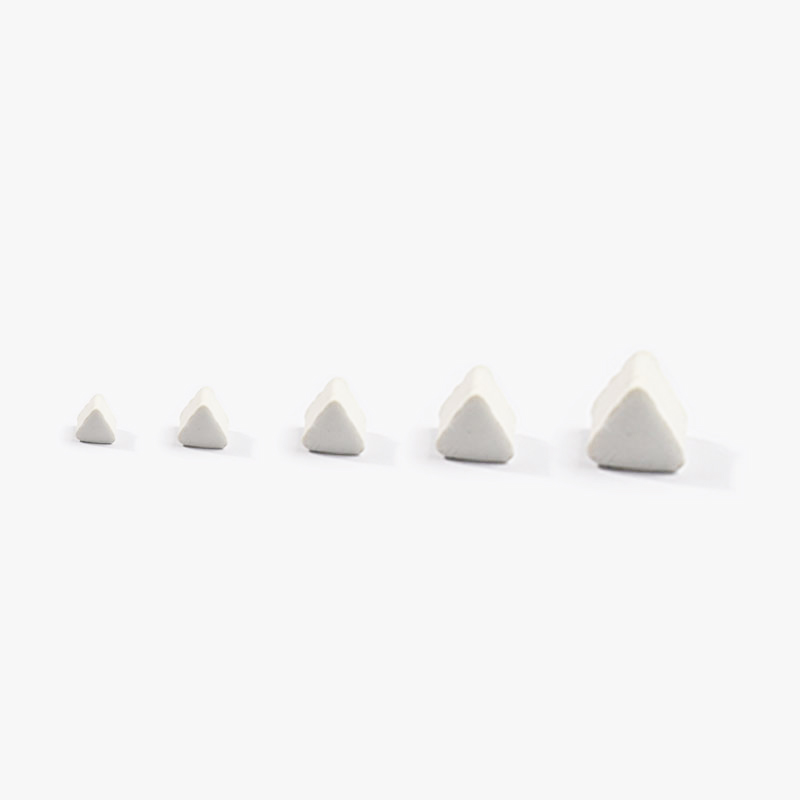
| Media | Best fit | Watch out for |
|---|---|---|
| Grinding and cutting media, fused alumina and silicon carbide based | Aggressive stock removal on heavy stainless burrs, weld dressing and rough cast surfaces before a refining stage. | Removes edge material quickly, can embed abrasive fragments in soft or gummy surfaces, and is usually too coarse for a final appearance stage. |
| Magnetic stainless pins and fine needles for magnetic finishing | Deburring and brightening of intricate small stainless features, slots, gear teeth and blind holes where media cannot be allowed to lodge. | Suits small part envelopes only, and the route needs testing on magnetic grades before it is assumed to apply to a given part. |
| Porcelain and fine high-density ceramic media | Pre-polish refining stages on austenitic stainless appearance parts before a brightening stage, where a finer texture is the objective. | Limited cutting power on hard or work-hardened surfaces, and wear changes the charge gradually, so finish can drift between batches. |
| Plastic media, polyester and urea based | Gentle deburring of delicate or thin stainless parts and of softer metals in mixed production, where edge loss must be minimised. | Low cutting power on stainless, can load with metal particles, and is generally the wrong tool for generating a stainless appearance finish. |
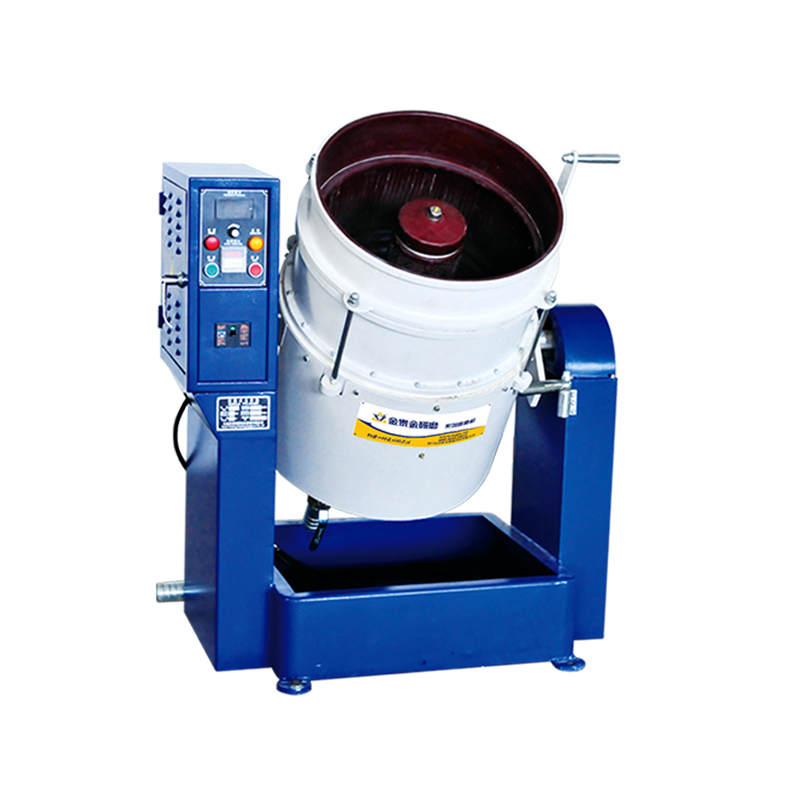
Disc finishing machines run a shallow, fast-moving charge that deburrs heavier machined stainless parts quickly: valve bodies, fittings, machined brackets and parts whose edges can lose material. The energy is an advantage for cycle time and a liability for thin walls and delicate features, so tooling and compartments often decide whether the route is acceptable at all. Centrifugal barrel finishing uses a planetary barrel motion that produces very high energy in short cycles, useful for aggressive edge radiusing on small, hard parts. The same energy rounds edges quickly, can exceed a tight radius callout within a short run, has part size and shape limits, and needs a larger load to justify the cycle. Treat both routes as candidates for heavy deburring and blending, and verify edge results on the actual part rather than assuming a shorter cycle means a safer one.
| Machine route | Where it fits | What it will not do |
|---|---|---|
| Magnetic finishing machine | Small precise stainless parts with internal features, slots and blind holes that must be deburred without media lodging in the passages. | Works within a small part envelope, and the route has to be tested per grade because it depends on the part's magnetic response. |
| Centrifugal barrel finishing machine | Very high energy deburring and edge radiusing of small, hard stainless parts in short cycles. | Rounds edges quickly and can exceed a tight radius within a short run; part size and shape are restricted and a substantial load is needed to justify the cycle. |
| Continuous or indexed wet line with staged media charges | Multi-stage stainless finishing where deburring, refining and brightening are separated to control edge loss and texture progression. | Needs clear segregation between stages to prevent carry-over of coarse media or iron contamination, and adds handling and floor space. |
| Tub vibrator | Long stainless parts such as trim sections, exhaust profiles and shafts that cannot be loaded into a bowl without being cut down. | Media velocity varies along the length, so finish evenness must be verified at both ends, and the machine occupies more floor space and compound volume. |
Cross-drillings, tapped holes, folded hems and closed volumes are lodging sites, and a lodged medium is worse than a visible defect because it can travel to the customer, escape during cleaning, or damage a mating surface in service. Detection needs a defined routine rather than a shake and a look: weigh the part where that is sensitive enough, inspect internal passages with a borescope at agreed angles, confirm each passage with a pin or plug gage, and record the media count into and out of the batch. Weighing alone catches only gross lodges, since a retained chip may be a fraction of a gram. Where a feature cannot be inspected reliably after processing, the better answer is to plug or mask it before the cycle rather than to add inspection afterwards. Any media found downstream is a signal to redesign the separation step, not to add more inspection.
| Failure mode | Likely cause | How to catch it |
|---|---|---|
| Hydrogen-related cracking risk on high-strength martensitic stainless parts | Acid-bearing compound chemistry combined with mechanical work on a hardened structure, with no defined post-finishing treatment by the buyer. | Confirm the material and hardness against the purchase documentation, verify which compound family was used and at what concentration, and route the fitness-for-service question to the buyer's engineering function. |
| Rust blooms or speckling on austenitic or duplex parts after finishing | Free iron transferred from carbon steel, ferritic stainless or worn steel machine parts sharing the same media, chamber, racks or bench area. | Run a ferroxyl-type test for free iron at agreed locations, compare against an untouched part from the same batch, and repeat the check after a defined exposure period to catch delayed blooms. |
| Uneven finish, with one region bright and another dull on the same part | Positional effects in the media mass, dead zones in the chamber, shielding by neighbouring parts, or a poor fill ratio in the load. | Mark reference locations, photograph under fixed raking light, and measure the same feature at multiple points on the part and across parts in the load to separate positional variation from process variation. |
| Edge rounding beyond the specified radius on a functional edge | Cycle energy, time or media size class chosen for appearance rather than for the tightest edge callout on the drawing. | Measure edge radius at marked locations with an optical comparator or a cast impression before and after, and record the result against a written allowable band rather than judging it visually. |
Groningen's industrial base is the Eemsdelta port and industry complex. Groningen Seaports manages the industrial areas of the Eemshaven and the port of Delfzijl, including the inland harbours Farmsumerhaven and Oosterhornhaven, the business parks Fivelpoort, Farmsumerpoort, De Delta, Weiwerd and MKB Park Eemshaven, and Groningen Railport in Veendam. The company concentrates on two clusters: energy and energy-related activity, circular industry and biobased chemistry; its stated 2030 vision is that the Eemshaven's energy and data sector is of international importance and that the chemical and recycling industry in Delfzijl is fully biobased. It runs the Chemport Innovation Center for scale-ups and participates in the Portlands Campus with maritime, energy and chemistry companies and knowledge institutions.
The nearest part of that base to this brief is energy: In 2025, 116 offshore wind turbine foundations were transhipped through the Eemshaven, for the Thor (Denmark) and Nordseecluster A (Germany) wind farms.
The Eemshaven and Delfzijl complex combines energy installations, offshore wind logistics, chemical and recycling plants and maritime services, so finishing demand is dominated by maintenance and fabrication work: pipe spools, valves, pump and turbine components, heat-exchanger parts and structural steel, where weld dressing, edge control and surface preparation before coating matter. Stainless and corrosion-resistant alloys are common because of the marine and chemical service environment.
A buyer here should settle the material and environment combination first — carbon steel for structures versus stainless or duplex for wet, saline or chemical service — and then decide whether the requirement is pre-coating surface preparation or in-service edge and burr control.
Freight context: Eemshaven (seaport and offshore wind logistics), Port of Delfzijl, Farmsumerhaven and Oosterhornhaven inland harbours, Groningen Railport in Veendam. Groningen Seaports operates both sea and inland harbours plus a rail terminal, and handled 116 offshore wind foundations in 2025, so the region has direct deep-sea and project-cargo capability for machinery. Rail freight to the region declined in 2025 after DB Cargo scaled back its Delfzijl service, which makes road transport the practical default for inland onward movement of machine tools.
The Netherlands applies the EU's common commercial policy, so imports of Chinese industrial machinery enter under EU customs rules and WTO tariff treatment rather than under a bilateral EU-China free-trade agreement; the European Commission also maintains trade-defence measures on selected Chinese product categories, and China is a WTO member. EU-China trade in goods reached EUR 732 billion in 2024, and in 2025 manufactured goods were 97.3% of EU imports from China, with machinery and vehicles alone accounting for 54.4% — the single largest category. Chinese finishing machines, media and compounds therefore arrive in a very large, well-established EU import stream, and the buyer should expect MFN duty plus trade-defence measures where a specific product is covered.
Goods entering the Netherlands from outside the EU must be declared to Dutch Customs (Douane, part of the Belastingdienst); the importer needs an EORI number, import duty is calculated on the customs value (goods value plus transport and insurance to the EU external border), and import VAT is paid at the border unless an article 23 permit or a fiscal representative is used. CE marking is mandatory for most machinery placed on the EEA market: the Machinery Regulation replaced the Machinery Directive and manufacturers must comply with the new requirements by 20 January 2027. The importer must verify that the conformity assessment was carried out correctly, that CE marking is applied properly, that the technical file is present and complete, and that the user manual is supplied in the correct language; the manufacturer's EC Declaration of Conformity must be kept. Dutch companies imported over EUR 140 billion of machinery and appliances in 2024, 24% of total Dutch goods imports.
SurfacePolish supplies from Xiamen, China. The buyer's own destination rules, conformity marking, tariff classification and documentation responsibilities stay with the buyer; confirm them against the authorities named above before ordering.
Acceptance for a stainless automotive part should be settled before a machine or medium is proposed, because the acceptance rule determines which route is even capable. If the finish callout is a word like bright, inspection is whoever looks last; if it is a roughness range at a named location plus a physical visual master viewed under stated lighting, inspection becomes repeatable and the argument moves to the part. Set the sampling plan, the inspection method and the instrument or gage for each characteristic, and decide separately which features get a functional check as opposed to a cosmetic one. Write the rule into the purchase documentation along with the material grade, the marked measurement locations and the acceptance limits for edge condition. A supplier can then report observations against a defined rule instead of being asked to judge its own work.
A trial is more useful as a structured comparison than as a single demonstration. Decide in advance what is being compared, such as two media shapes in the same size class, two compound families on one media charge, or two cycle lengths at one energy setting, and hold everything else constant. Keep a control part that receives no finishing at all, so that post-process differences can be attributed to the process rather than to handling. Name the features that must not change and the level of change that would be unacceptable, so that a result can be judged on the spot. Write down the questions the trial must answer before parts are shipped, and rank them, because the ranking is what tells the supplier which comparison matters most when cycle time is limited.
Use a test that detects iron rather than one that detects appearance. A ferroxyl-type reagent applied at agreed locations, left for the specified time, and read against its own reference is the usual method, and it detects free iron before a rust bloom becomes visible. Test the same locations on every sample, keep an untouched control part from the same batch for comparison, and record the result with the date and the part identification. Because a bloom may appear only after days of exposure, agree a defined evaluation window and storage condition. SurfacePolish reports what a trial observed; test method and acceptance level remain the buyer's decision.
Cost is governed by cycle time and the number of parts that fit in a load, by media consumption and replacement rate, and by labour for loading, unloading, separation, inspection and masking. Parts with several protected features cost more before the machine starts, because plugging and fixturing consume labour. A cycle that needs several stages for deburring, refining and brightening multiplies handling. Drying time and cleanliness verification add further steps, and mixing stainless with carbon steel in shared equipment forces either segregation or extra contamination checks. Ask for cost as a function of volume and batch size rather than as a single figure.
They are different processes with different effects, and SurfacePolish does not supply or perform electropolishing. Mechanical finishing works by media contact, so it blends, deburrs and brightens the surfaces the media can reach, and it rounds edges as it works. Electrochemical treatment removes material ionically and reaches into recesses that media cannot. Where an electropolished surface is specified for corrosion or cleanliness reasons, treat electrochemical processing as a comparison point and ask whether the specified requirement can be met by another route, then verify that on your own parts and against your own acceptance rule.
Use Groningen, Netherlands as the destination on the enquiry and state whether the deliverable is equipment, media and compound, a representative sample review or a line concept. A destination does not imply local stock, a local service point or a local delivery time.
Buyers here would reference the CE machinery regime (Machinery Regulation from 20 January 2027) and the Dutch/EN-ISO surface-finishing standards published by NEN, such as NEN-EN-ISO 2080. Equipment destined for chemical, marine or offshore-wind service normally carries additional client specifications for material conformity, corrosion protection and coating preparation.
Sources were retrieved on 2026-09-29 and describe the local industrial and trade context only. They do not evidence any SurfacePolish project, shipment, installation or service in Groningen.
The buyer needs rivet-hole burrs removed and the visible face refreshed while keeping the latch edges sharp enough to engage.
Send the material, dimensions, approximate weight, batch quantity, the incoming condition and photographs of the difficult features. Mark which features must not be contacted by media and state how the result will be inspected. This form carries source reference PSEO-0672; quote it if you prefer an additional manual reference.
Open the SurfacePolish enquiry form Email a prepared enquiry
No price, lead time, certification or result is promised here. Confirm whether a sample trial is available for the specific part and what the trial can and cannot show.
Page PSEO-0672 · revised 2026-09-29 · cross-border equipment, media and scoped sample review. City context is sourced and cited above.
Use this local checker to identify missing part and inspection information. It prepares a technical-review brief; it does not approve a machine, process recipe or production result.
Complete the part details to prepare a review brief.
Email : info@surface-polish.com


 IPv6 network supported


 +86-592-2381506