An automotive parts buyer in Modena, Italy has a formed stainless bracket whose sheared edges need deburring while its visible satin face must remain uniform for an appearance review. SurfacePolish supplies finishing machines, media and compounds across borders and runs a free sample trial on parts shipped to Xiamen, returning the tested parts with observations and a proposed media, compound and cycle direction that the buyer verifies independently. This brief is written for a buyer in Modena working on automotive parts; it describes equipment, media and a scoped sample review, not a local polishing service.
Which internal features must be deburred without lodging media, and what retrieval and verification step proves the passage and thread form are clean?
At what batch size, load fill ratio and media wear state does a trial observation still describe what series production will produce?
Which dimensions, seal faces and thread forms carry functional geometry, and what limit on stock removal per cycle can those features tolerate?
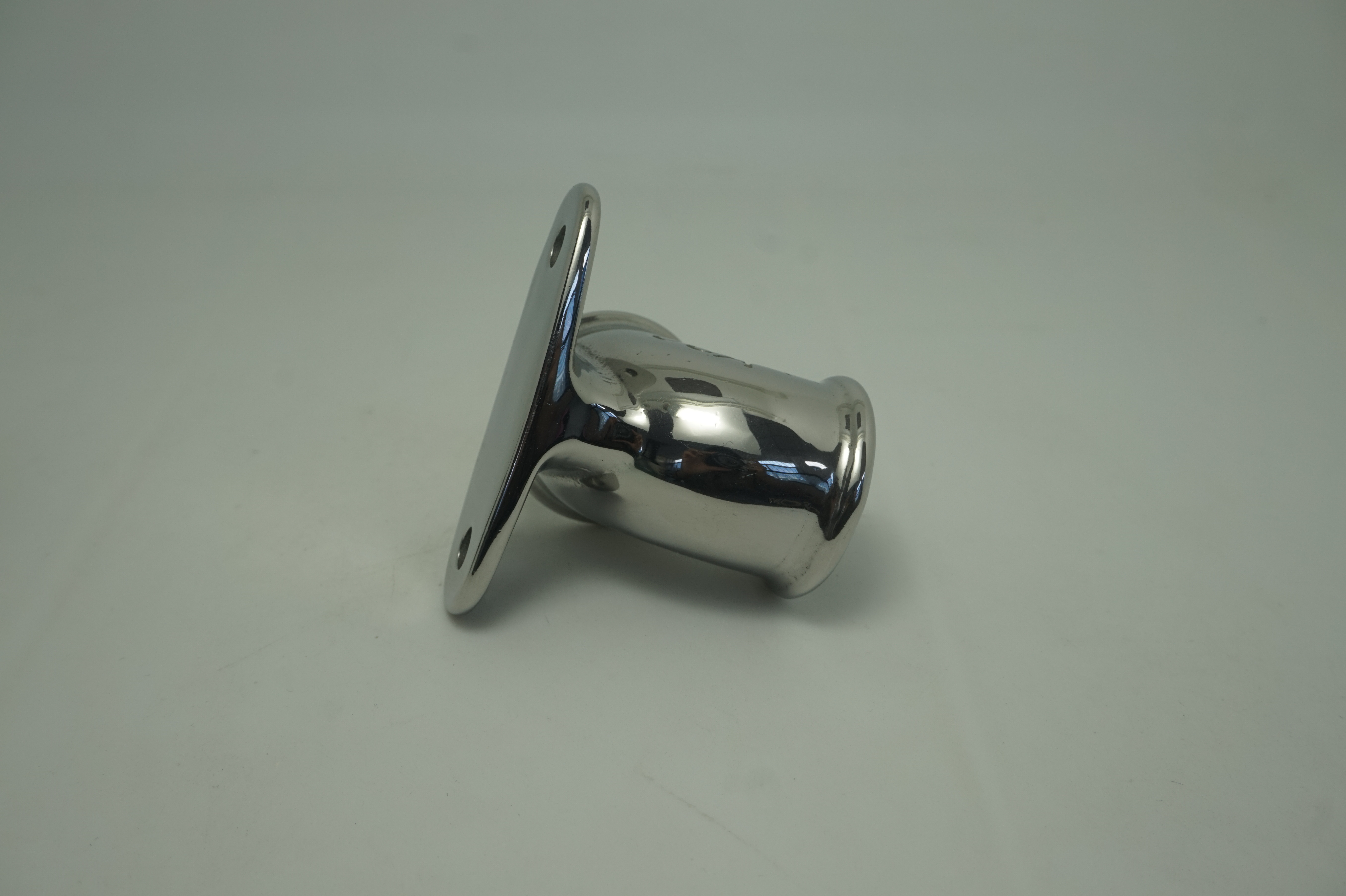
Stainless automotive parts usually carry two requirements that pull against each other: an appearance grade on surfaces the customer sees, and an edge or function requirement on features that must keep working. Map the part into exterior visible surfaces, hidden surfaces, and edges with a functional role such as sealing, bearing, fatigue resistance or assembly clearance. An edge that only needs a burr broken can take an energetic cycle; a bore edge that sets a seal or a press fit cannot. Ask which faces are graded after assembly, because a bright panel that meets a specification by itself may look mismatched against the mating panel next to it. A marked-up drawing that states, per surface, whether it is graded, functional or indifferent is the cheapest document in the whole finishing project.
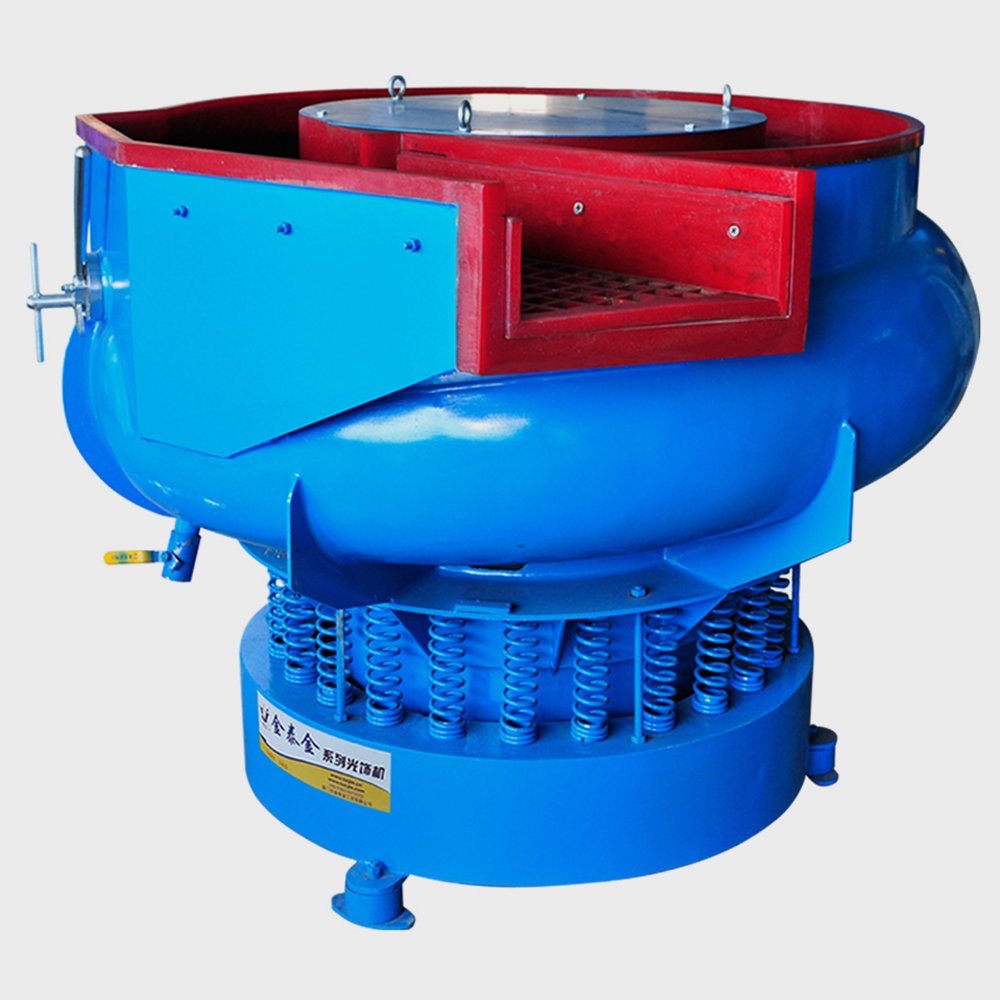
A vibratory bowl handles a broad middle band of stainless automotive parts: brackets, housings, flange blanks, handles, trim sections and small fittings. The load stays visible, amplitude, frequency and media blend can be adjusted, and the same machine serves both deburring and surface refinement when the media progression is planned. Limits are real, though. Part size and shape are capped by chamber geometry, and long or slender parts bridge and stall unless a tub or a fixture is used. Thin and threaded parts need compartments or fixtures to limit part-on-part contact. Watch fill ratio and the ratio of media to parts, because an over-filled or under-filled chamber changes both edge results and finish consistency, and keep the fill ratio stable from trial to production rather than filling to whatever the shift finds convenient.
| Machine route | Where it fits | What it will not do |
|---|---|---|
| Magnetic finishing machine | Small precise stainless parts with internal features, slots and blind holes that must be deburred without media lodging in the passages. | Works within a small part envelope, and the route has to be tested per grade because it depends on the part's magnetic response. |
| Continuous or indexed wet line with staged media charges | Multi-stage stainless finishing where deburring, refining and brightening are separated to control edge loss and texture progression. | Needs clear segregation between stages to prevent carry-over of coarse media or iron contamination, and adds handling and floor space. |
| Tub vibrator | Long stainless parts such as trim sections, exhaust profiles and shafts that cannot be loaded into a bowl without being cut down. | Media velocity varies along the length, so finish evenness must be verified at both ends, and the machine occupies more floor space and compound volume. |
| Vibratory finishing machine, bowl type | General deburring and surface refinement of medium-sized stainless automotive parts such as brackets, small housings and flange blanks in a visible batch load. | Part size and shape are capped by chamber geometry, and thin or threaded parts may need compartments or fixtures to control part-on-part contact. |
Once media and machine are fixed, the variables a buyer can actually control are compound concentration, flow rate and water quality. Concentration influences cut rate, foam and residue; running lean to save money usually costs more in finish variation than it saves in consumable. Flow rate removes swarf and heat from the mass, and an under-flowed chamber loads up, smells, and starts depositing sludge on the parts. Water hardness, chloride content and suspended solids matter directly on stainless, because hard water leaves mineral films and chloride-bearing supply raises pitting risk on austenitic grades. Get a water analysis for the site, dose by measured concentration rather than by eye, and monitor pH and clarity at the machine. Record the actual water source used during a trial, because a good result obtained on one supply may not survive a change.
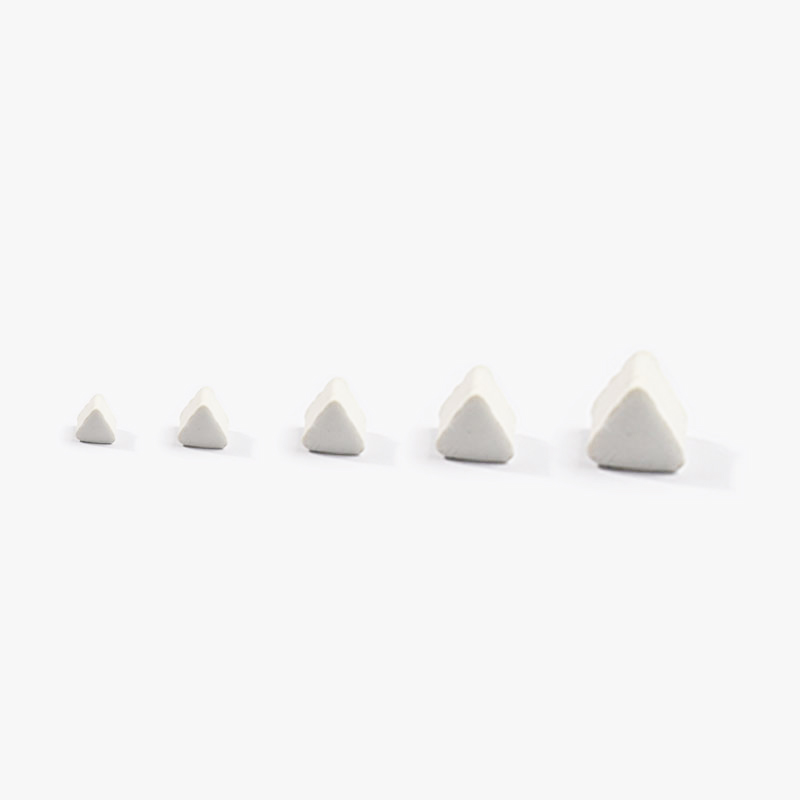
| Media | Best fit | Watch out for |
|---|---|---|
| Magnetic stainless pins and fine needles for magnetic finishing | Deburring and brightening of intricate small stainless features, slots, gear teeth and blind holes where media cannot be allowed to lodge. | Suits small part envelopes only, and the route needs testing on magnetic grades before it is assumed to apply to a given part. |
| Grinding and cutting media, fused alumina and silicon carbide based | Aggressive stock removal on heavy stainless burrs, weld dressing and rough cast surfaces before a refining stage. | Removes edge material quickly, can embed abrasive fragments in soft or gummy surfaces, and is usually too coarse for a final appearance stage. |
| Plastic media, polyester and urea based | Gentle deburring of delicate or thin stainless parts and of softer metals in mixed production, where edge loss must be minimised. | Low cutting power on stainless, can load with metal particles, and is generally the wrong tool for generating a stainless appearance finish. |
| Alumina-based ceramic triangles and angle-cut forms | Heavy deburring, edge blending and machine-mark removal on stainless brackets, flanges and housings where corners and recesses must be reached. | Wears down in size and sharpness, so cutting rate falls without any setting change; broken pieces and fines can lodge in small features and must be screened out. |
Two failure modes produce a damaged edge and are often confused. Impingement, sometimes called a gouge or a nick, is local damage from part-on-part contact or media striking a feature at excessive energy, and it typically appears on thin stamped covers, large flat panels and unsupported webs. Its signature is randomness: the defect site moves from part to part and does not follow the geometry of the edge. Over-rounding is systematic, follows the edge itself, and repeats at the same location on every part in the load. Both are found with raking-light photographs, magnification on the suspect feature and comparison across several parts from the same batch. The remedy differs too, because impingement is addressed by load fill ratio, amplitude, compartments or fixtures, while over-rounding is addressed by cycle intensity, media size class and media hardness.
| Failure mode | Likely cause | How to catch it |
|---|---|---|
| Hazing or waviness on a part specified as mirror or bright | An intermediate refining stage skipped or cut short, media too coarse for the final texture, or a media charge that has worn out of its working size range. | View under defined lighting against a physical master at the acceptable and marginal limits, measure roughness across the lay with a fixed instrument setup, and screen the media charge for size and condition. |
| Hydrogen-related cracking risk on high-strength martensitic stainless parts | Acid-bearing compound chemistry combined with mechanical work on a hardened structure, with no defined post-finishing treatment by the buyer. | Confirm the material and hardness against the purchase documentation, verify which compound family was used and at what concentration, and route the fitness-for-service question to the buyer's engineering function. |
| Heat tint, oxide or weld discolouration remaining after a light cycle | Incoming oxide from welding or laser cutting deeper than the finishing stage is designed to remove, or a finishing sequence that only brightens the surrounding surface. | Record the incoming oxide condition with photographs at agreed locations, then compare the same locations after processing and confirm whether removal of the oxide was inside the agreed scope. |
| Rust blooms or speckling on austenitic or duplex parts after finishing | Free iron transferred from carbon steel, ferritic stainless or worn steel machine parts sharing the same media, chamber, racks or bench area. | Run a ferroxyl-type test for free iron at agreed locations, compare against an untouched part from the same batch, and repeat the check after a defined exposure period to catch delayed blooms. |
Modena is a manufacturing-intensive province whose exports are equivalent to almost 60% of provincial value added, and the Chamber of Commerce forecasts manufacturing value added growth of up to +1.2% by 2027 (s4). In the second quarter of 2026 provincial exports reached EUR 4,978 million, the second-highest quarterly figure since 2023 (s2). The export mix is unusually concentrated: transport equipment is the largest category with more than a third of the total, machinery and mechanical appliances account for almost a quarter, and ceramic products for 14.0% (s2). Agri-food (+5.2%) and biomedical (+1.7%) exports grew while textiles, transport equipment and ceramics declined, and the Chamber of Commerce notes a steady fall in the number of manufacturing firms in textiles, ceramics and metalworking (s3). The ceramic tile district around Sassuolo, which spans the provinces of Modena and Reggio Emilia, is the centre of the Italian tile industry (s1).
For this brief the relevant part of that base is automotive: Transport equipment is the largest single export category of the province, accounting for more than a third of total provincial exports in the second quarter of 2026.
Edge quality and surface condition are recurring production requirements in the metalworking part of this base: transport-equipment and mechanical-engineering plants deburr machined, cast and geared components, and the province's biomedical exporters handle stainless and polymeric parts on which burrs and residual finishing media have to be controlled. Ceramic tile production raises a different problem, because the finishing-sensitive items there are moulds, dies and tooling rather than polished surfaces. A deburring or mass-finishing specification for Modena therefore belongs to the automotive, machinery and biomedical portion of the local base, not to tile pressing.
The first thing to settle is which part of the local base the equipment is for: a metal-cutting or biomedical requirement driven by burr height and cleanliness on stainless and cast parts, or the ceramic tooling side, where the requirement is different. For the first, the process window should be established on the buyer's own part families rather than from a generic machine size.
Freight context: Aeroporto di Bologna Guglielmo Marconi (BLQ), Porto di Ravenna, Porto di La Spezia. Modena is a landlocked province, so machines and sample parts move by road and rail to Italian gateways rather than through a local port; the export flow itself is what the Chamber of Commerce documents, at EUR 4,978 million in the second quarter of 2026, with the United States, Germany and France as the three largest destination markets (s2). The airport and ports named above are the standard regional gateways and were not verified against a port or airport authority page in this session, so treat them as geographic context rather than authority data.
Italy applies the EU's common commercial policy to imports from China, so Chinese industrial machinery enters under the EU Common Customs Tariff, where the duty rate depends on the type and origin of the goods and the working tariff is TARIC. Istat's August 2026 extra-EU trade release records a 16.0% year-on-year increase in Italian purchases from China, alongside strong growth from India, OPEC and Mercosur, so China remains one of the fastest-growing sources of Italian imports. Anti-dumping and other trade-defence measures apply case by case to specific product categories rather than to finishing machinery in general, so the applicable rate must be checked against the specific commodity code before a quotation is finalised.
The national standards body is UNI - Ente Italiano di Normazione, a private non-profit association founded over a century ago, which develops, publishes and disseminates voluntary technical standards and adopts the European and international standards as Italian editions. For finishing work the operative references are the surface-texture series UNI EN ISO 21920-1:2022, which fixes how the surface state (roughness, waviness, primary profile) is indicated on technical product documentation, and UNI EN ISO 21920-2:2022, which defines the terms, definitions and parameters used with profile methods. Machinery safety requirements come from the EU machinery legislation rather than from UNI alone: Machinery Directive 2006/42/EC applies to machinery placed on the EU market before 20 January 2027, after which Machinery Regulation (EU) 2023/1230 takes over.
SurfacePolish supplies from Xiamen, China. The buyer's own destination rules, conformity marking, tariff classification and documentation responsibilities stay with the buyer; confirm them against the authorities named above before ordering.
Acceptance for a stainless automotive part should be settled before a machine or medium is proposed, because the acceptance rule determines which route is even capable. If the finish callout is a word like bright, inspection is whoever looks last; if it is a roughness range at a named location plus a physical visual master viewed under stated lighting, inspection becomes repeatable and the argument moves to the part. Set the sampling plan, the inspection method and the instrument or gage for each characteristic, and decide separately which features get a functional check as opposed to a cosmetic one. Write the rule into the purchase documentation along with the material grade, the marked measurement locations and the acceptance limits for edge condition. A supplier can then report observations against a defined rule instead of being asked to judge its own work.
Moving from a trial to a producing line changes the process in ways the trial cannot show. Media wears during a long run, the compound bath accumulates swarf and dissolved metal, the load fill ratio changes with part mix, and handling steps multiply. A condition that held for a short cycle on five parts may drift over a full shift. Plan scale-up as a deliberate ramp: confirm that machine capacity and chamber geometry suit the real part, run the intended media charge to a representative wear state before judging results, and freeze the settings in a written work instruction with a media maintenance schedule. Decide in advance what will be measured during the ramp, at what frequency, and who is authorized to change a setting. Ramp-up risk is highest where the trial succeeded easily, because nobody is watching for the drift.
Speckled rust usually means free iron contamination rather than a material fault. Common sources are carbon steel parts run in the same machine or media, worn steel components in the chamber, steel racks and baskets, grinding dust settling on wet parts, and tools used elsewhere in the shop. A ferroxyl-type test at agreed locations confirms free iron, and a comparison against an untouched part from the same batch makes the result usable. Prevention is segregation: dedicated media and handling for stainless, covered storage, and a check on incoming media for metallic debris.
A trial produces observations on the parts tested under the settings used, and nothing more. It cannot guarantee a surface value, appearance grade, cycle time, capacity or cost in production, and it does not certify or qualify a process for any regulated application. What it can do is narrow the field: compare two media, two compound families or two cycle lengths under controlled conditions, expose edge and lodging risks, and give your engineering team measured before-and-after data to work from. Read the trial record, check that the settings are described fully enough to repeat, and keep the acceptance decision and any qualification work inside your own quality system.
No, and relying on it creates two problems. Ferritic and martensitic grades are strongly magnetic, annealed austenitic grades are effectively non-magnetic but become weakly magnetic after cold work, and duplex grades sit between. A magnet cannot separate those cases, so it cannot support grade segregation or media selection. Worse, a mixed load lets a magnetic part transfer free iron to an austenitic neighbour. Identify parts positively from material certificates, heat numbers and markings, and settle separation by retrieval method, because magnetic retrieval works well on some grades and not at all on others.
Use Modena, Italy as the destination on the enquiry and state whether the deliverable is equipment, media and compound, a representative sample review or a line concept. A destination does not imply local stock, a local service point or a local delivery time.
A Modena buyer would write surface-finish and deburring requirements into drawings and inspection plans against ISO/UNI surface-texture standards, and suppliers into the transport-equipment chain are normally qualified to IATF 16949; biomedical manufacturers work to ISO 13485 and to the cleanliness and residue limits written into their own device specifications. Confindustria Ceramica, based in Sassuolo, maintains product standardisation and research activity for the ceramic sector, which is a product-standardisation function rather than a surface-finish one.
Sources were retrieved on 2026-09-29 and describe the local industrial and trade context only. They do not evidence any SurfacePolish project, shipment, installation or service in Modena.
The buyer needs press burrs removed from the sheared edges while keeping the visible satin texture uniform enough to pass a customer appearance review.
Send the material, dimensions, approximate weight, batch quantity, the incoming condition and photographs of the difficult features. Mark which features must not be contacted by media and state how the result will be inspected. This form carries source reference PSEO-0452; quote it if you prefer an additional manual reference.
Open the SurfacePolish enquiry form Email a prepared enquiry
No price, lead time, certification or result is promised here. Confirm whether a sample trial is available for the specific part and what the trial can and cannot show.
Page PSEO-0452 · revised 2026-09-29 · cross-border equipment, media and scoped sample review. City context is sourced and cited above.
Use this local checker to identify missing part and inspection information. It prepares a technical-review brief; it does not approve a machine, process recipe or production result.
Complete the part details to prepare a review brief.
Email : info@surface-polish.com


 IPv6 network supported


 +86-592-2381506