An end-effector builder in Amsterdam, Netherlands supplying robotics and automation has a pocketed 7075 aluminium tooling plate where the edges must be deburred but the dowel holes and flatness cannot move. SurfacePolish supplies finishing machines, media and compounds across borders and offers a free sample trial, in which the plate is shipped to Xiamen and returned with observed results and a proposed media, compound and cycle direction for the buyer to assess. This brief is written for a buyer in Amsterdam working on robotics and automation; it describes equipment, media and a scoped sample review, not a local polishing service.
How much of the incoming contamination, cutting oil, machining chip and handling damage is expected to be removed by finishing rather than by an earlier operation?
What is the size and mass spread inside one part family, and does one machine have to cover both a heavy casting and a small gripper jaw?
Which alloys and tempers run through the shop, and how will media, machines and compounds be purged between aluminium, stainless and steel work?
Batch composition is a process variable. Mixing aluminium and stainless parts in one charge spreads aluminium fines onto the stainless and leaves a dull grey film; leaving small steel fasteners loose among aluminium housings produces impact marks and ferrous contamination. Decide the mix, the maximum mass per batch and whether delicate parts need compartments. Decide as well how a batch is identified, with a traveller carrying part numbers, alloy, machine, media charge, compound, cycle time and inspection result, so a finished lot can be traced back to the settings that produced it. Then record honestly what the parts arrived with, because cutting oil, coolant, machining chips, a previous blasting residue or a handling scratch all change what one cycle can achieve and are easy to attribute to the wrong cause later.
Compound carries debris away, keeps the media from loading and buffers the chemistry against the metal. Alkaline and neutral families are common for general deburring and cleaning; acidic families may be chosen where a descale or brightening effect is wanted; silicate-bearing products can leave a tenacious film that is hard to remove from a bore or a sealing land. On aluminium an effective corrosion inhibitor usually matters, because the wrong chemistry darkens the surface during or after the cycle. Concentration, flow and temperature shift the result, so dosing should be metered rather than judged by eye, and rinse water hardness, chloride content and suspended solids all affect foaming and what remains behind. Where an anodise or paint step follows, the film and smut left by the cycle become the buyer's problem, so define how the surface will be checked.
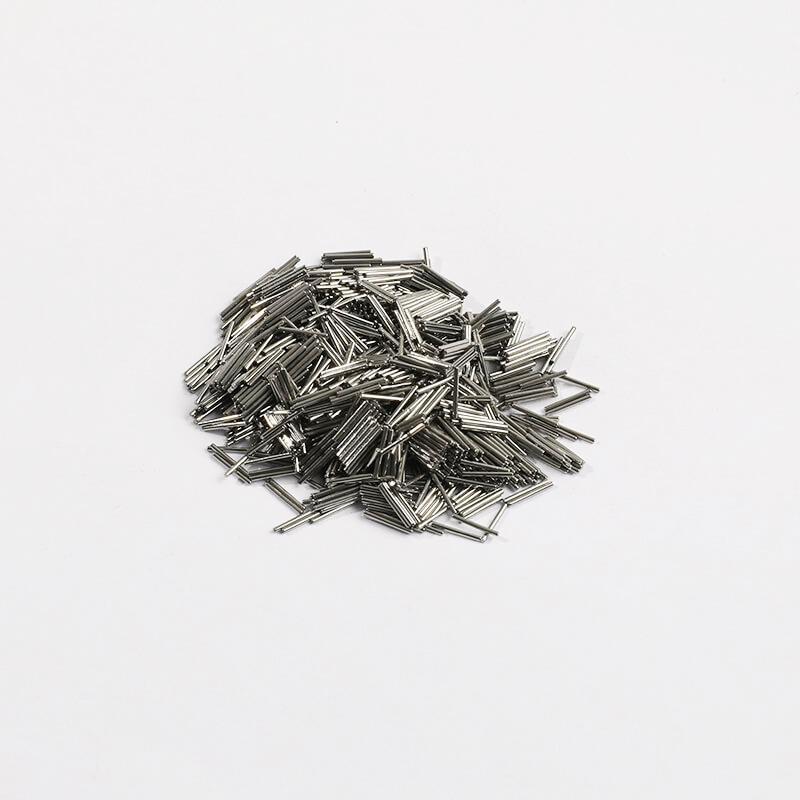
| Media | Best fit | Watch out for |
|---|---|---|
| Magnetic finishing pins and fine magnetic media | Small precise items such as spools, orifice plates, small valve parts and fine slot arrays where tumbling media cannot reach the feature | Limited working envelope, pins lodge in the same fine features they are chosen to reach, and the surface signature differs from tumbling |
| Heavy-cut ceramic, angle-cut triangles in a coarse size class | Removing a substantial milled or turned burr from open external edges and pockets on steel and stainless automation parts before a refinement stage | Cuts functional edges and corners aggressively, leaves a coarse surface on aluminium, and lodges in slots whose width approaches the media section |
| Fine ceramic or porcelain shapes in a small size class | Edge blending and surface refinement after a cutting stage, and reaching tighter external geometry on machined housings and brackets | Small sizes enter and retain in tapped holes and fine slots, and media wear shrinks the charge so the finish drifts over its life |
| Steel media, including balls and shaped pins | Bright finishing and edge blending on stainless automation components where appearance and a burnished surface matter | Transfers iron to aluminium and carbon steel, needs a corrosion-inhibiting compound, and must be separated magnetically or by screen at unload |
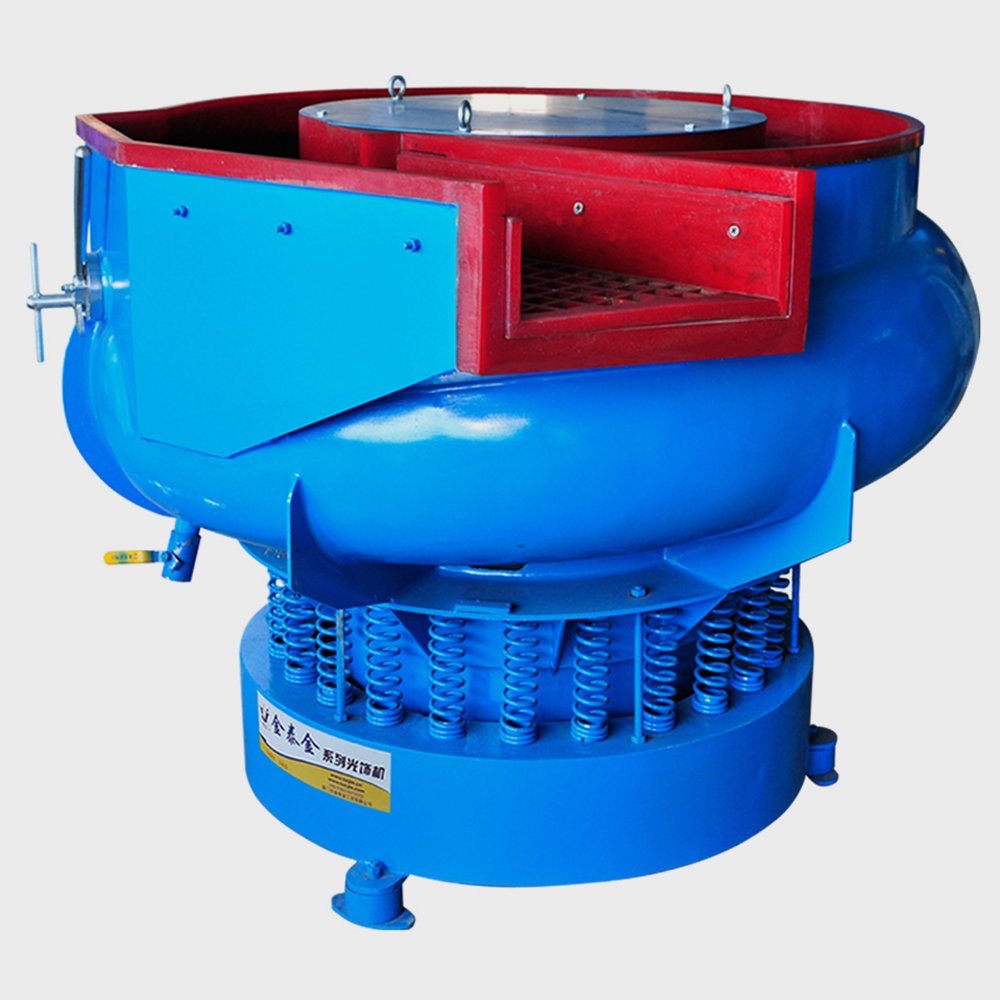
A round vibratory bowl is the usual starting point for machined automation parts that fit comfortably and can tumble without a fixture. Media circulates in a toroidal path and reaches external faces, open pockets and edges at moderate energy, and the open chamber lets an operator pull a part mid-cycle to look at a sensitive feature. Contact between parts is continuous, so finished mounting faces, thin cover plates and bright cosmetic panels need separation or compartmentalising within the charge. A bowl reaches external geometry only: internal passages, deep pockets and the underside of a flange depend on media size, compound flow and how the part sits in the load. Where a heavy milled burr has to come off first, a machine with higher removal energy may take the bulk of it, at the cost of faster edge loss.
| Machine route | Where it fits | What it will not do |
|---|---|---|
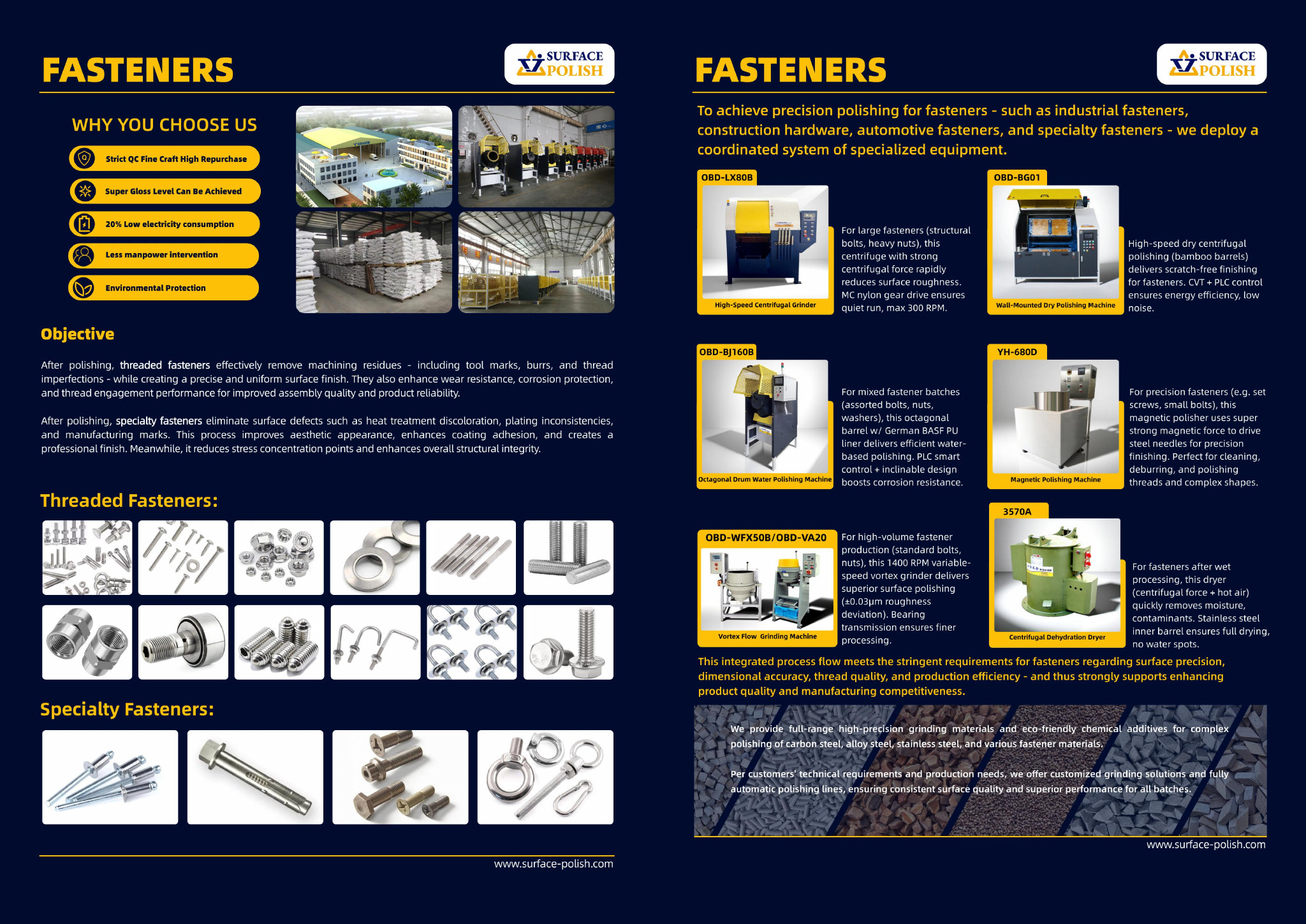
| Dry polishing machine and dryer | Removing residual moisture after a wet cycle and reducing water spotting on aluminium and stainless surfaces with pockets and threads | A finishing step only; a dry part can still carry compound film, fines and media dust, so it is not a cleanliness release |
| Disc finishing machine | Fast, high-energy edge breaking and surface refinement on small robust parts and uniform batches of gripper jaws, blocks and fittings | High impingement and edge-loss risk on thin, soft or aluminium parts, and the geometry must suit the disc working gap |
| Vibratory finishing machine, bowl type | General deburring and refinement of machined housings, plates and brackets that fit and can tumble without racking, with easy mid-cycle inspection | Continuous part-on-part contact and no access to deep internal passages; thin plates and finished mounting faces need separation |
| Grinding finishing machine | Taking off a heavy machining burr, dross or a defined stock layer before a refinement pass on robust steel and stainless work | High removal energy cuts functional edges fast and demands a tighter assessment of what may be removed and how much |
A medium left in a tapped hole or a cross-drilled passage usually escapes the finishing area and is found later at assembly or at a functional test. It happens when the size class is too close to the opening, when a charge has worn or fractured into smaller pieces, or when a passage was never mapped as a retention risk. Tapped holes, keyways, seal grooves, cross-drillings and slots whose width approaches the media section are the usual places. Retrieval has to be designed rather than assumed: count the charge in and out where practical, use a pin or thread gauge on sampled holes, borescope the smallest passages at an agreed angle, and rinse through a filter for a visual check. Any medium found is a non-conformance to record, not something to wipe away and release.
| Failure mode | Likely cause | How to catch it |
|---|---|---|
| Uneven finish with unrefined pockets, internal corners or the shielded side of a flange | Media cannot reach the feature at the chosen size or orientation, charge circulation is blocked, or the part was never repositioned during the cycle | Inspect at defined locations rather than judging the whole part, photograph the same feature before and after, and measure roughness only at the surfaces the drawing controls |
| Grey aluminium smear transferred onto stainless parts in a shared batch | Aluminium fines retained in media, compound or the machine sump after an aluminium lot, with no purge before the stainless lot | Check stainless surfaces under angled light for a dull grey film, review the changeover record, and inspect the charge and sump for retained fines |
| Bearing bore, bore lip or dowel hole edge rounded past the drawing limit | High-energy route, over-long cycle, dense or coarse media, or a functional edge run without masking or a shielding fixture | Measure the defined edge feature before and after with an optical comparator, radius gauge or moulded replica, and compare it with the maximum radius on the drawing |
| Burr remaining inside a cross-drilled intersection or an internal corner | Media too large to enter the intersection, part orientation that shields the feature, or a cycle stopped before that feature was reached | Borescope the intersection at a fixed angle, compare with a first-article reference, and use a pin or probe to feel for a lip on sampled parts |
Amsterdam's industrial base is organised around the Port of Amsterdam and the North Sea Canal rather than around large manufacturing campuses. In 2024 the port handled 62.2 million tonnes of cargo; coal fell to 6.6 million tonnes while dry bulk grew, with agribulk reaching 7.1 million tonnes (+12%), and oil products held at 29.1 million tonnes. CBS counted 4,170 industrial establishments (SBI C) in the municipality on 1 January 2026 out of 216,360 business establishments in total. The port's 2040 vision positions it as a destination port for clean shipping, circular industry and renewable energy.
The nearest part of that base to this brief is food: The port reported that declining coal volumes were offset by growth in dry bulk such as agribulk, which reached 7.1 million tonnes in 2024 (+12%), indicating a substantial agri-food bulk handling base in the harbour.
Agri-food, edible-oil and energy bulk handling in the port depends on stainless and carbon steel pumps, valves, pipework, tanks and conveyors, where burr removal, weld dressing and passivation of wetted surfaces affect both corrosion resistance and cleanability. Terminal and ship-repair work is typically low-volume and part-specific, so the practical question is usually media and process selection for mixed stainless and carbon steel parts rather than high throughput.
Before selecting equipment, a buyer here should settle whether the parts are hygienic stainless (cleanability, passivation, no media embedded in the surface) or structural carbon steel (edge radius, burr height, Ra), because that decision drives media and compound chemistry far more than machine size does.
Freight context: Port of Amsterdam (North Sea Canal), IJmuiden sea lock (Zeesluis IJmuiden). The harbour is a combined sea and inland-barge port; Port of Amsterdam reported 99 sea cruise calls and 1,880 river cruise calls in 2024. Machinery imported from outside the EU is declared to Dutch Customs at the point of entry and needs an EORI number, while goods arriving from another EU member state are not declared to customs at all.
The Dutch standards body is NEN (Nederlands Normalisatie-instituut), which publishes and maintains the NEN and NEN-EN-ISO standards; the content of a standard is set by a NEN standards committee made up of the organisations concerned, not by NEN itself. For surface finishing NEN publishes NEN-EN-ISO 2080, which defines the terms for the general types of surface-finishing processes with emphasis on practical use in metal finishing, under the standards committee for metallic coatings and corrosion of metals and alloys. Machinery safety, EMC, low-voltage, ATEX, RoHS and ecodesign requirements reach Dutch buyers through the CE directives and regulations referenced by KVK, with the Machinery Regulation applying from 20 January 2027.
The Netherlands applies the EU's common commercial policy, so imports of Chinese industrial machinery enter under EU customs rules and WTO tariff treatment rather than under a bilateral EU-China free-trade agreement; the European Commission also maintains trade-defence measures on selected Chinese product categories, and China is a WTO member. EU-China trade in goods reached EUR 732 billion in 2024, and in 2025 manufactured goods were 97.3% of EU imports from China, with machinery and vehicles alone accounting for 54.4% — the single largest category. Chinese finishing machines, media and compounds therefore arrive in a very large, well-established EU import stream, and the buyer should expect MFN duty plus trade-defence measures where a specific product is covered.
SurfacePolish supplies from Xiamen, China. The buyer's own destination rules, conformity marking, tariff classification and documentation responsibilities stay with the buyer; confirm them against the authorities named above before ordering.
Some failures never show on a surface. Measure the features that can move: bore diameters and roundness with a bore gauge or CMM, dowel hole position, flatness of a mounting face on a surface plate or CMM, wall thickness on a thin housing, and thread condition with go and no-go gauges, since edge finishing can open or gall a thread crest. Where the part carries a pneumatic or hydraulic passage, a flow or pressure check against a reference part catches a lodged medium or a burr that visual inspection misses. Where a seal or gasket seats, the buyer's own leak or assembly check is the only test that sees a rounded land or a residue film. These checks belong to the buyer's quality function against the buyer's own limits; a finishing report is supporting evidence rather than a release.
Change one variable at a time. If the question is media shape, hold the machine, load, compound, cycle time and part mix constant and change only the medium. If the question is cycle time, hold the charge and settings constant and stop at two or three defined intervals. Use adjacent coupons or parts from the same production lot so the only difference is the variable under test. Label the pieces before they run and have the returned parts judged in one session under the same light, rather than one at a time as they arrive. Where several people judge appearance, ask each to rank the parts before discussion so the strongest opinion does not set the answer. Running two changes at once produces a result that cannot be attributed to either.
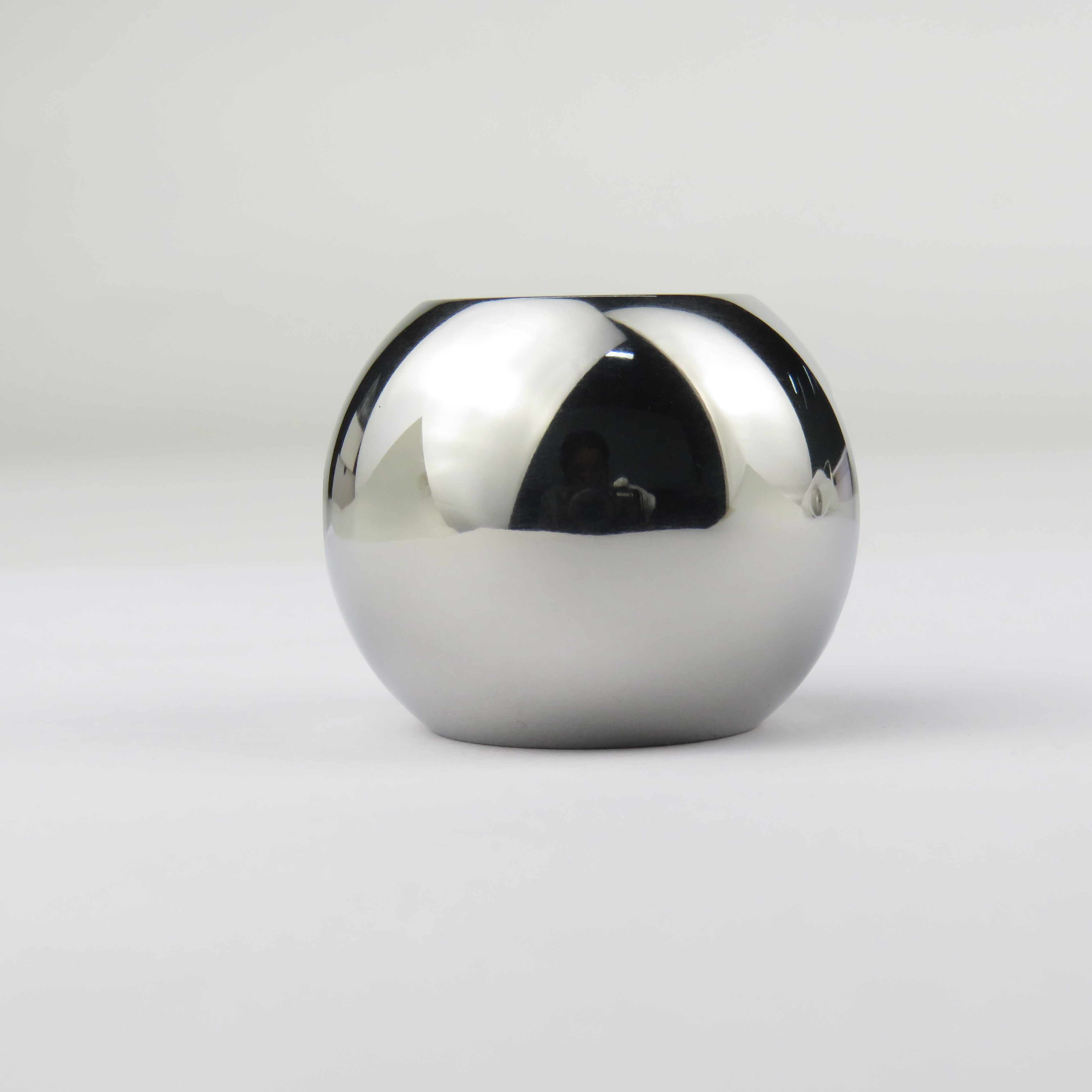
Cycle time depends on the starting burr, the alloy and temper, the media size class, the compound and how much edge refinement is wanted, so no figure can be quoted in advance. A part that needs only a light edge break runs very differently from one that must shed a milled burr or a recast layer before refinement, and a two-stage route has to count both stages. The useful approach is to test one or two defined stop points on representative parts and record what changed at each. SurfacePolish does not promise cycle times or capacity; treat any timing on returned parts as an observation from that run rather than a production commitment.
Size the medium well below the smallest opening the charge could enter, and treat every passage as a retrieval point rather than assuming it stays clear. Map the tightest tapped hole, keyway or cross-drilling first, then choose a size class against that geometry instead of an average part. Add a defined check such as a pin or thread gauge on holes, a borescope at an agreed angle and a rinse collected through a filter. For a trial, send the part with the smallest opening so the media choice is tested on the real feature. SurfacePolish reports what was observed on the tested parts; the release decision remains with your own quality function in Netherlands.
No. SurfacePolish supplies finishing machines, media and compounds across borders and runs a free sample trial on parts shipped to the factory in Xiamen. We do not design, integrate, program or commission robotic cells or automated handling lines, and no robotic polishing cell is offered here. What can be discussed is the part itself, the features that must be protected and the finishing step, and which loose-part machine and media route is worth testing. How parts are presented, loaded, unloaded and transferred is engineering scope you define and verify, and any machine or medium suggestion remains a starting point for your evaluation in Amsterdam.
Use Amsterdam, Netherlands as the destination on the enquiry and state whether the deliverable is equipment, media and compound, a representative sample review or a line concept. A destination does not imply local stock, a local service point or a local delivery time.
A local buyer would reference the CE marking regime for machinery — with the Machinery Regulation replacing the Machinery Directive and compliance required by 20 January 2027 — and the Dutch/EN-ISO surface-finishing vocabulary published by NEN, notably NEN-EN-ISO 2080 for metal-finishing terms. Food-contact and wetted-surface work is normally specified through the customer's own hygiene and material requirements rather than through a single national finishing standard.
Sources were retrieved on 2026-09-29 and describe the local industrial and trade context only. They do not evidence any SurfacePolish project, shipment, installation or service in Amsterdam.
The buyer wants the pocket edges and the plate faces deburred without warping the plate or rounding the dowel holes that locate the tooling.
Send the material, dimensions, approximate weight, batch quantity, the incoming condition and photographs of the difficult features. Mark which features must not be contacted by media and state how the result will be inspected. This form carries source reference PSEO-0610; quote it if you prefer an additional manual reference.
Open the SurfacePolish enquiry form Email a prepared enquiry
No price, lead time, certification or result is promised here. Confirm whether a sample trial is available for the specific part and what the trial can and cannot show.
Page PSEO-0610 · revised 2026-09-29 · cross-border equipment, media and scoped sample review. City context is sourced and cited above.
Use this local checker to identify missing part and inspection information. It prepares a technical-review brief; it does not approve a machine, process recipe or production result.
Complete the part details to prepare a review brief.
Email : info@surface-polish.com


 IPv6 network supported


 +86-592-2381506