A precision turned parts supplier in Breda, Netherlands in robotics and automation has a mixed batch of small stainless bushings and pins that need a consistent edge break without media trapped in the cross-holes. SurfacePolish supplies finishing machines, media and compounds across borders and offers a free sample trial: a representative batch travels to Xiamen and returns with observations and a proposed media, compound and cycle direction for the buyer to compare. This brief is written for a buyer in Breda working on robotics and automation; it describes equipment, media and a scoped sample review, not a local polishing service.
What is the smallest hole, slot, keyway or cross-drilling the charge must not enter or plug, and how will a lodged medium be detected and removed?
Which surfaces on the part are functional, such as bearing bores, dowel holes, seal lands, ground mounting faces and threads, and which are only cosmetic?
How much of the incoming contamination, cutting oil, machining chip and handling damage is expected to be removed by finishing rather than by an earlier operation?
Batch composition is a process variable. Mixing aluminium and stainless parts in one charge spreads aluminium fines onto the stainless and leaves a dull grey film; leaving small steel fasteners loose among aluminium housings produces impact marks and ferrous contamination. Decide the mix, the maximum mass per batch and whether delicate parts need compartments. Decide as well how a batch is identified, with a traveller carrying part numbers, alloy, machine, media charge, compound, cycle time and inspection result, so a finished lot can be traced back to the settings that produced it. Then record honestly what the parts arrived with, because cutting oil, coolant, machining chips, a previous blasting residue or a handling scratch all change what one cycle can achieve and are easy to attribute to the wrong cause later.
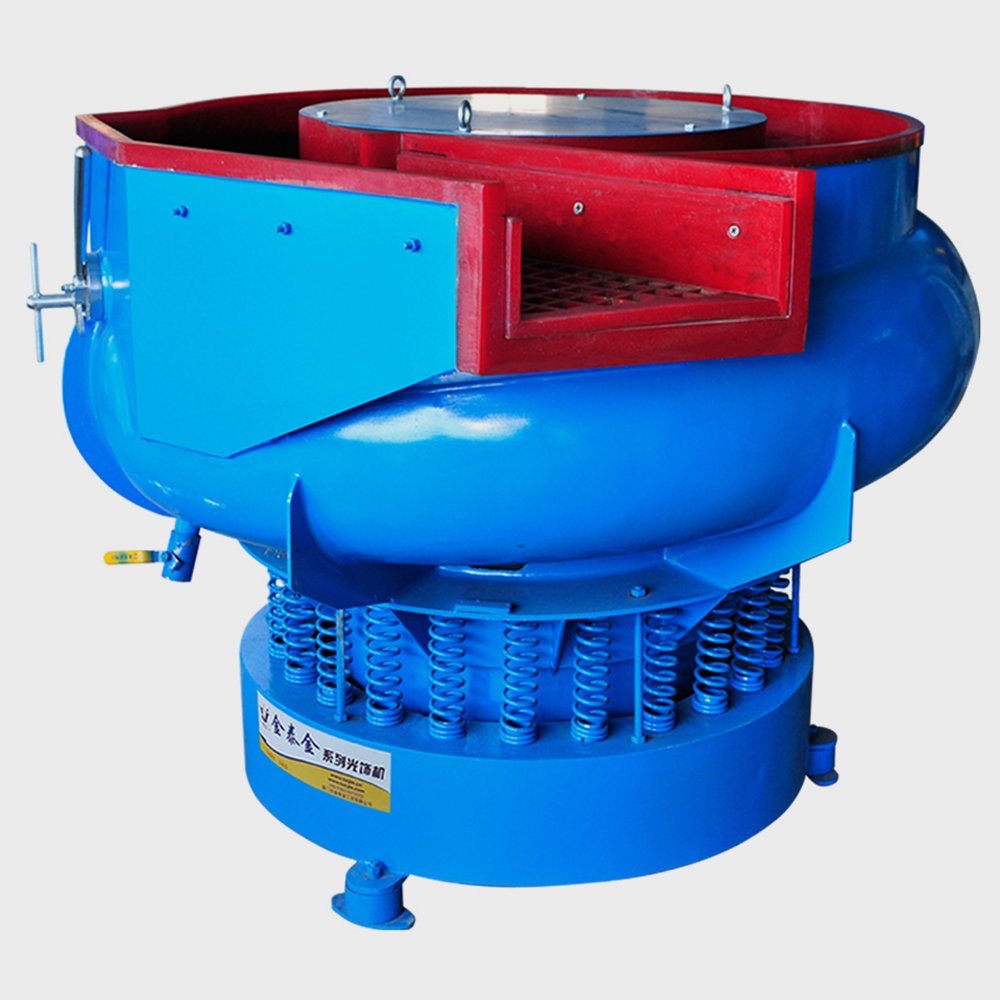
A round vibratory bowl is the usual starting point for machined automation parts that fit comfortably and can tumble without a fixture. Media circulates in a toroidal path and reaches external faces, open pockets and edges at moderate energy, and the open chamber lets an operator pull a part mid-cycle to look at a sensitive feature. Contact between parts is continuous, so finished mounting faces, thin cover plates and bright cosmetic panels need separation or compartmentalising within the charge. A bowl reaches external geometry only: internal passages, deep pockets and the underside of a flange depend on media size, compound flow and how the part sits in the load. Where a heavy milled burr has to come off first, a machine with higher removal energy may take the bulk of it, at the cost of faster edge loss.
| Machine route | Where it fits | What it will not do |
|---|---|---|
| Tub vibrator | Long parts such as linear-axis beams, manifolds and welded frames that cannot rotate in a bowl | Lower energy per unit area so heavy burrs take longer, and large tubs need floor space and a reliable part support method |
| Dry polishing machine and dryer | Removing residual moisture after a wet cycle and reducing water spotting on aluminium and stainless surfaces with pockets and threads | A finishing step only; a dry part can still carry compound film, fines and media dust, so it is not a cleanliness release |
| Vibratory finishing machine, bowl type | General deburring and refinement of machined housings, plates and brackets that fit and can tumble without racking, with easy mid-cycle inspection | Continuous part-on-part contact and no access to deep internal passages; thin plates and finished mounting faces need separation |
| Magnetic finishing machine | Fine deburring and light refinement of small precise features such as small bores, narrow slots and fine internal radii | Small working envelope that excludes housings and long parts, with pin media that can lodge in the fine features it reaches |
Steel media produces the brightest appearance of the common charges and the highest contact pressure, and it brings a contamination question with it. On aluminium it can embed iron-bearing fragments that show up later as rust spots or as particles in a wiped sample, so a shop that runs both materials needs a changeover discipline, dedicated charges or a different route for the aluminium work. Separation at unload matters as much as the choice: steel media is dense, retains in blind holes and slots, and can only be recovered magnetically if the equipment and the procedure are set up for it. The compound has to keep the charge clean and inhibit corrosion on the parts. A bright result from a steel charge is an observation about a surface, not evidence about cleanliness or fitness for a downstream process.
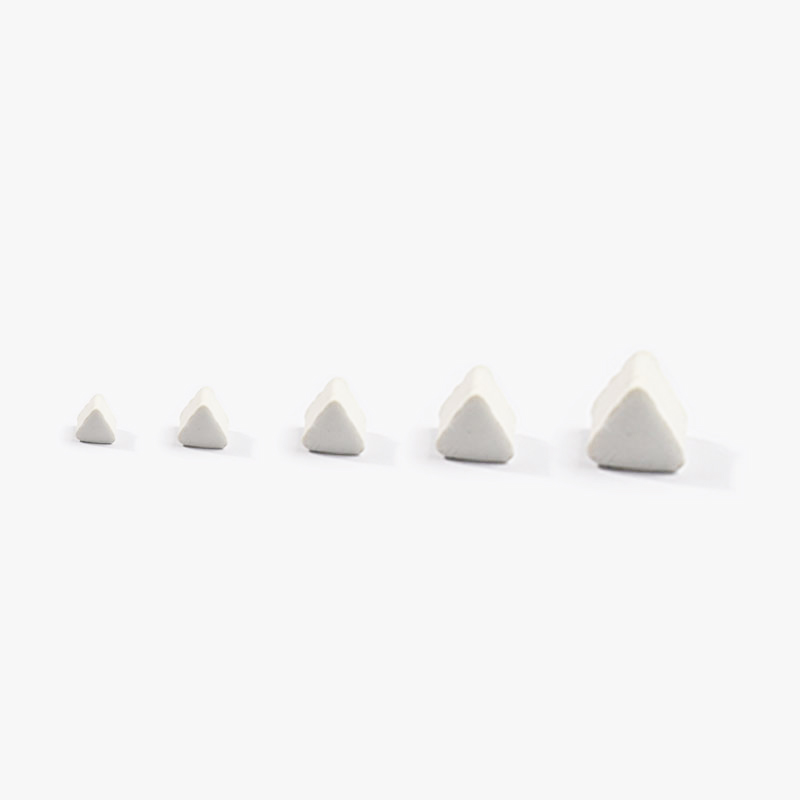
| Media | Best fit | Watch out for |
|---|---|---|
| Plastic triangles, cones and pyramids in a soft to medium grade | Deburring aluminium housings, gripper plates and other soft alloy parts where surface marking and edge rounding must be kept to a minimum | Slow cut rate, media deforms and wears, and a worn charge behaves noticeably differently from a fresh one |
| Dry media such as walnut shell and corn cob | Drying assistance and light surface polish after a wet cycle, particularly on parts with pockets and threads that must not stay wet | Does not deburr or refine metal significantly, generates dust, and must not be treated as a cleanliness step |
| Aluminium oxide grinding media in a dense ceramic bond | Heavier stock removal or a more consistent cut on robust steel and stainless parts with thick edges and a defined layer to remove | High removal energy rounds functional edges quickly and is a poor match for thin aluminium plates, cast housings and bore lips |
| Heavy-cut ceramic, angle-cut triangles in a coarse size class | Removing a substantial milled or turned burr from open external edges and pockets on steel and stainless automation parts before a refinement stage | Cuts functional edges and corners aggressively, leaves a coarse surface on aluminium, and lodges in slots whose width approaches the media section |
Edge rounding beyond limit is the failure that most often turns a finished automation part into scrap, because the features that round first are the ones that set position. A bearing bore lip, a dowel hole edge, a seal groove corner or the edge of a ground mounting land can lose a fraction of its geometry under a high-energy charge and still look uniform and polished. Coarse or dense media, an over-long cycle and a heavy load ratio all accelerate it, and aluminium rounds faster than stainless under the same conditions. Because the damage is invisible to a casual look, checking has to be deliberate: measure the feature before and after with an optical comparator, a radius gauge or a moulded replica, and compare the result with the limit on the drawing. Masking, a shielding fixture or a gentler medium are the usual mitigations to test.
| Failure mode | Likely cause | How to catch it |
|---|---|---|
| Impact marks, dents or a peened, rippled appearance on a visible aluminium face | Charge mass or load ratio too high, light parts left loose among heavy neighbours, or a soft alloy run on a route chosen for steel parts | Look for repeating mark patterns under angled light, compare a part run loose with the same part compartmentalised, and review the batch mix and load recorded for the lot |
| A ceramic, plastic or steel medium lodged in a tapped hole, keyway, cross-drilling or seal groove | Media size class too close to the opening, a charge that has worn or fractured into smaller pieces, or a retention feature that was never mapped | Count the charge in and out where practical, pin or thread gauge every hole, borescope the smallest passages at an agreed angle, and rinse through a filter for a visual check |
| Grey aluminium smear transferred onto stainless parts in a shared batch | Aluminium fines retained in media, compound or the machine sump after an aluminium lot, with no purge before the stainless lot | Check stainless surfaces under angled light for a dull grey film, review the changeover record, and inspect the charge and sump for retained fines |
| Colour change or darkening on an aluminium face after the cycle | Compound chemistry unsuitable for aluminium, no effective corrosion inhibitor, or a delay between finishing and drying | Compare the finished face with an unprocessed coupon of the same alloy under the agreed light, and review the compound product, dose and rinse sequence for the lot |
Breda combines logistics and distribution with an applied-technology and creative-technology base. The municipality is developing Innovatiedistrict Breda around two clusters, Robotics & AI and Games & Creative Technology, across the Slingerweg area, 't Zoet, the harbour area, the Chassekwartier and the Avans, BUas and Curio campuses. The Slingerweg area is being positioned as a hotspot for innovative makers with an emphasis on robotisation, where the Breda Robotics cluster and the Triple O Campus are located and more than 100 companies in the technology and creativity sector work. The city also operates the B'WISE startup incubator and provides business locations such as Rithmeesterpark, and its own business portal notes that local firms operate internationally in logistics.
For this brief the relevant part of that base is automation: The municipality is building Innovatiedistrict Breda on two clusters, Robotics & AI and Games & Creative Technology, and states that it started establishing innovative makers at Slingerweg in 2023, including the Breda Robotics cluster.
Breda's maker and robotics base, together with its logistics and business parks, generates demand for deburring and edge finishing of machined metal and plastic parts, sheet-metal enclosures, robot and machine frames and prototypes. Prototyping and small-series production place a premium on fast changeover and on processes that cope with mixed materials rather than on raw throughput.
A buyer should settle the batch profile first — prototype and small series versus repeat production — together with the material mix of aluminium, stainless, steel and plastics, because that determines whether a barrel, vibratory or disc process is the right starting point.
Freight context: Havengebied (harbour area within Innovatiedistrict Breda), Rithmeesterpark business park. Breda is a West-Brabant distribution location with business parks and a harbour area inside the innovation district, and local firms operate internationally in logistics. Machinery imported from outside the EU is declared to Dutch Customs at its point of entry, which for sea freight to this region will normally mean Rotterdam or Moerdijk.
The Netherlands applies the EU's common commercial policy, so imports of Chinese industrial machinery enter under EU customs rules and WTO tariff treatment rather than under a bilateral EU-China free-trade agreement; the European Commission also maintains trade-defence measures on selected Chinese product categories, and China is a WTO member. EU-China trade in goods reached EUR 732 billion in 2024, and in 2025 manufactured goods were 97.3% of EU imports from China, with machinery and vehicles alone accounting for 54.4% — the single largest category. Chinese finishing machines, media and compounds therefore arrive in a very large, well-established EU import stream, and the buyer should expect MFN duty plus trade-defence measures where a specific product is covered.
Business is conducted in Dutch, but engineering and procurement communication in these sectors is routinely handled in English. Buyers are KVK-registered legal entities and expect a clear commercial entity to contract with, an EORI number for customs, correct HS/TARIC classification, and a full CE technical file including the EC Declaration of Conformity and a manual in the correct language; a technical construction file held by the manufacturer is normally part of the qualification pack. For EU-internal supply the invoice carries 0% VAT with the customer's VAT identification number and the customer accounts for 21% Dutch VAT in its own return, so a Chinese seller shipping directly from outside the EU must be clear about who is importer of record and who carries the duty and import VAT. Trade and investment support is organised through bodies such as KVK, RVO, the regional development agencies and the Trade and Innovate NL network, and the Dutch technology industry is represented by FME.
SurfacePolish supplies from Xiamen, China. The buyer's own destination rules, conformity marking, tariff classification and documentation responsibilities stay with the buyer; confirm them against the authorities named above before ordering.
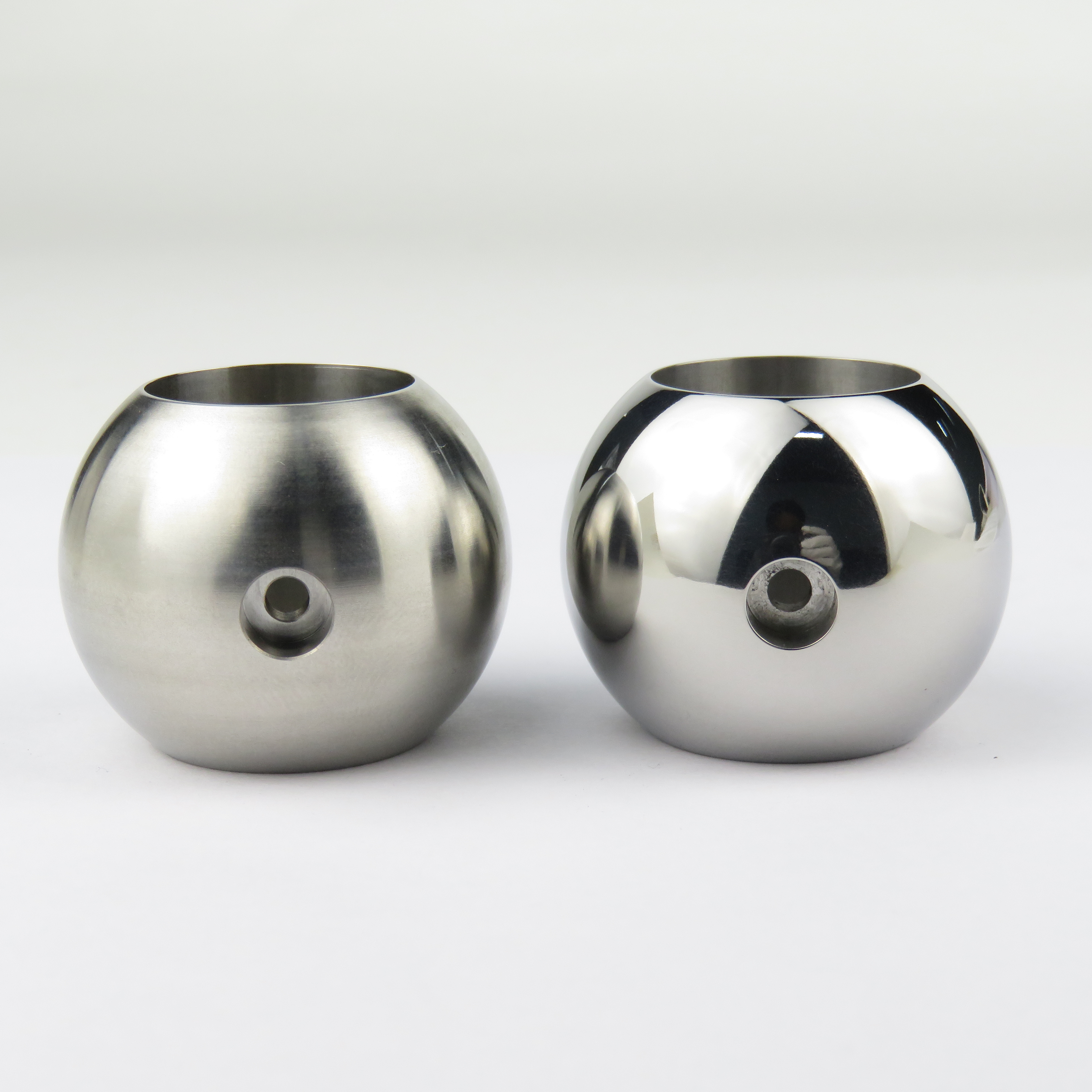
Roughness is only comparable when the measurement conditions are fixed. State the location by distance from a reference feature, the traverse direction relative to the machining or media marks, the cut-off and the evaluation length, then use the same conditions for the first article and for production checks. A reading taken along a bore axis and one taken around its circumference describe different surfaces. Curvature limits how a skid or shoe sits on the work, particularly in a small bore or on a narrow land, and a poorly seated pickup is not evidence. Take readings at several stations, because the ends of a part and the middle of a part often differ. Where visual appearance is what the customer sees, pair the number with a physical reference viewed at an agreed distance, since a surface can measure inside a band and still look wrong.
A trial can only be read against a documented starting point, so record the incoming condition before shipping. Photograph each critical feature at a fixed scale, measure roughness at marked locations with the instrument, cut-off and direction noted, check edge condition with a radius gauge or comparator, and record mass and critical dimensions. Note the as-received burr, existing scratches, cutting oil or coolant and the condition of any tapped hole. Keep one piece unprocessed as the baseline. When the parts come back, compare them against those records rather than against memory or photographs taken on a different day under different light. That pairing is also how the buyer distinguishes a change produced by the process from a feature the material already carried.
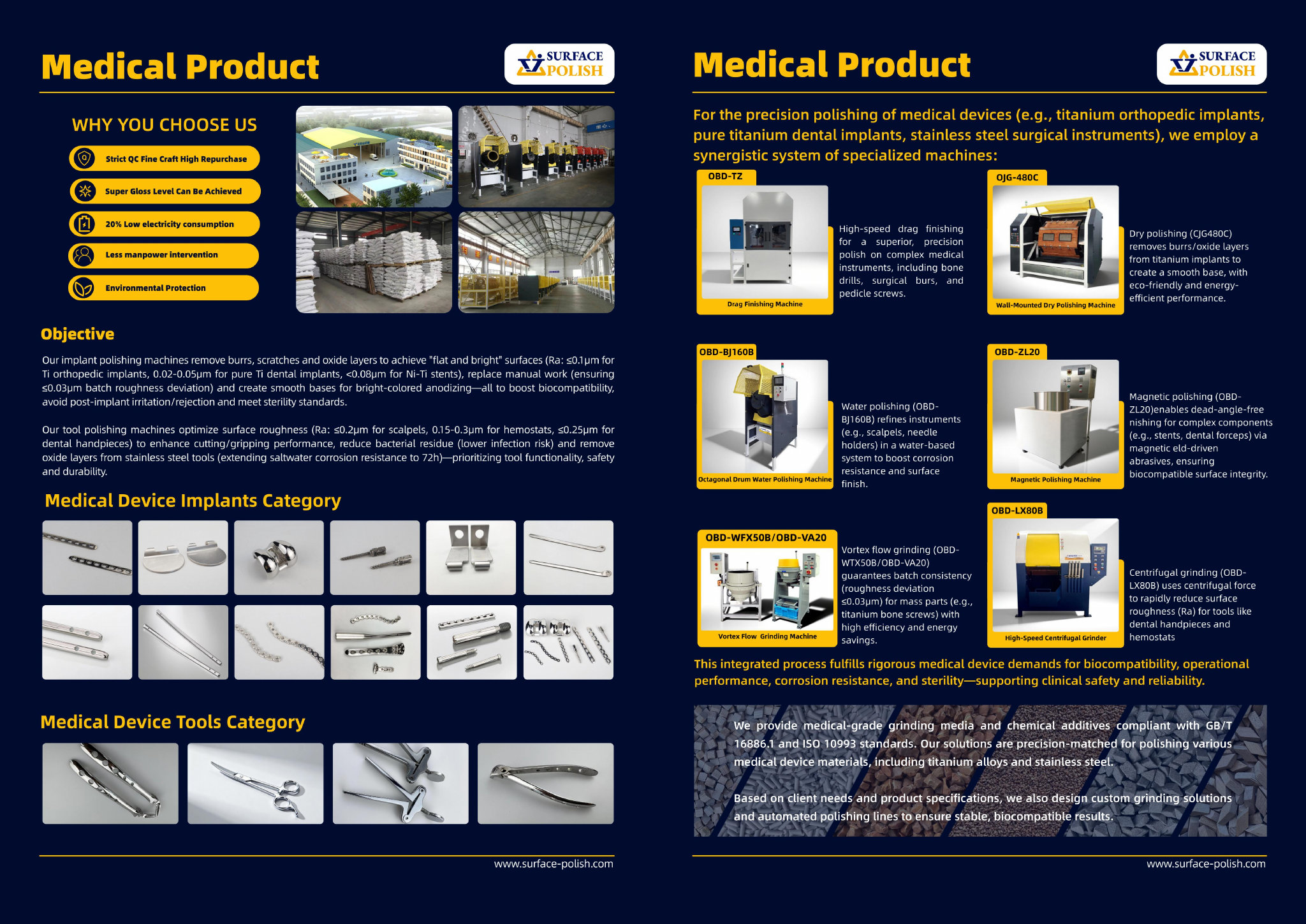
Ask for a record that identifies what was done rather than one that asserts a result. A useful record lists the part numbers and quantities in the lot, the machine used, the media type and size class, the charge mass and its age since the last screen or top-up, the compound and dose, the rinse water source, the cycle time, any interruption, the inspection results and the lot disposition. Request the media and compound data sheets. Where aluminium and stainless are processed on the same site, ask for the changeover note covering media purge, machine cleaning and compound replacement. This is finishing process documentation, not a certificate of compliance.
Yes. The offer is cross-border supply of finishing machines, media and compounds, together with a free sample trial and a scoped discussion of a finishing line concept. That means machine class, media and compound are considered as one question rather than three purchases, since a charge that suits one chamber may not suit another. The buyer keeps ownership of the part, the drawing and the acceptance criteria, and we do not verify the material, the upstream machining or the heat treatment. Bring the part family, the alloys, the size range and the features that must be protected into the discussion, along with the condition the parts arrive in.
There is no single best medium, because aluminium is soft and the trade-off is between cut rate and surface damage. Plastic media is often the safer starting point where a machined face, a thin wall or a bore lip must be preserved, while a fine ceramic cuts faster if the edges tolerate more energy. The deciding variables are the smallest opening a medium could enter, the smallest radius that must not be rounded, and the surface condition the next operation needs. Media size class usually matters more than the broad material name. Send a marked-up part with its tightest feature and one controlled face, and let the trial compare two size classes.
Use Breda, Netherlands as the destination on the enquiry and state whether the deliverable is equipment, media and compound, a representative sample review or a line concept. A destination does not imply local stock, a local service point or a local delivery time.
Buyers here would reference the CE machinery regime (Machinery Regulation from 20 January 2027) and the Dutch/EN-ISO surface-finishing standards published by NEN, such as NEN-EN-ISO 2080. Where parts feed logistics-equipment or robotics customers, the customer's own supplier specification for edges, roughness and cleanliness is normally the binding requirement.
Sources were retrieved on 2026-09-29 and describe the local industrial and trade context only. They do not evidence any SurfacePolish project, shipment, installation or service in Breda.
The buyer needs a repeatable edge break and a uniform appearance across the mixed batch without media lodging in the cross-holes.
Send the material, dimensions, approximate weight, batch quantity, the incoming condition and photographs of the difficult features. Mark which features must not be contacted by media and state how the result will be inspected. This form carries source reference PSEO-0690; quote it if you prefer an additional manual reference.
Open the SurfacePolish enquiry form Email a prepared enquiry
No price, lead time, certification or result is promised here. Confirm whether a sample trial is available for the specific part and what the trial can and cannot show.
Page PSEO-0690 · revised 2026-09-29 · cross-border equipment, media and scoped sample review. City context is sourced and cited above.
Use this local checker to identify missing part and inspection information. It prepares a technical-review brief; it does not approve a machine, process recipe or production result.
Complete the part details to prepare a review brief.
Email : info@surface-polish.com


 IPv6 network supported


 +86-592-2381506