A gripper and tooling maker in Chennai, India working in robotics and automation has a recurring batch of small machined jaws where the edge break has to be consistent without losing the pivot hole or the serrated face. SurfacePolish supplies finishing machines, media and compounds across borders and runs a free sample trial, returning a representative batch with observations and a proposed media, compound and cycle direction for the buyer to compare. This brief is written for a buyer in Chennai working on robotics and automation; it describes equipment, media and a scoped sample review, not a local polishing service.
What is the smallest hole, slot, keyway or cross-drilling the charge must not enter or plug, and how will a lodged medium be detected and removed?
How much of the incoming contamination, cutting oil, machining chip and handling damage is expected to be removed by finishing rather than by an earlier operation?
Which surfaces on the part are functional, such as bearing bores, dowel holes, seal lands, ground mounting faces and threads, and which are only cosmetic?
Automation work mixes scales in a way that catches buyers out. The same shop may finish a 40 kg robot base casting and a 30 g gripper jaw, and a machine sized for the casting will over-work the jaw. Load ratio, the mass of parts against the mass of the charge, is the variable that usually decides whether small parts come out even or rounded. Screen the family on its extremes: the heaviest part, the largest envelope, the thinnest unsupported wall and the smallest part that must meet the same appearance. Long linear-axis beams and thin cover plates distort under their own weight in a deep bed, while heavy castings need a chamber large enough to keep them moving. A shortlist built on the average part will miss both ends of the range.
The material family of the media sets how much energy reaches the part. Plastic media is lighter and is the conservative choice for aluminium housings, thin cover plates and machined faces that must not be peened, at the cost of a slower cut and a shorter media life. Ceramic cuts harder and holds its shape longer, which suits removing a machining burr from steel and stainless parts and blending edges, but it marks soft aluminium and rounds functional edges faster. Steel media burnishes to a bright appearance and works well on stainless, and it is the wrong starting point for aluminium because it transfers iron and can leave spotting that appears later. Wear behaviour differs across all three: ceramic shrinks and generates sludge, plastic deforms and floats differently, and steel can fracture into slivers.
| Media | Best fit | Watch out for |
|---|---|---|
| Aluminium oxide grinding media in a dense ceramic bond | Heavier stock removal or a more consistent cut on robust steel and stainless parts with thick edges and a defined layer to remove | High removal energy rounds functional edges quickly and is a poor match for thin aluminium plates, cast housings and bore lips |
| Plastic cylinders and cones in a harder, denser grade | Longer cycles on mixed batches of small fittings and screw-machine parts where a repeatable light edge break is wanted without ceramic impact | Can float or segregate by shape in a bowl, and cylindrical forms can wedge in slots, keyways and cross-drillings |
| Heavy-cut ceramic, angle-cut triangles in a coarse size class | Removing a substantial milled or turned burr from open external edges and pockets on steel and stainless automation parts before a refinement stage | Cuts functional edges and corners aggressively, leaves a coarse surface on aluminium, and lodges in slots whose width approaches the media section |
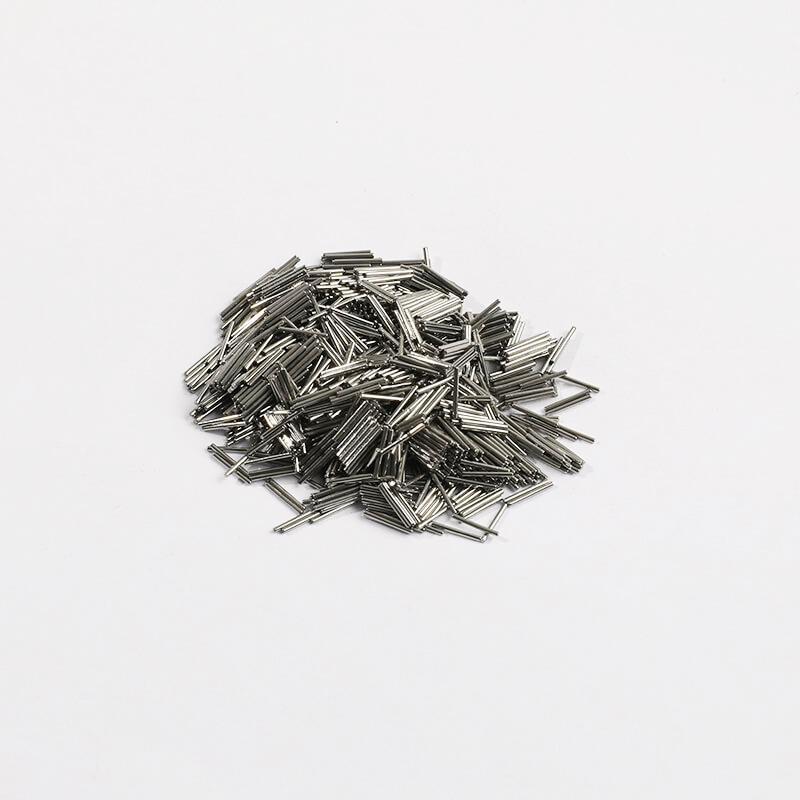
| Magnetic finishing pins and fine magnetic media | Small precise items such as spools, orifice plates, small valve parts and fine slot arrays where tumbling media cannot reach the feature | Limited working envelope, pins lodge in the same fine features they are chosen to reach, and the surface signature differs from tumbling |
Rotary barrel finishing is the gentle end of the range. Parts tumble in a closed drum, usually with plastic or light ceramic media and a generous compound flow, so direct impact is limited and small fragile components such as spools, pins, bushings and screw-machine parts survive. Cycles are long and the drum hides the work while it runs. Magnetic finishing works differently: a small charge of pin-shaped or fine media is driven by a moving field into narrow gaps, small bores and fine internal radii that tumbling media cannot enter, which suits precise items such as orifice plates, small valve spools and fine slot arrays. Its working envelope is small, the pins are a lodging risk in the features they are chosen to reach, and the surface signature differs from tumbling, so a roughness value from one route does not transfer to the other.
| Machine route | Where it fits | What it will not do |
|---|---|---|
| Dry polishing machine and dryer | Removing residual moisture after a wet cycle and reducing water spotting on aluminium and stainless surfaces with pockets and threads | A finishing step only; a dry part can still carry compound film, fines and media dust, so it is not a cleanliness release |
| Centrifugal barrel finishing machine | Small precise parts and short cycles with high contact pressure, such as spools, small inserts and compact machined components | Rounds edges and can distort thin unsupported sections quickly; results are sensitive to charge weight, speed and stop time |
| Magnetic finishing machine | Fine deburring and light refinement of small precise features such as small bores, narrow slots and fine internal radii | Small working envelope that excludes housings and long parts, with pin media that can lodge in the fine features it reaches |
| Grinding finishing machine | Taking off a heavy machining burr, dross or a defined stock layer before a refinement pass on robust steel and stainless work | High removal energy cuts functional edges fast and demands a tighter assessment of what may be removed and how much |
Contamination failures are quiet and are often attributed to the wrong operation. Aluminium fines left in a machine, a charge or a sump transfer onto stainless parts as a grey smear in the next batch. Iron from steel media, from a machine that has held carbon steel or from a tool used on both transfers to stainless and shows as pinpoint rust spots that appear hours or days later. Hard or high-chloride rinse water and slow drying leave mineral rings and haze on aluminium. A compound that is too aggressive darkens aluminium or attacks a freshly cut edge. The controls are procedural: segregate or dedicate media by material family, define and record the changeover, control rinse water and drying, and inspect after a defined dwell time rather than immediately. Left unchecked, these defects surface after the parts have moved on.
| Failure mode | Likely cause | How to catch it |
|---|---|---|
| Thin plate, cover or housing distorted, bowed or dimensionally drifted after the cycle | Tumbling load on an unsupported thin section, part-on-part contact, or heat and pressure from a high-energy route | Measure flatness, wall thickness and critical dimensions at the same marked points as the pre-process baseline, on a surface plate or CMM |
| Threads rounded, galled or opened out by edge finishing | Media working the thread crest during a long or high-energy cycle, with no plugging or masking on the hole | Run go and no-go thread gauges on every sampled hole, inspect the crest at magnification, and confirm that plugs or masks were fitted and removed |
| A ceramic, plastic or steel medium lodged in a tapped hole, keyway, cross-drilling or seal groove | Media size class too close to the opening, a charge that has worn or fractured into smaller pieces, or a retention feature that was never mapped | Count the charge in and out where practical, pin or thread gauge every hole, borescope the smallest passages at an agreed angle, and rinse through a filter for a visual check |
| Water spotting, mineral rings or haze left after wet processing and drying | Hard or high-chloride rinse water, slow or uneven drying, or parts stacked wet so moisture is trapped in pockets and threads | Inspect dried parts under angled light for rings and haze, check the rinse water source and the drying method, and confirm that pockets and tapped holes drain before packing |
Chennai is the industrial core of Tamil Nadu, a state that houses 110 industrial parks and estates, 45 Domestic Tariff Zones and over 42 operational Special Economic Zones, and is served by 4 international airports and 2 domestic airports (s1). The metropolitan belt is an automotive cluster: Tamil Nadu accounts for 35% of India's auto component production with more than 1,500 auto component factories, and Chennai appears as a named auto cluster alongside Thoothukudi, Madurai and Coimbatore (s2). Chennai is also a shipbuilding and marine hub, with Chennai, Thoothukudi and Cuddalore fostering shipyard clusters, dry docks and marine fabrication facilities anchored by Chennai Port and Kamarajar Port (s3). Heavy engineering value chains spanning pumps, valves, motors, fasteners and industrial machinery are concentrated in the Chennai-Tiruvallur cluster (s4), and life sciences manufacturing is anchored in a Chennai cluster including TICEL Biotech Park and Bioville park (s5).
The nearest part of that base to this brief is marine: Key hubs such as Chennai, Thoothukudi and Cuddalore are fostering shipyard clusters, dry docks and marine fabrication facilities, with Chennai Port and Kamarajar Port inside the Chennai cluster (s3).
Chennai's automotive and auto-component base runs high-volume machined and cast parts whose burrs, edge condition and surface roughness are inspected by OEM and tier-one customers, which makes deburring and consistent finish a throughput and quality problem rather than a craft operation. The shipbuilding, pumps/valves and biotech equipment segments add stainless and marine-alloy work where passivation, contamination control and cleanliness of product-contact surfaces matter as much as the cosmetic finish.
A Chennai buyer should settle the process window against the customer's drawing - required roughness and burr tolerance, alloy and heat-treatment condition, and whether the part is safety- or appearance-critical - because in an automotive or medical supply chain the finishing step has to hold a documented, repeatable result rather than merely look acceptable.
Freight context: Chennai Port, Kamarajar Port (Ennore), Chennai International Airport, Sriperumbudur / Oragadam industrial corridor. Chennai Port and Kamarajar Port at Ennore are the two port gateways inside the Chennai shipbuilding and industrial cluster, and the state's network includes 4 international airports and 2 domestic airports (s1, s3). Machines and sample parts therefore move by sea through Chennai/Ennore or by air through Chennai International Airport, with the automotive corridor at Sriperumbudur and Oragadam as the inland destination.
India classifies every imported item in the ITC(HS) schedule, a compilation of codes for all merchandise for export and import whose Schedule I lays down the import policy regime for each item, maintained at 8-digit level under the First Schedule of the Customs Tariff Act, 1975 and aligned at 6 digits with the WCO Harmonized System (c1, c3). Importability is judged by the policy in force on the date of import, and when a policy moves from free to restricted, goods already committed through an irrevocable commercial letter of credit opened before the change can still be imported up to the balance quantity, value and period in that ICLC (c4). Preferential customs treatment is available only through the preferential trade agreements, free trade agreements, CECAs and CEPAs that India notifies and that are in operation (c5), so Chinese-origin industrial machinery is assessed at the applicable rate of the customs tariff rather than under any India-China preferential rate; India's commerce leadership has separately pointed to exports under free trade pacts growing faster than imports (c12). For capital goods specifically, DGFT operates the Export Promotion Capital Goods (EPCG) scheme, whose stated objective is to facilitate import of capital goods for producing quality goods and services (c7), which Indian firms use when they want duty relief on imported plant against an export obligation.
The Bureau of Indian Standards (BIS) describes itself as the National Standards Body of India and runs the country's product certification system, including products under compulsory certification, a foreign manufacturers certification scheme with nomination of an authorised Indian representative, and a registration scheme for manufacturers (c8, c9). Indian Standards (IS) issued by BIS are the reference texts Indian buyers write surface, coating and material specifications against, and BIS-recognised or BIS-empanelled laboratories are the test facilities used for certification work. Where a machine, media or compound falls under a BIS quality-control order, the licence or registration duty attaches to the product placed on the Indian market, so an overseas supplier should settle the applicable IS standard and the certification route before quoting.
SurfacePolish supplies from Xiamen, China. The buyer's own destination rules, conformity marking, tariff classification and documentation responsibilities stay with the buyer; confirm them against the authorities named above before ordering.
Ask for a record that says what was actually done, rather than one that asserts a result. A useful batch record lists the part numbers and quantities in the lot, the machine used, the media type and size class, the charge mass and its age since the last screen or top-up, the compound product and dose, the rinse water source, the cycle time and any interruption, plus the inspection results and the lot disposition. Request the media and compound data sheets offered by the supplier. Where aluminium and stainless run in the same shop, ask for the changeover note covering media purge, machine cleaning and compound replacement. This is process documentation from a finishing operation, not a certificate of compliance with any standard, and it supports the buyer's own traceability.
Change one variable at a time. If the question is media shape, hold the machine, load, compound, cycle time and part mix constant and change only the medium. If the question is cycle time, hold the charge and settings constant and stop at two or three defined intervals. Use adjacent coupons or parts from the same production lot so the only difference is the variable under test. Label the pieces before they run and have the returned parts judged in one session under the same light, rather than one at a time as they arrive. Where several people judge appearance, ask each to rank the parts before discussion so the strongest opinion does not set the answer. Running two changes at once produces a result that cannot be attributed to either.
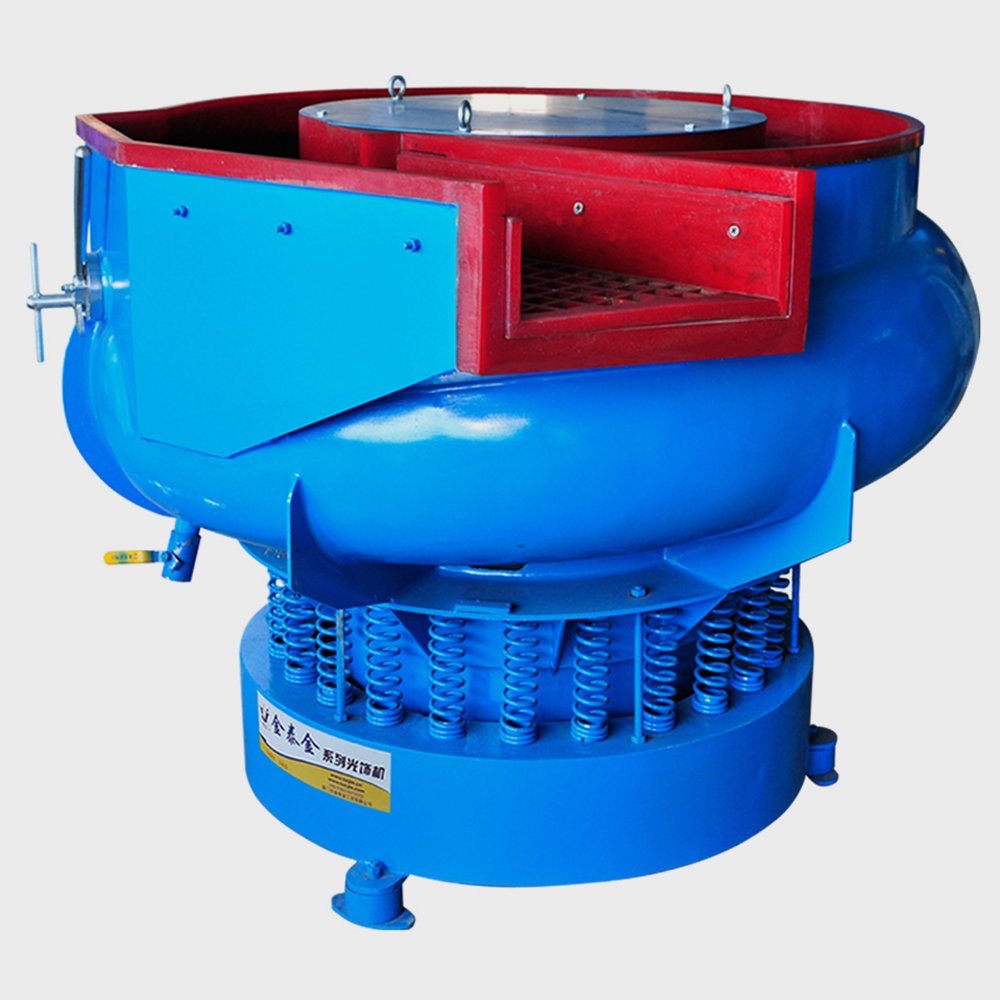
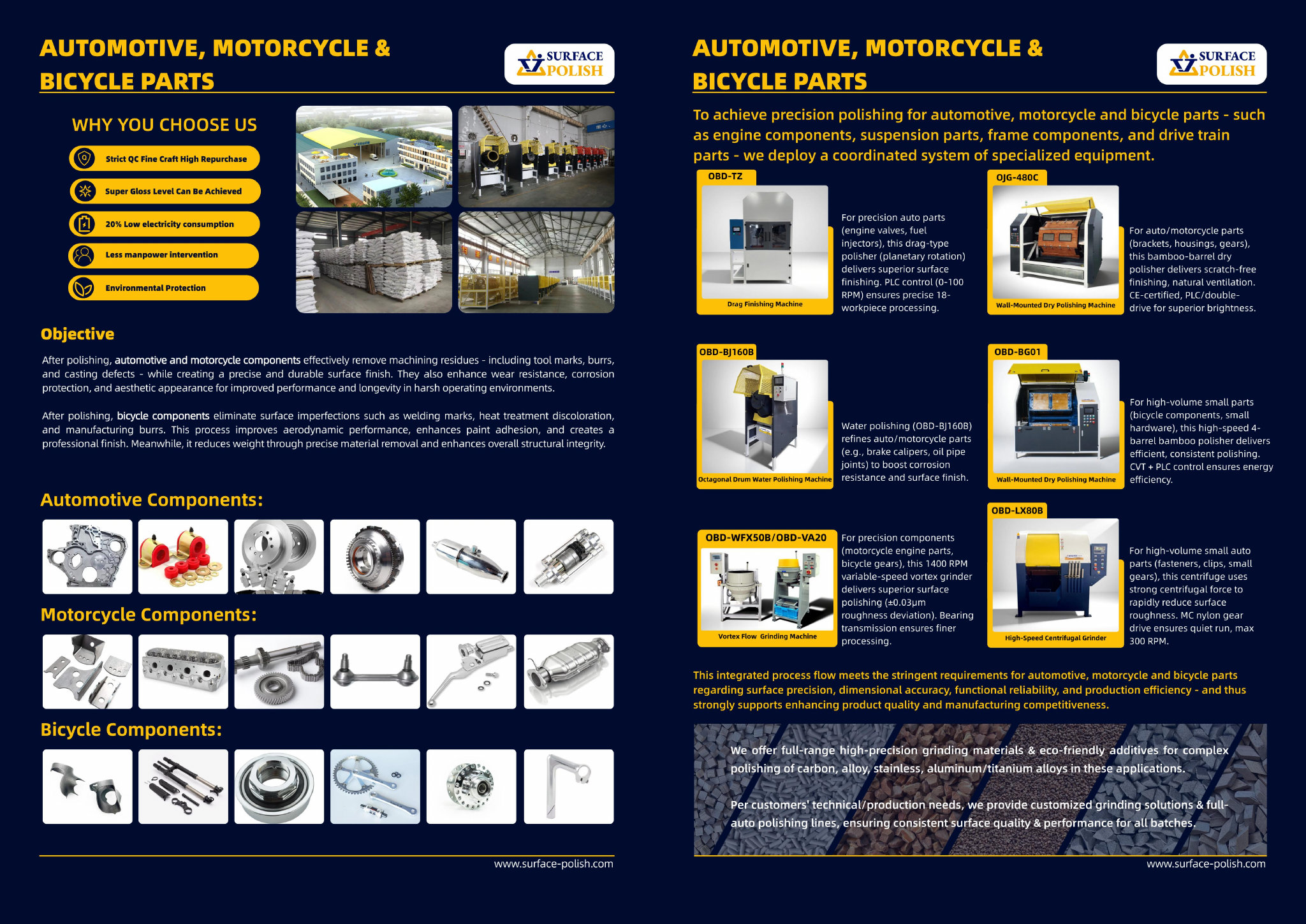
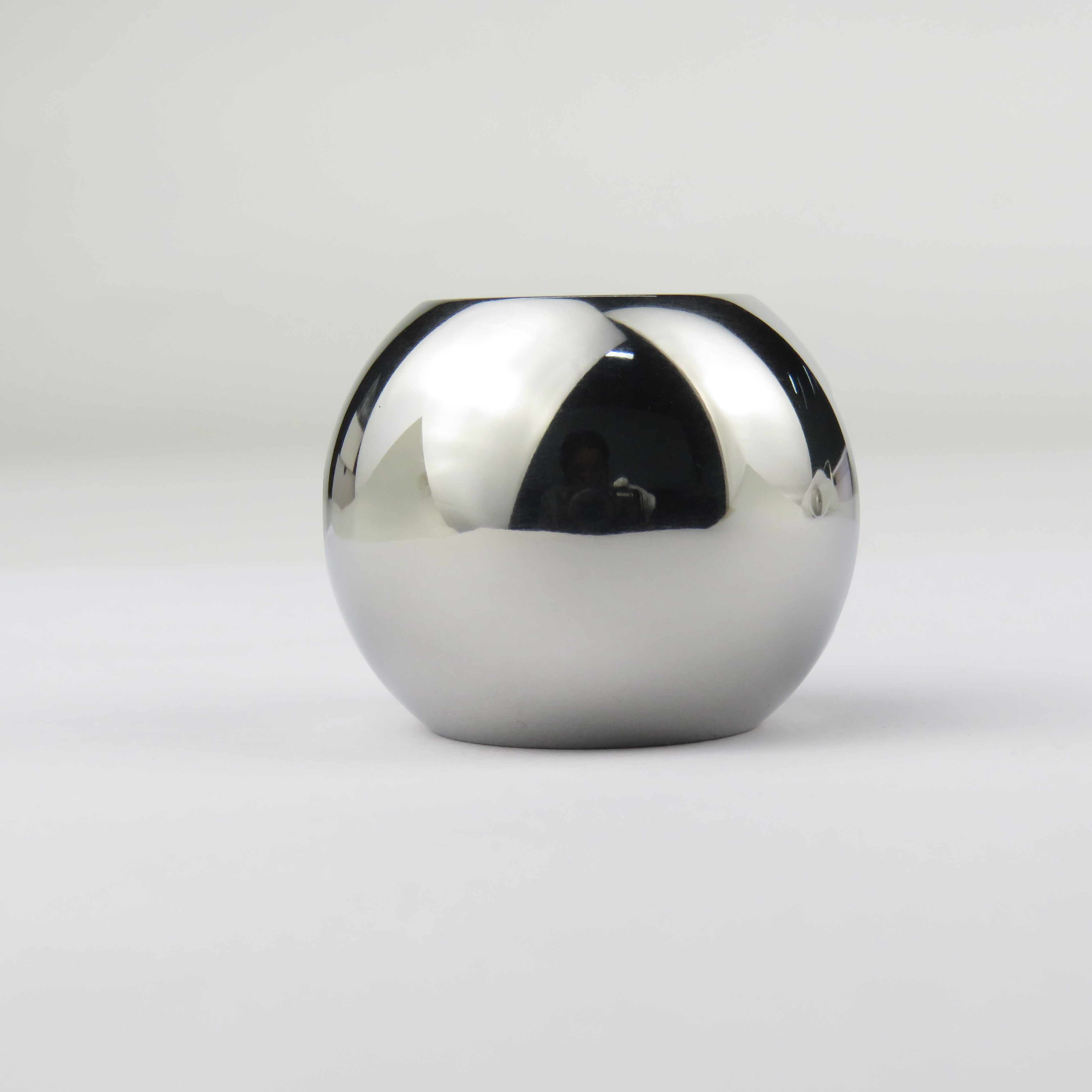
Change one variable at a time. Hold the machine, load, compound, cycle time and part mix constant and change only the medium. Use parts from the same production lot so the only difference is the variable under test. Label the pieces before they run and have the returned parts judged in one session, under the same light and at the same marked measurement points, rather than one at a time. Where several people judge appearance, ask each to rank the pieces before discussion. Where a cut stage is followed by a refinement stage, score the stages separately, because a good final result can hide an unremoved burr or an over-coarse first stage.
No. SurfacePolish does not supply or carry out electropolishing. Where an electrochemical treatment is part of a specification, it appears here only as a comparison point and as a reason to examine what a mechanical route can achieve on the same part, and the mechanical route can be discussed in terms of machine, media and compound options. A mechanical finish should not be presented as equivalent to an electropolished surface, and it does not reproduce what that process does. Where an electropolished finish is mandatory in your specification, that requirement stays with your own supply chain and your own engineering decision.
A bore cannot be protected by the cycle alone; it is protected by what is decided before the cycle. Masking or plugging the bore, keeping the part out of contact with heavy neighbours, choosing a lighter route and shortening the cycle all reduce the load the bore sees, but none of them guarantees a dimension. That is why the bore must be measured before and after at the same points, with a bore gauge or CMM, and compared with the drawing limit. SurfacePolish does not promise a tolerance or a result; the trial reports what was observed on the parts tested, and the dimensional acceptance decision stays with your own metrology and quality functions.
Use Chennai, India as the destination on the enquiry and state whether the deliverable is equipment, media and compound, a representative sample review or a line concept. A destination does not imply local stock, a local service point or a local delivery time.
A Chennai buyer's surface, edge and cleanliness specifications are written against Indian Standards (IS) published by the Bureau of Indian Standards, and automotive and life-sciences customers normally layer their own drawing tolerances and cleanliness requirements on top of the IS reference (s1). Where a product falls under a BIS quality-control order, the licence or registration requirement attaches to the item placed on the Indian market.
Sources were retrieved on 2026-09-29 and describe the local industrial and trade context only. They do not evidence any SurfacePolish project, shipment, installation or service in Chennai.
The buyer needs a consistent light edge break across the batch without rounding the pivot hole or blunting the serrations.
Send the material, dimensions, approximate weight, batch quantity, the incoming condition and photographs of the difficult features. Mark which features must not be contacted by media and state how the result will be inspected. This form carries source reference PSEO-0940; quote it if you prefer an additional manual reference.
Open the SurfacePolish enquiry form Email a prepared enquiry
No price, lead time, certification or result is promised here. Confirm whether a sample trial is available for the specific part and what the trial can and cannot show.
Page PSEO-0940 · revised 2026-09-29 · cross-border equipment, media and scoped sample review. City context is sourced and cited above.
Use this local checker to identify missing part and inspection information. It prepares a technical-review brief; it does not approve a machine, process recipe or production result.
Complete the part details to prepare a review brief.
Email : info@surface-polish.com


 IPv6 network supported


 +86-592-2381506