A linear motion component supplier in Delhi, India in robotics and automation has a hardened steel carriage block whose ground ways and mounting face must be left as they are while its edges are broken. SurfacePolish supplies finishing machines, media and compounds across borders and offers a free sample trial: representative blocks travel to Xiamen and return with observations plus a proposed media, compound and cycle direction for the buyer's own evaluation. This brief is written for a buyer in Delhi working on robotics and automation; it describes equipment, media and a scoped sample review, not a local polishing service.
What does the finishing step actually have to deliver before the next operation, whether that is assembly, anodising, painting or a functional test, and who defines that requirement?
Which surfaces on the part are functional, such as bearing bores, dowel holes, seal lands, ground mounting faces and threads, and which are only cosmetic?
Which alloys and tempers run through the shop, and how will media, machines and compounds be purged between aluminium, stainless and steel work?
Begin with a marked-up drawing rather than a part family name. On a robot joint housing, an actuator body or a gripper base plate, the surfaces that carry function form a short and severe list: bearing bores and their shoulders, dowel and pin holes that set position, seal grooves, ground mounting lands, clamp faces and threaded holes. Every one of those needs a decision before a medium is chosen, whether it is masked, plugged, finished to a stated limit or deliberately left as machined. The cosmetic list is usually longer, covering external webs, covers, ribs and visible faces that only have to look even. Separating the two lists prevents the most common error in this work, which is selecting a charge by part size and then discovering that it has been working a bearing seat that had to stay round.
Steel media produces the brightest appearance of the common charges and the highest contact pressure, and it brings a contamination question with it. On aluminium it can embed iron-bearing fragments that show up later as rust spots or as particles in a wiped sample, so a shop that runs both materials needs a changeover discipline, dedicated charges or a different route for the aluminium work. Separation at unload matters as much as the choice: steel media is dense, retains in blind holes and slots, and can only be recovered magnetically if the equipment and the procedure are set up for it. The compound has to keep the charge clean and inhibit corrosion on the parts. A bright result from a steel charge is an observation about a surface, not evidence about cleanliness or fitness for a downstream process.
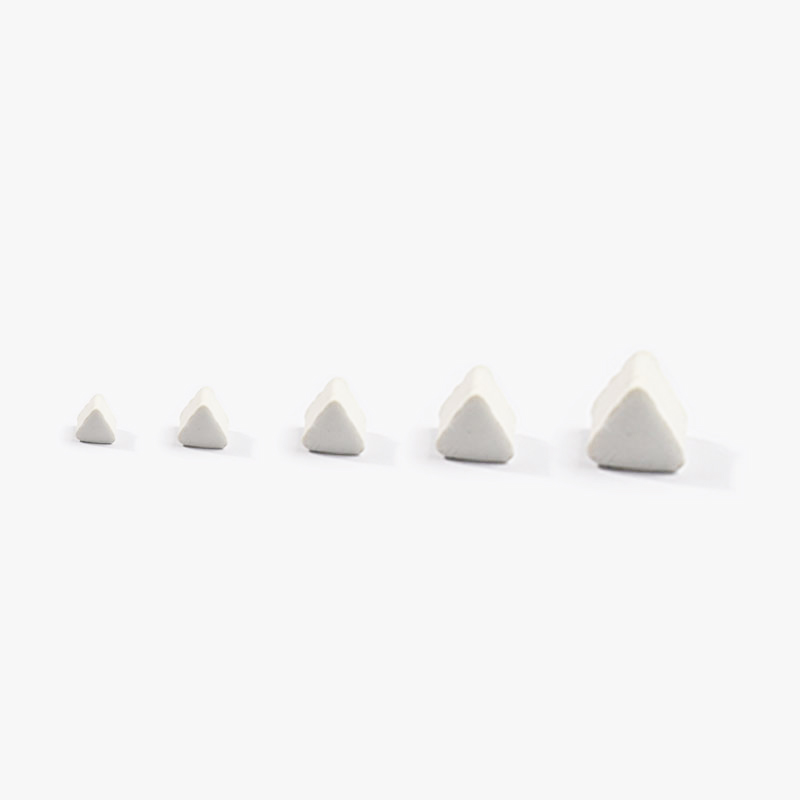
| Media | Best fit | Watch out for |
|---|---|---|
| Dry media such as walnut shell and corn cob | Drying assistance and light surface polish after a wet cycle, particularly on parts with pockets and threads that must not stay wet | Does not deburr or refine metal significantly, generates dust, and must not be treated as a cleanliness step |
| Aluminium oxide grinding media in a dense ceramic bond | Heavier stock removal or a more consistent cut on robust steel and stainless parts with thick edges and a defined layer to remove | High removal energy rounds functional edges quickly and is a poor match for thin aluminium plates, cast housings and bore lips |
| Plastic triangles, cones and pyramids in a soft to medium grade | Deburring aluminium housings, gripper plates and other soft alloy parts where surface marking and edge rounding must be kept to a minimum | Slow cut rate, media deforms and wears, and a worn charge behaves noticeably differently from a fresh one |
| Steel media, including balls and shaped pins | Bright finishing and edge blending on stainless automation components where appearance and a burnished surface matter | Transfers iron to aluminium and carbon steel, needs a corrosion-inhibiting compound, and must be separated magnetically or by screen at unload |
Inside any machine, the way parts are carried decides whether the finish is even and the geometry survives. Parts left loose together nibble each other along contact lines and produce bright impact marks on visible faces. Cradles that follow a casting, compartments, dividers and clip-on carriers present the same face to the media on every part and protect machined lands. Load ratio matters as much: too many parts in the charge reduces circulation and leaves shielded pockets unworked, while too few allows parts to be thrown against the chamber wall. Build the arrangement around the most delicate and the heaviest part in the family rather than an average one. Where a buyer plans automated loading or transfer between operations, the fixture interface, the orientation and the pick points belong to the buyer's own engineering scope and are defined and verified on that side.
| Machine route | Where it fits | What it will not do |
|---|---|---|
| Centrifugal barrel finishing machine | Small precise parts and short cycles with high contact pressure, such as spools, small inserts and compact machined components | Rounds edges and can distort thin unsupported sections quickly; results are sensitive to charge weight, speed and stop time |
| Disc finishing machine | Fast, high-energy edge breaking and surface refinement on small robust parts and uniform batches of gripper jaws, blocks and fittings | High impingement and edge-loss risk on thin, soft or aluminium parts, and the geometry must suit the disc working gap |
| Vibratory finishing machine, bowl type | General deburring and refinement of machined housings, plates and brackets that fit and can tumble without racking, with easy mid-cycle inspection | Continuous part-on-part contact and no access to deep internal passages; thin plates and finished mounting faces need separation |
| Dry polishing machine and dryer | Removing residual moisture after a wet cycle and reducing water spotting on aluminium and stainless surfaces with pockets and threads | A finishing step only; a dry part can still carry compound film, fines and media dust, so it is not a cleanliness release |
Contamination failures are quiet and are often attributed to the wrong operation. Aluminium fines left in a machine, a charge or a sump transfer onto stainless parts as a grey smear in the next batch. Iron from steel media, from a machine that has held carbon steel or from a tool used on both transfers to stainless and shows as pinpoint rust spots that appear hours or days later. Hard or high-chloride rinse water and slow drying leave mineral rings and haze on aluminium. A compound that is too aggressive darkens aluminium or attacks a freshly cut edge. The controls are procedural: segregate or dedicate media by material family, define and record the changeover, control rinse water and drying, and inspect after a defined dwell time rather than immediately. Left unchecked, these defects surface after the parts have moved on.
| Failure mode | Likely cause | How to catch it |
|---|---|---|
| Colour change or darkening on an aluminium face after the cycle | Compound chemistry unsuitable for aluminium, no effective corrosion inhibitor, or a delay between finishing and drying | Compare the finished face with an unprocessed coupon of the same alloy under the agreed light, and review the compound product, dose and rinse sequence for the lot |
| Rust spotting on stainless parts appearing hours or days after finishing | Ferrous transfer from steel media, a machine or tooling that has held carbon steel, or insufficient corrosion inhibition and drying | Inspect after a defined dwell time rather than immediately, look for pinpoint spots on and near edges, and trace the media and machine history for the lot |
| Thin plate, cover or housing distorted, bowed or dimensionally drifted after the cycle | Tumbling load on an unsupported thin section, part-on-part contact, or heat and pressure from a high-energy route | Measure flatness, wall thickness and critical dimensions at the same marked points as the pre-process baseline, on a surface plate or CMM |
| Compound film, smut or tenacious residue left on a face or in a bore | A film-forming or silicate-bearing compound, insufficient rinse volume, or drying a part before it is genuinely clean | Magnify the suspect surface, wipe a defined area with solvent against a clean reference, and confirm with the buyer's own cleanliness method |
Delhi is India's capital territory and the fourth largest Indian state or UT by FDI inflows, with 10,64,499 MSMEs registered in Delhi since inception, of which 276,746 are women-owned (s1). Industrial infrastructure is delivered by the Delhi State Industrial and Infrastructure Development Corporation Ltd. (DSIIDC), a government undertaking established in February 1971 that has developed industrial areas and sheds including Bawana Industrial Area and Narela Industrial Complex, and is building a Knowledge Based Industrial Park at Baprola and a built-up factory complex at Rani Khera (s3). The territory's freight and connectivity base includes Indira Gandhi International Airport, five major railway stations handling 496 passenger and 210 freight trains a day, and the Delhi-Mumbai Expressway running through six states (s1).
The nearest part of that base to this brief is medical: Delhi has 38 multispecialty and superspecialty hospitals, 556 primary health centres, 1,658 dispensaries and 46 polyclinics as of FY 2022-23, with institutions including AIIMS and Sir Ganga Ram Hospital (s1).
Delhi's industrial estates concentrate small and medium engineering units producing sheet-metal enclosures, machined components, medical and scientific hardware, and electrical assemblies, where burrs on punched or machined edges and cleanliness before coating or assembly are recurring quality issues. Additive, laser-cut and sheet-metal work in the NCR typically needs edge radiusing and a uniform finish before powder coating or anodising, and medical or instrument parts carry a cleanliness expectation on top of the finish.
A Delhi buyer should settle whether the parts need burr removal only, a specified surface roughness, or a cleanliness level suitable for a medical or instrument application, because the three require different process media and validation evidence - and should confirm whether the machine or consumable itself carries a BIS obligation before comparing landed cost.
Freight context: Indira Gandhi International Airport, Delhi NCR major railway stations (freight and passenger), Delhi-Mumbai Expressway, ICD Tughlakabad (inland container depot). Delhi is a landlocked territory whose international gateway is Indira Gandhi International Airport, supported by five major railway stations handling 210 freight trains a day and the Delhi-Mumbai Expressway (s1). Air-freighted equipment or sample parts clear through the airport's cargo channel, while sea-borne consignments are normally discharged at a west-coast port and railed or trucked inland to an NCR inland container depot.
The Bureau of Indian Standards (BIS) describes itself as the National Standards Body of India and runs the country's product certification system, including products under compulsory certification, a foreign manufacturers certification scheme with nomination of an authorised Indian representative, and a registration scheme for manufacturers (c8, c9). Indian Standards (IS) issued by BIS are the reference texts Indian buyers write surface, coating and material specifications against, and BIS-recognised or BIS-empanelled laboratories are the test facilities used for certification work. Where a machine, media or compound falls under a BIS quality-control order, the licence or registration duty attaches to the product placed on the Indian market, so an overseas supplier should settle the applicable IS standard and the certification route before quoting.
An Importer-Exporter Code (IEC) issued by DGFT is a key business identification number which is mandatory for exports or imports, and since the introduction of GST the IEC number is the same as the PAN of the firm (c6). The post-incorporation clearance list published by Invest India includes the IEC, a Customs- Special Valuation Branch reference and the grant of a Bureau of Indian Standards (BIS) licence, and it names the Central Board of Excise and Customs among the agencies in the framework (c10). The Foreign Trade Policy fixes the mandatory import documents as a bill of lading / airway bill / lorry receipt / railway receipt, a commercial invoice cum packing list and a bill of entry, with additional documents or NOCs possible for goods subject to product-specific compliance (c3); it also states that domestic laws, rules, orders, technical specifications and environmental, safety and health norms applicable to domestically produced goods apply mutatis mutandis to imports unless specifically exempted (c2), which is the basis on which a BIS quality-control order can bite on imported machinery. A landed-cost plan therefore needs the correct ITC(HS) classification and the basic customs duty and IGST that follow from it, plus the IEC, the bill of entry documentation and any BIS licence or registration obligation, and a related-party import can additionally be pulled into special customs valuation.
SurfacePolish supplies from Xiamen, China. The buyer's own destination rules, conformity marking, tariff classification and documentation responsibilities stay with the buyer; confirm them against the authorities named above before ordering.
Some failures never show on a surface. Measure the features that can move: bore diameters and roundness with a bore gauge or CMM, dowel hole position, flatness of a mounting face on a surface plate or CMM, wall thickness on a thin housing, and thread condition with go and no-go gauges, since edge finishing can open or gall a thread crest. Where the part carries a pneumatic or hydraulic passage, a flow or pressure check against a reference part catches a lodged medium or a burr that visual inspection misses. Where a seal or gasket seats, the buyer's own leak or assembly check is the only test that sees a rounded land or a residue film. These checks belong to the buyer's quality function against the buyer's own limits; a finishing report is supporting evidence rather than a release.
Change one variable at a time. If the question is media shape, hold the machine, load, compound, cycle time and part mix constant and change only the medium. If the question is cycle time, hold the charge and settings constant and stop at two or three defined intervals. Use adjacent coupons or parts from the same production lot so the only difference is the variable under test. Label the pieces before they run and have the returned parts judged in one session under the same light, rather than one at a time as they arrive. Where several people judge appearance, ask each to rank the parts before discussion so the strongest opinion does not set the answer. Running two changes at once produces a result that cannot be attributed to either.
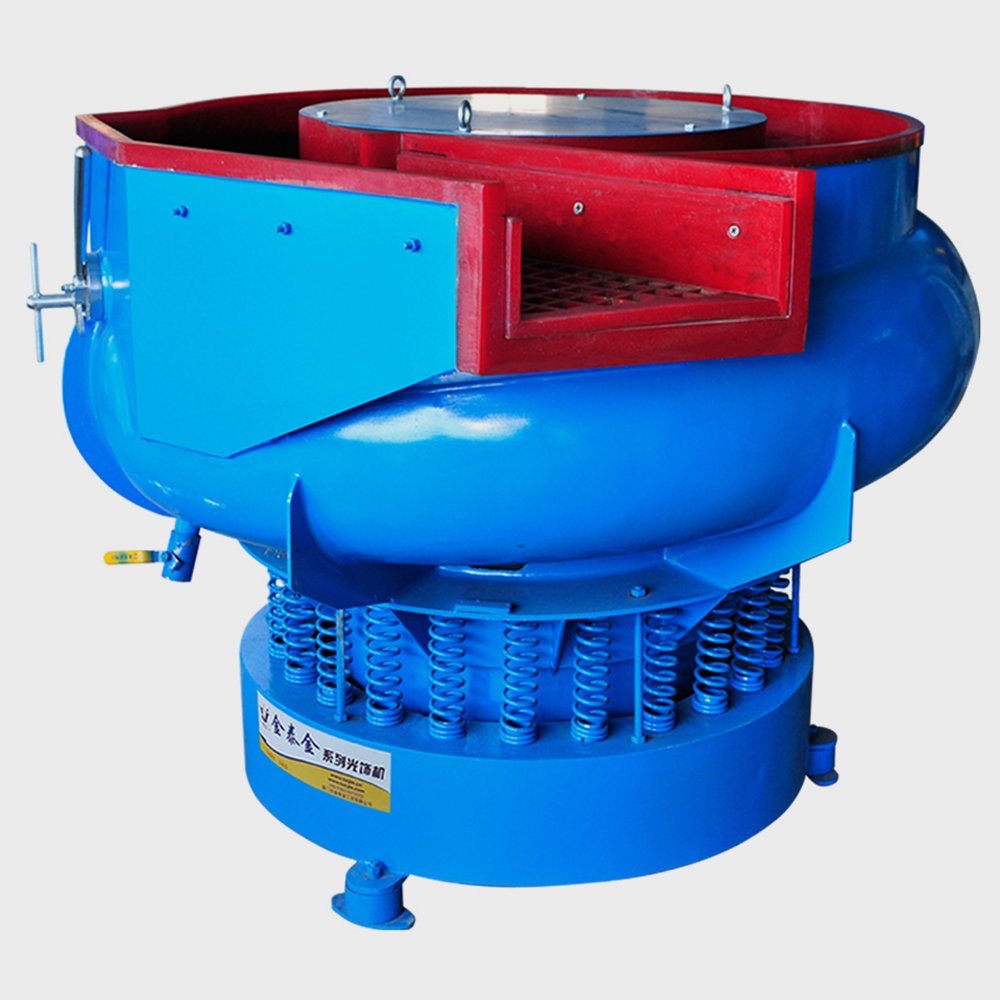

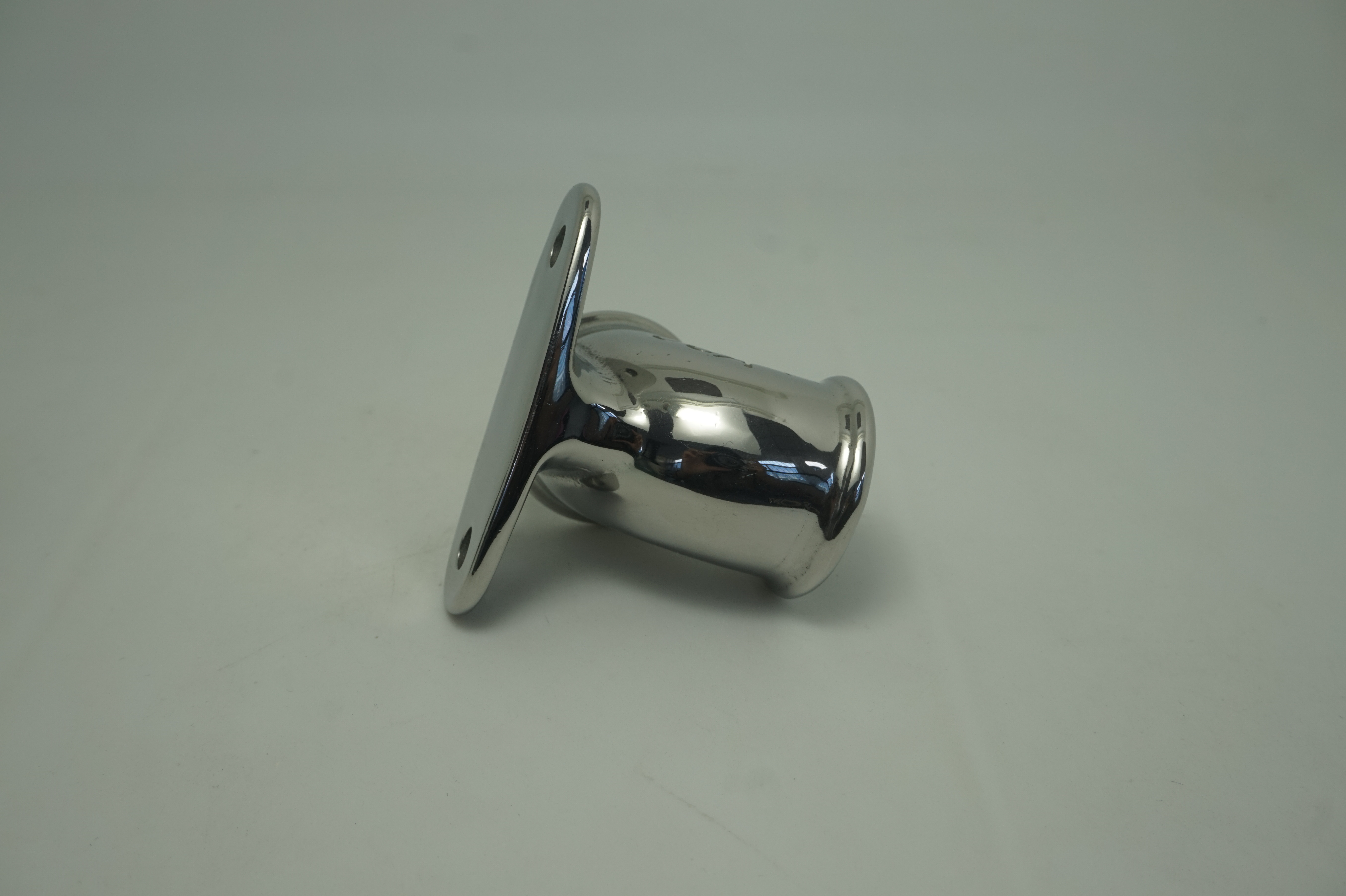
Cycle time depends on the starting burr, the alloy and temper, the media size class, the compound and how much edge refinement is wanted, so no figure can be quoted in advance. A part that needs only a light edge break runs very differently from one that must shed a milled burr or a recast layer before refinement, and a two-stage route has to count both stages. The useful approach is to test one or two defined stop points on representative parts and record what changed at each. SurfacePolish does not promise cycle times or capacity; treat any timing on returned parts as an observation from that run rather than a production commitment.
They can, but not without a changeover discipline, because the failure is contamination rather than damage. Aluminium fines retained in media, compound or a machine sump transfer onto stainless as a dull grey smear, and iron from steel media or carbon steel work shows up on stainless as rust spotting that appears hours or days later. Practical controls are dedicated or segregated media charges, a purging routine for the machine and sump, a compound change where needed, and a record of when the changeover happened. Where the volumes justify it, separate machines or separate charges are simpler than a cleaning procedure. Only you can decide which arrangement is acceptable for your own contamination control.
Ask for a record that identifies what was done rather than one that asserts a result. A useful record lists the part numbers and quantities in the lot, the machine used, the media type and size class, the charge mass and its age since the last screen or top-up, the compound and dose, the rinse water source, the cycle time, any interruption, the inspection results and the lot disposition. Request the media and compound data sheets. Where aluminium and stainless are processed on the same site, ask for the changeover note covering media purge, machine cleaning and compound replacement. This is finishing process documentation, not a certificate of compliance.
Use Delhi, India as the destination on the enquiry and state whether the deliverable is equipment, media and compound, a representative sample review or a line concept. A destination does not imply local stock, a local service point or a local delivery time.
Delhi buyers specify finish, cleanliness and material conformity against Indian Standards (IS) published by the Bureau of Indian Standards, the National Standards Body of India (s5). For medical and instrument work the buyer will usually add its own cleanliness and validation requirements on top of the IS reference, and where a product falls under a BIS quality-control order the licence or registration applies to the item placed on the Indian market (s5).
Sources were retrieved on 2026-09-29 and describe the local industrial and trade context only. They do not evidence any SurfacePolish project, shipment, installation or service in Delhi.
The buyer needs the milled and tapped edges broken lightly without removing material from the ground ways or softening the mounting face condition.
Send the material, dimensions, approximate weight, batch quantity, the incoming condition and photographs of the difficult features. Mark which features must not be contacted by media and state how the result will be inspected. This form carries source reference PSEO-0920; quote it if you prefer an additional manual reference.
Open the SurfacePolish enquiry form Email a prepared enquiry
No price, lead time, certification or result is promised here. Confirm whether a sample trial is available for the specific part and what the trial can and cannot show.
Page PSEO-0920 · revised 2026-09-29 · cross-border equipment, media and scoped sample review. City context is sourced and cited above.
Use this local checker to identify missing part and inspection information. It prepares a technical-review brief; it does not approve a machine, process recipe or production result.
Complete the part details to prepare a review brief.
Email : info@surface-polish.com


 IPv6 network supported


 +86-592-2381506