A pneumatics maker in Leipzig, Germany working in robotics and automation has a stainless actuator body whose bore lip and port threads must not be rounded or galled by edge finishing. SurfacePolish supplies finishing machines, media and compounds across borders and runs a free sample trial: the part goes to Xiamen, is processed under recorded settings, and returns with observations and a proposed media, compound and cycle direction for the buyer to verify. This brief is written for a buyer in Leipzig working on robotics and automation; it describes equipment, media and a scoped sample review, not a local polishing service.
What is the smallest hole, slot, keyway or cross-drilling the charge must not enter or plug, and how will a lodged medium be detected and removed?
How much of the incoming contamination, cutting oil, machining chip and handling damage is expected to be removed by finishing rather than by an earlier operation?
Which surfaces on the part are functional, such as bearing bores, dowel holes, seal lands, ground mounting faces and threads, and which are only cosmetic?
Begin with a marked-up drawing rather than a part family name. On a robot joint housing, an actuator body or a gripper base plate, the surfaces that carry function form a short and severe list: bearing bores and their shoulders, dowel and pin holes that set position, seal grooves, ground mounting lands, clamp faces and threaded holes. Every one of those needs a decision before a medium is chosen, whether it is masked, plugged, finished to a stated limit or deliberately left as machined. The cosmetic list is usually longer, covering external webs, covers, ribs and visible faces that only have to look even. Separating the two lists prevents the most common error in this work, which is selecting a charge by part size and then discovering that it has been working a bearing seat that had to stay round.
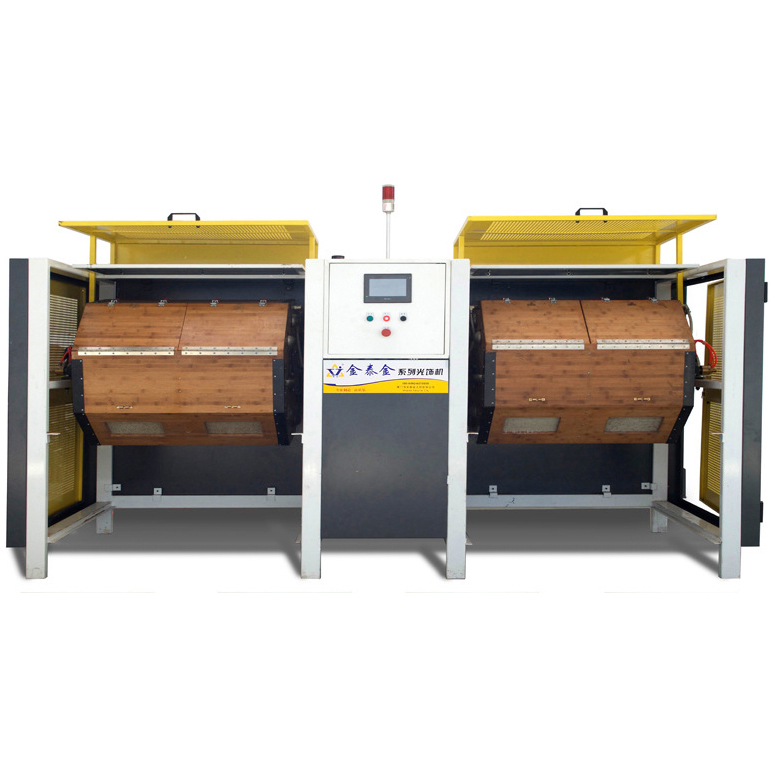
Disc finishing machines and centrifugal barrel machines deliver far more energy per unit of time than a bowl. A disc machine works the gap between rotating discs, which suits batches of small robust parts such as gripper jaws, mounting blocks and machined brackets where a consistent edge break is wanted quickly. Centrifugal barrel finishing multiplies the effective gravity acting on the charge, so cycles shorten and contact pressure rises sharply, which suits small precise parts and can round a thin section or deform a soft aluminium wall within a short over-run. Both routes depend on charge weight, speed, fill level and stop time being held to a record. They are a poor match for thin-walled housings, long beams and any part whose functional edge or bore lip must keep a tight radius.
| Machine route | Where it fits | What it will not do |
|---|---|---|
| Dry polishing machine and dryer | Removing residual moisture after a wet cycle and reducing water spotting on aluminium and stainless surfaces with pockets and threads | A finishing step only; a dry part can still carry compound film, fines and media dust, so it is not a cleanliness release |
| Disc finishing machine | Fast, high-energy edge breaking and surface refinement on small robust parts and uniform batches of gripper jaws, blocks and fittings | High impingement and edge-loss risk on thin, soft or aluminium parts, and the geometry must suit the disc working gap |
| Centrifugal barrel finishing machine | Small precise parts and short cycles with high contact pressure, such as spools, small inserts and compact machined components | Rounds edges and can distort thin unsupported sections quickly; results are sensitive to charge weight, speed and stop time |
| Grinding finishing machine | Taking off a heavy machining burr, dross or a defined stock layer before a refinement pass on robust steel and stainless work | High removal energy cuts functional edges fast and demands a tighter assessment of what may be removed and how much |
Shape decides what the marks look like, often more than the material label does. Spheres and rounded shapes leave overlapping craters, which suits a general deburred or satin appearance but reads as a peened, dimpled surface. Angle-cut triangles, cylinders and cones strike along their axis and leave a linear pattern, which suits visible covers, panels and brackets where a direction is wanted. The mass of the media then sets the cutting power, so a heavy ceramic charge removes a milled burr faster and also reaches edges sooner. On aluminium, a coarse angular charge can fold or smear the surface instead of cutting it cleanly. Choose the shape against the appearance the part must carry and the edges that must keep their radius, then keep the shape class stable, because a charge that has worn into rounded forms behaves differently from a fresh one.
| Media | Best fit | Watch out for |
|---|---|---|
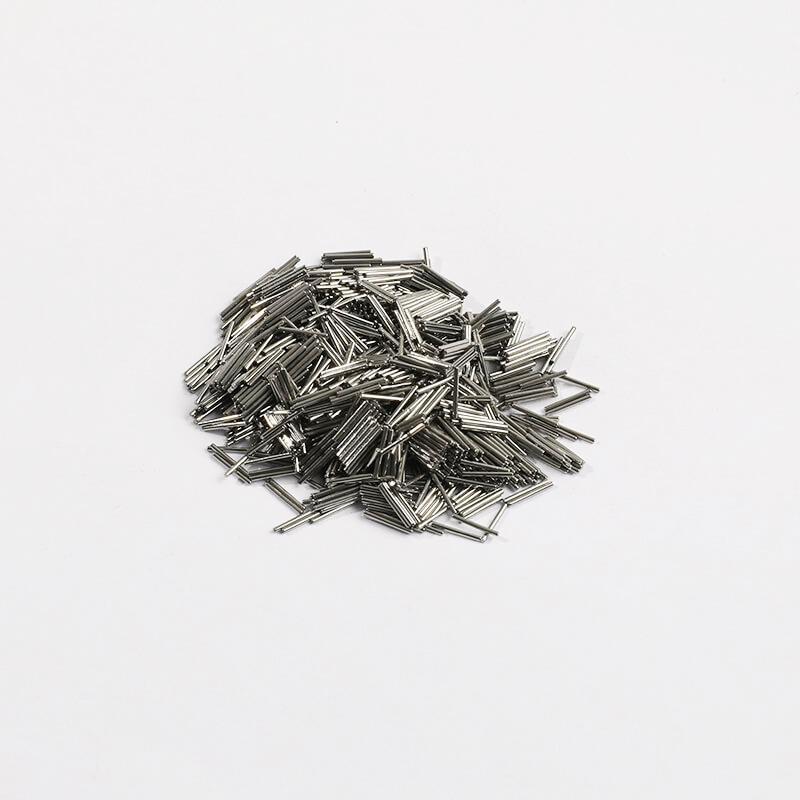
| Magnetic finishing pins and fine magnetic media | Small precise items such as spools, orifice plates, small valve parts and fine slot arrays where tumbling media cannot reach the feature | Limited working envelope, pins lodge in the same fine features they are chosen to reach, and the surface signature differs from tumbling |
| Heavy-cut ceramic, angle-cut triangles in a coarse size class | Removing a substantial milled or turned burr from open external edges and pockets on steel and stainless automation parts before a refinement stage | Cuts functional edges and corners aggressively, leaves a coarse surface on aluminium, and lodges in slots whose width approaches the media section |
| Dry media such as walnut shell and corn cob | Drying assistance and light surface polish after a wet cycle, particularly on parts with pockets and threads that must not stay wet | Does not deburr or refine metal significantly, generates dust, and must not be treated as a cleanliness step |
| Fine ceramic or porcelain shapes in a small size class | Edge blending and surface refinement after a cutting stage, and reaching tighter external geometry on machined housings and brackets | Small sizes enter and retain in tapped holes and fine slots, and media wear shrinks the charge so the finish drifts over its life |
Edge rounding beyond limit is the failure that most often turns a finished automation part into scrap, because the features that round first are the ones that set position. A bearing bore lip, a dowel hole edge, a seal groove corner or the edge of a ground mounting land can lose a fraction of its geometry under a high-energy charge and still look uniform and polished. Coarse or dense media, an over-long cycle and a heavy load ratio all accelerate it, and aluminium rounds faster than stainless under the same conditions. Because the damage is invisible to a casual look, checking has to be deliberate: measure the feature before and after with an optical comparator, a radius gauge or a moulded replica, and compare the result with the limit on the drawing. Masking, a shielding fixture or a gentler medium are the usual mitigations to test.
| Failure mode | Likely cause | How to catch it |
|---|---|---|
| Threads rounded, galled or opened out by edge finishing | Media working the thread crest during a long or high-energy cycle, with no plugging or masking on the hole | Run go and no-go thread gauges on every sampled hole, inspect the crest at magnification, and confirm that plugs or masks were fitted and removed |
| A ceramic, plastic or steel medium lodged in a tapped hole, keyway, cross-drilling or seal groove | Media size class too close to the opening, a charge that has worn or fractured into smaller pieces, or a retention feature that was never mapped | Count the charge in and out where practical, pin or thread gauge every hole, borescope the smallest passages at an agreed angle, and rinse through a filter for a visual check |
| Colour change or darkening on an aluminium face after the cycle | Compound chemistry unsuitable for aluminium, no effective corrosion inhibitor, or a delay between finishing and drying | Compare the finished face with an unprocessed coupon of the same alloy under the agreed light, and review the compound product, dose and rinse sequence for the lot |
| Water spotting, mineral rings or haze left after wet processing and drying | Hard or high-chloride rinse water, slow or uneven drying, or parts stacked wet so moisture is trapped in pockets and threads | Inspect dried parts under angled light for rings and haze, check the rinse water source and the drying method, and confirm that pockets and tapped holes drain before packing |
Leipzig has rebuilt a manufacturing base around a small number of very large plants and a cluster policy documented in the city's annual economic report: the city counted 633,592 inhabitants and 297,289 socially insured jobs in 2025. Automotive is the largest industrial cluster with 750 companies and 21,743 employees, built on the BMW Group plant (259,430 BMW and MINI vehicles in 2025, a record for the 20-year-old site) and the Porsche plant, where the city reports a new SUV model will be built. Aerospace is being added at Leipzig/Halle Airport, where Deutsche Aircraft is building a factory for the D328eco regional aircraft with a planned capacity of up to 48 aircraft a year, and life sciences (54,203 employees in 2,840 companies) and green tech (15,809 employees in 1,275 companies) are the two other clusters with published employment figures.
The nearest part of that base to this brief is aerospace: Deutsche Aircraft is building a D328eco regional-aircraft factory on a roughly 60,500 square metre site at Leipzig/Halle Airport, with a planned output of up to 48 aircraft a year.
The parts that matter in Leipzig are vehicle bodies and powertrains from the BMW and Porsche plants and their 750-strong supplier base, plus aircraft structures and engine components for the D328eco programme, all of which carry deburring, edge and cleanliness requirements. Aerospace and automotive both work to defined edge and surface conditions before painting, sealing or assembly, and 24/7 shift operation at the vehicle plants puts pressure on a supplier's ability to hold those conditions at volume. Life-science and medical-technology firms on the BioCity Campus add a second requirement pattern based on clean, burr-free stainless and aluminium surfaces rather than high removal rates.
Clarify first whether the part belongs to the automotive volume regime (IATF/VDA cleanliness and edge specs, three-shift supply) or to aerospace/medical (EN 9100 or ISO 13485 documentation and traceability), because that choice fixes the media, process control and documentation a Leipzig buyer has to demand from a finishing equipment supplier.
Freight context: Leipzig/Halle Airport (cargo hub, DHL and Deutsche Aircraft site), Leipzig rail freight and industrial sidings (Industriestammgleis serving the BMW plant and Logistikpark Leipzig), A9 and A14 motorway junctions / Leipzig logistics parks. Leipzig's logistics cluster employs 40,020 people in 1,219 companies with EUR 1.05 billion turnover, and the city reports the airport being used as a 24/7 hub by Deutsche Aircraft; logistics firms including Kühne + Nagel and DHL Global Forwarding operate at the location, alongside specialised pharma and biotech logistics. Machines and sample parts can arrive by air freight at Leipzig/Halle or by road/rail via the city's freight sidings and logistics parks.
Machinery placed on the German market must be CE marked, and the manufacturer is responsible for the conformity assessment, the technical file, the EU declaration of conformity and for affixing the mark; importers and distributors are separately obliged to ensure that only compliant, CE-marked products are placed on the EEA market (c3, c4). The customs authority is German customs (Zoll), part of the Generalzolldirektion, and the operator identification it issues, the EORI number, is a prerequisite for customs clearance in the European Union (c5, c6). In general EU practice a buyer's landed-cost plan therefore needs to cover the commodity-code classification that sets the duty rate, import VAT and the customs declaration, on top of the CE technical file and an identified EU-based economic operator who can act as importer or authorised representative; the technical documentation and the declaration of conformity must be available in the language required by the buyer's market surveillance authority.
DIN, the German Institute for Standardization, is the German standards body: German technical rules and standards from Germany and worldwide are distributed through DIN Media, its publishing house, and DIN adopts European and international standards at national level (c7). In practice a German buyer's surface, edge and cleanliness specifications are written against DIN/EN/ISO texts, while machinery conformity itself runs through the European CE route (CE marking plus technical file and EU declaration of conformity) rather than a separate national approval (c3, c7). In the automotive supply chain the VDA, whose members are the more than 620 companies producing for the German automotive industry, is the association through which sector supplier requirements and quality-management material are organised (c10).
SurfacePolish supplies from Xiamen, China. The buyer's own destination rules, conformity marking, tariff classification and documentation responsibilities stay with the buyer; confirm them against the authorities named above before ordering.
Ask for a record that says what was actually done, rather than one that asserts a result. A useful batch record lists the part numbers and quantities in the lot, the machine used, the media type and size class, the charge mass and its age since the last screen or top-up, the compound product and dose, the rinse water source, the cycle time and any interruption, plus the inspection results and the lot disposition. Request the media and compound data sheets offered by the supplier. Where aluminium and stainless run in the same shop, ask for the changeover note covering media purge, machine cleaning and compound replacement. This is process documentation from a finishing operation, not a certificate of compliance with any standard, and it supports the buyer's own traceability.
Scale-up is mostly about holding what produced the trial result. In production that means a media charge kept at a target mass, screened on a schedule with undersize and broken pieces removed and fresh media added to a recorded level. Compound should be metered to a concentration rather than poured by eye, and rinse water quality should be known and stable. Every lot needs an identity: part numbers, quantity, machine, media charge, compound, cycle time, operator, inspection result and disposition. Where the same machine handles aluminium and stainless, define the changeover, including media purge, machine cleaning and compound replacement, and record when it happened. Cycle counting is a simple control that is often skipped: a charge that has run a known number of hours can be scheduled for replacement before wear starts producing lodged media or a drifting finish.

No. SurfacePolish supplies finishing machines, media and compounds across borders and runs a free sample trial on parts shipped to the factory in Xiamen. We do not design, integrate, program or commission robotic cells or automated handling lines, and no robotic polishing cell is offered here. What can be discussed is the part itself, the features that must be protected and the finishing step, and which loose-part machine and media route is worth testing. How parts are presented, loaded, unloaded and transferred is engineering scope you define and verify, and any machine or medium suggestion remains a starting point for your evaluation in Leipzig.
They can, but not without a changeover discipline, because the failure is contamination rather than damage. Aluminium fines retained in media, compound or a machine sump transfer onto stainless as a dull grey smear, and iron from steel media or carbon steel work shows up on stainless as rust spotting that appears hours or days later. Practical controls are dedicated or segregated media charges, a purging routine for the machine and sump, a compound change where needed, and a record of when the changeover happened. Where the volumes justify it, separate machines or separate charges are simpler than a cleaning procedure. Only you can decide which arrangement is acceptable for your own contamination control.
No. SurfacePolish does not supply or carry out electropolishing. Where an electrochemical treatment is part of a specification, it appears here only as a comparison point and as a reason to examine what a mechanical route can achieve on the same part, and the mechanical route can be discussed in terms of machine, media and compound options. A mechanical finish should not be presented as equivalent to an electropolished surface, and it does not reproduce what that process does. Where an electropolished finish is mandatory in your specification, that requirement stays with your own supply chain and your own engineering decision.
Use Leipzig, Germany as the destination on the enquiry and state whether the deliverable is equipment, media and compound, a representative sample review or a line concept. A destination does not imply local stock, a local service point or a local delivery time.
Automotive suppliers in Leipzig work to IATF 16949 and VDA 6.3 with VDA 19.1 / ISO 16232 technical-cleanliness limits; aerospace work follows EN 9100-series quality systems with specific surface and edge requirements, and medical-technology and biotech suppliers work to ISO 13485. Surface-texture callouts are normally expressed to ISO 21920 and material conformity to EN 10204 (3.1), with CE marking required for machinery placed on the EEA market.
Sources were retrieved on 2026-09-29 and describe the local industrial and trade context only. They do not evidence any SurfacePolish project, shipment, installation or service in Leipzig.
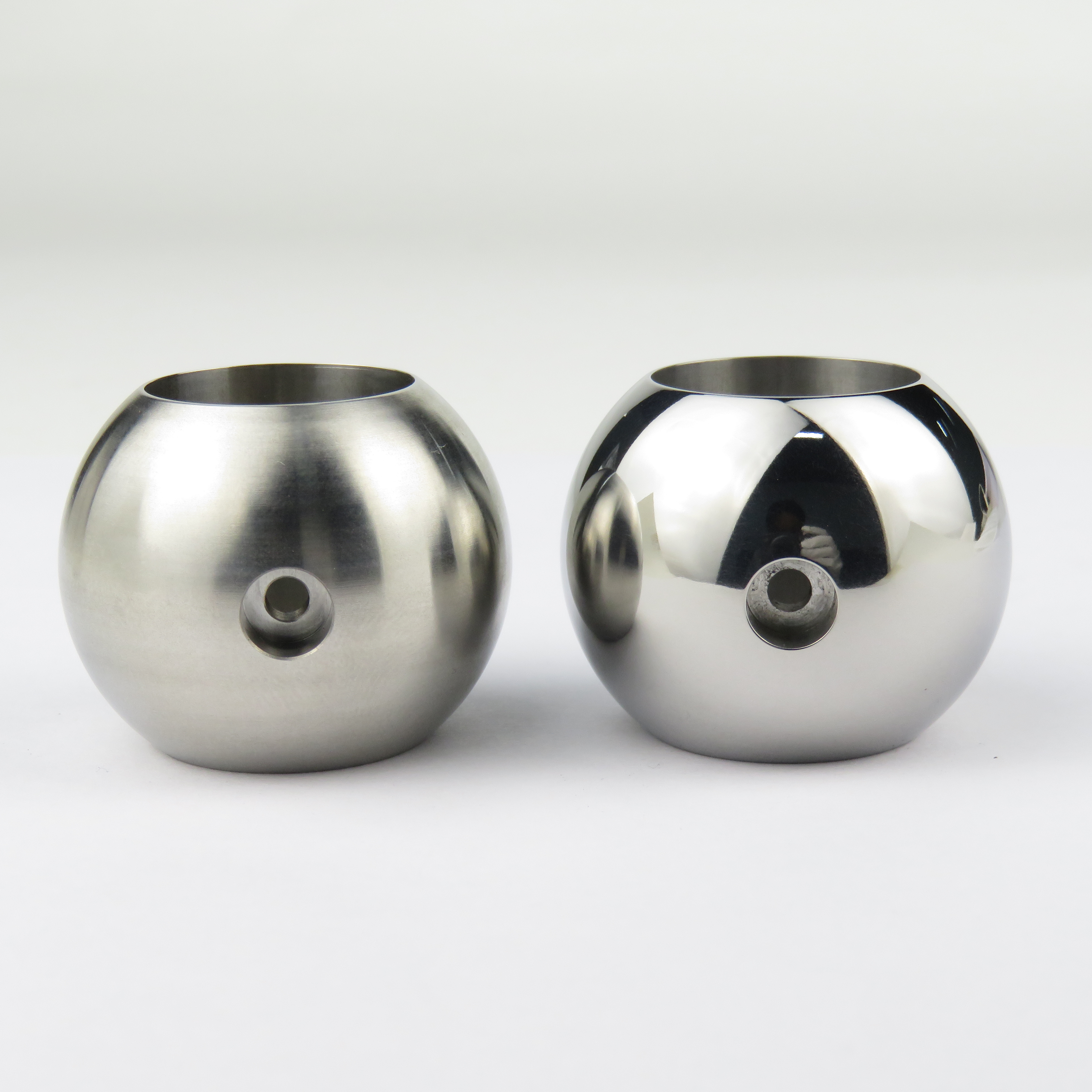
The buyer needs the external edges and port threads cleaned up while the bore and its lip keep the geometry the seal depends on.
Send the material, dimensions, approximate weight, batch quantity, the incoming condition and photographs of the difficult features. Mark which features must not be contacted by media and state how the result will be inspected. This form carries source reference PSEO-0380; quote it if you prefer an additional manual reference.
Open the SurfacePolish enquiry form Email a prepared enquiry
No price, lead time, certification or result is promised here. Confirm whether a sample trial is available for the specific part and what the trial can and cannot show.
Page PSEO-0380 · revised 2026-09-29 · cross-border equipment, media and scoped sample review. City context is sourced and cited above.
Use this local checker to identify missing part and inspection information. It prepares a technical-review brief; it does not approve a machine, process recipe or production result.
Complete the part details to prepare a review brief.
Email : info@surface-polish.com


 IPv6 network supported


 +86-592-2381506