A motor and drive manufacturer in Lille, France supplying robotics and automation has a cast aluminium housing that must be deburred without exposing porosity or marking the machined pilot and flange. SurfacePolish supplies finishing machines, media and compounds across borders and runs a free sample trial, with representative housings shipped to Xiamen and returned with observed results and a proposed processing direction for the buyer's review. This brief is written for a buyer in Lille working on robotics and automation; it describes equipment, media and a scoped sample review, not a local polishing service.
How much of the incoming contamination, cutting oil, machining chip and handling damage is expected to be removed by finishing rather than by an earlier operation?
What does the finishing step actually have to deliver before the next operation, whether that is assembly, anodising, painting or a functional test, and who defines that requirement?
What is the smallest hole, slot, keyway or cross-drilling the charge must not enter or plug, and how will a lodged medium be detected and removed?
Two housings made to the same drawing can need different routes because of alloy and temper. A 6061-T6 machined body is soft enough to smear and peen under a heavy ceramic charge, and it marks where a steel charge has transferred iron. A 7075 part is stronger and cuts differently. Austenitic stainless work-hardens at the surface and responds to media pressure rather than to sharp cutting. Hardened 4140 or a nitrided seat may tolerate only a light edge break, because the finishing step cannot be allowed to remove the case. Castings can open porosity that machining had closed. Record the temper, the hardness range and the heat treatment, and establish whether an anodise, passivation or paint step follows, because that step usually sets the residue and smut limits the finishing cycle has to respect.
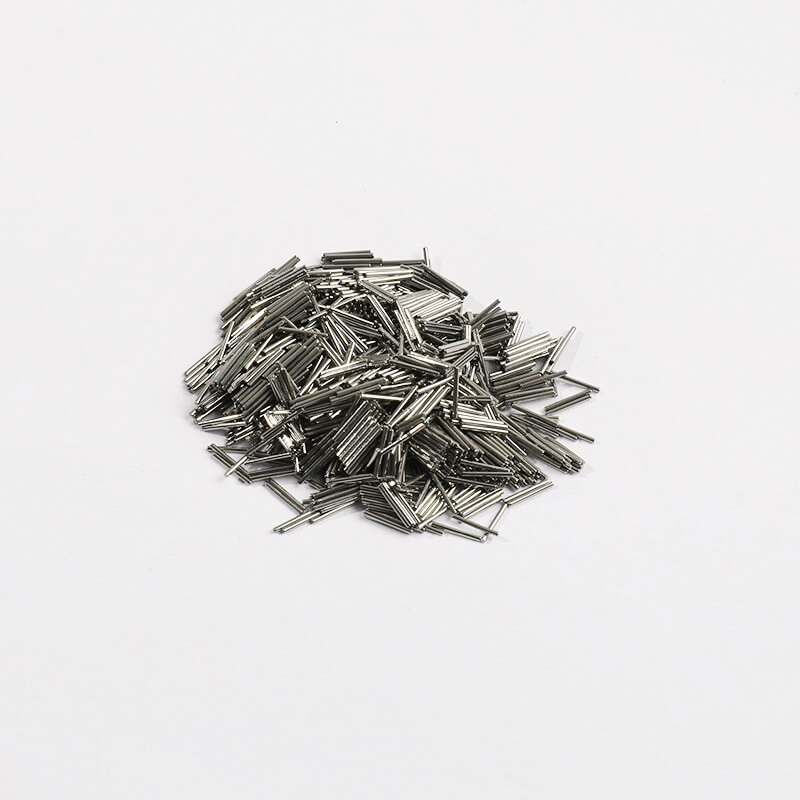
The material family of the media sets how much energy reaches the part. Plastic media is lighter and is the conservative choice for aluminium housings, thin cover plates and machined faces that must not be peened, at the cost of a slower cut and a shorter media life. Ceramic cuts harder and holds its shape longer, which suits removing a machining burr from steel and stainless parts and blending edges, but it marks soft aluminium and rounds functional edges faster. Steel media burnishes to a bright appearance and works well on stainless, and it is the wrong starting point for aluminium because it transfers iron and can leave spotting that appears later. Wear behaviour differs across all three: ceramic shrinks and generates sludge, plastic deforms and floats differently, and steel can fracture into slivers.
| Media | Best fit | Watch out for |
|---|---|---|
| Fine ceramic or porcelain shapes in a small size class | Edge blending and surface refinement after a cutting stage, and reaching tighter external geometry on machined housings and brackets | Small sizes enter and retain in tapped holes and fine slots, and media wear shrinks the charge so the finish drifts over its life |
| Aluminium oxide grinding media in a dense ceramic bond | Heavier stock removal or a more consistent cut on robust steel and stainless parts with thick edges and a defined layer to remove | High removal energy rounds functional edges quickly and is a poor match for thin aluminium plates, cast housings and bore lips |
| Plastic cylinders and cones in a harder, denser grade | Longer cycles on mixed batches of small fittings and screw-machine parts where a repeatable light edge break is wanted without ceramic impact | Can float or segregate by shape in a bowl, and cylindrical forms can wedge in slots, keyways and cross-drillings |
| Dry media such as walnut shell and corn cob | Drying assistance and light surface polish after a wet cycle, particularly on parts with pockets and threads that must not stay wet | Does not deburr or refine metal significantly, generates dust, and must not be treated as a cleanliness step |
A round vibratory bowl is the usual starting point for machined automation parts that fit comfortably and can tumble without a fixture. Media circulates in a toroidal path and reaches external faces, open pockets and edges at moderate energy, and the open chamber lets an operator pull a part mid-cycle to look at a sensitive feature. Contact between parts is continuous, so finished mounting faces, thin cover plates and bright cosmetic panels need separation or compartmentalising within the charge. A bowl reaches external geometry only: internal passages, deep pockets and the underside of a flange depend on media size, compound flow and how the part sits in the load. Where a heavy milled burr has to come off first, a machine with higher removal energy may take the bulk of it, at the cost of faster edge loss.
| Machine route | Where it fits | What it will not do |
|---|---|---|
| Disc finishing machine | Fast, high-energy edge breaking and surface refinement on small robust parts and uniform batches of gripper jaws, blocks and fittings | High impingement and edge-loss risk on thin, soft or aluminium parts, and the geometry must suit the disc working gap |
| Magnetic finishing machine | Fine deburring and light refinement of small precise features such as small bores, narrow slots and fine internal radii | Small working envelope that excludes housings and long parts, with pin media that can lodge in the fine features it reaches |
| Vibratory finishing machine, bowl type | General deburring and refinement of machined housings, plates and brackets that fit and can tumble without racking, with easy mid-cycle inspection | Continuous part-on-part contact and no access to deep internal passages; thin plates and finished mounting faces need separation |
| Barrel finishing machine, rotary barrel tumbling | Gentle deburring of small fragile parts and mixed batches of screw-machine components with a generous compound flow | Long cycles, no visibility while running, and internal features can collect media and compound that must be retrieved at unload |
Contamination failures are quiet and are often attributed to the wrong operation. Aluminium fines left in a machine, a charge or a sump transfer onto stainless parts as a grey smear in the next batch. Iron from steel media, from a machine that has held carbon steel or from a tool used on both transfers to stainless and shows as pinpoint rust spots that appear hours or days later. Hard or high-chloride rinse water and slow drying leave mineral rings and haze on aluminium. A compound that is too aggressive darkens aluminium or attacks a freshly cut edge. The controls are procedural: segregate or dedicate media by material family, define and record the changeover, control rinse water and drying, and inspect after a defined dwell time rather than immediately. Left unchecked, these defects surface after the parts have moved on.
| Failure mode | Likely cause | How to catch it |
|---|---|---|
| Water spotting, mineral rings or haze left after wet processing and drying | Hard or high-chloride rinse water, slow or uneven drying, or parts stacked wet so moisture is trapped in pockets and threads | Inspect dried parts under angled light for rings and haze, check the rinse water source and the drying method, and confirm that pockets and tapped holes drain before packing |
| Grey aluminium smear transferred onto stainless parts in a shared batch | Aluminium fines retained in media, compound or the machine sump after an aluminium lot, with no purge before the stainless lot | Check stainless surfaces under angled light for a dull grey film, review the changeover record, and inspect the charge and sump for retained fines |
| Uneven finish with unrefined pockets, internal corners or the shielded side of a flange | Media cannot reach the feature at the chosen size or orientation, charge circulation is blocked, or the part was never repositioned during the cycle | Inspect at defined locations rather than judging the whole part, photograph the same feature before and after, and measure roughness only at the surfaces the drawing controls |
| Compound film, smut or tenacious residue left on a face or in a bore | A film-forming or silicate-bearing compound, insufficient rinse volume, or drying a part before it is genuinely clean | Magnify the suspect surface, wipe a defined area with solvent against a clean reference, and confirm with the buyer's own cleanliness method |
Lille is the administrative and engineering centre of the Hauts-de-France manufacturing belt; the commune itself recorded 10 645 establishments at the end of 2024, 2,6 % of them industrial, and 183 864 jobs at the place of work in 2023, while the automotive plants and logistics parks of the region sit within commuting distance in the Douai, Valenciennes and Hordain corridors. The decisive industrial fact for a finishing buyer is that the Lille hinterland is served by France's third-ranking North Sea port: Dunkerque-Port, whose Port Ouest concentrates most of the port's recent development and which publishes a 2025-2029 environmental report and an annual press conference on its traffic. Lille is also a health-industry and digital-services centre, with the Eurasanté biomedical cluster and EuraTechnologies in the metropolitan area.
The nearest part of that base to this brief is automotive: The Lille metropolitan economy is the service, engineering and administrative centre of the Hauts-de-France manufacturing belt: INSEE records 183 864 jobs at the place of work in Lille in 2023 and 2,6 % of establishments in industry, with the region's automotive and equipment plants in the surrounding Douai-Valenciennes-Hordain corridors.
The Hauts-de-France automotive and equipment-supplier chain is a high-volume, tolerance-driven environment: transmission and brake parts, stampings, fasteners and machined housings where burrs cause function and warranty problems and edge condition affects fatigue and coating adherence. Suppliers here work to customer-specific edge and cleanliness specifications, so deburring is a controlled process step with defined acceptance criteria rather than a manual clean-up. The health-industry and instrumentation side of the Lille economy adds stainless and clean-surface requirements where residue and surface roughness are functional.
A Lille buyer should settle the cleanliness specification together with the edge specification, because in this supply chain a part that passes a visual deburring check can still fail the customer's particulate or film residue limit if media, compound and rinsing are not controlled as one process.
Freight context: Grand Port Maritime de Dunkerque (Port Ouest), Lille-Lesquin Airport, Lille / Dourges combined transport terminals. Dunkerque-Port is the North Sea deep-sea entry for the Lille hinterland and its Port Ouest concentrates most recent port development, with the port publishing a 2025-2029 environmental programme; Lille also has its own airport and dense rail/road links to Belgium and the Channel ports. Containerised finishing machines and media drums typically arrive through Dunkerque or Antwerp/Rotterdam and move by road or rail, while sample parts are sent by courier.
For imports from outside the EU the declarant must file a customs declaration whose form and content are fixed by the Union Customs Code and its implementing provisions; French Customs identifies classification, origin and value as the three fundamental notions and makes the common/national tariff consultable via RITA. The customs authority is the Direction generale des douanes et droits indirects (DGDDI), which also runs the Info Douane Service for formalities questions. Buyers should expect to need an EORI number and an EU VAT treatment, because customs and tax authorisations are handled together (SOPRANO). For machinery, the CE marking and the applicable EU product-safety directives are the compliance gate items to settle before shipment, and the French market surveillance authority is the DGCCRF; the tariff rate itself must be confirmed per HS code in RITA or the EU Access2Markets tariff tool, since it varies by machine type.
The French national standards body is AFNOR (Association francaise de normalisation), which coordinates French participation in standardisation and publishes the NF and NF EN standards that transpose ISO and CEN work; AFNOR also runs the certification activity attached to many of those standards. A French buyer of finishing equipment would normally reference ISO/NF EN surface-texture standards for roughness and profile parameters, ISO/NF EN cleanliness or residue specifications for critical parts, and management-system or sector schemes such as ISO 9001, IATF 16949 for automotive and EN 9100 for aerospace.
SurfacePolish supplies from Xiamen, China. The buyer's own destination rules, conformity marking, tariff classification and documentation responsibilities stay with the buyer; confirm them against the authorities named above before ordering.
Acceptance has to exist before a trial, in the drawing and the purchase specification, not as a verbal understanding afterwards. Name each controlled surface separately, because a bearing bore, a mounting land and an external cover will not respond to one media charge in the same way. State the parameter, the cut-off length, the measurement direction and the number of readings at each location. Where an edge limit applies, express it as a maximum radius or a required chamfer at a named feature rather than as a word such as deburred. Add the cleanliness requirement the part must meet and the method by which it will be judged, and say which faces are exempt. Settling those points early avoids the common dispute in which a supplier reports a surface and a buyer rejects on a feature that was never written down.
Send parts that represent the real range rather than one convenient sample. Include the part with the tightest hole, slot or cross-drilling, the thinnest unsupported section, the functional surface that must not be touched, and at least one part in its normal as-received condition with the usual burr, chips and cutting oil. Cover every alloy and temper in the family, because aluminium and stainless behave differently under the same charge. Add a coupon of the same material with a known starting roughness so a measurement can be compared before and after. Supply a marked-up drawing naming the controlled surfaces, edge limits and any cleanliness requirement, and a short note on what the part does in service. Several pieces let more than one stop point be examined; one part answers one question.
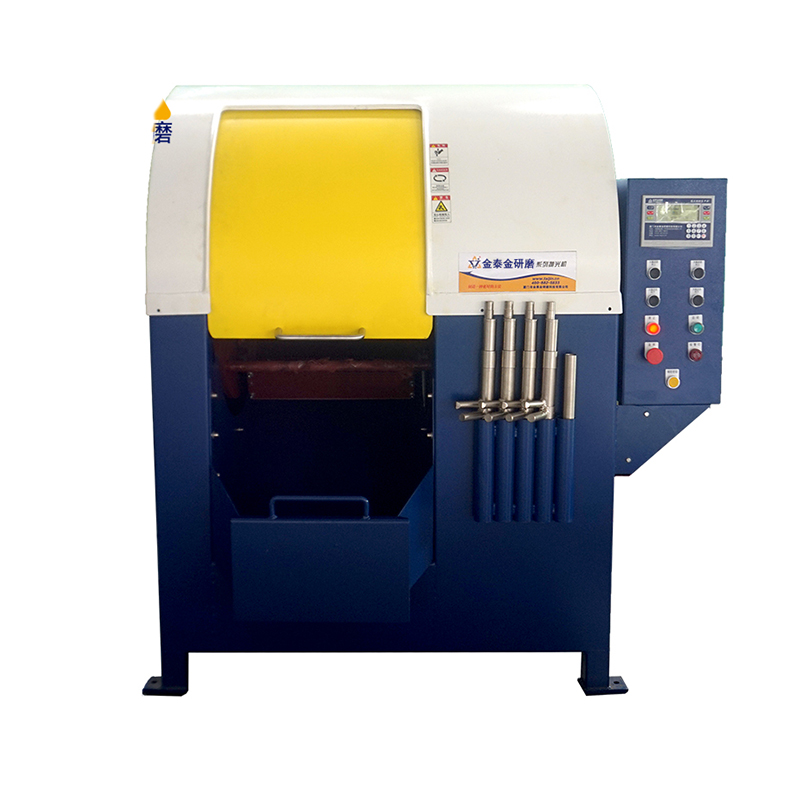
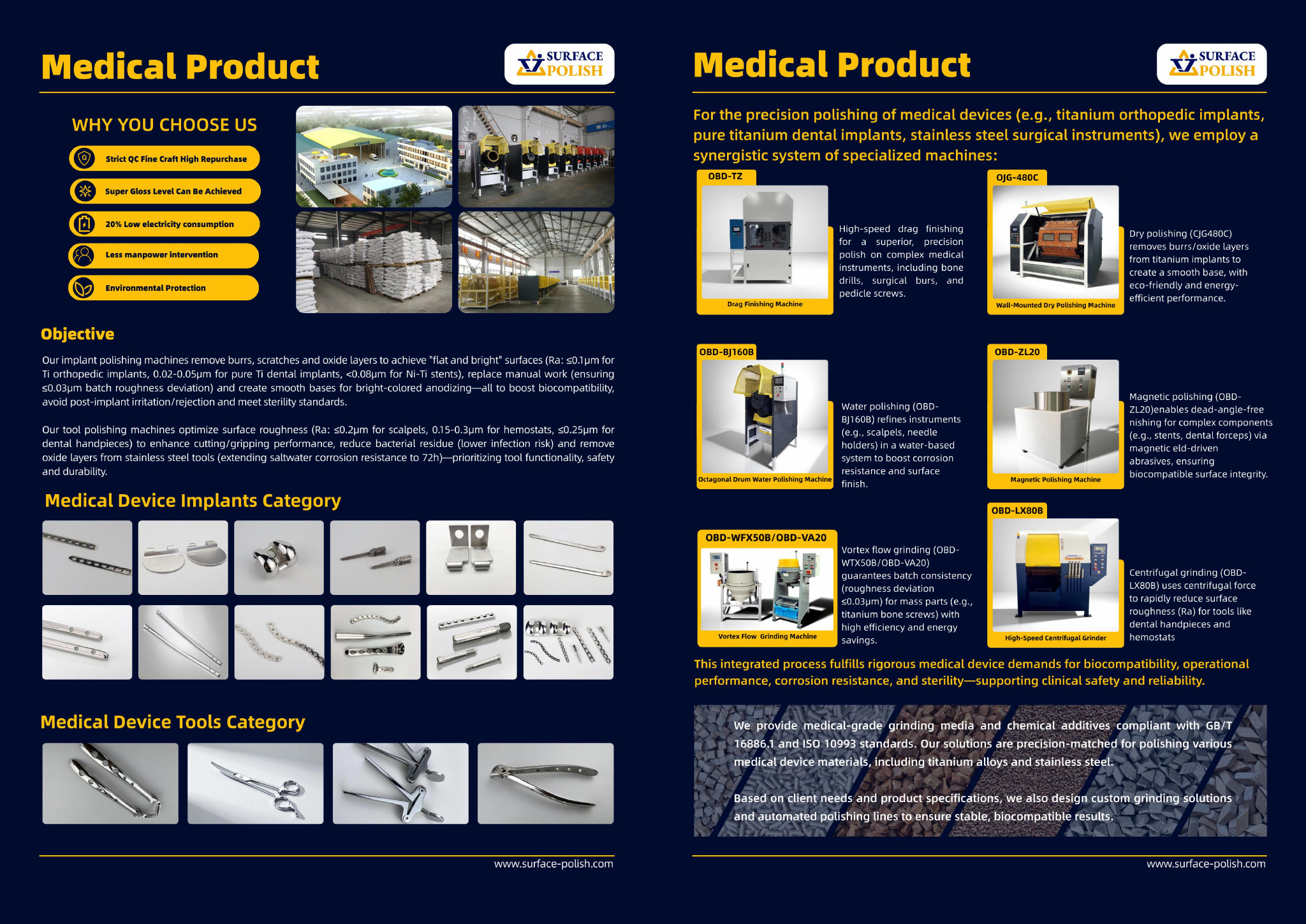
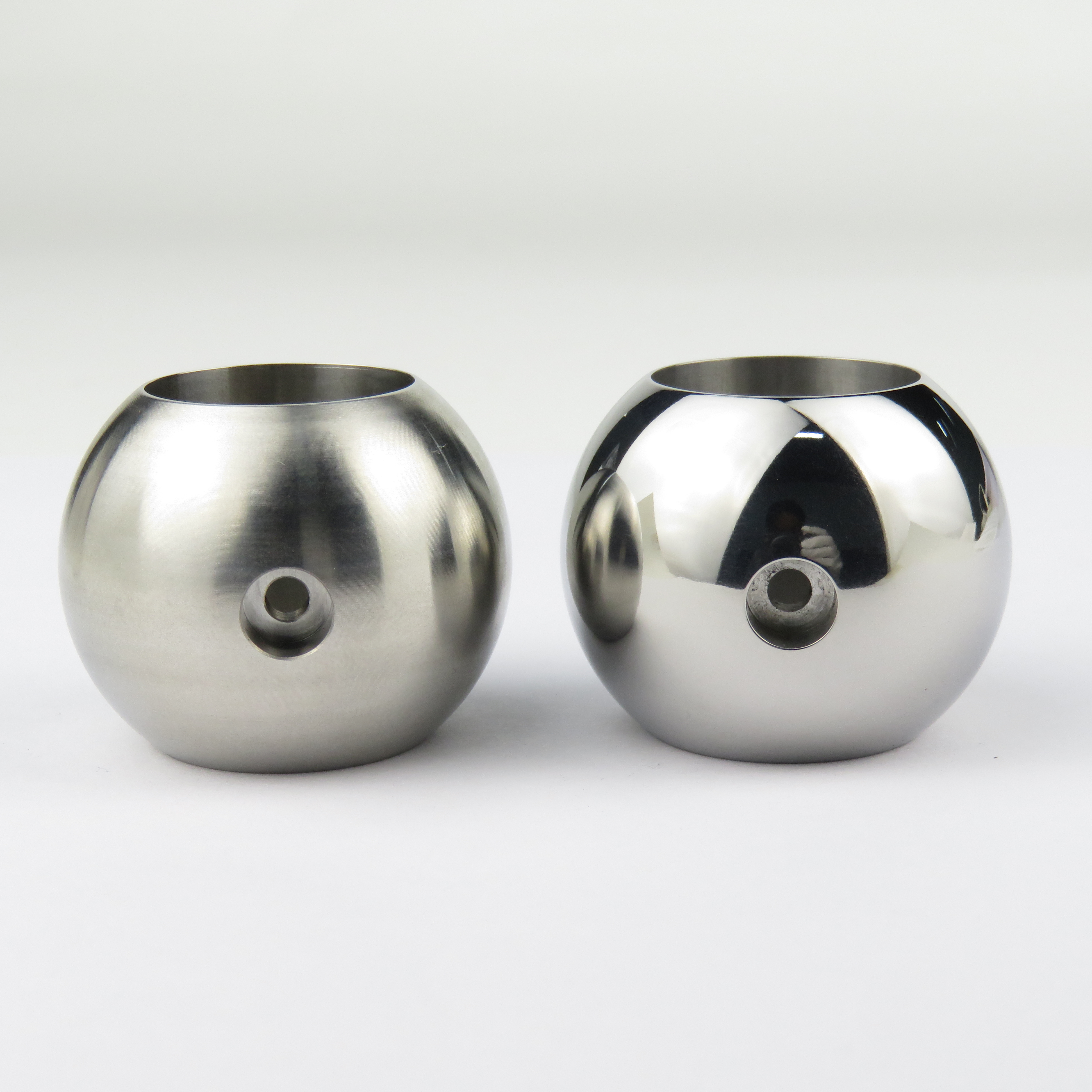
Yes. The offer is cross-border supply of finishing machines, media and compounds, together with a free sample trial and a scoped discussion of a finishing line concept. That means machine class, media and compound are considered as one question rather than three purchases, since a charge that suits one chamber may not suit another. The buyer keeps ownership of the part, the drawing and the acceptance criteria, and we do not verify the material, the upstream machining or the heat treatment. Bring the part family, the alloys, the size range and the features that must be protected into the discussion, along with the condition the parts arrive in.
Change one variable at a time. Hold the machine, load, compound, cycle time and part mix constant and change only the medium. Use parts from the same production lot so the only difference is the variable under test. Label the pieces before they run and have the returned parts judged in one session, under the same light and at the same marked measurement points, rather than one at a time. Where several people judge appearance, ask each to rank the pieces before discussion. Where a cut stage is followed by a refinement stage, score the stages separately, because a good final result can hide an unremoved burr or an over-coarse first stage.
A bore cannot be protected by the cycle alone; it is protected by what is decided before the cycle. Masking or plugging the bore, keeping the part out of contact with heavy neighbours, choosing a lighter route and shortening the cycle all reduce the load the bore sees, but none of them guarantees a dimension. That is why the bore must be measured before and after at the same points, with a bore gauge or CMM, and compared with the drawing limit. SurfacePolish does not promise a tolerance or a result; the trial reports what was observed on the parts tested, and the dimensional acceptance decision stays with your own metrology and quality functions.
Use Lille, France as the destination on the enquiry and state whether the deliverable is equipment, media and compound, a representative sample review or a line concept. A destination does not imply local stock, a local service point or a local delivery time.
A Lille automotive supplier would work to IATF 16949 with customer-specific requirements layered on top, and would specify surface texture using ISO/NF EN surface-texture standards and cleanliness (residual particle and film limits) per the vehicle-maker's specification; ISO 9001 applies to the non-automotive machinery and health-sector suppliers. AFNOR publishes the NF/NF EN versions of the relevant ISO standards that appear on drawings here.
Sources were retrieved on 2026-09-29 and describe the local industrial and trade context only. They do not evidence any SurfacePolish project, shipment, installation or service in Lille.
The buyer wants the fin edges and machined hole edges deburred without opening casting porosity or marking the machined flange face.
Send the material, dimensions, approximate weight, batch quantity, the incoming condition and photographs of the difficult features. Mark which features must not be contacted by media and state how the result will be inspected. This form carries source reference PSEO-0550; quote it if you prefer an additional manual reference.
Open the SurfacePolish enquiry form Email a prepared enquiry
No price, lead time, certification or result is promised here. Confirm whether a sample trial is available for the specific part and what the trial can and cannot show.
Page PSEO-0550 · revised 2026-09-29 · cross-border equipment, media and scoped sample review. City context is sourced and cited above.
Use this local checker to identify missing part and inspection information. It prepares a technical-review brief; it does not approve a machine, process recipe or production result.
Complete the part details to prepare a review brief.
Email : info@surface-polish.com


 IPv6 network supported


 +86-592-2381506
