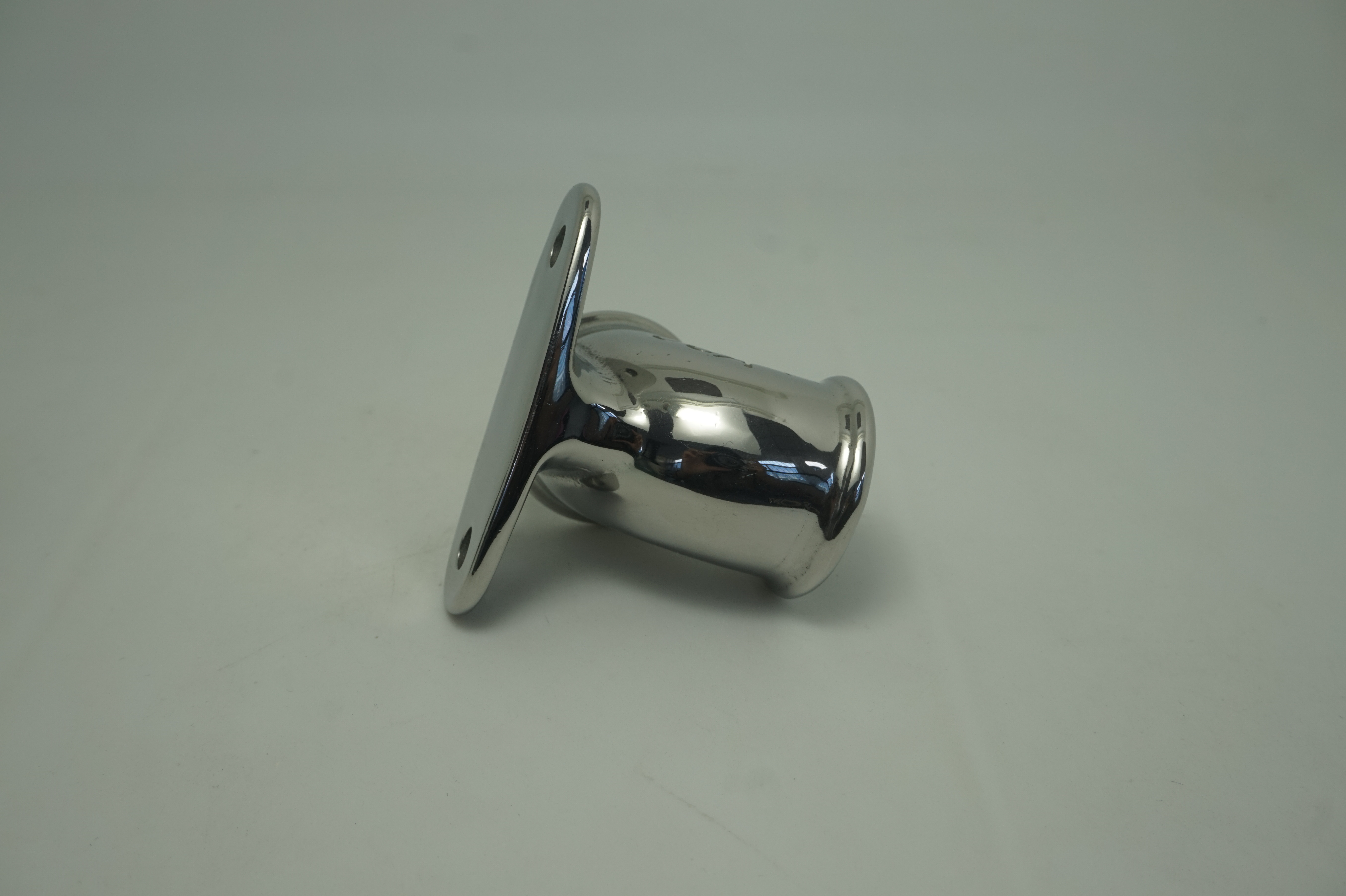
A welding and metalwork fabricator in Naples, Italy working in robotics and automation has welded stainless pedestal brackets whose fillet welds and laser-cut edges need dressing while the machined base face stays flat. SurfacePolish supplies finishing machines, media and compounds across borders and runs a free sample trial, sending representative weldments to Xiamen and returning them with observed results and a proposed route for the buyer's review. This brief is written for a buyer in Naples working on robotics and automation; it describes equipment, media and a scoped sample review, not a local polishing service.
What does the finishing step actually have to deliver before the next operation, whether that is assembly, anodising, painting or a functional test, and who defines that requirement?
What is the size and mass spread inside one part family, and does one machine have to cover both a heavy casting and a small gripper jaw?
How much of the incoming contamination, cutting oil, machining chip and handling damage is expected to be removed by finishing rather than by an earlier operation?
Automation work mixes scales in a way that catches buyers out. The same shop may finish a 40 kg robot base casting and a 30 g gripper jaw, and a machine sized for the casting will over-work the jaw. Load ratio, the mass of parts against the mass of the charge, is the variable that usually decides whether small parts come out even or rounded. Screen the family on its extremes: the heaviest part, the largest envelope, the thinnest unsupported wall and the smallest part that must meet the same appearance. Long linear-axis beams and thin cover plates distort under their own weight in a deep bed, while heavy castings need a chamber large enough to keep them moving. A shortlist built on the average part will miss both ends of the range.
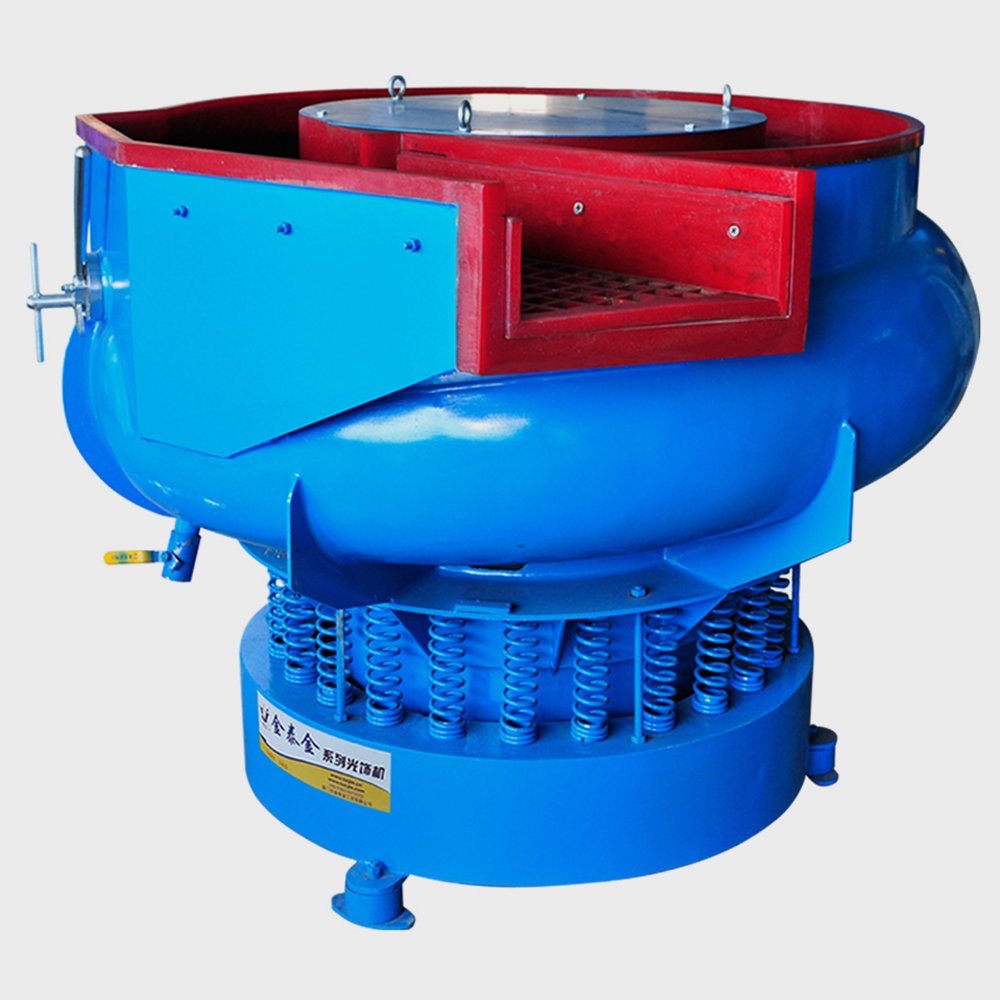
A round vibratory bowl is the usual starting point for machined automation parts that fit comfortably and can tumble without a fixture. Media circulates in a toroidal path and reaches external faces, open pockets and edges at moderate energy, and the open chamber lets an operator pull a part mid-cycle to look at a sensitive feature. Contact between parts is continuous, so finished mounting faces, thin cover plates and bright cosmetic panels need separation or compartmentalising within the charge. A bowl reaches external geometry only: internal passages, deep pockets and the underside of a flange depend on media size, compound flow and how the part sits in the load. Where a heavy milled burr has to come off first, a machine with higher removal energy may take the bulk of it, at the cost of faster edge loss.
| Machine route | Where it fits | What it will not do |
|---|---|---|
| Vibratory finishing machine, bowl type | General deburring and refinement of machined housings, plates and brackets that fit and can tumble without racking, with easy mid-cycle inspection | Continuous part-on-part contact and no access to deep internal passages; thin plates and finished mounting faces need separation |
| Dry polishing machine and dryer | Removing residual moisture after a wet cycle and reducing water spotting on aluminium and stainless surfaces with pockets and threads | A finishing step only; a dry part can still carry compound film, fines and media dust, so it is not a cleanliness release |
| Barrel finishing machine, rotary barrel tumbling | Gentle deburring of small fragile parts and mixed batches of screw-machine components with a generous compound flow | Long cycles, no visibility while running, and internal features can collect media and compound that must be retrieved at unload |
| Magnetic finishing machine | Fine deburring and light refinement of small precise features such as small bores, narrow slots and fine internal radii | Small working envelope that excludes housings and long parts, with pin media that can lodge in the fine features it reaches |
Compound carries debris away, keeps the media from loading and buffers the chemistry against the metal. Alkaline and neutral families are common for general deburring and cleaning; acidic families may be chosen where a descale or brightening effect is wanted; silicate-bearing products can leave a tenacious film that is hard to remove from a bore or a sealing land. On aluminium an effective corrosion inhibitor usually matters, because the wrong chemistry darkens the surface during or after the cycle. Concentration, flow and temperature shift the result, so dosing should be metered rather than judged by eye, and rinse water hardness, chloride content and suspended solids all affect foaming and what remains behind. Where an anodise or paint step follows, the film and smut left by the cycle become the buyer's problem, so define how the surface will be checked.
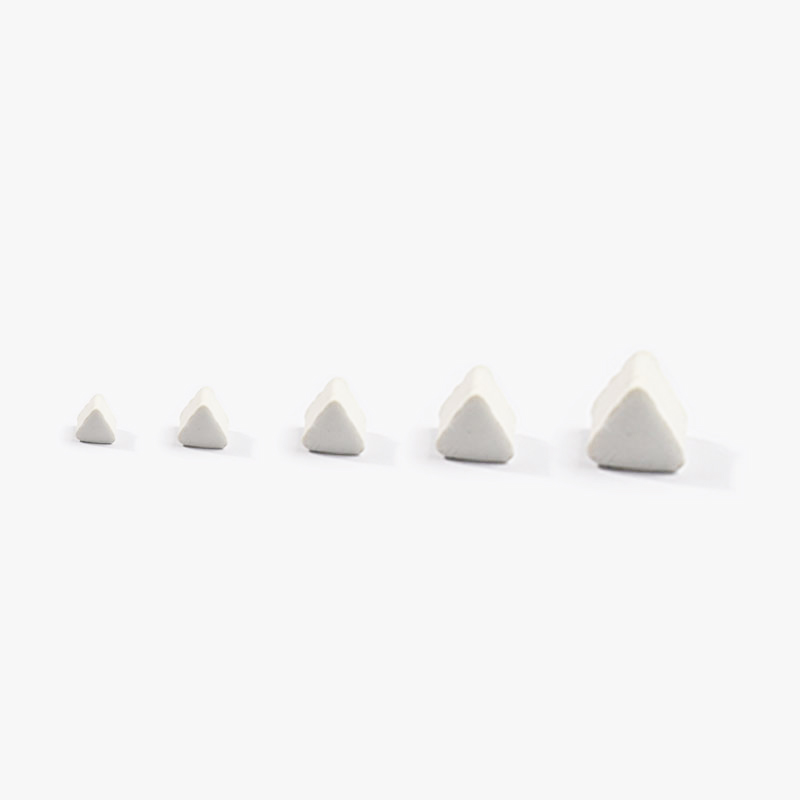
| Media | Best fit | Watch out for |
|---|---|---|
| Magnetic finishing pins and fine magnetic media | Small precise items such as spools, orifice plates, small valve parts and fine slot arrays where tumbling media cannot reach the feature | Limited working envelope, pins lodge in the same fine features they are chosen to reach, and the surface signature differs from tumbling |
| Plastic triangles, cones and pyramids in a soft to medium grade | Deburring aluminium housings, gripper plates and other soft alloy parts where surface marking and edge rounding must be kept to a minimum | Slow cut rate, media deforms and wears, and a worn charge behaves noticeably differently from a fresh one |
| Heavy-cut ceramic, angle-cut triangles in a coarse size class | Removing a substantial milled or turned burr from open external edges and pockets on steel and stainless automation parts before a refinement stage | Cuts functional edges and corners aggressively, leaves a coarse surface on aluminium, and lodges in slots whose width approaches the media section |
| Aluminium oxide grinding media in a dense ceramic bond | Heavier stock removal or a more consistent cut on robust steel and stainless parts with thick edges and a defined layer to remove | High removal energy rounds functional edges quickly and is a poor match for thin aluminium plates, cast housings and bore lips |
A medium left in a tapped hole or a cross-drilled passage usually escapes the finishing area and is found later at assembly or at a functional test. It happens when the size class is too close to the opening, when a charge has worn or fractured into smaller pieces, or when a passage was never mapped as a retention risk. Tapped holes, keyways, seal grooves, cross-drillings and slots whose width approaches the media section are the usual places. Retrieval has to be designed rather than assumed: count the charge in and out where practical, use a pin or thread gauge on sampled holes, borescope the smallest passages at an agreed angle, and rinse through a filter for a visual check. Any medium found is a non-conformance to record, not something to wipe away and release.
| Failure mode | Likely cause | How to catch it |
|---|---|---|
| Bearing bore, bore lip or dowel hole edge rounded past the drawing limit | High-energy route, over-long cycle, dense or coarse media, or a functional edge run without masking or a shielding fixture | Measure the defined edge feature before and after with an optical comparator, radius gauge or moulded replica, and compare it with the maximum radius on the drawing |
| Colour change or darkening on an aluminium face after the cycle | Compound chemistry unsuitable for aluminium, no effective corrosion inhibitor, or a delay between finishing and drying | Compare the finished face with an unprocessed coupon of the same alloy under the agreed light, and review the compound product, dose and rinse sequence for the lot |
| A ceramic, plastic or steel medium lodged in a tapped hole, keyway, cross-drilling or seal groove | Media size class too close to the opening, a charge that has worn or fractured into smaller pieces, or a retention feature that was never mapped | Count the charge in and out where practical, pin or thread gauge every hole, borescope the smallest passages at an agreed angle, and rinse through a filter for a visual check |
| Water spotting, mineral rings or haze left after wet processing and drying | Hard or high-chloride rinse water, slow or uneven drying, or parts stacked wet so moisture is trapped in pockets and threads | Inspect dried parts under angled light for rings and haze, check the rinse water source and the drying method, and confirm that pockets and tapped holes drain before packing |
The Chamber of Commerce's provincial economic profile records a broad manufacturing base alongside services: manufacturing accounts for 18% of provincial employment, behind public services and administration at 30.7% but ahead of commerce (14%), construction (9.5%) and transport (8.2%) (s2). The profile singles out mechanical, electromechanical and transport-equipment manufacturing as particularly significant, and records that the automotive and aeronautical industries are present through large plants that have generated a tier of specialised small and medium subcontracting firms (s1). The fishing and marine sector has an official support track: the chamber approved state-aid vouchers for modernising machinery and equipment for fishing firms in the Phlegraean communes (s5), and the wine sector of the province is promoted through chamber-organised export meetings with foreign buyers (s3). These chamber data are the provincial economic profile published by the Camera di Commercio di Napoli and its census base is historical, so the structural description should be read as the chamber's own profile rather than as current-year statistics.
The nearest part of that base to this brief is food: The chamber organised an incoming programme of B2B meetings with foreign buyers reserved for wine companies of the province of Naples, and the provincial profile lists horticulture, citrus, olive and vine cultivation among the most profitable coastal crops.
Naples has an automotive and aeronautical plant base supplied by a local subcontracting tier, which is the part of the local market where deburring and edge control matter most: transmission and engine components, hydraulic fittings, structural brackets and machined castings, all of which reach a finishing operation before inspection. The port's shipbuilding and ship-repair activity adds a large-fabrication case where weld dressing and surface preparation, not fine deburring, set the requirement. Burr and residue control is the acceptance issue for both, and for the aerospace-supplying shops it is written into the customer's drawing.
The first question is whether the shop supplies the automotive or the aeronautical chain, because that decides which quality regime governs and whether a special-process approval is needed at all. Having settled that, the acceptance criterion for burr height or cleanliness should be taken from the customer's drawing rather than agreed bilaterally, since both chains audit against the prime's specification.
Freight context: Porto di Napoli, Aeroporto internazionale di Napoli (Capodichino). The chamber's profile of the provincial transport system records more than 370 firms operating port services with more than 5,200 employees, and lists ship repairs, port warehousing, container services, freight forwarding and ship's agency among the main services, alongside bulk trades in mineral oils, cereals and machinery and vehicles (s6). It describes the international airport at Naples as the most important in southern Italy for traffic volume and close to the city centre (s6). Machines can therefore be landed by sea and cleared in the port area, while sample parts normally move by air, which makes the airport the practical route for a small consignment.
Italy applies the EU's common commercial policy to imports from China, so Chinese industrial machinery enters under the EU Common Customs Tariff, where the duty rate depends on the type and origin of the goods and the working tariff is TARIC. Istat's August 2026 extra-EU trade release records a 16.0% year-on-year increase in Italian purchases from China, alongside strong growth from India, OPEC and Mercosur, so China remains one of the fastest-growing sources of Italian imports. Anti-dumping and other trade-defence measures apply case by case to specific product categories rather than to finishing machinery in general, so the applicable rate must be checked against the specific commodity code before a quotation is finalised.
The customs authority is the Agenzia delle Dogane e dei Monopoli (ADM), which is the regulatory, supervisory and control authority for customs and collects the duties. Goods arriving from China are cleared by customs before they can enter the single market and are released into free circulation by means of a customs declaration; the date of acceptance of that declaration is the date used to calculate and apply the import duty and any VAT or excise duty. Importers should settle in advance who lodges the declaration and under which VAT and EORI arrangements, and must ensure the machine carries CE marking and is supported by the EU declaration of conformity and technical file. Because the CE mark is compulsory for machinery covered by the EU machinery legislation and forbidden for products outside it, the conformity route must be settled before shipment rather than at the border.
SurfacePolish supplies from Xiamen, China. The buyer's own destination rules, conformity marking, tariff classification and documentation responsibilities stay with the buyer; confirm them against the authorities named above before ordering.
Roughness is only comparable when the measurement conditions are fixed. State the location by distance from a reference feature, the traverse direction relative to the machining or media marks, the cut-off and the evaluation length, then use the same conditions for the first article and for production checks. A reading taken along a bore axis and one taken around its circumference describe different surfaces. Curvature limits how a skid or shoe sits on the work, particularly in a small bore or on a narrow land, and a poorly seated pickup is not evidence. Take readings at several stations, because the ends of a part and the middle of a part often differ. Where visual appearance is what the customer sees, pair the number with a physical reference viewed at an agreed distance, since a surface can measure inside a band and still look wrong.
Scale-up is mostly about holding what produced the trial result. In production that means a media charge kept at a target mass, screened on a schedule with undersize and broken pieces removed and fresh media added to a recorded level. Compound should be metered to a concentration rather than poured by eye, and rinse water quality should be known and stable. Every lot needs an identity: part numbers, quantity, machine, media charge, compound, cycle time, operator, inspection result and disposition. Where the same machine handles aluminium and stainless, define the changeover, including media purge, machine cleaning and compound replacement, and record when it happened. Cycle counting is a simple control that is often skipped: a charge that has run a known number of hours can be scheduled for replacement before wear starts producing lodged media or a drifting finish.
A trial shows what a given machine, charge and setting did to the parts tested, which is useful evidence but not a sizing study. Machine size depends on the largest envelope and mass in the family, the smallest part that must meet the same appearance, the load ratio you intend to run, and how many stages the part needs. Those are planning questions that belong in a line-concept discussion alongside the trial result. A part tested on a small machine may behave differently in a larger chamber, and a part run in a full production load may come out differently from one run in a light trial batch. Record both the settings and the load.
No. SurfacePolish supplies finishing machines, media and compounds across borders and runs a free sample trial on parts shipped to the factory in Xiamen. We do not design, integrate, program or commission robotic cells or automated handling lines, and no robotic polishing cell is offered here. What can be discussed is the part itself, the features that must be protected and the finishing step, and which loose-part machine and media route is worth testing. How parts are presented, loaded, unloaded and transferred is engineering scope you define and verify, and any machine or medium suggestion remains a starting point for your evaluation in Naples.
Change one variable at a time. Hold the machine, load, compound, cycle time and part mix constant and change only the medium. Use parts from the same production lot so the only difference is the variable under test. Label the pieces before they run and have the returned parts judged in one session, under the same light and at the same marked measurement points, rather than one at a time. Where several people judge appearance, ask each to rank the pieces before discussion. Where a cut stage is followed by a refinement stage, score the stages separately, because a good final result can hide an unremoved burr or an over-coarse first stage.
Use Naples, Italy as the destination on the enquiry and state whether the deliverable is equipment, media and compound, a representative sample review or a line concept. A destination does not imply local stock, a local service point or a local delivery time.
Naples-area buyers reference UNI and ISO standards for surface texture and cleanliness, and in the automotive and aerospace supply chains the qualification regimes their primes impose: IATF 16949 for automotive and AS/EN 9100 for aerospace, frequently with NADCAP special-process approval where surface treatment is involved. Because the province's automotive and aeronautical work runs through a subcontracting tier, the finish and cleanliness callouts usually reach a machine shop inside the customer's drawing and inspection plan rather than as a standalone finishing specification.
Sources were retrieved on 2026-09-29 and describe the local industrial and trade context only. They do not evidence any SurfacePolish project, shipment, installation or service in Naples.
The buyer wants the weld spatter and cut edges dressed and the visible faces blended without cutting into the machined mounting face.
Send the material, dimensions, approximate weight, batch quantity, the incoming condition and photographs of the difficult features. Mark which features must not be contacted by media and state how the result will be inspected. This form carries source reference PSEO-0500; quote it if you prefer an additional manual reference.
Open the SurfacePolish enquiry form Email a prepared enquiry
No price, lead time, certification or result is promised here. Confirm whether a sample trial is available for the specific part and what the trial can and cannot show.
Page PSEO-0500 · revised 2026-09-29 · cross-border equipment, media and scoped sample review. City context is sourced and cited above.
Use this local checker to identify missing part and inspection information. It prepares a technical-review brief; it does not approve a machine, process recipe or production result.
Complete the part details to prepare a review brief.
Email : info@surface-polish.com


 IPv6 network supported


 +86-592-2381506