A robotics manufacturer in Sydney, Australia working in robotics and automation has an aluminium joint housing whose bearing bore, shoulder and dowel holes must survive deburring intact. SurfacePolish supplies finishing machines, media and compounds across borders and runs a free sample trial: representative parts travel to the factory in Xiamen and come back with observations and a proposed media, compound and cycle direction for the buyer's own review. This brief is written for a buyer in Sydney working on robotics and automation; it describes equipment, media and a scoped sample review, not a local polishing service.
What does the finishing step actually have to deliver before the next operation, whether that is assembly, anodising, painting or a functional test, and who defines that requirement?
How much of the incoming contamination, cutting oil, machining chip and handling damage is expected to be removed by finishing rather than by an earlier operation?
What is the smallest hole, slot, keyway or cross-drilling the charge must not enter or plug, and how will a lodged medium be detected and removed?
The mechanism that raised the burr matters more than its size. Milling a pocket leaves a rolled edge that folds over the top of a wall; turning leaves a fine feather on a bore lip; EDM leaves a recast layer that is hard, brittle and behaves differently under impact media; cross-drilling leaves a burr inside the intersection of two passages that no external media stream reaches; laser cutting leaves dross on a bracket edge; a weld leaves spatter and a heat-affected zone. Each of those responds to a different combination of energy, media shape and time. Ask for the routing that produced the part and not only the drawing, because a cycle written for a milled edge will under-work a recast layer while rounding a turned bore lip long before the recast layer has gone.
Inside any machine, the way parts are carried decides whether the finish is even and the geometry survives. Parts left loose together nibble each other along contact lines and produce bright impact marks on visible faces. Cradles that follow a casting, compartments, dividers and clip-on carriers present the same face to the media on every part and protect machined lands. Load ratio matters as much: too many parts in the charge reduces circulation and leaves shielded pockets unworked, while too few allows parts to be thrown against the chamber wall. Build the arrangement around the most delicate and the heaviest part in the family rather than an average one. Where a buyer plans automated loading or transfer between operations, the fixture interface, the orientation and the pick points belong to the buyer's own engineering scope and are defined and verified on that side.
| Machine route | Where it fits | What it will not do |
|---|---|---|
| Barrel finishing machine, rotary barrel tumbling | Gentle deburring of small fragile parts and mixed batches of screw-machine components with a generous compound flow | Long cycles, no visibility while running, and internal features can collect media and compound that must be retrieved at unload |
| Dry polishing machine and dryer | Removing residual moisture after a wet cycle and reducing water spotting on aluminium and stainless surfaces with pockets and threads | A finishing step only; a dry part can still carry compound film, fines and media dust, so it is not a cleanliness release |
| Magnetic finishing machine | Fine deburring and light refinement of small precise features such as small bores, narrow slots and fine internal radii | Small working envelope that excludes housings and long parts, with pin media that can lodge in the fine features it reaches |
| Tub vibrator | Long parts such as linear-axis beams, manifolds and welded frames that cannot rotate in a bowl | Lower energy per unit area so heavy burrs take longer, and large tubs need floor space and a reliable part support method |
Media has to be small enough to enter the pocket or passage that must be finished and large enough not to lodge in a tapped hole, a cross-drilling, a keyway or a seal groove. Those two conditions conflict on almost every automation part, and the usual resolution is to plug or mask the openings rather than to compromise the charge. Measure the narrowest opening a medium could enter, and the depth behind it, and compare that against the smallest medium in the proposed charge. Threads are the classic retention point: a medium that enters a tapped hole is difficult to see and easy to leave behind. Where a passage genuinely needs work, plan a defined retrieval and check step rather than assuming parts come out clear. Media wear shrinks the charge over its life, so a size class that is safe when new can become a lodging risk later.
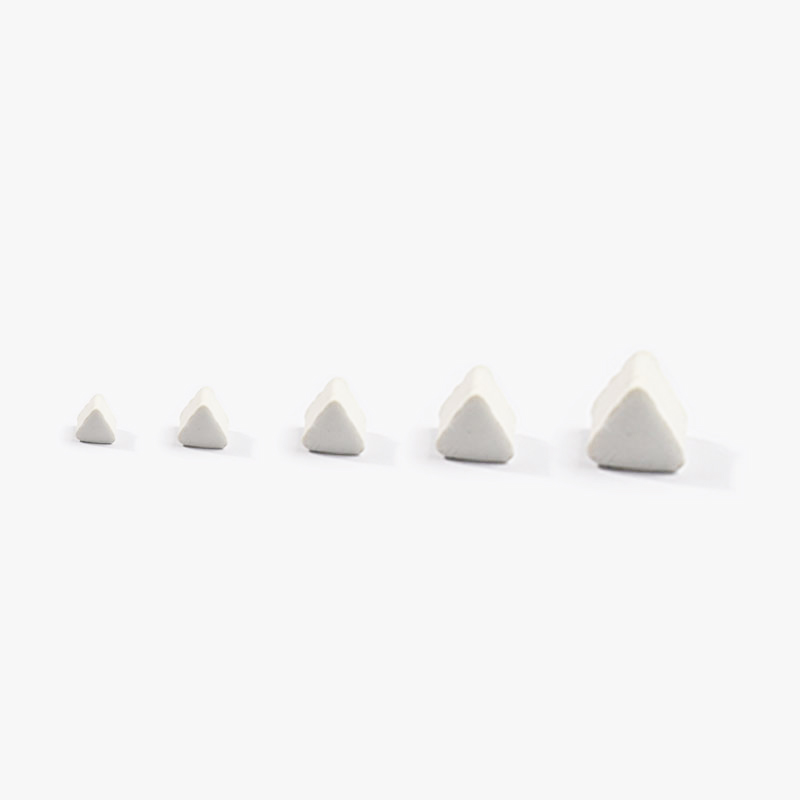
| Media | Best fit | Watch out for |
|---|---|---|
| Steel media, including balls and shaped pins | Bright finishing and edge blending on stainless automation components where appearance and a burnished surface matter | Transfers iron to aluminium and carbon steel, needs a corrosion-inhibiting compound, and must be separated magnetically or by screen at unload |
| Heavy-cut ceramic, angle-cut triangles in a coarse size class | Removing a substantial milled or turned burr from open external edges and pockets on steel and stainless automation parts before a refinement stage | Cuts functional edges and corners aggressively, leaves a coarse surface on aluminium, and lodges in slots whose width approaches the media section |
| Aluminium oxide grinding media in a dense ceramic bond | Heavier stock removal or a more consistent cut on robust steel and stainless parts with thick edges and a defined layer to remove | High removal energy rounds functional edges quickly and is a poor match for thin aluminium plates, cast housings and bore lips |
| Fine ceramic or porcelain shapes in a small size class | Edge blending and surface refinement after a cutting stage, and reaching tighter external geometry on machined housings and brackets | Small sizes enter and retain in tapped holes and fine slots, and media wear shrinks the charge so the finish drifts over its life |
Too much energy does not leave a smooth surface; it deforms one. Impingement shows as bright impact marks, dents on thin cover plates, flattened corners and a rippled or peened appearance on aluminium faces that should be flat. It comes from a heavy or dense charge, a high load ratio, a part that is too large a fraction of the load, or light parts left loose among heavy neighbours. A soft aluminium housing run in the same charge as steel brackets will show the marks first. Checking means looking for repeating mark patterns on exposed faces, comparing a part run loose with the same part compartmentalised, and reviewing the batch record for the mix and load that produced the lot. The practical fixes are separation, a lighter route, a shorter cycle and a charge sized to the part rather than to the chamber.
| Failure mode | Likely cause | How to catch it |
|---|---|---|
| Uneven finish with unrefined pockets, internal corners or the shielded side of a flange | Media cannot reach the feature at the chosen size or orientation, charge circulation is blocked, or the part was never repositioned during the cycle | Inspect at defined locations rather than judging the whole part, photograph the same feature before and after, and measure roughness only at the surfaces the drawing controls |
| Compound film, smut or tenacious residue left on a face or in a bore | A film-forming or silicate-bearing compound, insufficient rinse volume, or drying a part before it is genuinely clean | Magnify the suspect surface, wipe a defined area with solvent against a clean reference, and confirm with the buyer's own cleanliness method |
| Bearing bore, bore lip or dowel hole edge rounded past the drawing limit | High-energy route, over-long cycle, dense or coarse media, or a functional edge run without masking or a shielding fixture | Measure the defined edge feature before and after with an optical comparator, radius gauge or moulded replica, and compare it with the maximum radius on the drawing |
| Thin plate, cover or housing distorted, bowed or dimensionally drifted after the cycle | Tumbling load on an unsupported thin section, part-on-part contact, or heat and pressure from a high-energy route | Measure flatness, wall thickness and critical dimensions at the same marked points as the pre-process baseline, on a surface plate or CMM |
Greater Sydney's industrial base is organised around the Port Botany container gateway and the employment lands of Western Sydney. Investment NSW, the state's trade and investment agency, lists agrifood, defence and aerospace, digital technologies, life sciences and healthcare, and mining equipment, technology and services (METS) among the state's focus sectors, and describes New South Wales as a national leader in defence and aerospace with capability across land, sea, air and space. The NSW Industry Policy frames manufacturing through a Local Manufacturing Mission aimed at a diversified economy driven by innovation, productivity and robust supply chains. Machine-intensive work in the metro area is regulated through the same Work Health and Safety framework that SafeWork NSW applies to plant and machinery.
The nearest part of that base to this brief is medical: Life sciences and healthcare is one of Investment NSW's focus sectors, covering MedTech innovation and clinical trials in New South Wales.
For Sydney plants the finishing question is usually edge condition and cleanliness on parts that then go into a guarded, automated or hygienic production line: burrs and torn edges on machined or laser-cut components affect fit-up, machine guarding clearances and operator safety, and residues affect the adhesion of subsequent coatings. Food and beverage, medical and aerospace work in the metro area adds verification pressure, because surface condition is one of the characteristics a customer or auditor will check against a drawing or specification.
A Sydney buyer should settle the acceptance criteria for the finished surface - which burrs or edge conditions are actually functional, what surface roughness or cleanliness is required, and how it will be measured - before comparing machine types or media, because that decision drives whether a vibratory, barrel or disc process is appropriate at all.
Freight context: Port Botany, Sydney Harbour, Sydney (Kingsford Smith) Airport. Port Botany is the container gateway for New South Wales - the Port Authority of NSW describes it as one of Australia's busiest container ports and as the state's primary trade gateway, and reports piloted vessel movements there up 3.1% quarter-on-quarter and 7.8% year-on-year. Inbound finishing machines and sample parts therefore clear customs most commonly through Port Botany by sea cargo, with air freight handling urgent samples.
The national standards body is Standards Australia, which publishes Australian Standards (AS) and joint Australian/New Zealand Standards (AS/NZS); on their own, standards are voluntary and there is no general requirement for the public to comply, but state and Commonwealth governments often refer to AS or AS/NZS standards in legislation and they can then become mandatory. For finishing and machinery work, the applicable documents are the ones cited in the buyer's own contract, purchase specification, licence condition or safety management system, together with the marking rules in AS/NZS 4417.1 and AS/NZS 4417.2 for in-scope electrical equipment sold under the EESS.
Australia and China are parties to the China-Australia Free Trade Agreement (ChAFTA), signed on 17 June 2015 and in force since 20 December 2015; the Australian Border Force maintains a dedicated ChAFTA page and working tariff schedule, and FTAs give importers a route to preferential rates of duty where the rules of origin are met. China was Australia's largest source of imports in 2025 at $130.2b, up 12.5% on 2024, and 56% (69,567) of Australian business importers traded at least once with China in 2020-21. A Chinese supplier of finishing machines, media or compounds is therefore shipping into Australia's single largest import stream, and preferential duty depends on origin documentation rather than on a blanket zero-tariff guarantee for every product line.
SurfacePolish supplies from Xiamen, China. The buyer's own destination rules, conformity marking, tariff classification and documentation responsibilities stay with the buyer; confirm them against the authorities named above before ordering.
Roughness is only comparable when the measurement conditions are fixed. State the location by distance from a reference feature, the traverse direction relative to the machining or media marks, the cut-off and the evaluation length, then use the same conditions for the first article and for production checks. A reading taken along a bore axis and one taken around its circumference describe different surfaces. Curvature limits how a skid or shoe sits on the work, particularly in a small bore or on a narrow land, and a poorly seated pickup is not evidence. Take readings at several stations, because the ends of a part and the middle of a part often differ. Where visual appearance is what the customer sees, pair the number with a physical reference viewed at an agreed distance, since a surface can measure inside a band and still look wrong.
Scale-up is mostly about holding what produced the trial result. In production that means a media charge kept at a target mass, screened on a schedule with undersize and broken pieces removed and fresh media added to a recorded level. Compound should be metered to a concentration rather than poured by eye, and rinse water quality should be known and stable. Every lot needs an identity: part numbers, quantity, machine, media charge, compound, cycle time, operator, inspection result and disposition. Where the same machine handles aluminium and stainless, define the changeover, including media purge, machine cleaning and compound replacement, and record when it happened. Cycle counting is a simple control that is often skipped: a charge that has run a known number of hours can be scheduled for replacement before wear starts producing lodged media or a drifting finish.
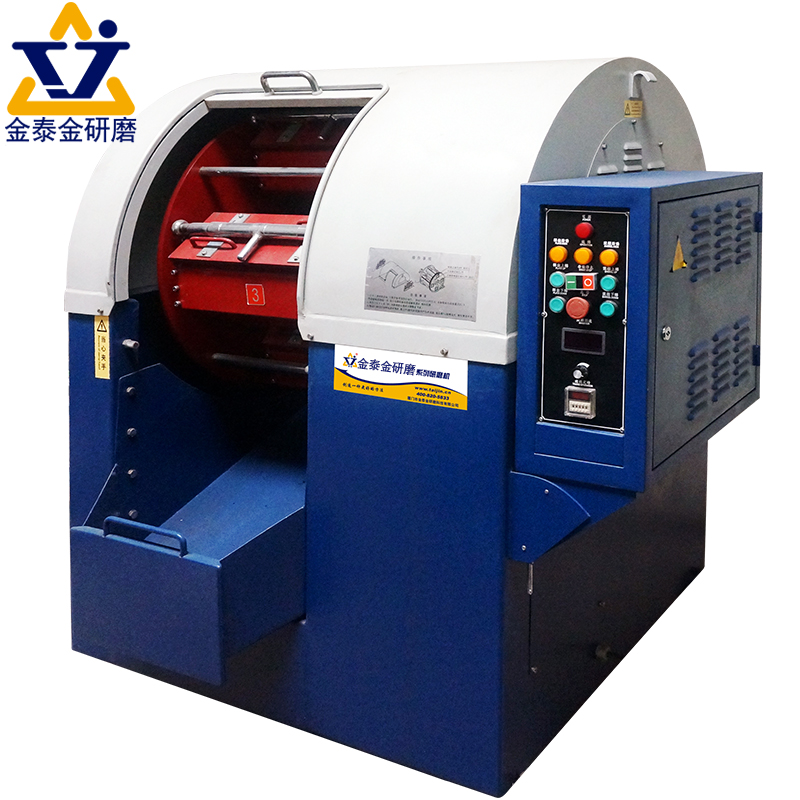
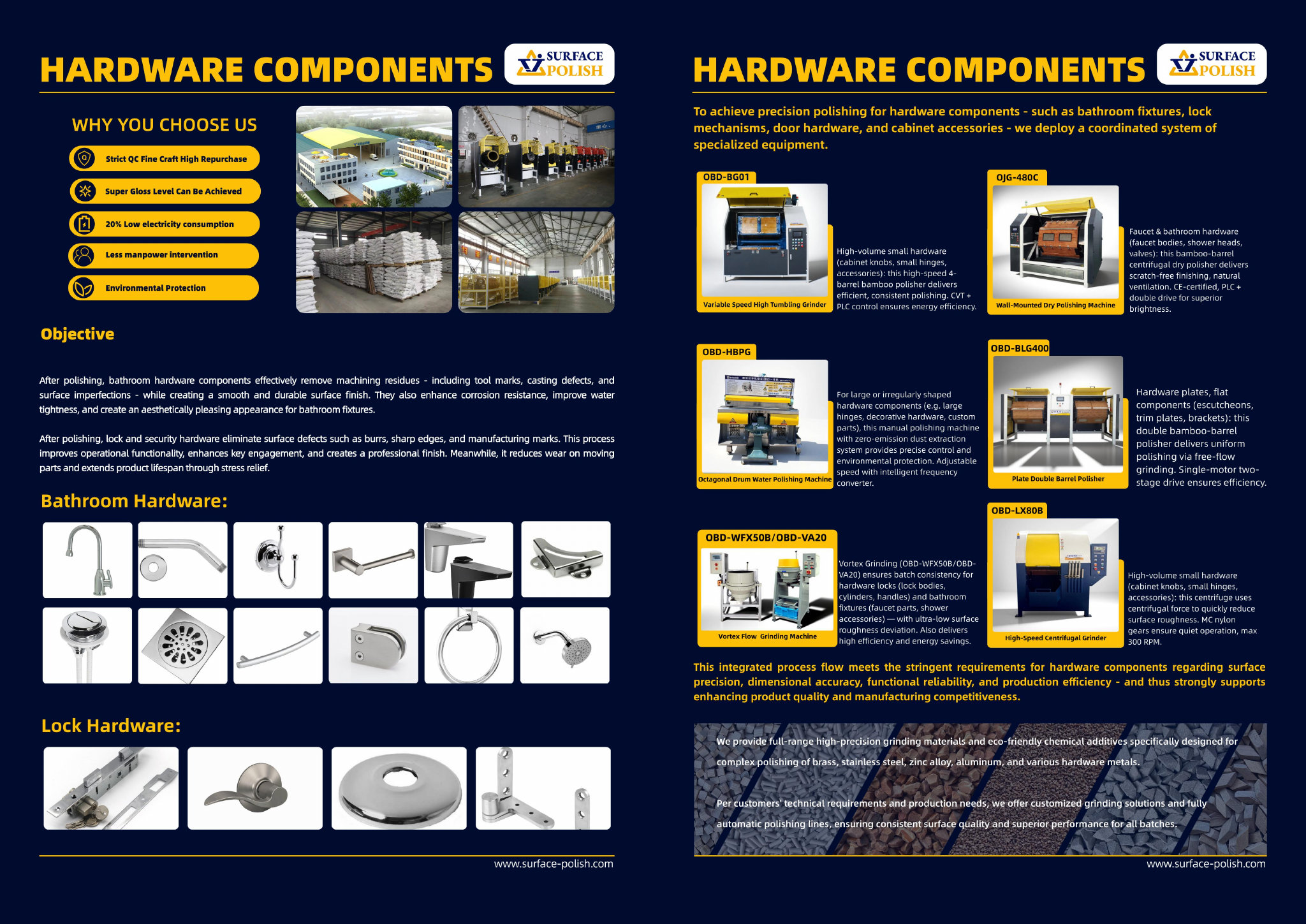
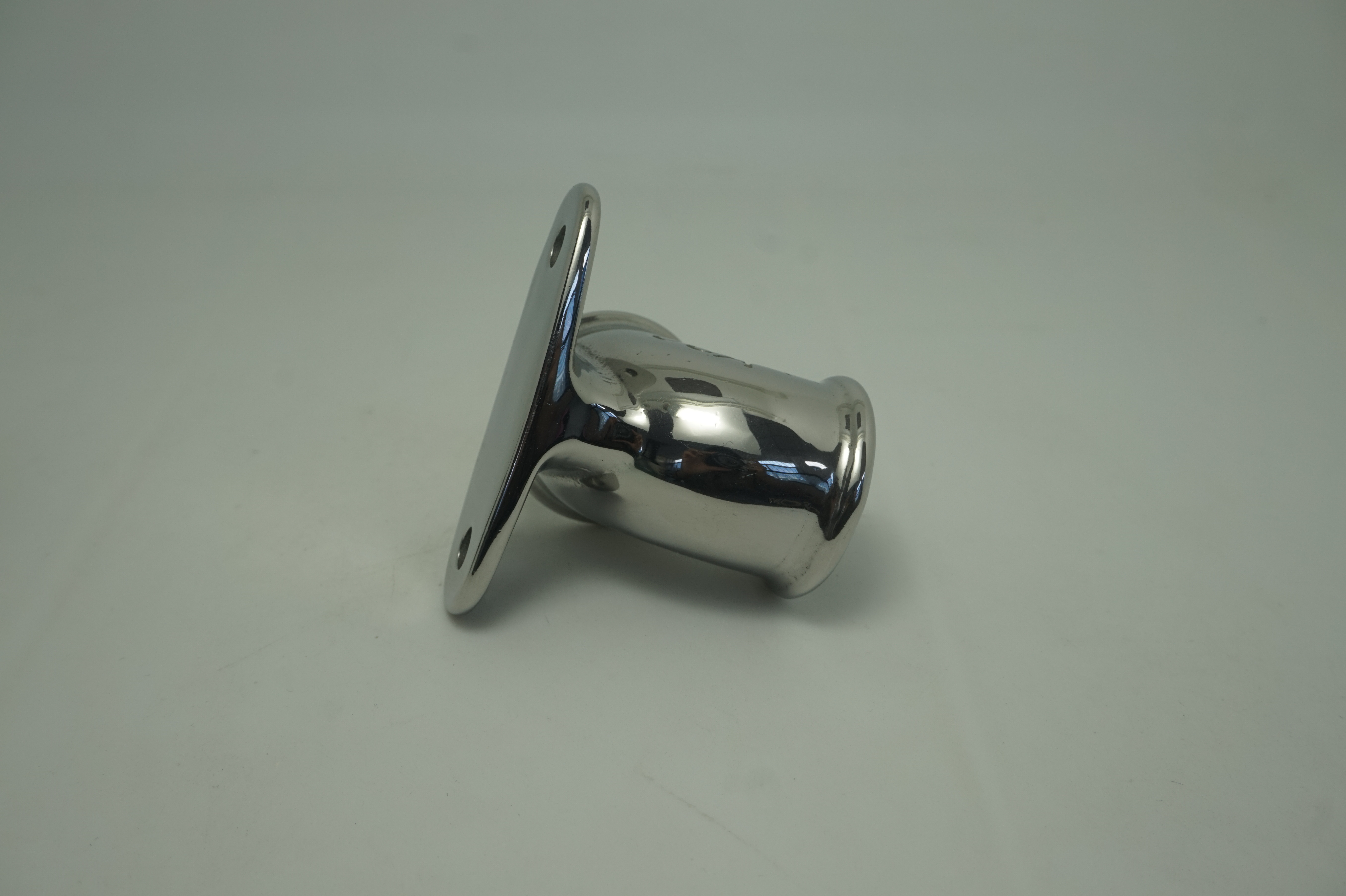
There is no single best medium, because aluminium is soft and the trade-off is between cut rate and surface damage. Plastic media is often the safer starting point where a machined face, a thin wall or a bore lip must be preserved, while a fine ceramic cuts faster if the edges tolerate more energy. The deciding variables are the smallest opening a medium could enter, the smallest radius that must not be rounded, and the surface condition the next operation needs. Media size class usually matters more than the broad material name. Send a marked-up part with its tightest feature and one controlled face, and let the trial compare two size classes.
Cycle time depends on the starting burr, the alloy and temper, the media size class, the compound and how much edge refinement is wanted, so no figure can be quoted in advance. A part that needs only a light edge break runs very differently from one that must shed a milled burr or a recast layer before refinement, and a two-stage route has to count both stages. The useful approach is to test one or two defined stop points on representative parts and record what changed at each. SurfacePolish does not promise cycle times or capacity; treat any timing on returned parts as an observation from that run rather than a production commitment.
Yes. The offer is cross-border supply of finishing machines, media and compounds, together with a free sample trial and a scoped discussion of a finishing line concept. That means machine class, media and compound are considered as one question rather than three purchases, since a charge that suits one chamber may not suit another. The buyer keeps ownership of the part, the drawing and the acceptance criteria, and we do not verify the material, the upstream machining or the heat treatment. Bring the part family, the alloys, the size range and the features that must be protected into the discussion, along with the condition the parts arrive in.
Use Sydney, Australia as the destination on the enquiry and state whether the deliverable is equipment, media and compound, a representative sample review or a line concept. A destination does not imply local stock, a local service point or a local delivery time.
Local buyers work to Australian Standards (AS) and joint AS/NZS standards cited in their purchase specifications or safety systems; on their own these standards are voluntary, but state and Commonwealth legislation frequently refers to them, which can make them mandatory. Electrical components of a finishing installation that fall in scope for the EESS must be marked with the Regulatory Compliance Mark to AS/NZS 4417.1 and AS/NZS 4417.2, and the machine itself falls under NSW work health and safety duties for plant.
Sources were retrieved on 2026-09-29 and describe the local industrial and trade context only. They do not evidence any SurfacePolish project, shipment, installation or service in Sydney.
The buyer needs the milled edges broken and the external faces evened out without touching the bearing bore or closing a dowel hole.
Send the material, dimensions, approximate weight, batch quantity, the incoming condition and photographs of the difficult features. Mark which features must not be contacted by media and state how the result will be inspected. This form carries source reference PSEO-0710; quote it if you prefer an additional manual reference.
Open the SurfacePolish enquiry form Email a prepared enquiry
No price, lead time, certification or result is promised here. Confirm whether a sample trial is available for the specific part and what the trial can and cannot show.
Page PSEO-0710 · revised 2026-09-29 · cross-border equipment, media and scoped sample review. City context is sourced and cited above.
Use this local checker to identify missing part and inspection information. It prepares a technical-review brief; it does not approve a machine, process recipe or production result.
Complete the part details to prepare a review brief.
Email : info@surface-polish.com


 IPv6 network supported


 +86-592-2381506