An automation frame builder in The Hague, Netherlands in robotics and automation handles 2 m aluminium axis beams whose machined ends and visible face need an even finish without bowing the profile. SurfacePolish supplies finishing machines, media and compounds across borders and offers a free sample trial: cut sections and one full length are shipped to Xiamen and returned with observations and a proposed media, compound and cycle direction for the buyer to assess. This brief is written for a buyer in The Hague working on robotics and automation; it describes equipment, media and a scoped sample review, not a local polishing service.
What does the finishing step actually have to deliver before the next operation, whether that is assembly, anodising, painting or a functional test, and who defines that requirement?
How much of the incoming contamination, cutting oil, machining chip and handling damage is expected to be removed by finishing rather than by an earlier operation?
Which surfaces on the part are functional, such as bearing bores, dowel holes, seal lands, ground mounting faces and threads, and which are only cosmetic?
Automation work mixes scales in a way that catches buyers out. The same shop may finish a 40 kg robot base casting and a 30 g gripper jaw, and a machine sized for the casting will over-work the jaw. Load ratio, the mass of parts against the mass of the charge, is the variable that usually decides whether small parts come out even or rounded. Screen the family on its extremes: the heaviest part, the largest envelope, the thinnest unsupported wall and the smallest part that must meet the same appearance. Long linear-axis beams and thin cover plates distort under their own weight in a deep bed, while heavy castings need a chamber large enough to keep them moving. A shortlist built on the average part will miss both ends of the range.
Shape decides what the marks look like, often more than the material label does. Spheres and rounded shapes leave overlapping craters, which suits a general deburred or satin appearance but reads as a peened, dimpled surface. Angle-cut triangles, cylinders and cones strike along their axis and leave a linear pattern, which suits visible covers, panels and brackets where a direction is wanted. The mass of the media then sets the cutting power, so a heavy ceramic charge removes a milled burr faster and also reaches edges sooner. On aluminium, a coarse angular charge can fold or smear the surface instead of cutting it cleanly. Choose the shape against the appearance the part must carry and the edges that must keep their radius, then keep the shape class stable, because a charge that has worn into rounded forms behaves differently from a fresh one.
| Media | Best fit | Watch out for |
|---|---|---|
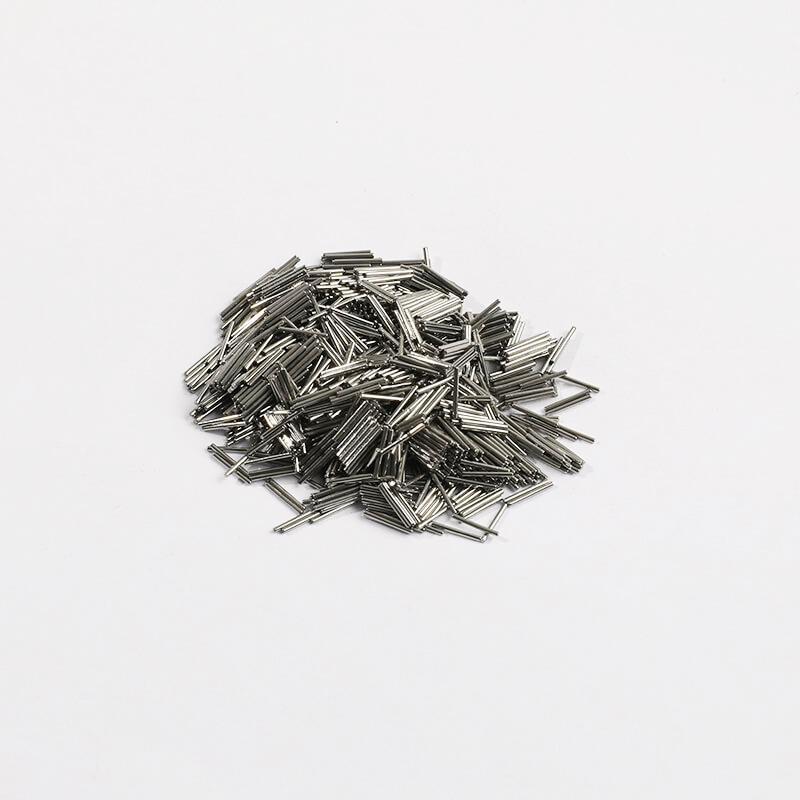
| Magnetic finishing pins and fine magnetic media | Small precise items such as spools, orifice plates, small valve parts and fine slot arrays where tumbling media cannot reach the feature | Limited working envelope, pins lodge in the same fine features they are chosen to reach, and the surface signature differs from tumbling |
| Aluminium oxide grinding media in a dense ceramic bond | Heavier stock removal or a more consistent cut on robust steel and stainless parts with thick edges and a defined layer to remove | High removal energy rounds functional edges quickly and is a poor match for thin aluminium plates, cast housings and bore lips |
| Steel media, including balls and shaped pins | Bright finishing and edge blending on stainless automation components where appearance and a burnished surface matter | Transfers iron to aluminium and carbon steel, needs a corrosion-inhibiting compound, and must be separated magnetically or by screen at unload |
| Fine ceramic or porcelain shapes in a small size class | Edge blending and surface refinement after a cutting stage, and reaching tighter external geometry on machined housings and brackets | Small sizes enter and retain in tapped holes and fine slots, and media wear shrinks the charge so the finish drifts over its life |
Long parts and heavy parts both fall outside a round bowl. A tub vibrator uses a rectangular chamber, so the working length extends along one axis while the bed stays shallow, which suits linear-axis beams, long manifolds and welded frames that cannot tumble end over end. The part is immersed or supported rather than turned, which removes bending risk from a divider, but energy per unit area is lower and a heavy burr takes longer. A grinding finishing machine works the other way, using higher removal energy to take off a defined layer or a heavy machining burr before refinement. That route cuts functional edges quickly and needs a tighter assessment of what may be removed. The deciding questions are part length, mass, how the part can be supported, and whether the critical face can be presented to the media at all.
| Machine route | Where it fits | What it will not do |
|---|---|---|
| Barrel finishing machine, rotary barrel tumbling | Gentle deburring of small fragile parts and mixed batches of screw-machine components with a generous compound flow | Long cycles, no visibility while running, and internal features can collect media and compound that must be retrieved at unload |
| Magnetic finishing machine | Fine deburring and light refinement of small precise features such as small bores, narrow slots and fine internal radii | Small working envelope that excludes housings and long parts, with pin media that can lodge in the fine features it reaches |
| Grinding finishing machine | Taking off a heavy machining burr, dross or a defined stock layer before a refinement pass on robust steel and stainless work | High removal energy cuts functional edges fast and demands a tighter assessment of what may be removed and how much |
| Tub vibrator | Long parts such as linear-axis beams, manifolds and welded frames that cannot rotate in a bowl | Lower energy per unit area so heavy burrs take longer, and large tubs need floor space and a reliable part support method |
A medium left in a tapped hole or a cross-drilled passage usually escapes the finishing area and is found later at assembly or at a functional test. It happens when the size class is too close to the opening, when a charge has worn or fractured into smaller pieces, or when a passage was never mapped as a retention risk. Tapped holes, keyways, seal grooves, cross-drillings and slots whose width approaches the media section are the usual places. Retrieval has to be designed rather than assumed: count the charge in and out where practical, use a pin or thread gauge on sampled holes, borescope the smallest passages at an agreed angle, and rinse through a filter for a visual check. Any medium found is a non-conformance to record, not something to wipe away and release.
| Failure mode | Likely cause | How to catch it |
|---|---|---|
| Impact marks, dents or a peened, rippled appearance on a visible aluminium face | Charge mass or load ratio too high, light parts left loose among heavy neighbours, or a soft alloy run on a route chosen for steel parts | Look for repeating mark patterns under angled light, compare a part run loose with the same part compartmentalised, and review the batch mix and load recorded for the lot |
| Compound film, smut or tenacious residue left on a face or in a bore | A film-forming or silicate-bearing compound, insufficient rinse volume, or drying a part before it is genuinely clean | Magnify the suspect surface, wipe a defined area with solvent against a clean reference, and confirm with the buyer's own cleanliness method |
| A ceramic, plastic or steel medium lodged in a tapped hole, keyway, cross-drilling or seal groove | Media size class too close to the opening, a charge that has worn or fractured into smaller pieces, or a retention feature that was never mapped | Count the charge in and out where practical, pin or thread gauge every hole, borescope the smallest passages at an agreed angle, and rinse through a filter for a visual check |
| Water spotting, mineral rings or haze left after wet processing and drying | Hard or high-chloride rinse water, slow or uneven drying, or parts stacked wet so moisture is trapped in pockets and threads | Inspect dried parts under angled light for rings and haze, check the rinse water source and the drying method, and confirm that pockets and tapped holes drain before packing |
The Hague is the seat of the Dutch government and the international city of peace and justice, so its economic base is services, international organisations and technology rather than heavy manufacturing. The city supports Stichting The Hague Security Delta, which brings government, knowledge institutions and companies together on innovation, talent development and digital resilience, and it hosts the National Cyber Security Centre, Europol, Eurojust, NATO bodies and the HSD Campus. The Hague & Partners lists cybersecurity, IT and tech, impact, humanity, legal and policy, rule of law and new energy as the city's key sectors, and notes that many energy companies, including Shell, Orsted and Total, have located there. Scheveningen harbour is the city's port, for which the municipality maintains a harbour vision through 2050.
For this brief the relevant part of that base is automation: The Hague & Partners states that the city benefits from an excellent IT infrastructure and a flexible multilingual and multinational talent pool.
The Hague has little heavy manufacturing, so finishing demand is concentrated in maintenance of building-services, port and marine equipment around Scheveningen and in technical hardware used by the city's energy, IT and security organisations. For those users the typical requirement is small-batch edge control, cleaning and surface preparation of stainless, aluminium and steel components rather than production-scale deburring.
A buyer here should first decide whether the need is a small in-house finishing capability for maintenance and prototyping or an outsourced batch process, and then fix the material mix and the required edge and roughness specification, because a maintenance workload and a production workload point to different machine types.
Freight context: Scheveningen harbour, Rotterdam The Hague Airport. Scheveningen is the city's harbour and is covered by a municipal harbour vision through 2050; the city also has Rotterdam The Hague Airport and is roughly 30 minutes from Schiphol. Machines imported from outside the EU are declared to Dutch Customs at their point of entry, and machine tools arriving by sea will normally clear customs at Rotterdam before road transport to The Hague.
The Dutch standards body is NEN (Nederlands Normalisatie-instituut), which publishes and maintains the NEN and NEN-EN-ISO standards; the content of a standard is set by a NEN standards committee made up of the organisations concerned, not by NEN itself. For surface finishing NEN publishes NEN-EN-ISO 2080, which defines the terms for the general types of surface-finishing processes with emphasis on practical use in metal finishing, under the standards committee for metallic coatings and corrosion of metals and alloys. Machinery safety, EMC, low-voltage, ATEX, RoHS and ecodesign requirements reach Dutch buyers through the CE directives and regulations referenced by KVK, with the Machinery Regulation applying from 20 January 2027.
Business is conducted in Dutch, but engineering and procurement communication in these sectors is routinely handled in English. Buyers are KVK-registered legal entities and expect a clear commercial entity to contract with, an EORI number for customs, correct HS/TARIC classification, and a full CE technical file including the EC Declaration of Conformity and a manual in the correct language; a technical construction file held by the manufacturer is normally part of the qualification pack. For EU-internal supply the invoice carries 0% VAT with the customer's VAT identification number and the customer accounts for 21% Dutch VAT in its own return, so a Chinese seller shipping directly from outside the EU must be clear about who is importer of record and who carries the duty and import VAT. Trade and investment support is organised through bodies such as KVK, RVO, the regional development agencies and the Trade and Innovate NL network, and the Dutch technology industry is represented by FME.
SurfacePolish supplies from Xiamen, China. The buyer's own destination rules, conformity marking, tariff classification and documentation responsibilities stay with the buyer; confirm them against the authorities named above before ordering.
Acceptance has to exist before a trial, in the drawing and the purchase specification, not as a verbal understanding afterwards. Name each controlled surface separately, because a bearing bore, a mounting land and an external cover will not respond to one media charge in the same way. State the parameter, the cut-off length, the measurement direction and the number of readings at each location. Where an edge limit applies, express it as a maximum radius or a required chamfer at a named feature rather than as a word such as deburred. Add the cleanliness requirement the part must meet and the method by which it will be judged, and say which faces are exempt. Settling those points early avoids the common dispute in which a supplier reports a surface and a buyer rejects on a feature that was never written down.
Change one variable at a time. If the question is media shape, hold the machine, load, compound, cycle time and part mix constant and change only the medium. If the question is cycle time, hold the charge and settings constant and stop at two or three defined intervals. Use adjacent coupons or parts from the same production lot so the only difference is the variable under test. Label the pieces before they run and have the returned parts judged in one session under the same light, rather than one at a time as they arrive. Where several people judge appearance, ask each to rank the parts before discussion so the strongest opinion does not set the answer. Running two changes at once produces a result that cannot be attributed to either.
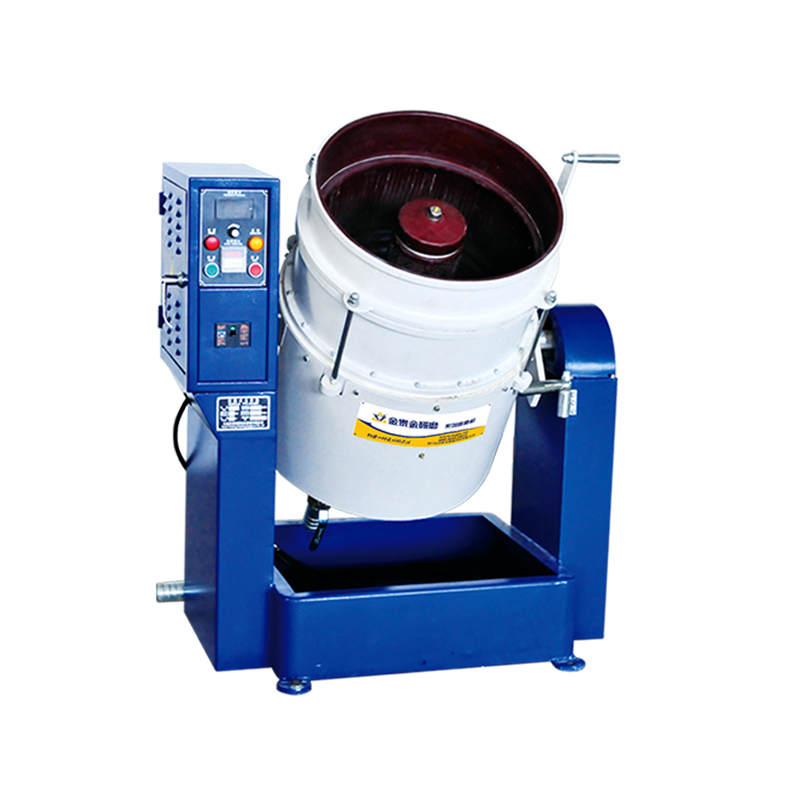

No. SurfacePolish supplies finishing machines, media and compounds across borders and runs a free sample trial on parts shipped to the factory in Xiamen. We do not design, integrate, program or commission robotic cells or automated handling lines, and no robotic polishing cell is offered here. What can be discussed is the part itself, the features that must be protected and the finishing step, and which loose-part machine and media route is worth testing. How parts are presented, loaded, unloaded and transferred is engineering scope you define and verify, and any machine or medium suggestion remains a starting point for your evaluation in The Hague.
Change one variable at a time. Hold the machine, load, compound, cycle time and part mix constant and change only the medium. Use parts from the same production lot so the only difference is the variable under test. Label the pieces before they run and have the returned parts judged in one session, under the same light and at the same marked measurement points, rather than one at a time. Where several people judge appearance, ask each to rank the pieces before discussion. Where a cut stage is followed by a refinement stage, score the stages separately, because a good final result can hide an unremoved burr or an over-coarse first stage.
SurfacePolish does not coat, anodise or paint parts, and no finishing cycle here should be treated as a coating preparation specification. A coating or anodising step usually makes residue, smut and embedded debris more visible rather than less, and a compound film left in a bore becomes your problem at the next operation. Define what your own coating process requires and how you will verify it, then ask for the parts to be checked against that requirement. A trial can report what was observed on the tested surfaces and the settings used, but the fitness of a surface for a downstream coating step is your own process decision.
Use The Hague, Netherlands as the destination on the enquiry and state whether the deliverable is equipment, media and compound, a representative sample review or a line concept. A destination does not imply local stock, a local service point or a local delivery time.
Buyers here would reference the CE machinery regime (Machinery Regulation from 20 January 2027) and the Dutch/EN-ISO surface-finishing standards published by NEN, such as NEN-EN-ISO 2080. Where equipment is used in marine or coastal conditions, corrosion-protection and coating-preparation specifications are normally added by the asset owner on top of those base standards.
Sources were retrieved on 2026-09-29 and describe the local industrial and trade context only. They do not evidence any SurfacePolish project, shipment, installation or service in The Hague.
The buyer needs the machined ends and the visible face refined evenly along 2 m without bowing the extrusion or loading it with media.
Send the material, dimensions, approximate weight, batch quantity, the incoming condition and photographs of the difficult features. Mark which features must not be contacted by media and state how the result will be inspected. This form carries source reference PSEO-0660; quote it if you prefer an additional manual reference.
Open the SurfacePolish enquiry form Email a prepared enquiry
No price, lead time, certification or result is promised here. Confirm whether a sample trial is available for the specific part and what the trial can and cannot show.
Page PSEO-0660 · revised 2026-09-29 · cross-border equipment, media and scoped sample review. City context is sourced and cited above.
Use this local checker to identify missing part and inspection information. It prepares a technical-review brief; it does not approve a machine, process recipe or production result.
Complete the part details to prepare a review brief.
Email : info@surface-polish.com


 IPv6 network supported


 +86-592-2381506