A decorative screen manufacturer in Cleveland, United States supplying architectural metalwork uses 2.5 m lengths of 25 x 25 x 0.9 mm stainless tube, and the flat faces dent and the lengths twist whenever the parts are run loose in a batch. SurfacePolish supplies finishing machines, media and compounds across borders and runs a free sample trial on sections shipped to Xiamen. This brief is written for a buyer in Cleveland working on architectural metalwork; it describes equipment, media and a scoped sample review, not a local polishing service.
How much of the incoming mill seam, joint weld or transit scratch must be removed, and what minimum wall thickness has to remain after that removal?
What is the longest length in the order, and how will it be supported, carried and packed at every stage between finishing, fabrication and installation?
What texture direction is required, and how will that direction be preserved and compared across lengths that are finished in different lots?
Once a length runs past roughly a metre and a half, handling stops being a detail and becomes the deciding constraint. A six-metre handrail cannot be turned in a chamber, cannot be stacked with its finished face against another part, and cannot be lifted by two people without risk of a bow. The screening questions are: what is the longest length in the order, how is it moved to and from finishing, is it cut to final size before or after finishing, and what supports it at every stage. Answering these sets the machine class, the cradle design and the inspection points. A buyer who fixes the finish specification first and the handling plan later usually discovers the finish cannot be held on the long lengths that matter most.
Compound concentration, flow rate and water quality need managing along the whole chamber, not just at the inlet. In a long tub the fluid front can arrive weaker at the far end, so media there cuts differently and the finish drifts from one end of a part to the other. Hard water leaves scale and spotting; very soft water may foam differently with the same compound. Foam is a real constraint in a tub because it cushions the media and reduces cut, and it overflows into the surrounding area. Set concentration by measurement rather than by appearance, check flow at both ends of the chamber, and plan drag-out and rinse-water handling before the first production run.
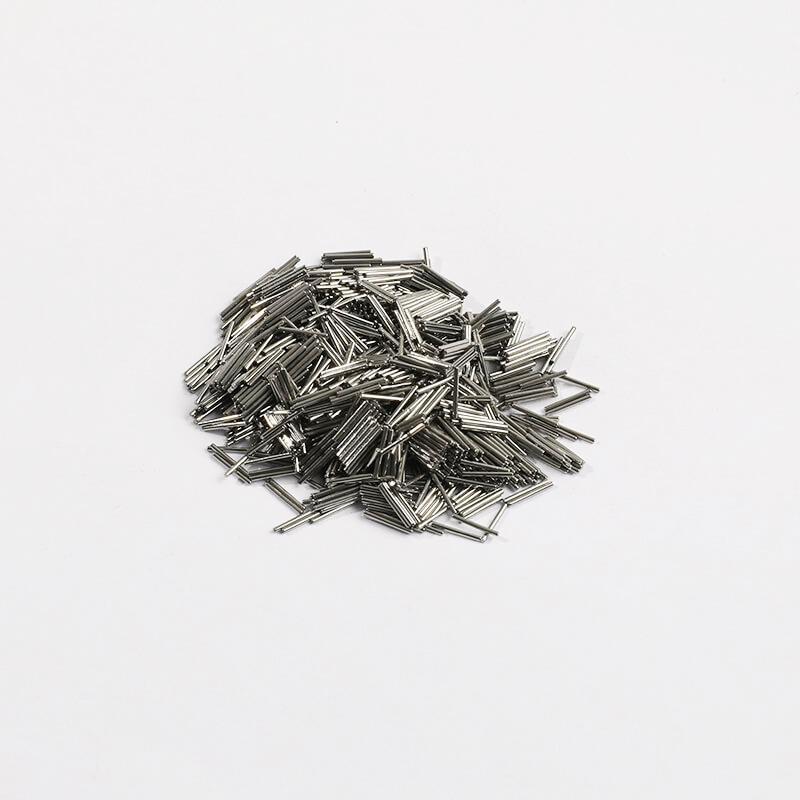
| Media | Best fit | Watch out for |
|---|---|---|
| Dry media, walnut shell and corn cob | Dry polishing and support for post-wet drying, particularly where a hollow section must not stay wet or carry residue inside. | Low cutting power, and dust generation and media separation need managing in the surrounding area. |
| Ceramic media, angle-cut triangles | Heavier cutting and seam removal on stainless tube and profiles, where a directional linear texture on the visible face is wanted. | Wears down and changes effective size class, generates sludge, and can over-round thin sections or chip on sharp edges. |
| Steel media, pins and balls | Bright, strongly linear appearance on stainless where a higher-lustre finish is wanted on accessible faces. | Heavy, needs tight compound control to stay clean and separated, and any iron-bearing debris is a contamination question the buyer has to define and verify. |
| Ceramic media, spheres and balls | General deburring and edge work on cut ends, brackets and small fittings in the same order as the long runs. | Produces overlapping crater-like marks that work against a linear brushed appearance and can peen a thin wall. |
Inside whichever machine is chosen, the fixture or the load arrangement decides whether thin sections survive. A thin-wall rectangular profile will flatten under its own weight in a deep bed, and two loose lengths finished together will nibble each other along the contact line. Practical measures are cradles that follow the profile, dividers or compartments that keep parts apart, end caps or plugs for open tube ends, and clip-on carriers that present the visible face to the media evenly. The fixture also fixes the finish: a part that rotates freely receives an inconsistent texture, while a part held at a controlled orientation receives a directional one. Build the fixture around the longest and thinnest part in the order, not the average one.
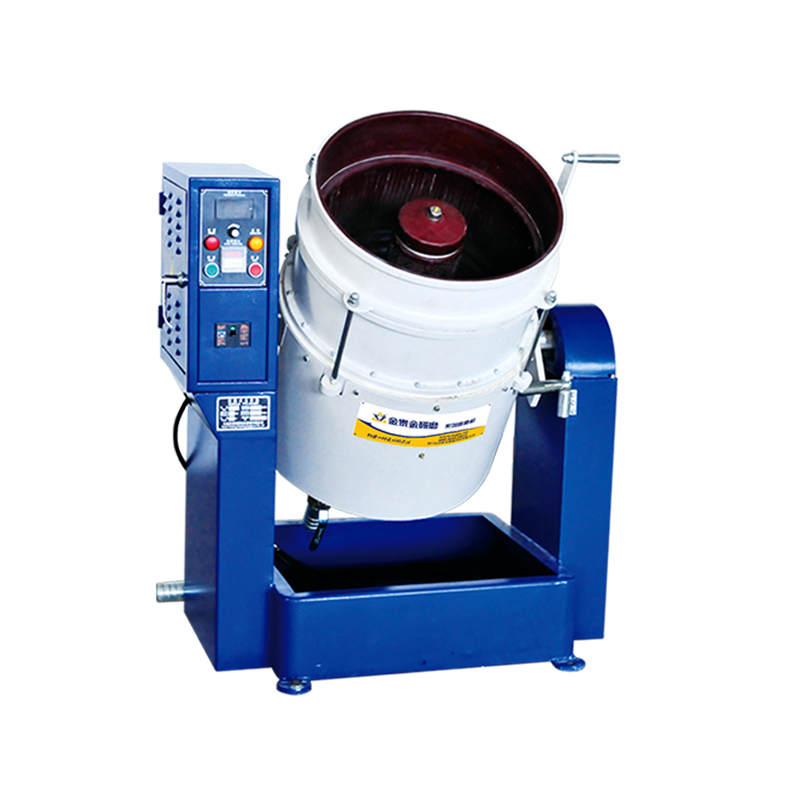
| Machine route | Where it fits | What it will not do |
|---|---|---|
| Disc finishing machine | Fast, high-energy cycles for small to medium fittings and hardware where a short cycle is the priority. | The high energy that makes it fast will distort, mark or bend thin and long parts. |
| Grinding finishing machine | Higher material removal where a mill seam, a joint weld or a deep scratch has to be cut back before surface refinement. | Removal is aggressive, so depth control and wall thickness limits have to be set before the cycle is run. |
| Tub vibrator | Long and large parts such as architectural tube and profiles, where the process length has to extend along the part. | Bed depth and fixture design decide whether thin sections survive, and fluid flow has to be checked at the far end of the chamber. |
| Centrifugal barrel finishing machine | High-speed finishing of small precise parts, including where a bright appearance is required on a compact geometry. | Chamber geometry and high contact forces rule it out for long, thin-wall or easily marked sections. |
Open tube ends, slotted channels and drilled fixings all collect media, swarf and compound. The failure is rarely visible at the end of the cycle; it shows up after the part is installed, when compound weeps from a bore onto a visible face or when a trapped particle works loose during handling and scratches an adjacent length. Treat removal as a designed step rather than a rinse: plug or cap what should never see media, count media in and out of each batch, and agree how the interior of a sample length will be checked, using an endoscope or an internal swab where the bore matters. Ask what the drying step after a wet process does for a closed section, because a hollow part that stays wet inside is a delayed defect.
| Failure mode | Likely cause | How to catch it |
|---|---|---|
| Bow along the length | Unsupported part in the bed, resting on hard supports, or lengths stacked while still wet. | Place on a surface plate or straight reference and measure the gap with a feeler gauge at several stations, against the incoming straightness record. |
| Longitudinal scratch running along the part axis | Incoming coil or straightener marks, media or swarf dragged along the surface during the cycle, or a finished length sliding over a bare support between operations. | View the surface under raking light at a low angle along the axis, compare the same station on several parts, and compare against the retained reference panel. |
| Hazy or milky patch with a dull reflection | Uneven cut, worn media in part of the chamber, or weak compound flow at the far end of a long tub. | Compare the near end and the far end of the same length, and check compound concentration and fluid flow at both ends of the chamber. |
| Twist along the length | Differential working of opposite faces, or clamping and stacking that loads the section unevenly. | Rest the length on a reference surface and compare the angular orientation of the two end sections with a square. |
Cleveland is a Great Lakes manufacturing economy. The Federal Reserve's Fourth District Beige Book reports demand for manufactured goods increasing at a robust pace, driven by data centre development and defence spending, and records manufacturers facing higher steel, copper and aluminium costs. NASA's Glenn Research Center has its main campus, Lewis Field, beside Cleveland Hopkins International Airport, with wind tunnels, drop towers, vacuum chambers and a research aircraft hangar, and a second Ohio campus at the Neil Armstrong Test Facility. The Port of Cleveland describes itself as one of the largest ports on the Great Lakes and reports about 13 million tons of cargo moving through Cleveland Harbor each year, tied to over 23,000 jobs. Case Western Reserve University sits within walking distance of three major hospitals and ranks among the top 25 private US universities in federal research spending, and Cleveland Clinic lists more than 300 locations.
The nearest part of that base to this brief is medical: Case Western Reserve University states it sits within walking distance of three major hospitals and is among the top 25 private US universities in federal research spending, and Cleveland Clinic lists more than 300 locations.
Cleveland's mix of heavy machinery, aerospace components and medical devices puts finishing requirements at both ends of the tolerance range: large machined and welded components need weld dressing, edge blending and surface preparation before painting or coating, while bearing, coupling, hydraulic and pneumatic parts need controlled edge radii and low Ra to avoid stress risers, seal damage and leak paths. Medical and dental instrument work adds burr-free edges and passivation-grade cleanliness, and because much of the local base is job-shop and low-to-mid volume, changeover time between part families matters as much as cycle time.
The question to settle first is what the drawing actually controls - Ra alone, an edge-radius range, or a burr-free requirement verified by a defined method - because that decides between vibratory, barrel, centrifugal and disc processes and fixes the media and compound combination. The second practical point is the material and downstream step: ferrous or non-ferrous, wet or dry, and whether the part is passivated or coated afterwards, since those set compound chemistry, rinse quality and drying requirements.
Freight context: Port of Cleveland (Cleveland-Cuyahoga County Port Authority) on the Great Lakes / St. Lawrence Seaway, Cleveland Hopkins International Airport (CLE), Cleveland, Ohio (CBP port of entry 4101). The Port of Cleveland describes itself as an all-water seaway connecting the Atlantic Ocean to America's heartland and reports roughly 13 million tons of cargo a year through Cleveland Harbor; FAA final CY2025 data list Cleveland-Hopkins International with 4,855,943 enplanements and more than 40 nonstop destinations, and CBP lists Cleveland, Ohio (4101) as a port of entry. For a Chinese machine builder the practical routing is an ocean container to a US East Coast or St. Lawrence Seaway port, then inland truck or rail to Cleveland, with customs entry at Cleveland (4101) or at the port of unlading.
The United States has no single mandatory national finishing standard. The national standards system is voluntary and consensus-based, coordinated at national level by the American National Standards Institute (ANSI): ANSI published the United States Standards Strategy (USSS) 2025 on 6 January 2026, a strategy that 'guides how the U.S. develops standards and participates in international standardization', while the National Institute of Standards and Technology (NIST) is the federal measurement and standards agency and states that 'Technical standards keep us safe, enable technology to advance, and help businesses succeed.' In practice a buyer specifies surface finish, deburring, cleaning and coating requirements on the drawing or in the purchase order using the voluntary consensus standards maintained by bodies such as ASME and ASTM International and their ISO equivalents, and the acceptance criterion is the buyer's own specification rather than a government-issued finishing standard. Where a part is destined for a regulated product - pressure equipment, food-contact equipment, aerospace or medical devices - the relevant industry code or the customer's qualification requirement governs instead.
Business is conducted in US English. Units matter: US drawings and purchase orders frequently use inches, microinch Ra and US gallons, and a supplier that quotes only metric can be asked to reissue documentation. Buyers are US legal entities with an EIN and expect an identifiable contracting entity, a correct HTSUS classification, a commercial invoice, packing list and bill of lading, country-of-origin marking, and an importer of record for customs. Procurement is normally evidence-driven: process selection is expected to be justified by a trial run on the buyer's own sample parts with measured results (burr height, edge radius, Ra, cleanliness) and by media and compound data sheets, rather than by a capability claim. Payment terms in general US industrial practice are open account with net-30 to net-60 terms for established buyers, with letters of credit or advance payment more common for a first order from a new overseas supplier; no US buyer assumes Incoterms, warranty terms or spare-parts lead times unless they are stated in the quotation.
SurfacePolish supplies from Xiamen, China. The buyer's own destination rules, conformity marking, tariff classification and documentation responsibilities stay with the buyer; confirm them against the authorities named above before ordering.
A roughness reading on tube has to be taken with the same care as one on a flat coupon, and usually more. State the location by distance from a reference end, the traverse direction relative to the grain, and the cut-off and evaluation length, and keep them the same for the first article and for production checks. Along the grain and across the grain give different values on the same surface, so a reading that does not say which direction it was taken in cannot be compared with anything. Curvature limits how a skid or a shoe can sit on the surface, particularly on small-diameter tube, and a reading taken with a poorly seated pickup is not evidence. Repeat the measurement at several stations along the length, because the ends of a part often differ from the middle.
Send cut sections from the actual production material, roughly 300 to 500 mm long, taken from at least three places along the delivery rather than from one offcut, and cover every wall thickness and profile in the order. Add one full-length piece where bend, twist or end effects could matter, because a short coupon does not reproduce how a long, unsupported length behaves in a bed. Include one length in the condition that most often arrives: a mill seam, a fabricator's weld, a transit scratch. If the buyer has an existing part whose appearance is acceptable, send that as a reference too, with a note on where it was viewed from. Label every piece with profile, alloy, wall, provenance and what should be observed on it.

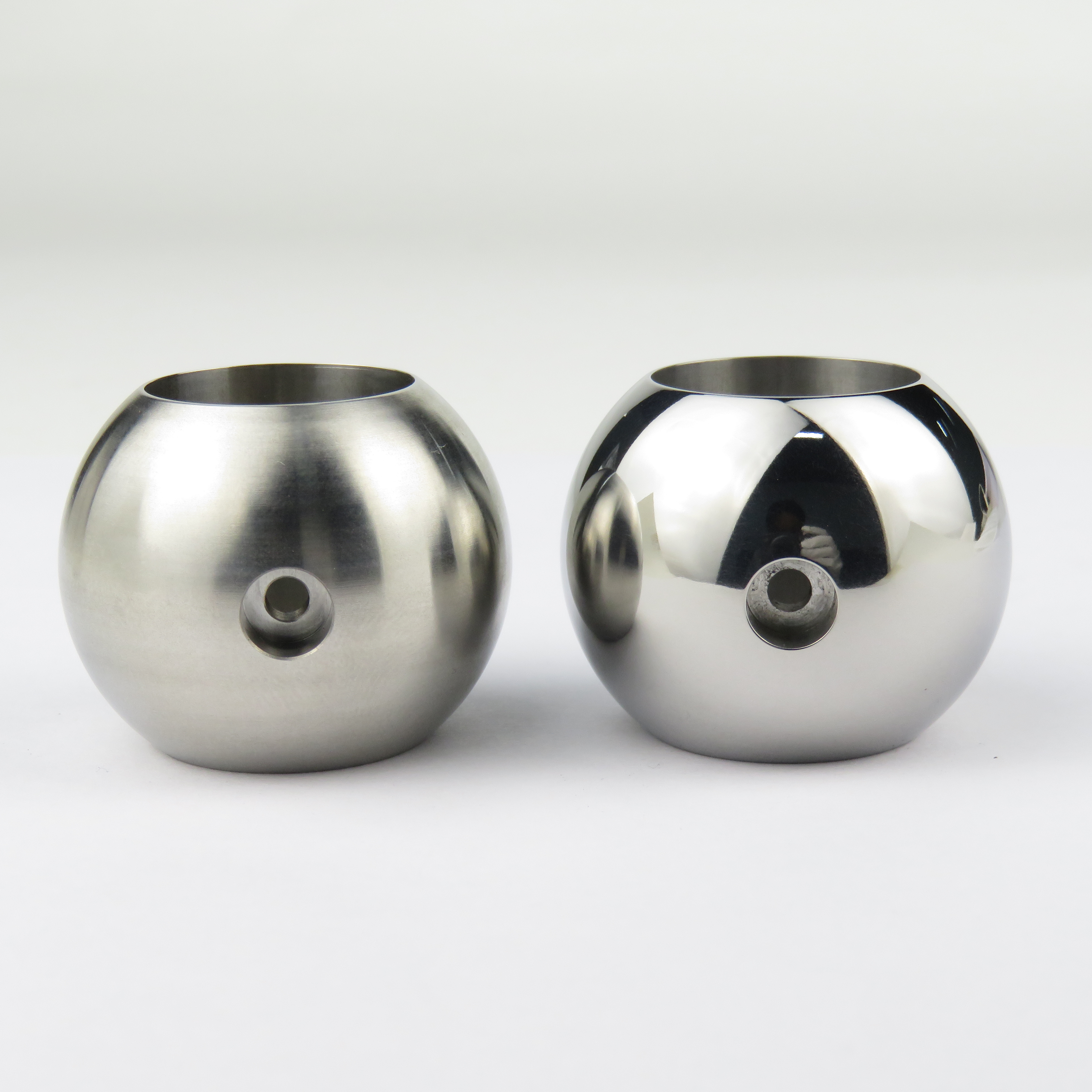
No. SurfacePolish does not supply or carry out electropolishing. Where electrochemical treatment is part of the buyer's requirement, we treat it as a comparison point and as a reason to look at what a mechanical route can achieve on the same part, and we can discuss media, compound and machine options for that mechanical route. A mechanical finish should not be presented as equivalent to an electropolished surface, and the choice between the two, together with any specification that depends on it, belongs to the buyer's own engineering decision.
Start with a physical sample: if a short section can be removed without damage, send it, together with the retained reference panel from the original order if one exists. An installed surface has aged, been cleaned and possibly scratched, so a new length will not reproduce it exactly, and the visible difference is usually easier to manage by finishing a group of adjacent lengths than by matching one piece in isolation. A trial reports what the tested settings produced on the sample you sent; deciding how close is close enough remains with your own acceptance process and the people who will look at it daily.
A round bowl moves its load on a circular path in a chamber whose diameter caps the part length, and extending that chamber to take a six-metre length stops being practical. The deeper issue is the bed: a long tube occupies too much of the load for the media to circulate around it, so the part is dragged and struck instead of worked evenly. Long sections are better run in a tub, where the process length can be extended along one axis, or on a dedicated arrangement that moves the part or the heads along the length.
Use Cleveland, United States as the destination on the enquiry and state whether the deliverable is equipment, media and compound, a representative sample review or a line concept. A destination does not imply local stock, a local service point or a local delivery time.
For machined and welded industrial parts in Ohio the reference documents are normally ASME B46.1 (or ISO 4287/4288) for surface texture together with the drawing callouts for edge break and burr limits; automotive-adjacent suppliers work to IATF 16949 quality systems, aerospace suppliers to AS9100 with NADCAP-approved special processes, and coating work is checked against the specified salt-spray and adhesion tests.
Sources were retrieved on 2026-09-29 and describe the local industrial and trade context only. They do not evidence any SurfacePolish project, shipment, installation or service in Cleveland.
The flat faces dent and the lengths twist whenever they are run loose together, and the buyer cannot accept that geometry loss.
Send the material, dimensions, approximate weight, batch quantity, the incoming condition and photographs of the difficult features. Mark which features must not be contacted by media and state how the result will be inspected. This form carries source reference PSEO-0087; quote it if you prefer an additional manual reference.
Open the SurfacePolish enquiry form Email a prepared enquiry
No price, lead time, certification or result is promised here. Confirm whether a sample trial is available for the specific part and what the trial can and cannot show.
Page PSEO-0087 · revised 2026-09-29 · cross-border equipment, media and scoped sample review. City context is sourced and cited above.
Use this local checker to identify missing part and inspection information. It prepares a technical-review brief; it does not approve a machine, process recipe or production result.
Complete the part details to prepare a review brief.
Email : info@surface-polish.com


 IPv6 network supported


 +86-592-2381506